First released in 2004, Irish Eyes tells the story of two brother, born eleven months apart.
Tom Phelan (John Novak) is the older brother, the one who is destined to go to law school, join the Justice Department, and to marry Erin (Veronica Carpenter), the daughter of one of Boston’s most prominent attorneys. Tom’s future lies in politics. As he makes his reputation by taking down members of the Boston underworld, he finds himself being groomed for attorney general and then who knows what else.
Sean Phelan (Daniel Baldwin) is the younger brother. Haunted by the murder of his father and stuck at home taking care of his mother (Alberta Watson) while Tom goes to college, Sean soon pursues a life of crime. He falls under the influence of the Irish mob, led by Kevin Kilpatrick (Wings Hauser). Sean quickly works his way up the ranks. It doesn’t matter how much time he does in prison. It doesn’t matter how many people he has to kill. It doesn’t matter if it alienates the woman that he loves or if it damages his brother’s political career, Sean is a career criminal. It’s the one thing that he knows. When Sean finds himself as the head of the Irish mob and also the American connection for the IRA, his activities are originally overlooked by his brother. Sean even threatens a reporter who makes the mistake of mentioning that Sean and Tom are brothers. But soon, Tom has no choice but to come after his brother. What’s more important? Family or politics?
Obviously (if loosely) based on Boston’s Bulger Brothers (Whitey became a feared criminal while brother John became a prominent Massachusetts politico), Irish Eyes doesn’t really break any no ground. Every mob cliché is present here and so is every Boston cliché. Don’t rat on the family. Don’t betray your friends. The only way to move up is to make a move on whoever has the spot above you. Every bar is full of angry Irish-Americans. Every fight on the street turns deadly. Everyone is obsessed with crime or politics. The film, to its credits, resists the temptation to have everyone speak in a bad Boston accent. (The Boston accent, much like the Southern accent, is one of the most abused accents in film.) Sean narrates the films and you better believe he hits all of the expected points about life on the street.
That said, it’s an effective film with enough grit and good performances to overcome the fact that it’s just a wee predictable. Daniel Baldwin is appropriately regretful as Sean and John Novak does a good job of capturing the conflict between Tom’s love of family and his own political ambitions. Curtis Armstrong shows up and is surprisingly convincing as a psychotic IRA assassin. Admittedly, the main reason that I watched this film was because Wings Hauser was third-billed in the credits. Hauser only appears in a handful of very short scenes and that’s a shame. In those few scenes, he has the rough charisma necessary to be believable as the crime boss who holds together the neighborhood and it’s hard not to regret that he didn’t get more to do in the film. That said, the film still works for what it is. It’s a good mob movie.
This film was originally entitled Irish Eyes. On Tubi, it can be found under the much clunkier name, Vendetta: No Conscience, No Mercy.
In 2009, Steven Soderbergh released a little independent film called The Girlfriend Experience starring, who at that time, was one of the adult industry’s biggest stars in Sasha Grey. The film explored and dealt with the life of a high-class escort by the name of Chelsea as she navigated the world of powerful men and the effect of money in monetizing something as intimate and personal as being someone’s girlfriend. It wasn’t a film that had many supporters. Most saw the inexperience of Sasha Grey as a dramatic actress hamstringing what was an interesting look at the dual themes of sex and capitalism.
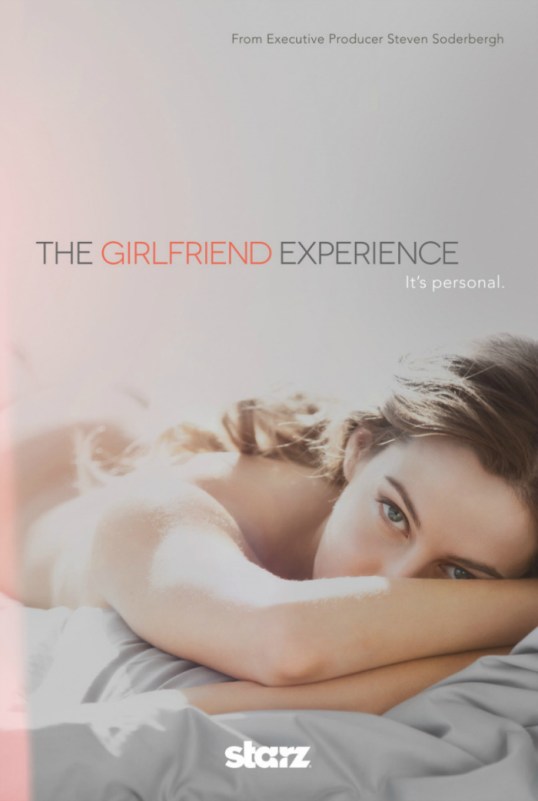
It’s now 2016 and the premium cable channel Starz has released a new dramatic series inspired by the very same Soderbergh film mentioned above, but not beholden to it’s characters and storyline. Where Sasha Grey’s character of Chelsea seemed more like an on-screen cipher the audience was suppose to imprint whatever their expectations onto, this series has a more traditional narrative of a young woman whose attempt to balance in her life a burgeoning career in law (she’s just earned an internship at a prestigious Chicago law firm) with her discovery of her inherent sexuality while dipping her toes into the high-end sex-workers trade of the so-called “girlfriend experience.”
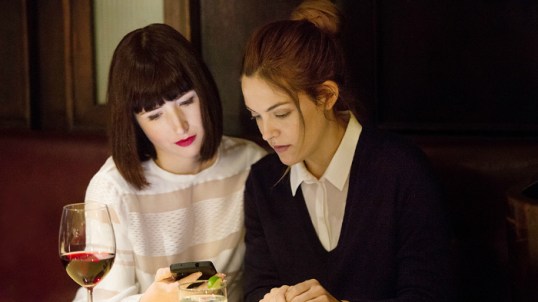
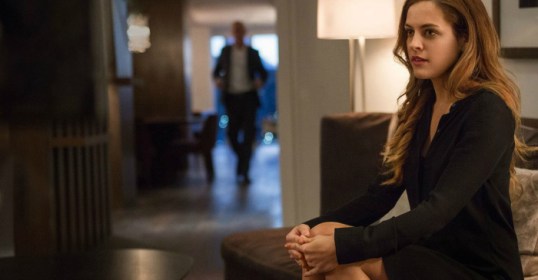
Riley Keough (last seen as the Citadel wife Capable who both romanced and mothers Nicholas Hoult’s War Boy Nux) plays Christine Reade as a struggling law firm intern who has worked hard to get where she’s at and continues to do so both as an intern and as a continuing law student. Yet, she also has the same problems many young people the past couple decades have had when it comes to earning their degrees. Debt has become a major issue and finding ways to make ends meet while still holding onto their dream profession becomes more and more difficult. Christine, at the encouragement of a close friend (played by Kate Lyn Sheil), tries her hand at becoming a high-price escort.
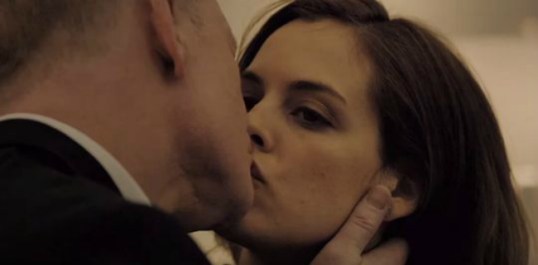
Just like the film it’s loosely based on, the series tries in the beginning to paint the high-priced escort profession that Christine gets herself into as very glamorous. Christine’s clients are white men who are older, rich and powerful. Men whose own interpersonal relationships with those close to them have been left behind in their quest for power. They see in Christine a sort of commodity to help fill in a need missing in their life even if false and just a transactional role-play experience.
Showrunners Amy Seimetz (who plays Christine’s sister Annabel) and Lodge Kerrigan (independent filmmakers and writers of renown) have created a show that explores not just the dual nature of how sex has become just another commodity in a world that’s becoming more and more capitalistic, but also a show that explores the nature of a professional woman in a world where they’re told that in order to fit in with the “men” they must suppress their sexual side. It’s a series that doesn’t hold back it’s punches in showing how the patriarchal nature of the professional world (it could be law, business, Hollywood, etc.) makes it difficult for women like Christine to try and be a successful professional and still retain their sexual nature. It’s a world up-ended and shown it’s cruel and ugly nature by Christine with every new client she meets and entertains.
The show and it’s writers (both of whom took turns directing each of the 13-episodes of the first season) don’t pass any sort of judgement on Christine’s choice of working as a high-paid escort. This series doesn’t look at these sex-workers as beneath what normal society expects of it’s women, both young and old. They instead want to explore the why’s of their decision to enter into such a career even if it means hampering their initial chosen profession. They’ve come up with some intriguing ideas of this world of escorts and powerful men walking through their lives always pretending to be one thing then another. A world where half-lies and made up personas have say much about the true natures of each individual as it does of the world around them.
Christine enters this world of becoming a “girlfriend experience” as a rebellious, adventurous lark, but finds out that her keen, observant and adaptable mind which has served her well in her rise as a law student and intern also serves her well in her new side-career. While her friend Avery who first introduces her to the world sees it all as a rush and exhilarating experience to be done here and there, Christine finds herself drawn deeper into the world as she goes from being represented to finally going off on her own as a freelancer. She’s her own boss and she controls what goes on with this new life.
Yet, The Girlfriend Experience is not all about the glass and steel, cold and calculating glamour of Christine’s new world. Just as she’s reached the heights of her new found power over the very system which tells her what she can and cannot be, outside forces that she thought was in her control brings her back to the reality of her choices throughout the first half of the series. For all the money, power and control she has achieved her old world as a law student and intern begins to fall apart as it intersects with her new one. It’s to the writers credit that they don’t give Christine any easy outs, but do allow her character to decide for herself how to get through both her professional and personal crisis.
While both showrunners Seimetz and Kerrigan have much to do with the brilliance of The Girlfriend Experience it all still hinges on the performance of it’s lead in Riley Keough. She’s practically in every scene and she grows as a performer right before out eyes. From the moment we see her we’re instantly drawn to her character. Hair up in an innocent ponytail and dressed very conservatively as she starts her internship, we still sense more to her character and we’re rewarded with each new episode as Keough’s performance with not just her acting both verbal and silent. Whether it’s the subtle changes in her expression as she transitions from an attentive “girlfriend”, supportive “confidant” and then to a calculating and all-business “escort” and all in a span of a brief scene.
Even the scenes where some audience may find titillating (even for premium cable like Starz, the sex in The Girlfriend Experience are quite eye-opening without being exploitative.), Keough manages to convey her true feelings with her eyes, while her body language convinces her latest client that it’s all real. She’s able to slip into whatever fantasy her client pays for and, in the end, whatever fantasy she wants to insert herself into in order to escape the terrible reality which has hardened and prepared her for the “real world” that all young people in college aspire to join.
The Girlfriend Experience might have been born out of an cinematic experiment by the icon of independent filmmaking, but it more than stands on it’s own take on ideas and themes (while adding and introducing some of their own) that Soderbergh tried to explore. With Sasha Grey’s performance as Chelsea proving to be a divisive reason whether Soderbergh’s film was a success or a failure, with Seimetz and Kerrigan they found in Riley Keough’s performance as Christine Reade a protagonist that engenders not just sympathy but at times frustration. Her Christine Reade doesn’t conform to what society thinks women should be when out and about in public and, for some men, when in private, as well.
The same could be said about this series as it doesn’t fit into any particular narrative and thematic box that we as a viewer have become trained to. It’s both a series exploring the existential idea of sexual identity and the commodifying power that capitalism has had on things intimate and personal. It’s also a series about a young woman’s journey of self-discovery that doesn’t just highlight the high’s but also shows how precipitous the fall can and will be when the traditionalists object. The show also performs well as a thriller due to the exceptional score composed by another brilliant indie-filmmaker. You may know him under the name of Shane Carruth.
The Girlfriend Experience doesn’t have the pulp sensibilities of such shows as The Walking Dead or the rabid following of Game of Thrones, but as of 2016 it’s probably the best new show of the year and here’s to hoping that more people discover it’s brilliance before it goes away.
 Through the Shattered Lens