Since today is Adrian Lyne’s birthday, it only seems appropriate that today’s song of the day should come from his best film.
Tag Archives: Adrian Lyne
4 Shots From 4 Films: Special Adrian Lyne Edition
4 Shots From 4 Films is just what it says it is, 4 shots from 4 of our favorite films. As opposed to the reviews and recaps that we usually post, 4 Shots From 4 Films lets the visuals do the talking!
Today’s the Shattered Lens wishes a happy 85th birthday to the British director, Adrian Lyne! Lyne was one of the many British director to start his career by making commercials. (Alan Parker and Tony and Ridley Scott also followed a same career path.) He brought the same technique that inspired people to buy products to his films and the enf result was some of the most stylish films of the 80s, 90s, and the aughts. Lyne hasn’t directed many films but his lasting influence cannot be denied.
It’s times for….
4 Shots From 4 Adrian Lyne Films
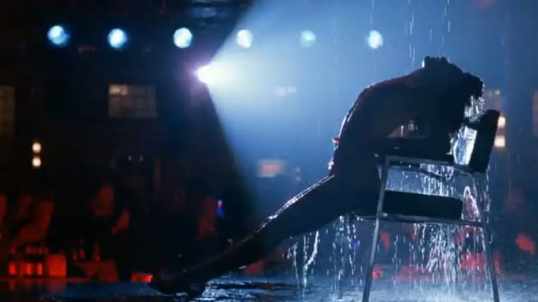
Flashdance (1983, dir by Adrian Lyne, DP: Donald Peterman)
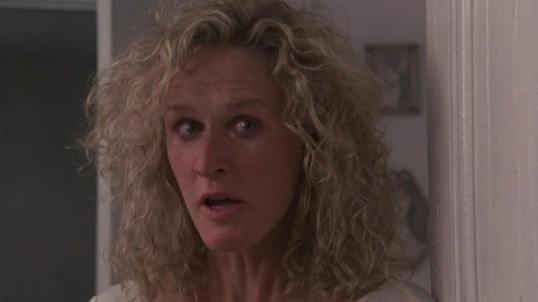
Fatal Attraction (1987, dir by Adrian Lyne, DP: Howard Atherton)
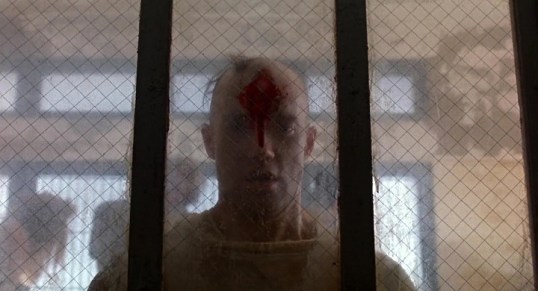
Jacob’s Ladder (1990, dir by Adrian Lyne, DP: Jeffrey L. Kimball)

Indecent Proposal (1993, dir by Adrian Lyne, DP: Howard Atherton)
4 Shots From 4 Films: Special 1983 Edition
4 Or More Shots From 4 Or More Films is just what it says it is, 4 shots from 4 of our favorite films. As opposed to the reviews and recaps that we usually post, 4 Shots From 4 Films lets the visuals do the talking!
Today, we pay tribute to a classic year in film. It’s time for….
4 Shots From 4 1983 Films
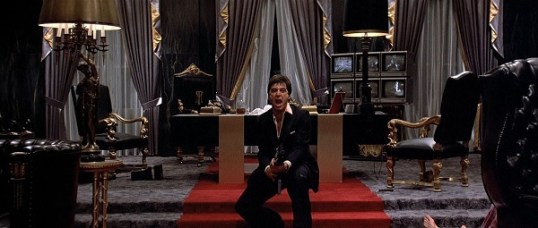
Scarface (1983, dir by Brian De Palma, DP: John A. Alonzo)
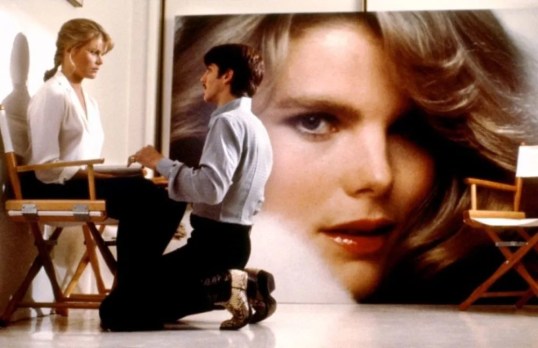
Star 80 (1983, dir by Bob Fosse, DP: Sven Nyvkist)
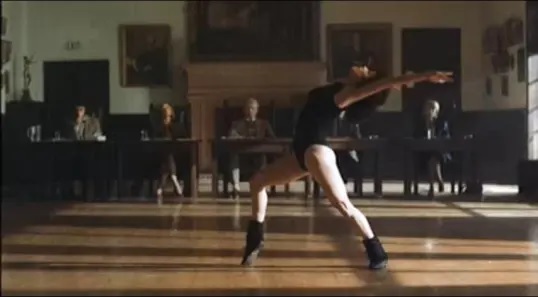
Flashdance (1983, dir by Adrian Lyne, DP: Donald Peterman)
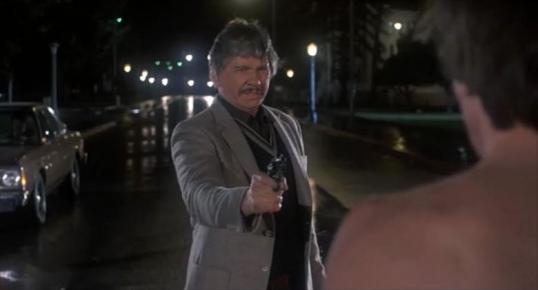
10 To Midnight (1983, dir by J. Lee Thompson, DP: Adam Greenberg)
4 Shots From 4 Films: Special 1993 Edition
4 Or More Shots From 4 Or More Films is just what it says it is, 4 shots from 4 of our favorite films. As opposed to the reviews and recaps that we usually post, 4 Shots From 4 Films lets the visuals do the talking!
Today, we pay tribute to the year 1993 with….
4 Shots From 4 1993 Films
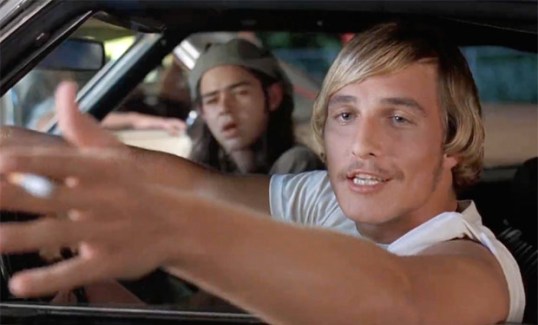
Dazed and Confused (1993, dir by Richard Linklater, DP: Lee Daniel)
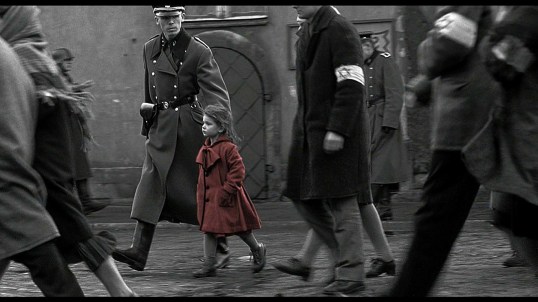
Schindler’s List (1993, dir by Steven Spielberg, DP: Janusz Kamiński)
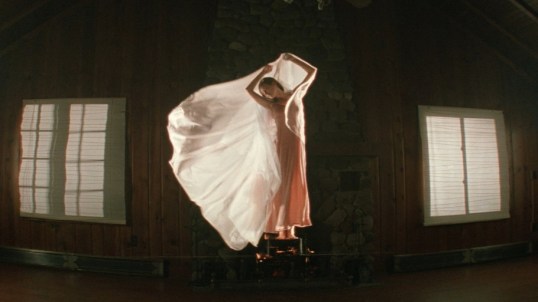
Trauma (1993, dir by Dario Argento, DP: Raffaele Mertes)
Indecent Proposal (1993, dir by Adrian Lyne, DP: Howard Atherton)
4 Shots From 4 Films: Special Dancing Edition
4 Shots From 4 Films is just what it says it is, 4 shots from 4 of our favorite films. As opposed to the reviews and recaps that we usually post, 4 Shots From 4 Films lets the visuals do the talking!
4 Shots From 4 Films
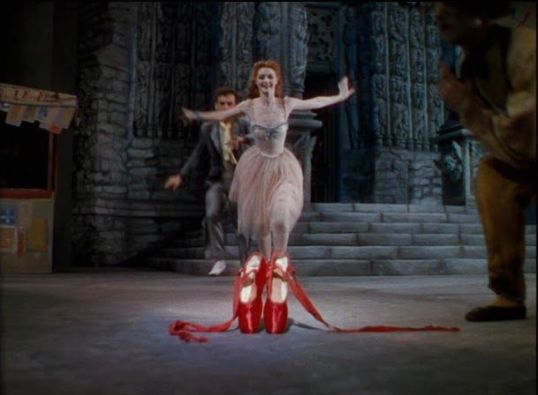
The Red Shoes (1948, dir by Michael Powell and Emeric Pressburger, DP: Jack Cardiff)
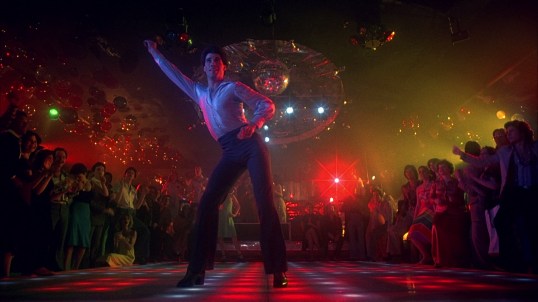
Saturday Night Fever (1977, dir by John Badham, DP: Ralf D. Bode)
Flashdance (1983, dir by Adrian Lyne, DP: Donald Peterman)
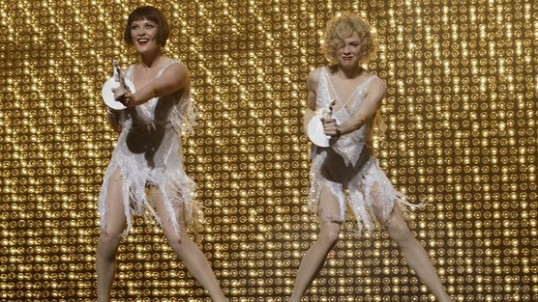
Chicago (2002, dir by Rob Marshall, DP: Dion Beebe)
4 Shots From 4 Films: Special Adrian Lyne Edition
4 Shots From 4 Films is just what it says it is, 4 shots from 4 of our favorite films. As opposed to the reviews and recaps that we usually post, 4 Shots From 4 Films lets the visuals do the talking!
Today’s the Shattered Lens wishes a happy 82nd birthday to the British director, Adrian Lyne! Lyne was one of the many British director to start his career by making commercials. (Alan Parker and Tony and Ridley Scott also followed a same career path.) He brought the same technique that inspired people to buy products to his films and the enf result was some of the most stylish films of the 80s, 90s, and the aughts. Lyne hasn’t directed many films but his lasting influence cannot be denied.
It’s times for….
4 Shots From 4 Adrian Lyne Films
Flashdance (1983, dir by Adrian Lyne, DP: Donald Peterman)

Fatal Attraction (1987, dir by Adrian Lyne, DP: Howard Atherton)
Jacob’s Ladder (1990, dir by Adrian Lyne, DP: Jeffrey L. Kimball)
Indecent Proposal (1993, dir by Adrian Lyne, DP: Howard Atherton)
Film Review: Deep Water (dir by Adrian Lyne)
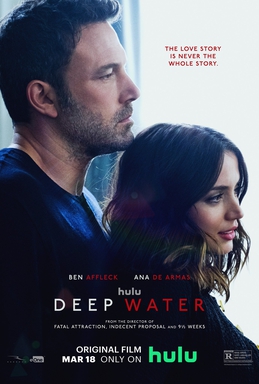
Just released on Hulu, Deep Water is the funniest film of the year so far.
Ben Affleck stars as Vic Van Allen. (Even his name is funny!) Vic made a fortune by inventing a computer chip that is used to help drones track people down and blow them up. Now, Vic is retired, living in a nice and small town, and publishing a photography/poetry magazine. He enjoys going to parties with his friends, joking about committing murder, and riding the heck out of his bike. Seriously, the shots of Affleck riding that bike are comparable to Will Ferrell playing the flute in Anchorman.
Ana de Armas plays Vic’s wife, Melinda. Everyone, including Vic, knows that Melinda cheats on Vic with almost every man that she meets. Vic accepts Melina’s infidelities on the condition that she not leave him and their daughter, Trixie (Grace Jenkins). Of course, Vic does still get upset. When Melinda’s former lover vanishes, Vic jokes to Melinda’s current lover that he killed the previous lover. Everyone in town gets a good laugh out of that one. Everyone, that is, but for Melinda and local busybody Don Wilson (Tracy Letts).
Both Melinda and Don think that Vic is capable of murder. As far as Don is concerned, Vic is responsible for the death of every single person who has ever been blown by a drone. Meanwhile, Melinda knows that there’s something strange about the way that Vic spends all of his time taking care of the hundreds of snails that he keeps in the basement. Vic, of course, insists that he was just making a joke when he said that he was a murderer. But then Vic actually does murder someone and things get complicated….
From what I understand, Deep Water is supposed to be a serious thriller but I absolutely refuse to believe that it’s not actually meant to be a parody of the genre. It’s director Adrian Lyne’s first film in 20 years. Lyne is best know for directing movies like 9 1/2 Weeks, Fatal Attraction. Indecent Proposal, and Unfaithful and so many of the scenes in Deep Water feel as if they’ve been specifically designed as a way to poke fun at Lyne’s previous films that one can’t help but suspect that at least a few of the film’s laughs are meant to be intentional. This is a film that features Ben Affleck, on a bicycle, chasing a car while the driver rants about how autocorrect is always ruining his text messages. I absolutely refuse to accept that this was truly meant to be taken seriously.
That said, Affleck wanders through the film with a glum expression on his face, one that suggests that he wasn’t let in on the joke ahead of time. Ana de Armas is ultimately defeated by a script that refuses to allow her character to behave with any consistency but she’s still smart enough to play Melinda as being a character who is at least partially aware that she’s in a movie. As for Tracy Letts, I have never seen any reputable actor overact quite as much as Tracy Letts does towards the end of Deep Water. It’s a sight to behold.
Adrian Lyne makes sure that the film looks good but he never manages to strike a consistent tone and the film’s plot is full of holes. Affleck spends a lot of time gazing at snails while Ana de Armas throws a fit when her daughter keeps insisting that Alexa play Old MacDonald. Tracy Letts, at one point, sees Affleck riding his bicycle and starts cursing like Linda Blair in The Exorcist. Deep Water doesn’t really work as a thriller but, as a comedy, it’s a lot of fun.
Ana de Armas and Ben Affleck take some deep breaths in the Deep Water Teaser
On the surface, Deep Water just looks like “The movie Ben and Ana did during Lockdown”, but with Adrian Lyne’s name attached to this, I’ve had a double take. Lyne is responsible for Flashdance, 9 1/2 Weeks, Indecent Proposal and Unfaithful. I’m curious about where this one is going. Judging from the heavy breathing, it seems this couple is good at giving tummy tickles.
Deep Water premieres on Hulu on March 18th.
Music Video of the Day: Flashdance (What a Feeling) by Irene Cara (1983, directed by Adrian Lyne)
Back in the 70s, Hollywood finally figured out that a good soundtrack was a good way to convince people to come see your movie.
In the 80s, Hollywood figured out that a good music video was an even more effective way to draw in audiences than a good soundtrack.
The video for What A Feeling is entirely made up of scenes from Flashdance. It probably wasn’t difficult to put it together and it probably played a huge role in the film becoming a hit and this song eventually wining an Oscar. It was a lesson that Flashdance producers Don Simpson and Jerry Bruckheimer would remember when they went on to produce other feature-length music videos, like Top Gun, Days of Thunder, and Dangerous Minds.
Enjoy!
Film Review: Flashdance (dir by Adrian Lyne)
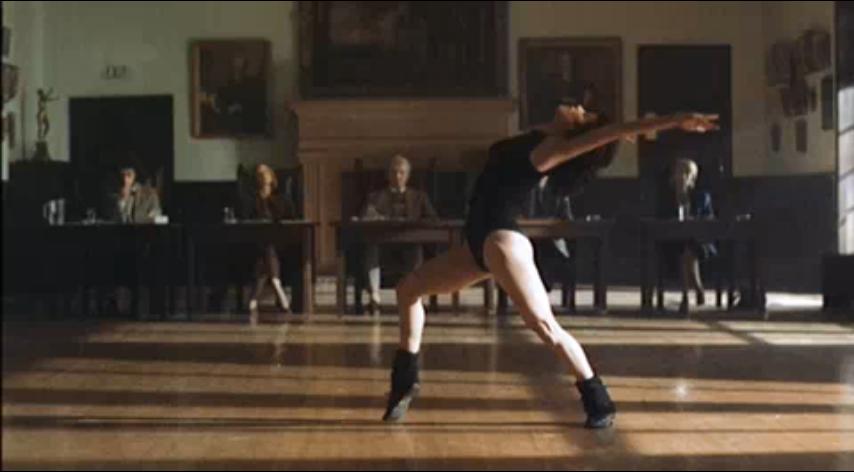
Instead of getting any sleep last night, I decided to stay up and watch the 1983 dance film, Flashdance. As a result, I’m not only very tired but everyone I see today, I’m just like, “You’re not really a welder, are you?”
In the film, that question is asked by bitchy Katie Hurley (Belinda Bauer) to 18 year-old Alex (Jennifer Beals) and the answer, by the way, is yes. Alex is a welder. Judging by the way the film handles the topic, it appears that audiences in 1983 were really stunned that a woman could be a welder. (I kept expecting to hear someone say, “She’s one of those lady welders, like you read about in the Reader’s Digest.”) Myself, I’m more amazed that an 18 year-old in Pittsburgh could get a high-paying union job. Then again, we never really see any evidence that Alex is really doing much as a welder. We do see her at a construction site holding one of those torch things but that’s pretty much it. Last night, I started Flashdance with no idea what a welder does and I ended the movie with even less of an idea but then again, the movie really isn’t about welding.

Instead, it’s about dancing! And love! And holding onto your dreams! And living in a big warehouse with a dog and a handsome boyfriend! As one character puts it, when you give up your dreams, you die. Of course, most people have multiple dreams so what happens if you only give up one but hold onto the others? I guess you just lose a toe or something. But anyway….

Actually, before we move on, how much money did welders make back in 1983? Because seriously, Alex lives in a gigantic and very nicely decorated building and her only roommate is a dog. As Alex explains to her boss and boyfriend, Nick (Michael Nouri), the building was an abandoned warehouse before Alex moved in. So, does Alex own the building? Does she just rent it? It’s a great place and I love what Alex does with it but seriously, it’s hard to believe that any 18 year-old — even one who is working two jobs — could afford it.

Yes, Alex has two jobs. Such is the price of independence. When she’s not welding, she’s dancing at a dive bar. Her routines are amazingly filmed and a lot of fun to watch but they’re also so elaborate it’s hard to believe that they could be performed in such a run-down establishment or that the bar’s blue collar clientele would have much patience for them. She’s an exotic dancer, which means she doesn’t take off her clothes. The sleazy owner of local strip club (Lee Ving) keeps trying to encourage Alex and her friend, Jeanie (Sunny Johnson), to come dance at his place but Alex has no interest in that. Jeanie, on the other hand, accepts the offer. Fortunately, Alex is there to run into the club and yank her off stage and then yell at her. Alex spends a lot of time yelling at people. She also throws a rock through one of Nick’s windows when she sees him talking to his ex-wife. One could argue that Alex has rage issues but no one in the film seems to take them personally. How could they? Alex is pursuing her dreams and the good thing about pursuing a dream is that you can do whatever you want while doing so.
(Interestingly, you can tell that the filmmakers were a little bit concerned that audiences in the early 80s might view Alex as being a bit too independent and confrontational. In between the scenes of Alex yelling at people and casually reaching underneath her sweatshirt to remove her bra while Nick watches, there are also scenes of Alex going to confession. It’s as if the film’s saying, “Yes, she welds! Yes, she has a temper! Yes, she’s flirty! But fear not, she’s a good girl! So, it’s okay for you to be on her side….”)

For a film that was shot on the streets of Pittsburgh, there’s not a gritty moment to be found in Flashdance. This is the type of film where Alex rides her bicycle across the city and it never once gets stolen, despite the fact that she never actually locks it up. In the world of Flashdance, all conflicts are easily resolved, all insecurities are ultimately conquered, and all dreams come true. It’s a world where Alex can become a great dancer despite having never had any formal training just because, as she puts it, she’s “watched TV and read books.” (My old dance teachers probably hated this movie.) It’s a fairy tale and, like most fairy tales, it’s deeply silly and yet oddly compelling at the same time. Never once do you buy that Alex is a welder and it’s pretty obvious, from all the quick cuts and the skewed camera angles, that Jennifer Beals did not do her own dancing. But it doesn’t matter because it’s hard not to get pulled into the film’s glitzy fantasy. Flashdance may technically be a bad movie but I dare you not to cry a little when Alex leaves her audition and finds Nick waiting for her. Not only does Alex achieve her dreams, but she also get a rich, older boyfriend, the type who gives her flowers and puts a bow on her dog.

It’s interesting to note that the two films that practically define the early 80s cinematic aesthetic, Flashdance and Scarface, were both released in 1983. (Not only was Flashdance initially offered to Scarface director Brian DePalma but Al Pacino was also offered the role of Nick. Pacino, of course, turned it down and played Tony Montana instead.) To be honest, I think you can argue that Flashdance and Scarface are essentially the same film. They’ve both got neon opening credits. They’ve both got a score from Giorgio Moroder. They’re both elaborate fantasies about someone who won’t surrender their dream. Just replace all the cocaine that Tony Montana snorted with Alex’s love of dancing.

Finally, I have to mention Flashdance‘s music. The score and the song may be totally 80s but it still sounds good in 2019. The theme song won an Oscar and let me tell you, if you can listen to this song without dancing around your house in your underwear, then you obviously have a lot more self-control than I do.
 Through the Shattered Lens