World War Z premiered over this past weekend and as I mentioned in my review the film was better than expected and showed something which previous zombie films have never truly shown and that’s the epic nature of just how a zombie apocalypse would look. While the film probably has disappointed fans of the novel for it’s massive and major deviations of the novel it was adapted from it was still a fun film.
It was from the opening title sequence of World War Z that I was first introduced to the song that comes in as the latest “Song of the Day”.
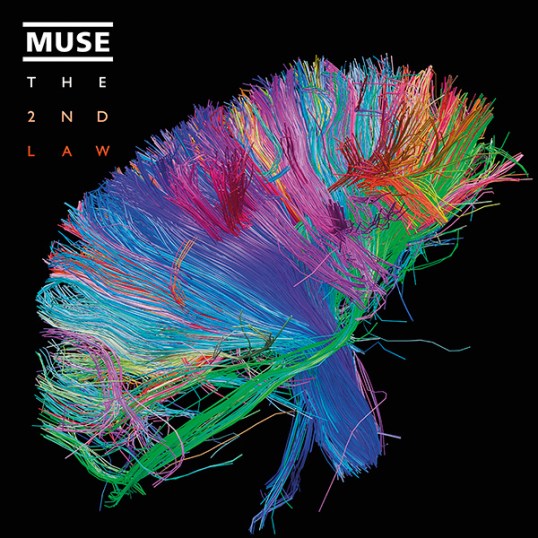
The song “Isolated System” from Muse’s latest album, The 2nd Law, really comes off as a nice precursor to what will be an apocalyptic event just around the corner. The whole song is an instrumental piece that’s interspersed with voice clippings from news reports that just have a hint of something ominous about to happen. The song looks to have have been influenced, whether by accident or on purpose, by another song which works well as a soundtrack to the apocalypse: Godspeend Ye! Black Emperor’s “East Hastings”.
Even if one didn’t like the film World War Z, this song was at least a nice find for those who haven’t been introduced to it.
Decade of last.fm scrobbling countdown:
42. Burzum (756 plays)
Top track (42 plays): Key to the Gate, from Det Som Engang Var (1993)
I remember watching some comedy in the early 90s where a cave man frozen in ice gets thawed out and has to adapt to life in modern Los Angeles. I don’t really remember any details about it, except that it was bad. This has pretty much been Varg Vikernes’s fate since being released from prison in 2009, and no one ought to feel the least bit sorry for him. Varg ultimately made his name known through his crimes, not his music, but he used to deliver a sound to match. There is a tinge of the deranged in classic Burzum. Albums like Det Som Engang Var carry such a lasting appeal because they simultaneously capture the pagan spirit of early 1990s black metal and the air of madness that overtook the scene, landing many of its participants in coffins or jail. Varg’s first new recording after his release, Belus, was sufficiently better than anyone expected to open the door for a potential second chance at a successful musical career. But after more than a decade with no means to record, Varg let his longing for creative expression take him, pumping out five new albums in the four years that followed with little quality control, coupled with an endless sea of writings. The overwhelming majority of this material was ho-hum, and for any other aging artist this would be fine. Plenty of other later-career heavy metallers have earned sufficient respect in their younger years to maintain a fan base as their capacity for greatness dwindled. Plenty of revolutionary thinkers have maintained a right to social commentary extending beyond their original mode of expression. But no one respects Varg Vikernes nor views him as a revolutionary, and no one really should. In spite of the quality of his early albums, he remained rightly subject to criticism, leaving prison to run head first into a sea of high expectations and further demands for proof of talent. He failed to rise to the occasion, and now no one cares. He is busy writing treatises and filming documentaries that no one will ever grant the time of day. He is chugging out album after album that most of us will never bother listening to. Sorry Count Grishnackh. It is too late for your opinions to ever matter.
We can certainly continue to derive enjoyment from select Burzum material while rolling our eyes at any mention of its creator, but for me Varg is a bit of a disappointment. Black metal is something of the thinking man’s sledgehammer–a genre which oddly entangles disgust for intellectualism with ideas which require a great deal of formal dialogue to express in other-than-artistic ways. But if the fault lines of egotism render my favorite forms of music necessarily esoteric, I have always preserved the hope that some musician might have something intelligent to say about it. Varg runs his mouth ceaselessly, and I think it a shame that nothing substantive has ever come out of it. No one has ever been in a greater position to serve as the spokesman for the genre than Varg Vikernes, granted for all of the wrong reasons. The murder of Euronymous and Varg’s outrageous, self-incriminating comments which followed propelled him to a level of stardom that his music alone could have never achieved. Sure, he was entirely at odds with the genre; he could never, unlike artists such as Ihsahn, point to unlawful actions in the early 90s scene as an immature expression of an entirely justifiable state of mind. But he had the one thing no other black metal artist could hope to achieve: extensive public attention beyond his niche genre.
I guess I hoped that more than 15 years in prison would have given him the opportunity to grow up a little. I thought maybe he would fess up to having been a dumb-shit teenager who ruined the Norwegian scene by letting his emo jealousy of Euronymous get in the way of his commitment to its values. I thought he might very carefully and very professionally take his time crafting an outstanding album as proof that he was moving on to bigger and better things. Belus succeeded in buying time, but Fallen and the works that followed proved beyond a doubt that the dumb-shit teenager was nothing more than an educated, bearded, dumb-shit adult. He never acknowledged his debt to metal–and his potential for adding a substantial new flame to a musical movement that has since rapidly left him in the dust. In short, it irks me that a man of so many words, once returned to the spotlight in 2009, had so little to say and show for it. Nevertheless, classic Burzum has stood the test of time and remains a quintessential example of the sound that swept Scandinavia in the early 1990s and continues to influence countless bands today.
Decade of last.fm scrobbling countdown:
43. Neutral Milk Hotel (727 plays)
Top track (81 plays): Holland, 1945, from In the Aeroplane Over the Sea (1998)
Featured track: In the Aeroplane Over the Sea (full album)
When you listen to a really diverse and enormous catalog of music, terms like “favorite” can seem more cheap than they really are. We are bombarded, after all, with trite Rolling Stones style top 100 whatever lists for which half the entries are predetermined without any serious consideration whatsoever and the remainder are entirely arbitrary. I like to think that this Top 50 series contains sufficient factual restraints to avoid these shortcomings–that the inclusions are genuine in a manner that avoids momentary whims and degeneration to name recognition. (You won’t find any Led Zeppelin, Beatles, or Pink Floyd in this house.) But I also like to think that that the dozens–maybe hundreds–of musical entities I have described as a “favorite” here on Shattered Lens have been sufficiently qualified to bear weight. I don’t typically speak of unequivocal favorites. I point out what I like best under a well-defined set of conditions.
So read this as it stands: In the Aeroplane Over the Sea is my favorite album. At some point in the late 1990s, Jeff Mangum became possessed by some superhuman muse long enough to compose 40 minutes of poetic euphoria.
I don’t know that any prose description could fully capture the depth of this album. It is a mesh of beautiful poetic metaphors that only slowly begin to reveal themselves over dozens of listens. It does follow a loose chronology that is sufficiently cryptic to allow for multiple but similar interpretations. The album begins with a reflection on an innocent childhood and the narrator’s first sexual experience (presumably with her–or possibly his–step-brother, the “King of Carrot Flowers”) in an environment of domestic tension that they were at the time oblivious to. The scene then fades into the past like a movie, the The King Of Carrot Flowers Pts. Two And Three presenting a bizarre first-hand account of the experience of being born–some sacred moment followed by an explosion of chaos as the narrator first boldly proclaims her existence in total disregard to the good and bad around it. (Garbage bins? Dead dogs?) The title track which follows seems to hark back to the scene of the opening song from the perspective of the innocent in awe of the mysteries of life, embracing her young lover and dreamily “laughing out loud” at “how strange it is to be anything at all.”Two-Headed Boy is the first track in which the lovers start to grow up. The childish “King of Carrot Flowers” has become a metaphorical misfit, one head clinging to youth and the other being forced into the hardships of adulthood. Their physical love is expressed in passionate desperation, aware that their innocence is fleeting: “In the dark we will take off our clothes, and they’ll be placing fingers through the notches in your spine and when all is breaking everything that you can keep inside.” The narrator ultimately assures him that their innocence is eternal, lying in wait for the moment that he can overcome his recognition of the hardships of life, and then she gets up and leaves: “Two-Headed Boy, there’s no reason to grieve. The world that you need is wrapped in gold silver sleeves left beneath Christmas trees in the snow. I will take you and leave you alone, watching spirals of white softly flow over your eyelids, and all you did will wait until the point when you let go.”
At this point, an instrumental interlude marks the passage of time into the middle third of the album. A blundering plod titled The Fool, it seems to capture the cast’s development into typical adults, overcome by petty concerns and squabbles. This new stage is not immediately spelled out, however. Instead, Mangum introduces the elusive ‘voices in his head’ characters in the plot, beginning with Anne Frank and her friend or lover. Holland, 1945 rocks out in a peculiarly up-beat fashion. It seems to be narrated by a holocaust survivor reflecting on the loss of Anne. Unlike the Two-Headed Boy, the narrator here is peculiarly optimistic and remains positive even while presenting such cutting lines as “it’s so sad to see the world agree that they’d rather see their faces filled with flies, all when I wanted to keep white roses in their eyes.” Prevented by tragedy from ever experiencing a traditional passage into mundane adulthood, the narrator remains at once innocent and fully aware of one of the 20th century’s greatest atrocities. The next track is beautiful but hard to place in context. We meet the “Communist Daughter”, a woman placed in another 20th century nightmare, and the imagery is completely inverted. The ocean is filled with seaweed and the white mountain peaks are not blanketed in snow but stained with semen, while the industrial wasteland around her is beautiful–the “cars careen from the clouds”, and “the bridges burst and twist about”. Oh Comely presumably returns to the original cast, and it hits rock bottom. Narrated, I think, by the adult successor of the Two-Headed Boy, it captures an intense bitterness towards some former lover–probably not the step-sister–and towards life in general. The narrator describes Comely as having been raised by a broken family in a trailer park and blundering into one bad relationship after another in search of elusive happiness, sleeping with men who make shallow promises in order to take advantage of her: “Oh Comely, all of your friends are now letting you blow, bristling and ugly, bursting with fruits falling out from the holes of some bratty bright and bubbly friend you could need to say comforting things in your ear. But oh Comely, there isn’t such one friend that you could find here standing next to me; he’s only my enemy. I’ll crush him with everything I own. Say what you want to say and hang for your hollow ways.” The narrator goes on to reflect on his own relationship with Comely and those moments when their love felt sincere, and then the song gives way from bitterness to lament. Voices of the past speak out in the narrator’s head: Anne’s lover describes her miserable death and regrets being unable to save her, while another voice calls to his dear Goldaline, claiming to be trapped “inside some stranger’s stomach” and promising to return her to a place where “there is sun and spring and green forever”.
The album then moves on to what I would consider its third and final movement–three tracks of inspiring beauty that describe the narrator–possibly the adult King of Carrot Flowers/Two-Headed Boy–reaching that “point where you let go” described in Two-Headed Boy and abandoning his bitterness to embrace life again. Ghost is something of an awakening. The narrator realizes that the ghost of Anne lives within him with her youthful spirit intact, and with it a sort of universal, eternal innocence shared among all of us though often forgotten with age. Suddenly the optimism of Holland, 1945 makes sense. “One day a New York city baby, a girl, fell from the sky from the top of a burning apartment building fourteen stories high. When her spirit left her body, how it split the sun. I know that she will live forever. All goes on and on and on. She goes, and now she knows she’ll never be afraid to watch the morning paper blow into a hole where no one can escape.” Her spirit will never fall into that hole of adult drudgery–and the narrator can at last climb back out of it. The next track is an instrumental celebration of this. The closing track, Two-Headed Boy Pt. 2, is by far my favorite on the album. The narrator finally grasps what is important in life. He makes amends with the people who were once close to him–his misguided father, a wayward brother, perhaps a former sister-in-law–acknowledges the breaking point where the innocence of their relationships was lost, and encourages the Two-Headed Boy to appreciate the simple things in life while they last and not be bitter at their parting:
Daddy please hear this song that I sing. In your heart there’s a spark that just screams for a lover to bring a child to your chest that could lay as you sleep and love all you have left, like your boy used to be, long ago, wrapped in sheets warm and wet.
Blister please, with those wings in your spine, love to be with a brother of mine. How he’d love to find your tongue in his teeth, in a struggle to find secret songs that you keep wrapped in boxes so tight, sounding only at night as you sleep.
In my dreams you’re alive and you’re crying, as your mouth moves in mine, soft and sweet. Rings of flowers ’round your eyes, and I’ll love you for the rest of your life.
Brother see, we are one in the same. And you left with your head filled with flames, and you watched as your brains fell out through you teeth. Push the pieces in place. Make your smile sweet to see. Don’t you take this away. I’m still wanting my face on your cheek.
And when we break we’ll wait for our miracle.
God is a place where some holy spectacle lies.
When we break, we’ll wait for our miracle.
God is a place you will wait for the rest of your life.
Two-Headed Boy, she is all you could need. She will feed you tomatoes and radio wires, and retire to sheets safe and clean. But don’t hate her when she gets up to leave.
Decade of last.fm scrobbling countdown:
44. Peste Noire (721 plays)
Top track (65 plays): Ballade cuntre les anemis de la France, from Ballade cuntre lo Anemi francor (2009)
Peste Noire is probably the most French thing to ever happen to metal. Famine has frankly stated, if the interview excerpts I saw were properly translated, that he intentionally aims to make his music as terrible and possible. This is something quite successfully achieved in the nearly unlistenable L’Ordure à l’état Pur, released two years ago. That album seems to me a big “fuck you” to everyone who failed to give Ballade cuntre lo Anemi francor an abysmal rating on Encyclopaedia Metallum. Its unprecedented levels of tastelessness successfully mock modern consumerism through an acute awareness of that about popular culture which inclines us to lose all faith in humanity. (Famine even traded in his traditional black metal/skinhead garb for a nu metal image in the packaging.) Maybe Ballade cuntre lo Anemi francor, released in 2009, was intended to be a parody too, but in that instance Famine let his actually incredible song-writing abilities and aesthetic awareness get in the way of producing anything which can honestly be regarded as terrible. I am rather inclined to call it one of my favorite albums of all time.
One of the most interesting people I have ever had the pleasure of knowing was a highly educated skinhead obsessed with extremely racist, nationalistic bands in the punk/skinhead/RAC sphere. He didn’t share any of their ideologies in the slightest, but he was able to set aside disgust in what they stood for and tap into the sort of raw emotion that drove average working-class individuals to proclaim such extreme views. Ballade cuntre lo Anemi francor might be said to mock this sort of music by maintaining the emotional appeal while deflating the fictionalized history typically necessary for its evocation. It embraces French nationalism as a parody, presumably. At least, it presents a raw, ugly image of the past that hardly meets the standard conditions for pride or beauty. Yet Famine’s vulgar vocals and lo-fi, distorted, “black and roll” instrumentation come coupled with an intense feeling of nostalgia that persists throughout the album. The parody, if it can be called a parody, stems from the presentation of nostalgia for something grotesque, but towards this end Famine committed his artistic talents without restraint. It is a nostalgic ode to a sick, sinister past, juxtaposing musical representations of unjustifiable violence and intolerance to a feeling of warmth and comfort. On the one hand it is deliciously dark, and on the other it is a legitimate embrace of nationalism in its most honest clothes. Ballade cuntre lo Anemi francor is an album that has always fucked with my head, and I love it dearly.
It looks like I have finally reached a personal milestone on this very site which I began on an overcast morning the day before Christmas 2009.
With E3 in full swing and video gaming sure to dominate pretty much everything entertainment throughout the week I thought it best that the latest “Song of the Day” come from one of the best video game soundtracks I’ve heard since I began listening to them these last 20 or so years.
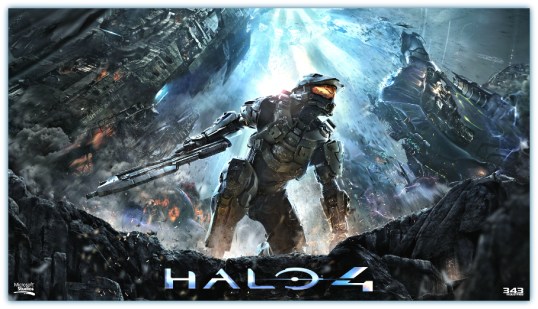
“Never Forget (Midnight Version)” is the reimagining of the classic song from both Halo 2 and Halo 3 by the franchises original composer Martin O’Donnell. This time 343 Industries in-house composer, Kazuma Jinnouchi takes the “Never Forget” song Halo fans have come to love and gives it new life and adding some minor touches to make it fit the bittersweet end to the very emotional ending to Halo 4.
There’s a bit more electronic instrumentation to Jinnouchi’s reimagining and the nice touch of putting some extra emphasis on the brass section of the orchestra to give the song a martial feel to it.
I love O’Donnell’s version, but after hearing this reimiaging by Kazuma Jinnouchi I do believe that it’s the best version out there, IMHO.
Decade of last.fm scrobbling countdown:
45. 東野美紀 (Miki Higashino) (705 plays)
Top track (31 plays): Beautiful Golden City, from Suikoden (1995)
Ms. Higashino is the first of a handful of video game music composers to have risen through my ranks over the years, thanks almost entirely to her beautiful contributions to the soundtracks of Genso Suikoden I and II. (Funny, I would rank Suikoden II in a three way tie for my favorite video game ever, and all three relevant composers made it onto the charts.) Her discography is small but compelling, showcasing an appreciation for traditional Asian and European folk music that rarely surfaces with such force among her contemporaries. Paying special attention to Japanese and Irish folk in particular, she managed to imbue the first two Suikoden titles with a lively earthiness ideal for an unprecedented model of gameplay made possible by the Playstation. The Suikoden games eschewed fantasy in the raw for an appeal to political and military strife in which the hero moves from town to town gathering an army and waging war along grey lines, the quintessential naivete of the RPG hero being frequently exploited to generate scenarios in which the moral high ground stood open to debate. If the main plots centered around those characters most aware of war’s many faces, the hero and the bulk of his officers–108 recruitable characters in all–were simple folk, fighting for personal reasons without a grasp of the big picture. Miki Higashino’s success in the Suikoden soundtracks rested in her ability to score appropriate music for the simple majority–those characters with deep ties to the land, who lacked a grand vision and swallowed whole the political propaganda which cast their homes and country in jeopardy. Songs like Beautiful Golden City capture what the majority of the Suikoden cast fought to preserve.
Higashino has a long history in the video game music industry in spite of her short list of works. She composed her first two soundtracks–Gradius and Yie Ar Kung-Fu–in 1985, at the surprisingly young age of 17. Yie Ar Kung-Fu in particular reveals that Higashino bore an appreciation for folk music from the very beginning of her career. I’ll leave you with the NES version of this remarkably early score.
HBO’s fantasy drama series, Game of Thrones, has gained the reputation of having the penultimate episode of the season (episode 9) play out a shocking event or moment that non-reader fans were not expecting. For fans of the show who have read the books the surprise is not as shocking but still worth the wait to finally see on the screen. Season 3 of the show looks to have shocked both types of fans.
In honor of the penultimate episode of Game of Thrones third season I’ve chosen the song which will forever go down in pop-culture history as the song that ushered in the “Red Wedding” to the tv landscape. It’s finally turned the series from must-see TV into one of those rare few shows that’s become an event that everyone will speak of for days, weeks, months and even years to come.
The Rains of Castamere
And who are you, the proud lord said, that I must bow so low? Only a cat of a different coat, that’s all the truth I know. In a coat of gold or a coat of red, a lion still has claws, And mine are long and sharp, my lord, as long and sharp as yours.
And so he spoke, and so he spoke, that lord of Castamere, But now the rains weep o’er his hall, with no one there to hear. Yes now the rains weep o’er his hall, and not a soul to hear.
And so he spoke, and so he spoke, that lord of Castamere, But now the rains weep o’er his hall, with no one there to hear. Yes now the rains weep o’er his hall, and not a soul to hear.
Decade of last.fm scrobbling countdown:
46. Agalloch (653 plays)
Top track (147 plays): Odal (Demo), from The End Records Sampler: At the End of Infinity [Echoes & Thoughts of Wonder] (2002)
Featured track: Limbs, from Ashes Against the Grain (2006)
Throughout the first decade of this century, Agalloch stood at the forefront of some of the most progressive movements in metal. They were the product of a new generation of musicians exceptionally well informed on musical trends happening outside of their own genre. Citing such diverse influences as Katatonia, Ulver, and Godspeed You! Black Emperor, they endowed their first major release, Pale Folklore in 1999, with an entirely unique sound. Bleak neofolk guitar and piano merged with black metal as the two most dominant styles to paint a beautiful and desolate snowy landscape that demands the listener’s full attention from start to finish. The folk felt, to me at least, just as influenced by neofolk artists far beyond the metal spectrum like Current 93 and Death in June as by Ulver’s Kveldssanger.
The Mantle in 2002 took this diversity a step further, incorporating post-rock proper as a central structural theme for most of the album. But it was Ashes Against the Grain, in 2006, that really solidified their place as one of the most significant metal bands of the era. It got back to the heavier influences that The Mantle had left behind, offering a seamless fusion of folk, post-rock, and metal that would inspire dozens of bands in the years to follow. As a band first born of black metal, their developed sound helped pave the way for a new era in experimental bm that broke the restraints of the 1990s. These restraints, of course, had long been shattered by Ulver, with Enslaved and ex-Emperor frontman Ihsahn following close behind, but these artists’ credentials as legendary musicians were well established while formulaic black metal was still the norm. Agalloch, alongside Alcest, appeared to me as the next generation, born into a much broader gene pool of music and taking full advantage of their situations. As the seven years since Ashes Against the Grain have shown, progressive and post-black metal was the new wave–and perhaps one of the most outstanding waves in the history of metal in general. I can’t tell you whether Agalloch directly influenced the bands that followed them or not, but their open-minded ability to appreciate black metal for its unique sensory qualities without giving in to the corpse-paint drenched exclusiveness of its accompanying culture drastically expanded the genre’s exposure.
I would say today that Pale Folklore is my favorite Agalloch album, though Ashes struck me the most when I first heard it. The version of the song I’ve played the most in Agalloch’s library though does not appear on any of their albums. It was the first track I ever heard by the band–an edited pre-release version of Odal from The Mantle that The End Records had featured on a free sampler cd. The song is not appreciably different from its studio album variant, but it cuts out sizable chunks of the intro and outro to create a much more repeatable track. Odal immediately struck me as deliciously similar in atmosphere to Matt Uelmen’s Tristram from the Diablo series, and I am often inclined to put the two on repeat together. I’ll leave you with a video of the finalized cd version of the song:
I posted just recently a new anime that people should be watching. I mean watching like this very moment if they find a copy of it. The anime I speak of is Ookami Kodomo Ame to Yuki(or known to those of us who don’t speak Japanese as Wolf Children Ame and Yuki). It’s from this anime that the latest “AMV of the Day” comes from.
Over this past weekend was the annual anime and otaku gathering in the Northeast called Anime Boston. Site writer pantsukudasai56 attended the con and had himself a King of a time. As part of the yearly con ritual would be the viewings of AMV nominees and the announcement of which videos won which categories at the con’s closing ceremony. This year one particular AMV caught the attention of pretty much every attendee who saw the video. It won in the Best Drama and Editor’s Choice category. Just watching the video I can see why it won in these two categories and was surprised it didn’t win Best in Show as well.
“Fidelity” was created by AMV editor Xophilarus and pretty much does a great job of emphasizing the dramatic aspects of the anime. It’s not difficult to do so since this anime is quite the tearjerker. What really puts the video into great level is the song choice. “King” by Laura Aquilina is such a beautiful song and fits very well with this anime. I could describe in more detail why this song fits this anime perfectly, but it’s better to just watch it and try and keep the waterworks from leaking.
Anime:Wolf Children Ame and Yuki (Ookami Kodomo Ame to Yuki)
Decade of last.fm scrobbling countdown:
47. Explosions in the Sky (647 plays)
Top track (93 plays): Memorial, from The Earth is Not a Cold Dead Place (2003)
Featured track: Your Hand in Mine, from The Earth is Not a Cold Dead Place (2003)
f#a#oo and Ágætis Byrjun might constitute my first introductions into the diverse world of sound we generalize as post-rock, but Godspeed You! Black Emperor and Sigur Rós both forged unique paths that few if any bands have successfully replicated. When I think of the quintessential sound I associate with the genre, it’s Explosions in the Sky and Mono that first come to mind. (And Isis, for the genre’s metal variant.) I don’t know that any band has so successfully perfected the build-up to explosion formula without ever delving into metal as these guys. (The featured track here accomplishes this in a particularly subtle manner.)
While Memorial is my most played track, I don’t consider it my favorite. That title more rightly belongs to Your Hand in Mine. Their level of quality is so consistent though that nearly any track could have incidentally topped my play chart. Another thing I’ve always found so compelling about these guys is their knack for appropriate titles. This extends beyond a band name that perfectly captures their sound and the most pleasantly optimistic album title I have ever encountered. (The Earth is Not a Cold Dead Place) Their track titles casually reach for the stars, predicting an overload of emotion and imagery that the songs themselves never fail to deliver. It’s amazing how much “A Poor Man’s Memory” and “First Breath After Coma” are enhanced by four simple words. “The Birth and Death of Day” practically names itself. More than any band I have encountered save perhaps Krallice, Explosions in the Sky have mastered the art of employing language as a descriptive subtitle to the thoughts and experiences they directly express through sound. The absurdity of this for Explosions is that they achieve it while remaining an exclusively instrumental band.


 Through the Shattered Lens