For completions sake, here is the other version of Young Turks by Rod Stewart. This is the rooftop performance that, according to Wikipedia, was aired about one-third of the way through Dick Clark’s three-hour American Bandstand 30th Anniversary Special Episode on October 30th, 1981.
You can see the part of the episode with the performance by Stewart below, which includes an introduction by Dick Clark.
It was practically a given that I was going be doing a Rick Astley music video today. I only considered doing Never Gonna Give You Up by Musical Youth for brief moment. That’ll have to wait for another day.
As you may or may not know, Rick Astley is making a comeback with his album called 50. The second single off of the album is for Angels On My Side. Oh, Rick. You sly devil. That also goes for everyone who worked on this video.
The video starts off, and we see that Rick Astley has been brought to a shipping yard to be executed by Guy Ritchie gangsters. But while they thought they were bringing Rick to a place of death, they were really taking him to a place of salvation. In other words, the gangsters have been rickrolled.
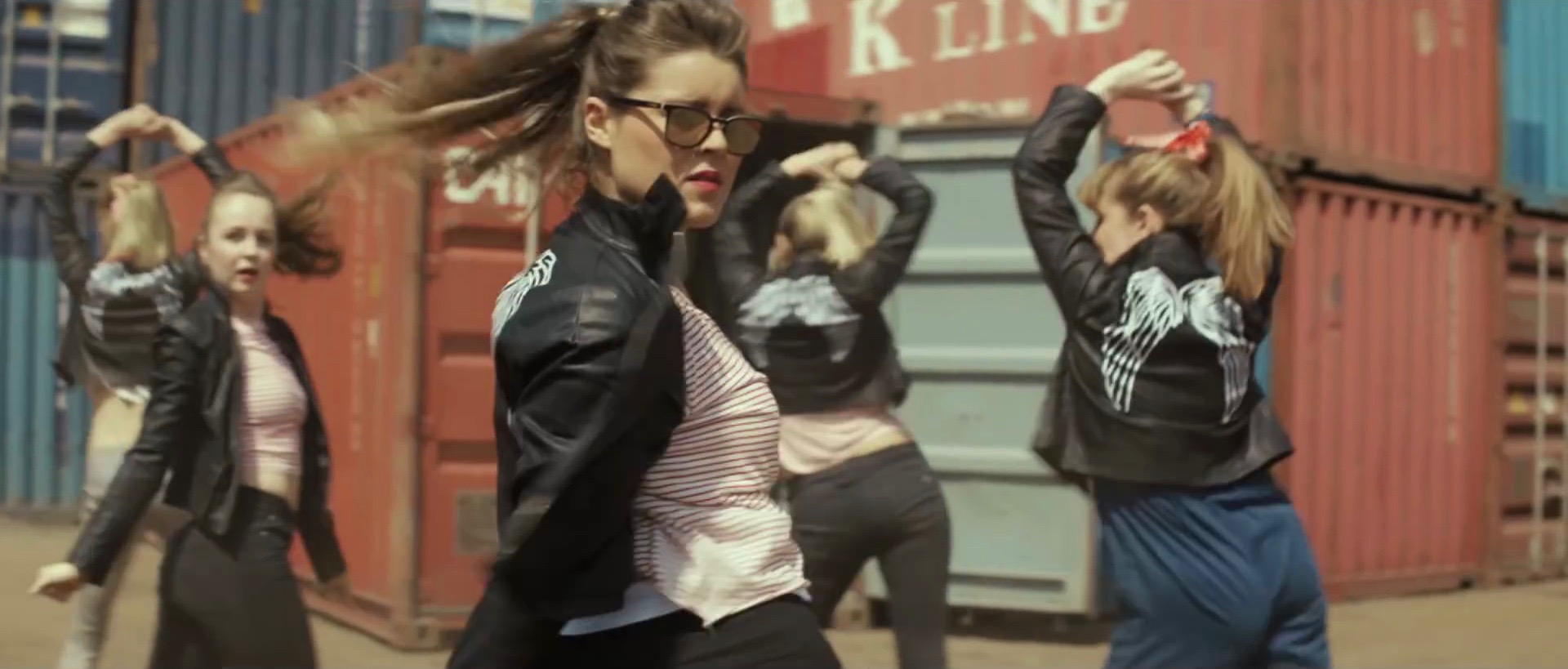
That salvation comes in the form of The Angels who emerge from a shipping container.
That’s when we find out what Rick has been up to behind-the-scenes all these years.
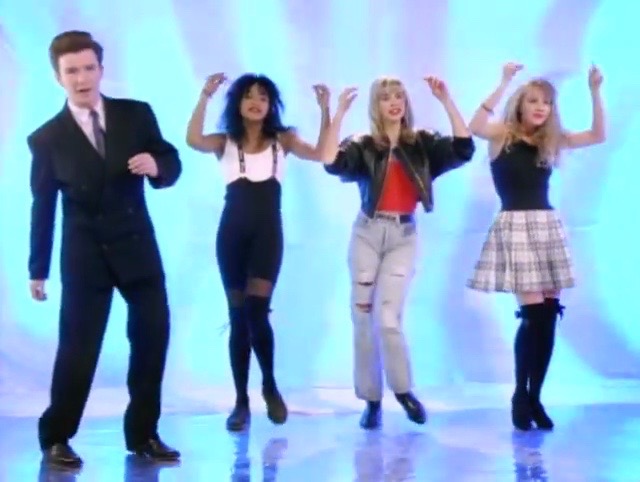
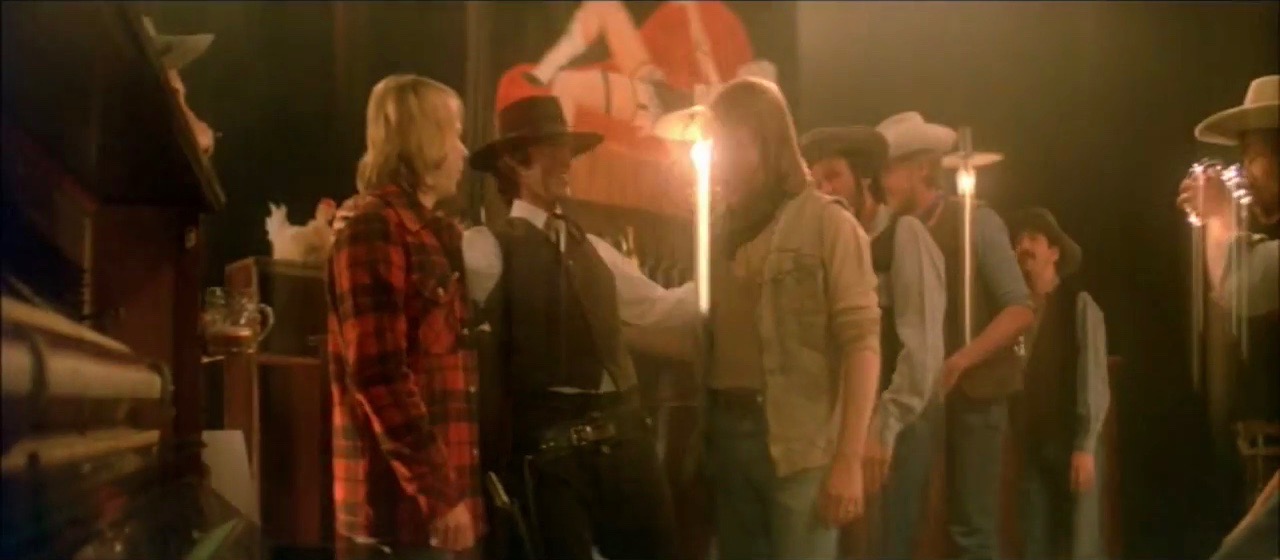
That’s right. Rick has successfully combined the backup dancers from Together Forever…
Together Forever by Rick Astley
with the T-Birds.
Grease (1978, dir. Randal Kleiser)
That, or director Michael Baldwin hired dance troupe Sparkle Motion, and Marianne Machin choreographed them. However, the connections between this, Together Forever, and Grease (1978) were clearly intentional.
The most obvious is that The Angels are with Rick forever–being angels and all.
There’s the kiss.
Together Forever by Rick Astley
When you watch both videos, you’ll notice that she and Rick raise their eyebrows when they are kissed. In his case, they snuck up on him. In her case, she points to her cheek where she expects a kiss.
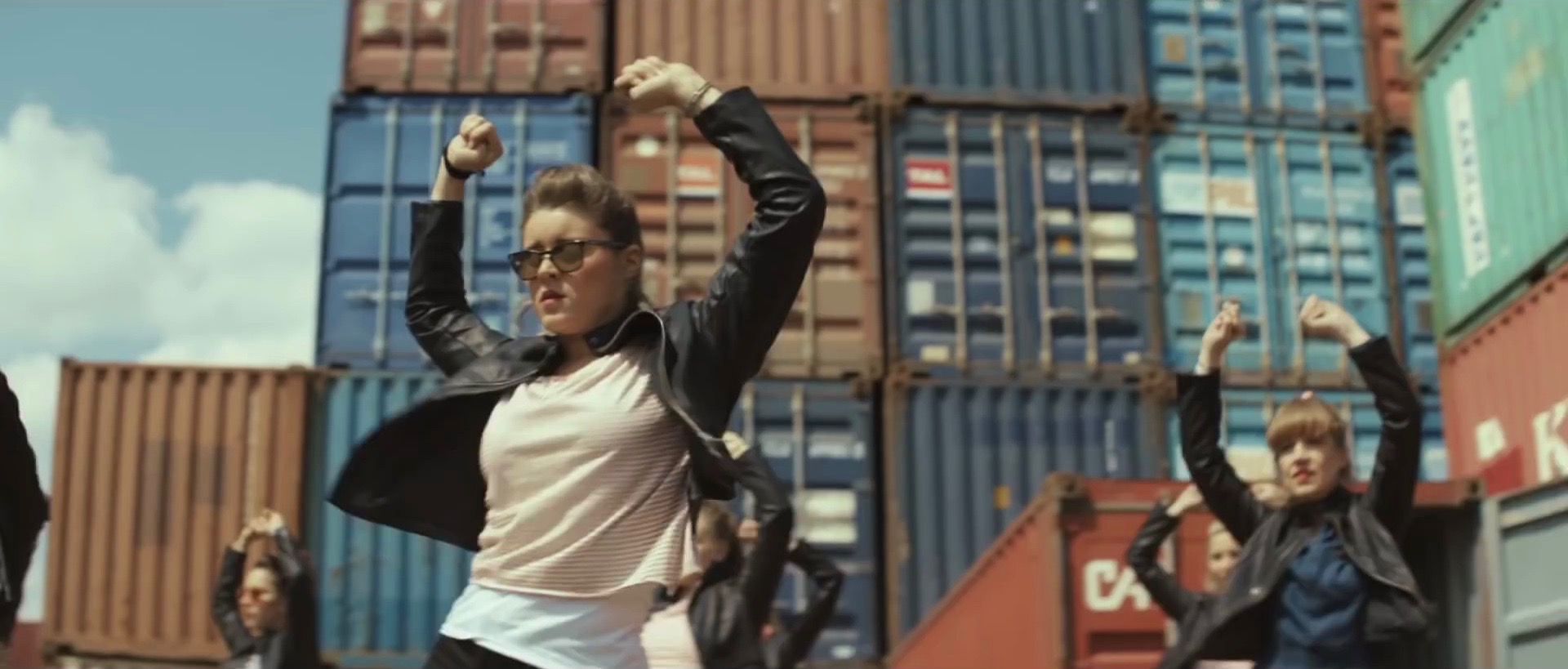
In the dancing you can see everything tied together when The Angles do this:
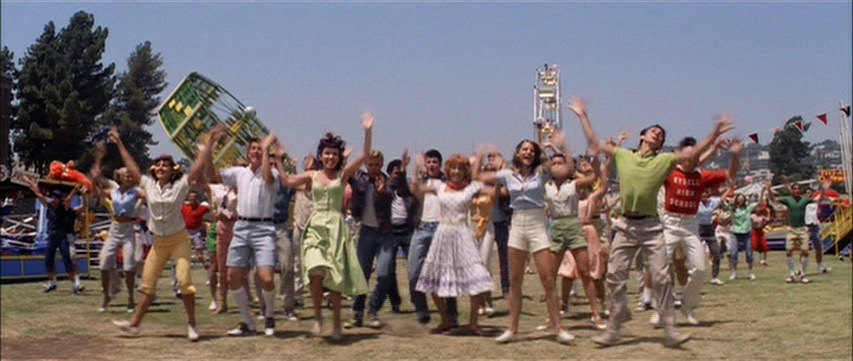
It would just be a standard dance move, but they happen to do the same thing at the end of Grease when they are singing We Go Together.
Grease (1978, dir. Randal Kleiser)
This is one of the few music videos I’ve ever seen that has credits at the end.
I would say “proper credits”, but I don’t see one for Rick Astley’s car in there. No really, that’s his actual car. Thanks to Michael Baldwin over on Promo News, we get several bits of behind-the-scenes information.
“One utterly remote dusty location, seven kooky dancers, two dangerous actors, several cold pizzas, no easy toilet access and looming sunstroke. That’s the glamour of music videos in 2016.”
“Despite the odds, it was a brilliant day and Rick was an absolute delight. We even used his car as a prop, which was completely covered in dirt by the time we all waved him off at the end of the day. I’d worked with the dancers, Sparkle Motion, before but always wanted to make something that featured them a lot more. And along came this perfect opportunity. Damn, I love those girls and Marianne, who came up with the routine, is an absolute legend. A real angel, even….”
They didn’t stop with the actual music video when it came to being clever. Take a look at the behind-the-scenes video below because you will see Rick get rickrolled by his own song while trying to talk about the video, and they never cut back to him to finish explaining it.
We do find out, before Rick is interrupted by Rick, that this was shot in Essex, UK.
There’s one last thing to notice. As Rick is walking away from the scene, The Angles pop in and out as the camera cuts.
I don’t know if that was intentional or not. It could have been since The Angels are otherwise invisible. Given when they are shown, I’m leaning towards that it was done on purpose.
At first, I honestly thought this was another version of Fernando. It’s actually the Spanish version of I Have A Dream. I can find music videos for Connie Talbot’s cover version and Westlife’s cover version, but not ABBA’s English version. There is a listing for it. I just can’t track it down right now. The best I can find is a live version. Maybe that’s why this is up on ABBA’s official VEVO channel. It’s better than not having any version available.
I thought this was a Spanish version of Fernando because the video is basically the same. You have the group sitting around in an intimate setting singing a low-key song. How I mistook the song itself, I have no idea. Since I can’t find an English version, I have no basis for comparison between the two videos. Still, I think this is exactly how I would want that version to look as well. The song lends itself well to something that is stripped down and involves nothing fancy.
There is a little bit of a complex story leading up to why I chose to do this music video, so let me try and walk you through it. I wanted to do Oh Sherrie by Steve Perry. I went to my trusty source of background on the first ten years of MTV–I Want My MTV by Craig Marks and Rob Tannenbaum. I figured there might be some background as to why Oh Sherrie is such a great early example of the early anti-video. I certainly found that information in the form of “discussion” about the music video for Separate Ways (Worlds Apart). In particular, Adam Rubin–after going on a rant involving calling for the execution of the director of the video and the band’s manager–said, “But this is my point, there really wasn’t a music-video aesthetic yet.” Really? I read that, and I wanted to started laughing. That’s right up there with people saying The Jazz Singer (1927) was the first sound film. Maybe if he had said there wasn’t an established way to make videos for any artist, rather than the select few who were onboard with making them prior to 1983 like ABBA; Bee Gees; Earth, Wind & Fire; Funkadelic; Van Halen; Rainbow; Judas Priest; and many more, then I could buy it. However, let’s have some fun at his expense by doing as many music videos prior to 1983 that I can find to continue to break up the ABBA retrospective so that it is not everyday.
Up to this video, we have already covered 75 pre-1983 music videos. These are videos such as the many beautifully constructed ABBA music videos of all types (which you’ll find a lot of Separate Ways comprised of), the stage performances of Meat Loaf and Van Halen, the special effects laden video for Let’s Groove by Earth, Wind & Fire, the video filled with visual tie-ins to the the title for Goody Two Shoes by Adam Ant, Run To Hills by Iron Maiden that broke un otherwise static stage performance video with relevant stock footage, the metaphor-laden Pressure by Billy Joel, and many more. Oh, and that little video for Rio by Duran Duran that went under everyone’s radar, which is why even early Def Leppard was shot like they were Duran Duran. I would include Michael Anthony as a samurai in Oh, Pretty Woman, but I haven’t done that video yet.
With that in mind, here is Young Turks by Rod Stewart, brought to us by the infamous Russell Mulcahy. As far as MTV goes, Rod Stewart was an early darling of there’s. He came prepackaged with so many music videos that he dominated the first day of MTV. The stories about him in I Want My MTV range from crazy dinners to stumbling upon jars of cocaine in his home. It’s interesting, but would you expect anything less from Rod Stewart. It’s not exactly shocking as it is, “That’s my Stewart!”
This song is probably burned into the memories of most people around my age (33). It was included on the Grand Theft Auto: San Andreas soundtrack. For whatever reason, this song would play again and again every time I had to repeat a mission that involved flying a plane. I don’t recall why I kept failing or what it kept playing this song instead of another; I just remember this song playing on an endless loop. However, it is a good song. Hearing it as many times as I did, didn’t change that fact.
Young Turks is a slang term referring to rebellious youth. According to the description on the YouTube video, this was the first video to feature break dancing.
I know I say it a lot, but it is a simple video. Two young lovers encounter dancers choreographed by Kenny Ortega and they are lead to Rod Stewart who is having a concert on a slab of concrete. In between, we get cuts to the young lovers trying to make it on their own. The restaurant that Billy emerges from is the Licha’s Santa Fe Girll at the northeast corner of 7th and Santa Fe streets in Los Angeles. The Hotel Hayward also shows up in the video. One of the things that sticks out at me the most in the video is the use of the split screen.
You may or may not recognize Patti who was played by Elizabeth Dailey. She has down mostly voice-work, but has appeared in numerous films over the years. She’s probably best-known for playing Dottie in Pee-wee’s Big Adventure (1985). But that’s only one of 185 acting credits.
Dale Pauley played by Billy. I couldn’t find any information about him except a shot of him kissing Holly Penfield. That’s it.
There is a second music video for this that is bland stage performance that Wikipedia says was aired one-third of the way through Dick Clark’s three-hour American Bandstand 30th Anniversary Special Episode on October 30th, 1981.
I’ll probably do that one in a couple of days, just so you can contrast the two.
Paul Flattery produced the video who we’ve already talked about.
Peter Lippman was the production manager who we’ve also already talked about.
They are prolific as both directors and producers.
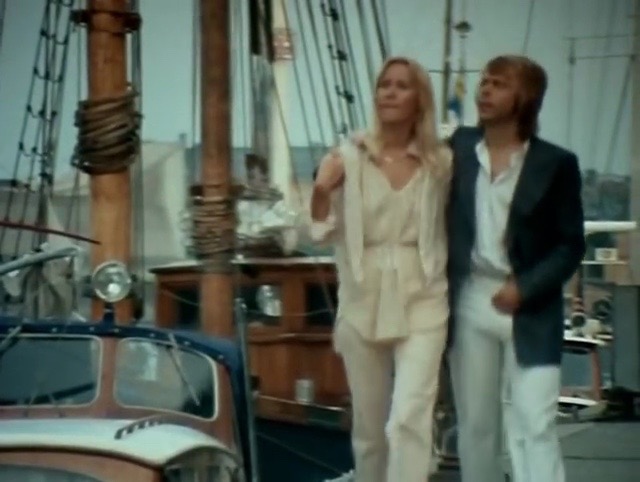
This song was written by Benny and Björn as a tribute to their hometown of Stockholm. The video feels like a combination of elements from Tiger and Dancing Queen. By that, I mean the dancing parts combined with location shooting. We also get the usual singing head-shots, and the synchronized walking and posing, but it’s Tiger and Dancing Queen that immediately came to mind when I watched this video.
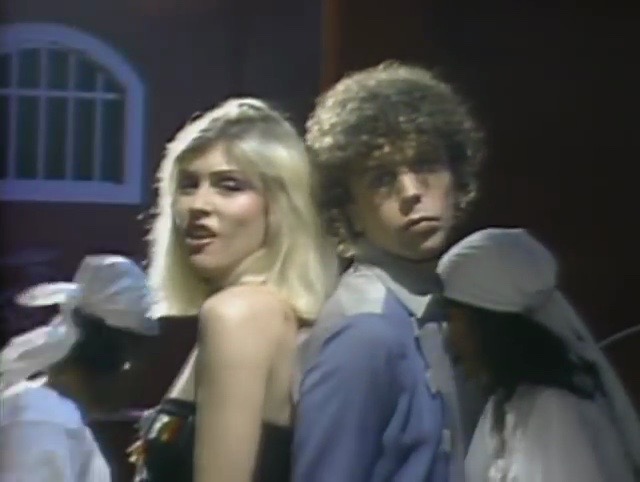
There are two things in this music video that look familiar to me.
Rapture by Blondie
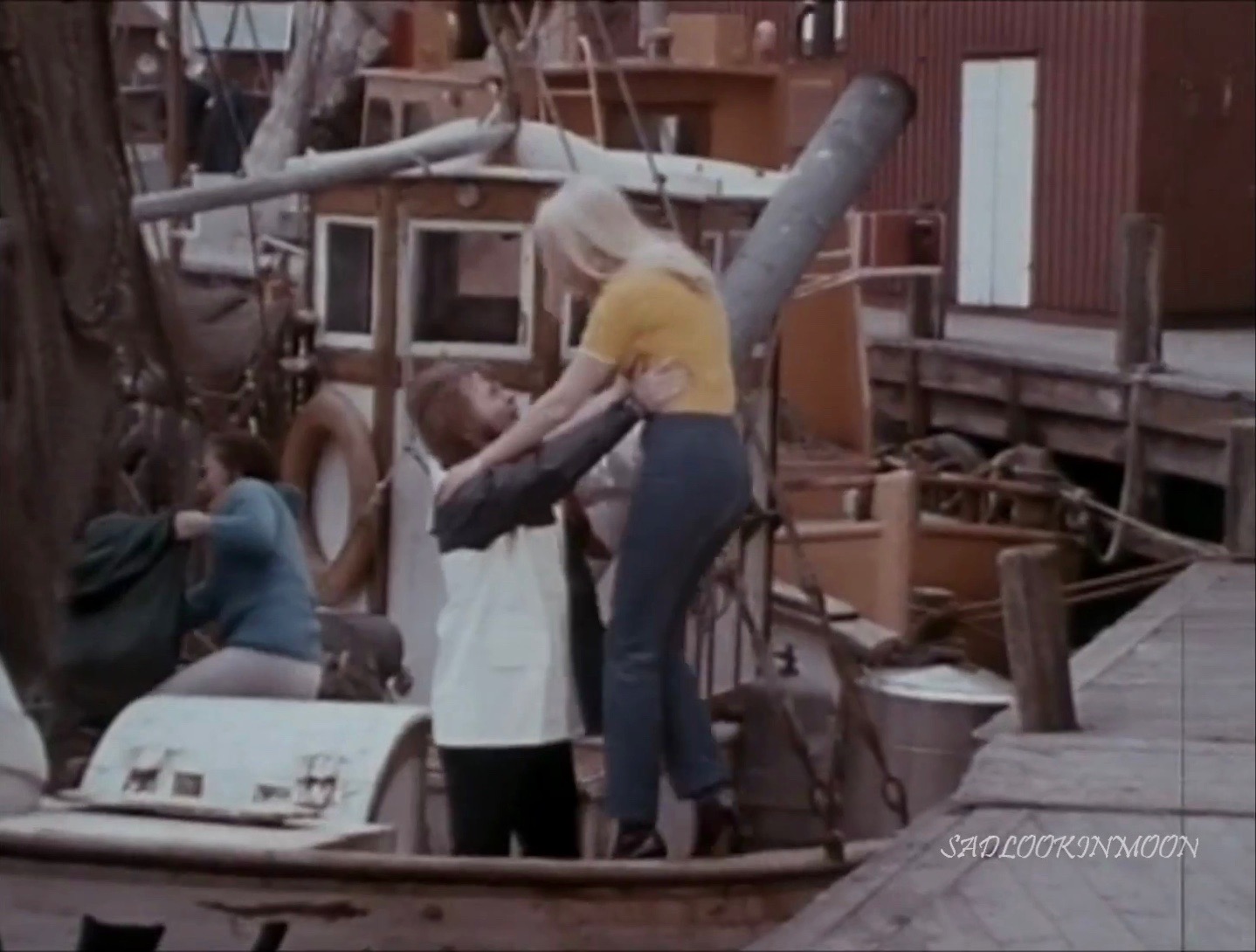
Also, it would appear that Hallström wanted to stick a little reference to an early Agnetha and Björn music video.
Titta in i men lilla kajuta by Björn
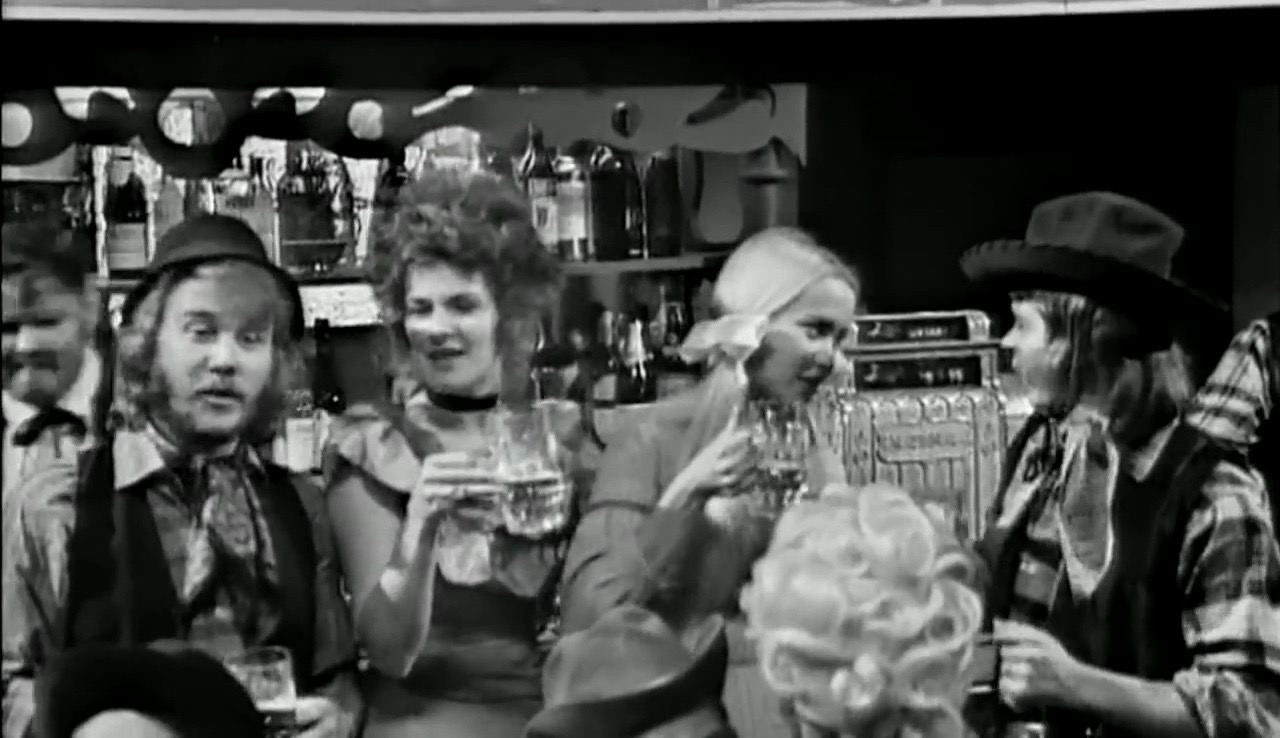
That second one was from 1969, which would make it about 10 years between the two. That music video is from the TV Special where they first met. It may seem like a bit of stretch, but there is this that says otherwise:
California Here I Come by ABBA (1970)
ABBA: The Movie (1977)
During ABBA: The Movie (1977), Hallström dreamt he was on the set of a 1970 TV Special where ABBA once performed. With that in mind, I’d bet he did mean to reference that music video.
The only other thing that I think is of note is the ending. I’m not sure why there are 16 seconds of silence as the camera pans around to the car. Maybe it’s to contrast with the opening shot of traffic at night. That’s my best guess.
It doesn’t matter how many times I watch this music video. The headbangers in front of the wall will always be funny to me.
According to Wikipedia, this was filmed in London during January of 1984. I’m not sure if that meant in a studio or not because if you look carefully at the left-hand side at the beginning, you’ll see what looks like car headlights going past. Maybe they did film this outside. That really is lead-singer Udo Dirkschneider riding the wrecking ball. Here’s a quote from him about it taken from Songfacts:
“It was very cold in London, near the airport,” Udo told us. “It was very cold, and especially when I had to step on this wrecking ball. That was something else. I said, ‘Please, no, I don’t want to do this!’ But in the end, I was young, so I said, ‘Okay, here we go.’ But it was freezing like hell.”
It would explain what looks like rain on the lens near the end of the video. There also appears to be wind since it does knock over something onstage and you can see their hair blowing to the right. It could be simulated, but given the quote from Dirkschneider, I’m not sure.
If you’re curious, and the video wasn’t clear about it, here is a quote from guitarist Wolf Hoffmann about the meaning of the song:
“We’ve always been interested in politics and in human rights and things like that, so a lot of the lyrics that we had in those days, and to the end actually, were dealing with human rights, for instance, and that’s really what ‘Balls To The Wall’ is all about. ‘One day the tortured will stand up and kick some ass!'”
In other words, it’s their version of We’re Not Gonna Take It by Twisted Sister. Makes sense that Julien Temple directed this video seeing as he also did Breaking The Law for Judas Priest. It would be fun to go through a retrospective of Julien Temple’s music videos. You wanna see him do ABC? You can. How about some Stray Cats? Yep! Dexy’s Midnight Runners? Absolutely. Sade? No problem. Kenny Rogers? Of course. Janet Jackson? Sure! It goes on and on. In the meantime, enjoy this video.
The 1980s are coming for ABBA. You can tell because Frida is beginning to transform into her Pat Benatar look.
At the same time, this video is ahead of the 1980s. It’s playing with the kind of effects I wouldn’t expect to see in music videos till the late-80s with Kevin Kerslake directed music videos, such as the one for Shadow Of A Doubt by Sonic Youth.
According to Wikipedia, the version above is the official music video for the song. However, assuming it is still up, there is another music video for the song that is within ABBA: The Movie (1977), which I have included below.
I prefer the one done for the single because it is more primitive.
Today would have been Leonard Nimoy’s birthday. I thought it would be fun to spotlight that other music video he did a little over 25 years prior to the one for Bruno Mars. The big question is why he did it. It’s simple. He was friends with the Hoffs. Susanna’s mom directed the video. It was produced by Matthew Hintlian.
That’s it. It’s a very simple video that is worth watching because you have The Bangles confusing and annoying Leonard Nimoy. I never thought I would be writing that sentence.
When I started out doing this retrospective, I wanted to get at least as far as this music video. Unfortunately, after 37 ABBA, and ABBA related music videos, I don’t have anything grand to say about it. Still, I can talk about some of the interesting aspects of it.
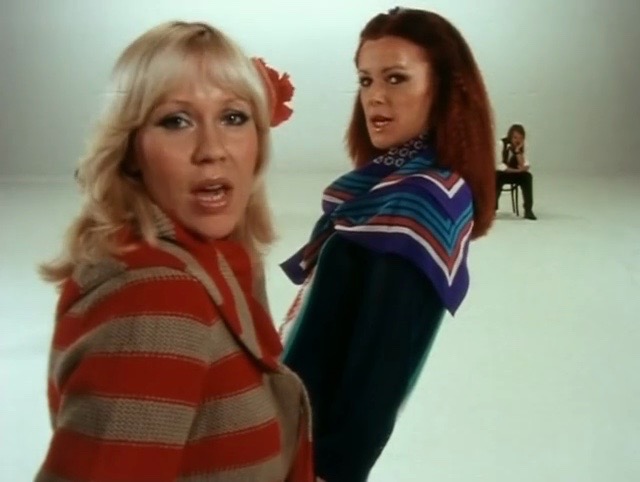
When you start it up, you are immediately greeted with The Brady Bunch split screen.
Note the crazy eyes on Frida. She does this several times during the video. Why? I don’t know. Why does she jump around at one point?
Maybe that’s jumping for joy.
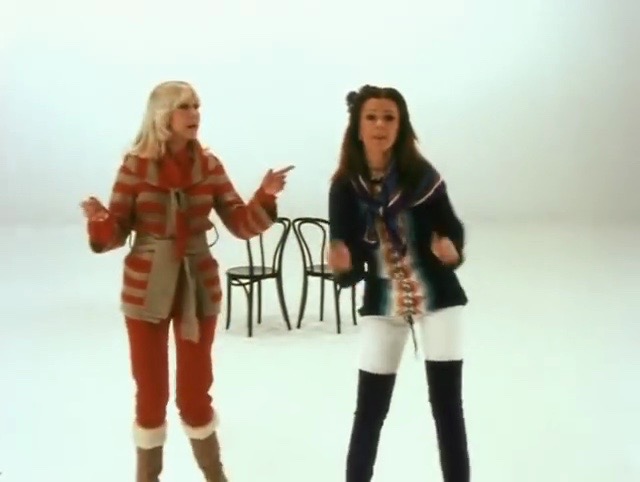
Take another look at the screenshot of the beginning of the video. Do you see how Agnetha and Frida aren’t doing the same thing? It’s a small detail, but an apt way to describe this music video is that it is all about details. You’ll notice that throughout the video, they are usually doing their own thing instead of carefully moving into certain positions. You still get some of that with shots like this one below.
But you get a lot of shots like this one below where they are doing different things.
While I’m bringing that up, take a look at this shot.
The mark to tell Agnetha and Frida where to stop is visible at Agnetha’s foot. Mistake? Maybe it is since you can also see that the far left has visible black area where the backdrop didn’t reach. You don’t see the mark again in the video. I like to think of it as something left in intentionally by Hallström.
The video is made up of a lot of elements from previous music videos, but there are little changes. The jump cuts are the most obvious. In general, the editing in this video is much more like what you would expect from music videos that would arrive with the birth of MTV.
Another interesting one is changing up the singing head-shot of Agnetha. We get the standard one early on that we are familiar with from videos like SOS. Then it is followed with one where we get Agnetha sweeping upwards from the lower right-hand corner of the screen to do her bit before swinging her head backwards to reveal that spotlight we saw in Money, Money, Money.
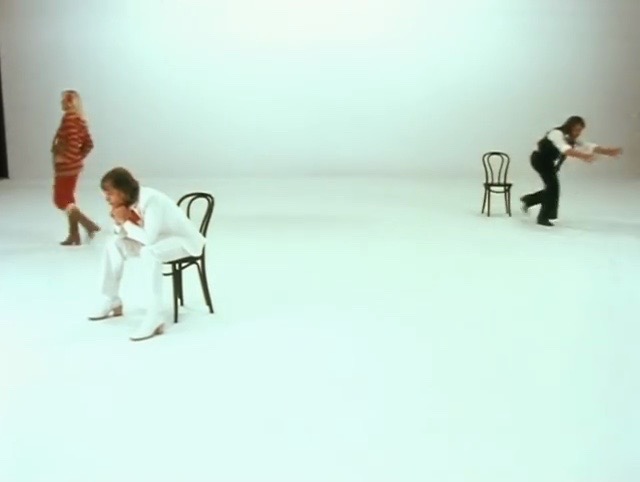
One of my favorite things is when Benny springs up from his seat to chase after Frida.
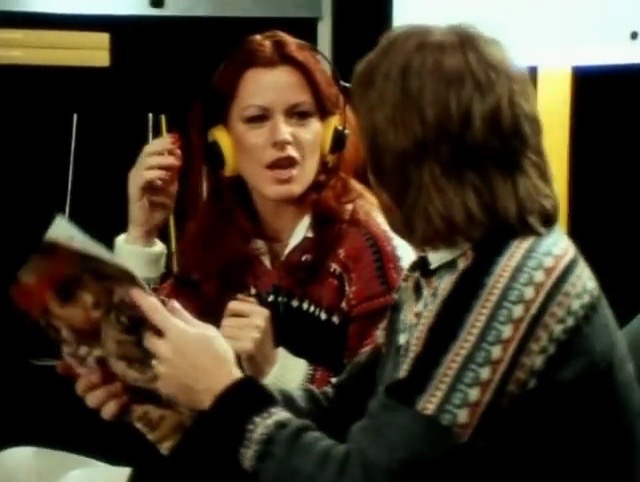
Another thing about the video is that we get a little cutaway to a part where Frida is listening to music while Benny reads a magazine.
Its inclusion ties together a lot of the elements the audience would be familiar with from other ABBA music videos.
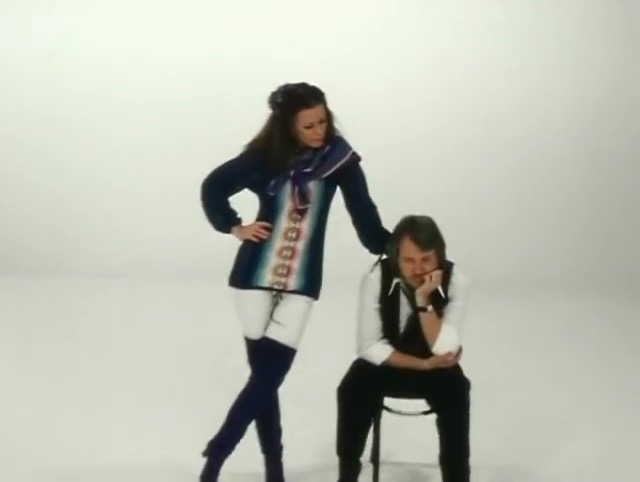
Something that isn’t familiar are the the camera movements. You can see the camera move in quickly to follow Frida to Benny sitting on a chair.
You also get shots where the camera moves upwards, and visa versa. It’s interesting how it will come down to, and move towards either Agnetha or Frida. This also happens the other way around as it returns to a shot of both of them.
The last thing I want to bring up is that you’ll notice that there are numerous times Agnetha turns around, or comes close to doing so. The video ends with the back of her head. I love it.
I think that’s it. Enjoy this landmark music video!
What is with some music videos not letting the thumbnail go through to an embed? You can see a less complete, but better looking version below that does display its thumbnail. They are both here at the time I am writing this, which is the day before this post goes live.
Okay, I think I can make this have to do with my current ABBA retrospective and tie in with Power Rangers (2017).
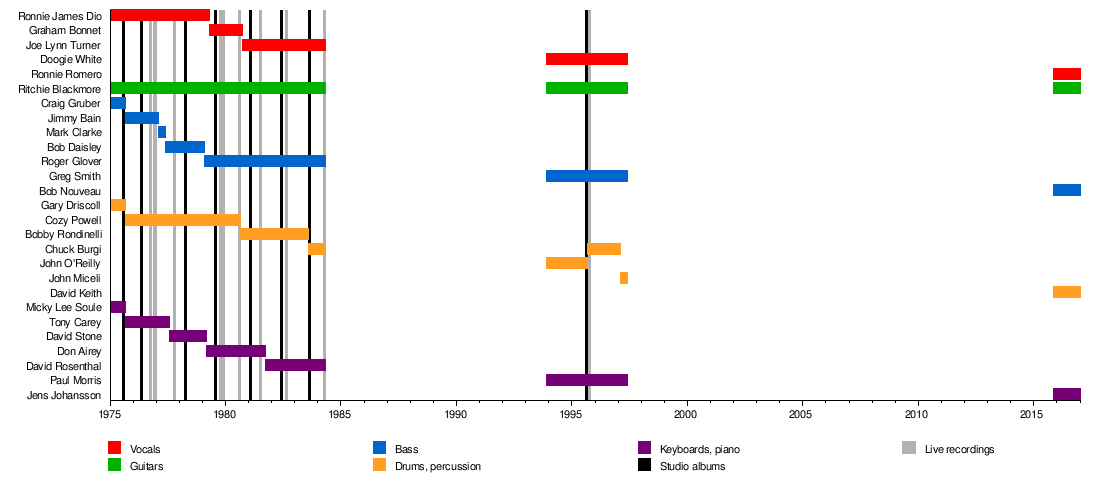
The first is obvious. I know next to nothing about Mighty Morphin Power Rangers except that they are multi-colored. Thus, Rainbow. Much like Power Rangers, the group has gone through so many different people that someone on Wikipedia put this chart together.
Second, this song was originally written by Argent guitarist Russ Ballard. You can hear his version below.
Russ Ballard would go on to write I Know There’s Something Going On for Frida and Can’t Shake Loose for Agnetha. That’s the ABBA connection.
The director of Power Rangers is Dean Israelite who was born in Johannesburg, South Africa. After the Russ Ballard version, Since You’ve Been Gone was covered by South African band Clout. You can hear two versions from them below. One appears to be the original, and the other for a more recent album.
It shouldn’t come as much of a surprise that lead-singer Cindy Alter was also born in Johannesburg.
There are my connections to ABBA and the new Power Rangers movie. But there’s other interesting information about the song and music video.
The song would also go on to be covered by Cherie and Marie Currie.
I like this version because they turned it into a duet. It’s tough to beat Graham Bonnet’s vocals on Rainbow’s version, so I like their different take on it. Brian May of Queen would also cover it later with his own band.
The director of the video is Ken Walz. He did most of his work in music videos as a producer. Notably, he produced Girls Just Wanna Have Fun and Time After Time by Cyndi Lauper. Both of them were directed by Edd Griles who also directed several music videos for Rainbow. Ken Walz also directed I Know What Boys Like by The Waitresses, along with a few others.
I love connections.
My favorite connection via the song is that you can tie Black Sabbath to The Righteous Brothers via Rainbow covering it. Ronnie James Dio fronted Black Sabbath after Ozzy Osbourne. Rainbow’s original vocalist was Ronnie James Dio. The original version of this song was produced by Roger Glover. Clout covered Substitute by The Righteous Brothers and this song. Roger Glover was the bassist for Rainbow during this period.
My favorite connection via the music video is that you can tie Rainbow to Pierce Brosnan’s wife Keely Shaye Brosnan. This music video was directed by Ken Walz. Ken Walz produced The Heart Of Rock And Roll by Huey Lewis & The News. The music video for Stuck With You by Huey Lewis & The News starred Keely Shaye Brosnan.
Add the two together with TV, and you can even bring Black Sabbath together with the short-lived sitcom My Two Dads, since Cyndi Lauper had a reoccurring role on Mad About You and Paul Reiser was on both shows (Black Sabbath->Ronnie James Dio->Rainbow->Edd Griles->Cyndi Lauper->Mad About You->Paul Reiser->My Two Dads).










 Through the Shattered Lens