And too many crime films in my DVR, so it’s time for another housecleaning! This edition of “Cleaning Out the DVR” features bank robbers, thieves, murderers, and other assorted no-goodniks in films from the 30’s to the 70’s. Here we go:
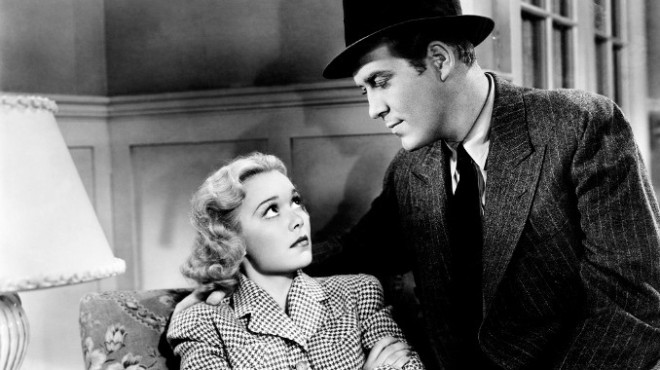
PRIVATE DETECTIVE (Warner Bros 1939; D: Noel Smith) Girl gumshoe Jane Wyman (named “Jinx”!) solves the murder of a divorced socialite embroiled in a child custody case, to the consternation of her cop fiancé Dick Foran. Maxie Rosenbloom plays his usual good-natured lug role as Foran’s partner. The kind of movie for which the term “programmer” was coined, furiously paced and clocking in at a swift 55 minutes. No wonder they talk so fast! Fun Fact: The Warner Brothers Stock Company is well represented with Familiar Faces Willie Best, Morgan Conway, Joseph Crehan, Gloria Dickson, John Eldredge, Leo Gorcey , John Ridgley, and Maris Wrixon all packed into it…
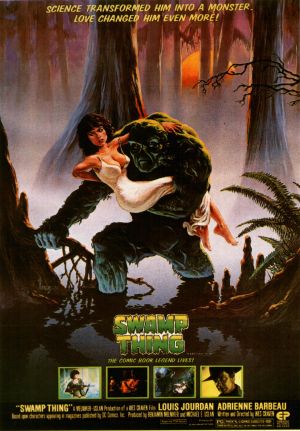
Ever since I decided that, while we are reviewing every episode of Twin Peaks, that every entry in Movie A Day would have a connection with the show, I knew that I would have to eventually review Swamp Thing. I didn’t want to because I hate Swamp Thing but, outside of his work as Leland Palmer, it is also Ray Wise’s most famous role. One of the good things about Twin Peaks is that it saved Ray Wise from being forever known as Swamp Thing.
Of course, Ray Wise does not really play Swamp Thing. He plays Alec Holland, the human scientist who is working on a formula that will allow animals and plants to thrive in extreme environments. When the evil Dr. Arcane (Louis Jourdan) sends his henchmen (including veteran bad guys David Hess and Nicholas Worth) to steal the formula, Alec gets set on fire and runs into the Louisiana bayou. When Alec emerges, he has become Swamp Thing, half-human and half-plant. He is also now played by Dick Durock. Swamp Thing must protect both bodacious Alice Cable (Adrienne Barbeau) and streetwise swamp kid Jude (Reggie Batts) while trying to prevent Arcane from using the formula to turn himself into a werewolf and conquer the world.
Despite the easily mocked name, Swamp Thing has often been one of the best characters in the DC universe. The movie does not being to do the character justice. At the time, Wes Craven was best known for movies like Last House on the Left and The Hills Have Eyes. Swamp Thing was an attempt to show that he could direct a big-budget, studio production. Unfortunately, Craven takes a deliberately campy approach to the material, to the extent that, if not for a handful of scenes like Swamp Thing crushing David Hess’s skull, Swamp Thing could have easily been directed by Joel Schumacher during his Batman years. Just the name Swamp Thing is campy enough. There’s no need to toss in Louis Jourdan turning into a werewolf. Fans of Adrienne Barbeau will do better to rewatch Escape from New York than sit through Swamp Thing.
Fortunately, for Ray Wise, Twin Peaks came along and saved him from forever being known as Swamp Thing.
Bill Parrish (James Lawless) is an honest, midwestern grocery store owner who admonishes one of his regular customers about her shoplifting habits. When she attempts to blame the devil, Bill reminds her that we all have a duty to resist the devil’s temptations. What Bill does not realize is that not only is the Devil (Paul Davies) listening in but he also looks like a member of the Bee Gees. The Devil gets offended and decides to tempt Bill with a trip to Las Vegas. The Devil gives Bill unlimited luck when it comes to placing his bets, something that gets Bill in trouble when he hits the jackpot on a slot machine that is specifically programmed to never pay off.
This month, I am reviewing films that have a Twin Peaks connection and that is the only reason why I am reviewing this low-budget oddity. In Satan’s Touch, the casino manager is played by Doctor Hayward himself, Warren Frost. What is interesting is that, for once, management is the hero. The manager does not hire a private detective to investigate Parrish out of spite or a desire for revenge. Instead, he is just worried that this man’s luck will cause Vegas to go bankrupt and put a lot of good people out of work.
Originally called Jackpot and made to play on the church circuit, the movie was retitled and released as a horror film in 1984. I rented a copy when I was 12 because there was a picture of an evil-looking woman with ample cleavage on the cover. As long as it has been since I saw the film, I do remember that she was nowhere in it. What I do remember is that Satan’s Touch was slow, not very interesting, and, whenever the Devil got bored, he would say, “I’m getting the Hell out of here.”
A few final notes about Warren Frost: Frost was married to the same woman from 1949 until his death earlier this year. He had three children, actress Lindsay Frost and writes Mark and Scott Frost. Mark, of course, co-created Twin Peaks while Scott also wrote for the show. If you don’t know Warren Frost from Twin Peaks, you probably know him as Mr. Ross on Seinfeld. On that show, his wife was played by his Twin Peaks co-star, Grace Zabriskie.
In 1964, having starred in several movies, including West Side Story, Richard Beymer put his acting career on hold and spent the summer in Mississippi, where he was one of several activists who worked to register blacks to vote and who taught at Freedom Schools. He brought a Bolex camera with him, filmed what he saw, and later edited that footage into a 30-minute documentary called A Regular Bouquet: Mississippi Summer.
Set to a soundtrack that is a mix of rock and roll and the blues, A Regular Bouquet is a heartfelt and often angry portrait of day-to-day life in the Jim Crow era. Over footage of black women and children working in a cotton field, a woman explains how, every year, she picks more cotton and gets paid less money for her work. There is positive and hopeful footage of young black children learning at a Freedom School but, at the same time, the murders of James Chaney, Andrew Goodman, and Michael Schwerner hang over the documentary. One of the documentary’s most strongest moments is a montage of still photographs that illustrate how far the authorities were willing to go to try to stop the civil right movement from reaching Mississippi.
A Regular Bouquet is available on YouTube. If some of the footage looks familiar, that is because it has regularly been reused in other documentaries about the civil rights movement. If you only know Richard Beymer as the evil Ben Horne on Twin Peaks, A Regular Bouquet is an eye-opening movie.
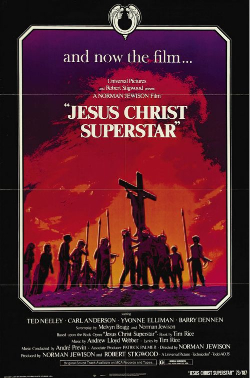
The 1973 film, Jesus Christ Superstar, opens with a desert in Israel. All is still. All is quiet. Suddenly, we see a cloud of dust in the distance. A bus is speeding through the desert and the music on the soundtrack explodes with a sudden urgency.
The bus comes to a stop and we notice that there’s a big cross tied to the top of it. The doors open and suddenly — oh my God, it’s hundreds of hippies! American hippies In Israel! They’re climbing off the bus, one after another. Some of them are being tossed sub machine guns. Another gets a whip. One of them puts on a purple robe and looks like he is slightly disturbed. Others are dressed in black. Makeup is applied. Everyone’s having a great time. One heavy-set fellow, with frizzy hair, climbs to the top of the bus and sits down on a throne. He watches as everyone else pulls down the cross. One long-haired man, who was never seen leaving the bus, is suddenly among the hippies. He’s dressed in white and everyone is suddenly bowing before him.
Well, almost everyone. One of the bus’s passengers, a serious-looking man (Carl Anderson), has walked away from the hippies. From a safe distance, he looks back at them and he seems to be as confused by all of this as we are.
Why is everyone in the desert? That’s relatively easy to explain. They’re performing a Passion Play. Carl Anderson is playing Judas. The man in white is Ted Neeley. Whether he is meant to be an actor playing Jesus or Jesus himself is a question that the movie leaves for you to decide. We never see him get off the bus and, perhaps more importantly, we don’t see him get on the bus at the end.
(Just you watch. I’ll mention that Jesus gets crucified at the end of this movie and someone will pop up in the comments and say, “How about a spoiler alert?”)
Hmmm…religion and hippies. Those are two things that, in the past, I have definitely had issues with. In fact, you would totally be justified in assuming that I would hate Jesus Christ Superstar. And yet, I don’t. I actually rather like it.
True, there are some things that make me cringe. The sound of all the disciples singing, “What’s the buzz, tell me what’s a happening?” always makes me shudder and say, “Oh my God, this is so 1973!” A scene where Judas suddenly finds himself being chased through the desert by a modern tank is just a bit too on-the-nose. Finally, I understand that Ted Neeley’s stage performance as Jesus is highly acclaimed but, to me, his performance in this film will always be known as the Screaming Jesus. Too often, it’s obvious that Neeley is still performing as if he’s on stage and has to project to the back row. It’s interesting to compare him to Carl Anderson, who also played Judas on stage but who, in the movie, gives a performance that is powerful specifically because it’s a cinematic performance, as opposed to a stage performance.
But, even with all that in mind, there’s so much about this movie that works. Based on the rock opera by Tim Rice and Andrew Lloyd Webber, Jesus Christ Superstar is definitely a product of its time, serving as a time machine for amateur historians like me. (Then again, I guess you could say that about any movie the opens with hippies driving a school bus across Israel.) Sometimes, the lyrics are a bit obvious but the songs still stick around in your head. And it’s not just Carl Anderson who gives a good performance. Yvonne Elliman, Josh Mostel, Bob Bingham, Larry Marshall, Barry Dennen — they all contribute strong work, both musically and otherwise.
And then there’s the big Simon Zealotes/Poor Jerusalem production number:
There’s several reasons I love this scene but mostly it just comes down to the fact that it captures the explosive energy that comes from watching a live performance. Larry Marshall (who plays Simon Zealotes) has one of the most fascinating faces that I’ve ever seen in a film and when he performs, he performs as if the fate of the entire world depends on it. As previously stated, I’ve never been sold on Ted Neely’s performance as Jesus but Carl Anderson burns with charisma in the role of Judas.
Mostly, however, I just love the choreography and watching the dancers. I guess that’s not that surprising considering just how important dance was (and still is, even if I’m now just dancing for fun) in my life but, to be honest, I’m probably one of the most hyper critical people out there when it comes to dance in film, regarding both the way that it’s often choreographed and usually filmed. But this scene is probably about as close to perfect in both regards as I’ve ever seen. It goes beyond the fact that the dancers obviously have a lot of energy and enthusiasm and that they all look good while dancing. The great thing about the choreography in this scene is that it all feels so spontaneous. There’s less emphasis on technical perfection and more emphasis on capturing emotion and thought through movement. What I love is that the number is choreographed to make it appear as if not all of the dancers in this scene are on the exact same beat. Some of them appear to come in a second or two late, which is something that would have made a lot of my former teachers and choreographers scream and curse because, far too often, people become so obsessed with technical perfection that they forget that passion is just as important as perfect technique. (I’m biased, of course, because I’ve always been more passionate than perfect.) The dancers in this scene have a lot of passion and it’s thrilling to watch.
Beyond that, there’s the insane burlesque of Josh Mostel’s performance as Herod and Barry Dennen’s neurotic interpretation of Pilate. There’s Yvonne Elliman’s performance of I Don’t Know How To Love Him. There’s that famous closing shot, a happy accident that was achieved when a shepherd just happened to wander past the camera.
And, of course, there’s this:
The performance above pretty much sums up the appeal of Jesus Christ Superstar. It’s both ludicrous and powerful at the same time.
I know there’s some debate as to whether Jesus Christ Superstar is sincere or sacrilegious. In college, there was this girl in my dorm who started the semester as a pagan, spent a month as an evangelical, and then ended the semester as a pagan again. When she was going through her evangelical phase, she would listen to the Jesus Christ Superstar soundtrack constantly. Seriously. 24 hours a day. 7 days a week. After three days, I was sick of hearing it. I found myself wondering if anyone had ever been driven to murder over having to listen to Heaven On Their Minds one too many times. Fortunately, something happened to cause her to once again lose her faith and she went back to listening to Fall Out Boy.
I don’t think that, as conceived by Rice and Lloyd Webber, Jesus Christ Superstar is in any way sacrilegious. At the same time, it does have a potentially subversive streak to it. This is especially true of the film version. At times, director Norman Jewison seems to be almost deliberately parodying the excesses of more conventional religious films. Instead of spending millions to recreate the ancient world, Jesus Christ Superstar uses ruins and desert. Instead of featuring ornate costumes, Jesus Christ Superstar features Roman soldiers who wear pink tank tops. Ultimately, Jesus Christ Superstar reveres Jesus but dismisses the conventions of both organized Christianity and epic filmmaking. Judah Ben-Hur would not have known what to do with himself if he wandered onto the set of Jesus Christ Superstar.
It’s over the top, silly, ludicrous, and ultimately rather powerful. Jesus Christ Superstar is a film that shouldn’t work and yet it does.
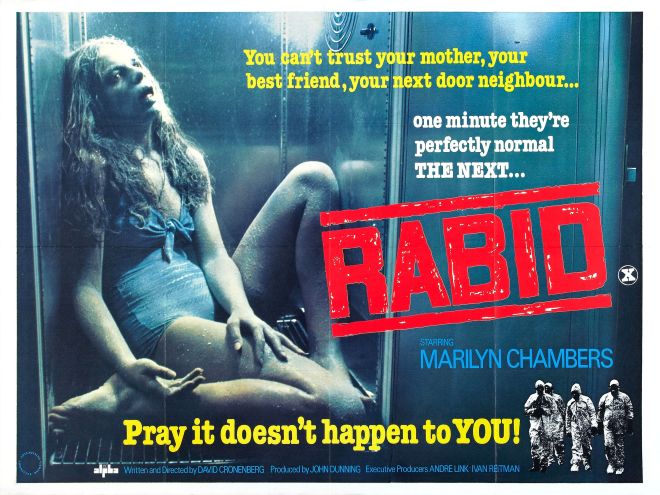
Once upon a time, there was a pretty young actress named Marilyn Chambers. She had a fresh, wholesome quality about her, and did some bits parts and modeling gigs. One was as the decent young mom holding her pride and joy baby on the box of Ivory Snow, the detergent that claimed it was 99 1/4% pure. But no acting jobs were forthcoming, so Marilyn found herself in a porn flick called BEHIND THE GREEN DOOR, which became a sensation…
… as did young Marilyn, though she longed to be taken as a serious actress in mainstream films.
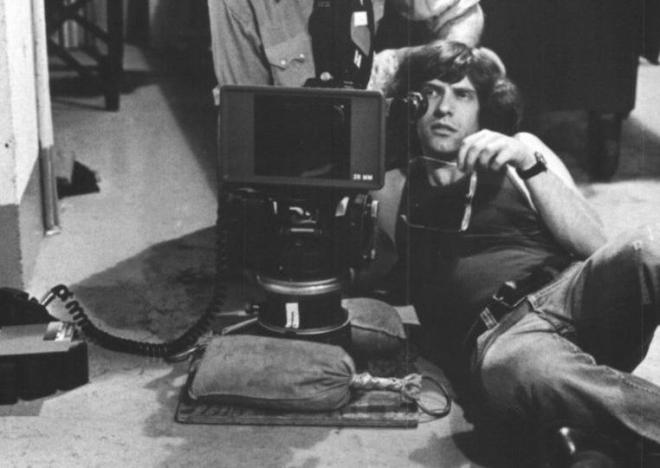
Around the same time, there was a young Canadian director named David Cronenberg. He was making a name for himself in the horror field with films like CRIMES OF THE FUTURE (1970) and SHIVERS (1975)…
… but though a few critics admired his work, most dismissed him as just another Grindhouse hack. For young…
Welcome to the future. To quote Leonard Cohen, it is murder.
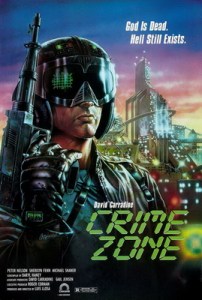
The police state of Soleil is engaged in perpetual war with the nation of Frodan. In Soleil, being rich means living a life of carefree decadence while the poor struggle to survive from day to day. Criminals are routinely executed on live TV and the government forces women to work as prostitutes, servicing only the rich and powerful. When Bone (Peter Nelson) and Helen (Sherilyn Fenn) meet, they break the law by falling in love. Desperate to escape to the legendary paradise of Frodan, Bone and Helen accept an offer from the mysterious Jason (David Carradine). If Bone and Helen agree to commit a series of crimes, Jason will help them escape Soleil. Bone and Helen soon become the two most wanted criminals in Soleil but Jason may not be what he seems.
David Carrdine’s performance is typically strange and Crime Zone has a few interesting ideas but the main reason to see the movie is because of the performance of a pre-Twin Peaks Sherilyn Fenn. As Helen, Sherilyn Fenn is sexy, tough, and always better than the material that she was given to work with.
Executive produced by Roger Corman, Crime Zone was an ambitious project that did not have the budget necessary to reach the heights of Blade Runner, Mad Max, A Clockwork Orange, or any of the other dystopian science fiction films that it tried to rip off. Crime Zone was filmed, on location, in Peru but that mostly for a budgetary reasons. Since almost the entire movie was shot on cramped and dark sound stages, it could have just as easily been filmed in West Baltimore. To its credit, Crime Zone has more on its mind than a lot of the movies that Corman executive produced in the 1980s but the main reason to see it will always be Sherilyn Fenn.
I grew up loving Mystery Science Theater 3000. Since my favorite was always Tom Servo, it never mattered to me whether Joel or Mike was the host. Even after the show went off the air, it was always nice to know that I could say, “How much Keeffe is in this movie?” and at least one person would know that the correct answer would always be “Miles O’Keeffe.”
When I first heard about the Kickstarter campaign to bring back Mystery Science Theater 3000, I was worried. As someone who owns all of the Rhino DVDs, along with The Mystery Science Theater 3000 Colossal Episode Guide and several VHS copies of the original broadcasts on both Comedy Central and SyFy, I was happy to see that there was still life in the show. At the same time, I was worried that a possibly inferior reboot might ruin some of my favorite childhood memories.
I just finished watching the first episode of the Netflix MST3K and there is no need for alarm or concern. My childhood will survive. While it wasn’t perfect, it was still more than good enough. It may not have ranked up with the classic episodes of MST3K but it’s at least as good as the one where Pearl forced Mike and the Bots to watch the Russian version of Hamlet.
Felicia Day and Patton Oswalt were great as the new Mads. I appreciated the return of the invention exchange and that the show still had the same deliberately cheap look that we all know and love from the original. With Tom Servo, Crow, and Gypsy all being voiced by new actors, it’s going to take a while to get used to the new crew on the Satellite of Love but, by the end of the episode, both Hampton Yount and Baron Vaughn had settled into their roles of Tom and Crow. Considering that it was his first episode and that it is still strange to see someone other than Joel or Mike hanging out with the bots, Jonah Ray did a commendable job as the new host, bringing a laid back vibe to the role that was very reminiscent of the Joel years. (That’s not surprising, considering that the revival is largely Joel’s baby.) Tom being able to fly and Gypsy now being suspended from the ceiling are things that sound like they should not have worked but they did. My one real complaint is that, without the Netflix captioning, it is often difficult to tell the difference between Jonah’s voice and Tom’s.
The movie was Reptilicus. As a badly dubbed Danish monster movie, it was the perfect “experiment” with which to start off the new MST3K. Everyone, even Gypsy, got a few good jokes in at the film’s expense. Among my favorites:
“Something is rotten in the state of Denmark and it’s this movie.” — Crow
“Now, you’re Mr. Filing Cabinet.” — Gypsy, after one of the film’s scientists placed his hat on a filing cabinet.
“The Danish Army, cheaper than extras and less busy.” — Tom
“Reptilicus Returns in Reptilicus 2: 2 Fast 2 Danish.” — Jonah
The show’s best joke came during a host segment, when Crow and Tom asked Jonah to explain how every country has a monster “preferably in rap.” The chorus of “Every country has a monster/They’re afraid of in their nation/Every monster has a country/Yeah, a station they call home” stayed with me long after the song ended.
Finally, I was happy to see the return of viewer mail segment. It is nice to know that, in 2017, eight year-olds are still drawing pictures of Tom and Crow on the Satellite of Love.
If you are like me and you were worried that a new Mystery Science 3000 would destroy your childhood, don’t worry. MST3K is back and, so far, it’s pretty good.
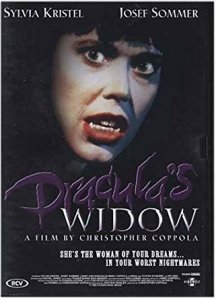
Since we are looking at and reviewing each and every episode of Twin Peaks, every movie-a-day this month has a Twin Peaks connection. Today’s entry, Dracula’s Widow, stars Lenny von Dohlen, who played reclusive shut-in Harold Smith on Twin Peaks.
Von Dohlen plays Raymond, the nerdy owner of a Los Angeles wax museum. When he receives six antique chests from Romania, he does not realize that one of them contains, Vanessa (Sylvia Kristel). Vanessa is a vampire and soon, she is killing the usual collection of perverts, muggers, and occultists. She also bites Raymond and turns him into her Renfield. Under her influence, Raymond even dumps his girlfriend, Jenny Harker (Rachel Jones).
However, Vanessa is not just a vampire. Vanessa is the wife of Dracula, himself. When she demands that Raymond take her to her husband, Raymond tells her that Dracula was killed nearly a hundred years ago by Prof. Van Helsing. (How did Vanessa not already know this?) Vanessa hunts down and kills Van Helsing’s grandson (Stefan Schnabel) but this brings both her and Raymond to the attention of Inspector Lannon (Josef Sommer).
In the 1990s, Dracula’s Widow was a late night HBO mainstay and it still has a cult following. I could sit here and count out all the ways that Dracula’s Widow does not make any sense but I’ve got a deadline. For all of this low-budget movie’s flaws, Dracula’s Widow is saved by the sexy presence of Sylvia Kristel and the atmosphere that can only be provided by neon lighting and a fog machine. Josef Sommer’s hard-boiled narration, in which he refers to Los Angeles as being Tinsel Town, is another highlight. As for Lenny von Dohlen, his performance as Raymond feels like a dry run for his turn as Harold Smith.
Dracula’s Widow was the directorial debut by Christopher Coppola, whose uncle Francis would later make Bram Stoker’s Dracula and whose brother, Nicolas Cage, ate a cockroach while making Vampire’s Kiss.
Whenever the subject of Twin Peaks comes up, that question gets asked a lot. Marshall played the sensitive (and oft-ridiculed) motorcycle-riding rebel James Hurley on Twin Peaks and, after the show’s cancellation, he went on to play a key supporting role in A Few Good Men. Marshall’s role may not have been huge but he managed to hold his own against actors like Tom Cruise, Jack Nicholson, and Kevin Bacon.
And then after A Few Good Men, nothing.
Why did James Marshall disappear?
He starred in a movie called Gladiator.
No, not the Russell Crowe movie that won all the Oscars. This Gladiator is about Tommy Riley (played by James Marshall), a teenager who moves to Chicago from Massachusetts. As one of the only white kids in his new neighborhood, Tommy finds himself being harassed by the local gangs. One night, he gets into a fight in a parking lot. (Fortunately, none of the neighborhood gangs carry guns or knives. They settle everything with fists.) Pappy Jack (Robert Loggia) is so impressed with Tommy’s fighting skills that he recruits Tommy to fight in illegal, underground boxing matches. Normally, Tommy would say no but he needs the money to help his father (John Heard) pay off his gambling debts.
Once recruited, Tommy is trained by the wise Noah (Ossie Davis) and works for boxing promoter, Jimmy Horn. Horn is played by all-purpose bad guy Brian Dennehy, who gives such a villainous performance that even Lance Henriksen would say, “Dude, dial it down a notch.” Tommy befriends two other boxers, Romano (Jon Seda) and Lincoln (Cuba Gooding, Jr.). At the time that Gladiator was filmed, Marshall was hot off of Twin Peaks and Gooding was hot off of Boyz ‘n The Hood. Fortunately, Gooding’s role is actually pretty small so he survived Gladiator and was able to go on to win an Oscar for Jerry Maguire and play O.J. Simpson in American Crime Story. Marshall was less lucky.
At one time, I thought that no one could be a least convincing boxer than Damon Wayans was in The Great White Hype. Then I watched Gladiator and saw James Marshall dancing around the ring and throwing punches. Normally, good editing can be used to disguise a lack of athletic ability but both Marshall and Gooding are so miscast as boxers that all the editing in the world can’t help. Jon Seda, who actually was an amateur boxer before getting into acting, is more convincing in the ring but his character is so saintly that anyone watching will know better than to get too attached to him.
A still notorious flop at the box office, Gladiator was directed by Rowdy Herrington but it’s no Roadhouse.


 I have been dreading this moment for a while.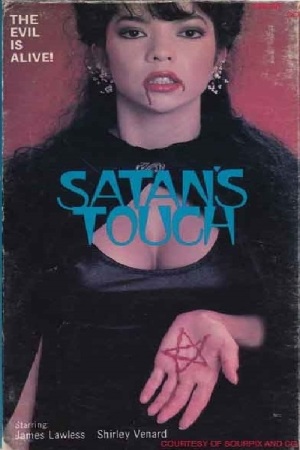


 Welcome to the future. To quote Leonard Cohen, it is murder.
 Since we are looking at and reviewing each and every episode of Twin Peaks, every movie-a-day this month has a Twin Peaks connection. Today’s entry, Dracula’s Widow, stars Lenny von Dohlen, who played reclusive shut-in Harold Smith on Twin Peaks.
 What ever happened to James Marshall?
 Through the Shattered Lens