Lifetime Film Review: Psycho Sister-In-Law (dir by Jake Helgren)


When one of your in-laws is a psycho, it’s going to lead to some tense family gatherings.  There’s just no way to get around it.  Have you seen those Vrylar commercials where people are screaming at random strangers or the mother is locked away in the kitchen and sobbing all the way through her daughter’s birthday party?  Well, that’s nothing compared to what it’s like to have a murderer drop by a wedding, a reunion, or even a funeral.

From the start of Psycho Sister-in-Law, we know that Zara Downes (Lydia Hearst) is not the ideal in-law.  This is largely due to the seeing Zara murder a woman in Las Vegas.  Now, admittedly, the woman that Zara murdered was kind of mean and she was keeping Zara from finding success as an actress but it’s 2020 and there are other ways to deal with an annoying co-worker.  Murder is never the answer!

Zara, of course, claims that she has had a difficult life.  Her father was very rich man but Zara grew up without him.  Instead, he gave most of his attention and affection to his son, Nick (Brando Eaton) and his fiancée, Callie (Diora Baird).  That’s largely due to the fact that Zara was the result of an affair that he had while married to Nick’s mother.  Still, when Mr. Downes dies, Zara is invited to the reading of the will.

When the will is read, Zara is annoyed to discover that she’s inherited less than both Callie and Nick.  So, Zara sets out to ingratiate herself with Nick and his pregnant wife, Haley (Andrea Bowen).  Zara also goes out of her way to try to upset Callie. When Nick says that he’s considering giving their father’s mansion to Callie, Zara puts her evil plans into overdrive.

And really, who can blame her?  It’s a really nice house!  I mean, I know I say that about almost every Lifetime film but Psycho Sister-In-Law really does feature one of the nicest mansions that I’ve ever seen.  Obviously, I don’t want to compare myself to Zara because she does kill a few people over the course of the movie but still, I’m not totally sure that I wouldn’t go a little bit crazy over that house myself.

Most Lifetime films do require a certain suspension of disbelief.  That’s something that we’ve all come to accept about the Lifetime genre and I’m certainly not going to complain about it.  The fact that people in these movies often make stupid mistakes is one of the things that make them so entertaining.  (And before we get too judgmental regarding fictional characters, who among us hasn’t made a stupid mistake or two?)  That said, Psycho Sister-In-Law really stretches that suspension of disbelief to its breaking point.  I mean, it’s nice that Haley wants everyone to get along but, at some point, you really do have to be willing to put your foot down and say, “Hey, if you’re obviously plotting on killing everyone in the house, you’re going to have to leave.”  Zara’s villainy was so obvious that you really did have to wonder if Haley and Nick were just being intentionally blind to it.

That said, the melodrama is certainly embraced and the house is really nice.  There’s a neat and unexpected twist towards the end of the movie and Lydia Hearst appears to be having a blast playing her murderous role.  It’s a fun movie, even if Nick and Haley’s naiveté will have you rolling your eyes until you’re dizzy.

Lifetime Film Review: The Killer In the Guest House (dir by Tony Dean Smith)


There’s an old saying.  If it seems too good to be true, it’ll probably end up trying to murder you.  I think that’s how it goes.

For instance, it may seem like a good idea to make some extra money by renting out your guest house.  And sure, it might seem like a good idea to pick the first handsome pilot who steps through the front door.  And it might seem like it’s a good thing that he’s tall and sexy and in shape and that he likes to take his shirt off whenever he’s doing the gardening.  And that first time that he defends your honor against your sleazy ex, you may be thinking to yourself, “This guy is perfect!”

Actually, Mark James (Marcus Rosner) would be perfect if not for the fact that, along with being charming and handsome, he’s also a total sociopath who has control issues and a habit of installing hidden cameras all over the place.  When Gina (Chelsea Hobbs) lets Mark move in, it seems like a perfect idea but soon, people are disappearing and Mark is failing to respect her personal space.  Gina is a struggling photographer who is still looking for her first big break and Mark has the looks of a model but is having a model paying you rent really worth having a dead body buried in your garden?  That’s a question that everyone must answer for themselves.

I’ve seen a lot of killer houseguest films on Lifetime.  Actually, even though Lifetime is known for being the “killer husband” network, you’re actually more likely to get murdered by a houseguest than by your husband.  Or, at least, that appears to be the case in the world of Lifetime cinema.  The best Lifetime films are the ones that connect with a real-life fear, like your mother marrying a con artist or your daughter refusing to listen to you when you tell her that the boy across the street with the shady past is up to no good.  The Killer In The Guest House gets at one of my main fears, which is that you’ll invite someone into your house and then they’ll just start hanging around.  Unfortunately, most unwanted houseguests don’t look as good as Marcus Rosner.

Anyway, you can probably guess what happens once Mark moves in with Gina.  It’s all obsession, lies, and murder.  As I’ve said countless times on this very site, we love Lifetime movies because they’re predictable.  They’re like trashy paperbacks that you read whenever you’ve got some time to kill.  The fun is being able to say, “I knew that was going to happen!”  That doesn’t mean that there aren’t any surprises to be found in The Killer In The Guest House, of course.  Mark has a lot of difficulty killing one of his victims and the film does a good job of playing up Mark’s exasperation as the victim just keeps coming back to life.  It shouldn’t be funny but it kind of is and I think it’s meant to be.  It’s not easy being a charming sociopath.

Marcus Rosner and Chelsea Hobbs both do a good job in the lead roles.  My favorite performance came from Matthew Kevin Anderson, as the hilariously sleazy Levon.  Whoever put together Levon’s wardrobe deserves an Emmy.

I guess the main lesson to be learned from Killer in the Guest House is that we should be careful we let move in to our home.  But seriously, when a guy says that he loves to garden and that he flies a plane for a living …. I mean, who can resist?

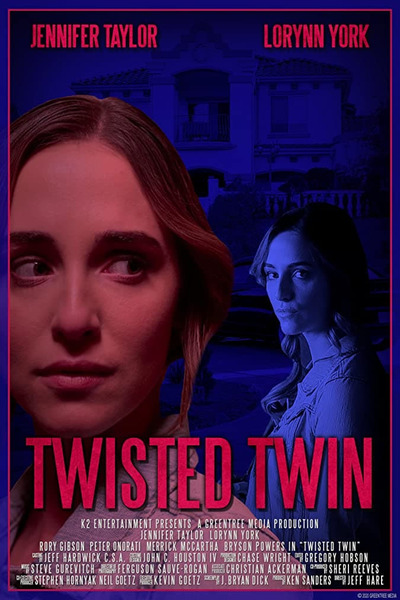
Lifetime Film Review: Twisted Twin (dir by Jeff Hare)


I always love a good killer twin movie and Twisted Twin is one of the best that I’ve ever seen.

The twins in question are Tess Houston and Sammy Crain, both played by Lauren Swickard (or Lorynn York as she was credited at the time this film was produced).  They were separated at birth and, until recently, neither knew about the other.  Tess grew up in a nice, middle-class household and became responsible and trustworthy.  Sammy grew up in a wealthy household and …. well, she’s totally evil and insane.  I guess you can’t have a good twin without a bad counterpart.

(For the record, I’ve known a few twins and most of them were absolutely charming ….. except for the Ashvins, who we won’t talk about.)

When Tess leaves for her college orientation weekend, she’s shocked to meet Sammy.  Sammy says that it’s just a coincidence that they both ended up on campus at the same time but we know that Sammy has actually been stalking Tess for a while.  Sammy and Tess quickly bond.  Soon, Tess is sleeping over at Sammy’s mansion and Sammy is taking Tess’s Spanish exam for her.  Sound great, right?

Except….

Well, it turns out that there are two dead bodies in Sammy’s house.  Someone murdered Sammy’s adoptive parents and, when the police arrive, Tess is there and the cleaning crew swears that Tess is actually Sammy.  Because Tess actually has been pretending to be Sammy, the police are skeptical when Tess explains that she’s actually Tess.  Meanwhile, Sammy has gone off with Tess’s adoptive mother, Patricia (Jennifer Taylor), and is now having to pretend to be Tess.

So, I absolutely loved this film, largely because it just totally went for it.  There was no worrying about being subtle.  There was no concern about trying to make us believe that the film was meant to be a serious examination of what it’s like to be either a twin or adopted.  Instead, Twisted Twin fully embraced the melodrama and just went totally insane.  Listen, you have to love a film like that.

But, I know what you’re saying.  “Lisa, Lifetime has aired a lot of films about killer twins.  What sets this one apart?”

Well, first off, you’ve got some nerve questioning my opinion.  That said, the thing makes Twisted Twin one of the best killer twin movies ever made is Lauren Swickard’s wonderfully demented performance as Sammy and Tess.  Swickard does a remarkably good job of playing both these roles and it’s a lot of fun watching both Sammy and Tess struggling, at various times, to play each other.  I especially liked it when Sammy suddenly found herself having to make coffee for her mom, despite not knowing where anything was in the kitchen or how Patricia even takes her coffee.  It’s a fun little comedic moment.

It’s an enjoyable Lifetime movie.  It made me wonder what I would do if I ever discovered I had a twin.  I’d probably ask her to live far away from me, to be honest.  I’m not that good at sharing.  Plus, I’ve seen enough Lifetime movies to know that suddenly discovered twins are always bad news.

Lifetime Film Review: Sleeping With Danger (dir by David Weaver)


I have to admit that when I first saw that Lifetime was going to be airing a film called Sleeping With Danger, a lot of really stupid jokes came to mind.

I mean, it’s true that the title was also the title of the Ann Rule story that served as the basis of the film’s plot but still, Sleeping With Danger just has such a Lifetime-y ring to it.  If you were making up a fake Lifetime movie, you’d probably give it a title like Sleeping With Danger.  And then you’d spend a while coming up with silly tag lines.

Sleeping with Danger means a morning of regret!”

“Mother, may I sleep with danger?”  (Wait, a minute, that one’s for real….)

I also found myself imagining the MyPillow guy shooting a commercial specifically for the movie.  “If you’re sleeping with danger, you’ve got to have support for your neck and back.  MyPillow is made right here in my home state of Minnesota, where we sleep with danger every winter….”

Then I watched the movie and, to be honest, I ended up feeling a little bit guilty.  Yes, the title might sound a bit campy but the film itself is actually very serious.  It’s probably one of the most serious films that I’ve ever seen on Lifetime.  Of course, it probably helps that it’s based on a true story and not a particularly happy one at that.

Elisabeth Rohm plays Grace Tanner, a directionless, 38 year-old flight attendant who thinks that she’s found love when she meets Dr. Paul Carter (Antonio Cupo), a charming and handsome nutritionist.  Grace and Paul have a whirlwind courtship, which soon leads to them living in a cabin out in the wilderness.  Needless to say, it is never a good thing, in a Lifetime movie (or in real life), when you end up isolated in a wilderness cabin.

Paul, it turns out, has a possessive streak and a rather shady history.  (One should note that this story takes place in the 90s, a.k.a. the time before Google.)  Grace comes across a restraining order.  She comes across evidence that Paul has been in trouble with the police before.  When she tries to question Paul about it, he hits her.  Even after Grace leaves him and goes to a shelter, she continues to deny that she’s in an abusive relationship.  No, she says, she and Paul are just having troubles.

Inevitably, Grace goes back to Paul.  Paul, for his part, always has an excuse to explain away his abusive behavior.  They settle into cycle, one that finds Grace a virtual prisoner.  Eventually, it all leads to murder….

It’s a pretty grim movie but it’s well-made and, even more importantly, it’s a realistic portrait of an abusive relationship.  Like so many victims, Grace is fooled into thinking that Paul is going to change or that it’s even her fault.  Sleeping With Danger shows all of the ways that someone like Paul will manipulate and hurt those around him.  Antonio Cupo and Elisabeth Rohm both give believable performances in the lead roles.  The film may be grim and a bit of a downer but it’s message makes it worth seeing.

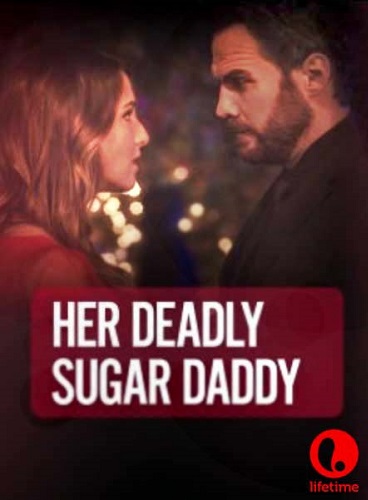
Lifetime Film Review: Her Deadly Sugar Daddy (dir by Brooke Nevin)


I have to admit that the term “sugar daddy” just amuses the Hell out of me.

Seriously, I can’t hear anyone use that phrase without starting to laugh.  I mean, it’s just such a ridiculous combination of words.  I remember that Dr. Phil went through this phase where, every week, he did a show about irresponsible millennials who, instead of getting a job, were going online and visiting what Phil called, “sugar daddy websites.”  Once you’ve heard Dr. Phil say, “sugar daddy” twenty times, it’s hard to take the term seriously.

Needless to say, when it comes to Lifetime films, sugar daddies are a popular topic.  I’ve lost track of the number of Lifetime films that I’ve seen in which a young woman decides that the only way to make ends meet is to start accepting money from older, wealthier men.  I mean, it seems like a good idea.  You get to dress up and you get a good dinner and you get to spend time in a really nice house and sometimes, you even get to fly on a private plane.  But, in the end, it’s never worth all the trouble.  First off, your parents and your friends will inevitably judge you and say that they’re ashamed of you.  Number two, there’s always a good chance that your sugar daddy will either 1) die of a heart attack at an inopportune time or 2) end up becoming obsessed with you.  To quote an anti-meth commercial that I recently watched on YouTube, “Don’t do it.  Not even once.”

In Her Deadly Sugar Daddy, Bridget (Lorynn York) gets involved in the world of being an escort not just because of the money ($10,000 a week!) but also because she needs something write about.  Bridget and her friend, Lindsey (Aubrey Reynolds), have recently moved over to Los Angeles from Arizona.  (This film makes it sound as if Arizona is literally on the other side of the world from California.)  The daughter of a famous novelist, Bridget wants to make a living as a writer.  However, she doesn’t want to write books, at least not yet.  Instead, she wants to blog.  Unfortunately, when she goes to the corporate headquarters of Swerve.com, she’s told that she doesn’t have enough experience to be one of their writers.  She’s told that she needs to start her own personal blog and build up a following before she can even think of writing for a fine site like Swerve.

(Hey, it worked for that Movie Bob guy.)

A bad date leads to Bridget meeting Anthony (Brent Bailey), a bearded businessman who ends up giving Bridget a job.  He needs someone to keep track of his schedule for him.  Bridget agrees.  He also needs someone to entertain older male clients.  After a little bit of hesitation, Bridget agrees to that too.  After all, she needs something to blog about, right?

Unfortunately, Anthony has an obsessive streak and some control issues.  Add to that, he doesn’t particularly want his employees blogging about his business or, for that matter, taking pictures around the office.  Soon, Bridget’s life is in danger.  If she survives, she’ll at least have something to write about….

Her Deadly Sugar Daddy delivers what you typically want out of a Lifetime film like this.  Anthony owns a big house and he works in a big office and Bridget’s clothes are to die for and an important life lesson is learned at the end of it all.  Brent Bailey is properly charming and intimidating as Anthony and Lorynn York (who has appeared in several of these films) is sympathetic as Bridget.  I have to admit that, on a personal level, I enjoyed the film because I’m a blogger who has worked as a personal assistant so I could relate to Bridget.  That said, I’m not interested in working at Swerve.  Through the Shattered Lens is perfect for me.

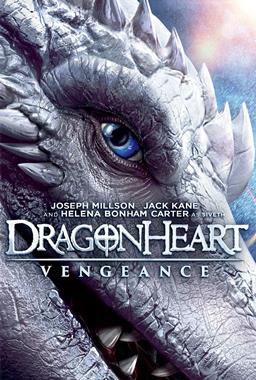
The Films of 2020: Dragonheart: Vengeance (dir by Ivan Silvestrini)


Dragonheart: Vengeance is the fifth Dragonheart film.  I should admit that, as far as I can remember, I’ve only seen one other Dragonheart film (the third one) and I did spend a good deal of Dragonheart: Vengeance trying to figure out just what the Hell was exactly going on.  But, ultimately, it didn’t matter that I sometimes had a hard time following the film’s plot.  To be honest, the only thing that mattered was that Dragonheart: Vengeance not only had a dragon but it was also a dragon that spoke in the voice of Helena Bonham Carter.

Let’s just start with the obvious.  Dragons are cool.  Yes, I know that they’re big and they breathe fire and sometimes they burn down cities and trample countries and they’re kind of protective of their gold and all that.  Plus, there’s always the chance that they don’t actually exist.  But no one can deny that dragons just have a certain style to them that makes them the most intriguing of all the possibly imaginary creatures out there.  Surely I’m not the only one who would not have been terribly upset if Smaug had eaten Bilbo during the second Hobbit film.  Add to that, dragons can fly and they can destroy all of your enemies and they’re kind of a cute, too.  They’re like cats, just with more fire-breathing abilities.

The same can be said of Helena Bonham Carter.  She’s just cool, no matter what she does or says.  Any film is automatically going to be improved by the participation of Helena Bonham Carter.  In this film, Bonham Carter delivers the dragon’s lines with just the right amount of posh sarcasm.  It’s not so much that she doesn’t like humans as much as it’s a case of her being smart enough to know that humans will inevitably disappoint her.

The dragon is named a Siveth.  During the Arthurian age, Siveth resides in the kingdom of Wallachia.  (That’s modern day Romania, which is also where Dragonheart: Vengeance was filmed.)  When Siveth first showed up, she was treated as a hero but, when she refused to follow the orders of shady King Razvan (Arturo Muselli), she was exiled out of the land.

Now, 30 years later, Lukas (Jack Kane) is a young farmer whose entire family has been killed by random raiders.  Seeking revenge, Lukas first asks Razvan for help and, when the king turns out to be useless, he then seeks out Siveth.  Following Lukas is Darius (Joseph Millson), a mercenary who has his own past with Siveth.

When Lukas does eventually discover Siveth, he also discovers that Siveth is actually a peace-loving dragon who refuses to help anyone who is only interested in vengeance.  However, through a chain of events that I didn’t quite follow, Siveth does eventually end up working with Lukas and Darius to not only defeat the raiders but to also reveal the identity of the powerful figure who is actually behind all the mayhem.

Dragonheart: Vengeance is likable movie.  It’s a little bit goofy at times but it still has a definite charm to it.  Yes, the plot isn’t always easy to follow, especially if you haven’t seen the other Dragonheart movies.  But you really don’t watch a movie like this for the plot.  You watch it for the dragon and Helena Bonham Carter makes Siveth into a pretty cool dragon.  Jack Kane and Joseph Millson both give likable performances as Lukas and Darius and the film has a nice message about embracing peace and distrusting anyone in authority.  That’s a message we can all get behind, especially when it’s delivered by a dragon!

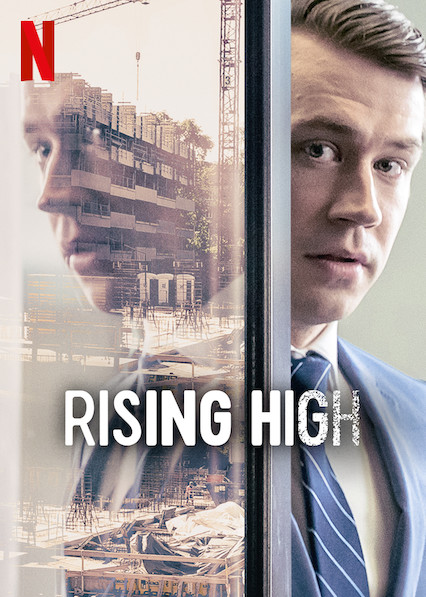
The Films of 2020: Rising High (dir by Cuneyt Kaya)


Ever since the Great Recession of 2009, films about white collar crime have been popular.  Some of them, like The Wolf of Wall Street, have been great and others, like The Big Short, have been terrible but one thing that they all have in common is that they’ve all left my very confused.

Seriously, as hard as I’ve tried, I’ve never been able to understand any of this stock market stuff.  Why do stocks go up?  Why do they go down?  Why do people sell them?  Why people buy them?  What do they get out of it?  If you buy a stock and then never sell it, did you just waste a huge chunk of cash?  What even is a stock?  How can a company have so much stock?  Can I sell stock in myself?  Seriously, how does it all work?

By that same token, how do you know how much a house is worth?  I know that it has to do with how much the house next to your house is worth but who decides how much that house is worth?  I’ve seen so many movies about people talking about real estate and insider trading and scampacs and I still don’t understand how any of it works.

Perhaps that’s why I don’t get as outraged as some people do while watching movies like The Wolf of Wall Street.  I know some people who walked out of that movie talking about how much they wanted the federal agent played by Kyle Chandler to throw Jordan Belfort (played, in the best performance of his career, by Leonardo Di Caprio) over the side of his boat.  Me, I was just happy that Jordan Belfort was able to buy himself a nice boat.  He got to hang out with his friends, he got live in a big house, and good for him.  I mean, he had fun.  We should all be so lucky.  The main reason why The Wolf of Wall Street was a thousand times better than The Big Short was because The Wolf of Wall Street was willing to admit that rich people are more fun than poor people.  The Wolf of Wall Street made its point with getting bogged down in all of the Marxist argle bargle that other white collar crime films tend to drown in.

Rising High is a German film that is superficially similar to The Wolf of Wall Street.  It follows Viktor (David Kross) and Gerry (Frederick Lau) as they make a small fortune through shady real estate deals.  Viktor is a smooth-talking salesman while Gerry is a bit rougher around the edges.  Basically, Viktor and Gerry get rich selling luxury apartments.  The only catch is that they don’t actually own the apartments that they’re selling.  Instead, they make bids with money that they don’t have and then they sell the property that they don’t own and then they use the money from the sell to purchase the property.  I guess that’s illegal.  I mean, Viktor does eventually end up getting arrested and telling the story of the shady ways that he got rich.

Anyway, Viktor’s story is typical of these type of films.  He grew up poor.  He found a way to make money and ethics be damned, he did what he had to do.  Soon, Viktor is married to Nicole (Janina Uhse) and having coke-fueled parties and listening to a lot of music.  He also spends a lot of time wondering if he’s allowed his life to get out of control.  He may be a white collar criminal but he’s a white collar criminal with a conscience.

Anyway, the main problem with Rising High is that it’s only 94 minutes, which means that the whole story feels somewhat rushed.  Viktor goes from being poor to being rich to being incarcerated in record time.  Because the film is so rushed, you never really get to explore Viktor’s life.  For all the complaints that you may have heard about The Wolf of Wall Street‘s 3-hour running time, it used those three hours to show us why Jordan Belfot and friends were willing to risk going to prison.  It showed us their lifestyle and, regardless of whether you liked any of them or not, you understood where their minds were at.  In Rising High, Viktor and Gerry are just jerks who get in over their heads.  You never really get to know them and even the decadent scenes of their wealthy lives feel as if they were all lifted from other movies.  Neither Viktor nor Gerry comes across as being a particularly interesting character so you really don’t care if they end up having to go to jail.  If anything, the main message I got from this film is that you should have as much fun as possible before the police show up.  If you spend too much time pondering the meaning of it all, you’re going to miss out on some good memories.

Anyway, as far as white collar crime films are concerned, I’m going to stick with The Wolf of Wall Street.  Seriously, that was a really nice boat….

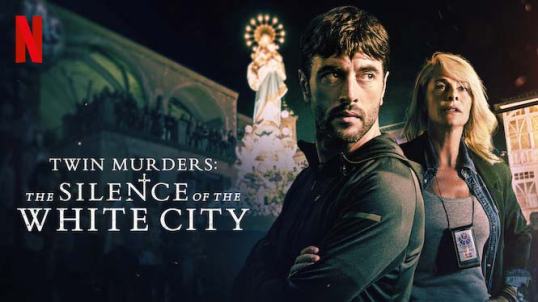
The Films of 2020: Twin Murders: The Silence of the White City (dir by Daniel Calparsoro)


Twin Murders: The Silence Of The White City is a Spanish film about two people who spend a lot of time jogging.

Alba (Belen Rueda) and Unai (Javier Rey) both like to run through the city of Vitoria-Gasteiz.  Eventually, they run into each other and soon, they’re running through the city together on an almost nightly basis.  Along the way, they fall in love.  Of course, there are complications.  Alba is married.  Unai is traumatized by something that happened in the past and he’s only now starting to come out of his shell.  Can these two find happiness?

Making things even more complicated, Alba also happens to be Unai’s new boss!  Alba is the deputy chief of the Basque Country’s police force.  Unai is a legendary detective and criminal profiler who has been on a leave of absence ever since the death of his wife.  Can Unai conquer his fears and his pain?  Can Alba prove that she’s capable of handling a job that typically goes only to men?  And, again — can they do all this while falling in love?

And there’s a serial killer to deal with, as well!

Actually, to be honest, the film is more about the serial killer than the love story between Alba and Unai.  It’s just that, when I watched the movie, I always found myself far more interested in the scenes of Alba and Unai running than in the scenes of Unai trying to discover the identity of the killer.  (In fact, the identity of the killer is revealed about 40 minutes into this 110-minute film, which means that the audience spends the majority of the film with a lot more information than either Unai or Alba.)  The running scenes are beautifully filmed and they’re well-played by Rueda and Rey.

Unfortunately, the serial killer stuff just isn’t that interesting.  This is another killer who has a precise way of picking his victims and who goes out of his way to pose the dead bodies in the most ornate and haunting way possible.  It leads to some effective visuals but it’s still not anything that we haven’t experienced in other movies.  I always find it interesting that cinematic serial killers always have such complicated motives whereas real-life serial killers almost inevitably turn out to be some nerdy guy who never got over still being a virgin on his 20th birthday.  Real-life serial killers are almost always sub-literate losers whereas cinematic serial killers are always very articulate and clever.  Call it the Hannibal Lecter effect, I guess.

Speaking of Hannibal Lecter, Twin Murders has its very own Hannibal.  His name is Tasio (Alex Brendemühl) and he’s a former TV crime show host who decided to become a real criminal.  The current murders look a lot like his former murders but Tasio’s still in prison so what gives?  Is Tasio involved in the new murders or is the new murderer just a copycat?  Watch and find out, I guess.

Twin Murders: The Silence of The White City is all about style.  The plot itself is full of red herrings and bizarre motivations and, at times, it’s nearly impossible to follow.  However, the film looks great and is full of ominous atmosphere.  The cast does a good enough job to make their clichéd characters somewhat engaging.  It’s definitely an imperfect film and certainly not one to watch if you’re looking for a realistic portrait of cops or serial killers.  But if you’re just looking for a film with style to burn, Twin Murders: The Silence of the White City can take care of you.

The Films of 2020: Murder To Mercy: The Cyntonia Brown (dir by Daniel H. Birman)


In 2004, a Nashville real estate agent and youth minister named Johnny Allen was found dead in his home.  He had been shot in the back of his head, while lying naked in bed.  The police claimed that he had been asleep when he was shot.  Cyntonia Brown, the 16 year-old runaway who was arrested for the crime, claimed that Allen had been awake and that he had been reaching for a gun when she shot him.  Cyntonia Brown was subsequently convicted of first degree murder and sentenced to life in prison.  She wouldn’t be eligible for parole until she served 51 years of her sentence.

From the start, there were questions about whether or not justice was done in the case of Cyntonia Brown.  Naively, she waved her Miranda rights after she was arrested, believing the detective’s claim that it would help her case if she just talked to them.  (Is a sixteen year-old mature enough to make the decision whether or not to talk to the police without an attorney present?)  Brown had spent years being abused by sexual predators, like her “boyfriend” Garion “Kut-Throat” McGlothen.  As well, there was evidence that she may have suffered from Fetal alcohol spectrum disorder, as a result of her mother having been an alcoholic.  FASD can lead to uncontrollable behavioral and perception issues.  With all of that in mind, should Cyntonia Brown have been sentenced to 51 years in prison?

In 2011, a documentary called Me Facing Life: Cyntonia’s Story aired on PBS.  Directed by Daniel Birman, Me Facing Life generated renewed interest in Brown’s case.  When Brown, who was described as being a model prisoner, petitioned Tennessee Governor Bill Halsam for clemency, her cause became a cause célèbre  for many (which is another way of saying that it trended on twitter for a few days).  In 2019, Gov. Halsam commuted Brown’s sentence to 15 years plus 10 years of supervised probation.  Cyntonia Brown was released and is today an activist for criminal justice reform.

Murder To Mercy is Daniel Birman’s follow-up to Me Facing Life.  The first half of the film is largely made up for footage from Me Facing Life while the 2nd half deals with Brown’s clemency hearing.  Unfortunately, Murder to Mercy only provides a surface-level examination of Cyntonia Brown’s case.  One can fully believe that her initial sentence was too harsh (as do I) and one can also believe that she was failed by the system (and again, I do) while also acknowledging that Murder to Mercy is a bit too one-sided in its presentation of the case to really be effective.

For example, even if you do believe that Johnny Allen was reaching for a gun or that Cyntonia Brown did have a justifiable reason to consider herself to be in danger, it’s still hard not to notice that his family is only present in one scene.  Since Allen’s family has been quite vocal in their opposition to Cyntonia Brown’s release, pushing them to the side doesn’t feel right.  (This wouldn’t bother me as much if the documentary had said, “Johnny Allen’s family refused to be interviewed for this documentary.”  That, at least, would have explained their absence.  As it is, it just feels like they were left out because the film isn’t interested in anything that might complicate the narrative.)

The film makes the argument that Cyntonia Brown was treated unfairly by the criminal justice system.  It does make one very good point.  When she was arrested in 2004, Tennessee law classified her as being a prostitute.  In other words, even before she was convicted of murder, she was classified as being a criminal instead of a victim.  Later, in response to criticism over Brown’s sentencing, the law was changed so that minors could not be charged with prostitution.  Instead, they are now classified as victims of sex trafficking.  That’s one of the good things to come out of the Cyntonia Brown case.  Oddly enough, though, the film doesn’t explore the role that race may or may not have played in the harsh sentencing of Cyntonia Brown.  If Brown was a white girl from the suburbs who had been forced into prostitution at the age of 12 and who had subsequently felt that her life was in danger, would she have been sentenced to, at minimum, 51 years in prison?  That’s an issue that goes largely unexplored.

Cyntonia Brown’s story is a complicated one and it’s also one that deserves to be told.  Unfortunately, this heartfelt but surface level examination doesn’t really do justice to anyone or any of the issues involved.

The Films of 2020: Dangerous Lies (dir by Michael Scott)


As soon as Elliott Gould showed up, I knew he was going to die.

Now, of course, I should clarify that I didn’t think that Elliott Gould the actor was going to die.  Instead, I thought that the character he was playing — Leonard Wellesley — was going to die.  Leonard, after all, is a wealthy man who has no family left and who is in bad health.  He keeps trying to give money to his caregiver, Katie (Camila Mendes).  Katie consistently refuses the money, even though she could really use it.  She and her husband, Adam (Jessie T. Usher), are drowning in debt.  Even after Leonard hires Adam to work as his gardener, they’re still struggling to make ends meet. Still, Katie doesn’t want to take Leonard’s money because Katie doesn’t want to take advantage of him.

For the plot to move forwards, it’s necessary for Leonard to die, though not before changing his will to leave everything to Katie.  Normally, when this happens in a movie, it turns out that the caregiver actually manipulated her employer into changing the will before murdering him but, in this case, Katie is totally innocent.  It’s actually kind of a nice twist.  As played by Camila Medes, Katie is someone who sincerely is trying to do the right thing, even if it means her life is occasionally difficult.  As played by Elliott Gould, Leonard may be a bit eccentric but he’s still just sincerely trying to thank the person who made his final days bearable.

(Admittedly, another reason why I knew Leonard was going to die was because, whenever a veteran actor like Elliott Gould shows up in a movie like this, he’s usually going to end up playing someone who dies under mysterious circumstances.  Call it the Rule of Eric Roberts.)

Moving into Leonard’s house, Katie and Adam are surprised to discover a large trunk of cash.  While Katie wonders why exactly Leonard would have a huge trunk of money hidden away in his house, Adam is more concerned with what they can do with that money.  While Katie tries to resist the urge to get greedy, Adam starts obsessing on the money.  What else does Leonard have hidden around the house?

Meanwhile, a mysterious man named Hayden (Cam Gigandet) watches the house and plots his next move….

Dangerous Lies is a thriller that was released on Netflix back in April.  This is probably one of those low-budget movies that would have been overlooked if not for the fact that everyone was pretty much locked inside their house when it was released.  Watching Dangerous Lies provided a nice escape from the bad news of the pandemic.  Speaking for myself, it was kind of fun to watch Katie and Adam explore their new home.  After being stuck inside of mine for a month, the idea that I could suddenly inherit a mansion provided a nice bit of wish-fulfillment.

As for the film itself, it was a diverting thriller.  Elliott Gould brought some unexpected depth to the role of Leonard and Camila Mendes and Jessie T. Usher were believable as the couple at the center of the story.  They had a believable chemistry and Usher did a good job of portraying Adam’s losing struggle with his own greed.  This is the type of simple but entertaining film that you watch if you have a few hours to kill in the afternoon and there’s nothing wrong with that.