The TSL’s Grindhouse: Pumpkinhead (dir by Stan Winston)


Originally released in 1988, Pumpkinhead has always struck me as being one of those films that more people remember hearing someone else talk about it than have actually sat down and watched.  

I think that’s because it has such a great title.  Pumpkinhead!  That’s not a title that you’re going to forget and it conjures up all sorts of scary images.  If you hear someone mention that title, it stays in your head.  It’s an easy title to remember and it’s also an easy title to turn into a macabre joke.  If, on Halloween night, you and your friends hear a sound in the house, you can always say, “It must be Pumpkinhead!”  Everyone will laugh, regardless of whether they’ve seen the film or not.  It’s kind of like how everyone knows what the Great Pumpkin is, even if they’ve never actually watched the old cartoon.

As for the actual film, it’s a mix of monster horror and hick revenge flick.  It’s one of those movies where a bunch of dumb city kids do something stupid while driving through the country and, as a result, they end up having to deal with a curse and a monster. 

Ed Harley (Lance Henriksen) is a widower who owns a grocery store that is pretty much sitting out in the middle of nowhere.  Seriously, you look at his little store sitting off the side of a country road and you wonder how he makes enough money to feed his family.  Of course, the store’s location isn’t the only problem.  The other problem is that Ed seems to instinctively mistrust the few people who do stop off at the place.  Even if I lived near there, I probably wouldn’t want to shop at that store because I know Ed would glare at me and make me feel like I was doing something wrong.

However, a group of dumbass dirt bikers do stop off at the store.  And then they decide to drive their dirt bikers around the store while another member of the group takes pictures.  Unfortunately, the dirt bikers run over Ed’s son, little Billy.  The dirt bikers flee the scene, heading to their cabin.  Ed meanwhile goes to the local witch and asks her to summon …. PUMPKINHEAD!

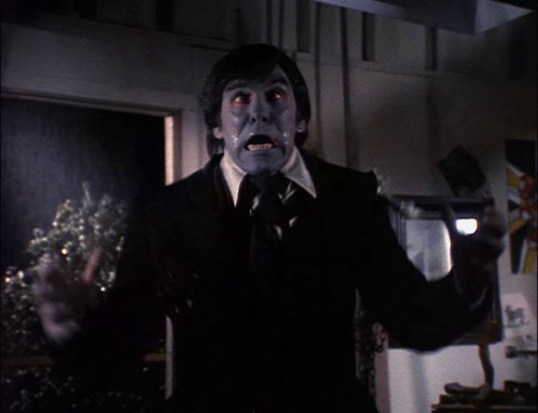
After a lengthy ceremony, Pumpkinhead shows up.  Because Pumpkinhead was directed special effects maestro Stan Winston, he’s a very impressive creature.  He looks something like this:

You may notice that Pumpkinhead doesn’t actually have a pumpkin for a head but no matter!  It’s still a good name and when your monster looks like that, he can call himself whatever he wants.

Anyway, Pumpkinhead tracks down and starts to kill the people responsible for the death of Billy.  Unfortunately, it turns out that Ed experiences each murder along with Pumpkinhead and he quickly has a change of heart.  The witch tells him it’s too late.  Pumpkinhead will not stop until everyone’s dead and if Ed tries to interfere, Ed will die as well.

It’s a clever-enough idea, a filmed version of one of those old legends that you occasionally hear about in the country.  It’s a good thing that the monster is really, really scary because his victims are pretty much forgettable.  Some of them feel bad about killing Ed’s son and some of them don’t but it’s hard to keep straight which is which.  They’re just too bland.  As a result, their deaths don’t really generate any sort of emotion, good or bad.  They’re just there to be victims.  The only person your really care about is Ed but that’s mostly because he’s played by Lance Henriksen and Henriksen is one of those actors who can bring almost any character to life, regardless of how thinly-drawn that character may be.  Henriksen has a built-in authenticity.  Since he’s clearly not a product of the Hollywood publicity machine but is instead someone who obviously lived an interesting life before he ever auditioned for his first film, you believe in Henriksen’s performance even when the script betrays him.  You believe that he owns that store, even though the store seems to be in the worst location ever.  When he mourns Billy, you believe it.  When he tries to stop Pumpkinhead, you believe that as well.  What little humanity that there is to be found in the film is almost totally the result of Henriksen’s performance.

So, give it up for Lance Henriksen and give it up for the scariness of Pumpkinhead and also give it up for director Stan Winston, who came up with enough horrific visuals that it almost made up for his apparent lack of interest in the film’s human characters.  Give it up to for a little-known character actress named Florence Schauffer, who is properly creepy as the local witch.  Pumpkinhead is a good film to watch with your friends on Halloween, even if the title monster doesn’t really have a pumpkin for a head.

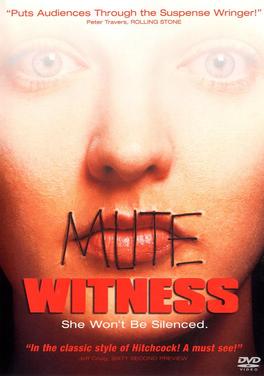
Mute Witness (1995, directed by Anthony Waller)


Billy (Marina Zudina) is an FX makeup artist who is working on a movie in Moscow.  The movie is a cheap slasher, directed by Andy (Evan Richards), who is dating Billy’s sister, Karen (Fay Ripley).  One night, after shooting on the slasher film has ended for the day, Billy stumbles upon another film crew shooting what she initially thinks is a porno.  Instead, it turns out to be a real-life slasher film as the film’s star is brutally murdered while Billy watches.  Though Billy manages to escape from the killers, the police refuse to take her claims seriously.  Working with a private detective named Larsen (Oleg Yankovsky), Billy tries to prove that she saw what she saw while also trying to avoid being killed the snuff film crew and the Russian mob.

Mute Witness is an intense, clever, and suspenseful thriller from the mid-90s.  It has never got as much attention as it deserves, despite an intriguing premise, a sympathetic protagonist, and an international setting.  The film was shot on location and Moscow proves to be the perfect setting for a chilling story about greed, corruption, and murder.  When Mute Witness was filmed, the collapse of Soviet communism was still a recent event and there were still a lot of questions about what type of country the new Russia was going to become.  The Russian mob was still a relatively new concept to many people.  In Mute Witness, post-Soviet Moscow is a dark and menacing place where no one is who they say they are.  It’s a city where people can easily disappear, money can buy immunity from scrutiny, and where the horrors of a slasher film can’t begin to compete with the horrors of reality.  Though the film was made when Boris Yeltsin was still in charge of Russia, it feels very much like a prediction of the Putin era.

Alec Guinness makes a cameo appearance in Mute Witness.  He only appears in one scene but he makes an undeniable impression.  His scene was filmed in Germany, months before the rest of the film was shot.  (Due to his busy schedule, it was the only time that Guinness was available.)  Guinness reportedly did the scene as a favor to director Anthony Waller and offered to do it for free.  Genuine class, indeed!

Though Mute Witness was overshadowed by the success of Scream, it was still enough of a critical and cult success that Waller was offered a studio picture.  Unfortunately, that film turned out to be An American Werewolf in Paris.  Waller has only directed two films since American Werewolf in Paris.  That’s a shame as Mute Witness was an auspicious debut and stands the test of the time as one of the better horror thriller to come out of the 90s.

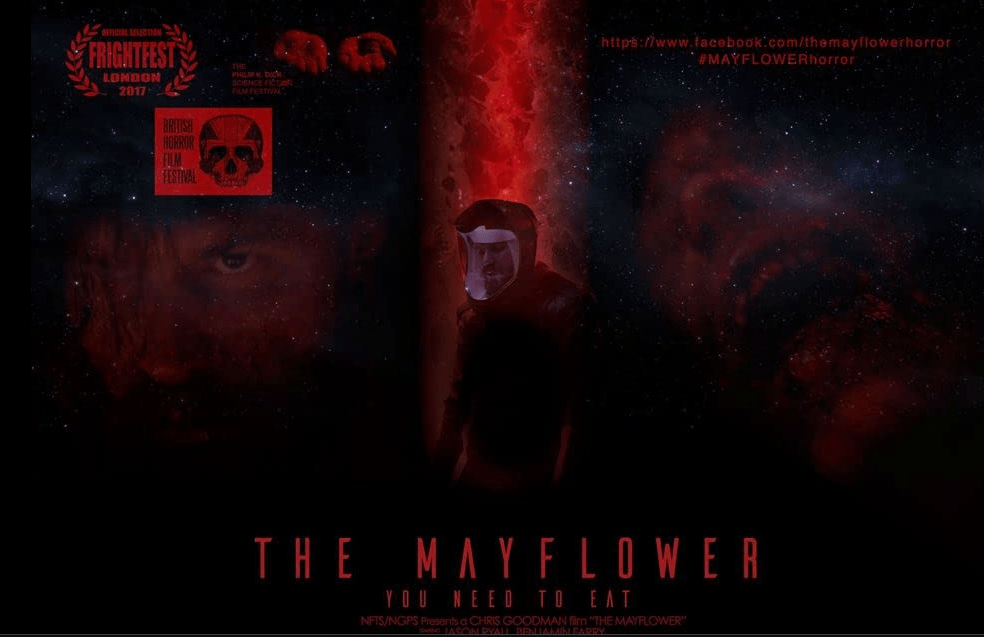
The Mayflower, Review By Case Wright


What if in Alien the xenomorph was really easy to kill? This is a question most filmmakers never cared to answer, but you would not be fancy then like Benjamin Farry! Nope, you would not be fancy, not….fancy…at…all! Benjamin Farry, unlike you, is super fancy because he answered that question- that’s just science! Like that song, She blinded ME… with Bacon Grease… or science or something like that. Bacon is scientifically delicious! I’m very hungry.

Speaking of being hungry, what if you were a space ship janitor and got infected by a parasite that made you hallucinate and go full-on cannibal and head toward earth? Well, you’d rapidly remember that you were a space janitor and blow up your space ship before humanity became a snack! That’s pretty much the entire short.

I don’t want to be too cruel about this short because it did have a beginning, middle, and end like you would have in an interesting story. I cannot write that this wasn’t filmed because it definitely was filmed…and I think they used props… From party city. I also cannot write that it wasn’t a short because it was really really easy for the protagonist to achieve his quest; therefore, it was a short or even a brief. I cannot write that “The Mayflower” didn’t win an award because that did happen….somehow. Maybe it was like everyone got a turn to win like an honorary degree?

If you’re bored and want to take that boredom to another level, this is the short for you! Think of it like watching Alien if it were on cheat mode and made for 30 bucks.

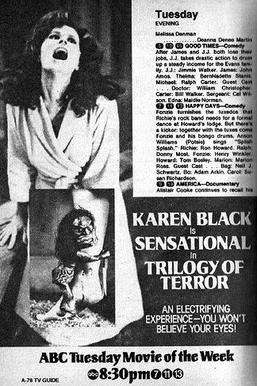
Horror on the Lens: Trilogy of Terror (dir by Dan Curtis)


For today’s horror on the Lens we have a made-for-TV movie that, like yesterday’s The Norliss Tapes, was produced and directed by Dan Curtis.

Trilogy of Terror, which aired in 1975, is an anthology film, featuring three segments that were each based on a short story from Richard Matheson.  What makes this particular film special is that each segment features Karen Black playing a radically different character from the previous segment.  The film really is a showcase for this underrated actress, though Black herself later said that the film ruined her career because it typecast her as a horror actress.

The third segment is the one that gets all the attention.  That’s the one with the killer doll.  I like all of the segments, though.  The first one is often considered to be the weakest but anyone who has ever been through a similar situation will appreciate it as tale of revenge.  The second segment has a playful vibe that I liked.  And yes, the third segment is genuinely frightening.

From 1975, here is Trilogy of Terror:

The TSL’s Grindhouse: Eat Locals (dir by Jason Flemyng)


Every fifty years, the top vampires in the UK gather in one location.  They discuss their upcoming plans.  They settle old scores.  They make peace or declare war.  Actually, I’m perhaps giving them a bit too much credit.  Judging from the 2017 film, Eat Locals, they spend most of their time being bitchy and plotting against each other.  Vampires are apparently not the easiest creatures to get along with.

Their latest meeting is taking place at a farmhouse out in the country.  In theory, the farmhouse should be isolated enough for the vampires to meet in peace but it doesn’t turn out that way.  First, Vanessa (Eva Myles) shows up with a human hitchhiker named Sebastian (Billy Cook).  Sebastian may think he’s going to get laid but it turns out that the vampires are more interested in eating a local.  Then, a bunch of British soldiers show up.  It turns out that they’re from the special vampire squad and they’re determined to take out all the top vampires all at once.  Their leader is also apparently interested in collecting vampire blood, which he can then sell to a cosmetics company.  Want to defy aging?  Vampire blood’s the answer!

I watched Eat Locals last Halloween.  My friends and I had previously watched (at my insistence) Vampire Circus and we decided to follow it up with another British vampire film, this one a more recent one.  (Vampire Circus was released in 1972.  Eat Locals, on the other hand, was released 45 years later, in 2017.)  As an unapologetic horror snob, I was a bit skeptical about Eat Locals and, when the film started, I may have groaned a little because it became obvious that this was going to be one of those films where people spent a lot of time sitting around in an unlit room.  But still, I gave it a chance.

And, ultimately, Eat Locals turned out to be better than I was expecting.  The film has its flaws but it was hard not to admire its determination to stay true to its concept, even at the risk of alienating its audience.  Eat Locals pretty much takes place in one location.  This means that, for all of the build-up, the first big battle between the soldiers and the vampires largely takes place off-screen.  That’s the sort of narrative decision that will undoubtedly turn off a lot of viewers but I actually liked the staginess of it all.  At a time when other directors would have cut away and wasted a lot of money on an action scene that wouldn’t have added much to the film’s narrative, director Jason Flemyng (who is better known as an actor) sticks with the vampires.

Unfortunately, the vampires aren’t always as interesting as the film seems to think that they are.  They’re all very arch and very British but most of them don’t have much personality beyond that.  A few of them, however, are memorable as a result of the efforts of the talented cast.  Charlie Cox, Freeman Agyeman, Vincent Regan all make a favorable impression with their fanged roles.  As for the soldiers, they’re all very British as well.  If you’ve ever watched any film about the UK Special Forces, you will immediately recognize every type of character and situation that Eat Locals satirizes.

Eat Locals is an uneven film and the narrative momentum lags during its final few minutes.  In many ways, it feels like a really clever short film that’s been expanded upon.  That said, there’s enough vampiric satire and uniquely British humor to make the film an entertaining watch.

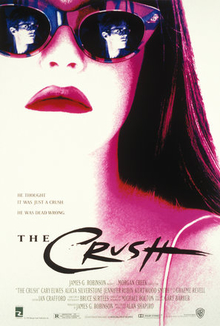
The Crush (1993, directed by Alan Shapiro)


Darien or Adrian?  Adrian or Darien?  Who does Alicia Silverstone play in The Crush?  It depends on which version you saw.

When the movie came out in theaters, she was named Darien because she was based on a real girl named Darien who writer/director Alan Shapiro claimed was obsessed with him.  When the real-life Darien saw the movie and saw that she was portrayed as a psycho stalker, she was understandably pissed off and she sued Shapiro.  As a result, when the film was re-edited for TV and later released on video, Darien suddenly became Adrian.

Whether Silverstone’s playing Adrian or Darien, the movie is still fairly lackluster.  This movie came out when Alicia was still known for playing the lead in several sexually-charged Aerosmith videos and it features her doing the whole Lolita thing, which was very popular in the 90s.  She becomes obsessed with her neighbor, Nick (Cary Elwes).  Nick tries to be nice but when it become obvious that he’s not going to risk going to jail even if the the girl next door does look like Alicia Silverstone, Adrian/Darien starts trying to make his life Hell.  She also tries to kill Nick’s girlfriend with a bunch of bees.  Nick’s girlfriend is played by Jennifer Rubin, who was one of the best of the straight-to-video actresses of the 90s.

(Unlike Alicia’s other pre-Clueless starring turn, The Babysitter, The Crush was not straight-to-video but probably would have been if not for those Aerosmith videos.  The Babysitter is also not very good but it’s an unsung classic when compared to The Crush.)

The Crush is one of those movies that got a huge push when it came out.  MTV was all over it and the commercials were edited to make it look like a steamy thriller starring the girl that every boy had a crush on in 1993.  I can’t remember if the movie got an R-rating or a PG-13 but I do know that my friends and I were bummed out when we were told we weren’t allowed to see it.  Later, we rented it on video and discovered, not for the first time, that we were misled.  The movie itself is really tame and Alicia’s miscast.  She actually seems too level-headed to be the type who would try to kill Jennifer Rubin.  Cary Elwes goes through the whole movie with a pained expression on his face, like he’s wondering how he went from The Princess Bride to this.  Kurtwood Smith plays Alicia’s father and he was always good as a bad parent.  It’s also always good to see Jennifer Rubin, even if her role here doesn’t allow her to show off the wicked playfulness that made her a late night Cinemax favorite.  She definitely should have been a bigger star.

The main lesson to learn from The Crush?  If you are going to portray an acquaintance as a murderous psycho, at least be smart enough to change the name.  It will save you a lot of money and trouble.

International Horror Review: The Sadistic Baron Von Klaus (dir by Jess Franco)


In the small Austrian town of Hoffen, there’s been a murder.

Actually, there’s been more than one murder.  Several women have been killed, stabbed to death by what appears to be an ancient dagger.  The people of Hoffen are convinced that it’s the result of ancient curse, one that states that every male descendant of the original Baron Von Klaus is destined to become a sadistic murderer.  However, there are only two living male descendants.  Max Von Klaus (Howard Vernon, at his decadent best) has an alibi.  Ludwig (Hugo Blanco) wasn’t even in town.  So, if neither Max nor Ludwig committed the murders, then it had to be someone else in town, right?

Or could it be, as the townspeople suspect …. THE ORIGINAL BARON VON KLAUS HAS COME BACK TO LIFE!

Wait …. what?  How stupid are these people?  I mean, I know that small villages are supposed to be a breeding ground of superstition but it seems kind of obvious that it’s probably just some random human serial killer.  Then again, if you believe in a centuries old curse, I guess it’s not that difficult to accept the idea of the dead coming back to life.  I mean, it seems pretty stupid to me but what do I know?

While a police detective and a reporter investigate the crimes, Ludwig is shocked to discover that there’s a torture dungeon in the basement of the Von Klaus castle.  Ludwig is encouraged to be the first member of the Von Klaus family to find the courage the destroy the dungeon and abandon the castle.  Instead, Ludwig finds himself drawn to the dungeon.  Will he be able to resist its musty charms or is he destined to become yet another sadistic Baron von Klaus?

Hmmmm …. a violent and loosely-plotted movie that’s set in a small Austrian village, one that opens with a close-up of two hands playing the piano and which features Howard Vernon as a decadent aristocrat.  Even if you hadn’t already read the title of the review, the plot description alone should be all you would need to hear to know that The Sadistic Baron Von Klaus was a Jess Franco film.

Before he died in 2013, Spanish director Jess Franco was famous for being one of the most prolific directors around.  He’s officially credited with directing 203 films but most sources agree that he was responsible for a lot more.  Franco remains something of a controversial figure.  Many of his films were bad.  Quite a few of them were surprisingly good and atmospheric.  Christopher Lee did several films with him and consistently defended Franco as being an intelligent artist who was often forced to work under less-than-perfect conditions.  Franco was also a member of Orson Welles’s European entourage, with Franco even doing some second unit work on the sublime Chimes at Midnight.  Speaking for myself, I’ve seen plenty of boring Jess Franco films.  But I’ve also seen some surprisingly good ones.  Female Vampire, Faceless, The Awful Dr. Orloff, Nightmares Come At Night, A Virgin Among the Living Dead, all of them are atmospheric, dream-like exercises in cinematic style.

The Sadistic Baron Von Klaus is middle-of-the road Franco.  Despite plot similarities and the presence of Howard Vernon, it’s not as memorable as The Awful Dr. Orloff (which came out the same year) but it’s also clearly put together with more care than some of Franco’s later films.  The plot really doesn’t hang together but that’s to be expected from a Franco film.  For that matter, way too much time is spent with the police inspector and the journalist.  But, visually, the black-and-white cinematography is gorgeous and, as he often did for Franco, Howard Vernon does a great job of epitomizing the decaying aristocracy of Europe.  The film is deliberately paced but Franco does do a good job of creating an feeling of impending doom.  Each scene seems to be leading towards the discovery of a terrible secret, with Hoffen coming to life as a town fueled by superstition and repressed desires.  The scene in which the Von Klaus torture chamber is used is shockingly violent (the film’s title is not kidding about the sadism) but it also highlights the film’s theme about the impossibility of escaping the sins of the past.  Considering that this film was made while Europe was still struggling to rebuild after World War II and when General Franco was still in control of Jess Franco’s native Spain, that was probably intentional on the director’s part.  The Von Klaus curse stands in for the fear that fascism, dictatorship, and war was always destined to rise again.

The Sadistic Baron Von Klaus is not one of Franco’s better-known films but it is one that shows that Franco could make an effective film when he had the time, the money, and the motivation.

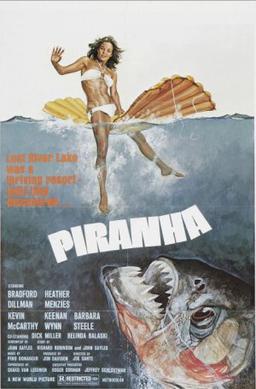
Horror Film Review: Piranha (1978, dir by Joe Dante)


At the height of the Vietnam War, the U.S. Government came up with a plan that could have changed the course of the war.

What if the government developed gigantic, super-fast, occasionally jumpy piranha?  And what if they set those killer fish loose in the rivers of Vietnam?  Would those fish swim through North Vietnam and take out the VC?  Sadly, the war ended before the government got a chance to test out Operation Razorteeth.  With the war over, the government was stuck with a bunch of killer fish.  Scientist Robert Hoak (Kevin McCarthy) ignored all orders to destroy his mutant fish because they were his life’s work.  (Awwwwwwwww!)  He kept an eye on them and did everything he could to prevent them from getting into the nearby river.

Unfortunately, Dr. Hoak’s best wasn’t good enough.  Because the piranha have gotten loose and now they’re making their way down to the river!  They start out eating skinny dipping teenagers, fisherman, and Keenan Wynn.  (They’re good enough not to eat Wynn’s adorable dog, which I appreciated.)  Further down the river, there’s a summer camp and a water park!  It’s definitely not safe to get back in the water but sadly, that’s what several people insist on doing throughout this film.  Even when the water is full of blood, people will jump in.  (It’s easy to be judgmental but it is a pretty river.  I don’t swim but I honestly wouldn’t mind living near a river that looked that nice.  Instead, I have to make due with a creek.)

Floating down the river on a raft and trying to warn everyone is the unlikely team of Maggie (Heather Menzies) and Paul (Bradford Dillman).  Maggie is a detective who has come to town to track down the two teenage skinny dippers who were eaten at the start of the film.  Paul is a drunk.  Well, technically, Paul is a wilderness guide and he does spend the entire movie wearing the type of plaid shirt that would only be worn by someone who goes camping every weekend but really, Paul’s main personality trait seems to be that he enjoys his booze.  Paul’s daughter is away at the summer camp.  Yes, that’s the same summer camp that’s about to be visited by a school of piranha.  AGCK!

Produced by Roger Corman and obviously designed to capitalize on the monster success of Jaws, Piranha was an early directorial credit for Joe Dante.  Dante would later go on to direct films like The Howling and GremlinsPiranha was also an early screenwriting credit for the novelist John Sayles, who would use his paycheck to launch his own directing career.  As a director, Sayles specializes in politically-themed ensemble pieces, which is something you might not guess while watching Piranha.  (Piranha does have an anti-military subplot but then again, it’s a film from the 70s so of course it does.)  Like the best of Corman’s film, Piranha works because it sticks to the basics and it delivers exactly what it promises.  Piranha promises killer fish biting away at anyone dumb enough to get in the water and that’s what it gives us.  As an added bonus, we also get some occasionally witty dialogue and Joe Dante’s energetic, self-aware direction.

As is typical with the films of both Corman and Dante, the cast is full of familiar faces.  Along with Kevin McCarthy as the mad scientist and Keenan Wynn as the eccentric fisherman, Dick Miller shows up as the waterpark owner.  Richard Deacon, who made a career of playing bosses and neighbors on various sitcoms in the 50s and 60s, plays the father of a missing teenager.  Director Paul Bartel plays the head of the summer camp, who may be a jerk but who still heroically jumps in the water to save several campers.  (Bartel’s moment of heroism is one of Piranha’s best scenes and, significantly, it’s played without irony.  You’ll want to cheer for the guy.)  Finally, the great Barbara Steele plays the government scientist who shows up to clean up Operation Razorteeth.

Piranha is simple but entertaining.   Dante’s direction is energetic and, despite the film’s self-referential tone, the killer fish are just savage enough to be scary.  It’s a film that tell us not to get back in the water but which understands that the temptation might just be too strong.

Horror on the Lens: The Norliss Tapes (dir by Dan Curtis)


The Norliss Tapes (1973, dir by Dan Curtis)

Today’s Horror on the Lens is The Norliss Tapes, a 1973 made-for-TV movie that was also a pilot for a television series that, unfortunately, was never put into production.

Reporter David Norliss (Roy Thinnes) has disappeared.  His friend and publisher, Stanford Evans (Don Porter), listens to the tapes that Norliss recorded before vanishing. (Stanford Evans, it must be said, is a great name for an editor.)  Each tape details yet another paranormal investigation.  (Presumably, had the series been picked up, each tape would have been a different episode.)  The first tape tells how Norliss investigated the mysterious death of an artist who apparently returned from the grave.

For a made-for-TV movie, The Norliss Tapes is pretty good.  It’s full of atmosphere and features a genuinely menaching yellow-eyed zombie monster. The film was directed by Dan Curtis, who was responsible for several made-for-TV horror films and who also created the deathless TV show, Dark Shadows. Curtis also directed a few feature films. Burnt Offerings, for instance, will be forever beloved for its scene of annoying little Lee Montgomery getting crushed by a chimney. If you ever get a chance to listen to the director’s commentary that Dan Curtis recorded for the Burnt Offerings DVD release, you must do so. Curtis comes across as the crankiest man on the planet and it’s actually kind of fascinating to listen to. His irritation when Karen Black keeps asking him if he knows the name of the actor who played the ghostly chauffeur is truly an amazing thing to here. (For the record, the actor’s name was Anthony James, he also had important supporting roles in two best picture winners — In The Heat of the Night and Unforgiven — and yes, he was one of the best things about Burnt Offerings. Karen Black knew what she was talking about.)

But back to The Norliss Tapes!

Admittedly, this is not the first Halloween in which I’ve shared The Norliss Tapes with our readers. Back in 2015, The Norliss Tapes was one of our “horrors on the lens.” Unfortunately, there’s only so many good quality, public domain horror films available on YouTube so, occasionally, a movie is going to show up more than once over the years. But, as long as it’s good film, who cares?

Enjoy The Norliss Tapes!

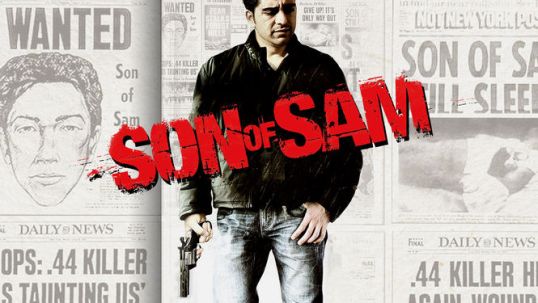
The TSL’s Grindhouse: Son of Sam (dir by Ulli Lommel)


Oh, Ulli Lommel.

Where to even begin?

Born in what is now Poland but what was then Germany, the late Ulli Lommel got his start as a frequent collaborator with the enfant terrible of New Wave German cinema, Rainer Werner Fassbinder.  Lommel acted in several of Fassbinder’s films and Fassbinder produced Lommel’s third film as a director, the acclaimed The Tenderness of Wolves.  In the 70s, Lommel relocated to the United States and, after marrying heiress Suzanna Love, he became a prominent part of the New York City art scene.  He hung out with Andy Warhol.  He made films about punk rock.  He directed three films, Cocaine Cowboys, The Boogeyman, and The Devonsville Terror, that proved that he actually did have some talent when it came to taking on thrillers and horror films.

And then, it all pretty much fell apart.  Reportedly, after he and Love divorced, he lost not only his frequent star but also his main financial backer.  Lommel spent the rest of his lengthy career directing zero-budget horror films that were best-known for featuring stock footage that was lifted from his previous films.  Starting in 2005, he started making direct-to-video movies about real-life serial killers.  In interviews, Lommel insisted that his films were not exploitive but that, instead, his serial killer films were meant to offer up a critique of the hypocrisy of American society.  And while it’s easy to roll your eyes at Lommel’s claim, I have no doubt that he was being, in his own way, perfectly sincere.  His serial killer films are famous for not sticking to the facts but they should be even more famous for their emphasis on alienation and loneliness.  All of Lommel’s serial killer films focus on people living on the fringes of society, ignored by those who would rather pretend that they didn’t exist.  Lommel consistently portrayed serial killers as being a symptom of a much bigger disease.

Unfortunately, Lommel made his films with very little money and on a very tight shooting schedule.  Reportedly, Lommel’s philosophy was to almost always only shoot one take.  If someone screwed up a line or if there was a glaring continuity error or if the camera crew briefly appeared in the background, so be it.  Indeed, because Lommel’s later films were so deliberately chaotic and semi-improvised, it was often difficult to tell if a continuity error was actually a mistake or something that Lommel deliberately planned.

Sadly, this led to Ulli Lommel getting a reputation for being one of the worst directors of all time.  That’s not fair, though.  Whatever one might say about his low budgets or his odd style, one cannot deny that Ulli Lommel had a unique vision and that he stuck with it.  That’s more than you can see for most bad directors.  If nothing else, you’ll never mistake a Ulli Lommel film for being the work of any other director.

Take his 2005 film about the Son of Sam.  The film is 80 minutes of David Berkowitz (played by Yogi Joshi) wandering around New York with a confused look on his face.  Whenever he sees anyone, a voice commands him to kill while another voice chants “Son of Sam …. Son of Sam.”  Meanwhile, there are flashforwards to the recently arrested David Berkowitz, meeting with his public defender and subsequently asking a priest (played by Lommel himself) to exorcise the demons from him.  Then there are flashbacks to Berkowitz at some sort of Satanic coven meeting where the high priestess won’t stop laughing.  (In typical Lommel fashion, the high priestess is clad in her underwear while everyone else in the cult is dressed in black.)  Then, there’s another set of flashbacks to Berkowitz talking to an old woman who may or may not be a part of the cult.  Then a dog shows up and gives Berkowitz a meaningful stare.

It’s a mess with no real plot and making it through the entire 80 minutes is a true endurance test.  The film not only screws up the facts behind the murders (i.e., the real-life Berkowitz shot people sitting in cars, the film’s Berkowitz shoots a drug dealer standing in a doorway) but it also buys into Berkowitz’s self-serving claim of having been manipulated by a Satanic cult, a claim that falls apart under scrutiny and common sense but which was still recently presented as fact by a Netflix miniseries.  We’re told that the film is taking place in the 70s, which is good because, despite the presence of one awkward conversation about going to Studio 54, you’d never know it otherwise.

And yet …. there’s an intensity to Lommel’s vision that I have a hard time totally dismissing.  The movie plays out like a fever dream and the visuals are so chaotic and so random and just so weird that it’s hard not to feel that Lommel probably did manage to capture what it was like inside of David Berkowitz’s messed-up head.

Don’t get me wrong.  Son of Sam is not a good film.  It’s a mess and it’s repetitive nature gets boring fairly quickly.  But it’s also hardly the work of the worst director of all time.  Instead, it’s uniquely Lommel.