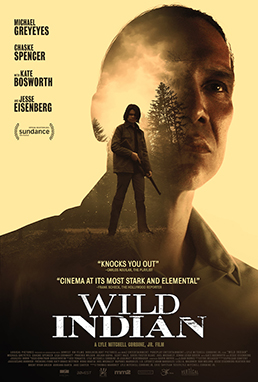
Catching Up With The Films of 2021: Wild Indian (dir by Lyle Corbine, Jr.)


Wild Indian opens in the 80s, with two teenage boys living on a Ojibwe reservation in Wisconsin.  Both of them come from broken homes.  Both of the are bullied in school.  Makwa (played, as teenager, by Phoenix Wilson) is quiet but angry and spends most of his time trying to avoid the company of his alcoholic parents.  His cousin, Teddo (played, as a teenager, by Julian Goppal), is slightly more responsible and level-headed.  One day, after Makwa kills one of his classmates, he begs Teddo to help him hide the body.  Teddo is reluctant but eventually, he agrees.

We then jump forward several years.  Now played by Michael Greyeyes, the adult Macwa lives in California and he uses the name Michael Peterson.  He’s a businessman, a partner in a firm with Jerry (played by the film’s executive producer, Jesse Eisenberg).  Michael is married to a white woman (Kate Bosworth) and lives in an upscale apartment.  He and his wife have one child and another is on the way.  Though Michael doesn’t deny his Native heritage, he now uses it for a gimmick.  He describes it as being his “brand.”  He never speaks of his past in Wisconsin.  His wife doesn’t even know his original name.  Michael would seem to have everything that he’s ever wanted but it’s obvious that he’s still struggling with his inner demons.  He hires a stripper so that he can strangle her.  The rare time he does talk about other Native Americans, it’s to dismiss them as being dishonest and narcissistic, descriptions that many would use to describe Michael himself.

Meanwhile, Teddo (now played by Chaske Spencer) has spent the last several years in prison.  Wracked with guilt after helping Makwa cover up the murder of their classmate, Teddo became a drug dealer.  When he gets out of prison, his face is heavily tattooed, as if he’s trying to announce his crimes and sins to the world.  When he visits the mother of the boy that Makwa murdered, Teddo starts to cry uncontrollably.  Eventually, Teddo leaves Wisconsin, heading to California so that he can confront Makwa face-to-face.

Wild Indian is an atmospheric and, at times, rather disturbing thriller.  It’s not a surprise that Teddo wants and needs some sort of resolution with Makwa but, from that premise, the film’s story goes off in some unexpected directions and, in the end, neither Makwa nor Teddo turn out to be quite who the viewer was expecting them to be.  Teddo, the violent drug dealer, turns out to have a strong sense of moral obligation while Makwa, for all of his success, is so deeply in denial about his past and his sins that he can’t even be honest with himself about who he is, much less anyone else.  It all leads to a rather jarring ending, one that may seem abrupt but actually works perfectly.  In the end, the sins of the past cannot be escaped and they cannot be changed.  All one can do is live under the clouds of the past.

Wild Indian is triumphant directorial debut for Lyle Corbine, Jr., an uncompromising character study of two men who can never escape the past no matter how much they may want to.  Both Michael Greyeyes and Chaske Spencer give wonderful performances as Makwa and Teddo.  This is definitely a film to track down and watch.
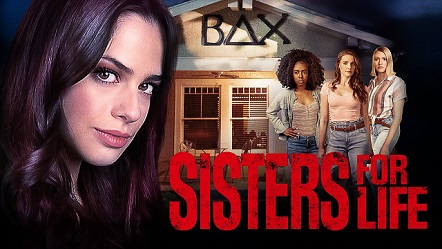
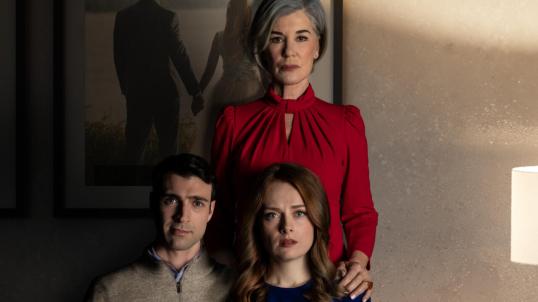
Lifetime Film Review: Sisters For Life (dir by Anna Elizabeth James)


It’s pledge week!

Bailee (Briana Fermia) really wants to join the college’s nicest sorority and she feels that she established a real connection with Jana (Maddison Bullock) when she interviewed to be selected for one of the opening spots.  Unfortunately, connection or not, there’s no room for Baileee because a legacy named Cori (Taylor Fono) has also applied.  Cori’s mom was in the sorority.  Cori’s sister was in the sorority.  Therefore, Cori gets to be in the sorority!  Yay!  College traditions are the best!

Bailee confronts Jana about how unfair it is that she wasn’t invited to join the sorority.  Jana feels guilty but what can she do?  There’s just no space.  But then, one night, Cori is attacked on campus.  Due to her injuries, Cori has to withdraw from the college and therefore the sorority.  Who can take Cori’s place?  Jana has a suggestion!

Bailee is now in the sorority and it soon turns out that she’s totally clingy and kind of psychotic.  She takes the whole idea of “sisters for life” very seriously and Bailee fully expects that Jana will be her sister for life.  Jana, meanwhile, is like, “This is my senior year, I want to hang out with my boyfriend, and I want to finish up my science project so I can have a career once I graduate.”  Soon, the other sorority sisters are getting drugged, framed, and attacked.  Even Jana’s boyfriend gets attacked in the shower!  Could it all somehow be connected to Bailee?

Of course it’s all connected to Bailee!  The film wastes no time in making it clear that Bailee is not to be trusted.  That’s the way Lifetime films work.  Anyone who shows up out of nowhere and suddenly starts demanding that you be her sister for life is going to turn out to be totally unhinged.  They always start out as slightly needy but seemingly sweet but, by the time the second commercial break rolls around, they’ve already put at least one person in the hospital or maybe even worse.  Some people will go to outrageous lengths to have a friend.

Anyway, Sisters for Life was a fun, if slightly predictable, Lifetime film.  As I’ve said in the past, though, the predictability is kind of the point.  Familiarity is one reason why Lifetime movies are so much fun to watch.  We’re always a few steps ahead of everyone else in the movie.  Towards the end of the film, one character announces, “You’re the meanest sister that I’ve ever had!” with a totally straight face and if you can’t appreciate the self-awareness behind a line like that than Lifetime films just aren’t for you.

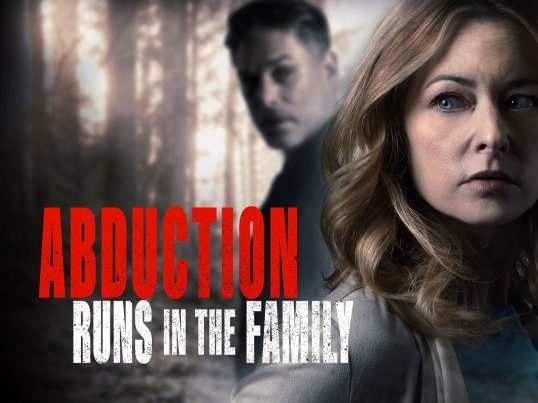
Lifetime Film Review: Abduction Runs In The Family (dir by Jeff Hare)


If abduction runs in you family, it might be time to get a new family.

Or it might just be time to make sure that you’re really, really good at it because, if abduction is the family business, you don’t want to be embarrassed at the next family reunion.

Abduction Runs In The Family in not only an ominous way to describe your relations but it’s also the title of a Lifetime movie.  It stars Jessica Morris as Alyssa.  When she was a child, Alyssa was abducted by a man named Miles (James Hyde).  Miles did not abuse or deliberately harm Alyssa.  Instead, he wanted a replacement for his daughter, Sophie and, when he abducted her, he treated her as if she was his own daughter.  Alyssa was eventually rescued and Miles was sent to prison.  Now, years later, Alyssa has become famous as a result of talking and writing about how she was not only kidnapped but how she also eventually forgave Miles for what he did.  As the movie begins, Miles is about to get out of prison and Alyssa has a book coming out about her experience.  Finally, life is providing a chance for both of them to get on with their lives.  Miles, of course, has been given a restraining order as a condition of his parole.  He’s not to go anywhere near Alyssa or her daughter, Emma.

But then …. Emma disappears!

Emma’s been abducted and Miles is Alyssa’s number one suspect.  However, Miles has an alibi for the entire afternoon and he insists that he did not kidnap Emma.  If Miles didn’t do it, who did?  Can Alyssa rescue Emma with the help of the man who abducted Alyssa so many years ago?

Abduction Runs In The Family is an interesting Lifetime film, largely because it takes an unexpected approach to the relationship between Alyssa and Miles.  Alyssa insists that, after kidnapping her, Miles only treated her with kindness and fatherly love and the film keeps you guessing as to whether Alyssa’s memories are correct or if she’s still suffering from Stockholm Syndrome.  Miles is creepy, largely due to his past, and yet he still seems to be sincere in his desire to move on from his previous actions.  It leads to an interesting dynamic between the two characters, who are both well-played by Morris and Hyde.

Unfortunately, the solution to the mystery itself isn’t particularly satisfying.  This is one of those Lifetime mysteries where the film overall would have benefitted from a few more suspects because once you eliminate one them, there’s pretty much only one other person left.  And, unfortunately, a good deal of the film’s conclusion rests on the guilty party leaving a very obvious clue out in the open for everyone to see.

All that said, this is still a compelling Lifetime film, one that takes its story in some unexpected directions.  The final scene between Morris and Hyde is nicely acted and written.  This is definitely a Lifetime film to keep an eye out for.

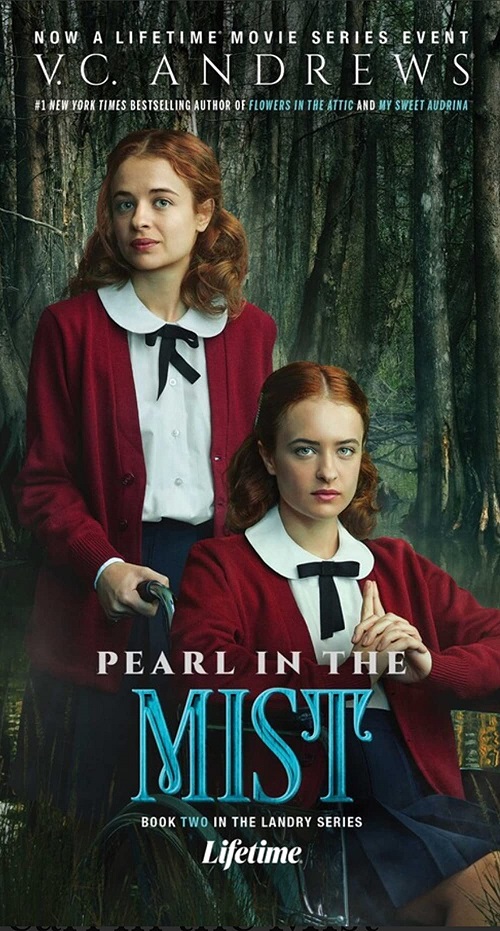
Lifetime Film Review: V.C. Andrews’ Pearl in the Mist (dir by David Bercovici-Artieda)


Since I kind of enjoyed watching Ruby earlier today, I decided to watch the second film in Lifetime’s Landry family saga, V.C. Andrews’ Pearl In the Mist.

Pearl in the Mist picks up where the first film ended.  The year is 1962 and aspiring artist Ruby (Raechelle Banno) is living in New Orleans and still thinking about the life that she left behind in the Bayou.  Her father (Gil Bellows) is still married to her bitchy stepmother (Lauralee Bell).  Ruby’s twin sister, Giselle (Karina Banno), is still using a wheelchair as a result of a car accident and she’s still angry that Ruby stole away Giselle’s boyfriend, Beau (Ty Wood).  Ruby’s half-brother, Paul (Sam Duke), is still living in the Bayou and is still in love with Ruby, despite the fact that any physical relationship between them would be incestuous.

However, it’s time for Ruby and Giselle to get out of New Orleans.  They’ve been enrolled in a prestigious boarding school.  Giselle is not happy about having to leave home.  Ruby is excited because, goddammit, Ruby’s excited about everything.  At the boarding school, Ruby deals with all sorts of drama.  She befriends a girl who is passing as white.  She inspires a blind pianist.  She flirts with a hunky groundskeeper.  She continues to paint under the tutelage of Miss Stevens (Meaghan Hewitt McDonald).  She does all of this despite the fact that the school’s headmistress (Marilu Henner) hates her because Ruby is from the Bayou and no one trusts “swamp people.”  As the same time, Ruby has to deal with her wicked stepmother and her bitter sister.

I have to admit that, at first, I didn’t think I was going to like Pearl in the Mist, if just because Ruby herself was so perfect that she was kind of annoying.  She never had a bad thought.  She never said a bad word.  She was also so extremely naïve and so endlessly enthusiastic that I could understand why Giselle was so sick of having to deal with her.  Ruby’s innocence made sense in the first film, because Ruby was still adjusting to life in the city.  But, by the time Pearl in the Mist rolls around, there’s really no excuse for Ruby to be so clueless about …. well, everything.

Fortunately, about halfway through, the film started to get interesting.  Bizarre incidents started to pile up.  Characters started to snap at each other in dialogue that was so overwritten and pulpy that it was kind of impossible not to love the sound of it.  The film embraced the melodrama, as I like to say.  It all eventually led to a plot twist involving Giselle that was so insane and so out there that it redeemed the entire film.  Karina Banno appeared to be having a lot of fun being bad as Giselle and it was fun to watch her.  If you’re going to be in a film like this, you always want to play the bad girl.  They always get the best lines.

In the end, Pearl in the Mist was so over-the-top and cheerfully silly that I couldn’t help but enjoy it.  All trips to the Bayou should be as fun.

Lifetime Film Review: V.C. Andrews’ Ruby (dir by Gail Harvey)


This time is the 1950s and the place is Louisiana.  Ruby Landry (Raechelle Banno) is a teenage girl who lives in a shack out on the Bayou.  She’s never known her mother.  She’s never known her father.  She does know her Grandmere, Catherine (Naomi Judd), who is a Bayou witch.  

Ruby might not know much but she knows how to paint.  One day, the owner of a New Orleans art gallery just happened to be driving by when he spots Catherine selling Ruby’s paintings on the side of the road.  He’s impressed, even though the paintings aren’t really that impressive.  He buys the paintings and then hangs them in his gallery.  Ruby can’t wait until she graduates high school so that she can move to New Orleans with her boyfriend, Paul Tate (Sam Duke).  Except … uh-oh!  Grandmere explains to Ruby that Paul is actually her half-brother so no, they can’t run off together.  That’s incest and that might be okay for the Ozarks but folks in the Bayous got standards.

As long as secrets are being shared, Grandmere also explains that Ruby’s father is a wealthy man named Pierre Dumas (Gil Bellow) and that Ruby actually has a twin sister, who we later learn is named Gisselle (and who is played by Karina Banno, the twin sister of Raechelle Banno).  Having dropped a lot of information on Ruby, Grandmere promptly dies.

Ruby inherits Grandmere’s shack and she still has the money that she made off of her paintings, which means that Ruby is now one of the richest people in the Bayou.  However, her alcoholic grandfather still wants to sell her to a local businessman so Ruby flees the Bayous, heads to New Orleans, and decides to live with Pierre!

Pierre is ecstatic to discover that he has another daughter.  Pierre’s wife (Lauralee Bell) is a bit less excited about it.  And Gisselle claims that she could hardly care less about her Bayou sister.  In fact, it seems like Ruby’s only ally is the housekeeper who, it turns out, knows all of the best voodoo priestesses in New Orleans….

Now, believe it or not, all of that happens within the first 30 minutes of RubyRuby is not a boring film.  In fact, one could claim that there’s almost too much going on.  No sooner has Ruby moved into the house than she’s hearing mysterious weeping coming from one of the bedrooms.  No sooner has Ruby started high school in New Orleans than she’s being set up for humiliation by her twin sister.  As soon as Ruby draws one of her classmates naked, you know that she’s going to end up in an asylum where a doctor will demand to know if she’s familiar with the term nymphomania.  Ruby is a big and messy film, one that embraces the melodrama with so much enthusiasm that it’s easy to overlook that the film really doesn’t make much sense and that a lot of the plot is dependent upon people not being particularly smart.

Ruby is one of the many recent Lifetime films to be adapted from a V.C. Andrews novel.  Now, of course, V.C. Andrews didn’t have anything to do with writing Ruby.  She died long before the book was written.  Instead, Ruby was written by ghost writer, pretending to be Andrews.  The plot ticks off all of the usual V.C. Andrews tropes with such precision that it’s hard not to be both impressed and amused.  White trash?  Yep.  Incest?  Yep.  Rich relatives?  Yep.  More incest?  Yep.  Big house?  Yep.  Twins?  Yep.  If you made use of a random V.C. Andrews plot generation, it would probably give you something similar to Ruby.

Ruby is silly fun.  It doesn’t reach the heights of Flowers in the Attic films but it’s still better than the films that Lifetime made about the Casteel family.  It was also the first of four films about Ruby and her family.  I’ve got the other three on the DVR and I’ll be watching and hopefully reviewing them before the month ends.

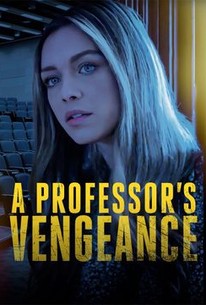
Lifetime Film Review: A Professor’s Vengeance (dir by Danny J. Boyle)


When aspiring writer Nicole Atkins (Lindsey Dresbach) returns to graduate school, she assumes that she’ll take a few creative writing courses and that will be it.  Unfortunately, her creative writing professor has come down with a case of mono and his replacement is Daniel Hudson (Ross Jirgl), an arrogant academic with whom Nicole previously had a torrid affair.  At time, of course, Nicole didn’t know that Daniel was married to a veterinarian named Valerie (Crystal Day).

It’s an awkward situation but Nicole hopes that her previous relationship with Daniel won’t be a factor in the grades that he gives her.  Daniel, meanwhile, seems to be perturbed by the fact that Nicole is getting close to another student, Brandon (Byran Bachman).  When one of Nicole’s papers gets an F, Daniel explains that he actually gave her an A.  Maybe, Daniel suggests, Brandon hacked into the system and changed her grade, all in an effort to make Daniel look bad.

Meanwhile, students are dying.  The police think that the deaths are due to accidental drug overdoses but the viewer knows that there’s a murderer stalking the campus and anyone who has ever had any sort of relationship with Daniel is a potential target!

If this was one of Lifetime’s “Wrong” films, A Professor’s Vengeance would have concluded with Vivica A. Fox showing up at the end and saying, “Looks like you slept with the Wrong Professor” or “You picked the Wrong Major.”  However, it’s not a part of the Wrong series, even if it does have a plot that feels like it would have been perfect for the particular franchise.  Also, like the majority of the Wrong films, A Professor’s Vengeance is a thoroughly fun and enjoyable Lifetime melodrama, full of lies, sex, death, and a smug man who you just can’t wait to see get his comeuppance.  It also has a twist ending and a nicely done dream sequence!  Seriously, what more could you ask for from a film like this?

Ross Jirgl is wonderfully hissable as the smug professor but the film is truly stolen by Crystal Day, playing the professor’s wife.  Day perfectly captures the fury of a woman who is smart enough to know better than to trust her husband and her building anger as it becomes obvious that he’s cheated on her is one of the best parts of the film.  Lindsey Dresbach is a likable heroine and, just as importantly, she’s also believable as someone who could write a short story that someone would actually want to publish.  Meanwhile, Bryan Bachman is very sweet and sympathetic as her well-meaning classmate.  Of course, it’s not a Lifetime film without a skeptical police detective and, in this film, that role is well-played by Kate Dailey.  If I ever committed a crime, I would not want to be questioned by Kate Dailey’s detective.  I would probably start naming names as soon as she shot me that first glare.

I very much enjoyed A Professor’s Vengeance.  It’s exactly the type of film that made me fall in love with Lifetime in the first place.

Lifetime Film Review: A Predator Returns: Stalker’s Prey 3 (dir by Colin Theys)


Bruce is back!

Played by Houston Stevenson, Bruce is the character at the center of Lifetime’s Stalker’s Prey trilogy.  Bruce is a handsome, charming young man who loves studying the ocean and who, even more importantly, loves studying sharks.  In fact, sharks tend to follow Bruce wherever he goes.  You have to understand that Bruce is one of those people who has to move around a lot.  He has a bad habit of becoming obsessed with teenage girls and then feeding his romantic rivals to his shark.  Poor Bruce.  If only he had more confidence in himself!  Anyway, you can usually find Bruce hanging out in the marina or near the bay.  Usually, he’ll be using an assumed name but you can always tell that it’s Bruce because he’s the guy who won’t stop talking about how much he loves the water.

A Predator Returns finds Bruce calling himself David and telling everyone that he’s an oceanography students.  He’s living in a deserted lighthouse and seems to be content to spend all of his time feeding his sharks.  However, when he spots a group of teenagers swimming near the lighthouse, everything pretty much goes downhill from there.  After he rescues the teenagers from his sharks, Bruce quickly becomes obsessed with Courtney (Leigha Sinotti).  Courtney is having trouble at home, largely because of her demanding mother and her overprotective father.  Soon, she’s running around with Bruce and staying out until five in the morning.  Courtney’s father takes an automatic dislike to Bruce.  Uh-oh, looks like someone’s about to become shark bait.

Bruce and Courtney’s relationship gets pretty serious.  How serious?  At one point, Bruce shouts, “BRUCE IS GOING TO BE A DADDY!”  Of course, by the time Bruce finds out about that, Courtney has already dumped him because he’s such an obvious psycho.  Bruce is determined to get Courtney back, even if it means framing her for murder.

Especially when compared to Stalker’s Prey and A Predator’s Obsession, there isn’t much shark action in A Predator Returns.  The shark’s do much an appearance, of course and they do eat a few unfortunate victims.  But, compared to the previous films, they still don’t play a huge role in the story.  That was a bit disappointing, as the sharks really were the main attractions in the previous two Stalker’s Prey films.  You really can’t introduce sharks and then just kind of push them to the side.  It’s the rule of Chekhov’s Shark.  If you introduce a shark during act one, it’s going to have to eat at least a dozen people by the end of act three.

That said, Huston Stevenson really dug into the role of crazy Bruce and he was well-matched by Leigha Sinotti as Courtney.  The film was full of winking references to Jaws and a host of other horror films and it’s impossible not to enjoy a film that’s so clearly in on the joke.  Director Colin Theys keeps the action moving quickly and the movie ends a nicely ambiguous note, one that suggests that the story may not be quite over.  If there’s anything that I’ve learned from watching these films, it’s that sharks have 9 lives and, for that matter, so does Bruce!

Lifetime Film Review: A Mother’s Lie (dir by Stefan Brogren)


Even the best of families have secrets.

Unfortunately, the family at the center of A Mother’s Lie is hardly one of the best.  Sure, they’re wealthy.  And sure, they’ve got several very nice and very big homes.  But matriarch Joyce (Sonja Smits) is a little bit …. well, unhinged.  She was shocked when her teenage daughter, Katherine (Alex Paxton-Beesley) got pregnant.  Joyce demanded that Katherine not tell her boyfriend, Chuck (Gabriel Venneri).  Instead, Katherine went into hiding for 9 months.  When Katherine gave birth, Joyce told her that the baby was stillborn.

Now, 20 years later, Katherine and Chuck are married and they’re raising a daughter, Haley ( Zoe Sarantakis). Katherine has never told Chuck about their first child and Katherine feels guilty about that.  When Haley is diagnosed with leukemia and her parents are told that she’ll die without a bone marrow transplant, Katherine can’t help but wish that their first daughter had lived.  After all, she would be the perfect donor!

Well, it turns out that Joyce wasn’t being honest when she said that the first baby was stillborn.  The baby was born alive and was put up for adoption, without Katherine’s knowledge.  Libby (Madelyn Keys) was adopted by a poor but good family.  She’s now attending college and dreaming of going to medical school.  But how will she be able to pay for it!?

One day, Libby receives an offer from a mysterious benefactor.  All Libby has to do is agree to donate some bone marrow to a young girl and Libby will receive more than enough money to pay for medical school!  She’ll even be allowed to recuperate in an isolated and mysterious mansion!  The only condition is that Libby has to remain anonymous and she can’t have contact with the girl’s family.  Of course, Libby agrees!

Yay!  Haley’ going to live!  Libby’s going to be rich!  And the family secrets are going to remain hidden!  Except …. well, as I said, Joyce is a little bit unhinged, to the extent that she’s willing to kill anyone who might reveal the secret of what happened the night that Katherine gave birth to Libby.  It quickly becomes obvious that Libby is going to be lucky to escape from the mansion with her life….

A Mother’s Lie is an enjoyably gothic Lifetime film, the movie equivalent of one of those old paperback books that always featured a nervous-looking woman standing in front of a shadowy mansion.  It even features a sinister housekeeper (played well by Louise Kerr), who will do anything to help Joyce keep her secrets!  It’s all appropriately melodramatic and the film is made with enough self-awareness that it never makes the mistake of taking itself too seriously.  It’s an entertaining Lifetime film, pure and simple.

It’s also a very Canadian film.  From the minute I saw Libby casually walking down a snow-covered path on her way to class, I knew that this was a film that made north of the border.  That’s not a complaint, of course.  Many of the best Lifetime film were made in Canada and I always enjoy spotting former Degrassi actors.  And while this film’s cast may not have featured any Degrassi grads, A Mother’s Life was directed by Stefan Brogren, who played Mr. Simpson on that venerable show.  He does a good job of keeping the action moving and maintaining a properly gothic atmosphere.  It’s an enjoyable 90 minutes.

Cleaning Out The DVR: The Mauritanian (dir by Kevin Macdonald)


Last night, I finally watched The Mauritanian.

The Mauritanian is a film that was released earlier this year.  The Golden Globes gave it some unexpected love.  The Oscars ignored it.  It won some awards in the UK.  It’s based on the true story of Mohamedou Ould Salahi, who was detained at Gitmo without charge for 15 years.  The U.S. government claimed that Salahi was one of the men responsible for recruiting the 9-11 hijackers.  Salahi claimed innocence and wrote and published his memoirs while he was still a prisoner.  Salahi was regularly tortured and sexually abused while detained.  His interrogators regularly threatened to bring his mother to Gitmo, where she would be gang-raped, unless Salahi told them what they wanted to hear.

It’s a horrifying story and an important one, especially nowadays when so many people have forgotten that everyone is meant to have rights under the law.  Unfortunately, The Mauritanian doesn’t really do the story justice.  Instead of simply focusing on Salahi (played, in a charismatic performance, by Tahar Rahim) and what he went through after being detained, the film divides its time between Salahi, his lawyers, and the man assigned to prosecute his case.  As the representatives of the legal system, Jodie Foster, Shailene Woodley, and Benedict Cumberbatch all give one-note performances.  Foster somehow won a Golden Globe for her role but there’s not much to the performance or the character, beyond the fact that she’s pissed off and she’s played by a respected performer who came out of semi-retirement because she agreed with the film’s message.  Shailene Woodley is not particularly believable as someone who could have passed a bar exam.  Meanwhile, the film uses Benedict Cumberbatch’s likable screen presence to try to disguise the fact that it tells its story with a counter-productively heavy hand.  The film wants us to think its nuanced, just because the normally heroic Cumberbatch is playing one of the government’s representatives.

The Mauritanian is a film that wants to shock and outrage us.  It’s also a film that wants to move us and make the audience celebrate the activism of the attorneys played by Foster and Woodley.  Unfortunately, director Kevin Macdonald takes a rather generic approach to telling this story.  There’s no complexity.  There’s no surprises.  One need only look at a film like The Report to see how a film like this could have been effective.  Instead, The Mauritanian often threatens to become as self-congratulatory as The Trial of the Chicago 7.  At its weakest, it’s like an Aaron Sorkin film, without the snappy dialogue.  There is a harrowingly effective sequence in which Salahi is psychologically tortured but Macdonald lessens the impact by continually cutting to Foster and Cumberbatch reading a report about the torture.  It takes a moment that should have been about what Salahi was put through and instead makes it about how his attorney reacts to it.  It’s as if Macdonald didn’t have faith in his audience and felt that we would need two stars to let us know that the torture we’re viewing with our own eyes was wrong.

Though The Mauritanian was only released a few month ago, it already feel like a relic from another era.  One gets the feeling that a flawed but politically outspoken film like this would have gotten a lot more attention from the Academy if it had been released in 2006 or 2007 or even during the first two years of the Obama administration, back when people still believed that Obama was serious about closing Gitmo.  Today, however, we take the excesses of the war on terror for granted.  People are no longer shocked by them.  As I watched The Mauritanian, I found myself thinking about the fact that, just two-and-a-half months ago, the U.S. blew up an innocent aide worker and his family, bragged about it, and then tried to cover it up.  At one time, this would have been a national scandal.  In 2021, however, it’s the sort of thing that gets shrugged off.  One gets the feeling that a movie will never be made about that man or his family.


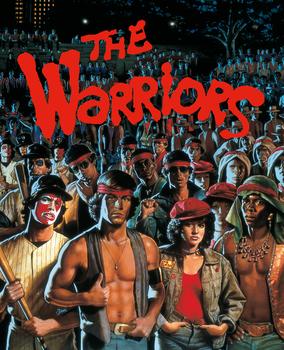
Scenes That I Love: Cyrus’s Speech From The Warriors


Cyrus?

He’s the one and only.

From 1979’s The Warriors (which I watched earlier tonight as a part of the #FridayNightFlix live tweet), here’s a scene that I love.  Playing the role of Cyrus, the man who could bring all of the gangs of New York together, is Roger Hill.  Playing the role of his assassin is the great David Patrick Kelly.

Cyrus knew what he was talking about but the world wasn’t ready for him.

Can you dig it?