Film Review: KIMI (dir by Steven Soderbergh)


KIMI, the latest addition to Steven Soderbergh’s interesting but frustratingly inconsistent filmography, stars Zoe Kravitz as Angela Childs.  Angela is an agoraphobic tech worker who is living in Seattle during the COVID pandemic.  A sexual assault survivor, Angela spends her days and nights safely locked away in her apartment.  She works from home.  She always keeps her mask some place near.  Occasionally, she’ll have a video session with her therapist.  Her mom calls and scolds her for not going outside.  She exchanges texts and occasionally more with Terry Hughes (Byron Bowers), an attorney who lives across the street.

And, she’s watched by Kevin (Devin Ratray).  Kevin also lives across the street and, throughout the film, he’s occasionally seen watching her from his top floor apartment.  It’s creepy but it’s not surprising.  KIMI is a film in which everyone is being watched by someone else.  Sometimes, they realize it and often they don’t.  Welcome to the Surveillance State, where privacy is the ultimate illusion.

Angela works for the Amygdala Corporation.  Under the leadership of CEO Bradley Hasling (Derek DelGuado), Amygdala has created KIMI, the virtual assistant that is superior to Alexa because all of KIMI’s errors are corrected not by a pre-programmed algorithm but instead by human workers who are constantly listening to KIMI’s data stream and correcting errors.  Angela is one of those engineers.  Usually, her job consists of programming KIMIs to play individual Taylor Swift songs as opposed to building Taylor Swift playlists.  When one owner calls KIMI a peckerwood, Angela programs the KIMI to understand that peckerwood is an “insult; vulgar.”  However, one data stream contains the sounds of what Angela believes to be a sexual assault and a subsequent murder.

Uniquely, for a film like this, Angela’s struggle is not to get people to believe that she heard what she heard.  Instead, her struggle is to get the evidence to the people who need to hear it for themselves.  Angela is terrified of leaving her apartment and, once she finally does, the outside world confirms all of her fears.  KIMI is a film about paranoia, a portrait of a world where everyone can be tracked and no one — from Angela’s too-helpful boss (Rita Wilson) to the man who casually walks by with an umbrella — can be trusted.

As I’ve said in the past, Steven Soderbergh has always been hit and miss for me.  It’s remarkable how many Soderbergh films that I love but it’s equally remarkable just how many Soderbergh films I absolutely loathe.  At his best, he can be a clever stylist and, at his worst, he can be painfully pretentious.  And yet, regardless of anything else, you do have to respect Soderbergh’s willingness to experiment with different genres and styles.  Soderbergh never stops working, despite the fact that he announced his retirement years ago.  Despite getting off to a slow start, KIMI is one of Soderbergh’s more entertaining thrillers, one that does a great job creating an atmosphere of paranoia and one that is also blessed with excellent performances from Zoe Kravitz and Rita Wilson, who makes good use of her limited screen time.  KIMI is a well-made Hitchcockian thriller and, along with No Sudden Move, it’s a return to form for Soderbergh after the two terrible movies that he made with Meryl Streep, The Laundromat and Let Them All Talk.  Yes, Soderbergh can be inconsistent but when he’s good …. he’s very, very good.  (Sometimes, he’s even brilliant.)  Narratively, KIMI may be a relatively simple film by Soderbergh standards but it’s undeniably effective.

Along with being a portrait of our paranoid age, KIMI is very much a pandemic thriller.  Angela mentions that her relationship with Terry started during the lockdowns, a time when no one found it strange that someone would be unwilling to leave their apartment.  When Angela does finally step out of her apartment, she is, of course, fully masked up and her paranoia about being followed severs as a metaphor for the paranoia that many people felt (and continue to feel) during the pandemic.  KIMI is not the first pandemic thriller and it certainly won’t be the last.  Still, what’s interesting to me that the pandemic subtext will probably be more noticeable to those who lived in states with mask mandates and aggressively regulated lockdowns than it will be for those of us who live in states that never had mandates and which, for lack of a better term, re-opened last year.  Half the people viewing KIMI will nod in recognition as Angela grabs her mask before walking up to her front door and as she quickly dashes down the street, careful not get too close to anyone else.  The other half will feel as if they’re watching some sort of dystopian science fiction film.  It all depends on where you’ve lived for the past two years.
Film Review: Shut In (dir by DJ Caruso)


Shut In is not a political movie.

It’s important to point that out because much of the online reaction to Shut In will be totally political.  That’s because it’s the second film to have been produced by The Daily Wire.  And yes, Ben Shapiro is listed as one of the film’s producers.  For many, it doesn’t matter that the film’s script appeared on The Black List of the best unproduced scripts in Hollywood.  (Of course, some notoriously terrible movies have been made out of the scripts that appeared on The Blacklist — remember Cedar Rapids? — so maybe it’d be best not to call too much attention to that.)  It won’t matter that the script was initially purchased by a major studio or that Jason Bateman (who is hardly a right-wing media figure) was originally set to direct it before the project was delayed by the pandemic.  All that will matter is that the film was produced by the Daily Wire and therefore, it will be judged as being some sort of political statement.

Indeed, when the film’s premiere was streamed on YouTube earlier tonight, I kept one eye on the movie and another eye on the chat comments.  About 80% of them were from people saying, “Let’s go Brandon!”  18% were from people saying, “Biden 2024 Harris 2028.”  And 2% of the comments were from some group of weirdoes who were obsessed with Liz Cheney.  The film itself might not be political but the film’s audience definitely was and probably will continue to be so.  I imagine most hardcore online liberals will automatically hate the film because of who produced it while most hardcore online conservatives will be tempted to overpraise it and cite it as proof that a good film can be made outside of the Hollywood system.  It’s tempting to say that’s just the way of the world nowadays but, to be honest, it’s really just the way of the extremely online world.  Most people won’t care one way or the other.  They’ll just view it as a being an effective thriller.

And, make not doubt about it, Shut In is not a bad film.  It’s an effectively tense thriller, one that has plenty of suspense and which makes good use of its limited budget.  If it’s never quite a great film, that’s because there’s a few pacing and plausibility issues, especially early on in the film.

Shut In stars Rainey Qualley as Jessica, a former dug addict who has escaped from her abusive ex and who is now trying to start a new life, with her young daughter and her newborn son, in an isolated farmhouse.  Unfortunately, when her ex, Rob (Jake Horowitz), and his scummy friend, Sammy (Indie film legend Vincent Gallo, making his first film appearance in ten years), show up at the house, Jessica ends up getting locked in the pantry while Rob and Sammy ransack the house and, most importantly, steal her phone so she can’t call for help.  Trapped in the pantry, Jessica tries to figure out a way to escape while also trying to instruct her young daughter on how to take care of her baby brother.  The whole time, of course, she’s aware that Sammy and Rob could return at any minute.

Director D.J. Caruso does a good job of building and maintaining tension throughout the film.  The majority of the film’s action takes place in that pantry and, just like Jessica, we find ourselves forced to try to interpret the sometimes random footsteps and snippets of conversation that we hear throughout the house.  Rainey Qualley, who is the daughter of Andie MacDowell and who has a Southern accent that is almost as prominent as her mother’s, is sympathetic in the role of Jessica and does a good job of playing up not only her fear but her strength.  Jessica is a survivor and it’s difficult not to admire her as she searches for a way to escape.  Vincent Gallo is older but still as uniquely photogenic as he was during his indie heyday.  He’s memorably creepy as Sammy.

As I said, it’s not a flawless film.  It takes a while for things to really get going and, towards the end of the film, a few of the characters behave in ways that defy logic.  One key moment depends on a character surviving something that, by all logic, should have easily killed them.  It may not be a political film but there are a few bits of heavy-handed religious symbolism, including an injury that deliberately calls to mind stigmata.  That said, when Jessica finally begins to fight back, it’s an enjoyably cathartic moment.

Shut In is an effective thriller and a determinedly non-political one.  If nothing else, it’ll keep you out of the pantry.

International Film Review: Into the Wind (dir by Kristofer Rus)


Ania (Sonia Mietielica) is the privileged daughter of a wealthy doctor.  She’s graduated from an exclusive high school in Warsaw and now, she’s about to start studying medicine in London.  The plan is that she’ll eventually take over her father’s medical practice and that she will, of course, marry someone from her upper class social circle.  Ania is haunted by the death of her artist mother and still struggles to get along with her stepmother (Sonia Bohosiewicz).

Michal (Jakub Sasak) is a handsome but poor athlete who works at the local beach resort.  At night, he’s a waiter.  During the day, he’s a kitesurfing instructor.  He may not have money or an education but he’s sensitive and artistic.  He likes good music, good weed, and hanging out good people.  He’s laid back but he cares about his friends and he’s got a romantic soul.

Together …. they solve crimes!

No, actually, they don’t.  There are no crimes to be solved in Into The Wind.  Instead, they meet when Ania accompanies her father, her stepmother, and her new baby brother to the resort for the summer.  While Ania listens to her father talk about how the pandemic has not really effected his practice (this is a 2022 film so, of course, there is talk of COVID in the background), Michal serves food and wine and is largely unseen by the other guests.  (The wait staff, as he explains it, is meant to be invisible.)  However, Ania sees him and he sees her.  And soon, they’re in love, they’re hanging out on the beach, they’re listening to music, and they’re kitesurfing!  But they’re also from two different worlds.  Ania’s father does not want his daughter to end up with a waiter.  And Michal’s friends are convinced that Ania will eventually return to her safe, upper class existence and Michal will be left heart-broken.

This Polish film is narratively predictable but visually stylish.  The plot should be familiar to anyone who has ever seen Dirty Dancing but then again, it’s not exactly as if Dirty Dancing was the most original film ever made.  That said, though the plot may be predictable, the film has enough lovely shots of the beach and the two leads have more than enough romantic chemistry to keep things watchable.  This is a good film to watch after a long and exhausting day, when you just want a simple story, a happy ending, and some nice pictures to go along with it.  Speaking for myself, as someone who spent last week dealing with below freezing temperatures and ice on the ground, the beach and the ocean looked very inviting and, for that matter, so did Jakub Sasak.  The beach and the cast are pretty and that’s pretty much all that a film like this really needs to work.

That said, I did really like the Kitesurfing scenes.  Kitesurfing is something that I personally would never do, seeing as how it would mean confronting not only my fear of drowning but also, potentially, my fear of heights but, even with that in mind, the film still made it a look like something that everyone should try at least once.  The scenes of people skimming across and occasionally floating above the water take on an almost religious grandeur as the surfer becomes onr with the forces of nature and fate.  Those scenes are exciting to watch, even if the story taking place around them is thoroughly predictable.

Film Review: Munich — The Edge of War (dir by Christian Schwochow)


Munich — The Edge of War opens in 1932, at Oxford University, where three graduating students are toasting their futures as a part of the “mad generation” that’s come to age in the aftermath of World War I.  Six years later, two of them will reunite as the world appears to be on the verge of another great war.

One of them, Hugh Legat (George McKay), is a secretary to the English Prime Minister, Neville Chamberlain (Jeremy Irons).  Chamberlain, haunted by the death and destruction of the Great War, is convinced that Europe can have “peace in our time,” through a policy of negotiation and appeasement.  He is aware of the men who have come to power in Italy and Germany and he’s certainly heard the rumors that they are planning on conquering Europe themselves.  However, Chamberlain is almost in denial about the reality of the situation, at one point suggesting that Hugh write a polite letter to Mussolini requesting that Mussolini tell Hitler to tone down his rhetoric.

Hugh’s classmate, Paul von Hartmann (Jannis Niewöhner), returned to Germany after graduating from Oxford.  At first, he was an enthusiastic backer of Hitler and the Nazi party.  He was rewarded with a position as a translator in the Foreign Office.  However, Paul has since become disillusioned with Hitler and is painfully aware of the anti-Semitism that has become a part of everyday life in Berlin.  Paul regularly meets with a group of generals who are plotting a coup against Hitler.  The generals believe that, if they allow Hitler to invade Czechoslovakia, the German people will rise up in order to avoid being led into another war and that they will cheer as the generals march into Hitler’s office and place him under arrest.  Paul worries that the generals are being naïve.  Adding to Paul’s problems is a former childhood friend named Franz Sauer (August Diehl).  Sauer is a new member of the SS and he has a disconcerting habit of showing up anywhere that Paul happens to be, almost as if he is aware that Paul is not the dedicated civil servant that he pretends to be.  When Paul receives a stolen document that reveals the details of Hitler’s true plans for Europe, he and Hugh team up to try to keep Chamberlain from singing the Munich Agreement.

Looking over the events that led to World War II, one question that historians frequently ask is why did Neville Chamberlain consistently refuse to stand up to Hitler despite Hitler’s growing acts of aggression.  Why did Chamberlain knowingly turn a blind eye to every treaty and agreement that Hitler broke or ignored?  Why, with Hitler openly declaring his plans to conquer Europe, did Chamberlain and so many others insist that Hitler’s actions would somehow be different from his words?  Was Chamberlain just naïve or was he, like so many others who had been traumatized by the Great War, in willful denial about the inevitability of conflict with Hitler?  Was Chamberlain just a politician trying to keep a war-weary public happy or did he truly believe that signing an agreement with Hitler would somehow lead to “peace in our time?”  Munich — The Edge of War suggests that all of the above may be true, with Jeremy Irons playing Chamberlain as being an old school establishmentarian, one with sincere intentions but also one who is incapable of truly understanding the new reality that has been brought about by the desolation of World War I.  As played by Irons, Chamberlain is occasionally sympathetic but, even more frequently, he’s obstinate in his short-sightedness and his insistence that he alone understands how to deal with Hitler.  He’s not necessarily a bad man but he’s definitely not the right man for the times.

Of course, the majority of the film focuses not on Chamberlain but instead on Paul and Hugh.  George McKay and Jannis Niewöhner both give good performances as two civil servants who know the truth but find it impossible to get anyone to listen to them.  Niewöhner is especially effective as Paul, capturing not only his disillusionment with Germany but also his disgust for himself for having been previously fooled by Hitler’s rhetoric.  Like Chamberlain, Paul was also in denial about Hitler’s true beliefs.  The difference is that Paul has learned from his mistake and is now desperately trying to reveal the truth, even if no one else wants to hear it.

It’s a good and effective film, one that works both as a historical drama and an espionage thriller.  The film is at its best when it focuses on what daily life is like when a nation is living in the shadow of the possibility of war.  Hugh comes home to discover his son wearing a gas mask and he has to convince his wife to leave London for the weekend, even though he can’t specifically tell her why.  Meanwhile, Paul lives in a Berlin that’s full of imposing architecture and seemingly happy people but with a shadow of menace hanging over every street corner.  The city’s new buildings, built to celebrate Hitler’s vision of a new Germany, are all disturbingly pristine, as if they only exist so that evil can hide behind their impressive facades.  And in the background of every scene in Berlin, there are the uniformed men with their red armbands and their haughty glares.

It’s said that hindsight is 20/20 and, indeed, it’s easy to look at someone like Neville Chamberlain and dismiss him as just being a tragically failed and foolish politician.  And there is definitely an argument to be made that he was.  (That’s certainly how I tend to view him.)  Still, Munich — The Edge of War does a good job of capturing not only the feeling of a world on the verge of war but also the motivations of those who closed their eyes to what was coming and also to those who did not.  That we know that Paul and Hugh’s efforts are ultimately to be for naught adds a poignant sadness to the scenes of them trying to get someone to listen to them but it also makes for a powerful viewing experience.  How many eyes were open in the 30s?  How many eyes are closed today?

Banjo Hackett: Roamin’ Free (1976, directed by Andrew V. McLaglen)


The great Don Meredith will always be remembered for a few things.

He’s remembered for being the first Dallas Cowboys quarterback, leading the team to multiple championship games but sadly never making it to the Super Bowl.  If you’ve seen North Dallas Forty, the quarterback played by Mac Davis was based on Meredith.  North Dallas Forty was based on a book by Phil Gent, a former Cowboys wide receiver.  When asked about the book and Gent’s portrayal of himself as being the best player on the team, Meredith reportedly said, “Hell, if I had known Phil was that good, I would have thrown him the ball more often.”

Don Mereidth was also one of the first players to make the jump from playing on the field to calling plays in the broadcast booth.  He was the good old boy who served as a foil to Howard Cosell and who sang “Turn out the lights, the party’s over” whenever it became obvious that one team was going to win the game.

He will also always be remembered for an incident in 1979 when, while covering a game in Denver, he supposedly said, “Welcome to Mile High Stadium — and I am!”  This is actually an urban legend.  Meredith never actually said he was high on national television but if a member of the original Monday Night Football Team was going to say that, it probably would have been Dandy Don.

Don Meredith is less remembered for his acting career but, like a lot of retired football players in the 70s, he tried his hand at performing.  As an actor, Don Meredith was a very good quarterback.  His performances were superior to Joe Namath’s but his range was undeniably limited.  Smart producers essentially had Don Meredith play himself, a laid back good old boy who liked his beer and enjoyed hanging out with his buddies.

Banjo Hackett was typical of Don Meredith’s films.  In this made-for-TV movie, Meredith plays the title character.  He’s the nicest horse trader in the old west but not even someone as laid back as Banjo Hackett is going to stand for someone stealing from him.  When he learns that his nephew, Jubal (Ike Eisenmann), has been put into an orphanage and that evil bounty hunter Sam Ivory (Chuck Conners) has stolen Jubal’s favorite horse, Banjo steps up to the huddle.  First, he engineers Jubal’s escape from the orphanage. Then he and his nephew track Sam across the frontier, determined to catch up with him before he sells Jubal’s horse.

Banjo Hackett was obviously meant to serve as a pilot for a television series.  The series never happened but Banjo Hackett itself is a likable film that will be best appreciated by western fans who are looking for something harmless to watch.  Don Meredith may not have been a versatile actor but he had a sincere screen presence and Chuck Conners was always an effective bad guy.  The cast is full of familiar western actors, including Slim Pickens, L.Q. Jones, and Jeff Corey.  As a movie, Banjo Hackett is as amiable as its lead character.

Film Review: Men With Brooms (dir by Paul Gross)


Yesterday, having watched a bit of the Winter Games, I decided that I wanted to watch a movie about curling.

Unfortunately, I quickly discovered that there aren’t really a lot of curling films out there.  There’s several films about ice skaters, of course.  They all feature haughty skaters being forced to partner up with blue collar amateurs and almost all of them end with everyone falling in love.  (Yay!)  And there’s plenty of hockey movies.  They all feature brawny Canadians getting into fights and almost all of them end with someone losing their front two teeth.  (Yay!)  But there aren’t a whole lot of curling movies.  I guess some people don’t believe that a broom on ice can be cinematic.  Well, the joke’s on them!  Brooms are very cinematic!  However, I did finally come across the 2002 Canadian film, Men With Brooms, on Tubi.

Now, you should understand that when I say that Men With Brooms is a Canadian film, I mean that it is very, very Canadian.  This isn’t just a film that was shot in Canada by an American company looking for tax credits and a city that looked like New York without being as expensive.  Instead, this is a film about very polite people who say “eh?” frequently and who are usually wearing several layers of clothing in order to protect from the chill in the air and the snow on the ground.  This not a film that was shot in Canada for an American audience.  This is a film that was made by Canadians for Canadians and that’s actually kind of nice.  There’s even a scene where the characters bemoan the arrival of another “American” fast food restaurant.  Speaking as an American, I think we are far too often guilty of taking our neighbors to the north for granted.  It’s good to be reminded that they are a separate nation with a separate culture and their own individual way of looking at the world.

The film begins with the death of an old man named Donald Foley (James B. Douglas).  Ten years before he died, Donald was the head coach of the greatest curling rink to ever play in Ontario.  (For those — like me! — who are not familiar with all of the details and lingo of curling, a rink is just another word for team.)  However, the rink broke up under mysterious circumstances.  The former rink skip (team captain), Chris Cutter (Paul Gross), left Foley’s daughter at the altar and skipped town.  He also tossed the rink’s curling stones into a lake!  In fact, it was while he was retrieving the stones that Donald had the heart attack that killed him.  Way to go, Chris, ya hoser!

The entire team reunites for Foley’s cremation and they discover that the coach has had his ashes put into a curling stone.  And he wants the team to come back together and to win a championship using that very stone!  And he also wants Chris to reconnect with his father, Gordon (Leslie Nielsen).  Of course, it turns out that Chris is not the only member of the team to have issues.  One team member has a low sperm count.  Another one is a drug dealer and another is having a mid-life crisis.  But they’ll all set aside their differences and try to win one for the coach!  And if they even think about quitting, there will always be a helpful townsperson around to say, “You’re going to win the Golden Broom, eh?”

Tonally, Men With Brooms is all over the place.  Odd comedic moments are mixed in with scenes of sentimental drama and the end result is a film that never seem to be quite sure what it’s trying to be.  Not all of the big emotional moments pay off.  Leslie Nielsen, though, is pretty good playing a relatively straight role.  (He still gets his share of funny lines but this performance is definitely a different comedic beast from the deadpan style of self-parody that he’s best known for.)  Ultimately, flaws aside, it’s a likable and fairly well-acted film, one that has a gentle spirit in even its raunchier moments.  It’s just so damn Canadian that it’s hard not to appreciate it.

Add to that, it’s a good film to watch if you’re trying to teach yourself about curling.  It may have been a slight film but, thanks to Men With Brooms, I now officially know that a curling team is called a rink.  You learn something new every day.

Reacher, S1 Ep2, “First Dance”, Review by Case Wright (Dir. Sam Hill), Teleplay- Scott Sullivan


The cold opens in this show are awesome; the end of the last episode feeds right into the opening of the following episode. It is literally a long movie. Reacher needs to follow up his next lead with Paul’s wife (Kristen Kreuk) and sneaks around the house and finds a vegetation clue- Really. Reacher is Sherlock Holmes/Shane/Batman. This small clue leads him to where his brother’s killer lied in wait. I know that I’m throwing a lot at you, but you have to understand that this show does not let up- There is no exhaling. You are like Reacher; you can’t stop. Then, he beats A LOT of people who try to mess with him. Why? Just why? Messing with Reacher…. ohhhh… bad idea. Side note: he’s got a soft spot for animals. I can relate to this man… so well, except he’s a bit taller.

The people killing off these Margrave residents are rough; I didn’t know you could mix crucifixion and castration, but here we are. I need a counter-clicker like they have a sporting events to keep track of all of the murders.

The writer and director establish that the town officials are as crooked as a mountain road. The killers see Charlie, Paul’s wife, as a loose end so she has to run her for her life with her children and go into hiding. Venezuelan special forces are trying to kill Reacher…and well everyone who connected to this unknown criminal enterprise.

Side note: Reacher never wears a shirt. I’m assuming it’s because of an allergy fabric sensitivity.

Roscoe is assigned to keep tabs on Reacher and it leads to dancing and partial nudity. I know that reads as contrived, but it did seem to work. There is real chemistry between Reacher and Roscoe. Sam Hill, the director, is not just great setting up tension, but he knows how to pace a story. However, they all seem to be anti-shirt. You see more shirt-wearing at a pool.

The episode ends with Roscoe seeing that her house was raided and she is targeted by the killers as well. Who isn’t marked for death?! How do they even get the mail in this town?

I thoroughly enjoyed this episode. Watch this show!

Reacher shirt allergy sufferer.

True Grit: A Further Adventure (1978, directed by Richard T. Heffron)


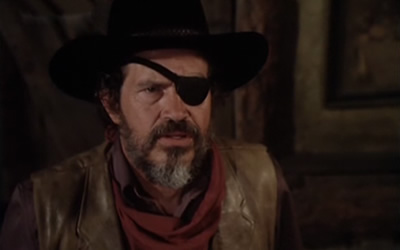
Warren Oates as the legendary, one-eyed old west lawman Rooster Cogburn?

That was the idea behind True Grit: A Further Adventure, a made-for-TV movie that was meant to serve as a pilot for a potential television series.  The film is a direct sequel to 1969’s True Grit and it features Warren Oates stepping into the role of Rooster Cogburn, the character that John Wayne famously played in the original film and who Jeff Bridges later played in the 2010 remake.  In A Further Adventure, Cogburn is once again hired to escort teenager Mattie Ross (Lisa Pelikan) across the country.  Along the way, Rooster gambles away all their money, meets an attractive widow (Lee Meriwether), and gets a job in a mining town.  With the help of Mattie, he also gets a job as a bounty hunter and the two of them go after a group of wanted outlaws.  Mattie tries to reform Rooster and make him act like more of a traditional western hero while Rooster drinks and gambles and complains.

I am a huge Warren Oates fan but even I have to admit that he’s miscast of Rooster Cogburn.  In both Charles Portis’s original novel and the two films that were adapted from it, Rooster was overweight and physically imposing,  He wasn’t book-smart but he was wise in the ways of the frontier.  Physically, Warren Oates is too slightly built and his trademark nervous energy feels out of place in the role of Rooster.  Wayne and Bridges were both believable as men who would draw first and ask questions later but Oates was a natural-born talker.  That’s one of the things that made him one of the best actors of the 70s but it doesn’t serve him well in the role of Rooster Cogburn.

On the plus side, Lisa Pelikan is a considerable improvement on Kim Darby in the role of Mattie, though she’s nowhere near as good as Hailee Steinfeld would later be in the 2010 film.  Lee Meriwether and Warren Oates shares some good scenes together but the film’s made-for-TV origins makes Meriwether’s overall performance feel like a special guest star diversion.  True Grit: A Further Adventure is a throw-back to the type of formulaic western television programs that were popular in the late 60s.  It’s easy to see why the pilot didn’t get picked up.  It was miscast and it was too late.  If it had aired a few years earlier, it’s possible to imagine Oates and Pelikan traveling to a different town and getting involved in a different story on a weekly basis and perhaps the role would have been changed to better suit Oates’s style of acting.  But, by 1978, television was heading in the direction of Hill Street Blues and the days of the western were over.

Unfortunately. Warren Oates would die just four years after this film aired, a tragically early passing that robbed the world of a unique actor who was in his prime.  Though Oates may not have been right for Rooster Cogburn, he will always be remembered for films like Badlands, Bring Me The Head of Alfredo Garcia, Stripes, Dillinger, and Two-Lane Blacktop.  He was truly a one of a kind talent.

A Blast From The Past: I Like Bikes But…. (dir by Bob Deaton, Loren Dolezal, Dennis Hess, Ernest Johnson, Oscar Rojas, Robert Rose, and Trudy Travis)


How many directors does it take to put together a 13-minute film about bicycles?

Apparently, it takes seven!  At least that’s the amount that received credit for 1978’s I Like Bikes But….  I guess some of them did the live action shots and some of them did the animation and maybe one of them was in the recording booth with the narrator but still, seven seems like a lot.  But I guess it takes a lot of manpower to make people like cyclists.

Anyway, this film was meant to encourage people to not only ride bicycles but to also observe all of the safety rules that surround riding bikes in public.  A bicycle named Ike is convinced that he can make you love overlook the slow-moving nuisance of the public cyclist if he just keep repeating, “I like bikes over and over again….”  That may have worked for Eisenhower but he won a war so everyone already liked him.  Whereas bicyclists are usually the people you dread getting stuck behind in traffic.

I have to admit that, after watching this short film, I found myself hating bikes even more than I did before.  But I do appreciate Ike’s enthusiasm.  He tried.

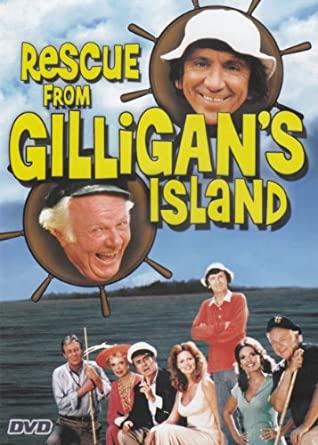
Rescue From Gilligan’s Island (1978, directed by Leslie H. Martinson)


I know that this is going to shock some people but Rescue From Gilligan’s Island is dumb.  In fact, it is not just dumb.  Instead, it is very, very, very dumb.  It’s just about the dumbest goddamn thing I’ve ever seen.

The first TV movie sequel to the 60s television show about a group of castaways on an uncharted isle, Rescue From Gilligan’s Island picks up ten years after the final episode of Gilligan’s Island.  The castaways are still living on the island and trying to figure out how to get back home.  There’s the Skipper (Alan Hale, Jr.) and Gilligan (Bob Denver).  There’s Mary Ann (Dawn Wells), the Howells (Jim Backus and Natalie Schaefer), and the Professor (Russell Johnson).  Ginger is also there but there’s something different about her.  Tina Louise refused to return to the role because she always said appearing on Gilligan’s Island ruined her career.  Ginger is now played by Judith Baldwin, who looks glamorous but who also plays her role distressingly straight, as if she was the only person unaware that nothing about Gilligan’s Island should have been taken seriously.

After ten years of being stranded, the professor finally figures out how to get the castaways off the island!  You’ll never believe the plan he comes up with.  He decides that the castaways should build, get this … a raft!  Ten years on the island and it never occurred to them to just make a raft?  The castways do get some help from a tsunami, which pushes them out to the ocean.  And then when Gilligan sets the raft on fire, they’re saved by the Coast Guard.

(How did they spend ten years on the island without killing Gilligan?)

Despite having been away from ten years, everyone settles back into their old routines but it’s not just the same.  The Professor tries to teach but the students just want to hear about what it was like to be marooned on an island.  Ginger returns to acting but is expected to now appear in PG-rated films!  Mary Ann agrees to marry her old boyfriend, Herbert, despite not loving him.  The Howells go right back to their old lives because the Howells are just as weird as on the mainland as they were on the island.

As for Gilligan and Skipper, they try to convince their insurance company to pay to fix the Minnow so that they can go back to giving three-hour tours but to do that, they have to convince all of the castaways to sign a form swearing that the Skipper was not liable for what happened during that last tour.  (But, even if they could fix up the Minnow, why would anyone want to take a tour with the Skipper and Gilligan when the entire world probably knows that doing so mean risking having to spend ten years on a deserted island?  There’s a reason why no one wanted to fly with George Kennedy after the fourth Airport movie.)  So, Gilligan and the Skipper travel the country and visit old friends while being pursued by two Russian agents (Vincent Shiavelli and Art LeFleur) who want to steal a metal disc that Gilligan found on the island.

I told you it was dumb.

Dumb it may have been but it was also the highest rated show for the week that it aired.  While this didn’t lead to a new series, it did lead to two more made-for-TV movies.  In the first one, the castaways opened a resort.  In the second one, they teamed up with a group of sports superstars and kept Martin Landau from exploiting the island’s natural resources.  Dumb as this movie may be, it was necessary steps towards teaming the Skipper up with the Harlem Globetrotters.