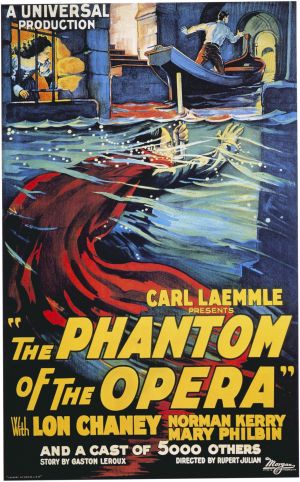
Horror On The Lens: The Phantom of the Opera (dir by Rupert Julian)


Today’s horror movie on the Shattered Lens is both a classic of silent era and one of the most influential horror films ever made.  It’s one that I previously shared in 2013, 2015, 2016, 2108, 2019, 2020, and 2021 but it’s such a classic that I feel that it is worth sharing a second (or fifth or even a sixth or perhaps an eighth) time.

First released in 1925, The Phantom of the Opera is today best known for both Lon Chaney’s theatrical but empathetic performance as the Phantom and the iconic scene where Mary Philbin unmasks him. However, the film is also a perfect example of early screen spectacle. The Phantom of the Opera was released during that period of time, between Birth of the Nation and the introduction of sound, when audiences expected films to provide a visual feast and Phantom of the Opera certainly accomplishes that. Indeed, after watching this film and reading Gaston Leroux’s original novel, it’s obvious that the musical was inspired more by the opulence of this film than by the book.

This film is also historically significant in that it was one of the first films to be massively reworked as the result of a poor test screening. The film’s ending was originally faithful to the end of the novel. However, audiences demanded something a little more dramatic and that’s what they got.

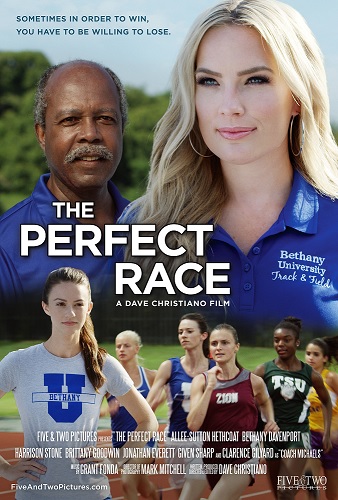
October Positivity: The Perfect Race (dir by Dave Christiano)


In this 2019 sequel to Remember The Goal, cross country coach Courtney Smith-Donnelly (Allee Sutton Hethcoat) finds herself coaching at the college level.  One of the runners that she coached in high school, Brittany (played by Bethany Davenport), is now the best runner at Bethany University.  In fact, she’s the second best runner in the nation!  Coach Michaels (Clarence Gilyard, Jr.) brings in Courtney to work with Brittany while he deals with some health complications.

So, pretty much all the stuff that happened during the first movie happens during the second.  Once again, everyone doubts Courtney’s training methods.  Once again, Courtney takes it upon herself to tell all of the runners how to live their lives.  Brittany’s father gets angry when Courtney tells Brittany to run slower than usual.  Considering that Courtney is now a local celebrity because of how well the cross country team did in Remember the Goal, you might think that the other coaches would know about her techniques and would prepare for them.  But nope.  No one has any faith in Courtney’s ideas but she’s vindicated in the end.  In fact, over the course of two movies, Courtney is never once incorrect about anything.  To be honest, that’s kind of annoying.

The main difference between Remember The Goal and The Perfect Race is that Courtney is a thousand times more preachy in the sequel.  In the first film, she cited a verse from Corinthians and later talked about Jesus raising a girl from the dead and that was about it.  In The Perfect Race, it’s rare that a scene goes by without Courtney saying, “Do you remember the story about….” and then offering up a Biblical lesson.  It gets a bit tiring and, again, it’s hard not to get bored with Courtney having all of the answers all of the time.  For example, when she’s told that the track team doesn’t practice when its raining, she promptly asks everyone in the room to raise their hand if their parents are divorced.  Courtney goes on to explain that, if you’re not willing to train while it’s raining, you probably won’t be able to make a marriage work either.  WHAT!?  You know what else might end a marriage?  Dying of pneumonia.

For a film about athletics, The Perfect Race is a very talky film.  Unfortunately, most of the conversations are very repetitive.  When Courtney tells Brittany to slow down during one of her races, we got several scenes in a row of people asking each other why Courtney did that.  Brittany’s father asks Brittany why Courtney told her to slow down.  Brittany replies that she doesn’t know.  In the very next scene, Brittany’s father tells Coach Micheals about what Courtney told Brittany to do.  Coach Michaels asks Brittany’s father why Courtney did that.  “I don’t know,” Brittany’s father replies.  Coach Michaels asks Brittany why Courtney did that.  “I don’t know,” Brittany replies.  In the next scene, two rival coaches talk about Brittany slowing down.  One coach asks, “Why did she do that?”  “I don’t know,” the other coach replies.  And it just kept going and going until eventually, I wanted to throw something at the TV.

Anyway, my frustrations aside, Courtney is triumphant at the end of the movie, largely because Courtney is perfect and never makes any mistakes.  Did I mention how annoying that can get?

This film inspired me to go for a run, if just to have an excuse to stop watching it.  And, before anyone asks, I do not like carrots.

The TSL’s Horror Grindhouse: Scissors (dir by Frank De Felitta)


The plot of the 1991 film, Scissors, is not easy to describe. That’s not because the plot is particularly clever as much as it’s because it doesn’t make much sense.

Basically, Sharon Stone plays a woman named Angela Anderson. She is oddly obsessed with scissors and terrified about getting close to anyone. She’s been getting hypnotherapy from Dr. Carter (Ronny Cox) in an effort to understand why she’s so repressed but she doesn’t seem to be getting anywhere. This could possibly have something to do with the fact that Dr. Carter is continually distracted by the adulterous activities of his wife, Ann (Michelle Phillips).

Angela lives in a lonely but surprisingly big apartment with only her cat for company. Her cat is named Midnight and he’s a black cat so he automatically became my favorite character in the film. Living next door to her are two twin brothers. Alex (Steve Railsback) is a soap opera star. Cole (Railsback, again) is an artist in a wheelchair who continually paints cartoonish pictures of Angela being attacked by a man with a big red beard.

Then, one day, Angela goes out to buy some scissors. When she returns and gets on the elevator to head back up to her apartment, she’s attacked by a man …. A MAN WITH A RED BEARD! Fortunately, Angela is able to stab him with her scissors. After the man with the red beard runs off, Angela is discovered in the elevator by Alex and Cole. Alex and Angela fall in love. Cole’s not too happy about that.

Following so far?

Angela get a call about a job interview, one that requires her to go to a stranger’s apartment. Despite the fact that the film has spent nearly an hour setting up Angela as being intensely agoraphobic, she has no problem going to this apartment. However, once she enters the apartment, she finds herself locked in! She also discovers that the red-bearded man is also in the apartment. Fortunately, he’s dead. Unfortunately, it appears that he was killed by Angela’s scissors. There’s also a raven in the apartment. The raven continually taunts Angela, saying, “You killed him!” Let’s just be happy that Edgar Allan Poe wasn’t around to see this.

Trapped in the apartment, Angela has flashbacks to her past. Is Angela the murderer? Is all of this just happening in her mind? Or is someone trying to drive her over the edge?

Though Scissors is set up as a psychological horror film, it’s really more of an extended acting exercise for Sharon Stone. Stone wanders around the apartment. She talks to herself. She had a nervous breakdown or two. She discusses life with a puppet. Every single scene seems to be designed to make audiences go, “Wow, she really can act!” but, despite all of the histrionics on display, Angela is still a very one note character. By making her obviously unstable from the start, the film doesn’t really leave the character with much room to develop or take us by surprise. The film attempts to end on a bit of an ambiguous note as far as Angela’s character is concerned but that type of ambiguity has to be earned. There’s nothing to Stone’s performance to indicate that there’s anything about Angela that isn’t totally on the surface. To suggest that there was more to her than originally appeared is to insult the audience’s ability to discern hidden depths.

The film does eventually wrap up its mystery and present a solution of sorts. Unfortunately, it’s a totally unsatisfying solution and one that’s dependent on otherwise intelligent people coming up with a ludicrously overcomplicated scheme to deal with one not particularly complicated problem. It’s all pretty forgettable but at least the cat survives.

The Strange Possession of Mrs. Oliver (1977, directed by Gordon Hessler)


Miriam Oliver (Karen Black) is a prim housewife who always keep her hair in a tight bun and who wears eyeglasses.  After she starts to have dreams about going to her own funeral, Mrs. Oliver’s personality starts to change.  Her husband, Greg (George Hamilton), can only watch as Mrs. Oliver puts on a blonde wig, ditches her eyeglasses, and starts to dress in revealing clothes.  Greg wants to concentrate on starting a family but the new Mrs. Oliver only cares about going out and partying all night.  She also wants to move into a new house, one that was previously owned by a woman named Sandy.  Sandy, who was a student of the occult, died in a mysterious fire.

The Strange Possession of Mrs. Oliver is a good made-for-TV movie that gives viewers two Karen Blacks for the price of one!  Black is undeniably sexy, whether she’s playing the prim Mrs. Oliver or the wild Sandy.  But she also delivers a really good performance as she switches back and forth from being Mrs. Oliver and being Sandy.  Richard Matheson provides an intelligent script while Gordon Hessler’s direction keeps you guessing as to whether Mrs. Oliver is truly possessed or if she’s just having a mental breakdown of some sort.  This is an enjoyably twisty thriller with a good ending and a knockout performance from Karen Black.

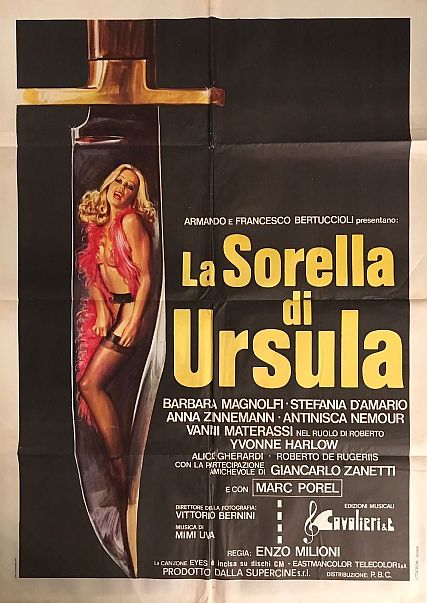
International Horror Film Review: The Sister of Ursula (dir by Enzo Milioni)


This 1978 Italian giallo tells the story of two sisters.  Ursula (Barbara Magnolfi, who is best-known for playing Olga in Argento’s Suspiria) is high-strung and prone to nightmares.  She claims that she can see people for who they really are.  Dagmar (Stefania D’Amario) is a year or two older.  She looks after her sister and makes sure that Ursula takes her pills.  Still, it’s hard to escape the feeling that Dagmar would like to be free of having worry about Ursula.

After the death of their father, Ursula and Dagmar check into a hotel in an Italian resort town.  Ursula wants to find their mother, a prostitute who left their father shortly after Ursula was born.  Dagmar, for her part, seems to just want to take a vacation and maybe meet a few men.  Ursula gives Dagmar a hard time for being promiscuous.  Dagmar gives Ursula a hard time for being neurotic and not having any fun.  It’s a typical family vacation.

Unfortunately, there’s also a homicidal lunatic on the loose, one that kills the promiscuous.  In typical giallo fashion, he wears black gloves and, often, all we see of him is his madness-filled eyes.  Unlike a lot of other giallo killers, he does not use a knife.  Nor does he strangle his victims.  Instead, he uses a big wooden dildo to beat people to death.  Believe me, I’m probably making it sound more interesting than it actually is.  For a film that wallows in sleaze, The Sister of Ursula doesn’t focus too much on the killer’s use of a dildo as a murder weapon, beyond showing its shadow on a wall at one point.  It’s an odd piece of directorial restraint that feels at odds with the rest of the movie.

Describing The Sister of Ursula as being a sleazy film doesn’t begin to describe just how sleazy this film is.  There’s not a single character to be found in the film who is not, in some way, perverse and the frequent soft-core sex scenes seem to exclusively take place in locations that don’t appear to have been cleaned anytime recently.  (One such scene features a picture of Donald Duck hanging on the wall over the bed.  That’s one of those weird but fun decorating choices that always seems to occur in giallo films.)  There are many films that leave you feeling like you need to take a shower afterwards.  This is one of the few films that I can think of that will leave you feeling like you need to take a shower every fifteen minutes or so.  

As for the film’s mystery, it plays out at a languid pace.  The story gets bogged down with a subplot about drug dealers.  One would be tempted to say that the film cultivates an atmosphere of ennui but I think that’s giving The Sister of Ursula too much credit.  This film was not made by a subversive artist like Jean Rollin or Jess Franco.  Instead, it’s just a poorly directed and paced giallo film.  That said, the Italian scenery is often lovely to look at and Barbara Magnolfi and Stefania D’Amario are believable as sisters.  This is a minor giallo that’s not so much terrible as it’s just forgettable.  

Horror Film Review: Halloween Ends (dir by David Gordon Green)


Halloween Ends?  Not likely.

It is true that, with this movie, David Gordon Green does close out his version of the Halloween trilogy and, for that, we should all be thankful.  For all the critical acclaim that the film received, none of Green’s Halloween films seem destined to stand the test of time.  I like almost all of David Gordon Green’s work except for his Halloween films and, unfortunately, I find his version of Halloween to be so self-important and annoying that it overshadows what I previously liked about his other movies.  (Don’t even get me started on the news that he will next be rebooting The Exorcist.)  Watching the Green Halloween trilogy, you find yourself wondering why Green made the films at all since he seems to consider the whole slasher genre to be beneath him.  Say what you will about Rob Zombie’s Halloween films, Zombie at least loves the horror genre.  Green, like so many Blumhouse filmmakers, only seems to make horror films so that he can remind us that he’s better than them.

But I doubt that this will be the final Halloween film.  It will be the last Halloween film produced under Blumhouse, as the rights to the story and the characters now revert back to Malek Akkad.  And, as long as there is money to be made off of the franchise, there will be new Halloween films.  Someone else will come along and reboot the franchise and hopefully wipe out the Green continuity just as ruthlessly as Green wiped out the previous franchise’s continuity.  In an age of franchises and prequels and cinematic universes, the Halloween franchise is proud to say, “Ha!  You mean you actually kept track of what happened in all the other movies!?  Sucks to be you, dumbass.”

But let’s talk about Halloween Ends.

As you may remember, Halloween Kills ended with Michael killing Laurie Strode’s daughter and Laurie (Jamie Lee Curtis) grabbing a shotgun and heading out to get  revenge.  Well …. ha ha, joke’s on you.  Laurie never got her revenge.  Michael vanished.  Four years later, Laurie has gone from being a badass survivalist to being a cheerful, cookie-baking grandma because she had to let go of the anger.  Laurie spent forty years preparing for Michael to return and then, when Michael does return and brutally murders her daughter, Laurie decides that she has to let go of her anger.  Laurie’s main concern is that the town of Haddonfield is now a traumatized and angry place.  Maybe she can spread positivity by writing a memoir about her life.  Sadly, this means that we also have to listen to passages from Laurie’s memoirs.  Laurie Strode is good at fighting psychotic killers but she sucks as a writer.

Unfortunately, whenever Laurie leaves the house that she shares with her granddaughter, Allyson (Andi Matichak), she runs the risk of being accosted by all of the angry people who all lost a relative or a friend to Michael Myers.  All of them view Laurie as being a reminder of the pain caused by Michael.  They actually do have a point and you have to wonder about Laurie’s claim that she’s staying in Haddonfield to help the town heal.  First off, I don’t know why Laurie would have so much loyalty to what appears to be a fairly generic suburb.  Secondly, the townspeople are so traumatized that is actually seems a bit a selfish for Laurie to remain in Haddonfield and to continually remind everyone of the worst night of their lives.  I mean, Laurie could move.  You know who can’t leave?  The wheelchair-bound woman who was paralyzed while Michael was killing everyone in town because he wanted to find Laurie.

Michael disappeared after killing Laurie’s daughter.  No one knows where Michael is.  Michael is a big and fearsome serial killer who nearly wiped out an entire town and he’s out there somewhere and apparently, no one is looking for him.  That’s what one has to assume because, according to the film, he’s spent the last four years living underneath a bridge.  He’s still wearing his mask.  He looks and acts exactly the same way as he did previously.  He’s still killing people.  He’s just doing it under a bridge.  How, in four yeas time, has it not occurred to anyone in law enforcement to not check under the bridge?  It’s the most obvious hiding spot in town but no one looked under the bridge.  And why, if Michael is obsessed with killing Laurie, has he spent four years under a bridge as opposed to going to Laurie’s house?

Michael is pretty much treated as a supporting character in Halloween Ends.  For that matter, so is Laurie.  The majority of the film centers around a new character named Corey (Rohan Campbell).  Corey was a college student with a bright future until a terrible babysitting accident led to the death of a boy named Jeremy.  Corey was blamed for the death, even though it really wasn’t his fault.  (The scenes with Corey and Jeremy open the film and are so well-handled that it leaves little doubt that Green was far more emotionally invested in Corey’s storyline than he was in any of the Michael/Laurie nonsense.)  Even though Corey was acquitted of manslaughter, he is now the town pariah.  Corey meets and falls in love with Allyson but, unfortunately, the town’s constant taunting and suspicion causes him to snap.  He becomes a disciple and then a rival of Michael’s.

Corey is the type of damaged character who has been at the center of many of David Gordon Green’s non-Halloween films.  One gets the feeling that Green wanted to make a movie about Corey but, since he’s abandoned indie films in order to spend his time screwing up venerable horror franchises, Green and co-writer Danny McBride instead jammed Corey’s story into a Halloween film.  While Corey has the potential to be an interesting character, he doesn’t belong here.  Making Corey into a killer means reducing Michael’s powers.  Michael goes from being a fearsome symbol of pure evil to being some guy in the sewers who gets beaten up and mugged by a nerdy guy who previously couldn’t even stand up to the members of the school band.  It not only goes against the spirit of the original Halloween films but also against everything that was previously established in the Green Halloween films.  I mean, Corey beats up Michael after Corey gets beaten up by a bunch of band kids.  Maybe if the posse in Halloween Kills had been made up of the high school marching band, Laurie’s daughter would still be alive.

It all gets to be a bit annoying.  There are so many little things that don’t make any sense.  My favorite is that the family of that hired Corey to babysit moves out of their house after the death of their son.  Corey continues to break into the now abandoned house, which has sat empty for four years.  And yet, the abandoned house is remarkably well taken care of.  For some reason, the family took all of their furniture but left behind a grand piano.  Why wouldn’t they take the piano with them?  In the drawing room, there’s a book shelf that is empty except for three books.  Why would the family leave those three books behind?  When Green rebooted the Halloween franchise, he ignored all of the sequels because, according to him, the sequels weren’t any good and didn’t make sense.  But Halloween Ends feels as rushed and nonsensical as any of the films that featured Danielle Harris as Laurie’s daughter.

The film ends with the community of Haddonfield coming together once again.  It’s a scene that I wish I could describe but to do so would mean spoiling the end of the movie.  Let’s just say that it’s incredibly dumb and it almost feels like a parody of the previous Green films.  One of the worst thing about the Green films is the insistence of presenting Haddonfield as being some sort of iconic location as opposed to just being a generic anytown USA.  The whole reason why the original Halloween films were so effective was because Haddonfield could have been anywhere.  Green tries to turn Haddonfield into another Twin Peaks and it’s another sign that he never really understood what made John Carpenter’s original film work in the first place.  Ironically, a lot of what happens during the final moments of Halloween Ends would make more sense if Michael was Laurie’s brother but, again, the Green films did away with all that.

Halloween Ends is not necessarily the worst film of 2022.  As a director, Green is still capable of coming up with an effective shot or two.  But, considering the hype that accompanied it, it is one of the most disappointing.  And it also has the most unintentionally funny ending of any film you’re likely to see in 2022.  Whenever I feel down, I just think about that solemn procession to the auto yard and it cheers me right up.

As I said at the start of this review, Halloween will never end as long as there is money to be made.  So, in another few years, we’ll get another reboot and, once again, we’ll discover with Laurie, Tommy Doyle, Linsdey, and Sheriff Brackett have been doing since the night Michael came home.  My idea for a reboot is that they should make Michael and Laurie into siblings.  That would be interesting.
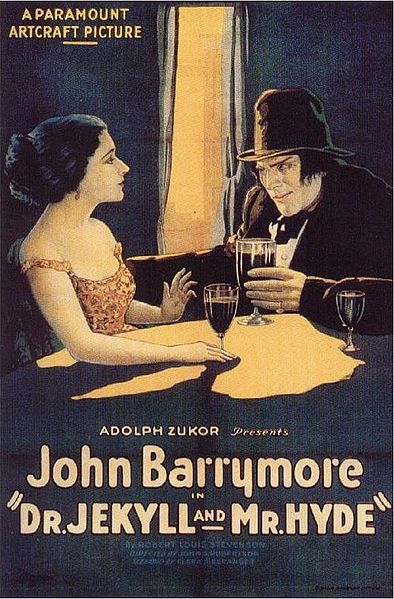
Horror on the Lens: Dr. Jekyll and Mr. Hyde (dir by John S. Robertson)


394px-Dr_Jekyll_and_Mr_Hyde_1920_poster

Ever since the birth of film, Robert Louis Stevenson’s Dr. Jekyll and Mr. Hyde has been a popular subject for adaptation.  Not only does the classic story of a good doctor who unleashes his evil instinct via potion serve as a potent metaphor for everything from sexual repression to drug addiction, but the dual role of Dr. Jekyll and Mr. Hyde has provides an excellent opportunity for an actor to show off.

The first film adaptation of Dr. Jekyll and Mr. Hyde is believed to have been made in 1908.  Two more version followed in 1912 and 1913 and then, suddenly, 1920 saw three different film versions.

The best known of the 1920 version is our film for today.  This version is best remembered for John Barrymore’s powerful performance in the title role but it also holds up remarkably well as a work of cinematic horror.

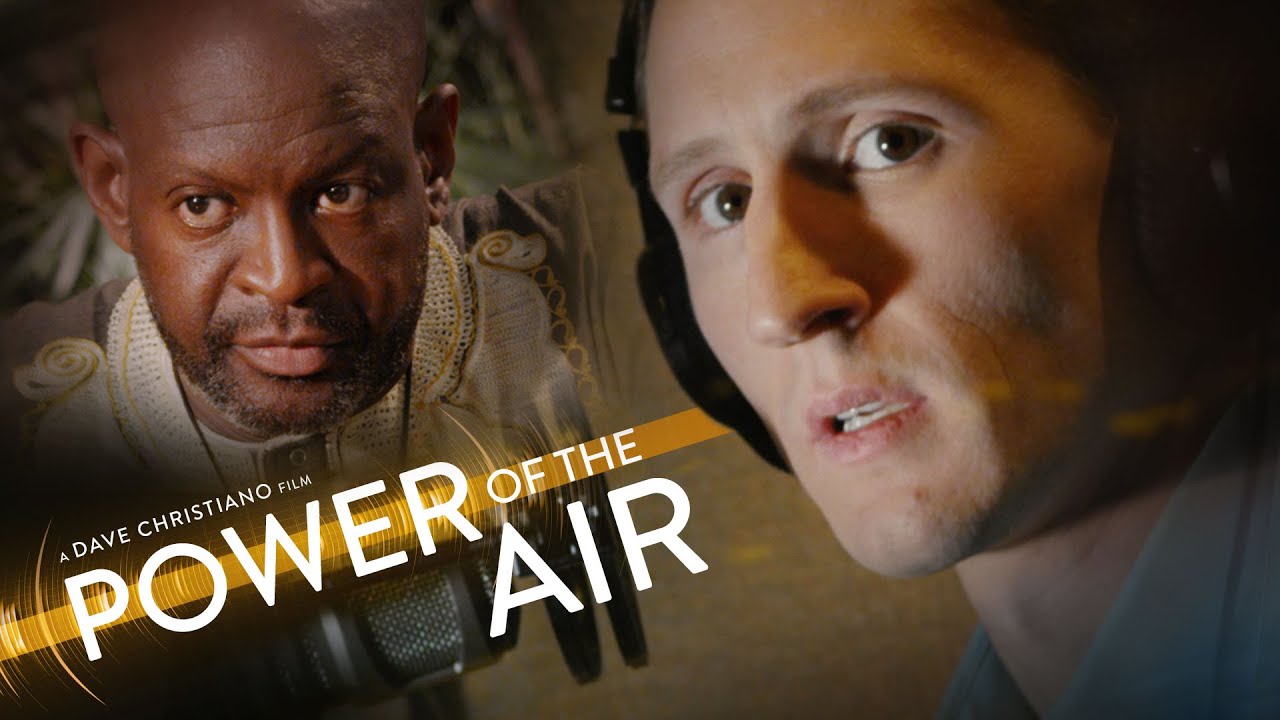
October Positivity: Power of the Air (dir by Dave Christiano)


The 2018 film, Power of the Air, tells the story of David Williams (Nicholas X. Parsons).  David thinks that he can be a committed Christian despite the fact that he spends every weekend at the movies.  In fact, he and his friends have a streak going.  For over 40 weekends, they have gone to the movies and David has never once worried about all of the violence, nudity, and adult language that he sees.

Some might say that this is because David is an adult who has found a way to relax after work.  However, a Nigerian missionary named Emeka Odum (played — quite well, it must be said — by Veryl Jones) says that it’s because David is using the movie theater as a substitute for church.  As Odum explains it, the movie theater has become America’s new house of worship and, as a result, America is now a second-rate nation that has lost its way.  Why, in three years, America might even have a president who obviously doesn’t know where he is half the time.  And it’s all Hollywood’s fault!  Well, actually, the movie suggests that it’s really your fault for going to the movies.

If that sounds like an old-fashioned message, that’s because Power of the Air is a very old-fashioned movie.  That is perhaps not surprising, as this is a Dave Christiano production, but it still feels strange to hear David — the character and not the director, though one gets the feeling that it’s not a coincidence that they share the same name — announce that he can no longer watch any movies that feature people cursing.  I mean, avoiding a movie because of violence makes sense to me.  Avoiding a movie because of nudity or political messaging is also understandable.  Everyone has different things that they’re looking for.  But avoiding a movie because of cursing is basically just another way of announcing that you’re never going to watch another movie.  I mean, I’ve known plenty of Christians who do curse.  At the same time, I do have to admit that I hardly ever curse but that’s just because I don’t want to sound like everyone else.  I gave up cursing for Lent and my sisters all accused me of cheating because, according to them, it’s not really a sacrifice if you give up something that you don’t actually do.

Anyway, David wants to use mass media to spread a good Christian message so he comes up with the idea of broadcasting a commercial on all fifteen of his city’s radio stations at the exact same time.  As he sees it, this will mean that everyone will hear the commercial whether they try to change the station or not.  (Or, you know, they might just turn off their radio.  Or they might turn down the volume.  Or they might resent having David’s message forced upon them and respond by going to a Marvel film.)  Unfortunately, Charlie (Patty Duke), the manager of the biggest station in town, doesn’t want to run a religious commercial.  Can David change her mind?

Of course, I think the real problem with David’s plan is that the days of people spending all day listening to the local radio stations are pretty much over.  That’s true today and it was true when this film was made in 2018.  There are now so many options out there and so many other ways to keep oneself entertained during the day that the idea of everyone in the city listening to local AM radio seems a bit naïve.  David really should have started a podcast or something.

Anyway, Power of the Air is a fairly slow-moving film and it’s one of those films that will mostly appeal to people who already agree with its message.  The film is probably most interesting as Dave Christiano’s feature-length justification for making the type of movies that he does.  The main message seems to be that if only more people watched Christiano’s films, then David wouldn’t have had to spend all that money on those radio ads.

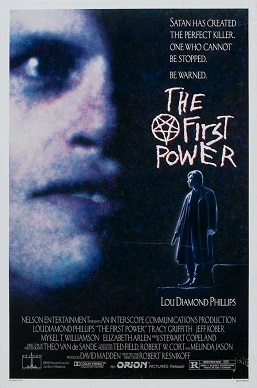
The TSL’s Horror Grindhouse: The First Power (dir by Robert Reskinoff)


In this 1990 horror film, Lou Diamond Phillips plays Russell Logan, a Los Angeles police detective who specializes in capturing and sometimes killing serial killers.  (“So far,” a news reporter breathlessly tells us, “Detective Logan has captured or killed three serial killers!”)  His latest triumph is the capture of Patrick Channing (Jeff Kober), also known as the Pentagram Killer because he carves a pentagram on his victims.

Logan captures Channing thanks to a tip from a psychic named Tess (Tracy Griffith).  Tess specifically made Logan promise her that he wouldn’t push for Channing to get the death penalty.  However, after Logan captures him, he goes back on his word and Channing is sentenced to die in the gas chamber.  To be honest, I wasn’t aware that detectives had the power to decide whether or not to go for the death penalty when it comes to prosecuting murder cases.  As far as I’ve known, that’s always been the job of the district attorney’s office.  Maybe they do things differently out in California….

Anyway, Channing smiles when he’s sentenced to death and then he smiles again when he’s executed.  Logan shrugs all of that off but suddenly, the pentagram murders start up again.  The murderer is killing people in the exact same way that Channing did and he also appears to be targeting the people who were involved in Channing’s capture.  Meanwhile, Tess is running around angry because she specifically told Logan not to allow Channing to be executed.

Hmmmm …. have you figured out what’s going on, yet?

Of course you have!  That’s because you’ve seen a horror movie before.  From the minute that Channing was sentenced to die, you probably knew that Channing would eventually come back from the dead and start murdering people all over again.  It turns out that, by executing Channing, the state of California has granted him the first power, i.e. resurrection.  By committing more murders, Channing is hoping to unlock all of the other powers.  Those powers include the power to appear and disappear at will, possess other people, jump off of roof tops, and mockingly laugh at anyone who tries to stop him.

Apparently, Detective Logan is not a fan of horror movies because it takes him a while to figure all of this out.  (We should keep in mind that he’s a cop so his job is to be skeptical of claims of people returning from the dead.)  But once he starts hearing Channing’s disembodied voice and getting attacked by possessed priests and homeless women, he really has no other option but to accept the truth and work with Tess to try to end Channing’s reign of terror.

The First Power is one of those horror films that’s extremely predictable but effective nonetheless.  Lou Diamond Phillips manages to maintain a straight face, regardless of how outlandish this film gets and Jeff Kober seems to be having a blast as the flamboyantly evil Patrick Channing.  Channing jumps off of rooftops and through windows with a graceful aplomb and the film actually has some fun with the idea of Channing skipping from body to body.  The First Power is often dumb but always entertaining.

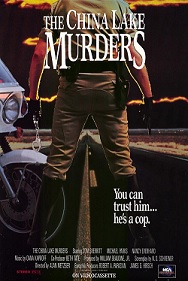
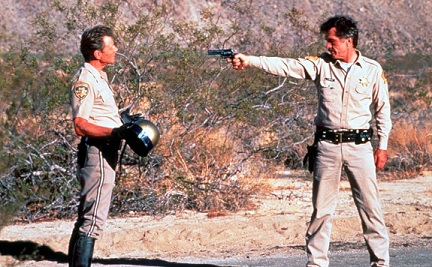
The China Lake Murders (1990, directed by Alan Metzger)


Officer Donnelly (Michael Parks) of the Arizona Highway Patrol has snapped.  One day, he doesn’t show up for roll call and instead drives out to the desert.  Sometimes, he pulls people over and tells them that they’ve violated a traffic law.  Sometimes, he stops to help a stranded motorist.  Every encounter ends with Donnelly killing someone.  When Donnelly reaches the town of China Lake, he flirts with a waitress (Lauren Tewes) and befriends Sheriff Sam Brodie (Tom Skerritt).  Brodie is investigating the mystery of why so many people are turning up dead in the desert and he slowly comes to realize that his new friend is the one responsible.

The China Lake Murders was produced by the USA Network and it used to air regularly throughout the 90s.  For a while, it held the record for the highest rated basic cable film.  One reason why so many people would watch it whenever it aired was because the movie started out with a warning that it contained strong violence and some sexual content.  That warning was all that it took to convince most people to watch the movie.  While the sexual content is tame (we see someone’s bare back at one point), the violence is indeed strong. 

So is the performance of Michael Parks, who plays Donnelly as the ultimate nightmare cop.  In many ways, Donnelly epitomizes everything that people hate about the police.  He’s a bully who hides behind his uniform and his badge.  The movie never explains why Donnelly suddenly snapped but watching him, it’s easy to guess that he’s always been a sadist.  He channeled his cruelty into law enforcement and now that he’s crossed the line and is killing random people, he still believes that his uniform will protect him.  Tom Skerritt, on the other hand, is the epitome of what most people would hope a cop would be, fair-minded and more concerned with helping the community than controlling it.

The China Lake Murders is a little slow.  Since it’s revealed early on that Parks is the killer, there’s not much suspense during the middle section of the film.  Things pick up, though, when Skerritt and Parks finally go after each other.  The two veteran actors bring a lot of gravitas to their roles and their final confrontation does not disappoint.