4 (or more) Shots From 4 (or more) Films is just what it says it is, 4 (or more) shots from 4 (or more) of our favorite films. As opposed to the reviews and recaps that we usually post, 4 (or more) Shots From 4 (or more) Films lets the visuals do the talking.
Today, the Shattered Lens pays homage to the greatest of Mardi Gras cities, New Orleans!
4 Shots From 4 New Orleans-Set Films
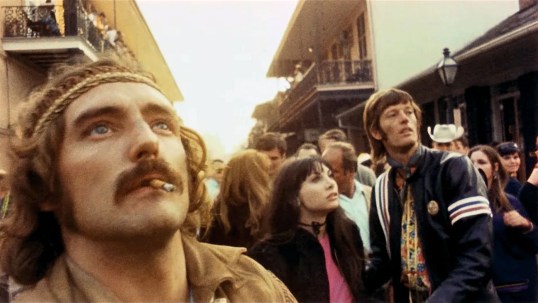
Easy Rider (1969, dir by Dennis Hopper, DP: Laszlo Kovacs)
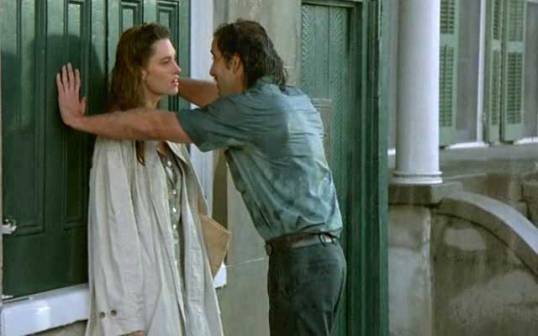
Zandalee (1990, dir by Sam Pillsbury, DP: Walt Lloyd)
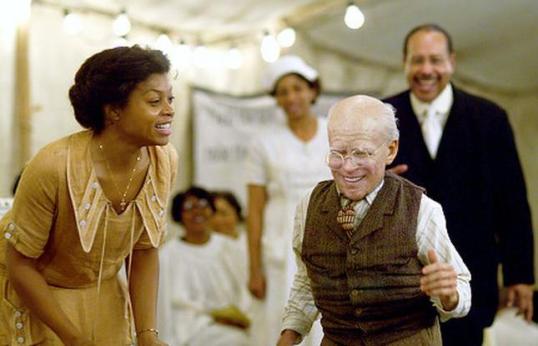
The Curious Case of Benjamin Button (2008, dir by David Fincher, DP: Claudio Miranda)
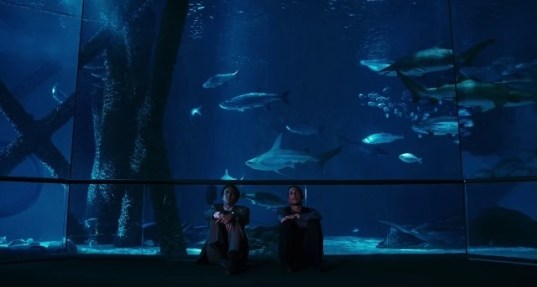
Bad Lieutenant: Port of Call New Orleans (2009, dir by Werner Herzog, DP: Peter Zieitlinger)
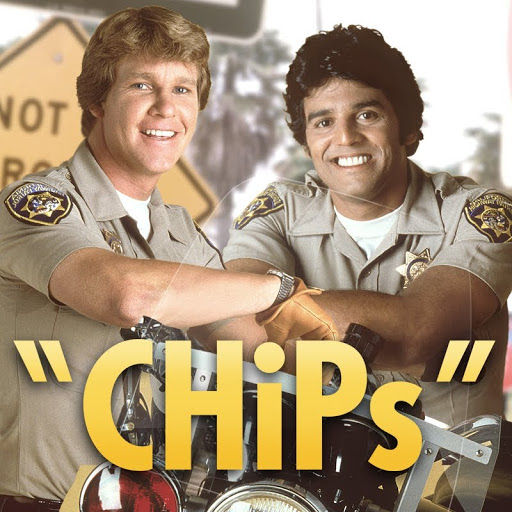
Welcome to Late Night Retro Television Reviews, a feature where we review some of our favorite and least favorite shows of the past! On Mondays, I will be reviewing CHiPs, which ran on NBC from 1977 to 1983. The entire show is currently streaming on Prime!
This week, a new boss gets on everyone’s nerves!
Episode 3.11 “The Watch Commander”
(Dir by Don Weis, originally aired on November 17th, 1979)
There’s a new watch commander and he’s not making any friends. Lt. Harold Bates (Granville Van Dusen) previously worked in the PR Department at Sacramento and he sets out to make a bad impression from the minute that Sgt. Getraer first introduces him to the cops working out of the Los Angeles precinct. Lt. Bates is all about following the book. He notes every flaw, from a missed button to poor gas mileage. Getraer tries to get him to understand that there’s more to being a cop than just following regulations and that being a member of the Highway Patrol means having to make split-second decisions. Bates wants to know why Ponch isn’t wearing a regulation shirt.
In some ways, this is as close as CHiPs will ever get to The Caine Mutiny. Nobody removes Bates from command but Bates still struggles to recover from making a terrible first impression and his own Queeg-like personality doesn’t help things. His attempts to call out the members of the Highway Patrol who get the worst gas mileage backfires when Officer Grossman siphons gas out of Bates’s car, leading to Bates appearing at the bottom of the list. Bates has no idea how to talk to or trust people. Jon Baker tries to offer a helping hand, especially since both he and Bates served in Vietnam. He invites Bates to go skydiving with him over the weekend. Bates assumes it’s a set-up and turns him down.
We do get the usual car crashes and a subplot about a bunch of thieves who are stealing trucks from loading docks but the majority of this episode takes place at headquarters. Ponch, who is said to still be on limited duty, is recovering from his accident and one gets the feeling that this episode was developed so Erik Estrada could be a part of the story without actually having to spend too much time on his bike. (Estrada actually did injure himself during filming and those injuries were written into the show.) In some ways, this is CHiPs at its most realistic because everyone always hates the new boss, especially one who thinks that he knows everything.
Going back to The Caine Mutiny, it was impossible not to feel sorry for Queeg, who was not a bad guy but instead just someone who wasn’t good at talking to people and who ultimately was let down by the people who should have been supporting him. I never felt that type of sympathy for Bates, who really did just come across as being a jerk. Thank goodness for Robert Pine, whose steadiness as Sgt. Getraer is well-used by this episode. Pine is there to support Bates but he also protects his men. This episode features Getraer at his most likable. Everyone should be so lucky as to have a Getraer in their life.
I was a bit shocked to discover that I’ve neve actually sat down and written up a real review of 1979’s Mad Max for this site. Considering how much I like this film and all the scenes and shots that I’ve share from Mad Max, you would think that I would have at least written about why I like this violent but intriguing film so much. Today is George Miller’s birthday so let’s talk about the film that launched his career.
Mad Max is often described as being a post-apocalypse film but that’s not quite true. It does take place in a “near future,” one in which there seems to be noticeably less people around. The roads of Australia are dominated by crazed punks who have taken their obsession with their cars and motorcycles to the extreme. (Director George Miller trained as a doctor and has said that this film was partially inspired by the auto crash victims who were brought into the emergency room on a nightly basis.) Civilization is on the verge of collapsing but it is still hanging on by a thread. For every Night Rider (Vincent Gil), ranting as he crashes into people, and for every psycho gang leader like Toecutter (Hugh Keays-Byrne), there are people just trying to survive day-to-day. The nightly news is still televised though the news is always so bad that no one seems to pay it much mind anymore. There are still cops, like Max Rockatansky (Mel Gibson) and Goose Rains (Steve Bisley), who patrol the roads in their cars and who do whatever is necessary to chase down the people who appear to be destined to inherit a world that they very much want to destroy. Society still exists but it’s obviously on its last legs and the attempts to maintain some sort of normalcy — laws, news, vacation homes, sexy saxophone playing — can’t hide the fact that the world is coming to a violent end. Max tries to deny that reality until, finally, he has no choice but to accept both the new world and his place in it.
Whenever I watch Mad Max, I’m always surprised by the fact that Mel Gibson almost seems like a supporting character for the majority of the movie. When the movie starts, Max is tightly wound and in control and he doesn’t show much emotion while he’s on the job. The flamboyant and always joking Goose seems like a much more likable protagonist. He’s the guy that the viewer wants to spend time with and, when he ends up getting burned nearly to death by Toecutter and Toecutter’s protegee, Johnny the Boy (Tim Burns, cast as one of the most loathsome characters ever to appear in a film), it’s a shocking moment. Goose had so much life to him. The attention then shifts to Max’s wife, Jessie (Joanne Samuel). When she finds herself being menaced by Toecutter and his gang, it’s alarming because she’s both a mother and she’s eventually isolated from both her family and from Max. We don’t want to see anything bad happen to Jessie. When something bad does happen, we’re more than ready for Max to step up and get some vengeance. And that’s exactly what Max does. One of the film’s most iconic images features Max not even flinching at the sound of an explosion in the distance. He’s gotten his vengeance but at the price of his soul. And, even as the film comes to an end, it’s obvious that nothing can be done to stop society’s collapse. Max has accepted what neither Goose nor Jessie could. There is no safety or society in the new world. There is only the road and the battle to control the remains of the world.
What makes Mad Max such a thrilling film? A lot of it has to do with the stuntwork, which remains truly spectacular to this day. Made in the era before CGI, Mad Max features real cars that are being driven by real people who put themselves into real danger to capture some of the most stunning crashes captured on film. As well, the cast truly brings their characters to life. Tim Burns makes Johnny the Boy into a truly hateful character, one who manages to somehow be both whiny and dangerous at the same time. Joanne Samuel and Steve Bisley are sympathetic as Jessie and Goose. And then you’ve got Mel Gibson, young and on the verge of the superstardom that people now tend to pretend never happened, showing the intensity that would become his trademark as the increasingly unhinged Max. (I love Tom Hardy but, as good as he was in Mad Max: Fury Road, he never came close to capturing the soul-shattering intensity of Gibson’s thousand-yard stare,)
That said, I think the main reason why Mad Max continues to resonate is because it all feels so plausible. One looks at the world of Mad Max and it’s very easy to imagine finding yourself there. Unlike other apocalypse films that often seem to be taking place in an entirely different universe, Mad Max feels like it could be playing out just a few miles away from the closet motorway. For all of the spectacular stunts and flamboyant characters, Mad Max is a film that continues to feel very real. For that, George Miller deserves a lot of credit. Mad Max is a true classic of grindhouse filmmaking, featuring a story that feels more powerful with each passing year.
Welcome to Retro Television Reviews, a feature where we review some of our favorite and least favorite shows of the past! On Mondays, I will be reviewing Miami Vice, which ran on NBC from 1984 to 1989. The entire show can be purchased on Prime!
This week …. has Tubbs turned evil?
Episode 3.19 “Red Tape”
(Dir by Gabrielle Beaumont, originally aired on March 13th, 1987)
There’s a turncoat in the Vice Department. Someone is leaking information about search warrants to the bad guys and, as a result, cops are walking straight into booby traps. When a routine search for a low-level thief leads to an explosion that kills one cop (Viggo Mortensen) and leaves Tubbs covered in the man’s blood, Tubbs announces that he’s fed up with all of this and he refuses to take another assignment until the leaker has been caught. Castillo tells Tubbs he can either accept his new assignment or quit. Tubbs says he’s done.
The problem is that all of Tubbs’s money is wrapped up with the department’s credit union and Tubbs can’t withdraw it quickly enough to get back to New York. The usually cool and collected Tubbs throws a fit, getting himself arrested when he starts threatening people at the credit union. Crockett gets him out of jail and Tubbs says their partnership is done. Switek tries to open up about his feelings after Zito’s death. Tubbs says he doesn’t care. What’s going on with Tubbs? He’s acting like a total jerk and he’s also loudly letting everyone know that he’s desperate to get out of Miami and that he needs money quickly….
If you guessed Tubbs was working undercover, you are correct! It’s all an elaborate ruse to get crooked Detective McIntyre (Scott Plank) to approach Tubbs with an offer. (McIntyre’s girlfriend is played by a young actress named Annette Bening) Unfortunately, only Tubbs and Castillo know that Tubbs is still one of the good guys, A hot-headed young detective named Bobby Diaz (Lou Diamond Phillips) thinks that Tubbs really is crooked. Diaz already lost one partner to the leaker. He’s looking for revenge and even while Tubbs and Castillo are planning to take down McIntyre, Bobby is planning to take down Tubbs. In typical Miami Vice fashion, it all leads to shoot out that leaves the bad guys dead but which also leaves Diaz mortally wounded and cursing Tubbs with his dying breath. Tubbs goes from pretending to hate his job to actually hating it.
Seriously, were there ever any unambiguously happy endings on Miami Vice? It seems like nearly every episode ended with Crockett and Tubbs realizing that their latest victory — assuming they were lucky enough to even have one — would prove to pyrrhic. There would always be a new drug boss ready to replace anyone that they took out of the game. There would aways be a new cop willing to betray his colleagues. And there would always be a mountain of red tape, waiting to keep them from making a difference. This episode was dark!
This season seems like it’s been more Tubbs-centric than previous seasons and, as dark as thing got, it was still a little fun to watch Phillip Michael Thomas go totally over the top as the angry Tubbs. The scene in the credit union was one that I’m sure would be enjoyed by anyone who has ever had to deal with red tape. One could argue that Tubbs go so far overboard that the bad guys should have been able to see through his ruse. But, still, this episode was effectively moody and dark. Watching it, it was hard not to feel that Thomas deserved more storylines than he got.
Next week: Crockett falls in love with Melanie Griffith!
As some of our regular readers undoubtedly know, I am involved in hosting a few weekly live tweets on twitter and occasion ally Mastodon. I host #FridayNightFlix every Friday, I co-host #ScarySocial on Saturday, and I am one of the five hosts of Mastodon’s #MondayActionMovie! Every week, we get together. We watch a movie. We snark our way through it.
Tonight, for #MondayActionMovie, the film will be 1994’s Tough & Deadly!
It should make for a night of fun viewing and I invite all of you to join in. If you want to join the live tweets, just hop onto Mastodon, pull up Tough & Deadly on YouTube, start the movie at 8 pm et, and use the #MondayActionMovie hashtag!
I’m picking today’s song of he day as much for the video as the song. By combining one of The Prodigy’s best songs with scenes from George Miller’s best film, whoever put this video together did a brilliant job!
Today’s scene of the day comes from the original Mad Max, directed by George Miller and starring Mel Gibson as Australia’s favorite apocalypse survivor. In this scene, Max — who is still trying to be a servant of law and order — chases The Night Rider!
The Night Rider has become a bit of a fan favorite, which is saying something for someone who really isn’t in the film for that long. As Mad Max takes place before the total collapse of civilization, it’s temping to see The Night Rider as a harbinger, letting Max and his other police colleagues know what the future for holds all of them.
4 (or more) Shots From 4 (or more) Films is just what it says it is, 4 (or more) shots from 4 (or more) of our favorite films. As opposed to the reviews and recaps that we usually post, 4 (or more) Shots From 4 (or more) Films lets the visuals do the talking.
Today the Shattered Lens wishes a happy birthday to one of our favorite people, George Miller! The doctor-turned-director began his cinematic career with 1979’s Mad Max and he’s gone on to become one of the most influential and important filmmakers out there. In honor of George Miller’s birthday, here are….
4 Shots From 4 George Miller Films
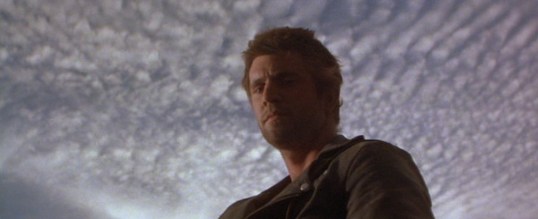
Mad Max (1979, dir by George Miller, DP: Dave Eggby)
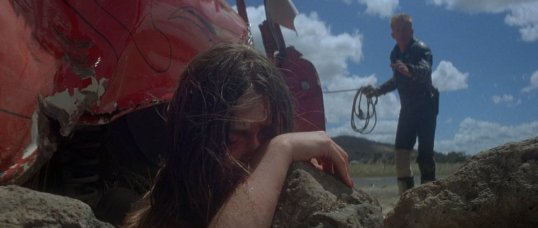
The Road Warrior (1981, dir by George Miller, DP: Dean Semler)
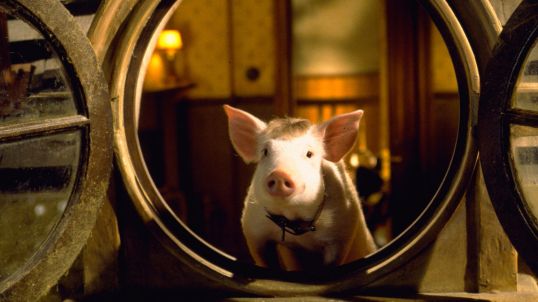
Babe: Pig In The City (1998, dir by George Miller, DP: Andrew Lesnie)
Mad Max: Fury Road (2015, dir by George Miller, DP: John Seale)
Presence takes place in one very big house. The Payne family — Rebekah (Lucy Liu) and Chris (Chris Sullivan) and their teenage children, Tyler (Eddy Maday) and Chloe (Callina Liang) — have moved into the house, little aware that it is already haunted by a poltergeist. The entire film is seen through the eyes of the poltergeist, the Presence.
The Presence floats through the house, going from room to room and allowing us to hear snippets of conversation that help us to put the plot together. The Paynes have moved to what they hope will be a better neighborhood and school district for their children. Tyler is a swimmer and his new school will perhaps make it easier for him to get the attention of college scouts. Chloe is still mourning the death of one of her friends. Her friend died of a drug overdose and we hear enough conversations to learn that drugs were apparently a problem at Chloe’s old school. More than one of Chloe’s classmates have died. Chris keeps an eye on Chloe, looking for any signs of drug addiction. Rebekah, meanwhile, is more concerned with the future of Tyler. As for the Presence, it gets upset easily. It’s not happy that Chloe seems to like Ryan (West Mulholland), a friend of Tyler’s who, at first, seems like almost a parody of sensitivity. The Presence gets even more upset when Tyler circulates a nude photo of another student online. What does the Presence want with the Paynes and will Rebekah and Chris’s already strained marriage survive the pressure of living with the mysterious spirit?
Written by David Koepp and directed by Steven Soderbergh, Presence is told with long takes and naturalistic lighting. Following the film’s plot requires listening to snippets of conversations that sometimes drift in from a neighboring room. It’s an interesting technique, or at least it is for the first half of the film. Eventually, it becomes apparent that Soderbergh is more interested in the film as a technical experiment than as an actual story involving interesting characters or surprising twists. At first, the long shots and the lack of close-ups seem to symbolize that the Presence is an outsider amongst the living family but eventually, they come to symbolize Soderbergh’s detachment from the story that he’s telling. As with so many of Soderbergh’s genre exercises, it’s a film that’s easier to respect than enjoy. Soderbergh sticks with his technique for the entire film, even when it would easier to abandon it. I appreciate the dedication but sometimes, I wish Soderbergh could just make a genre film without continually trying to convince us that he’s actually too good for the material.
On the plus side, Soderbergh does get fairly effective performances from his cast. There’s a twist involving Ryan’s character that isn’t really surprising but West Mulholland still does an excellent job selling it. Callina Liang realistically portrays Chloe’s sadness and I could definitely relate to her need to rebel, as I would think anyone who has ever been a teenager would. As so often happens with Soderbergh’s films, the extreme stylization gets in the way of the story but Liang still brings a bit humanity to Soderbergh’s chilly vision.


 Through the Shattered Lens