The Kid Stayed In The Picture: Robert Evans, R.I.P.


Robert Evans was a true Hollywood character and I think that, if he hadn’t existed, someone would have had to have created him.  He went from selling clothes to starring in B-movies to producing blockbusters.  He made and lost and remade a fortune while marrying one of the most beautiful women in the world, Ali MacGraw.  Among his friends were Jack Nicholson, Warren Beatty, Henry Kissinger, and Robert Towne.  Among his enemies was occasionally Francis Ford Coppola, who never would have directed The Godfather if not for Evans’s insistence that he be given the job.  Dustin Hoffman was nominated for an Oscar for playing Evans in Wag The Dog.  In Orson Welles’s The Other Side of the Wind, Geoffrey Land played “Max David,” a studio executive who was obviously meant to be Evans.

Bob Evans’s lows were almost as intense as his highs.  Forced out of his position at Paramount, Evans went independent and produced Chinatown.  Evans married Ali MacGraw, just to lose her to Steve McQueen.  He was arrested for cocaine possession and then went on to produce one of the great pop cultural moments of the 80s, the anti-drug tv special, Get High On Yourself.  He lost a fortune on The Cotton Club but made a comeback in the 90s.

In 1994, He also wrote on the greatest Hollywood memoirs of all time, The Kid Stays In The Picture.  Written in Evans’s trademark mix of cynicism and sentiment, The Kid Stays In The Picture tells a warts-and-all story of fast times and big talent in Hollywood.  With both the book and a subsequent documentary of the same name, Robert Evans let the world know who he was and that he wasn’t going to apologize for a damn thing.

Robert Evans died on Saturday, in Beverly Hills.  He was 89 years old and with his passing, an amazing story of Hollywood comes to a close.

Rest in Peace, Bob Evans.

Great Moments In Comic Book History: The Debut of Man-Wolf in Amazing Spider-Man


As a super hero, Spider-Man never got any respect.

From the beginning of his costumed career, Spider-Man was often misunderstood.  Perhaps because of his early days as a professional wrestler, he was often dismissed as being an immature attention seeker.  Unfortunately, when you combine that with Peter Parker’s legendary lack of luck, bad things are going to happen.  Especially during the early run of Amazing Spider-Man, being close to Peter Parker meant that there was a good chance that you would end up dead and Spider-Man would somehow be blamed for your death.  Leading the charge would always be J. Jonah Jameson, the bombastic editor of The Daily Bugle.

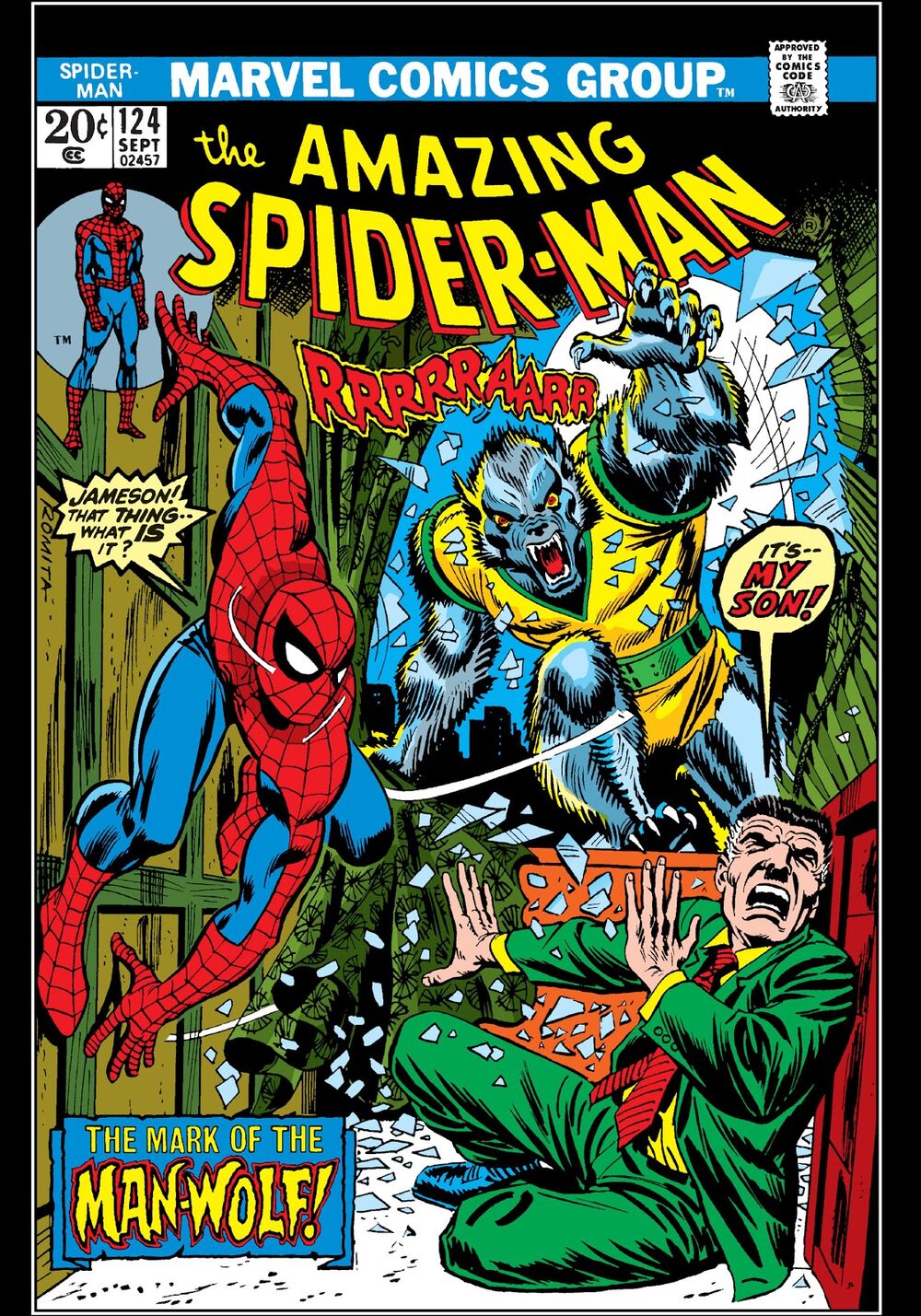
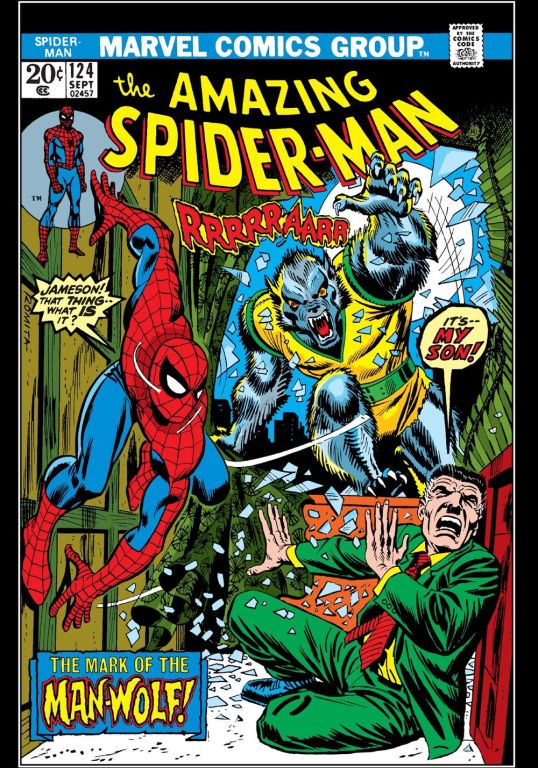
At the start of Amazing Spider-Man #124, Spider-Man is again finding himself being blamed for two deaths.  This time, though, it’s personal.  Spider-Man is still coming to grips with the death of his first love, Gwen Stacy.  Meanwhile, both the police and Jameson suspect that Spider-Man is also to blame for the death of businessman Norman Osborne.  (What they didn’t know, however, was that Norman had actually been terrorizing the city as the Green Goblin and, as was revealed decades later, Norman wasn’t really dead.)  While Peter Parker struggles to get back into rhythm of everyday life, Jameson demands that Spider-Man be brought to justice.

However, Jonah has a bigger problem to worry about.  His son, John, has returned home.  John is an astronaut and, up until this issue, was always portrayed as being everything that Peter wasn’t.  While Peter was struggling to pay the bills and keep Aunt May from being evicted, John was going to the moon and returning a national hero.  John, however, has brought back something from his mission.  The moon rock that John wears around his neck as a necklace causes John to turn into the Man-Wolf, a werewolf who is full of rage at John’s father, J. Jonah Jameson.  Can Spider-Man save the man who has dedicated his life to making him miserable?

Spider-Man always had a rich and well-drawn supporting cast, with characters like Mary Jane Watson, Flash Thompson, Liz Allan, and Harry Osborne becoming almost as well-known as the webslinger himself.  No character, though, was as beloved and hated as J. Jonah Jameson.  For all of his bluster, Jonah was frequently portrayed as being not evil but misguided.  He may have been too stubborn to admit that Spider-Man was not a menace but Jonah was often portrayed as having his own brand of integrity.  Usually, he tried to do the right thing.  The Man-Wolf saga put Jonah’s integrity to the test.  After years of accusing every super hero in New York of being a menace, how would Jonah react when the menace was his own son?

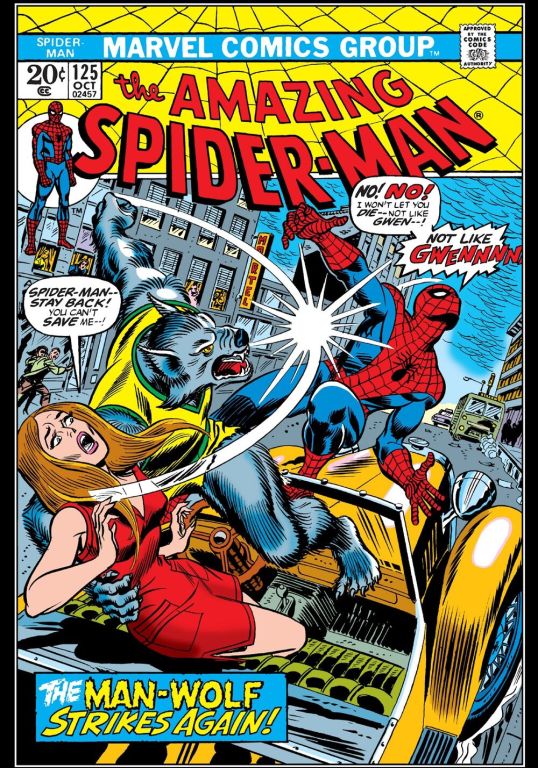
These two issues also provide a turning point in Spider-Man’s character.  Despite being haunted by Gwen’s death, Peter realizes that he cannot shut himself off from the world.  And, despite his justifiable anger at Jonah Jameson, Spider-Man still saves his life and protects his son because he know that’s what a hero does.

This saga ends with John Jameson temporarily cured and freed of the curse.  Of course, it wouldn’t last.  Man-Wolf would return, sometimes as a hero and sometimes as a menace.  And Spider-Man would be there to meet him.
Amazing Spider-Man Vol. 1 #124 (September, 1973)

“The Mark of the Man-Wolf”

Writer:Gerry Conway
Inker:John Romita Sr., Tony Mortellaro
Colorist:Dave Hunt
Letterer:Art Simek
Penciler:Gil Kane

Amazing Spider-Man Vol. 1 #125 (October, 1973)

“The Man-Wolf Strikes Again”

Writer:Gerry Conway
Inker:Tony Mortellaro, John Romita Sr.
Colorist:Dave Hunt
Letterer:Art Simek
Penciler:Ross Andru

Previous Great Moments In Comic Book History:

  1. Winchester Before Winchester: Swamp Thing Vol. 2 #45 “Ghost Dance” 
  2. The Avengers Appear on David Letterman
  3. Crisis on Campus
  4. “Even in Death”

Spreading The Disease: Pledge Night (1990, directed by Paul Ziller)


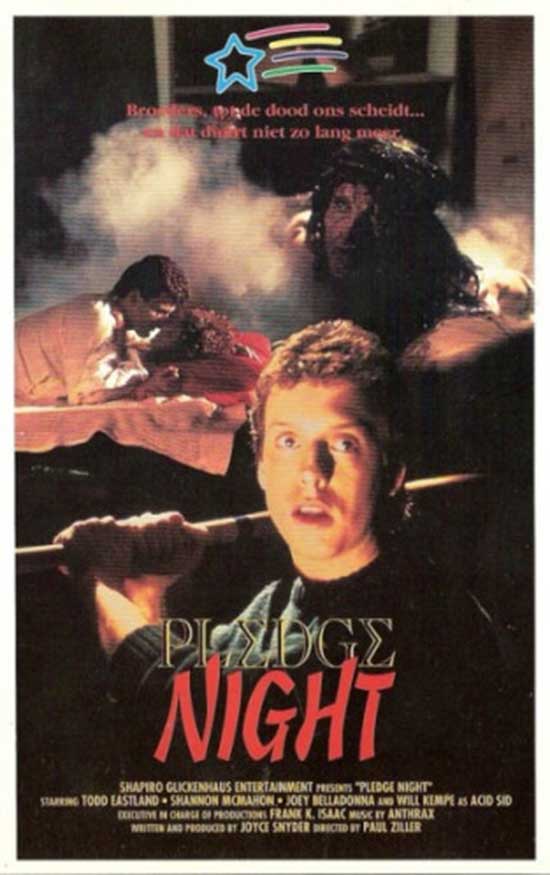
It’s same old song and dance.  In the 60s, a hippie named Sid (Joey Belladonna) is accidentally killed during a hazing gone wrong.  In the 90s, during another fraternity hazing, Sid (now played by Will Kempe, who, the same year that Pledge Night was released, played Rick Von Slonecker in Whit Stillman’s Metropolitan, a film that about as different from Pledge Night as a apple is from a banana) emerges from a toilet and kills everyone almost everyone at the frat house.  His name is now Acid Sid now and he has more one-liners than Freddy Krueger.  “That’s for Spiro Agnew!” he says as he dispatches one victim who probably didn’t even know who Spiro Agnew was.  Other deaths include death by castration, an egg beater, and, of course, a radio dropped in a bath tub.  Pledge Night is interesting in that it does occasionally have a sense of humor about itself.  It starts out as a frat comedy and there is actually more time spent on the absurdity of pledges being hazed than on them being killed.  Once Sid does arrive, it becomes your standard Nightmare on Elm Street rip-off, albeit one where the majority of the victims are male jocks instead of the usual victims who show up in slasher films.  Most of the frat boys are fairly obnoxious so you’ll be on Sid’s side the entire time.  The film certainly is.

If Pledge Night gets any attention today, it is probably because of a mix of Metropolitan fans who want to see Rick Von Slonecker kill frat bros and Anthrax fans who have heard that Joey Belladonna is in the movie.  Belladonna is only in the movie for a few minutes, just long enough to get submerged in acid as a part of absurdly cruel fraternity prank.  Anthrax also provided the film’s forgettable soundtrack.

Pledge Night is a typical 90s college slasher, clearly influenced more by Nightmare on Elm Street than Friday the 13th.  If the movie had been made a few years later, it could have taken full advantage of the self-referential style of horror that was introduced to the slasher genre by Scream and Pledge Night probably would have been a better movie.  Pledge Night does have a sense of humor about itself and the slasher genre but it often seems to be held back by the requirements of also trying to satisfy what horror fans were expecting to get in 1990.  By trying to toe the line between horror and comedy, Pledge Night is never scary enough to work as horror or funny enough to work as comedy.

Game Review: Suspect (1984, Infocom)


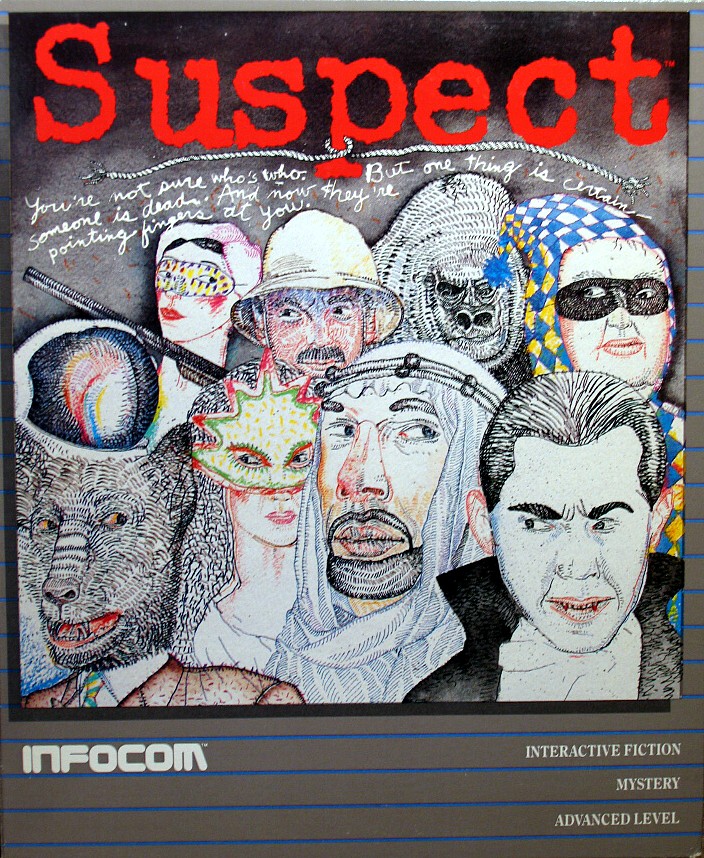
The time is Halloween, circa 1984.  You are a newspaper reporter who has been invited to the annual Halloween costume party that is being thrown by your old friend, Veronica Ashcroft-Wellman.  You show up, eager to find a story.  You are dressed as a cowboy, complete with a lariat and a gun belt.  Shortly after you arrive, Veronica goes to her office.  Not long afterwards, Veronica is discovered dead.  Around her neck is your lariat.  Lying near her body is a bullet from your gun belt.  You’re not only a suspect.  In the eyes of the police, you’re the only suspect!

Infocom’s third and final murder mystery followed Deadline and The Witness.  Just like those two games, you have a limited amount of time to explore your surroundings, find clues, and talk to the other people at the party.  Run out of time and you’ll once again be approached by the trusted Sgt. Duffy.  This time, though, Duffy is coming to take you to jail.  The stakes have never been higher and the mystery has never been more complex.  Not only is the house bigger than the houses in Deadline and The Witness but there’s also many more suspects, all of whom are in costume and all of whom move around at their own free will.  Clues are not difficult to find but it can be a struggle to not only figure out how they link together but to also the convince the investigative detective that they are important.  This is not an easy game to win.  I played it several times and failed to solve the mystery every time.  Finally, I did what anyone would have done in my situation.

I cheated.

I found a walk-through for the game and, following it step-by-step, I solved the murder and cleared my name.  If I hadn’t used that walk-through, I probably never would have solved the case.  This is not a game for casual text adventurers.  This is for people who want to totally immerse themselves in a world and then spend hours working out a plan of attack.

It’s also an elegantly written game, with its fair share of Easter eggs for experienced gamers.  Just count the number of guests who have come to the party costumed like characters from other Inform games.  This game is tough but rewarding, even if you do end up having to cheat to win.

Suspect can be played at the Internet Archive.

Email of the Damned: Paranoia (1998, directed by Larry Brand)


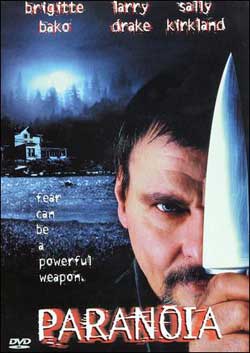
Interior designer Jana Mercer (Brigitte Bako) is haunted by the night that her entire family was murdered by serial killer, Calvin Hawks (Larry Drake).  Even though Calvin was captured and imprisoned, she still fears that someday he’ll get out.  Calvin, meanwhile, feels that he and Jana have a special bond because he decided to allow her to live.  From his prison cell, he follows her life via the internet.  He even sends her messages, which doesn’t do much for her state of mind.  Finally, a former neighbor of hers invites her to return to her old neighborhood so that she can confront her fears.  However, after serving 20 years in prison, Calvin has been released for good behavior.  As a part of his parole, he is not allowed to go anywhere near Jana or any of the scenes of his crimes.  Soon after getting released, Calvin decides to violate his probation.  A serial killer violating probation?  Who would have guessed?

Paranoia raises a few questions.  What type of prison would allow a serial killer to have a laptop in his cell and access to the internet, let alone send out messages unsupervised?  What type of legal system would sentence a serial killer to only 20 years in prison?  Why wouldn’t the authorities make any effort to let Jana, as the sole survivor of Calvin’s crimes, know that Calvin is about to be released from prison?  Why would Jana, a recluse who says she is incapable of trusting people, be so quick to accept an invitation to go to the country with someone that she barely knows?  It makes no sense but the movie still somehow maintains enough suspense to work.

The best thing about Paranoia are the performances of Brigitte Bako and Larry Drake.  Bako, who was one of the best of the 90s direct-to-video stars, brings some needed sass to the role of Jana while Larry Drake was a B-movie veteran who always made a good villain.  Larry Brand, who also did Overexposed and The Drifter, wrote and directed Paranoia and, just as he did in those two previous films, Brand includes a lot of pop cultural references.  It’s not every day that you see a direct-to-video B-movie that includes an inside joke about The Dick Van Dyke Show.  Brand and his cast bring some unexpected style to the nonsensical story.

Watching Paranoia today, it’s hard not to get nostalgic.  With a plot that hinges on email almost as much as the plot of Sleepless in Seattle, it’s a 90s film, through and through.  They don’t make them like this anymore.

Game Review: Aisle (1999, Sam Barlow)


Image by Sam Barlow

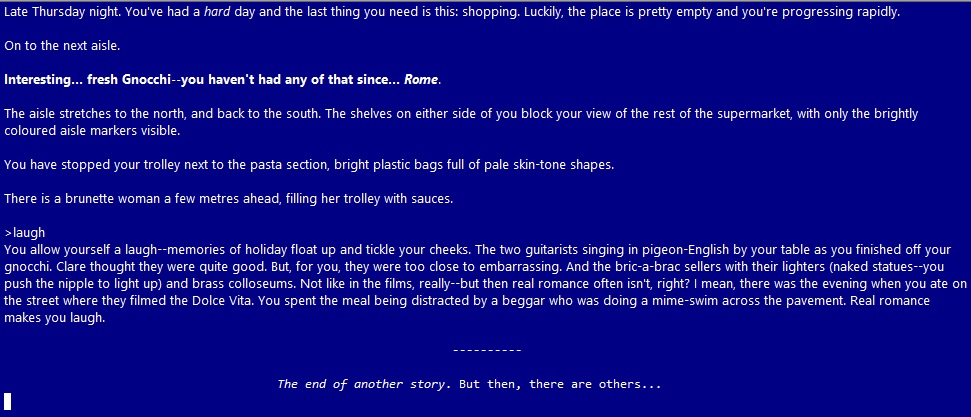
Aisle is perhaps the greatest work of Interactive Fiction ever created.

It’s Thursday night.  You’ve had a long day and you’re ready to go home.  You just have to pick up some gnocchi from the grocery store.  You are standing on the correct aisle, with your cart.  There is a woman standing a few feet away from you, with a grocery cart of her own.  What will you do?

Choose your action carefully because this is only a one-move game.  There are hundreds of commands that you can choose from but each command will lead to a different conclusion.

Some commands will lead to happy ending.  Some commands will lead to a sad ending.  Some will trigger old memories.  Sometimes, the memories will be happy and romantic.  Sometimes, they will involve death, insanity, and horror.  Sometimes, you are a good man and sometimes you are a bad man.  Sometimes, you are healthy and sometimes you are sick.  It all depends on which command you chose.

Because each command leads to different details of the story being revealed, Aisle is a game that rewards frequent replays.  Deciding to laugh in one game led to me typing “Remember Clare” in the next game.  Even simply choosing to leave the aisle can lead to a variety of different endings, depending on how you decide to leave.  This game can be a romantic or it can be horrific.  It all depends on which word, out of the hundreds that the game is prompted to respond to, you type in at the prompt.

Aisle can be downloaded from here.


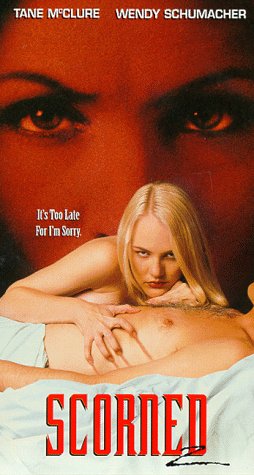
Amanda Returns: Scorned 2 (1997, directed by Rodney McDonald)


Released in 1993 as a part of the 90s Skinemax explosion, Scorned was one of the best of the many films to co-star Andrew and Shannon Tweed.  The story of a vengeful widow (Tweed) hellbent on destroying Stevens’s family proved to be so popular that it was inevitable that there would be a sequel.  Four years later, the mayhem continued in Scorned 2.

Tane McClure takes over Shannon Tweed’s role as Amanda, who has amnesia and can’t remember anything about her previous life as a sex-addicted sociopath.  Amanda is now married to psychology professor Mark Foley (Myles O’Brien) but she’s haunted by nightmares (which are made up of scenes lifted from the first Scorned) that provide clues to her former life.  While Amanda seeks help from a hypnotherapist, her frustrated husband ends up falling for one of his students, Cynthia (Wendy Schumacher).  Cynthia already has a boyfriend but she’s willing to screw a professor if it will help her grades.  When Amanda discovers that Mark is cheating on her, she snaps and reverts back to her old ways as she seeks revenge on everyone who she feels has betrayed her.  Further complicating things is that Alex Weston (Andrew Stevens, reprising his role from the first Scorned) has recently arrived on campus and is seeking revenge for the death of his son.

Scorned 2 was made during the dwindling days of Skinemax, long after the heyday of late night cable’s popularity.  It even featured a scene in which Cynthia’s boyfriend explains how computer passwords work, which is not something that anyone had to worry about when the first Scorned or its many imitators were initially released.  Unfortunately, Shannon Tweed did not reprise her role as Amanda.  Tane McClure was not a bad actress and bore a superficial similarity to Tweed but she just didn’t have Tweed’s ability to make even the stupidest dialogue sound natural.  Andrew Stevens did return but his character is largely wasted.  The real star of the film is Wendy Schumacher, for giving a credible performance while showing how far one student will go to keep up her grades.  Considering the cost of college, can you blame her?  Today, as with many of the films of that era, the main appeal of Scorned 2 is one of nostalgia.

Game Review: 9:05 (2000, Adam Cadre)


(Image by Adam Cadre)

I’m still working on my review of Heavy Rain so, while I do that, why not play Adam Cadre’s 9:05?

9:05 is a text adventures which opens with a scenario that should be familiar to anyone who has previously played an interactive fiction game.  It’s the morning.  The phone is ringing.  The person on the other line says that you have overslept and the boss is asking why you’re not at work.  Now, you have to get out of bed and quickly do what you need to do to be able to leave the house.  It’s a scene that has served as the premise of many IF games but 9:05 adds a macabre twist at the end, one that makes the game worth replaying.

9:05 is a short game and most of the puzzles are deliberately simple to solve.  It should not take any longer than 5 to 10 minutes to play the game for the first time.  If you’ve never played an IF game before, 9:05 is a good one to start with.  If you’re a veteran player, you will enjoy the way that 9:05 plays with and subverts the usual IF conventions.

The game can be downloaded from here.

Wait Until Dark With Shelley Hack: Blind Fear (1989, directed by Tom Berry)


Three criminals, two men and a woman, go from robbing an armored car to invading a seemingly deserted New England inn.  Led by psycho Ed (Kim Coates, of course), they kill the elderly caretaker (Jan Rubes) and then settle in to wait for the arrival of their contact.  However, when a pizza is delivered, they notice that only half of the pizza has anchovies.  “Not everyone likes anchovies!”  Ed declares.  That means that the pizza was ordered for two and there’s someone else in the Inn!

That other person is Erica (Shelley Hack), who was the inn’s switchboard operator.  She’s now hiding in the inn, desperately trying to figure out how to avoid getting captured by Ed and the gang.  Complicating things for Erica is that she’s blind.  Complicating things for the criminals is that they’re no match for her other heightened senses.  While the gang searched the inn, Erica kills the lights and sets some traps of her own.

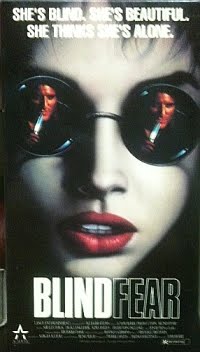
The VHS box art for Blind Fear (which I don’t think has ever been released on DVD), says, “She thinks she’s alone,” which is actually the exact opposite of the film’s plot.  (it also features Erica wearing tinted glasses, something that she doesn’t do in the actual film.) Erica never thinks that she’s alone and spend almost the entire film in hiding because she knows that she’s not alone.  Ed and the criminals briefly think that they’re alone but then the pizza arrives and the anchovies give everything away.  I guess “She thinks she’s alone” sounded better than “Shelley Hack spends 90 minutes in the dark.”

Imagine a remake of Wait Until Dark starring the least interesting star of Charlie’s Angels and you have a pretty good idea of what this efficient but forgettable Canadian thriller is like.  As an actress, Shelley Hack never had much screen presence but she’s not really bad in this movie, in which she spends most of the runtime crawling around in the dark while never getting a single blonde curl out of place.  Not surprisingly, the best performance in the film comes from Kim Coates, who has been playing psychos and lowlifes for almost longer than I’ve been alive.  Nobody does it better than Kim Coates!

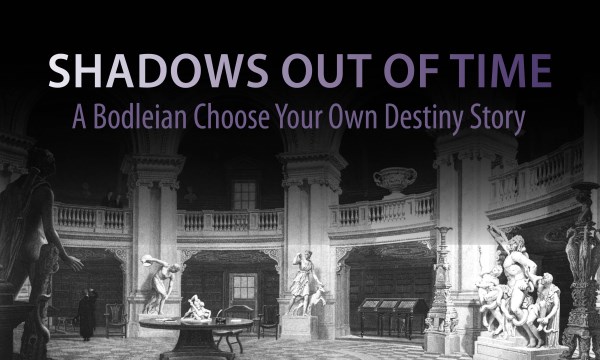
Game Review: Shadows Out Of Time (2018, Brendon Connelly, Dan Q, Liz McCarthy, and Bodleian Libraries)


I was going to review Heavy Rain today but it looks like I’m going to need an extra day to work on that review and hopefully figure out an appropriately way to describe Madison Pagie’s role in the game.

Until I do that, how about taking a look at Shadows Out of TimeShadows Out Of Time is a text adventure game that begins with you, a student at Oxford, waking up in your favorite chair in the Old Bodleian Upper Reading Room.  In front of you is a copy of Lovecraft’s Shadow Out Of Time, which you were reading before you fell asleep.  Upon waking up, you discover that the library appears to be deserted.  Further searching reveals that the entire town appears to be bereft of human life!  Are you alone or is there something with you?  You’ll have to explore to find out.

Shadows out of Time is a choose your own adventure-style game.  You read the descriptions and then you decide which of two options to go with.  Do you go out to the quad or do you continue to explore the library?  Do you try to reach Rad Cam or do you steal a bike and try to return to your home?  It can be a challenging game but, fortunately, you always have the option to “wake up” if you want try again.  (Or you can “stay asleep forever.”)

It’s an atmospheric game that captures the unique feel of Oxford.  (The game itself was obviously specifically written for students at Oxford.  For any Americans who may want to play, Radcliffe Camera is not a camera shop.)  It’s an entertaining tour through haunted Oxford.  You can play it here.