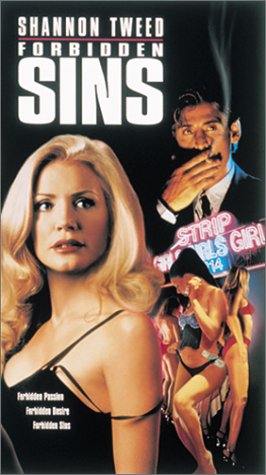
Cinemax Friday: Forbidden Sins (1999, directed by Robert Angelo)


There’s been a murder!  A stripper named Virginia Hill (Kristen Pierce) has been found dead and the evidence suggests that she died as the result of sadomasochistic sex play gone wrong.  Lead detective John Doherty (Myles O’Brien) immediately suspects that the murderer is David Mulholland (Corin Timbrook).  Mulholland is a millionaire who owns the club where Virginia used to dance.  He has a reputation for being into some kinky stuff.  (A cashier at the local adult bookstore swears that Mulholland only buys BDSM-related magazines.)  Detective Doherty is convinced that Mulholland not only killed Virginia but that he’s killed before.  For this detective, this case is personal.

It’s about to get a lot more personal because, after he’s arrested, Mulholland hires Maureen Doherty (Shannon Tweed) to defend him in court.  Maureen is John’s ex-wife and she knows firsthand how obsessive her former husband is.  For reasons that she can’t fully explain, Maureen feels that Mulholland has been set up.  Working with Virginia’s best friend, Molly Malone (Amy Lindsay), Maureen sets out to prove that Mulholland is innocent.  But is he?

Yes, it’s yet another remake of Jagged Edge, with Shannon Tweed more than capably stepping into the Glenn Close role.  The chance to see Shannon Tweed play a high-powered attorney is the main reason to see Forbidden Sins and she does a pretty good job with the role.  Among the stars of the Skinemax era, Tweed was one of the more talented and she was always as credible delivering dialogue as she was disrobing.  Other than Tweed, the rest of the cast is okay but nothing special.  For instance, one reason why Jagged Edge worked was because Jeff Bridges kept you guessing.  In this film, the same cannot be said of Corin Timbrook.  The script and the direction are all pretty much standard for what you would expect from a 90s direct-to-video sexploitation flick and, again, the main thing that elevates this film above others of its type is the conviction that Shannon Tweed brings to her role.

For those who are only watching this film for the nudity (and, to be honest, that’s probably going to be the majority of the people who go to the trouble to track down something called Forbidden Sins), Shannon Tweed has one scene while Amy Lindsay has several.

My favorite thing about Forbidden Sins is that the murdered stripper was named after Bugsy Siegel’s girlfriend.  My second favorite thing about Forbidden Sins is that the working title was apparently Forbidden By Law.  That’s one way to describe murder, I guess.
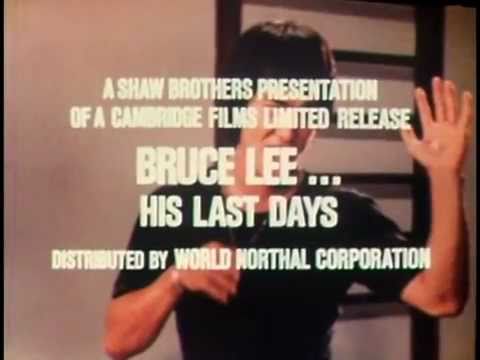
Bruce Lee: His Last Days, His Last Nights (1976, directed by John Law Ma)


Also known as Bruce Lee & I, this films stars Betty Ting Pei as herself.  At the time that the film was made, Betty was one of the most vilified women in the world.  An actress who was best known for appearing in softcore sexploitation, Betty was a “friend” of Bruce Lee’s.  It was while visiting Betty in her apartment that Bruce announced that he had a terrible headache.  Betty gave Bruce Equagesic, a powerful type of aspirin, to help him deal with his headache.  Bruce then fell asleep and, as we all know, never woke up.

Not surprisingly, after Bruce’s death, Betty was at the subject of a lot of unfavorable speculation and unsavory rumors.  Some Bruce fans accused her of poisoning Bruce, either accidentally or on the orders of the organized crime figures who wanted to take over Bruce’s career.  There was also speculation as to the nature of Bruce’s relationship with Betty.  Bruce was married and had two children and, after he died, he was recast as almost a saintly figure.  Betty’s claim that she was Bruce’s mistress did not fit in with that new reputation.

Bruce Lee: His Last Days, His Last Nights opens with Bruce (played by Danny Lee, who later won a critical respect by appearing in several John Woo films) filming a fight scene before then going to Betty’s apartment where, after the first of the movie’s many sex scenes, Bruce ends up dead in Betty’s bed.  With both the press and even people in the streets accusing Betty of being evil, Betty goes to a bar and, while drowning her sorrows, tells the bartender about her life with Bruce Lee.

In Betty’s telling, she knew and loved Bruce long before he became a star.  She met him when she was just an innocent schoolgirl and he saved her from some thugs in the streets.  Later, they both met again while pursuing their film careers and they became lovers.  Betty felt guilty about carrying on an affair with a married man but Bruce didn’t care.  Bruce mostly cared about smoking weed, getting into fights, and getting laid.

This is one of the stranger Bruceploitation films.  Most Bruceploitation films presented Bruce as being a real-life super hero who was either killed by his enemies or who faked his death so he could protect his family.  This one presents Bruce as essentially being a petulant and cocky asshole who didn’t really care about anyone but himself.  Some of that may be because the film was produced by the Shaw Brothers, with whom Bruce famously refused to work with early in his career.  (It’s rumored, though, that Bruce was thinking of leaving Golden Harvest for the Shaw Brothers at the time of his death.)  The other reason why Bruce comes across as being so unlikable in this movie is that it’s told from the point of view of Betty, who was often accused of having corrupted Bruce and of not being worthy of him.  This film makes the argument that Bruce was not worthy of Betty.

Once you get past all of the controversy about how this film presents Bruce Lee and his relationship with Betty Ting Pei, it’s still not a very good movie.  It’s too slow and they’re aren’t enough big fights.  (When Bruce does fight, it’s usually to protect Betty from an unwanted admirer.)  Bruce does don the yellow track suit but it’s just so he can debate philosophy with Betty.  We expect more from our Bruceploitation films.

Music Video of the Day: Waiting On A Friend by The Rolling Stones (1981, directed by Michael Lindsay-Hogg)


“Just let me be cynical for a moment. First of all, it’s really NOT about waiting on a woman friend. It’s just about a FRIEND; it doesn’t matter if it’s a man or a woman. I can see people saying, Oh, we’re all much older now, Mick’s writing this much more compassionate stuff, must be about a real person. But that’s only in their perception of it.”

— Mick Jagger on Waiting For A Friend

Is our man Mick waiting for a friend or is he waiting for his drug connection?  Since the video features Mick hanging out in front of a building in New York and waiting for Keith Richards to come walking up, I guess both could be true.  Interestingly enough, Keith has often said that he and Mick have a strained relationship in real life, though Keith also wrote in his autobiography, “”I still love him dearly … your friends don’t have to be perfect.”

This video was popular in the early days of MTV.  At a time when many of the big rock bands were still skeptical about the music video format and many were also predicting that MTV would never last, the network was happy to have a video from a group as legendary as the Stones.  The video was directed by Michael Lindsay-Hogg, who was  doing videos even before MTV was a thing.  Waiting with Jagger in front of the building is Peter Tosh.

Enjoy!

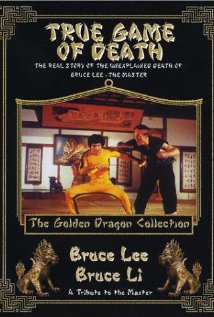
The True Game of Death (1979, directed by Steve Harries and Chen Tien-Tai)


After the death of Bruce Lee, the world cries out for another great martial arts film star.  Fortunately, Hsao Lung (Lung Tien-Hsiang) answers the call.  Hsao Lung bears a passing resemblance to Bruce and whenever he trains or looks at a magazine, he imagines stock footage from old Bruce Lee movies, suggesting that Bruce Lee’s spirit has possessed Hsao Lung’s body.

The mafia, led by George (George Stephens), wants a piece of Hsao Lung’s films but Hsao Lung refuses.  The mob then forces George’s wife, Alice (Alice Meyer), to slip a powerful drug into his coffee.  They say that it will only put Hsao Lung into a coma.  Instead, it kills him!

Soon, a new chef comes to work for Alice.  The chef looks, sounds, and moves exactly like Hsao Lung but he wears a fake beard and oversized eye glasses.  After Alice explains the circumstances of what led to Hsao Lung’s death (which means that the audience watches a flashback to a scene that happened ten minutes prior), the chef removes his beard and glasses.  It’s Hsao Lung!  He’s not dead!  Everyone is stunned except for the people watching the movie because, after all, Hsao Lung’s entire disguise consisted of glasses and a fake goatee.

The bad guys kidnap Alice and this, of course, leads to Hsao Lung putting on a yellow track suit and fighting several villains in a pagoda.  It’s basically just the end of The Game of Death all over again, except there’s no Kareem Abdul-Jabbar this time.  It should be noted that the final fight scenes are well-staged and a hundred times better than anything else in this movie.  Hsao Lung fights four motorcyclists, two sumo wrestlers, and a boxer.  The boxer and Hsao Lung discuss the philosophy of combat before fighting, just like Bruce Lee and Kareem did.

Even by the standards of the Bruceploitation genre, The True Game of Death is a shoddy production.  The plot makes no sense and Lung Tien-Hsiang is good in the fight scenes but otherwise, he can’t come close to matching Bruce Lee’s screen presence.  It’s not a good sign that the best part of The True Game of Death is an almost shot-for-shot rip-off of the best part of the original Game of Death.  Outside of the closing fight scenes, my favorite part of The True Game of Death is that, before Alice gives Hsao Lung the poison, random gangsters keep showing up everywhere she goes and reminding her to do it.  Even though he’s usually no more than a few feet away, Hsao Lung never picks up on it.

The main thing that The True Game of Death has going for it is that it’s a Bruceploitation film and will therefore only be seen by fans of that very specific genre, the majority of whom will probably have a good idea of what they’re about to get even before the movie starts.  Bruceploitation is a genre that is built on some very specific tropes and The True Game of Death doesn’t waver from a single one of them.  It doesn’t demand much from its audience and if you stick with it, you’ll get a pretty cool fight at the end of the movie.

4 Shots From 4 Films: Special John Llewellyn Moxey Edition


4 Shots From 4 Films is just what it says it is, 4 shots from 4 of our favorite films. As opposed to the reviews and recaps that we usually post, 4 Shots From 4 Films lets the visuals do the talking!

John Llewellyn Moxey was one of the best directors that most people have probably never heard of.  Born in Argentina and raised in the UK, John Llewellyn Moxey made his directorial debut with the classic horror film, City of the Dead.  Though he directed a handful of other feature films, Moxey is best known for being one of the best television directors of the 70s and 80s.  Along with directing episodic television, Moxey was responsible for directing several classic made-for-television films.  Moxey proved himself to be a master of every genre but, because he worked in television, his talent was often taken for granted.

When Moxey died last year at the age of 94, his work was in the process of being rediscoverd and reevaluated.  Today would have been Moxey’s 95th birthday and, in honor of the man and his career, here are 4 shots from 4 of his best.

4 Shots From 4 Flms

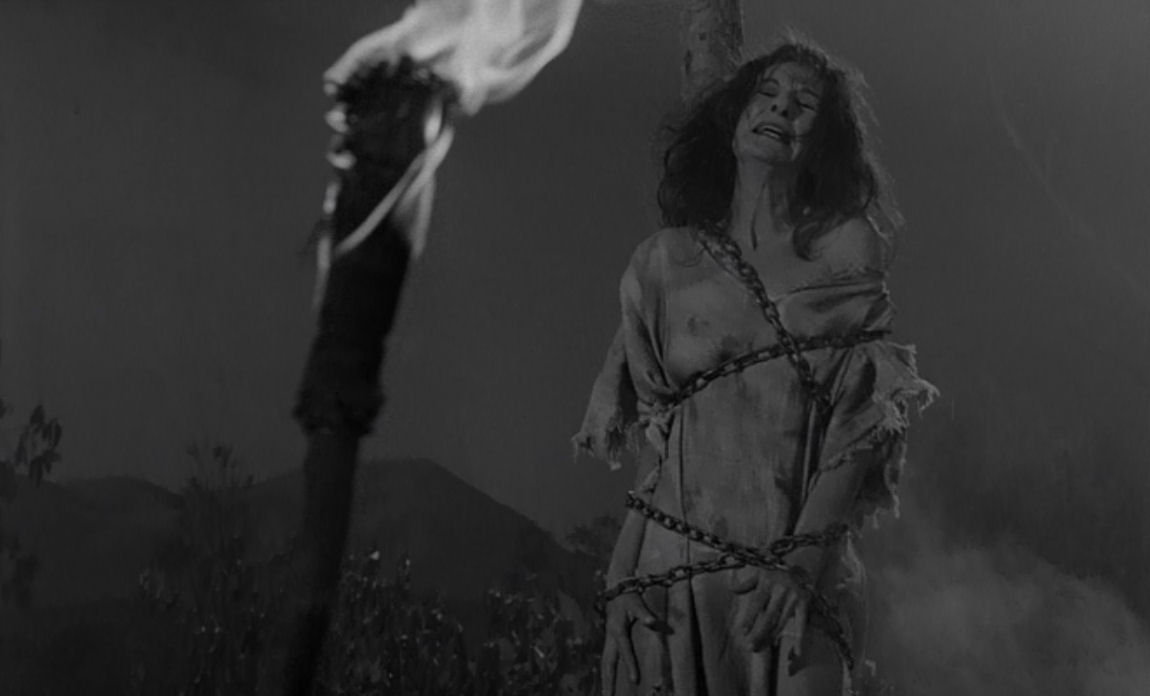
The City of the Dead (1960, directed by John Llewellyn Moxey)

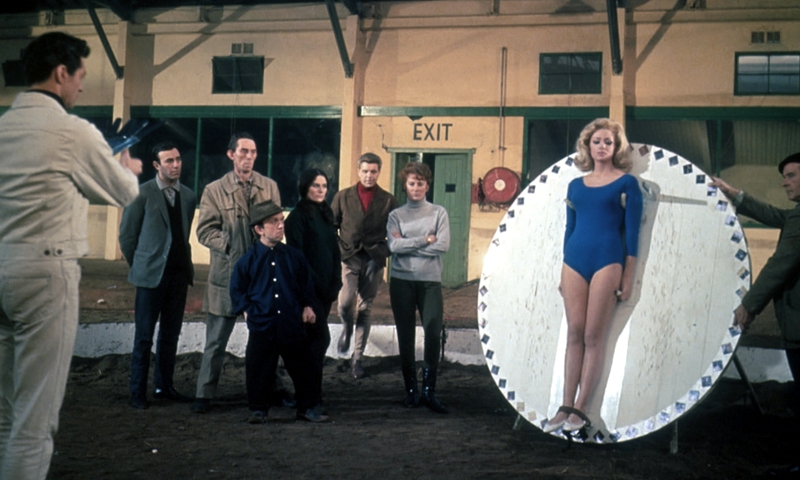
Circus of Fear (1966, directed by John Llewellyn Moxey)

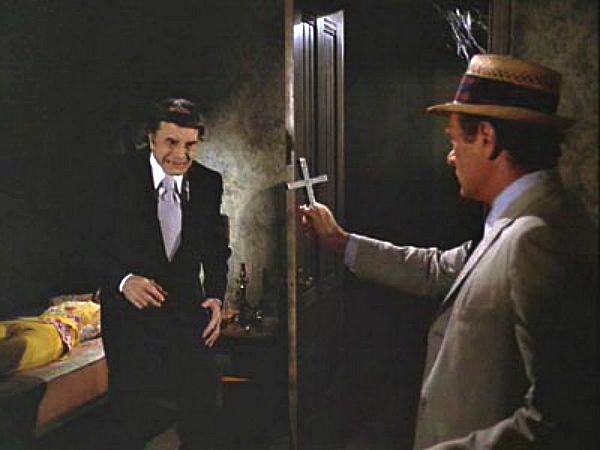
The Night Stalker (1972, directed by John Llewellyn Moxey)

Where Have All The People Gone? (1974, directed by John Llewellyn Moxey)

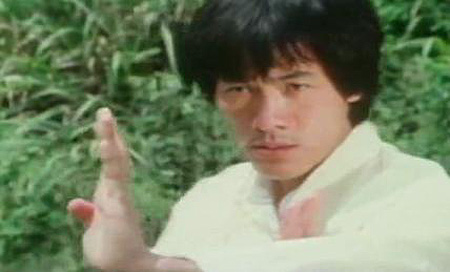
Bruce Li The Invincible (1978, directed by Law Kai Shuk)


Because he’s immature and unpatriotic, Cheng (Michael Chan Wai Man) is kicked out of the local kung fu school and exiled from China.  Before leaving, he promises his teacher that he will go to Malaysia and change his ways.  Instead, he goes to Malaysia and sets himself as a local crime lord.  Along with extorting businesses, running a gambling den, and kidnapping female tourists, Chen also trains a group of gorillas to serve as his own persona army.  Realizing that Chen needs to be brought back to the school, three men head to Malaysia to take him down.  Bruce Li, the most successful of the Bruce Lee imitators to spring up after Lee’s death, plays Yo Fung, one of them three men.  According to the film’s title, he’s invincible.  Personally, I like the idea of naming a movie after its star.  Would Once Upon A Time In Hollywood have won more Oscars if it had been called Brad Pitt The Indestructible?  I think we all know that it would have.

Even by the standards of 70s Bruceploitation, Bruce Li The Invincible is incoherent.  According to the imdb, Bruce Li The Invincible has a running time of 92 minutes.  The version I saw was badly dubbed into English and only ran for 84 minutes so it seems probable that, like a lot of kung fu films, this one was re-edited for distribution in the U.S.  Maybe the full 92 version explains how Cheng became so powerful so quickly or why Bruce Li and his allies end up having to fight two well-trained gorillas when they arrive in Malaysia.  The film never makes it clear whether the gorillas are supposed to be actual gorillas or if they’re supposed to be goons who chose to put on gorilla costumes before attacking their targets.

Luckily, even if the plot doesn’t make any sense, the fight scenes are pretty good.  That includes the fights with the gorillas.  In fact, the gorilla fights are the main reason to see this movie.  Just when you think that you’ve seen everything that Bruceploitation genre has to offer, Bruce Li is suddenly getting jumped by a man wearing a gorilla costume.  That was more than worth the 84 minutes that I spent watching this movie.  Though this movie may be frequently confusing, the gorillas are pretty damn cool.

4 Shots From 4 Films: Executive Produced by George Harrison


4 Shots From 4 Films is just what it says it is, 4 shots from 4 of our favorite films. As opposed to the reviews and recaps that we usually post, 4 Shots From 4 Films lets the visuals do the talking!

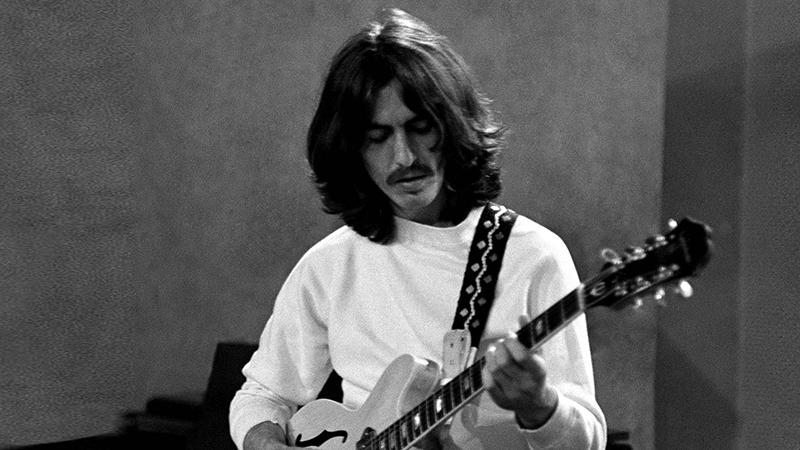
Today would have been the 77th birthday of my favorite members of the Beatles (not to mention The Traveling Wilburys), George Harrison.  Harrison died far too young but he left behind a legacy of music that is celebrated to this day and will still be celebrated long after the rest of us have moved on.

While everyone knows George from his music, what is often forgotten is that Harrison is also often credited with helping to revive the British film industry.  After the break-up of the Beatles, Harrison partnered with Denis O’Brien and formed HandMade Films.  At a time when British cinema was struggling both financially and artistically, Harrison served as executive producer for some of the best films to come out of the British film industry.  Harrison championed many talented British directors and he used his clout to get many otherwise difficult project produced.  It’s fair to say that, if not for his support, the members of Monty Python would never have been able to make the then-controversial Life of Brian, which is now widely regarded as one of the best British comedies ever made.

Today, on his birthday, here are four shots of four films executive produced by George Harrison.

4 Shots From 4 Films

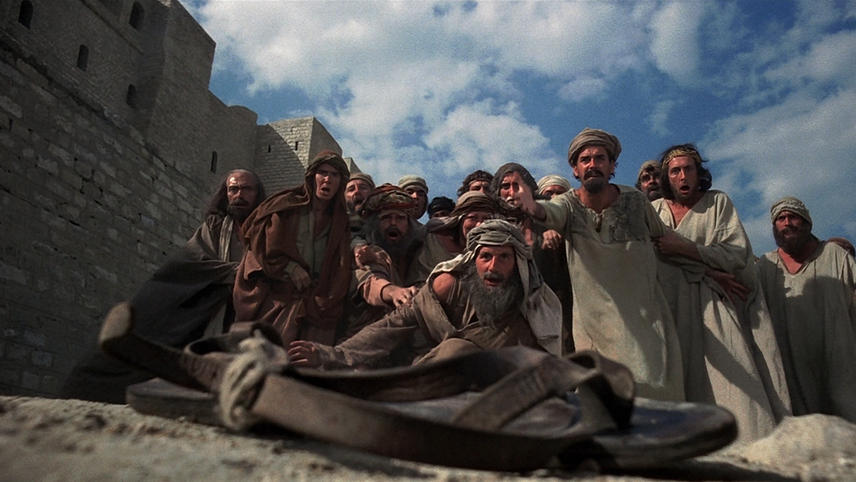
Monty Python’s Life of Brian (1979, directed by Terry Jones)

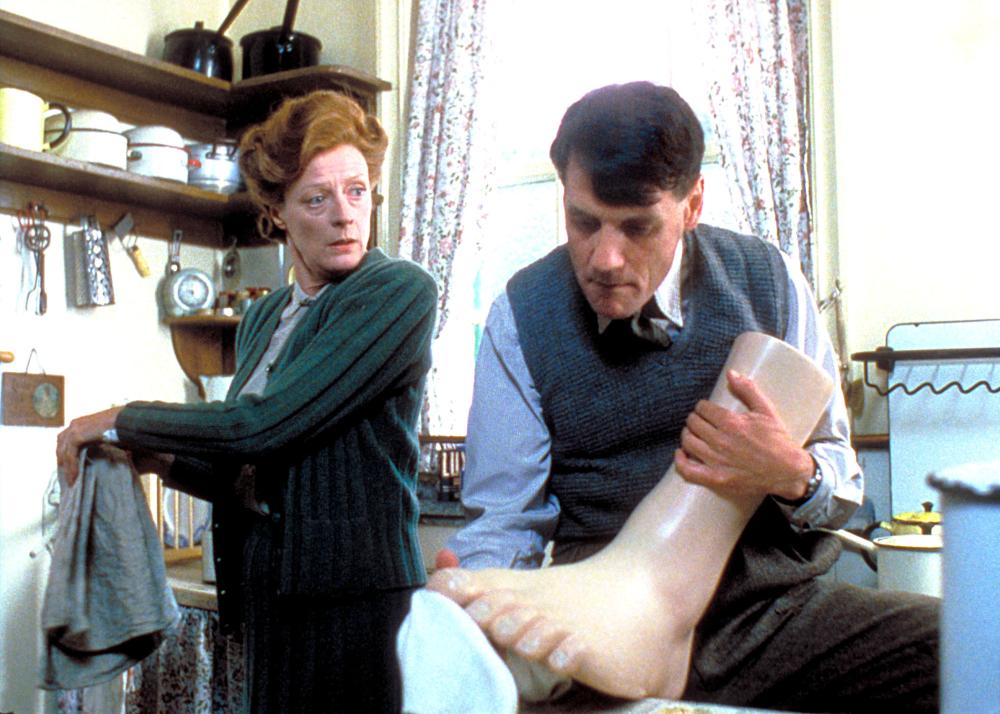
The Missionary (1982, directed by Richard Loncraine)

A Private Function (1984, directed by Malcolm Mowbray)

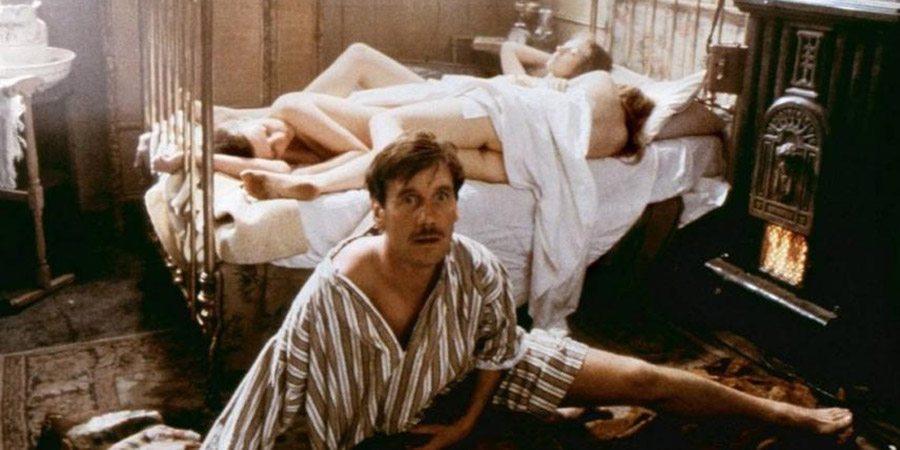
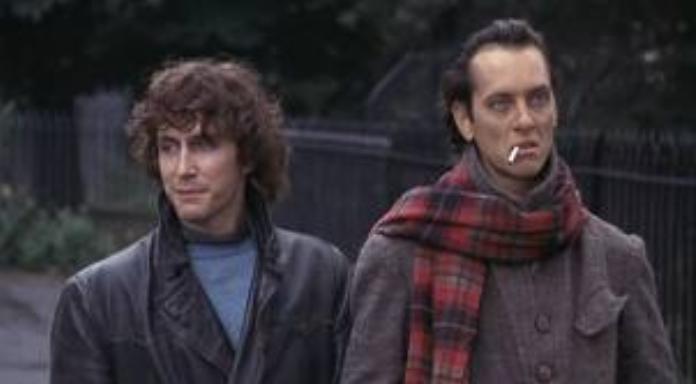
Withnail and I (1987, directed by Bruce Robinson)


Music Video of the Day: Safe Home by Anthrax (2003, directed by Robert Carlsen)


“You have always been my safe home.”

Yes, that is Keanu Reeves walking down a highway medium while Anthrax performs the song in this video.  What is Keanu doing there?  He was a long-time fan of Anthrax and he just happened to be available when this video was being shot.  This video came out while Reeves was still riding high from The Matrix films and it is easy to imagine Neo wandering about aimlessly.  It’s much more difficult to imagine the same thing happening to John Wick, who always has a destination in mind.

Other than the movie star cameo, this is a no frills video from Anthrax, one that lets the music do the talking.  I’m not a huge Anthrax fan but I always appreciate relatively direct videos like this.

This is James Hetfield’s favorite Anthrax song.

Enjoy!

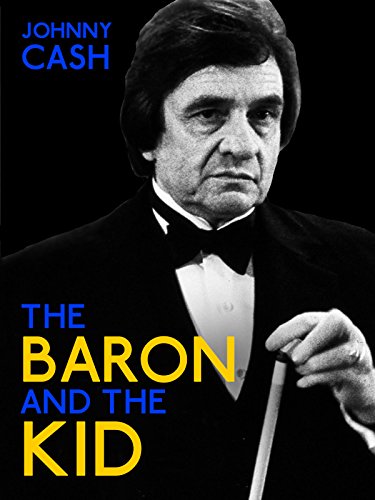
The Baron and the Kid (1984, directed by Gary Nelson)


Ever wonder what The Color of Money would have been like if it starred Johnny Cash and featured less Eric Clapton but more country and western on the soundtrack?  The Baron and the Kid is here to satisfy your curiosity.

Johnny Cash is Will Addington, better known as The Baron.  Back in the day, The Baron was the meanest and the most ruthless pool hustler around.  He’d cheat people out of their money without even giving it a second thought.  He drank.  He doped.  He womanized.  He abused his wife, Dee Dee (June Carter Cash).  After the Baron became the 9-ball world champion, Dee Dee left him and the Baron changed his ways.  Now, years later, he only plays exhibition games for charity and the strongest thing that he drinks is grapefruit juice.

When a young hustler who calls himself the Cajun Kid (Greg Webb) challenges the Baron to a game, the Baron wins easily but he still recognizes that the Kid has a natural talent.  When the Cajun Kid attempts to put up his mother’s wedding ring as stakes for another game, the Baron recognizes the ring as the one that Dee Dee used to wear on her finger.  After talking to Dee Dee, the Baron discovers that the Kid is actually his son.

The Baron takes the Kid under his wing, hoping to train him to become a champion while, at the same time, getting to know his son.  The Kid proves to be a difficult student.  He’s cocky and, like the Baron did in his youth, he has a temper.  He also has a manager, a good-for-nothing con artist named Jack Steamer (Darren McGavin).  Steamer doesn’t want to lose the money that the Kid brings in and he plots to to keep him away from his father.  The Baron, though, is determined to prevent the Kid from making the same mistakes that he made.  However, when the Baron and the Kid both find themselves competing in the same championship, the Baron finds himself being tempted by his old demons.

The Baron and the Kid is okay for a made-for-tv movie.  It’s predictable but Johnny Cash has such a formidable screen presence that it doesn’t matter that he was sometimes a stiff actor.  The Baron’s past of booze and drugs mirrors Cash’s own past and when Cash, as the Baron, talks about how he’s trying to keep the Kid from making the sames mistakes, there’s little doubt that he knows what he’s talking about.  Some of the pool sequences are creatively shot and Richard Roundtree has a great cameo as a cocaine dealer named Frosty.  There’s nothing surprising about The Baron and the Kid but fans of Cash and the game of pool should enjoy it.

Music Video Of The Day: Jesus Built My Hotrod by Ministry (1991, directed by Paul Elledge)


Needless to say, that’s the famous Gibby Haynes providing the vocals on Ministry’s Jesus Built My Hotrod.  Gibby recorded the vocals while he was in Chicago, doing the first Lollapooloza tour.  Ministry’s Al Jourgensen told Songfacts, “Gibby came down completely drunk off his ass. He couldn’t even sit on a stool, let alone sing. I mean, he was wasted. He fell off the stool about 10 times during the recording of that vocal. He made no sense and it was just gibberish. So I spent two weeks editing tape of what he did, thinking it still was better than what I was thinking of doing with the song.”

Fortunately, Gibby’s vocals saved both the song and probably the future of the band.  Ministry had already been given an advance of $750,000 to make an album.  According to Jourgensen, the band spent all the money on drugs and ended up with only this song to show for all of their efforts.  In an attempt to at least get some of their money back, Warner Bros. released the song as a single and it quickly shot up the charts.  For a while, at least, it was Warner Bros’s top selling-single of all time.  As a result, Ministry got another advance of $750,000 and this time, they actually used the money to make an album.

As for the video, it’s all about car culture.  Paul Elledge also directed two videos for Anthrax.

Enjoy!