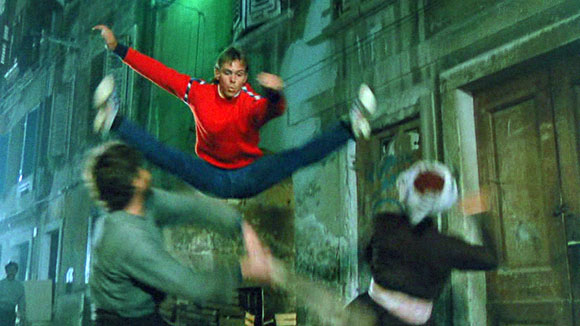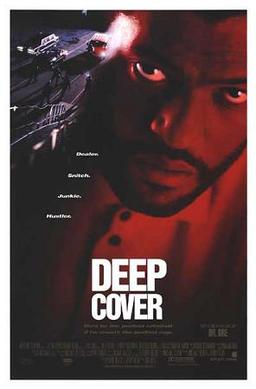
Deep Cover (1992, directed by Bill Duke)


When Russell Stevens was 10 years old, he saw his father get gunned down while holding up a liquor store.  Now, 20 years later, Russell (Laurence Fishburne) is a cop who is so straight that he doesn’t even drink.  But because of his father’s background, a psychological profile that indicates Russell is unique suited to understand how the criminal mind works, and the fact that he has no loved ones at home, he is recruited to work undercover.  His weaselly handler, Carver (Charles Martin Smith), explains that going undercover means that Russell is going to have to become a criminal 24/7.  He can’t just do his job for 8 hours a day and then go back to his normal life at night.

With the government’s money, Russell sets himself up as a dealer, buying and selling the drugs that are destroying his community.  It does not take long before Russell meets David Jason (Jeff Goldblum), a lawyer and aspiring drug kingpin.  At first, David makes Russell as being an undercover cop but, after Russell is arrested by the righteous but clueless Detective Taft (Clarence Williams III), David changes his mind and brings Russell into the operation.  The line between being a cop and a criminal starts to blur, especially after David and Russell start to bond over their mutual dislike of their boss, Felix (Gregory Sierra).  It doesn’t take long for Russell to get in over his head.

There have been a lot of films made about undercover cops losing themselves in their new criminal identity but few take the story to its logical conclusion like Deep Cover does.  Russell may start out as a straight arrow but, by the end of the movie, he’s killed a dealer in cold blood and broken his own personal pledge to never do cocaine himself.  He also discovers that David is often a more trustworthy partner than his own colleagues in law enforcement.  Fishburne and Goldblum both give excellent, spot-on performances as Russell and David and they’re supported by an able cast of weasels and tough guys.  I especially liked Charles Martin Smith’s performance as Carver.  (When Russell asks Carver if he’s ever killed a man, Carver laughs and says that he went to Princeton “just to avoid that shit.”)  Gregory Sierra is also great in the role of Felix and I loved that, of all people, Sidney Lassick played one of Felix’s henchmen.  That’s like seeing John Fiedler play the Godfather.

One of the best crime thrillers of the 90s, Deep Cover is not only a detective film but it’s also a politically-charged look at why America’s war on drugs was doomed to failure.  No sooner does Russell get into position to catch the man behind Felix’s operation than he’s told to drop the case because the State Department thinks that the drug lord could be politically helpful to them in South America.  As Russell discovers, the War on Drugs is more interested in taking out the soldiers on the streets than the generals in charge.  While men like Carver sit in their offices and move people around like pieces on a chess board, people like Russell are left to clean up the mess afterward.
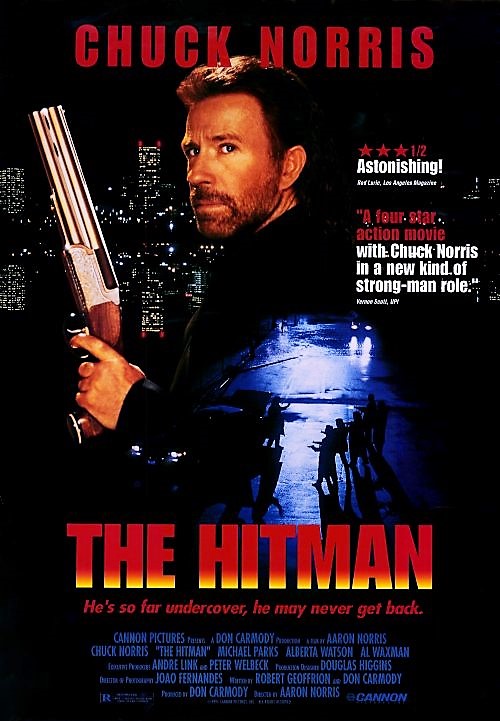
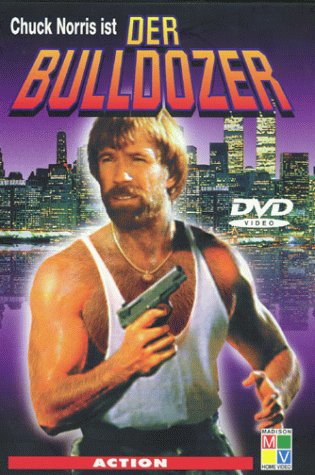
The Hitman (1991, directed by Aaron Norris)


When cop Cliff Garrett (Chuck Norris) gets shot by his corrupt partner, Ronny Delaney (Michael Parks), he dies and nearly gets to go to heaven.  However, at the last minute, the doctor’s manage to bring Cliff back to life.  Since everyone believes Cliff to be dead, his superiors come up with a brilliant plan.  What if Cliff changes his name to Grogan, grows his hair long, and goes undercover as a hitman?

Cliff’s up for it and is soon working for an Italian mobster named Marco Luganni (Al Waxman).  Marco wants to eliminate all of the other mobsters in town but he also has to deal with a bunch of drug-dealing Iranians who are trying to move in on his territory.  Cliff soon works his way into the inner circle and plays all sides against each other.  What’s strange is that Cliff manages to fool everyone into thinking that he’s Grogan despite the fact that all he’s really doing is wearing his hair long.  In fact, the only person who he doesn’t fool is his former partner, Delaney.  Delaney is not happy to discover that Cliff is still alive and sets out to take him out once and for all.

Because this is a Chuck Norris film, there’s a subplot where Cliff helps a bullied youth named Tim (Salim Grant) learn how to stick up for himself.  One thing that set Chuck Norris apart from other 80s action heroes is that Chuck always tried to teach all the kids in the audience of his R-rated films a good lesson about staying off drugs, standing up to bullies, and not doubting the American way.  I always have mixed feelings about this aspect of Chuck’s films because the message scenes usually don’t fit in with the rest of the narrative and it’s always questionable if a film featuring Chuck killing people is the right place for a wholesome life lesson but, at the same time, Chuck is so sincere that these scenes usually feature his best acting.  When Tim beats up a bully and then Chuck beats up the bully’s father, it really makes you realize that someone missed an opportunity by not making a movie where Chuck Norris played a computer science teacher who prepared his students not just for a career in STEM but also taught them how to put the members of football team in their place.  In the case of The Hitman, the crime subplot and the bullying subplot come together when Delaney decides to use Tim to strike at Cliff.

The Hitman is one of Chuck’s later films, which means the budget is lower than the films he did for Cannon and the action scenes are not as elaborate.  Chuck’s brother, Aaron, directs and he does okay but he’s no Joe “Missing In Action” Zito or Menahem “Delta Force” Golan.  The fight scenes are competently done in a workmanlike manner but they’re never as exciting as what we’ve come to expect from the Norris brand.  The main appeal here is to see Chuck Norris and Michael Parks in the same movie.  Chuck, as always, underplays while Parks, as always, overplays and it’s always entertaining to watch them go at each other.  Otherwise, The Hitman is for Chuck completists only.

A Force of One (1979, directed by Paul Aaron)


Someone is targeting a squad of undercover narcotics detectives, killing them by taking them by surprise and breaking their necks before they even have a chance fight back.  Lt. Dunne (Clu Gulager) doesn’t like seeing his best detectives getting murdered so he orders all of them — including Mandy Rust (Jennifer O’Niell) and Rollins (Superfly himself, Ron O’Neal) — to take martial arts training so that they can defend themselves.  And who better to train them than karate champ and dojo owner, Matt Logan (Chuck Norris)?  The no-nonsense Logan teaches the detectives a few moves and even starts a tentative romance with Mandy.  But when his adopted son (played by future director Eric Laneuville) is murdered by the drug dealers, Logan goes from being a teacher to being an avenger.

Since today is Chuck Norris’s 80th birthday, it only seems appropriate to review one of Chuck Norris’s better films.  A Force of One was made at a time when Chuck was still trying to make the transition from being the karate instructor to the star to being a star himself.  Norris had been disappointed by his previous few starring vehicles, all of which strangely played down Norris’s martial arts skills.  After his friend and student, Steve McQueen, told Chuck that he needed to specialize in playing strong, silent types, Norris followed his advise with A Force Of One, which features considerably less dialogue than Norris’s previous films but also a lot more fighting.

Though the character may be named Matt Logan, Chuck Norris is basically playing himself in A Force of One.  In the scenes where he’s training the detectives and talking about why he’s personally so opposed to drugs, Chuck comes across as so earnest that it doesn’t matter that he’s not much of an actor.  What he’s always lacked in range, Chuck makes up for in general badassery and A Force Of One features him at his most badass.  Chuck’s final fight with the ninja assassin is one of his best.

Jennifer O’Neill got top billing in A Force Of One and she and Chuck actually have decent romantic chemistry.  She seems to bring him a little bit out of his shell and she’s also actually believable as a tough cop.  Because this was early in Chuck’s career and the script was co-written by police procedural specialist Ernest Tidyman, A Force Of One spends as much time following round the other cops as it does with Chuck and the squad’s camaraderie is believable.  The cops are all played by good character actors like Ron O’Neal, Clu Gulager, Pepe Serna, and James Whitmore Jr. and they all give pretty good performance while, at the same time, not upstaging Chuck.

One final note: There’s a scene where Chuck and Jennifer O’Neill are in an evidence room.  Keep an eye out for a box that is labeled K. Reeves.  That’s a reference to director Paul Aaron’s stepson, Keanu Reeves, who worked as a production assistant on this film.

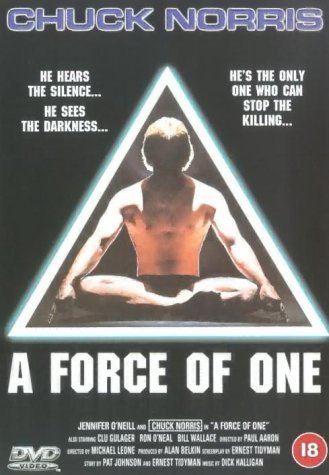
The German version of A Force Of One

4 Shots From 4 Films: Special Chuck Norris Edition


4 Shots From 4 Films is just what it says it is, 4 shots from 4 of our favorite films. As opposed to the reviews and recaps that we usually post, 4 Shots From 4 Films lets the visuals do the talking!

Today is the 80th birthday of the greatest living American, Chuck Norris!  For those who doubt that power of Chuck, consider this: Chuck Norris is a year older than Bernie Sanders and he could still beat him in a fight.

In honor of Chuck’s birthday, here are 4 shots from 4 of his best.

4 Shots From 4 Films

An Eye For An Eye (1981, directed by Steve Carver)

Silent Rage (1982, directed by Michael Miller)

Code of Silence (1985, directed by Andrew Davis)

The Delta Force (1986, directed by Menahem Golan)

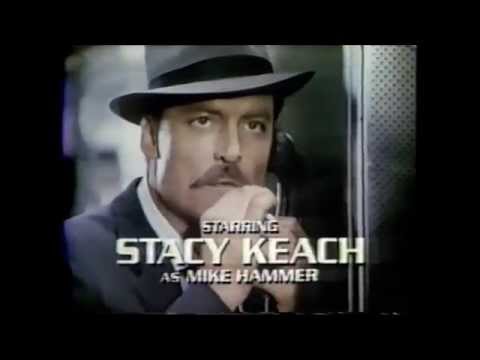
Murder Me, Murder You (1983, directed by Gary Nelson)


When two employees of an all-female courier service are murdered, Private Investigator Mike Hammer (Stacy Keach) is on the case.  The service was owned by his ex-girlfriend, Chris (Michelle Phillips), and she wants him to protect her while she testifies in front of a grand jury.  It turns out that her courier service has gotten involved in some shady business, transporting deliveries between a helicopter company and a South American dictator.  Chris fears that she’ll be murdered to keep her from testifying.  Hammer agrees to protect her and she tells him that he has a 19 year-old daughter who he’s never met.

While Chris is testifying, she suddenly dies on the stand.  The doctors say that it was a heart attack but Hammer knows that it was murder.  Hammer sets out to not only get revenge for Chris but also to find his daughter, who has disappeared into the world of underground pornography.  It’s all connected though, as is traditional with Mike Hammer, it can sometimes be difficult to keep up with how.

Murder Me, Murder You was a pilot film for a brief-lived but fondly-remembered Mike Hammer TV series that aired in the 80s.  Murder Me, Murder You takes Mickey Spillane’s famous detective into what was then the modern age but it allows him to remain a man of the hard-boiled noir era.  Hammer’s narration is tougher than leather, he’s more interested in listening to swing music than new wave, and he still dresses like an old-fashioned private eye, complete with a fedora on his head.  As played by Stacy Keach, he’s also just as dangerous and quick to kill as Hammer was in Spillane’s original novels.  In the novels, Hammer was an unapologetic brute who often bragged about how much he enjoyed killing criminals and communist spies and whose closest associate was his gun, which he nicknamed Betsy.  When Spillane’s novels were filmed, the violence of Hammer’s character was often downplayed.  (A notable exception was Robert Aldrich’s Kiss Me Deadly, which suggested that Hammer was such a fascist that he would eventually be responsible for the end of the world.  The Mike Hammer of Spillane’s novels would probably dismiss Kiss Me Deadly as being red propaganda and set out to deliver American justice to the Hollywood communists who wrote it.)  In Murder Me, Murder You, Mike Hammer is just as brutal an avenger as Spillane originally imagined him to be.  With his hulking frame, grim eyes, and his surly manner, Stacy Keach is the perfect Mike Hammer.

Murder Me, Murder You is a convoluted and often difficult-to-follow murder mystery but with Keach’s bravura lead performance, a strong supporting cast (including notable tough guys Tom Atkins and Jonathan Banks) and good direction from TV movie vet Gary Nelson, this movie comes about as close as any to capturing the feel of Mickey Spillane’s original novels.  Murder Me, Murder You was released on DVD fourteen years ago.  Though it is now out-of-print, copies are still available on Amazon.

4 Shots From 4 Films: R.I.P., Max von Sydow


Steppenwolf (1974, directed by Fred Haines)

I woke up to the sad news that Max von Sydow, one of the greatest actors of all time, died yesterday.  He was 90 years old and he leaves behind a truly amazing filmography.  He played saints, sinners, assassins, exorcists, generals, poets, doctors, and even ordinary men who were just trying to make it day-to-day.  That he was nominated for only two Academy Awards over a career that lasted 71 years was a major oversight on the Academy’s part.  He was an actor who was as capable in arthouse films as he was in the latest installment of a legendary sci-fi franchise.

It’s hard to take a career as long and productive as von Sydow’s and narrow it down to just four shots from four films so I’m not going to try.  The shots are below are some of my favorite von Sydow performances but they’re hardly definitive.  Max von Sydow gave so many good and memorable performances that it’s hard to know where to start.  Below are 4 shots from 4 films from a truly remarkable career.

Max von Sydow, R.I.P.

4 Shots From 4 Films

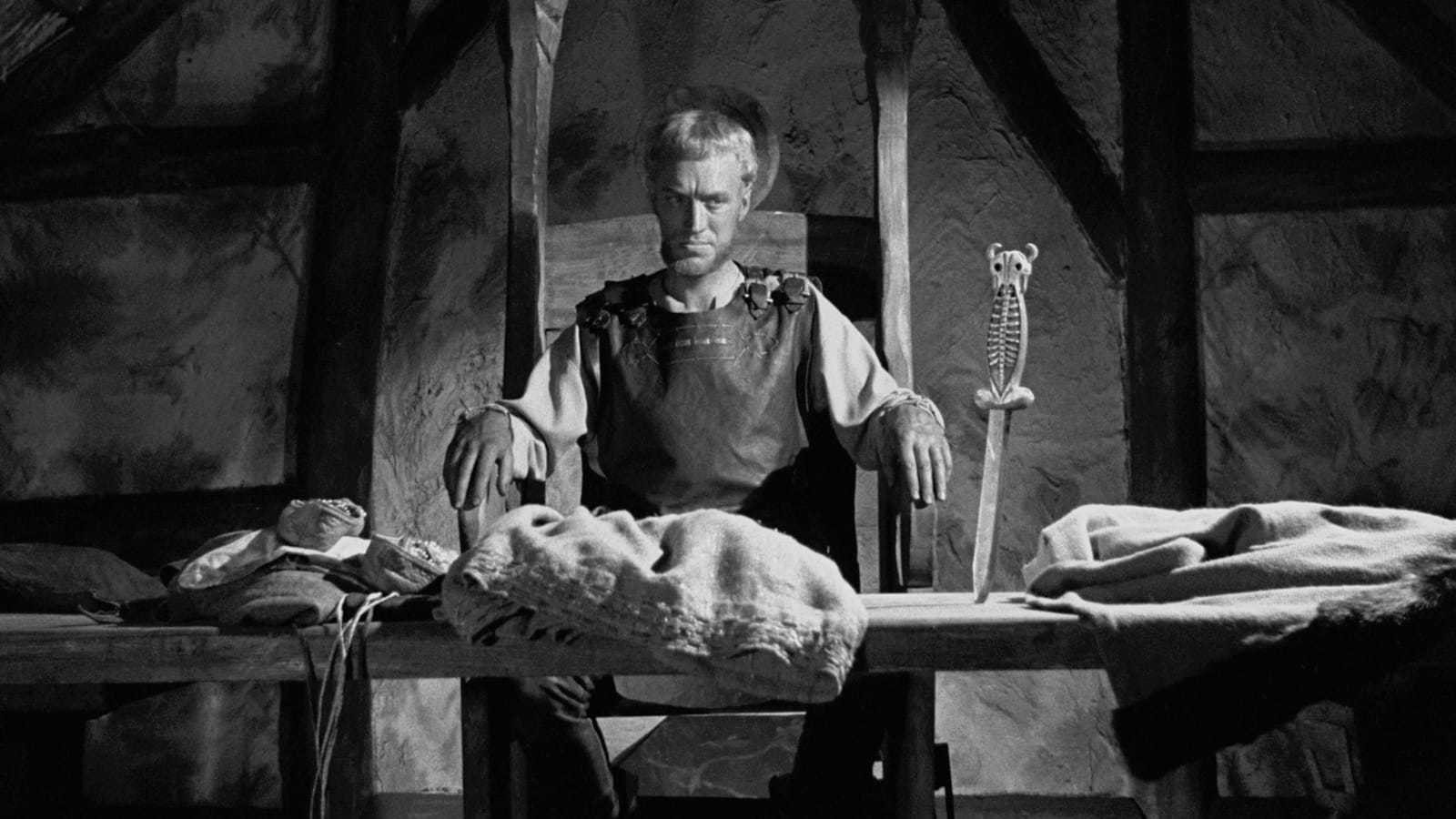
The Virgin Spring (1960, directed by Ingmar Bergman)

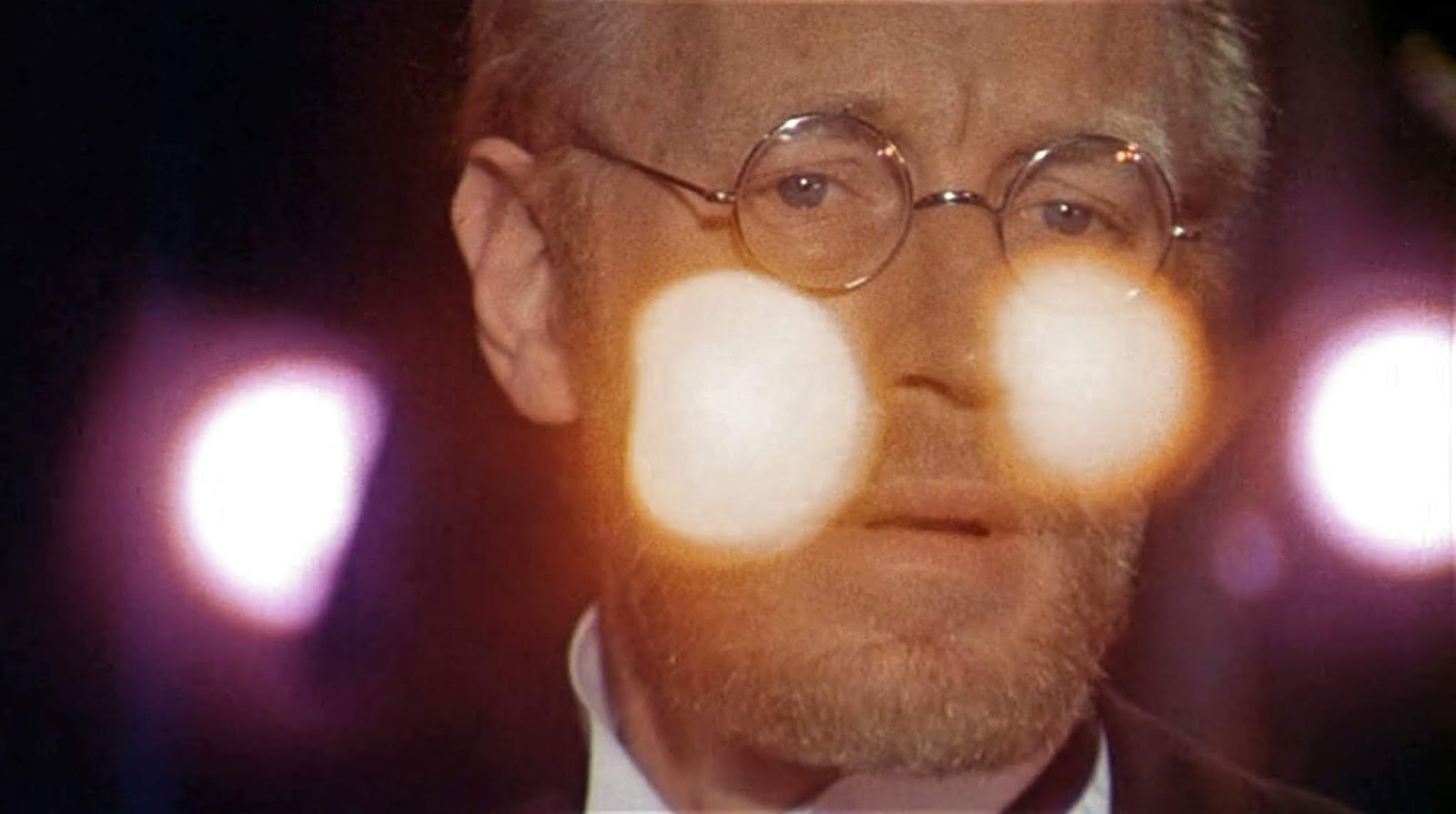
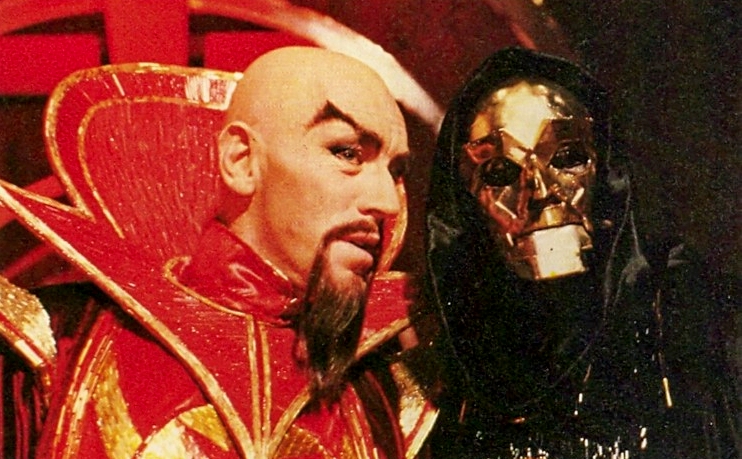
Flash Gordon (1980, directed by Mike Hodges)

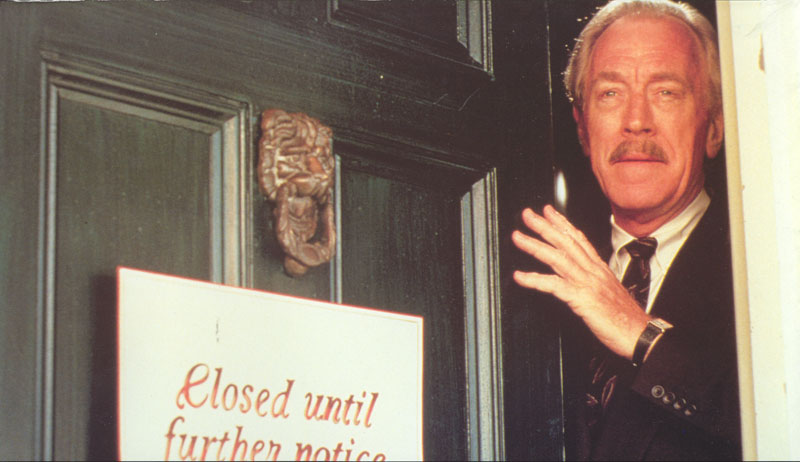
Needful Things (1993, directed by Fraser C. Heston)

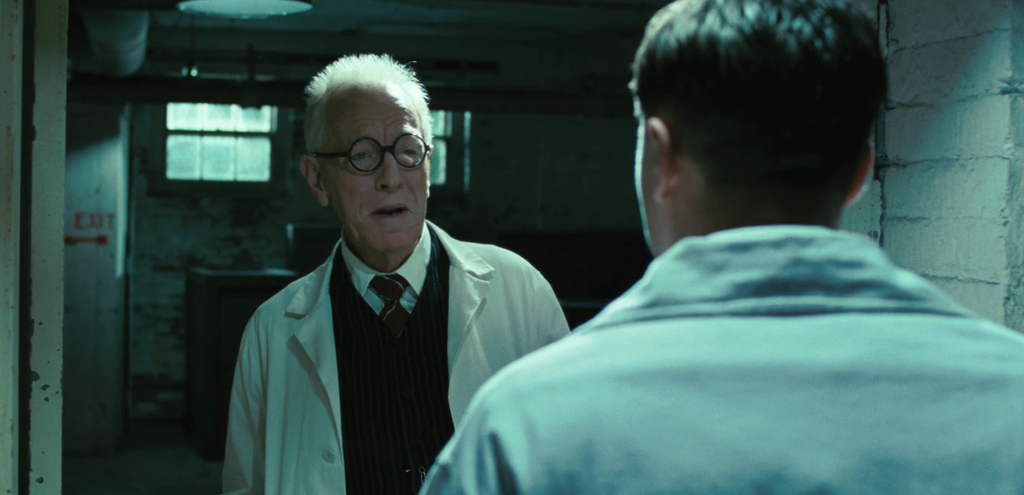
Shutter Island (2010, directed by Martin Scorsese)

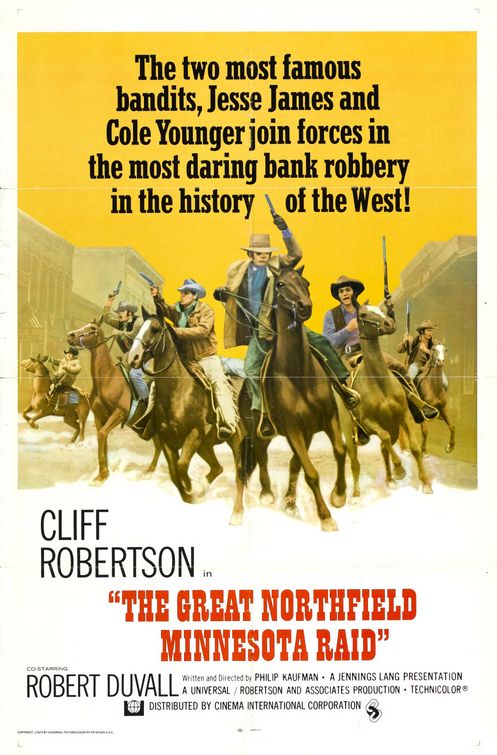
The Great Northfield Minnesota Raid (1972, directed by Philip Kaufman)


Despite having received pardons from the Missouri legislature in recognition of their military service to the Confederacy, Jesse James (Robert Duvall) and Cole Younger (Cliff Robertson) simply cannot stop robbing banks.  The James-Younger Gang has set their sights on the bank in Northfield, Minnesota, which is said to be the biggest bank west of the Mississippi.  Cole arrives in Northfield before the rest of the gang and scouts the location.  What he discovers is that most of the town’s citizens aren’t putting their money in the bank because they all assume that it will eventually be robbed.  With Jesse determined to pull off the crime of the century, Cole and Jesse have to figure out not only how to escape after the robbery but also how to get the people to deposit their money in the bank’s vault in the first place.

Philip Kaufman is a director who made a career out of reinterpreting history (his best known film is The Right Stuff) and, when it was first released in 1972, The Great Northfield Minnesota Raid was a revisionist western that mixed moments of comedy with moments of brutal violence.  Today, of course, presenting Jesse James and Cole Younger as being ruthless outlaws is no longer that daring of a narrative choice.  In The Great Northfield Minnesota Raid, Robert Duvall plays Jesse as being the western equivalent of a corrupt businessman, sending others to do his dirty work and not accepting any of the consequences for his own bad decisions.  Robertson plays Cole as being more a free spirit, an outlaw who is determined to enjoy himself.  Both of them give interesting performances but they also seem to be too contemporary for the characters that they’re playing.

Like most revisionist westerns of the early 70s, the film is full of hints that the old west and the time of the outlaws is coming to an end.  There’s a steam engine sitting outside of the bank and Kaufman spends almost as much time focusing on people reacting to that as he does on the planning and execution of the robbery.  When the robbery does finally occur, it’s not an easy robbery like you might find a 1940s western.  Instead, it’s a violent comedy of errors that leaves much of the film’s characters dead or wounded in the streets of Northfield.  The contrast between the quirky comedy of the first part of the film and the violence of the robbery is occasionally interesting but it often feels forced.  Sometimes, Kaufman seems like he’s trying too hard to be Sam Peckinpah.  In the end, Kaufman often doesn’t seem to be sure what he’s trying to say with this film.  He seems to be suggesting that Jesse and Cole are soon to be relics of a bygone era but why then cast Duvall and Robertson in the roles and have them play the roles like two mid-level hoodlums in 20th Century New York?

It’s an interesting but muddled film that never quite works.  For the definitive film about the James/Younger Gang, check out Walter Hill’s The Long Riders.

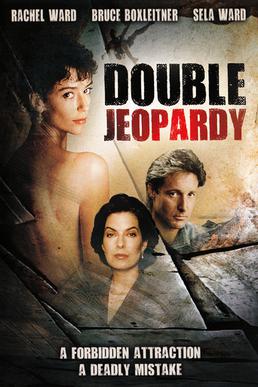
Double Jeopardy (1992, directed by Lawrence Schiller)


Salt Lake City is riveted by the sensational murder trial of mountain climber Lisa Burns Donnelly (Rachel Ward).  Lisa killed her ex-boyfriend, Eddie.  She says that she did it in self-defense after Eddie raped her.  The prosecution claims that she murdered Eddie after he caught her cheating on him with another man.  Lisa’s lawyer, Karen Hart (Sela Ward), is up for a judgeship.  Her husband, Jack (Bruce Boxleitner) is Lisa’s ex-boyfriend.  What Karen doesn’t know is that, other than Lisa, Jack is the only person who witnessed what happened the night of the murder because, just moments before, he and Lisa had been committing PG-13-rated adultery in her shower.

One of the interesting things — in fact, maybe the only interesting thing — about Double Jeopardy is that several online sellers claim that the film stars Aaron Eckhart.  It is true that Eckhart is in the movie.  It was shot in Salt Lake City while he was a student at BYU and it was his film debut.  However, Eckhart has about a minute of screen time and about five lines.  He plays a Marine named Dwayne who someone meets in an airport.  His big line is, “Semper Fi, babe!”

As for the film, since it’s set in Salt Lake City, there’s a lot of talk about how Lisa is being unfairly judged for her unconventional (read: non-Mormon) life style and there’s a heavy-handed subplot about Jack trying to put on a production of The Crucible but it doesn’t add up too much.  It would probably have been easier for the movie to make a point about religious and moral persecution if Lisa wasn’t actually guilty of murdering Eddie.  Instead, the movie leaves you thinking, “Maybe those Mormons have a point.”

Double Jeopardy tries hard to be something more than your standard legal thriller but it’s pretty forgettable.  Rachel Ward was always a great femme fatale and Sally Kirkland gives a good performance as the cop who sees through both Lisa and Jack.  The film was produced for Showtime at a time when cable was still trying to prove that it could provide original content worth paying for so there’s some cursing and sideboob tossed in, as if to say, “See?  You don’t get this on NBC!”  Otherwise, this is a by-the-numbers made-for-TV movie.

Cinemax Friday: The Hit List (1993, directed by William Webb)


Charlie Pike (Jeff Fahey) is an assassin with a conscience.  He learned how to kill while serving in the military and now, he uses his skills to help out the Committee, a shadowy organization of lawyers who are determined to take out the leaders of organized crime.  When Charlie announces that he has decided to retire from the killing game, the Committee’s Peter Mayhew (James Coburn!) asks him to take on one more job as a personal favor to him.

Mayhew puts Charlie in contact with the beautiful and alluring Jordan (Yancy Butler, making her film debut).  Jordan is the widow of a businessman who was murdered by the mob.  Jordan asks Charlie to kill the man who killed her husband.  Charlie agrees but, after he does the job, he discovers that the man he killed was actually a government informant who was scheduled to testify to Congress!  Someone double-crossed Charlie and now, Charlie’s got both the police and another group of assassins trying to track him down.  Jordan claims that Mayhew told her that the informant was responsible for her husband’s death.  Mayhew denies it and says that Jordan must have set Charlie up.  Charlie has to figure out who to trust before it’s too late.  Complicating matters is that Charlie and Jordan have become lovers.

The Hit List is essentially a 40s film noir reinterpreted for the direct-to-video age.  Jeff Fahey has the Alan Ladd role while Yancy Butler does her best imitation of Lana Turner.  Fahey was one of the best actors to routinely star in the neo-noirs that used to populate late night Cinemax and The Hit List features one of his best performances.  Fahey is a convincing killer but he still brings enough humanity to the role that you believe Charlie could find himself falling for Jordan.  Yancy Butler is a sultry and sexy femme fatale and James Coburn is James Coburn, supercool, slick, and always in control.  It shouldn’t be too hard to figure out which one of the two is betraying Fahey but all three commit to their roles and give enjoyable performances.  I especially liked the scene where Mayhew accuses Jordan of double-crossing Charlie and James Coburn grins like he’s having the time of his life.  James Coburn was one of those actors who could liven up and improve any scene in any movie and he proves that here.

The Hit List is a well-made B-noir that’s elevated by its cast and which will leave you nostalgic for Cinemax in the 90s.

4 Shots From 4 Films: Special Robert Clouse Edition


4 Shots From 4 Films is just what it says it is, 4 shots from 4 of our favorite films. As opposed to the reviews and recaps that we usually post, 4 Shots From 4 Films lets the visuals do the talking!

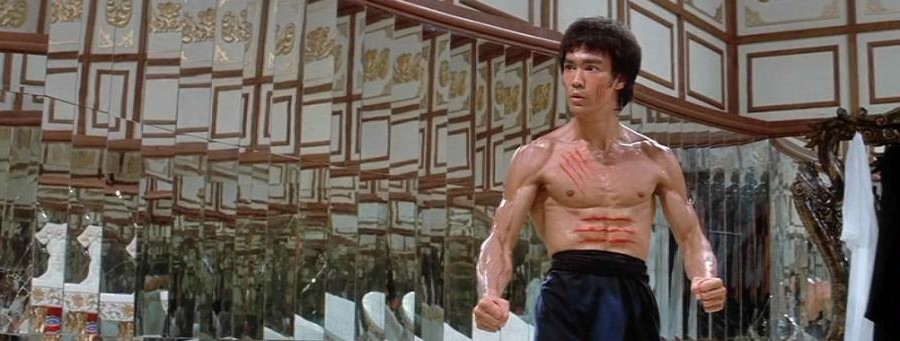
Today, we pay tribute to director Robert Clouse, who was born 92 years ago today.  Best-known for directing Bruce Lee’s biggest hit, Enter The Dragon, Clouse was responsible for some of the most memorable action films of the 70s and the 80s.  He was an action auteur who never got the respect that he deserved but we can pay tribute to him today.

4 Shots From 4 Films

Enter The Dragon (1973, directed by Robert Clouse)

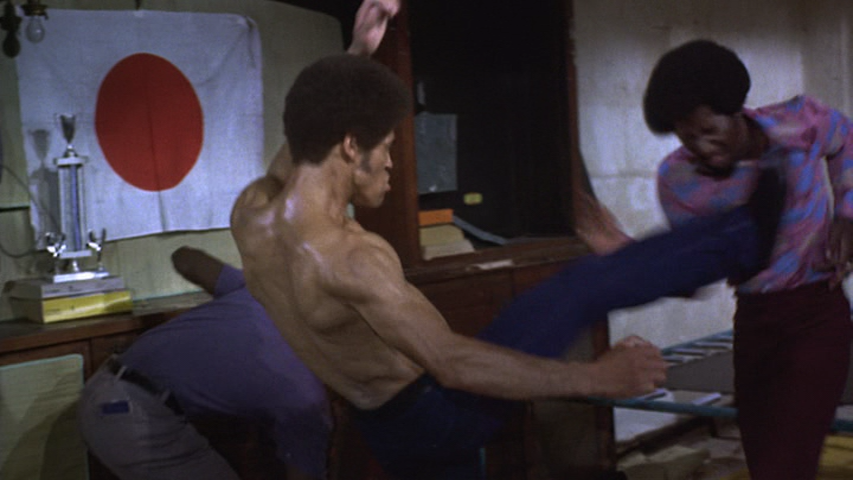
Black Belt Jones (1974, directed by Robert Clouse)

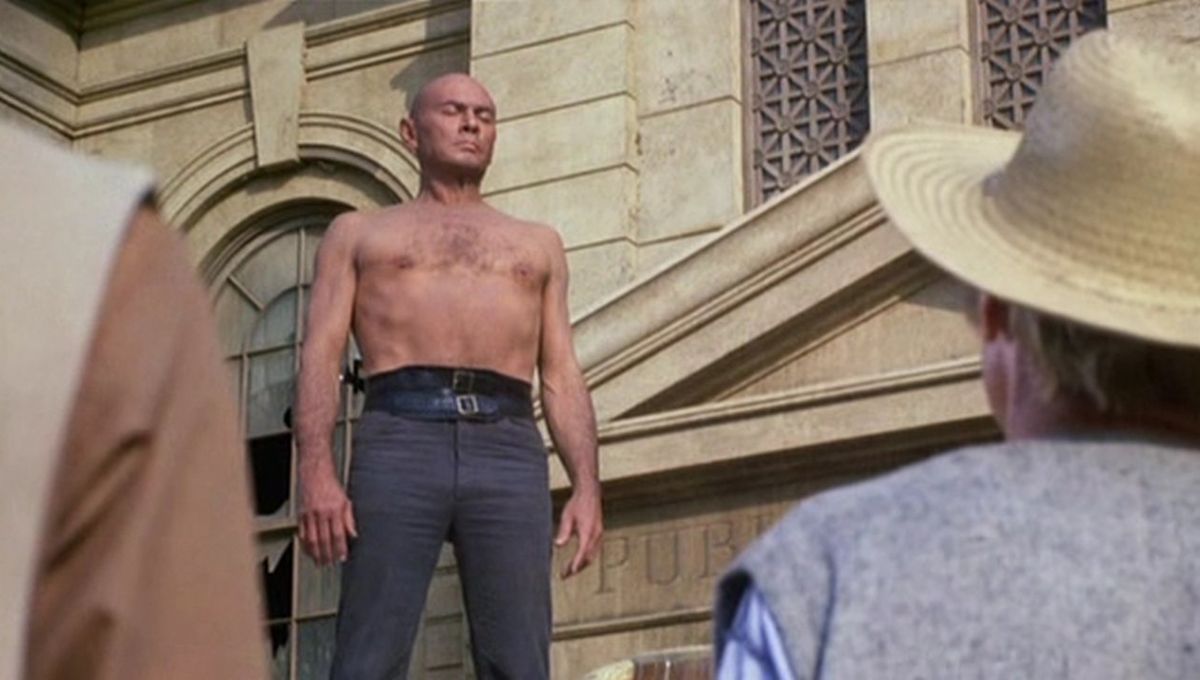
The Ultimate Warrior (1975, directed by Robert Clouse)

Gymkata (1985, directed by Robert Clouse)