“Well…Welcome to the Wasteland.” — Maximus
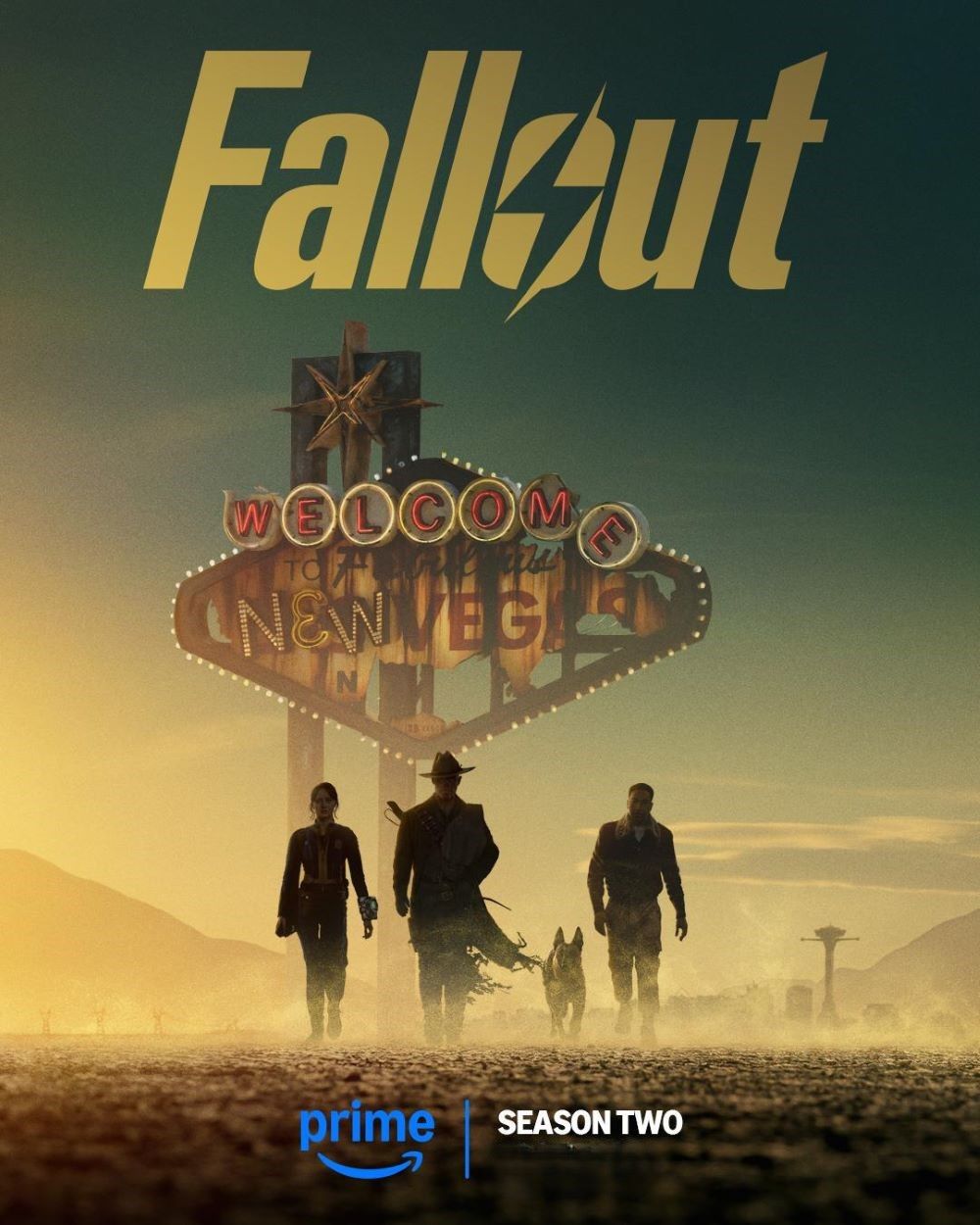
Diving headfirst into the season 2 finale of Fallout, episode 8 slammed into me like a radstorm tearing through the garish neon fog of New Vegas—a whirlwind of high-octane mayhem that cranks the overarching tension to eleven while scattering a bunch of tantalizing loose ends across the irradiated sands. Christened “The Strip,” this powerhouse installment rolled out in Prime Video’s carefully recalibrated evening premiere window, the sort of strategic time shift they pulled to maximize viewer frenzy and keep everyone glued from the opening credits. What starts as a scrappy tale of individual survival in the prior episodes morphs here into a sprawling canvas of factional blood feuds, deftly interweaving those delicious Easter eggs from the beloved games with audacious original flourishes that pay homage to the source material’s spirit without ever feeling shackled by it. For the uninitiated casual viewer dipping their toes into the post-apocalyptic pool, there’s just enough emotional resolution on the core trio’s personal odysseys to leave you with a satisfied glow, yet the longtime wasteland wanderers—those of us who’ve logged countless hours in the Mojave—can practically hear the massive plot engines revving up for an explosive season 3 detonation.
From the jump, the episode plunges us into the seedy shadows of Freeside, where Aaron Moten’s Maximus finds himself locked in a ferocious tussle with a rampaging pack of Deathclaws that have breached the barriers, mutating the opulent Strip into a primal pit of razor-sharp talons, spurting blood, and raw survival instinct. Walton Goggins absolutely commandeers the screen as the Ghoul in these sequences, his haunting pre-war flashbacks delivering visceral emotional haymakers as he finally corners Robert House, reimagined here as a razor-tongued artificial intelligence overlord yanked straight from the New Vegas playbook, complete with that signature blend of megalomania and dry wit. Goggins’ Ghoul doesn’t mince words or pull punches, grilling House relentlessly for intel on his vanished family, only for the AI to unload a cascade of devastating revelations: Cooper Howard, in a moment of misguided patriotism, unwittingly funneled critical cold fusion technology right into the Enclave’s greedy claws, igniting the chain reaction that birthed the Great War—turns out the President himself was neck-deep in their shadowy cabal. This bombshell doesn’t just land; it excavates and reframes every lingering enigma from season 1, transforming Coop’s well-meaning actions into the tragic catalyst that obliterated civilization, all underscored by a chilling flashback to his arrest at the hands of a HUAC-inspired congressional witch hunt that systematically dismantles his glittering Hollywood existence, blacklisting him into oblivion.
Shifting gears underground, Ella Purnell’s riveting portrayal in the vault sequences forms the pulsating emotional heartbeat of the entire hour, thrusting Lucy into a harrowing confrontation with her father Hank—now a zombified shell of his former self—trapped within one of House’s ingeniously rigged management vaults that double as psychological torture chambers. Kyle MacLachlan devours the role with gleeful malevolence, laying bare Hank’s insidious brain-chip initiative, where he’s hijacking Congresswoman Welch’s saccharine “gold standard” personality template to overwrite minds, churning out armies of compliant drones stripped of free will. The mercy killing of Welch’s grotesque severed head with a hefty crowbar stands out as a gruesomely poetic flourish, mirroring House’s own hard-knocked tales of endurance in the wastes, but the true masterstroke comes when Lucy seizes control, reversing the procedure to implant the chip into Hank himself—a merciless, ice-cold denouement to their shattered father-daughter dynamic that had been simmering all season. Emerging from the depths, she collapses into a profoundly earned, battle-scarred embrace with Maximus, who moments earlier had improvised a roulette-wheel fragment into a desperate shield during an unarmored casino melee against the Deathclaw horde, only for a thundering cavalry charge from the NCR to barrel in, smashing together divergent game endings in a symphony of chaotic convergence.
The Ghoul’s storyline weaves in its own brand of understated heartbreak, steering clear of mawkish sentimentality; the discovery of empty cryopods meant for his wife Barb and daughter Janey hits like a sledgehammer to the irradiated chest, yet a cryptic postcard from the Colorado badlands injects a slender thread of optimism, slyly foreshadowing a seismic geographical pivot toward the Rockies in the seasons to come. Notably absent is any grand, weepy reunion or reconciliation with Lucy—sure, the group hauls her out of the vault inferno, but they gloss over any substantive dialogue probing the Ghoul’s savage underbelly, marking a subtle but noticeable lapse in peeling back another layer of his evolving humanity. Across the factional divide, the Legion’s intrigue reaches a fevered crescendo as the cunning Legate anoints himself the new Caesar upon deciphering the ailing leader’s final missive—”it ends with me”—executing a textbook power consolidation by silencing potential rivals and forging the splintered hordes into a singular, unstoppable juggernaut aimed squarely at storming the Strip. Brotherhood of Steel devotees score a tantalizing post-credits morsel with blueprints for the colossal Liberty Prime, strongly implying that Michael Cristofer’s Elder Cleric Quintus is gearing up to deploy some serious mech-stomping firepower in future clashes.
Deeper in the vault network, Vault 32 erupts into pandemonium as Annabel O’Hagan’s Steph pries apart Betty’s fortified Enclave Pip-Boy cache, inadvertently triggering “Phase 2” with ominous undertones of Forced Evolutionary Virus (FEV) poised to warp the inhabitants into rampaging super mutants, a thread that masterfully callbacks to the season’s mid-point murmurs. Moisés Arias’ Norm threads the needle through a frenzied Radroach ambush that decimates Bud’s sycophantic crew, hauling Claudia to momentary safety, while Johnny Pemberton’s Thaddeus undergoes a nightmarish metamorphosis into a centaur-esque abomination—proliferating mouths, shedding limbs, and even picking off distant rescuers with opportunistic foot-triggered shots before his body fully succumbs to the mutation. Those fleeting super mutant sightings from episode 6 crystallize in a torrent of exposition, but for all its revelations, this segment mostly serves as intricate groundwork: cementing the Enclave as the puppet masters of apocalypse, with the scorched surface world reduced to their perpetual laboratory playground.
Where “The Strip” truly excels is in its pulse-pounding action choreography and the nuanced character evolution that anchors the spectacle. The Deathclaw showdown unfolds as a ballet of brutality—gory eviscerations and desperate dodges that highlight Moten’s Maximus shedding his power-armored persona for gritty, improvisational brawling prowess. The production design dazzles at every turn: heads bursting in crimson fountains, flesh shredded by incoming missiles, the Strip’s eternal neon splendor grinding mercilessly against the pervasive wasteland squalor for that quintessential Fallout aesthetic tension. Pacing remains a tightrope triumph, deftly juggling a constellation of interwoven plotlines without ever tipping into overload, while those interspersed flashbacks elegantly suture the halcyon pre-war era’s illusions of security to the grim post-apocalyptic reality. The soundscape elevates it further, layering ambient dread with precision—those eerie payphone rings slicing through the cacophony like personalized harbingers of doom.
That relentless propulsion toward future conflicts, however, exacts a toll on immediate gratification. Vault 31 lingers as overt season 3 appetizers rather than a sealed chapter, and the simmering Brotherhood internal schisms peter out without the anticipated fireworks. Hank’s reduction to a mind-wiped vagrant unceremoniously exiled to the wastes provides a poignant, if understated, capstone to his arc, but it lacks the thunderous finality one might expect for a villain of his stature after seasons of buildup. Lingering voids—like a more introspective Ghoul-Lucy exchange or a meatier exploration of House’s centuries-spanning machinations with the Enclave—cry out for expanded breathing room between the explosive set pieces. Ultimately, the episode embraces its serialized “act two finale” DNA, lavishing attention on narrative springboards and cliffhanger bait over comprehensive bow-tying, which suits the binge-watching ecosystem to perfection but might leave traditionalists yearning for a more self-contained punch.
Thematically, “The Strip” captures Fallout‘s savage satirical soul with unerring precision: the pre-war megacorporations like Vault-Tec and the Enclave emerge not as mere enablers of nuclear Armageddon, but as its deliberate architects, with the bombs themselves relegated to collateral damage. Hank’s casual invocation of the surface as his “grand experiment” reverberates with chilling authenticity, evoking the darkest chapters of Cold War psy-ops, loyalty purges, and human experimentation on a societal scale. The major factions stand poised on a razor’s edge—NCR forces rallying for resurgence, a revitalized Caesar’s Legion under iron-fisted renewal, House’s immortal digital tyranny—all converging toward an explosive proxy war in the uncharted expanses of Colorado, terra incognita even for the most seasoned game explorers. The ensemble cast remains a towering strength across the board: Purnell masterfully alloys Lucy’s wide-eyed vault idealism with burgeoning wasteland ferocity, Moten infuses Maximus’ redemption arc with hard-won authenticity, and Goggins perpetually threads the Ghoul’s needle between irreverent monster and profoundly wounded everyman.
All told, “The Strip” forges a riveting, hook-saturated exclamation point that propels Fallout season 2 far beyond the claustrophobic vault escapades and shattered Los Angeles vistas of its debut year, ascending into intricate games of wasteland realpolitik while honoring its RPG lineage and boldly scripting its own legacy. Veterans of the franchise revel in the New Vegas allusions without a whiff of exclusionary gatekeeping, ensuring broad accessibility. As the end credits fade, the anticipation builds unbearably: the Ghoul’s high-stakes pursuit into the peaks, the ripple effects of rampant FEV outbreaks, and the brutal scramble over those reality-warping chips that could redefine power in the wastes. Prime Video has cemented its grip on a genuine phenomenon; those irradiated Rockies are calling, and the fallout promises to be cataclysmic.
Fallout Season 2 Episodes
- Episode 1: “The Innovator”
- Episode 2: “The Golden Rule”
- Episode 3: “The Profligate”
- Episode 4: “The Demon in the Snow”
- Episode 5: “The Wrangler”
- Episode 6: “The Other Player”
- Episode 7: “The Handoff”


 Through the Shattered Lens