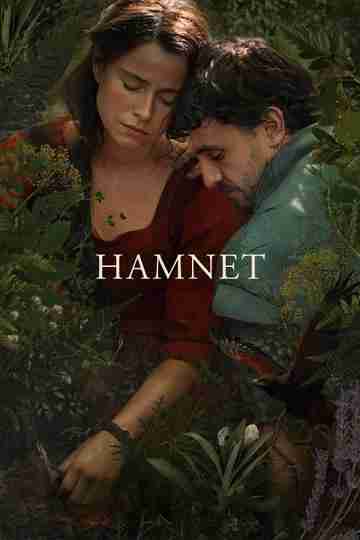
The Iowa Films Critics Association has announced its picks for the best of 2025 and, for once, One Battle After Another is nowhere to be found! Congratulations, Hamnet!
BEST FILM
Hamnet
BEST ANIMATED MOVIE
Zootopia 2
BEST DIRECTOR
Chloé Zhao – Hamnet
BEST ACTOR
Tom Hiddleston – The Life of Chuck
BEST ACTRESS
Jessie Buckley – Hamnet
BEST SUPPORTING ACTOR
Mark Hamill – The Life of Chuck & The Long Walk
BEST SUPPORTING ACTRESS
Ariana Grande – Wicked: For Good
BEST SONG
The Girl in the Bubble – Wicked: For Good
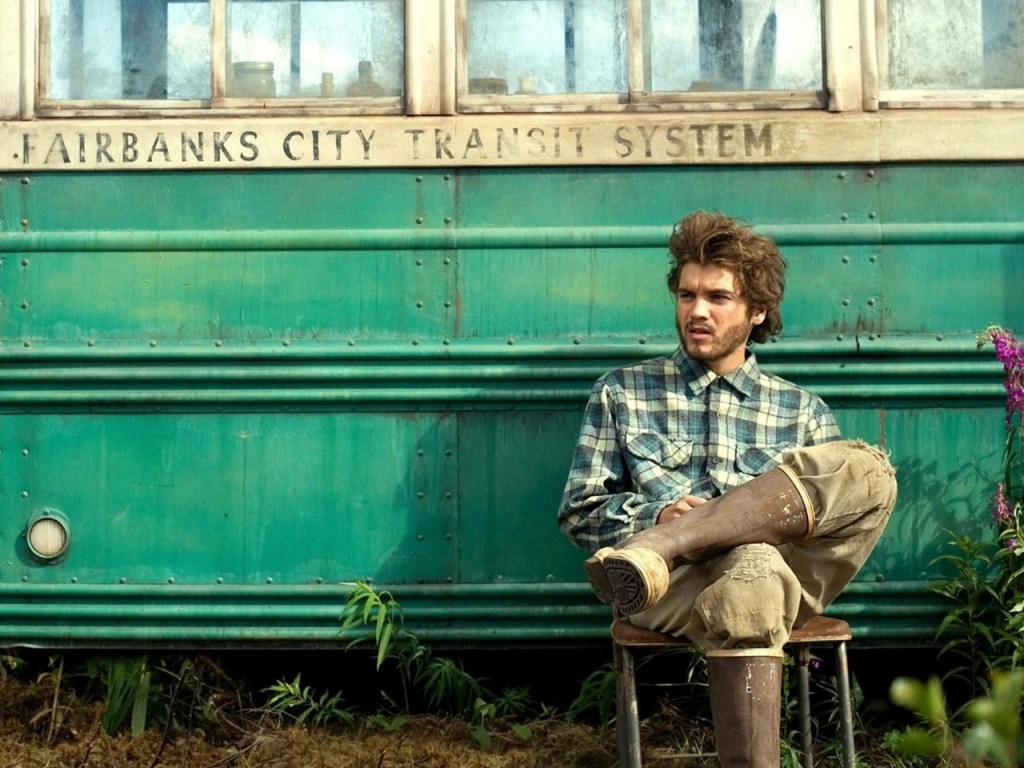
This morning my wife told me she wanted to watch a movie based on a true story. After scrolling for a bit, I came across the film INTO THE WILD, which interested me for a couple of reasons. First, it was directed by Sean Penn, whose directorial debut, THE INDIAN RUNNER (1991), gave my favorite actor of all time, Charles Bronson, a late-career character performance that critics actually took seriously. I’ve followed his directing career ever since. Second, the movie stars Emile Hirsch, who my wife and I had the rare opportunity to watch up close this summer while he was filming a movie here in Central Arkansas… an awesomely surreal experience that’s had me revisiting the work of the actors I saw that day. As such, today seemed like the perfect time to hit play on INTO THE WILD!
INTO THE WILD is based on the true story of Christopher McCandless (Emile Hirsch), a bright, idealistic young man who graduates from college in the early 1990s and immediately walks away from the type of life everyone expects him to live. Chris donates his savings to charity, abandons his car, burns the cash in his wallet, reinvents himself as Alexander Supertramp, and sets off across America on a great Alaskan adventure. Along the way he comes across different people who impact his life in a variety of ways, from some free-spirited hippies, to a grizzled old widower, and even a beautiful young lady who takes an immediate liking to him. Each of these encounters offer Chris a chance to form meaningful relationships, but he always decides to keep moving on. When he does eventually make it to the wilds of Alaska, it’s everything he hoped for… at first. But as the months wear on, his loneliness and inexperience take their toll, and Chris is forced to face the ultimate consequence of his decisions.
I’ll start out by saying that INTO THE WILD is a truly beautiful film. Sean Penn and his cinematographer Eric Gautier capture so many amazing images, from the Grand Canyon and Lake Tahoe, to the Denali National Park in Alaska. We see an America that is awe-inspiring, and we can at least somewhat understand why Chris might want to escape to such a world of promise. I also liked the music, especially when Eddie Vedder’s voice emerges to punctuate a scene that seems perfectly in tune with Chris’ restless spirit.
I must admit that Chris McCandless, the person, is quite the frustrating subject. He’s intelligent and sincere, but he’s also painfully naive and self-righteous. It’s noble that he wants to find ultimate truth, but he goes about it by running away from the messy parts of his life, especially the parents, played here by William Hurt and Marcia Gay Harden, that he sees as horrible people. I guess my frustration with Chris’ decisions may be the point, and Director Sean Penn doesn’t turn him into either a saint or a fool. While watching the film, I was somewhat torn between admiring Chris for the way he rejects materialism and lives his life on his own terms, while also being disappointed as he continually walks away from any person who gets too close or tries to help him.
Emile Hirsch is incredible in the lead role as Chris McCandless. He captures his restless spirit, as well as his determination to make it completely on his own, that is, until he realizes that he overplayed his hand. The other performances that stood out to me came from Vince Vaughn as a farmer that Chris stops and works for, Catherine Keener as a hippie with her own set of issues, and especially Hal Holbrook as a lonely, but perceptive old man who sees in Chris the grandson he never had.
At the end of the day, I feel that INTO THE WILD is a powerful film, but not because of what ultimately happens to Chris. Rather, what lingers with me is his too-late realization that personal freedom without meaningful relationships is not satisfying. As beautiful as this movie is to look at, its strongest moments are Chris’ interactions with the caring people he meets along the way. I just wish one of them had been able to convince him to call his mom and dad.
“If I happen to die because of this, get rid of my PC.” — Satoru Mikami
That Time I Got Reincarnated as a Slime (Tensei Shitara Suraimu Datta Ken or just Tensura) is one of those anime that sounds ridiculous until you actually watch it—and then it wins you over completely. At first glance, it looks like just another overpowered-protagonist isekai: an average guy dies, wakes up in a fantasy world, and immediately breaks every rule of balance by becoming borderline divine. But the secret of Slime is that it plays the genre cliché knowingly, twists it in clever ways, and wraps it around a surprisingly heartfelt story about kindness, leadership, and how to build a community from the ground up. Adapted from the smash-hit light novel series by Fuse, this anime manages to blend humor, politics, action, and emotional sincerity into something both epic and easy to love.
The plot starts simply enough. Satoru Mikami, a 37-year-old office worker in Tokyo, leads an unremarkable life—no family, no glory, just gray daily routine. When he’s stabbed while saving a coworker from an attack, his story seems over. But in those final moments, a disembodied voice (which fans will come to know as the “Great Sage”) grants him strange abilities based on his dying wishes—resist pain, store knowledge, devour anything—and rebirths him in another world. Only there’s a catch: he’s not reborn as a mighty warrior or a handsome prince—he’s a slime. A small, bouncy, blue blob.
And that’s the brilliance of Slime. Right from the start, it refuses to take itself too seriously. Satoru—now officially calling himself Rimuru Tempest—reacts to his new form with more curiosity than despair. He experiments with his strange “Predator” skill, realizing he can absorb monsters, materials, and abilities. What could have been a story about survival quickly becomes something much more strategic and creative. Rimuru uses his curiosity and intelligence—his distinctly human mindset—to adapt and thrive. Rather than treating this world like his personal video game playground, he studies how it works, learns its rules, and decides to reshape it with compassion instead of domination.
The premise is standard isekai dressing, but the execution sets it apart. Instead of endless dungeon fights or brooding antiheroes, Rimuru’s first big win is domestic: helping a desperate goblin tribe survive by organizing them into an early community. That act of leadership kickstarts the show’s core theme—world-building not just in the literal sense, but in the moral one. Rimuru’s journey isn’t just “how strong can I get?” It’s “how can I make life better for everyone who trusts me?”
Season 1 captures this beautifully. It’s full of warmth, humor, and charm, balancing genuine emotional stakes with endlessly creative fantasy world-building. Each new episode adds another layer: goblins evolve, wolves unite, ogres become loyal allies, and soon Rimuru’s little settlement turns into the thriving “Tempest Federation.” Watching this society grow feels oddly satisfying—like SimCity mixed with The Lord of the Rings. Rimuru’s mix of modern knowledge and genuine empathy makes him an ideal leader, not because he’s undefeatable, but because he listens. And yes, he is overpowered—but his strength never alienates him from others. Instead, it’s his compassion that keeps everyone orbiting around him.
Then Season 2 hits, and that’s where Slime surprises anyone who thought it was just a feel-good story. Without spoiling any major turns, the narrative expands dramatically, weaving in politics, moral conflict, and real emotional stakes. We see the pressures that come with leadership—and that building a nation means dealing with jealousy, greed, and betrayal from other powers. Rimuru faces choices that test his entire philosophy: when kindness clashes with survival, which wins? It’s during this stretch that Slime truly proves it’s not all fluff. It’s not afraid to explore tragedy, anger, and questions of responsibility while still maintaining that core optimism. The emotional moments hit harder precisely because the first season was so upbeat—when darkness strikes, it matters.
By Season 3, the show evolves from a fun fantasy romp into full-blown epic world-building. The stage grows larger as Tempest becomes recognized as a power equal to human nations and even the Demon Lords themselves. The scale of the story starts to echo grand political and military dramas, yet Slime never loses its charm or humor. New characters arrive, alliances form, and the world Fuse created in the light novels starts unfolding in earnest, rich with lore and history. The storytelling becomes more intricate, drawing on themes of diplomacy, governance, and the tension between peace and power. Rimuru, now balancing the weight of nations, remains empathetic, even as he stands toe-to-toe with gods and demons. The anime’s pacing gets sharper in these seasons—the stakes feel higher, but every step still connects back to Rimuru’s original dream of coexistence.
What’s striking is how Slime manages to mature without losing its brightness. Other isekai get darker as they grow “serious,” but Slime earns that depth while keeping its warm soul intact. You still get the lovable banter, the laugh-out-loud humor, and the chaotic cooking incidents with Shion’s questionable meals—but now those lighthearted scenes are contrasted by moments of real tension, making the highs and lows hit harder. It’s a tonal balance most anime fumble, but this one handles gracefully.
Credit where it’s due: Studio Eight Bit deserves massive praise for consistency. Across multiple seasons, the animation remains vibrant, colorful, and fluid. Rimuru’s slime form has this elastic motion that never stops being oddly satisfying to watch, while the battle choreography builds steadily in intensity. The later large-scale fights—especially those involving entire armies—carry real cinematic weight, made possible by polished direction and careful scaling of power levels. And yet, some of the most memorable sequences aren’t the battles at all—they’re moments of world expansion, where the show slows down to reveal a new nation, a festival, or a simple shared meal. The world feels tangible, lived-in, and surprisingly peaceful when it needs to be.
The voice acting is equally excellent. Miho Okasaki’s performance as Rimuru captures the rare balance of leadership and levity—cool-headed yet warm, curious yet confident. Other standouts like M.A.O. as Shion and Makoto Furukawa as Benimaru bring distinctive energy to their roles, adding emotion even to comedic exchanges. The soundtrack enhances everything—rousing orchestral pieces for the grand battles, gentle piano and flute motifs for Tempest’s everyday life. The music, like the story itself, isn’t just about big moments; it’s there to remind you of what’s worth protecting.
Where the series really shines, though, is in how it redefines heroism. Rimuru isn’t a lone knight, a destined savior, or a man on a revenge mission. He’s a builder. He wins through collaboration, understanding, and logic as much as through magic or might. That makes him one of the most endearing protagonists in contemporary anime—a soft-spoken optimist who’d rather talk his way to peace than fight needlessly, but who won’t hesitate to defend what matters when push comes to shove. His brand of leadership feels quietly revolutionary, showing strength through empathy rather than ego. That’s the underlying hook of Slime: it’s power fantasy done with heart.
Supporting characters thrive within that dynamic. Shion’s unfiltered enthusiasm, Benimaru’s steady confidence, Shuna’s intelligence and warmth—each plays a vivid role in making Tempest feel like a real, breathing community. Even the side characters grow, gaining new depth as the seasons roll on. By the time you reach Season 3, the relationships built from earlier episodes pay off emotionally. Tempest doesn’t just survive because Rimuru’s strong—it endures because everyone around him shares his vision.
And just when it feels like the story has covered everything, the best news arrives: there’s much more coming. A massive fourth season has already been announced, set to include 60-plus episodes—one of the largest season plans in recent anime memory. This next arc is expected to dive deep into the light novels’ later storylines, some of the most complex and thematically rich in Fuse’s entire saga. Fans can expect broader conflicts, new continents, cosmic-level stakes, and a deeper dive into the philosophical questions the anime hints at. If Seasons 1 through 3 show Rimuru learning how to rule, Season 4 promises to show what it truly means—to lead, to balance ideals and pragmatism, and to face the cost of utopia head-on.
What’s most exciting is that the groundwork is already there. The anime’s consistent quality, expanding world, and loyal fanbase suggest that these upcoming arcs could elevate it into one of the great long-form fantasy anime—something closer to a serialized epic than a simple adventure. It’s rare for an anime adaptation to not just match its light novel source material but to build upon it visually and emotionally, and Slime continues to do exactly that.
So, why call That Time I Got Reincarnated as a Slime a must-watch? Because it does what few modern fantasy anime manage—it believes in its own heart. It’s smart without being cynical, hopeful without being naive, and endlessly entertaining while still exploring meaningful ideas about leadership, identity, and what it means to build something lasting. Rimuru’s world might be made of magic and myth, but his struggles and principles feel deeply human. Every season expands that truth in new directions, and the best part is, the story isn’t even close to over.
Whether you’re a long-time anime fan or someone looking for a genuinely uplifting escape, this series is pure comfort with real depth—a rare blend of world-building, intelligence, and soul. If you’ve overlooked it before because of its funny title, now’s the perfect time to dive in. With a massive new season on the horizon and Rimuru’s journey only getting grander, That Time I Got Reincarnated as a Slime isn’t just an isekai success story—it’s growing into one of the defining fantasy epics of this generation.
When architect Theo (Benedict Cumberbatch) and aspiring chef Ivy (Olivia Colman) meet in London, it is love at first sight. Ivy wants to move to America so that she can pursue her dream of opening a restaurant. Theo impulsively decides that he wants to move with her. (Take that, Britain!) They marry and the film follows them as they settle in California and pursue success in their respective fields while raising precocious twins. At first, Theo has more success than Ivy but that changes when a freak storm causes one of Theo’s buildings to collapse on the same night that it also causes hundreds of stranded tourists to suddenly show up at Ivy’s restaurant. Ivy becomes a success while Theo, who is now basically unemployable, becomes a stay-at-home dad. Theo starts to resent Ivy’s success. Ivy starts to resent the amount of time that Theo spends with their daughters. Looking to fix their fraying marriage, Theo design an ultra-modern and chic home for them. Needless to say, by the end of the movie, Theo is being chased through the house by a gun-wielding Ivy.
Oh, Benedict Cumberbatch and Olivia Colman. They’re both good actors and I’ve appreciated many of their past performances but, watching them in The Roses, I do have to admit that I realized that I’ve started to get a bit bored with both of them. Their performances here all about technique. Cumberbatch does his barely repressed anger thing until eventually he explodes into a frantic fury. Colman does her cutting barb followed by a goofy smile thing. Neither performance really has much emotional depth and, even when they’re supposed to be happy, you don’t really buy them as a couple for a second. Even when they blow up at each other and fully embrace their growing hatred, it doesn’t have much of an emotional impact because they never really seemed to like each other to begin with. Every line that Colman delivers sounds like a sarcastic attempt at a bon mot, even she’s supposed to be sincere. There’s nothing shocking about either one of their cruel comments to each other. It just feels like two actors doing their thing.
At its heart, The Roses is meant to be a satire. Theo and Ivy grow to hate each other but neither one is willing to give up their rather tacky house. Unfortunately, Jay Roach is exactly the wrong director for this material. Roach has gone from directing broad but genuinely funny comedies to becoming something of a second-rate Adam McKay. Perhaps even more so than McKay, he’s a prime example of what happens when a director decides that he can’t just be happy making movies that people actually enjoy. (Trumbo and Bombshell may have gotten mildly good reviews from critics who are sympathetic to Roach’s liberal politics but, in the end, Austin Powers is the film for which audiences will remember Jay Roach.) There’s not a subtle moment to be found in The Roses and, as a result, there’s not really much genuine emotion to be found either. Towards the end of the film, we get a montage of Theo and Ivy escalating their attacks on one another. It’s one thing for Ivy to create an AI video of Theo smoking crack. It’s another thing for Theo to spike the food at Ivy’s restaurant with hallucinogenic shrooms, leading to an slow motion orgy involving a bunch of middle-aged tourists. It all becomes so cartoonish that the film loses sight of whatever it was trying to say about marriage.
Touted as an Oscar nominee before it was released and subsequently forgotten about, The Roses was one of the many disappointing films of 2025.
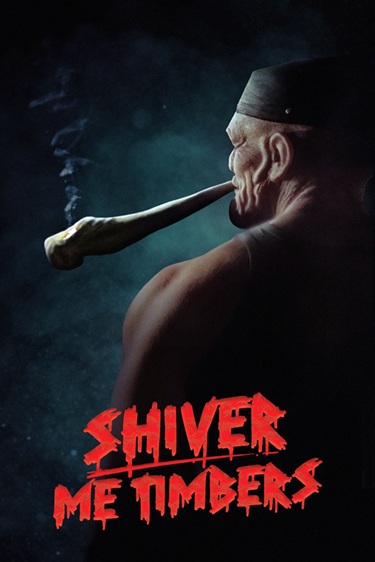
That my reaction to watching Shiver Me Timbers, one of three killer Popeye movies that came out in 2025. Online, there’s some debate over which of the three films is the worst. I’ve only seen two of them so I really can’t say. What I can tell you is that Shiver Me Timbers makes Popeye The Slayer Man look like a freaking masterpiece by comparison.
The film actually does start off with a vaguely clever premise. The year is 1986 and a group of friends are camping so that they can watch as Halley’s Comet crosses the night sky. Our main character is Olive (Amy Mackie), who isn’t sure whether or not she wants to go to M.I.T. I have to admit that I could relate to Olive, just because I wouldn’t want to go to college in Massachusetts either. Plus, Oliva wears all black and has a generally sarcastic attitude, which is pretty much the same way that I was when I was 18.
Anyway, a piece of a meteorite falls out of the sky and, after getting nearly burned up in the atmosphere, it falls into the pipe of a scrawny sailor who is fishing out at the lake. The sailor smokes the tiny meteorite and is immediately mutated into a hulking killer. He proceeds to kill all of Olive’s friends. The deaths are extremely bloody and go out of their way to shock but, oddly enough, they don’t make much of an impression. Part of the problem is that Olive’s friends aren’t that interesting and, as a result, you don’t really care that much about any of them getting killed. The film has this weird habit of featuring close-ups of decapitated heads still struggling to speak. I’m going to be charitable and assume that this was meant to be an homage to Werner Herzog’s Aguirre, the Wrath of God. Herzog, however, was smart enough to only have one decapitated head speaking.
For all the pain that the character go through as Popeye snaps their bones and removes their heads, the real pain is reserved for those watching the movie. The pacing is abysmal, the dialogue is terrible (and please, can we stop making slasher movies where the victims all keep talking about other slasher movies?), and the mutated Popeye looks so dumb that it’s hard to take him seriously as any sort of threat. (Popeye The Slayer Man at least had a vaguely credible killer Popeye.) The film ends with a shout-out to Evil Dead II and it actually would have been pretty cute if the film before it had been better. As it its, it feels like an unearned comparison.
On the plus side — because I hate to be totally negative about anything — the shots of the night sky were actually very effective. That may sound like almost a parody of faint praise and I guess maybe it is but seriously, there was some real beauty to shots of the stars moving across the sky.
Anyway, let’s stop turning public domain characters into murderers, shall we? Thanks!
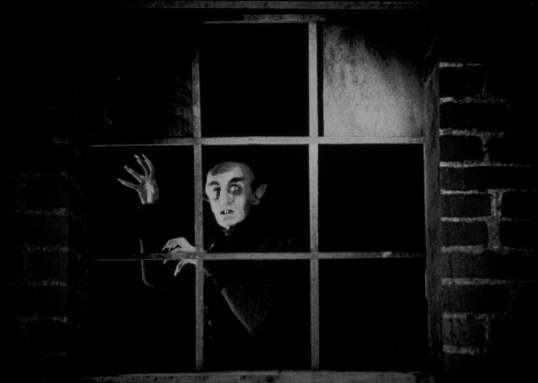
Today’s scene that I love is from F.W. Murnau’s classic, Nosferatu. The film is 103 years old but scenes like the one below continue to inspire nightmares.
4 Shots From 4 Films is just what it says it is, 4 shots from 4 of our favorite films. As opposed to the reviews and recaps that we usually post, 4 Shots From 4 Films lets the visuals do the talking.
Today was celebrate the visionary director, F.W. Murnau! Murnau was born 135 years ago today, in Germany. He went on to become a leading expressionist and one of the most influential filmmakers of all time. Needless to say, it’s time for….
4 Shots From 4 F.W. Murnau Films
The Hunchback and the Dancer (1920, dir by F.W. Murnau)
Nosferatu (1922, dir by F.W. Murnau)
Faust (1926, dir by F.W. Murnau)
Sunrise: The Story of Two Humans (1927, dir by F.W. Murnau)
In 1987, ITV commemorated the 10-year anniversary of the death of Elvis Presley by airing Love Me Tender, a special that featured popular British acts covering songs that were originally made famous by Elvis. Pet Shop Boys’s synth-pop version of Always on My Mind proved to be the unexpected hit of the program and the band released the song as a single. It went on to become the UK’s Christmas number one single for the year.
It was also featured in It Couldn’t Happen Here, a surreal film that starred Pet Shop Boys and which was directed by documentarian Jack Bond, who had started his career with a ground-breaking film about Salvador Dali and who later became famous for his work with TheSouth Bank Show. The subsequent music video was lifted from the film. In the movie and the video, Chris Lowe and Neil Tennant are driving a taxi cab. They stop to pick up a passenger, an older man played by Joss Ackland. (In the movie, there’s an earlier scene in which Lowe and Tennant hear a news report about an escaped killed who matches their new passenger’s description.) While their passenger rambles on, Lowe and Tennant turn on the radio and listen to the song, which leads to several other clips from the film. And while the critics may not have cared much for It Couldn’t Happen Here, the band’s version of Always On My Mind remains a popular classic.






 Through the Shattered Lens