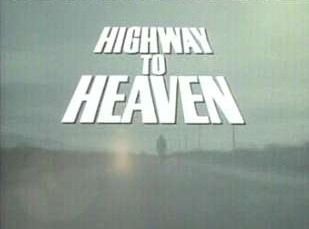
Welcome to Late Night Retro Television Reviews, a feature where we review some of our favorite and least favorite shows of the past! On Thursdays, I will be reviewing Highway to Heaven, which aired on NBC from 1984 to 1989. The entire show is currently streaming on Tubi and several other services!
Today, season 4 comes to a close with an episode about two football teams, one struggling and one not. Care to guess which team is going to win the big game?
Episode 4.24 “The Whole Nine Yards”
(Dir by Michael Landon, originally aired on April 27th, 1988)
Charlie DuBoise (Dinah Lacey) is a twelve year-old girl who wants to play football. Vince Diller (Beau Starr) is the chauvinistic coach who refuses to allow Charlie to join his team, despite the fact that she can catch and she’s even faster then his son, quarterback Ricky Diller (Chad Allen). Instead, Charlie joins another team, the 0-5 Minnows. Who is the new coach of the Minnows? Mark Gordon, of course!
Ricky has a hard time accepting that a girl beat him in a race and, when Charlie approaches him in a totally 80s arcade, a fight breaks out. Luckily, Jonathan is there to break it up. Ricky apologizes to Charlie while Charlie has a gigantic wad of Kleenex stuck up her nose. The scene goes on for a while and Charlie never removes the Kleenex. It was awkward to watch. Seriously, that’s what nampons are for.
Eventually, Ricky gets sick of Vince and his win-at-all-costs mentality. Ricky talks back to his father and gets kicked off the team. Ricky joins the Minnows and he and Charlie defeat Vince’s team in the big game. Vince comes to realize that the game should be about fun and Ricky and Charlie go to the school dance together.
And so ends season 4 of Highway to Heaven. Shows about girls who want to play football are always weird to me because I’m a girl and I can’t ever think of circumstances in which I would want to play football. But I do think that if Charlie wants to get a head start on getting the concussions that will ruin her adult life, she should certainly be allowed to do so. The main problem with this episode was that Vince was such an ogre and such a terrible father that the show’s happy ending felt false. His son joined another team and destroyed Vince’s undefeated record. The episode ends with Vince saying he’s proud of his son but Vince has been such a monster that his words sound hollow. I’m kind of worried about what’s going to happen when Ricky goes home. Instead of putting together a football game, Jonathan and Mark should have been calling Child Protective Services.
This is my final episode of Highway to Heaven for 2025. Retro Television Reviews will be taking a break for the holidays but this feature will return! On January 8th, 2026, we’ll start our look at the final season of Highway to Heaven.
In 2014’s So This Is Christmas, Eric Roberts and Vivica A. Fox play a married couple!
That’s really not the plot of the film but it is probably the main reason why most people will watch it. Roberts and Fox have been frequent co-stars over the past few years, thanks to the “Wrong” films on Lifetime. In this film, we get to see them as a couple and, while they don’t exactly have the greatest romantic chemistry, we do get to watch as the sing a duet of Mary, Did You Know?
Both Eric Roberts and Vivica A. Fox get to do more actual acting than they usually do whenever they appear in low budget films like this one. Roberts is the father of Ashley (Lexi Ainsworth), an alcoholic teenager who leaves the house in sparkly booty shorts and who has a best friend who is supposed to be in high school but who appears to be about 40 years old. Fox is the mother of Jason (Titus Mankin, Jr.), who has a pregnant girlfriend and a growing cocaine addiction….
That may sound like some fairly heavy stuff for a Christmas movie. What’s interesting is that the film still largely takes a Hallmark approach, even while the characters are getting drunk, cursing, and nearly getting killed as a result. Ashley starts to change her ways when a groundskeeper named Mac (Bryan Massey) recruits her to help direct the Christmas show at the local shelter. Jason learns an important lesson after his girlfriend is put in a coma as a result of his own stupid decisions….
It’s kind of an unpleasant film, to be honest. Scenes of Ashley earnestly working on the play are mixed with smokey scenes of drug dealers threatening to kill everyone. It’s a mishmash of styles that doesn’t come together and, at nearly two hours, the film drags considerably.
That said …. Eric Roberts and Vivica A. Fox! Singing!
Previous Eric Roberts Films That We Have Reviewed:
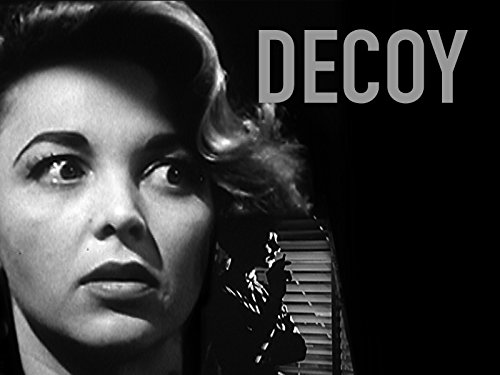
Welcome to Retro Television Reviews, a feature where we review some of our favorite and least favorite shows of the past! On Thursdays, I will be reviewing Decoy, which aired in Syndication in 1957 and 1958. The show can be viewed on Tubi!
This week, Casey solves her easiest case yet!
Episode 1.14 “Bullet of Hate”
(Dir by Teddy Sills, originally aired on January 13th, 1958)
This week, Casey doesn’t go undercover. Instead, she’s just a uniformed police officer who responds to fight between teenage Stella (Sandra Whiteside) and her adoptive aunt, Mary (Joanna Roos). Casey takes sympathy on Stella, who isn’t a bad kid but who is rebelling against her heartless Aunt Mary and Uncle Lester (Alfred Ryder). When Mary ends up getting shot, Stella is the number one suspect and Stella herself even thinks that she’s responsible. But, of course, it turns out that Stella has been framed by Lester.
The main problem with this episode is that we watch as Lester frames Stella by giving her a gun. When Stella fires the gun during an argument, Mary isn’t injured but she does faint. Stella flees. Lester then uses the gun to actually shoot Mary. Since we know that Lester committed the crime, there’s not really any suspense when Casey starts to suspect that Stella’s been set up. We already know she’s been set up and we also know that, since Lester is an idiot, Casey is going to be able to easily solve the case. And since we know that Casey is good with a gun, we’re not that surprised when Casey ends up taking Lester out (in self-defense, of course!). This isn’t like Columbo or the first season of Poker Face where the killer is so diabolically clever that we can’t wait to see how the hero manages to trick them into confessing. Lester’s just a dummy.
Joanna Loos and Alfred Ryder both went overboard as the villainous aunt and uncle but Sandra Whiteside was effective as the desperate Stella. Apparently, this was one of only two roles that Whiteside played in her career. She gives a strong performance.
This is my final Decoy review for 2025. Retro Television Reviews is going on break for the holidays so that I can focus on Awards Season and Christmas movies! Decoy will return on January 8th, 2026.
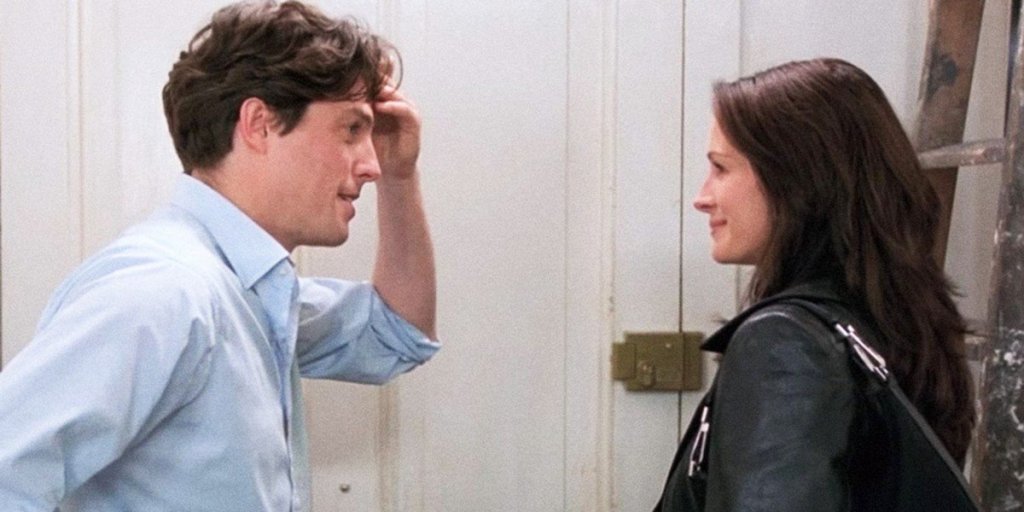
Life takes an unexpected turn for the reserved Englishman William Thacker (Hugh Grant) when the hugely popular American movie star Anna Scott (Julia Roberts) wanders into his humble little travel book shop in the district of Notting Hill in West London. When the initial meeting is followed up by some coincidentally spilled orange juice and an unexpected kiss, William finds himself completely smitten. After Anna leaves, and still in a state of disbelief, William struggles focusing on his normal life with his eccentrically odd flat mate Spike (Rhys Ifans). When Anna surprisingly reaches back out to him wanting to get back together, the sweet and shy William is ecstatic, but he remembers that he’s already obligated himself to attend his sister Honey’s (Emma Chambers) birthday party that night. Wanting to be part of something normal, Anna goes to the party as William’s date, where she has a wonderful, relaxing evening with Honey and their close-knit group of best friends that includes Max (Tim McInnerny), Bella (Gina McKee) and Bernie (Hugh Bonneville), even if she did give them quite the shock when she walked through the door. Everything seems to be going beautifully, but the life of an international film icon tends to be complicated, and William soon finds himself caught up in a whirlwind that includes her “boyfriend,” the arrogant American actor Jeff King (Alec Baldwin). He’s not really her boyfriend anymore, but that seems of little consequence to the press. And then there’s the sudden emergence of racy pictures of Anna from her past in the British tabloids. As much as William loves Anna, will he ever be able to deal with life in Anna’s superstar spotlight?
NOTTING HILL is part of a trilogy of modern-day love stories that I’m sure to watch every year, with the other two being RETURN TO ME (2000) and HITCH (2005). I’ve noticed that these three movies have plot points in common that I find extremely appealing. First, both NOTTING HILL and RETURN TO ME feature main characters who have a group of loyal family and friends who offer uncompromising love and support. William Thacker’s sister and friends clearly care about him and want what’s best for him. If necessary, they’re willing to prove it by being honest with him when he’s unwilling to be honest with himself. One of the best scenes of the film occurs near the end when William tells his group of friends that he’s turned down Anna’s request to continue their relationship, even after she says the famous lines, “I’m also just a girl, standing in front of a boy, asking him to love her.” While his friends struggle to find the right words, the flaky Spike, played superbly by Rhys Ifans, rushes into the meeting and when asked his opinion, says these three words to William, “You daft prick!” A memorable song on the movie’s excellent soundtrack reminds us sometimes that “you say it best when you say nothing at all,” but sometimes words need to be spoken, and Spike cares enough to tell William what he needs to hear. I’ve said it before, but I love it when a movie surrounds its characters with the type of people we’d love to have in our corner in real life. Second, both NOTTING HILL and HITCH feature plot lines that show a “star” falling for a sweet nobody. Maybe it’s because I’m a nobody myself, but the idea of the rich and powerful falling in love with regular people like me always strikes a nerve. Sure, it may be a fantasy, but it’s a fantasy I’m perfectly willing to roll with.
As far as I’m concerned, Julia Roberts and Hugh Grant have never been more appealing than they are in NOTTING HILL. Julia is so beautiful, and I fell in love with her myself for the first time when I watched this movie at the theater in 1999. There are scenes where William is watching Anna Scott on the big screen and the small screen, whether it be a love story or a science fiction movie, and he’s clearly in complete awe of her. As a film buff going back to my early teens, I can relate so easily to his character, whether it be my crush on Elizabeth Shue in the 80’s or Salma Hayek in 90’s. Heck, as recently as a couple of years ago, after interviewing the lovely Jan Gan Boyd who starred with Charles Bronson in ASSASSINATION (1987), I can still identify with a man completely smitten with a beautiful actress. And Hugh Grant is so sweet, witty and funny as William Thacker. This was a big film for Grant, as a few years earlier his promising Hollywood career had somewhat stalled due to his arrest on Sunset Strip in Los Angeles for “lewd conduct in a public place” with a prostitute named Divine Brown. With the irony not lost on me, if you’ve seen NOTTING HILL before you’ll understand that my inclusion of this matter of public record proves the character of Anna Scott to be correct when she explains to William just how difficult it can be to live life in the public eye. Regardless of all that, Hugh Grant is great in the film, and with a few years separating the events, it seems the filmgoing public was ready for forgiveness. NOTTING HILL was a runaway box office success, raking in $365 million dollars at the worldwide box office.
The final thing I want to point out about NOTTING HILL is the incredible talent behind the scenes. Director Roger Michell helmed one of my very favorite Jane Austen adaptations, PERSUASION from 1995, starring Amanda Root and Ciaran Hinds. It’s a perfect movie as far as I’m concerned, and I watch it several times every year. Writer Richard Curtis has written the wonderful films FOUR WEDDINGS AND A FUNERAL (1994), BRIDGET JONES’S DIARY (2001), and LOVE ACTUALLY (2003), and he clearly knows how to push our love buttons. Both Michell and Curtis do the most successful work in their careers here. Now whether or not it’s their very best is a matter of opinion, but it’s definitely great work that I can confidently recommend to anyone.
The American Film Institute has announced its picks for the ten best American films of 2025. For better or worse, the AFI is usually a pretty good precursor so, in all probability, the Best Picture nominations will look a lot like what’s listed below. That said, one should keep in mind that Sentimental Value, The Secret Agent, and It Was Just An Accident were not eligible for the AFI’s top ten. If I had to guess, I’d say that Bugonia is probably going to be replaced by Sentimental Value.
AFI Motion Pictures of the Year
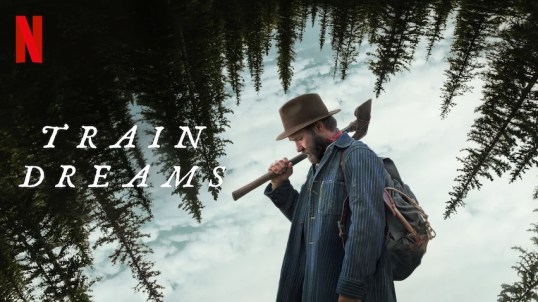
Avatar: Fire and Ash Bugonia Frankenstein Hamnet Jay Kelly Marty Supreme One Battle After Another Sinners Train Dreams Wicked: For Good
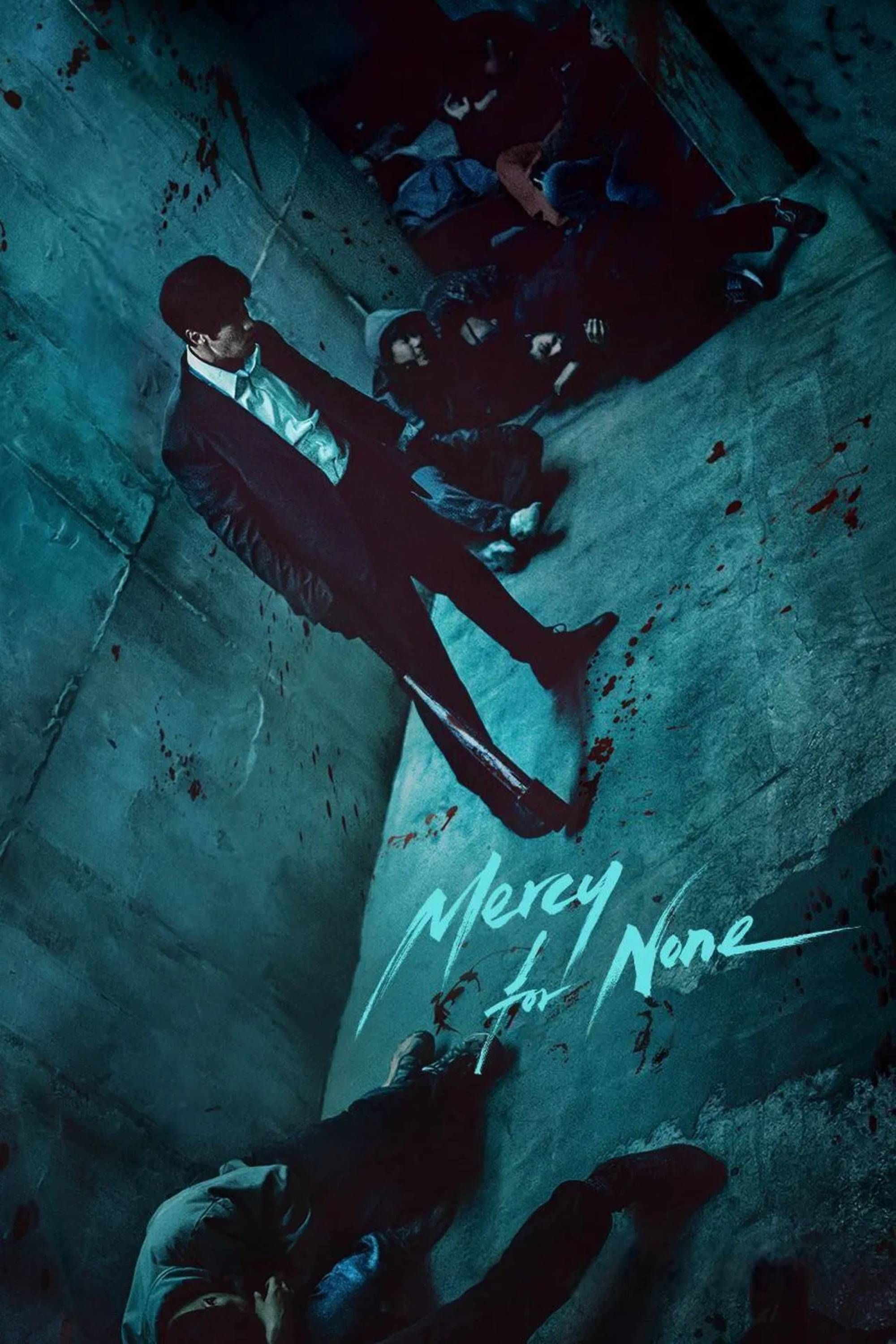
“The deal was clear—his life for mine. You broke it.” — Nam Gi-jun
Mercy for None is a gritty, intense Korean action drama that drops you into the shadowy underbelly of Seoul’s criminal world, where revenge is less a personal choice and more a brutal currency everyone ends up paying. Adapted from the webtoon Plaza Wars: Mercy for None by Oh Se-hyung and Kim Geun-tae, the series runs a lean seven episodes at roughly 40–45 minutes each, making it a compact but powerful binge. It follows Nam Gi-jun, a former gang enforcer who once carved out a bloody reputation for himself before literally cutting himself out of the life—he slices his own Achilles tendon to walk away after a disastrous job. Years later, when his younger brother Gi-seok, now a rising figure in the underworld, is murdered in what looks like a calculated move in a larger power struggle, Gi-jun is dragged back into the orbit he tried so hard to escape. What begins as a simple quest for payback slowly mutates into a full-blown gang war between rival factions, where old debts, broken promises, and rotten institutions all collide.
The show’s webtoon roots are easy to feel in its storytelling style and visual sensibility. Plaza Wars: Mercy for None was known for its grim noir tone, sharp sense of place, and explosive outbursts of violence, and the drama leans into that DNA rather than sanding it down. The adaptation keeps the basic spine of the story—an aging, wounded enforcer returning to a city carved up by criminal empires—and translates the panels’ rough, kinetic energy into tight, live-action set-pieces. So Ji-sub’s casting as Nam Gi-jun is spot-on: he looks and moves like someone who has survived more fights than he cares to remember, and his presence gives the character that blend of weariness and danger that fans of the source material wanted to see. The direction and writing embrace the original’s grimy, unforgiving atmosphere, focusing on high-stakes confrontations and the emotional cost of violence rather than trying to make the material more broadly “feel-good” or conventional.
At the center of everything is Gi-jun’s arc, and that’s where the series finds its emotional weight. He isn’t written as a slick, wisecracking antihero; he’s a man who carries his history in his body and on his face. When he’s living in hiding, you can feel the way his past still sits on his shoulders, and once he learns how his brother died, the shift in him is less about explosive rage and more about grim resolve. The limp from his old injury, the way he braces himself before every fight, and the quiet moments where he weighs what he’s about to do all help make him feel like a person first and a genre archetype second. That keeps the show from collapsing into pure revenge fantasy, even when Gi-jun tears through rooms full of armed men; there’s a sense that every win costs him something.
The supporting cast gives the drama a lot of texture, especially the older gangsters who make up the city’s criminal backbone. These men are written as survivors who’ve spent decades navigating backroom deals, territory disputes, and shifting alliances; they don’t just feel like generic “boss” figures but people with their own codes and grudges. Their scenes have a heavy, lived-in tension, even when nobody is throwing a punch. By contrast, some of the younger characters—the hotheaded heirs and ambitious underlings—can feel more sketched in. They bring energy and chaos, but their motivations and personalities aren’t always explored as deeply as they could be, which sometimes makes their big turning points land a little softer. The show also makes the deliberate choice to center almost entirely on men, with women mostly absent or on the fringes. That tight focus suits the idea of a closed, hyper-masculine underworld, but it does limit the emotional and thematic range.
Where Mercy for None really swings for the fences is in its action. The fights are brutal, messy, and grounded, full of close-quarters grappling, improvised weapons, and bodies hitting concrete hard. There’s a clear sense of geography in most of the set-pieces: you can tell where everyone is in a hallway brawl or a parking garage ambush, and the camera usually holds long enough to showcase the choreography without turning everything into a blur. Gi-jun’s physical limitations are baked into the way he moves; he fights like someone who knows his body can betray him at any second, relying on experience, ruthlessness, and timing more than sheer athleticism. As the series goes on, though, it does start to push him closer to the edge of believability, with him surviving punishment that would realistically stop anyone else. Whether that bothers you will depend on how much you’re willing to accept heightened genre logic in exchange for cathartic, over-the-top showdowns.
Stylistically, the series leans into a very specific mood: lots of night shots, harsh lighting, and cramped locations that make the city feel like a maze of traps and dead ends. Bars, offices, stairwells, garages, and back alleys all start to feel like different battlegrounds in the same endless war. When the show occasionally cuts to quieter, more open environments—like scenes from Gi-jun’s life in seclusion—they almost feel like they belong to a different world. That contrast reinforces just how suffocating his return to Seoul is. The music tends to underscore rather than dominate, and while it may not be the kind of score you walk away humming, it adds an extra layer of tension to confrontations and a sense of heaviness to the aftermath of each fight.
Structurally, Mercy for None benefits from being short and focused. With only seven episodes, there isn’t much room for filler, so the story keeps moving—information is revealed, allegiances shift, and every episode pushes Gi-jun further into conflict. There’s no attempt to pad things out with a romance subplot or quirky comic relief, which makes the series feel more like a long crime film than a traditional drama season. At the same time, the show occasionally leans on familiar rhythms: Gi-jun confronts a new layer of the conspiracy, storms another stronghold, leaves a trail of bodies, and moves on. A bit more variation in the types of obstacles he faces or the perspectives we follow might have made the middle stretch feel less repetitive. Still, the relatively tight run helps prevent that repetition from becoming a serious drag.
On a thematic level, the drama keeps circling back to ideas of debt, loyalty, and the illusion of getting out clean. Gi-jun once believed that sacrificing part of himself physically would allow him to walk away from the life he lived and protect the people he cared about. The story systematically tears that belief apart. The bosses he helped rise are still entangled in their old patterns, the institutions that are supposed to enforce justice are compromised, and his brother’s death becomes proof that the system he once upheld ultimately consumes everyone in its reach. The ending doesn’t offer easy comfort: the people who engineered the power struggle pay a price, but what’s left behind is not some hopeful new order, just ruins. Gi-jun’s revenge lands, but it doesn’t look or feel like a victory.
As a whole package, Mercy for None works very well as a stripped-down, no-frills revenge saga with a strong sense of character and place. Its strengths lie in So Ji-sub’s committed performance, the weighty, bruising action, and the way it translates its webtoon source into something that feels cinematic rather than purely episodic. Its weaknesses—limited female representation, some underdeveloped younger characters, and occasional repetition in structure and escalation—keep it from feeling completely fresh, but they don’t undermine what the show is clearly trying to be. It isn’t out to reinvent the gangster genre; it’s out to inhabit it fully, with a distinctly Korean noir flavor and a protagonist who feels like he’s been carved out of regret and rage.
If you’re looking for a character-driven revenge thriller that leans into dark atmosphere, grounded yet stylized violence, and the slow unraveling of a criminal ecosystem, Mercy for None is absolutely worth the time. If you’re hoping for a broader ensemble piece with varied perspectives, rich female characters, or a more hopeful worldview, this will probably feel too narrow and bleak. As a webtoon adaptation and a compact action drama, though, it stands out as a confident, hard-edged entry that knows exactly what it wants to do and largely pulls it off.
Today, we present to you 2015’s The Flight Before Christmas!
Mayim Bialik and Ryan McPartin are both on the same Christmas Eve flight. Bialik plays a woman who has given up on romance. McPartin plays a man who is flying to Boston to ask his girlfriend to marry him, even though it’s obvious that they’re not right for each other. At first, our two main characters don’t get along but then their flight is temporarily diverted to the most romantic place on Earth …. Bozeman, Montana!
You can guess what happens. You’ve probably already guessed that it occurs at a quaint Bed & Breakfast. But did you guess that Brian Doyle-Murray plays a jolly man named Noel Nichols and that …. oh, you did? Well, good for you.
It’s a cute movie, nonetheless. If there is a Santa Claus, I hope he’s played by Brian Doyle-Murray.
4 Shots From 4 Films is just what it says it is, 4 shots from 4 of our favorite films. As opposed to the reviews and recaps that we usually post, 4 Shots From 4 Films is all about letting the visuals do the talking.
Today, we celebrate the birthday of Jeff Bridges! It’s time for….
4 Shots From 4 Jeff Bridges Films
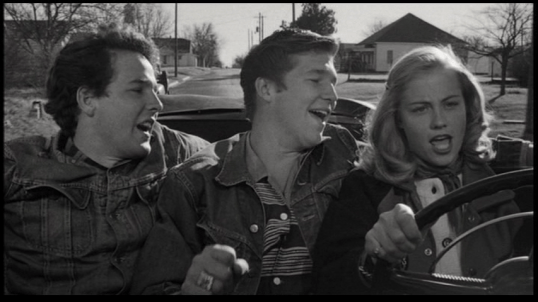
The Last Picture Show (1971, dir by Peter Bogdanovich, DP: Bruce Surtees)
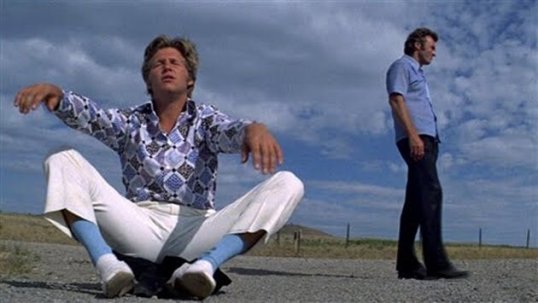
Thunderbolt and Lightfoot (1974, directed by Michael Cimino, DP: Frank Stanley)
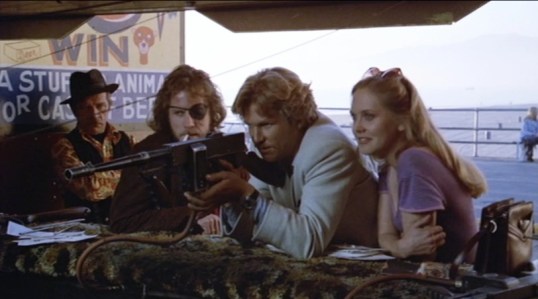
Cutter’s Way (1981, dir by Ivan Passer, DP: Jordan Cronenweth)
Starman (1984, dir by John Carpenter. DP: Donald M. Morgan)


 Through the Shattered Lens