“Within, walls continued upright, bricks met neatly, floors were firm, and doors were sensibly shut; silence lay steadily against the wood and stone of Hill House, and whatever walked there, walked alone.”
—Shirley Jackson, The Haunting of Hill House
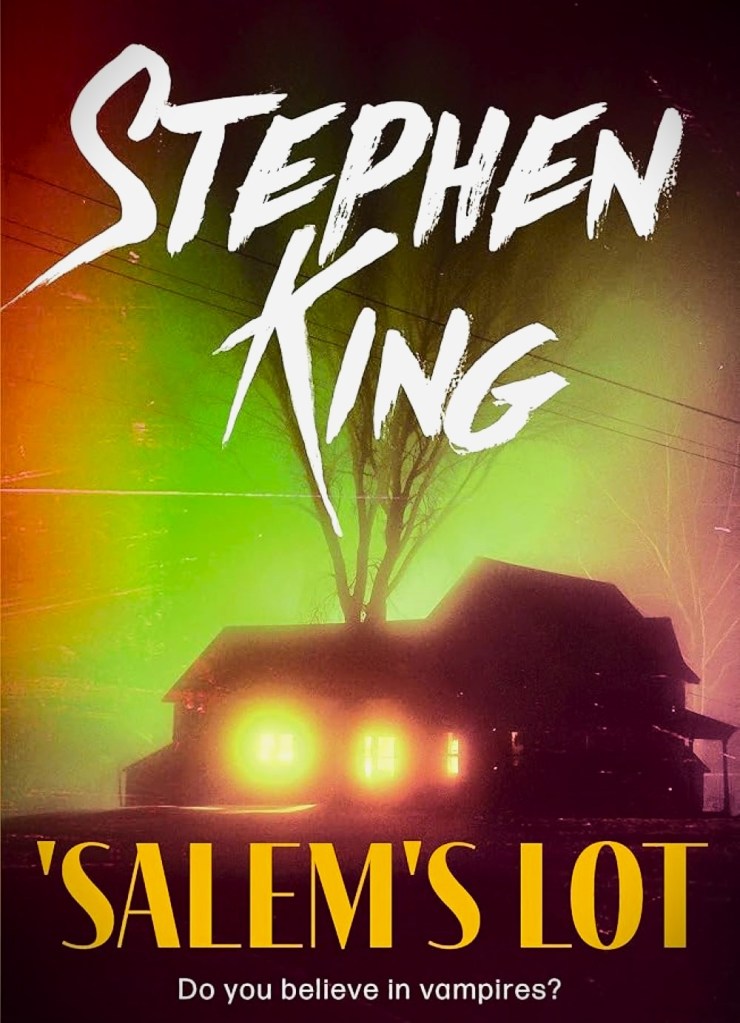
Stephen King’s Salem’s Lot opens with an unsettling and bold narrative choice. Instead of introducing the main characters or setting a conventional stage, the novel begins by showing two nameless figures—an older man and a younger companion, burdened by events already passed. These itinerants are fleeing a terrible evil, seeking refuge in a small Mexican village, suffused with mystery and dread. This brief but cryptic prologue hooks the reader immediately with a pervasive sense of unease and unanswered questions: who are these men, and what horror haunts them so far from home?
This unsettling beginning is not only risky but masterful. King, in just his second published novel, chooses to forgo straightforward exposition and instead promises that the narrative will move backward, retracing the dark events that led to this moment of flight and loss. The prologue casts a shadow into the past, preparing readers for a story where the darkness is already present and will only deepen.
Rewinding, the narrative places us in the small New England town of Jerusalem’s Lot—known to its inhabitants simply as “The Lot”—a quintessential small town in 1970s Maine. Here, Ben Mears, a novelist haunted by childhood trauma centered on the forbidding Marsten House, returns home with the intention of writing about the old mansion. The Marsten House is not just a setting; it is a malignant presence perched over the town like an ominous sentinel. Ben’s youth intrudes everywhere in his memory of that house—a place where something unknowable once touched him—and now, as an adult, he confronts both that past and the house again, its shadow casting unease over the town.
Ben isn’t the only arrival. Richard Straker sets up an antique shop, accompanied by his rarely seen partner, Kurt Barlow—an inscrutable figure whose very mention deepens the novel’s pervasive tension. King reveals Barlow’s presence slowly and indirectly, heightening the atmosphere without immediate confrontation.
King excels at immersing readers in the rhythms of small-town life. Through detailed observation of everyday routines, gossip, and personalities, he crafts a believable, textured community. Each townsperson—whether skeptical official, gossip-prone neighbor, child, or elder—is vividly realized, not as a simple archetype but as a living, breathing individual. Yet beneath this surface of normalcy lurks a pervasive darkness: secrets, resentments, and moral frailties accumulate like hidden mildew in the town’s corners.
In this, Salem’s Lot evokes the spirit of Peyton Place, the classic fictional small town where scandal and hypocrisy fester beneath neighborly facades. King’s Jerusalem’s Lot feels like a much darker cousin—a town where those faults and hidden sins once fodder for gossip become the very soil from which real, supernatural evil springs. While Peyton Place explored human failings within social dynamics, Salem’s Lot reveals how those failings create openings for Kurt Barlow’s vampiric menace. The town’s insularity, mistrust of outsiders, and collective denial become liabilities dooming it—not just morally, but existentially.
At the heart of this encroaching nightmare stands the Marsten House, a building elevated beyond mere backdrop into a living entity. Like Shirley Jackson’s Hill House, Richard Matheson’s Belasco House in Hell House, and King’s own later Overlook Hotel, the Marsten House is steeped in decades of violence and evil. Its walls seem to soak up past horrors; its windows serve as more than architectural features—they are eyes into the house’s dark soul. This physical presence is sinister and predatory, complicit in the nightmarish events it enables. To enter the house is to step into something corrupt and breathing, an organism as alive and malign as the vampire it conceals.
What makes Salem’s Lot especially powerful is how King integrates the supernatural into the texture of daily life. The fantastical elements do not feel imposed or alien but grow organically from the social dynamics, habits, and vulnerabilities of this small town. The horror is inevitable precisely because it grows from recognizable human weaknesses and communal blind spots. This fluid blending invites readers to experience terror as an intimate shattering of the ordinary, a disruption of the familiar.
Relationships anchor the emotional core of the narrative. Ben’s romance with Susan Norton, the steady wisdom of Matt Burke, the youthful courage of Mark Petrie—their humanity keeps the terror grounded and poignant. As vampirism spreads, these bonds are tested and shattered. Community, which once defined the town’s identity, fractures under suspicion and fear. Friends become threats; homes become prisons.
The looming Marsten House is a perfect emblem of this dual threat: a predator perched within the community itself. As Barlow turns neighbors into monsters, the house’s silent complicity looms ever larger. It is as much a character as any human, a sentinel feeding on the decay of place and spirit alike.
As the novel hurtles toward its climax, King heightens the tension with vivid, claustrophobic scenes inside the haunted mansion. The house’s corridors and rooms twist into traps, its atmosphere suffocating and oppressive. King’s mastery of sensory detail brings a visceral dimension to the horror, blending psychological terror with physical menace.
The conclusion returns to the somber tone of the prologue. Although some survive, the town is hollowed out—a ghostly husk abandoned to darkness. Evil is not eradicated but waits patiently, ready to thread its way back through the cracks. The cycle of horror, loss, and exile continues.
Stephen King’s unique strength in Salem’s Lot lies not only in his richly developed characters and finely drawn community but in how seamlessly he introduces supernatural horror into what reads like a real-time study of small-town life. The fantastical elements grow naturally from the social fabric, making the terror feel inevitable rather than contrived. This synthesis of realism and fantasy deepens the novel’s power.
King’s portrayal of Jerusalem’s Lot as a place rotting from within yet clinging to its veneer of normalcy offers a chilling echo of Peyton Place. But while Metalious’s town suffocated under scandal, Salem’s Lot is consumed by predation—the vampire feasting not only on blood but on the fractures of belonging and trust. It is both eerily familiar and profoundly alien: a place where monsters live not just in shadows, but in whispered suspicions and buried sins.
Through this blend of gothic haunted-house traditions, social critique, and psychological realism, Salem’s Lot endures as a masterpiece of horror. The Marsten House is not merely a setting but a sentinel, symbolizing accumulated evil watching over a doomed community. King’s novel terrifies not only with its monsters but with its intimate knowledge of how everyday life can harbor the seeds of nightmare beneath a calm surface.
 Through the Shattered Lens
I couldn’t put this down and stayed up all night reading it all.
LikeLike
One of his greatest works…just like “The Stand”, it has incredible suspense and horror, and you know and care about the characters in the story…masterful
LikeLike