Horror Film Review: Evils of the Night (dir by Mardi Rustam)


How dumb can one movie be without becoming unwatchable?

1985’s Evils of the Night is here to answer that question!

Three space alien vampires (John Carradine, Julie Newmar, and Tina Louise) have led an expedition to Earth.  They’ve taken over a hospital and they’re stealing the blood of their patients so that it can be sent back to their dying planet.  They especially want young blood, which is why they specifically came to a college town.  Unfortunately, their intelligence was faulty and they arrived during the summer, when the campus was closed.  (I guess this is one of those rare colleges that don’t offer a summer term.)  There’s actually a very lengthy scene in which Carradine explains the faulty intelligence to Newmar and Louise and then Newmar complains about how the alien intelligence service just isn’t that good.  What makes this scene so special is that Carradine delivers his lines with a straight face and Newmar actually seems to be sincerely annoyed.  Aliens — they’re just like us!

Just because college is out of session, that doesn’t mean that there aren’t any young people hanging out down at the lake.  There’s actually quite a few, though all of them look to be a little bit too old for high school or college or whatever they’re supposed to be attending.  Several of them are played by veterans of the adult film industry, including Amber Lynn and Jerry Butler.  Everyone wants to get laid down at the lake, which is probably the most realistic thing about Evils of the Night.  However, John Carradine needs their blood so he has Julie Newmar hire two slovenly mechanics, Kurt (Neville Brand) and Fred (Aldo Ray), and sends them out to kidnap any young people that they find.  Kurt and Fred are very good at their job.  Newman pays them and mocks them for caring so much about coins.  Little do the mechanics realize that the aliens are planning on shooting them with their space laser as soon as they leave the planet.

Evils of the Night is a good example of a bad movie that is oddly watchable just because the viewer finds themselves curious as to just how stupid things can get.  The answer here is very stupid and very nonsensical  It never seems to occur to anyone just go to a different lake or maybe just do their skinny dipping in a pool somewhere.  The plot has a “make it up as you along” feel to it and that, at the very least, keeps things vaguely interesting.  The actors playing the “teen” victims are enthusiastic without being particularly good while most of the veterans in the cast are all obviously just there for the paycheck.

That said, John Carradine.  Wow.  What a career.  A trained Shakespearean actor who made his stage debut in 1925 and went on to appear in a countless number of movie, Carradine was a favorite of both John Ford and Fred Olen Ray.  Carradine appeared in hundreds of a theatrical films.  In fact, his final film was released seven years after Carradine’s death.  Carradine was one of the great actors, with that deep voice and that commanding stare.  But he was also one of those actors who was apparently willing to appear in just about anything and that’s one reason why he’s still such a beloved icon.  Playing an outer space vampire-turned-doctor was definitely not the strangest role that Carradine ever played.  Carradine handles his scenes like a pro!

Evils of the Night is dumb but I dare you to look away.

October True Crime: The Onion Field (dir by Harold Becker)


This 1979 true crime drama opens in Los Angeles in 1963.

Rookie Detective Karl Hettinger (John Savage) has just joined the Felony Squad and met his new partner, Ian Campbell (Ted Danson, making his film debut).  Ian is a tall, somewhat eccentric detective, the type who practices playing the bagpipes in the basement and who takes Hettinger under his wing.

Meanwhile, Jimmy Smith (Franklyn Seales) has just been released from prison.  The nervous and easily-led Jimmy almost immediately runs into Gregory Powell (James Woods), a small-time hood with delusions of grandeur.  Powell is the type who talks a big game but who really isn’t even that good of a thief.  Smith and Powell form an uneasy criminal partnership.  They are easily annoyed with each other but they also share an instant bond.  Though the film doesn’t actually come out and say what most viewers will be thinking, there’s a lot of subtext to a brief scene where Powell appears to caress Smith’s shoulder.

One night, Hettinger and Campbell are kidnapped by Smith and Powell.  Smith and Powell drive them out to an onion field.  Because he’s misinterpreted the Federal Kidnapping Act and incorrectly believes that he and Smith are already eligible for the death penalty because they kidnapped two police officers, Powell shoots and kills Campbell.  (The close-up image of Campbell falling dead is a disturbing one, not the least because he’s played by the instantly likable Ted Danson.)  Hettinger runs and manages to escape.  He saves his life but he’s now haunted by the feeling that he abandoned his partner.

The rest of the film deals with the years that follow that one terrible moment in the onion field.  Treated as a pariah by his fellow cops, Hettinger sinks into alcoholism and eventually becomes a compulsive shoplifter.  Smith and Powell, meanwhile, use a variety of tricks to continually escape the death penalty and to keep their case moving through the California justice system.  Powell, for instance, defends himself and then later complains that he had incompetent counsel.  Smith, meanwhile, is defended by the infamous Irving Karanek, a legendary California attorney who specialized in filing nuisances motions.  (Later Karanek found a measure of fame as Charles Manson’s attorney.  Eventually, he had a nervous breakdown in 1989, lived in his car, and was briefly suspended by practicing law.)  While Smith and especially Powell quickly adjust to being imprisoned, Hettinger spends the next decade trapped in a mental prison of guilty and bitterness.

Based on a non-fiction book by Joseph Wambaugh, The Onion Field is a compelling look at a true crime case that continue to resonate today.  The film can be a bit heavy-handed in its comparisons between the two partnerships that define the story.  Both Hettinger and Smith are young and neurotic men who find themselves working with a more confident mentor.  The difference is that Hettinger’s mentor is the cool, composed, and compassionate Ian Campbell while Smith’s sad fate is to be forever linked to the erratic Gregory Powell.  While the film may have the flat look of something that was made for television, it’s elevated by the performances of its lead actors.  James Woods give an especially strong performance as the cocky Powell, a loser in the streets who becomes a winner behind bars.  Over the course of the film, he goes from being a joke to being the prisoner that others come to for legal advice.  John Savage, meanwhile, poignantly captures Hettinger’s descent as the trauma from that night leaves him as shell of the man that he once was.

The film’s supporting cast is full of familiar faces.  Christopher Lloyd and William Sanderson show up as prisoners.  Ronny Cox plays the detective in charge of the onion field investigation.  David Huffman plays a district attorney who is pushed to his breaking point by the obstructive tactics of Smith’s attorney.  Priscilla Pointer play Ian Campbell’s haunted mother.  All of them do their part to bring this sad story to life.

The Onion Field is a chillingly effective true crime drama and a look at a murder that was inspired by one man’s inability to understand federal law.

Horror Song of The Day: Cat People (Putting Out Fire) by Giorgio Moroder and David Bowie


Today’s horror song comes the hypnotic soundtrack of Paul Schrader’s Cat People.  This song was so good that it later showed up and was used to equally strong effect in Quentin Tarantino’s Inglourious Basterds.

4 Shots From Horror History: 1930s Part One


This October, I’m going to be doing something a little bit different with my contribution to 4 Shots From 4 Films.  I’m going to be taking a little chronological tour of the history of horror cinema, moving from decade to decade.

Today, we take a look at the start of the 1930s.

4 Shots From 4 Films

Dracula (1931, dir by Tod Browning)

Dracula (1931, dir by Tod Browning)

Frankenstein (1931, dir by James Whale)

Frankenstein (1931, dir by James Whale)

Vampyr (1932, dir Carl Theodor Dryer)

Vampyr (1932, dir Carl Theodor Dryer)

White Zombie (1932, dir by Victor Halperin)

White Zombie (1932, dir by Victor Halperin)

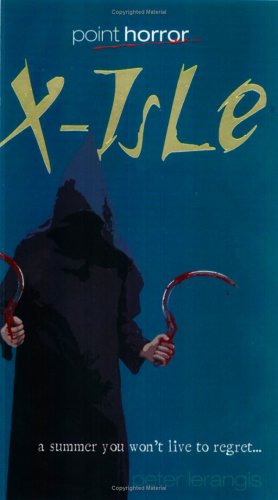
Horror Book Review: X-Isle By Peter Lerangis


X-Isle!?

Is this a book about an island that is populated by the twenty or so people who actually refer to twitter by it’s “new” name of X?

No, actually, it’s not.  X-Isle was published in 2002, in the days before social media and ever-present phones.  X-Isle is a slasher story, one in which a group of good-looking teens end up hanging out at the exclusive Spinnaker Lodge, a luxury resort on an isolated island.  It’s like that island that Kim Kardashian took all of her friends and employees to during the COVID epidemic?  Remember that?  Everyone else was locked inside or wandering around triple-masked while Kim went to an island and then scolded everyone else for not taking proper precautions.

(Sorry to get off topic there but seriously, the COVID era was messed up in ways that people are still struggling to full comprehend.)

Reading X-Isle, I found myself wandering if you really could write an effective, non-ironic, old school slasher story nowadays.  The whole key to the slasher genre is that people have to be isolated and there has to be no way of reaching out for help.  Every slasher movie now has to come up with some extended to reason to explain why no one can call the police.  Whenever a horror movie starts with someone saying, “Give me your phone, you’ll get it back after the weekend,” I roll my eyes a little just because it’s become such a cliche.  At this point, I imagine even Camp Crystal Lake has free wi-fi.  It’s easy to imagine a camp counselor tweeting out, “Help!  There’s a murderer at Crystal Lake!” and someone replying, “Whatever, Jussie.”

X-Isle gets off to a good start with a collection inner-office dossiers that introduce us to the main characters.  What the memo reveals is that the main requirement to work at the resort is a handsome face or a good body.  Once the story kicks in, we meet our group of potential victims and, unfortunately, none of them really live up to all the hype in the introduction.  We spend a good deal of time with Carter, a womanizer who, at one point, feels the need to tell us that he’s not psychotic despite the fact that his behavior is often manipulative and narcissistic.  When you actually have to tell people that you’re not a psycho, you probably are. Of course, in this book, Carter is one of the heroes.

Someone is killing guests and employees.  It’s a YA book so we don’t actually see the kills but the aftermath is described in properly grisly fashion.  The reveal of who the killer was doesn’t make much sense but, given that the book ends with a cliffhanger, that was perhaps deliberate.

Anyway, I’ve always kind of enjoyed the slasher genre, even with all of its cliches and its issues towards anyone who shows the slightest spark of independence.  X-Isle was a fast and entertaining read.  None of the characters were particularly likable which made it a lot less stressful to read about them being put in danger.  In the end, the main lesson is to stay away from mysterious islands.  That’s probably good advice.

Join #MondayMania For Sleepwalking In Suburbia!


Hi, everyone!  Tonight, on twitter, I will be hosting one of my favorite films for #MondayMania!  Join us for Sleepwalking in Suburbia!

You can find the movie on Tubi and then you can join us on twitter at 9 pm central time!  (That’s 10 pm for you folks on the East Coast.)  See you then!

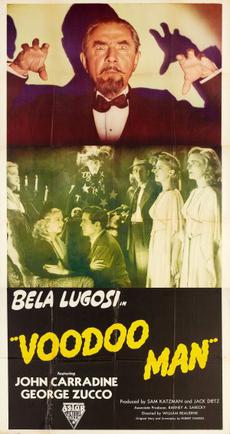
Horror Film Review: Voodoo Man (dir by William Beaudine)


In 1944’s Voodoo Man, Michael Ames stars as Ralph, a screenwriter who has been asked to write a treatment based on the real case of several “girl motorists” who have disappeared in the surrounding area.  Ralph turns down the assignment because he’s busy planning his wedding to Betty (Wanda McKay).  However, when Betty’s maid of honor, Stella (Louise Currie), vanishes, Ralph and Betty set out to investigate.  As Ralph puts it, he’s become a part of the story that he earlier rejected.

What has happened to Stella and all of the other women?  They’ve been abducted by Toby (John Carradine) and Grego (Pat McKee), two lunkheads who work for Dr. Marlowe (Bela Lugosi).  Dr. Marlowe lives in an isolated mansion where he is cared for by his loyal housekeeper (Mici Goty).  Twenty-two years ago, Dr. Marlowe’s wife, Evelyn (Ellen Hall), died but Marlowe has been able to keep her body in a sort of suspended animation ever since.  Marlowe is kidnapping women because, through the use of voodoo and mad science, he hopes to take their “will to live” and transfers it into Evelyn.  Helping Marlowe out is a voodoo priest named Nicholas (George Zucco).

Lugosi, Carradine, and Zucco!  Obviously, the main appeal of Voodoo Man is that it brings together three great names in horror. Even if the story doesn’t really make much sense (and it doesn’t), the film gets a lot of mileage out of the combination of Lugosi, Carradine, and Zucco.  While Lugosi does seem to be a bit bored with his role, Carradine and Zucco really throw themselves into their characters.  John Carradine, in particular, seems to be having the time of his life as he shuffles around the mansion and replies, “Yes, master,” to every command from Dr. Marlowe.  It’s the type of entertaining performance that could only be delivered by a trained Shakespearean slumming in a low-budget, B-grade horror film.  As for Zucco, he plays Nicholas with a certain amount of ruthless erudition.  Zucco is playing the Boris Karloff role here and he definitely seems to understand what that means.

As for the film itself, it has its moments.  Legend has it that director William Beaudine’s nickname was “One Shot” because he was usually only willing to do one take of each scene.  As a result, he filmed quickly and he didn’t spend a lot of money and that was probably a good thing for a production like Voodoo Man.  It also meant that if someone flubbed a line or bumped into a piece of furniture, that take would still be the one that showed up in the film.  My favorite moment of Voodoo Man was when the local sheriff (Henry Hall) referred to Dr. Marlowe as being “Dr. Martin,” and Bela Lugosi, who appeared to be struggling not to laugh, quickly said, “It’s Marlowe.”  The sheriff corrected himself.  That’s the type of fun you don’t get in movies made by people who do more than one take.

Voodoo Man has a quick 61-minute running time.  To enjoy it, it probably helps to already be a fan of low-budget, B-horror films from the 40s.  Lugosi, Carradine, and Zucco are combination that deserves to be seen.

Monday Live Tweet Alert: Join Us For Satan’s School For Girls!


As some of our regular readers undoubtedly know, I am involved in hosting a few weekly live tweets on twitter and occasionally Mastodon.  I host #FridayNightFlix every Friday, I co-host #ScarySocial on Saturday, and I am one of the five hosts of Mastodon’s #MondayActionMovie!  Every week, we get together.  We watch a movie.  We snark our way through it.

Tonight, for #MondayActionMovie, the film will be 1973’s Satan’s School For Girls! I picked it so you know it’ll be good.

It should make for a night of fun viewing and I invite all of you to join in.  If you want to join the live tweets, just hop onto Mastodon, find the movie on YouTube, hit play at 8 pm et, and use the #MondayActionMovie hashtag!  The  watch party community is a friendly group and welcoming of newcomers so don’t be shy.   

See you soon!

Horror On The Lens: Baffled! (dir by Philip Leacock)


This is a film that I share every year for Horrorthon and can you blame me?  Check out this pitch: Leonard Nimoy is a race car driver who can see into the future and who uses his powers to solve crimes!

Seriously, if that’s not enough to get you to watch the 1973 made-for-TV movie Baffled!, then I don’t know what is.  In the film, Nimoy takes a break from racing so that he and a parapsychologist (played by Susan Hampshire) can solve the mystery of the visions that Nimoy is having of a woman in a mansion.  This movie was meant to serve as a pilot and I guess if the series had been picked up, Nimoy would have had weekly visions.  Of course, the movie didn’t lead to a series but Baffled! is still fun in a 70s television sort of way.  Thanks to use of what I like to call “slo mo of doom,” a few of Nimoy’s visions are creepy and the whole thing ends with the promise of future adventures that were sadly never to be.  And it’s a shame because I’ve always wondered what was going on with that couple at the airport!

Enjoy Baffled!  Can you solve the mystery before Leonard?


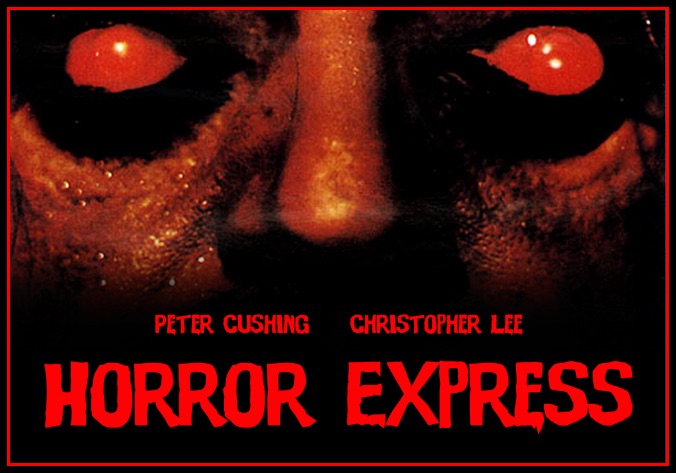
Horror Review: Horror Express (dir. Eugenio Martin)


There was one film I saw when I was very young that absolutely terrified me, and even now, decades later, it still has the power to unsettle me and rob me of sleep. That film is Horror Express, a 1972 Spanish-British horror/science fiction hybrid directed by Eugenio Martín. It brought together two titans of gothic horror cinema, Christopher Lee and Peter Cushing—icons of the Hammer Films era—while also featuring Telly Savalas in a sadistic, scene-stealing turn as a volatile Cossack captain.

When Horror Express was released, the horror genre was at a fascinating crossroads. The gothic traditions popularized by Hammer Studios throughout the 1960s were beginning to fade, overtaken by the grittier, bloodier styles of filmmakers like Herschell Gordon Lewis and George A. Romero. By 1968, Romero’s Night of the Living Dead had already shifted the genre toward a darker, more nihilistic tone, paving the way for the grislier excesses that would dominate the 1970s. Martín’s film stood out precisely because it clung to the elegance and atmosphere of Hammer’s gothic aesthetic while incorporating moments of shocking violence and morbid detail. It occupied an unusual in-between space: refined in look and tone yet unnerving in its thematic brutality. Its blend of period atmosphere, science fiction paranoia, and restrained gore made it a fascinating transitional work in horror history.

The premise is simple but chilling. Aboard the Trans-Siberian Express, a British anthropologist (Christopher Lee’s Professor Saxton) transports a recently unearthed specimen—an ape-like, fossilized creature. His colleague, Peter Cushing’s Dr. Wells, becomes reluctantly entangled in the unfolding mystery. Predictably, the specimen is not what it seems; it revives and begins unleashing a series of violent attacks on the passengers. Soon it is revealed to harbor a far more terrifying, alien intelligence capable of killing and inhabiting its victims. This leads to one of the film’s most haunting sequences: the white-eyed, zombie-like corpses, drained of memories and humanity, shambling through the train corridors under the entity’s control. At eight years old, these images struck me as some of the most horrifying I had ever seen, and even today their uncanny blend of gothic atmosphere and science fiction body horror still lingers.

Viewed in retrospect, Horror Express bears a striking resemblance to John W. Campbell’s novella Who Goes There?—the basis for Howard Hawks’ The Thing from Another World and John Carpenter’s The Thing in 1982. Like those stories, it is steeped in paranoia, playing with the idea of an alien intelligence that can absorb knowledge and animate the dead. While it never attains the precision of Carpenter’s later masterpiece, it foreshadows that same blend of claustrophobia, distrust, and escalating dread.

What makes Horror Express unforgettable is its restraint. Rather than leaning on gore, it generates fear through suggestion, atmosphere, and disturbing imagery. The snowy isolation of the Trans-Siberian route reinforces the cold sterility of its alien invader, while the confined train cars become a claustrophobic prison of escalating terror. Over time, the film has slipped into the public domain, making it widely available on streaming platforms and budget DVDs. Though often overlooked in surveys of 1970s horror, it deserves recognition as one of the last great gothic horror films before the torch passed to Craven, Carpenter, and Hooper.

For me, Horror Express remains not just a childhood scare but a cinematic touchstone: a rare piece of science fiction horror bridging two eras, one that manages to terrify without relying on excess gore. It disturbed me at age eight, and even now, watching the blank-eyed corpses lurch through the dim train cars still triggers that same visceral shiver.