Doctor Who — The Time Meddler (1965, directed by Douglas Camfield)


Today, everyone knows the origins of the Doctor.  We know that the Doctor is a Time Lord and a native of the planet Gallifrey.  We know that the Time Lords had a policy of not interfering with other civilizations.  They could travel through time but they were never to change history.  We know that the Doctor, even after stealing the TARDIS, remained true to that belief while other renegade Time Lords did not.

It wasn’t always like that.  During the show’s early years, the Doctor was meant to be a very mysterious figure and it was implied that he himself had invented (rather than stolen) his TARDIS.  It wasn’t until nearly two years into the show’s original run that we met anyone else from the Doctor’s home planet and that we finally got to see a TARDIS that could actually change shape.

All of that happened in The Time Meddler, a four-episode serial the originally aired from July 3rd, 1965 to July 24th.  In this episode, the Doctor’s TARDIS materializes in Northumbria in 1066.  With Ian and Barbara having recently returned to their own time, the Doctor (William Hartnell) is now traveling with Vicki (Maureen O’Brien) and Steven Taylor (Peter Purves), both of whom come from the future and who are much less argumentative than either Ian or Barbara.  Finally, the Doctor has companions who are not only happy to be there but who are willing to do whatever he says.  Though the Doctor tells Vicki that he will miss Ian and Barbara, he does seem much more relaxed in this serial than in previous ones.

The Doctor’s arrival is observed by The Monk (Peter Butterworth), a mysterious figure who doesn’t seem to be surprised at all to see a blue police call box materialize in 1066.  A time meddler who it is implied has met the Doctor before, the Monk is plotting on changing the course of history by wiping out King Harald Hardrada’s Viking invasion fleet, therefore leaving Harold Godwinson and his troops fresh and fully armed so that they can then defeat William The Conqueror at the Battle of Hastings.  The Doctor is captured early on by the Monk, leaving Steven and Vicki to deal with the suspicious locals.

The Meddling Monk was truly a great creation.  As played by Peter Butterworth, he wasn’t so much an evil-doer as he was just someone who thought it would be fun to change history.  (I’ve always disliked the theory that the Meddling Monk was an early incarnation of The Master.  The Master was always evil while the Monk was basically a prankster.)  Peter Butterworth gives an amusing and energetic performance as the Monk and the highlights of the serial are the scenes between him and Hartnell.  They both bring out the best in each other and Hartnell, who could often seem testy while acting opposite the younger actors who played his companions, truly seems to enjoy playing opposite an actor who was basically his equal in both skill and experience.

This episode is best-known for being the first episode to introduce another member of The Doctor and Susan’s race.  It was also the first episode to feature a TARDIS other than the Doctor’s.  (The Monk’s TARDIS works, which reminds the viewer of just how broken-down the Doctor’s vehicle actually is.)  It is often overlooked that it was also one of the better “historical” episodes.  Doctor Who was originally envisioned as a show that would teach younger viewers about history.  Unfortunately, the purely historical episodes were often dry and uninvolving.  This episode teaches about the Battle of Normandy but it also livens things up by giving the Doctor a worthy adversary.

It can be difficult to judge Hartnell’s time as the Doctor, just because so many of his serials are either incomplete or totally missing.  For viewers who are used to a younger and friendlier Doctor, Hartnell’s Doctor can seem rather grouchy.  The Time Meddler, though, features William Hartnell at his best and is one of the highlights of Doctor Who‘s early years.

The Barbarians (1987, directed by Ruggero Deodato)


In a magical land of dragons and fierce warriors, the evil sorcerer Kadar (Richard Lynch) attacks a peaceful group of traveling entertainers, slaughtering the majority of them and kidnapping their queen, Canary (Virginia Bryant).  Canary has a magical ruby that Kadar hopes will increase his power.  Canary also has two sons who are each sold separately into slavery.  Years later, these muscle-bound twins, Kutchek (Peter Paul) and Gore (David Paul), will be reunited and will team up to save their mother, fight a dragon, and free the kingdom from Kadar.
An Italian-American co-production that was directed by Ruggero Deodato and distributed by Cannon, The Barbarians was a starring vehicle for the so-called Barbarian Brothers.  Peter and David Paul were twin bodybuilders who appeared in a handful of films and who are today best-known for getting cut out of Oliver Stone’s Natural Born Killers.  (In his director’s commentary, when explaining why their scene didn’t work, Stone said, “It was my fault.”)  Peter and David Paul were not natural-born actors.  They’re both pretty stiff in The Barbarians but their natural chemistry as brothers made up for a lot.  They spend most of their screentime in The Barbarians bickering and yelling at each other and you get the feeling that was something they had a lot of experience with.

The Barbarians starts slow.  It takes a while to get going and the plot has the ramshackle feel of many Cannon productions.  Richard Lynch, as always, is a great villain and familiar faces like Michael Berryman and George Eastman have small roles.  Trying to keep track of who is betraying who can require keeping a scorecard while watching the movie but The Barbarians does a good job of creating its fantasy world (and it looks really good for a film that was probably not made for much money) and once the action finally does get started, there’s enough of it to keep things entertaining.  The Barbarians battle not only Kadar’s sorcery but a dragon as well and they do it all while trash talking each other.  The film feels like a cross between Dungeons and Dragons and a regional wrestling production.  It’s entertainingly dumb.

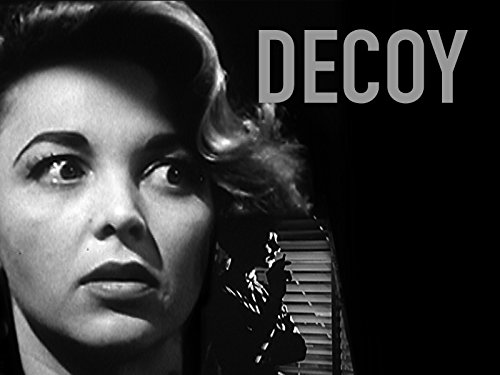
Retro Television Review: Decoy 1.6 “The Savage Payoff”


Welcome to Retro Television Reviews, a feature where we review some of our favorite and least favorite shows of the past!  On Thursdays, I will be reviewing Decoy, which aired in Syndication in 1957 and 1958.  The show can be viewed on Tubi!

This week, Casey gets involved in the shady world of college athletics.

Episode 1.6 “The Savage Payoff”

(Dir by Teddy Sills, originally aired on November 18th, 1957)

When a college basketball player is killed in a car accident, the police discover evidence that he may have been throwing games for the mob.  Lt. Franklin (Bill Zuckert) suspects that the dead player’s best friend and roommate, Dave Carter (Don Hastings), might be taking money as well.  Disguising herself as the dead player’s sister, Casey introduces herself to Dave and befriends him in an attempt to discover the truth.  It turns out that the gangsters have been paying Dave off but, at the last minute, Dave decides not to throw the game and instead leads the team to victory.

This episode bothered me a little.  When the episode begins, there is no real evidence that Dave has been taking money from the mob.  Instead, Lt. Franklin just assumes that Dave is guilty and, with only his hunch to go on, he assigns Casey to befriend Dave and try to prove his guilt.  Obviously, there are times when the police have to go undercover but it was still hard not to feel that the police should have at least had some sort of solid evidence before upending Dave’s life.  The fact that Dave was both mourning his friend and was obviously attracted to Casey just made the whole thing feel all the more icky.  Indeed, a lot of Casey’s action in this episode seem like they would be considered to be entrapment.

Probably the most interesting thing about this episode was that Dave was played by a young Don Hastings.  If you’re like me and you grew up with an aunt who loved As The World Turns, you’ll immediately recognize him as Dr. Bob Hughes.  Hastings played Dr. Hughes for a record-setting 50 years and even spoke the show’s final lines when he said, “Good night” on September 17th, 2010.  Hastings gave a convincing performance as Dave.  I was happy to see him take a stand and refuse to fix the game.  I was also happy that Casey didn’t have to take him to jail.  That would have been depressing.

Speaking of jail, there’s where Casey’s going next week!  We’ll see what happens!

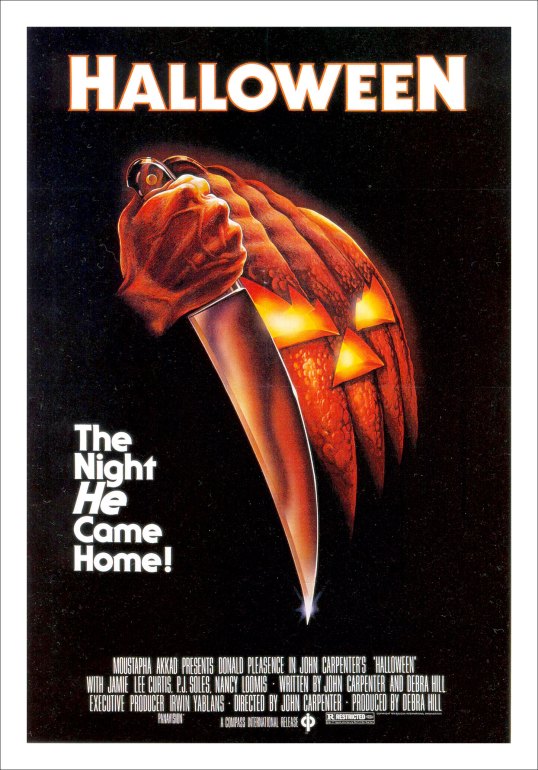
Horror Scenes That I Love: Dr. Loomis Explains Michael Myers in the original Halloween


We’ve talked a bit about Donald Pleasence today.  Pleasence is one of my favorite actors, an intense performer with an eccentric screen presence who always gave it his all, even in films that didn’t always seem like they deserved the effort.  Pleasence was a character actor at heart and he appeared in a wide variety of films.  He’s absolutely heart-breaking in The Great Escape, for instance.  However, it seems that Pleasence is destined to be best-remembered for his horror roles.  For many, he will always be Dr. Sam Loomis, the oracle of doom from the original Halloween films.

In this scene from the original Halloween, Dr. Loomis (Donald Pleasence) attempts, as best he can, to explain the unexplainable.  I’ve always felt that Pleasence’s performance in the first film is extremely underrated.  People always tend to concentrate on the scenes where he gets angry and yells or the later films where an obviously fragile Pleasence was clearly doing the best he could with poorly written material.  But, to me, the heart of Pleasence’s performance (and the film itself) is to be found in this beautifully delivered and haunting monologue.

In this scene, we see that Dr. Loomis is himself a victim of Michael Myers.  Spending the last fifteen years with Michael has left Loomis shaken and obviously doubting everything that he once believed.  Whenever I watch both Halloween and its sequel, I always feel very bad for Dr. Loomis.  Not only did he have to spend 15 years with a soulless psychopath but, once Michael escapes, he has to deal with everyone blaming him for it.  Dr. Loomis was literally the only person who saw Michael for what he was.

Incidentally, Donald Pleasence nearly turned down the role of Sam Loomis.  He didn’t think there was much to the character.  (The role had already been offered to Christopher Lee and Peter Cushing, neither of whom were interested.)  It was his daughter, Angela Pleasence, who persuaded Donald to take the role.  At that year’s Cannes Film Festival, Angela saw John Carpenter’s Assault on Precinct 13 and she assured her father that Carpenter was a talented filmmaker.  Taking his daughter’s advice, Donald Pleasence accepted the role and, by all accounts, was a complete gentleman and a professional on set.  After making horror history as Dr. Sam Loomis, Pleasence would go on to appear in two more Carpenter films, Escape from New York and Prince of Darkness.

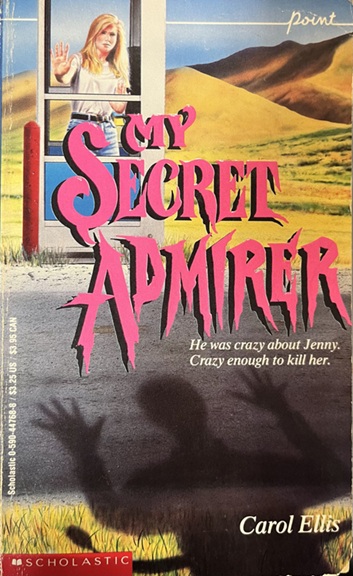
Horror Novel Review: My Secret Admireir by Carol Ellis


First published in 1989, My Secret Admirer tells the story of Jenny.

Jenny is a teenager who has lived in four different town over the past six years.  Her dad’s job requires him to move from town to town and her mother doesn’t like the idea getting tied down anywhere.  I have to admit that I could relate to Jenny because my family used to move all over the place.  By the time I was 12 years old, I had lived in Texas, Oklahoma, Arkansas, New Mexico, Colorado, and Louisiana.  Frequently moving meant that I had to continually get used to new towns, new schools, new teachers, and new friends.  Years later, I realized that spending my childhood on the go left me with massive trust and abandonment issues.  In other words, it really sucked.  My heart went out to Jenny.

When the book opens, Jenny has only been in her new home for a few days.  She’s still nervous about the house and the town.  She’s scared of the hills that are near her home and the rocky bluffs that sit behind the hills.  She worries about wild animals.  She doesn’t know anyone in town and school doesn’t start for another few days.

So, of course, her parents decide to abandon her.

When they are informed that their old house has been sold, Jenny’s parents buy plane tickets so that they can fly back to their former home and collect the rest of their belongings.  Jenny is left behind so that she can deal with the painters (who are scheduled to show up in three days).  Parents in YA book — especially YA horror books — are usually not that great but I have to say that Jenny’s parents take selfish parenting to a whole other level.

Fortunately, Jenny meets her neighbor, the very talkative Sally.  Sally ropes Jenny into taking part in a big scavenger hunt.  During the hunt, Jenny meets Dave and his bitchy girlfriend, Diana.  Diana and Dave are having a fight so Dave teams up with Jenny for the scavenger hunt and, within an hour or so, Jenny and Dave are in love.  Unfortunately, the scavenger hunt does not go as well for Diana.  A day after a sudden storm brings the hunt to a close, Diana is found at the bottom of the cliff.  With Diana in a coma, Jenny wonders if it’s possible that Dave pushed her.

Meanwhile, Jenny seems to have a secret admirer, someone who calls the house and leaves messages on her answering machine.  It’s all good and well until someone leaves a present on her porch.  When Jenny opens the package, she discovers the head of a rattlesnake!

This novel was fairly ridiculous.  Between Jenny’s parents basically abandoning her in a town and house that she barely knew to Jenny falling in love with Dave after spending 30 minutes with him, this book was all about people making bad decisions.  Unfortunately, despite all of the silly plot developments, the book never quite becomes the sort of over-the-top, melodramatic spectacle that one might hope it would become.  That said, I could relate to how Jenny felt about always being the new girl and it was a quick read.  For that matter, I don’t like heights either.

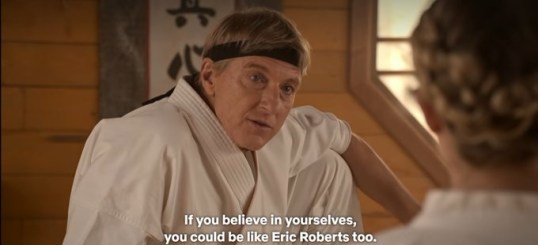
In the end, the book’s message was one to which I could relate:

No, not that!  Instead, if you believe in yourself, you can get a boyfriend and you can survive being stuck in a scary old house!  That’s an important lesson to learn!


October True Crime: Dr. Crippen (dir by Robert Lynn)


Dr. Hawley Harvey Crippen

In 1910, a homeopath named Dr. Hawley Harvey Crippen was executed by hanging in the UK.

An American by birth, Dr. Crippen had come to London in 1897 with his second wife.  (His first wife died of a stroke and Crippen sent his only son to live with his grandparents.)  Cora Crippen was a former music hall singer who hope to continue her career in London and who did manage to make friends with several prominent members of the city’s theatrical community.  Dr. Crippen was widely regarded as a meek man who was dominated by his rage-prone wife.  Crippen struggled to hold down a regular job and eventually ended up as a manager at the Druet Institute for the Deaf.  By at least 1905, Dr. Crippen was having an affair with a young typist named Ethel Le Neve.

Cora disappeared in early 1910.  When her friends stopped by the house to ask for her, Dr. Crippen said that his wife had left him for another man and had returned to America.  Later, he claimed that Cora had subsequently died in California.  When Ethel was spotted wearing Cora’s jewelry, the London police launched their own investigation into Cora’s disappearance.  After Crippen was interviewed by the police, he and Ethel fled to Brussels and then boarded an ocean liner heading for Canada.  After Crippen and Ethel disappeared, the police searched Crippen’s home and found a torso buried in the basement.  It was assumed that the torso was all that was left of Cora.

(As some have pointed out, it didn’t seem to make much sense for Crippen to dispose of Cora’s head, legs, and arms but to keep her torso.  Apparently, at that time, it was common for human torsos to show up in the Thames, the result of people jumping in the river and then having their body split apart by the current.  As such, the Thames also became a popular place to dump murder victims.  One wonders why Crippen wouldn’t have done the same.)

Meanwhile, on the ocean liner heading to Canada, the captain noticed that one passengers looked like a freshly shaven Dr. Crippen and that the “boy” he was traveling with was obviously a young woman in disguise.  The captain sent a wireless telegram to London.  Chief Inspector Walter Dew boarded a faster liner and actually managed to reach Canada before Crippen.  When Crippen and Ethel arrived in Canada, Walter Dew was waiting for them.

Fate simply wasn’t on Crippen’s side.  If Crippen had bought third class tickets instead of sailing first class, it’s probable the captain would have never seen him during the voyage.  If Crippen had taken a boat to his native United States instead of Canada (which was then still a British dominion), Dew would not have been able to take him back to the UK without an extradition hearing and it’s entirely possible that the evidence would have been ruled insufficient.  Instead, Crippen was promptly returned to London and put on trial for murdering his wife.

During the heavily-covered four-day trial, Crippen’s defense was that Cora had returned to America and that there was no way to prove that the torso was Cora’s.  Though the jury found Crippen guilty in just 22 minutes and he was hanged a month later, there were many who felt that Crippen was innocent or, at the very least, that his guilt had not been proven.  I imagine that one reason why so many people doubted Dr. Crippen’s guilt was because he just didn’t look or act like a murderer.  He wasn’t Jack the Ripper, a shadowy figure moving through the night.  Instead, he was a short, balding, and rather owlish looking man who wore glasses and who, in most photographs, has a quizzical expression on his face.

In short, Dr. Crippen seems as if he was literally destined to eventually be played by Donald Pleasence.

The 1963 film, Dr. Crippen, takes a rather straight-forward approach to telling the story of the doctor.  It opens with Crippen (Donald Pleasence, naturally) on trial for the murder of his wife and it largely tells the story through flashbacks.  Cora (Coral Browne) is portrayed as being a no-talent narcissist who regularly cuckolds her husband while Ethel Le Neve (Samantha Eggar) is portrayed as being a naive young woman who truly loves Dr. Crippen.  The film leaves open the question of whether or not Crippen killed his wife, though it seems to strongly suggest that Crippen was innocent of the crime and the only reason he fled London was because he wanted to be with Ethel.  Donald Pleasence is excellent as Dr. Crippen, playing him with just enough ambiguity that the viewer is left to wonder whether he did it or not.  Pleasence turns Crippen into a sympathetic figure while still holding back just enough to suggest that emotional darkness that could have led even the meek Dr. Crippen to becoming a murderer.  Nicolas Roeg’s black-and-white cinematography captures both the harshness of Crippen’s life in prison and the fleeting romance of his brief time with Ethel.

As for the real life Crippen, both his guilt and his subsequent execution continue to be controversial, with some claiming that DNA testing proved that the torso did not belong to Cora.  (Other have quite reasonably pointed out that the sample used had degraded quite a bit over a hundred years.)  There have been many attempts to win Dr. Crippen a posthumous pardon but all have failed and will probably continue to fail unless Cora’s remains are somehow discovered in a grave somewhere in California.

Shortly before his execution, in his final letter to Ethel Le Neve, Crippen wrote, “Face to face with God, I believe that facts will be forthcoming to prove my innocence.”  After Crippen was hung, Ethel spent three years in Canada before returning to London.  She changed her name, worked as a typist, and eventually married and had two children.  She died in 1967, fifty-seven years after Dr. Crippen.

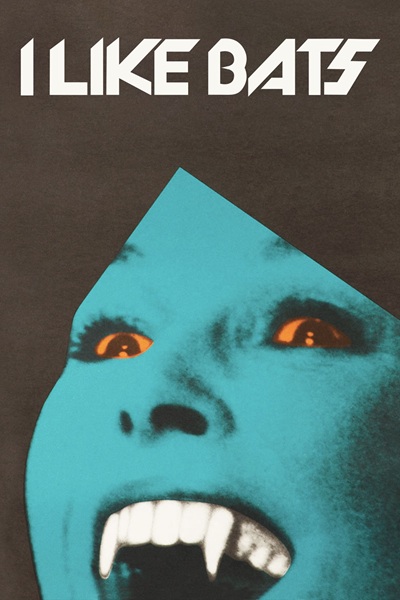
Horror Film Review: I Like Bats (dir by Grzegorz Warchoł)


In this 1986 Polish film, Katarzyna Walter stars as Iza, a young woman who lives in a small village and who appears to be happy with her quiet life.  Despite the efforts of her aunt (Małgorzata Lorentowicz) to set her up with a local bureaucrat (Edwin Petrykat), Iza says that she is happy being single.  Even though there’s a “sex murderer” on the loose, Iza still prefers to walk alone at night.  She is happy taking care of her bats and making pottery.

Iza, however, has a secret life that not even her aunt knows about.  Sometimes, she puts on dark glasses and a brunette wig and she goes to a nearby town.  She presents herself as being as prostitute but, once she’s alone with a man, she grabs him, bites his neck, and drinks his blood.  Iza is a vampire!

Iza seems quite happy with being a vampire or, at least, she does until she meets Dr. Rudolf Jung (Marek Barbasiewicz), a psychiatrist who visits her aunt’s shop and buys a tea set.  Jung is handsome and single and Iza’s aunt thinks that he would be a perfect match for her.  For once, Iza agrees.  When Iza sees Dr. Jung being interviewed on television about an experimental asylum that he operates out of an ancient castle, Iza goes to the castle and asks to be admitted as a patient.  The bemused Jung replies that there are no vacancies.  Iza replies that she’s a vampire and she wants Dr. Jung to cure her.  Jung, assuming that Iza is merely delusional, take her on as a patient.

Iza proves to be a difficult patient.  For one things, she’s immune to hypnotism, which is apparently Dr. Jung’s main technique.  Secondly, she doesn’t really seem to want to stop being a vampire.  Instead, she just seem to be attracted to Dr. Jung.  Why she’s so attracted to Dr. Jung is another question all together.  Dr. Jung is a condescending jerk who doesn’t really seem to care about any of his patients.  Just as Iza drinks the blood of her victims, Dr. Jung seems to thrive off of the delusions of his patients.  The main thing that Jung and Iza have in common is a belief that they were both destined to be forever alone.  Dr. Jung explains that he never had room for a wife or a family because he was too busy going to school and making a name for himself.  Iza, meanwhile, has always assumed she’ll be alone because she’s a vampire.

(Interestingly, even though the film clearly establishes that Iza is a vampire, none of her victim come back as vampires and she has no problem going out during the day.)

I Like Bats is an intriguing vampire film, one that mixes a creepy atmosphere with a liberal dose of dark humor.  The story itself meanders a bit and is not always easy to follow.  The motivations of Iza and Jung are often rather unclear.  Like a lot of films that were made in Eastern Europe during the period of communist domination, the most interesting thing about the film is the contrast between the beauty of old Europe, with its castles and its green countryside, and the brutal ugliness of the dominant Marxist-Leninist culture.  Though I Like Bats is not explicitly political, there’s still a healthy dose of paranoia running through the film, the type of paranoia that goes along with living in or near an authoritarian state.

I Like Bats is not always easy to follow but the dark ending carried a punch and it’s a film that will stick with you.

4 Shots From Horror History: The 1900s


This October, I’m going to be doing something a little bit different with my contribution to 4 Shots From 4 Films.  I’m going to be taking a little chronological tour of the history of horror cinema, moving from decade to decade.

Today, we look at the 1900s.

4 Shots From 4 Films

Bluebeard (1901, dir by Georges Méliès)

Bluebeard (1901, dir by Georges Méliès)

The Monster (1903, dir by Georges Méliès)

The Monster (1903, dir by Georges Méliès)

Satan At Play (1907, dir by Segundo de Chomón)

Satan At Play (1907, dir by Segundo de Chomón)

The Sealed Room (1909, dir by D.W. Griffith)

The Sealed Room (1909, dir by D.W. Griffith)

Horror Film Review: The Godsend (dir by Gabrielle Beaumont)


In The Godsend, a married couple, Alan and Kate Marlowe (played by Malcolm Stoddard and Cyd Hayman), have a chance meeting with a pregnant stranger (Angela Pleasence).  While Alan suspects that there is something wrong with the mysterious woman, Kate insists on allowing her to come have dinner with them.  At their rural home, the Stranger spends most of her time glaring at Alan and, when she’s left alone, she cuts the phone line.  When the Stranger goes into labor, Alan and Kate deliver her daughter.  The next morning, the Stranger has disappeared and Alan and Kate end up taking the baby — now named Bonnie — into their household.

Alan and Kate already have four other children but that soon starts to change.  First, baby Matthew is found dead in his crib.  As Bonnie grows up, the other children die.  Little Davey drowns in a creek and Bonnie is found with scratches on her hands.  Davey’s brother Sam says that he is scared to be left alone with Bonnie.  Alan and Kate tell him that he’s being silly.  Later, Sam is found dead in the barn.

With their neighbors flat-out accusing Alan and Kate of murdering their children and Bonnie doing strange things like attempting to give her father the mumps, Kate starts to have a nervous breakdown.  Meanwhile, Alan comes to fear that Bonnie may be the one responsible for the death of the other children and that she may now be targeting that last remaining child, Lucy (Angela Deamer).

First released in 1980 and based on a novel by Bernard Taylor, The Godsend is a British horror film that moves at its own deliberate pace.  The action unfolds slowly, with an emphasis on atmosphere and ambiguity.  While it certainly seems that Bonnie is responsible for the death of the other children, the first half of the film leaves room for doubt.  The viewer is left to wonder whether it’s possible that Alan himself is just being paranoid.  As the film progresses, one becomes aware that Bonnie is not only evil but she also has far greater powers than even Alan realizes.  The film ends on a properly dark note.  There really is no future in England’s dreaming.

The Godsend was a bit too slow.  As is so often the case with British horror films from the early 80s, the film was so determined to prove that it was better than the old Hammer bodice rippers that it allowed itself to get a bit too self-serious and stately.  That said, The Godsend is also undeniably creepy.  Viewers have been conditioned to believe that, no matter what else happens in a film, the children will survive.  Even though the children might very well be traumatized for life, it’s still generally accepted that they will somehow manage to make it to the end of the film.  The Godsend breaks that unofficial rule and it actually gets a bit depressing to watch.  Alan and Kate are going through the worst experience that a parent can can suffer.  Alan blames Bonnie while Kate clings to her as being one of the few things that she still has left.  It’s a sad movie that captures a very primal fear.

For the most part, the cast does a good if not spectacular job with the material.  The best performance comes from Angela Pleasence in the role of The Stranger.  Angela Pleasence was the daughter of Donald Pleasence, an actor who will always be best-remembered for playing Dr. Sam Loomis in the original Halloween films.  Dr. Loomis would have identified Bonnie as being evil from the start.  Unfortunately, no one would have listened to him until it was too late.

Horror Film Review: Teenage Monster (dir by Jacques R. Marquette)


The 1958 film Teenage Monster opens in the late 1800s.  Gold prospector Jim Cannon (Jim McCullough) has got a nice little home with his wife, Ruth (Anne Gwynne) and their young son, Charlie.  One day, Jim and Charlie are out looking for gold when a meteor falls from the sky and crashes right in front of them.  Jim is killed, which I guess is an occupational hazard for anyone who works outside.

(Seriously, you never know when a meteor might crash on top of you.  There might be one about to slam into your home right this minute.  Read quickly.)

Charlie survives the meteor crash but he’s still bathed in radiation.  Ruth takes Charlie home and she keeps him locked up in a back room for his own safety.  Seven years pass and Charlie (Gilbert Perkins) is now a teenager.  Unfortunately, he’s a very old-looking teenager.  Standing nearly seven feet tall, he has long hair and a full beard and he can’t really speak beyond a few grunts.  Occasionally, Charlie manages to get out of the back room and Ruth has to look for him.  She understands that the 19th Century is no place for a radioactive mutant boy.

When Ruth discovers gold, she’s able to buy a house in town.  Unfortunately, living in town means that Charlie notices a young woman named Kathy North (Gloria Castillo).  Smitten with her, Charlie kills her jerk of a boyfriend and decides to bring her home.  Ruth pays Kathy to keep silent about Charlie but it turns out that Kathy has other plans.  Realizing that Charlie is in love with her and will do anything that she commands, she tells him to start killing people around town.

Teenage Monster may seem like an odd title for a western about a boy who gets mutated by a radioactive space rock.  Charlie is technically a teenager but he looks like he’s nearly 60.  The film uses the radiation as an excuse for Charlie’s rapid aging and his grown spurt.  Randomly blaming everything on radiation is one thing that B-movies of the 50s and the 60s definitely all had in common.  I suppose if space radiation could have brought the dead back to life in Night of the Living Dead, it could have also transformed Charlie into a teenage monster.  As far as B-movies were concerned, J. Robert Oppenheimer had a lot to answer for.  Of course, if this movie were made today, Charlie’s transformation would have somehow been due to climate change.

As for the film itself, it’s short and that’s definitely a good thing.  The idea of combining B-horror and the old west is an intriguing one but the movie doesn’t really do that much with it.  Yes, there are gunmen and deputies but they could have just as easily been modern-era outlaws and lawmen without really changing much about the film.  Director Jacques Marquette was a former cinematographer who went into directing so it’s a bit odd that the film has a flat, rather bland look to it.  On the plus side, Anne Gwynne gives a better performance than the material deserved.

Keep your kids away from radiation, everyone.  Other than cheap, clean energy and countless advances in medicine and science, nothing good ever seems to come from it.