The Unnominated #18: Two-Lane Blacktop (dir by Monte Hellman)


Though the Academy of Motion Picture Arts and Sciences claim that the Oscars honor the best of the year, we all know that there are always worthy films and performances that end up getting overlooked.  Sometimes, it’s because the competition too fierce.  Sometimes, it’s because the film itself was too controversial.  Often, it’s just a case of a film’s quality not being fully recognized until years after its initial released.  This series of reviews takes a look at the films and performances that should have been nominated but were, for whatever reason, overlooked.  These are the Unnominated.

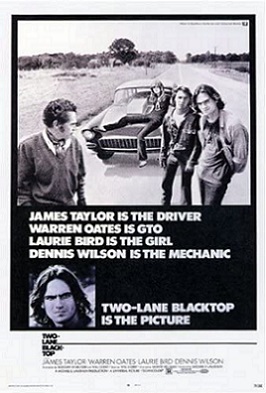
The 1971 road film, Two-Lane Blacktop, is a movie about four people whose real names are never revealed.  Indeed, their names are never as important as what they’re driving.

Named after his car, GTO (Warren Oates) is a talkative man who likes to brag on himself and who picks up hitchhikers so he can talk to them.  We don’t learn much about GTO’s background.  For someone who talks as much as he does, GTO doesn’t reveal much about who he is when he’s not driving.  It’s easy to imagine him as a salesman, traveling across the country and desperately trying to make his quota before the sun goes down.  With the way that he picks up hitchhikers and his need to convince everyone of his own skill and prowess behind the wheel, it’s easy to imagine that he’s probably recently divorced and still dealing with suddenly being on his own.  He seems to have something to prove, not only to everyone around him but especially to himself.  One gets the feeling that the life he had suddenly collapsed and he took to the road to escape it all but he still hasn’t reached the point where he can handle truly being alone.  For all of his talk, it doesn’t take long to notice that GTO isn’t quite as worldly as he claims he is.

A chance meeting leads to GTO getting into a cross-country race with The Driver (James Taylor) and the Mechanic (Dennis Wilson), two young men who are driving a 1955 Chevy and who make their money by engaging in street races.  (They’re also quick to steal a license plate when no one’s looking.)  The Driver and the Mechanic don’t talk a lot and, when they do, it’s in terse and somewhat awkward sentences.  (Both Taylor and Wilson were musicians who made their acting debut with this film.  Their natural stiffness and lack of emotion works well for their characters.)  The Driver and the Mechanic seem to communicate solely through driving.  They pick up The Girl (Laurie Bird) and both the Driver and the Mechanic seem to have feelings for her but it’s pretty obvious that their true love will always be for their car.

Two-Lane Blacktop is a road movie, a movie that really doesn’t have much of a plot (the cross-country race soon ceases to be a real race) but which does have some beautiful footage of America in 1971 and an outstanding performance from the great character actor, Warren Oates.  Easy Rider was advertised as being a film about a man who looked for America and couldn’t find it.  That’s actually a better description of Two-Lane Blacktop, a film about three uniquely American men who have embraced the car culture that is at the center of life in America but who are still, more or less, lost in their home country.  Oates, always talking and refusing to give up or even acknowledge the fact that he doesn’t really know much about how cars work, represents the so-called silent majority.  Wilson and Taylor are the next generation, their long-hair branding them as outsiders while their skill with a car and their desire win represents what we’re told is the best of the American competitive spirit.  What makes the film unsettling is the feeling that all three of them are using their cars as a way to avoid dealing with the reality of their lives.

Two-Lane Blacktop may sound a bit pretentious and it is.  The metaphors get a bit heavy-handed.  That said, as directed by Monte Hellman, it’s both a gorgeous travelogue and a valuable time capsule, a document of life in the late 60s and early 70s.  Hellman directed the film on the road.  When we see the Mechanic stealing a license plate so no one down south will know that he and the Driver are actually from California, it’s a powerful scene because it was actually filmed on location, in the South.  This isn’t a film that was shot on a backlot.  This is a film that was shot across America and it captures the country at a time when, much like today, no one was really sure what the future held for its politics or its culture.  It may be a film about three men who are obsessed with cars but it’s also a portrait of a country in an almost directionless state of turmoil.

Two-Lane Blacktop was promoted as being the next Easy Rider but it turned out to be a notorious box office failure.  James Taylor and Dennis Wilson never did another movie.  Warren Oates continued as a busy character actor while Laurie Bird died of an intentional drug overdose in 1979.  Director Monte Hellman’s directorial career continued but his days of being courted by the major studios were over.  However, as the years passed, audiences started to discover Two-Lane Blacktop and now, it’s considered to be a cult classic.

Given its failure at the box office, Two-Lane Blacktop was ignored by the Academy.  The Oscar for Best Picture went to another film that featured a memorable car chase, The French Connection.  While Two-Lane Blacktop may not have deserved to win Best Picture (not over nominees like The French Connection, The Last Picture Show, Fiddler on the Roof, and A Clockwork Orange), it certainly is far more memorable movie than the fifth film nominated that year, Nicholas and Alexandra.  If nothing else, Warren Oates deserved a nomination for his supporting performance.  The Academy may not have embraced Two-Lane Blacktop but, fortunately, film lovers eventually would.
Previous Entries In The Unnominated:
  1. Auto Focus 
  2. Star 80
  3. Monty Python and The Holy Grail
  4. Johnny Got His Gun
  5. Saint Jack
  6. Office Space
  7. Play Misty For Me
  8. The Long Riders
  9. Mean Streets
  10. The Long Goodbye
  11. The General
  12. Tombstone
  13. Heat
  14. Kansas City Bomber
  15. Touch of Evil
  16. The Mortal Storm
  17. Honky Tonk Man

Blue Ridge (2020, directed by Brent Christy)


Former Green Beret Justin Wise (Johnathon Schaech) is the new sheriff of the small mountain town of Blue Ridge.  Sheriff Wise is so good at his job that he can just step inside of a gas station and figure out that it’s been robbed just by observing that the millennial behind the counter isn’t look at his phone.  The sheriff has a phone-obsessed millennial daughter (Taegen Burns) and a supportive ex-wife (Sarah Lancaster), who works as a waitress.

He also has a big mystery on his hands when the daughter of Cliff McGrath (Graham Greene) is found murdered.  The McGraths thinks that the Wade family is responsible.  The Wades have a long-standing grievance against the McGraths.  Sheriff Wise and Deputies Dobson (Lara Silva) and Thompson (Ben Esler) have to solve the mystery before a full-out war breaks out in town.

I was not surprised to discover that this was a pilot for television series.  The movie has the homey feel of the type of mystery show that your parents or grandparents would watch every Friday night.  Sherriff Wise may not be as old as my parents but he definitely shares their feelings about phones and trying to understand what’s wrong with the kids today.

It’s an old-fashioned movie but it’s mildly diverting and it does hold your attention.   Johnathon Schaech gives a strong performance as the sheriff who can beat up three people at once but who still gets nervous before asking a woman out on a date.  Graham Greene and Tom Proctor both give good performances as the rival family patriarchs and the mystery takes some interesting turns.  Blue Ridge did a good job of brining its small town setting to life.  Blue Ridge is good enough to be a pleasant afternoon diversion.

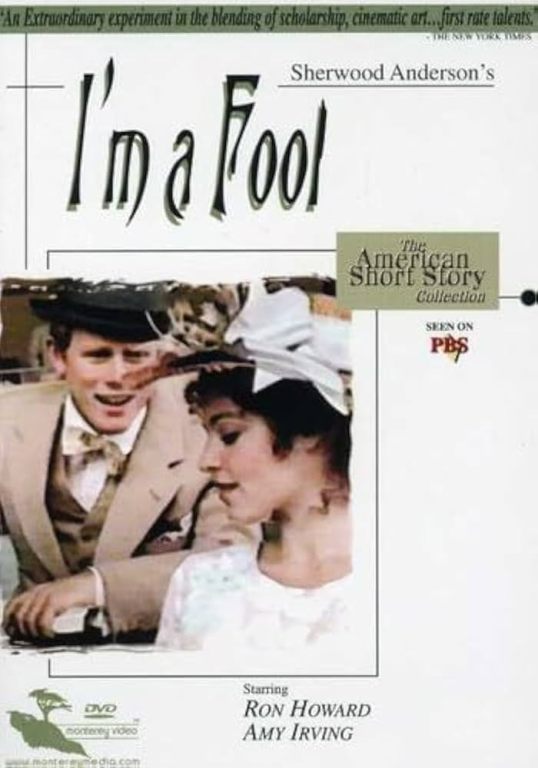
Retro Television Review: The American Short Story Episode 6: “I’m A Fool”


Welcome to Retro Television Reviews, a feature where we review some of our favorite and least favorite shows of the past!  On Saturdays, I will be reviewing The American Short Story, which ran semi-regularly on PBS in 1974 to 1981.  The entire show can be purchased on Prime and found on YouTube and Tubi.

This week, after an introduction from Henry Fonda, The American Short Story presents a short film about a young man discovers that he’s a fool.

Episode 6 “I’m A Fool”

(Dir by Noel Black, originally aired in 1977)

In this adaptation of a Sherwood Anderson short story, Ron Howard (back in his younger days, before he became better-known as a director) stars as Andy.  Andy is a young man who runs away from his safe and comfortable life in search of adventure.  He gets a job as a “swipe,” which was apparently what people used to call the folks who took care of the horses at a racetrack.  He and an older black man named Burt (Santiago Gonzalez) travel the racing circuit in Ohio and form a tentative friendship.  Burt can tell that, for all of his attempts to come across as being tough and worldly, Andy is a virgin who gets drunk easily and who has no idea what the real world is like.

Andy claims to be a proud member of the working class but then he meets a pretty and rich girl named Lucy (Amy Irving).  Andy introduces himself as being Walter, the son of a wealthy stable owner.  Andy and Lucy spend the day together and Andy comes to realize that he loves her and that she seems to love him as well.  But then Andy realizes that she only knows him as Walter and that it’s too late to tell her the truth.  “I’m a fool,” Andy says before leaving with Burt.

This 35-minute short film featured good performances from Ron Howard and Amy Irving and some lovely shots of the countryside, showing why a life of wandering through rural Ohio might appeal to a young person searching for meaning.  There’s a great scene in a bar where the outclassed Andy tries to prove himself to a bunch of snobs by drinking whiskey and smoking a cigar.  Unfortunately, the strength of Sherwood Anderson’s original short story is that it puts us straight into Andy’s head and allows us to see the thought process that led to him coming up with his foolish lie.  Despite featuring narration from Ron Howard, this adaptation doesn’t really accomplish that and, as a result, the viewer is always on the outside looking in.

It’s not a bad adaptation but it can’t beat sitting down and reading the original story.

Brad’s “Scene of the Day” – Lee Byung-hun fights for his BITTERSWEET LIFE!


I went through my Asian movie phase beginning in the mid to late 90’s. I started with Hong Kong cinema before adding in South Korean cinema in the early 2000’s. One of the first South Korean films I watched was JOINT SECURITY AREA (2000), which was directed by the great Park Chan-wook and starred Lee Byung-hun and Song Kang-ho. It’s an amazing film so I started following the work of all the talent involved. Lee Byung-Hun would make A BITTERSWEET LIFE in 2005, and it’s probably my favorite film of his. He’s a complete badass in it. I bought my DVD of the film from a cool movie shop in Chicago when I was visiting on business back in 2011. Lee would eventually start appearing in Hollywood films like the GI JOE movies, RED 2, and THE MAGNIFICENT SEVEN remake, but my favorites are his Korean films, with the violent I SAW THE DEVIL (2010) a real standout. Heck, he’s even in the popular THE SQUID GAME series that’s currently playing on Netflix. I didn’t realize that until a few weeks back, so I even watched a few episodes.

Today, July 12th, 2025 is Lee Byung-hun’s 55th birthday. I’m celebrating here on the Shattered Lens by sharing a badass fight scene from A BITTERSWEET LIFE. Lee looks great in a suit or tux, but he’s also a believable tough guy who isn’t afraid to get bloody like he does here.

So, enjoy this brutal fight scene from A BITTERSWEET LIFE, and be sure to stay for the humorous punctuation from the gravediggers at the end!

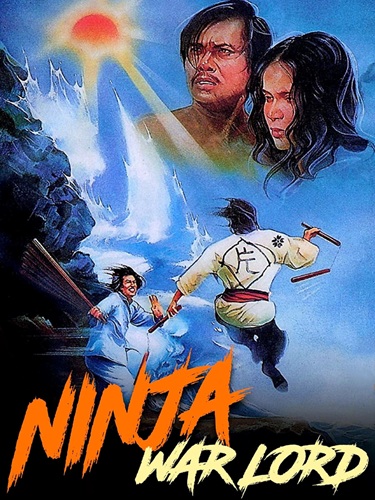
The TSL Grindhouse: Rage of Wind (a.k.a. Ninja War Lord) (dir by Ng See-Yuen)


Also known as Ninja War Lord, 1973’s Rage of Wind takes place during the Japanese occupation of China during the Second World War.

A Chinese fishing village is controlled by the ruthless Taka (Yasuaki Kurata), who terrorizes the town with his Hawaiian-shirt wearing henchmen and who deals with dissent by hanging people in the town square and then refusing to allow their loved ones to take down the bodies.  When boxer Chan Kwong (Chan Sing) returns to the village after pursuing a successful fighting career in the United States, the village rejoices.  Finally, there is someone who can stand up to Taka!  And the villages needs help because Taka has just instituted a new fishing tax!

Oh, Taka, you fool!  Don’t you realize that raising taxes never solves anything?  I realize that this film is taking place at a time when Milton Friedman was still working for the government and also long before the Laffer Curve was drawn on that napkin but still, raising taxes is always the last refuge of the unimaginative.  When the people in the village express their displeasure at having to pay more in taxes, Taka decides to seize their boats.  Hey, Taka, you dumbass commie — how are they going to make the money to pay your taxes if they don’t have their boats!?  Fortunately, Chan Kwong isn’t going to let the taxman get away with this.

(It’s interesting that this film features a Chinese hero fighting on the side of free enterprise.)

Here’s a few things that I liked about Rage of Wind.

First of all, it didn’t waste anytime getting to the good stuff.  The film’s first fight broke out within the first five minutes of its running time and, from that moment on, people were either fighting or preparing to fight.  This film didn’t feature any slow spots.  The fights were exciting to watch and, even more importantly, they distracted the viewer from asking too many questions about the plot.  At times, it felt like everyone in the film would have been well-served to just stop fighting and negotiate but that wouldn’t have been as much fun to watch.

Second, Taka wore a cape.  His henchmen may have dressed like tourists in Hawaii but Take wore a red cape!  And what’s even more impressive is that Taka totally pulled off the look.  Seriously, if someone can wear a cape and not look like an idiot, that’s when you know that person is a total badass.

Third, both the bad guys and the good guys got their own annoying sidekick.  The bad sidekick was constantly popping up and laughing.  The good sidekick had no teeth.  Both sidekicks died, which is an example of this film giving the viewers what they want.

Fourth, the musical score was made up of stolen riffs from Pink Floyd and the Theme From Shaft.  (I didn’t recognize the Pink Floyd riffs but everyone that I was watching the film with was like, “How did they get Pink Floyd!?”)  Apparently, the film “borrowed” the music without paying.  I love the shamelessness of old school Hong Kong cinema.

Fifth, the final fight between Taka and Chan Kwong is absolutely brutal!  Seriously, when you’re watching a film about people who are incapable of settling their conflicts through talking, this is exactly the type of fight you want to see.

Finally, once again, all of the conflict could have been avoided if they hadn’t tried to tax everyone to death!  I love films that are anti-taxation.  Watching a double feature of Rage of Wind and Harry’s War might become my new Tax Day tradition!


Live Tweet Alert: Join #ScarySocial for Piranha!


As some of our regular readers undoubtedly know, I am involved in a few weekly live tweets on twitter.  I host #FridayNightFlix every Friday, I co-host #ScarySocial on Saturday, and I am one of the five hosts of #MondayActionMovie!  Every week, we get together.  We watch a movie.  We tweet our way through it.

Tonight, at 9 pm et, Deanna Dawn will be hosting #ScarySocial!  The movie?  1995’s Piranha!  

If you want to join us this Friday, just hop onto twitter, start the movie at 9 pm et, and use the #ScarySocial hashtag!  It’s a friendly group and welcoming of newcomers so don’t be shy.

The film is available on Prime!

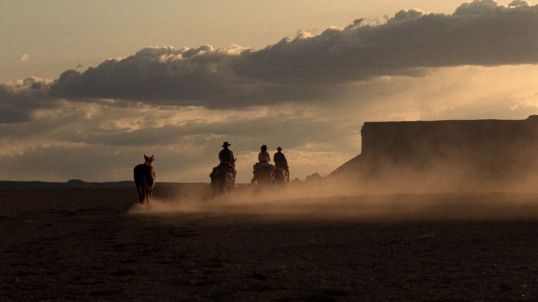
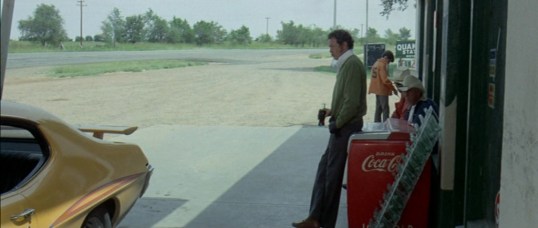
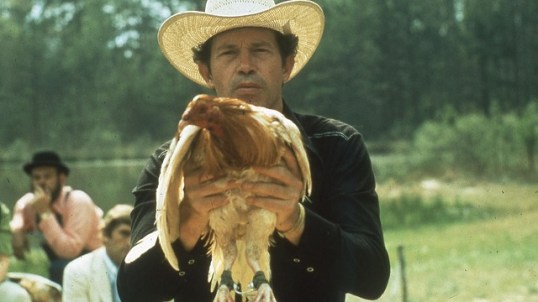
4 Shots From 4 Films: Special Monte Hellman Edition


4 Or More Shots From 4 Or More Films is just what it says it is, 4 shots from 4 of our favorite films. As opposed to the reviews and recaps that we usually post, 4 Shots From 4 Films lets the visuals do the talking!

96 years ago today, the great director Monte Hellman was born in New York City.  Though Hollywood never quite understood Hellman or his idiosyncratic vision, he and his films have inspired a countless number of independent filmmakers.  Hellman started his career with Roger Corman and was one of the first directors to recognize the talent of actors like Jack Nicholson and Warren Oates.  When Monte Hellman passed away in 2021, he was eulogized as one of the key figures of the Hollywood counterculture.  Today, we celebrate Hellman and his films with….

4 Shots From 4 Monte Hellman Films

The Shooting (1966, dir by Monte Hellman, DP: Gregory Sandor)

Two-Lane Blacktop (1971, dir by Monte Hellman, DP: Jack Deerson)

Cockfighter (1974, dir by Monte Hellman, DP: Nestor Almendros)

China 9, Liberty 38 (1978, dir by Monte Hellman, DP: Guiseppe Rotunno)

Late Night Retro Television Review: Friday the 13th 3.19 “The Tree of Life”


Welcome to Late Night Retro Television Reviews, a feature where we review some of our favorite and least favorite shows of the past! On Fridays, I will be reviewing Friday the 13th: The Series, a show which ran in syndication from 1987 to 1990. The entire series can be found on YouTube!

This week, it’s Johnny vs the Druids.

Episode 3.19 “The Tree of Life”

(Dir by William Fruet, originally aired on May 7th, 1990)

Johnny randomly runs into a distraught woman who claims that, years ago, her daughter was abducted and her husband murdered by obstetrician  Dr. Sybil Oakwood (Gale Garnett).  When Jack and Micki doubt the woman’s story, Johnny investigates on his own and discovers that Dr. Oakwood is kidnapping newborn girls and raising them in her fertility clinic.  It turns out that Dr. Oakwood is a druid and she’s trying to breed future Druidic priestesses.

(Don’t yell at me, this is the show’s interpretation of druidism.)

This was the next-to-the-last episode of Friday the 13th and it just feels like the writers were tired and uninspired.  Suddenly, for the first time in three years, Jack and Micki are skeptical about reports of the paranormal.  Johnny is back to being impulsive and, if we’re to be honest, kind of stupid.  He tells the distraught mother that her daughter is being held prisoner at the fertility clinic and then is shocked when the mother runs off to the clinic without waiting for Johnny to accompany her.  Once again, it all leads to a cult and an underground cavern.  This entire episode feels like it was recycled from previous episodes.

I’m not an expert on paganism so I’m not going to get into whether or not this episode accurately portrayed druidic beliefs.  I will say that the druids in this episode acted like every other cult that’s ever appeared on this show.  They’re just like the Satanic cult that showed up at the end of season 2.  Making them druids is probably one of those things that sounded good when the episode was pitched.  The word “druid” brings to mind Stonehenge and all the rest of that good stuff.  But, narratively, there was nothing gained nor lost by making them druids.  The show treated them like any other self-destructive cult.

This episode was a bit dull.  It felt like the show was taking one last shot at getting audiences to replace Johnny as Ryan’s replacement.  The whole thing just felt uninspired.  It certainly left your brave reviewer bereft of inspiration.

Next week, we come to the conclusion of Friday the 13th: The Series.