Music Video of the Day: Jump Around by House of Pain (1992, directed by David “Shadi” Perez)


Happy St. Patrick’s Day!

Ever since it was first released and this video first aired on MTV, Jump Around has been one of the unofficial anthems of St. Patrick’s Day.  The video was so popular that many people continue to associate both the song and House of Pain with Boston’s Irish community, despite the fact that the band was from Los Angeles and only two members were of Irish descent.

All together now: “I came to get down, I came to get down, jump around!”

Enjoy!

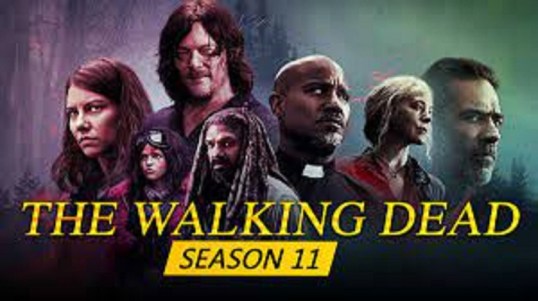
TV Review: The Walking Dead 11.12 “The Lucky Ones” (dir by Tawnia McKiernan)


It’s confession time!

As I’ve mentioned in the past, I was never a regular Walking Dead viewer in the past.  And, after Carl Grimes died, I actually stopped watching the show all together.  It was not until this current season started that I once started to regularly watch The Walking Dead.  So, I have to admit that I had actually forgotten that Hillside and Alexandria were separate locations, with separate leaders and separate governing philosophies.  I guess I just assumed that Hillside was a particularly trashy party of Alexandria.  But, no …. I was wrong!  It turns out that Alexandria, Hillside, and Oceanside are three separate communities.

Go ahead.  Take a moment to laugh at me and then we’ll move on.

Done?

Well, we’re moving on anyways!

This week’s episode found Governor Milton and Lance Hornsby visiting each of the three communities and trying to bring them into the Commonwealth.  Milton offered security and access to better goods.  Alexandria saw that this was a good idea and signed up.  Oceanside, on the other hand, said, “We’ll do whatever Hillside does.”  Well, why don’t you just become a part of Hillside then!?

Not surprisingly, Maggie didn’t want to join up with the Commonwealth.  Maggie was indeed tempted but, when she saw the difference between how the leaders of the Commonwealth lived as opposed to how the community’s workers and soldiers lived, Maggie said no deal.  Or, at least, that’s what Maggie claims happened.  Personally, I think it has more to do with Maggie not wanting to surrender any of her power.  For all of her concerns about the way the Commonwealth treats its citizens, it’s not exactly as if Maggie is running a democracy herself.  After Maggie refused to enter into an alliance with the Commonwealth, a few members of Hillside left the community and, quite frankly, I don’t blame them.  Hillside’s a dump!  Not even Negan is willing to live there.

Anyway, at the end of the episode, we learned that Gov. Milton isn’t as bad as everyone tends to assume.  She was okay with not being able to bring Hillside and Oceanside into the Commonwealth, even saying that she expected that Maggie would ultimately refuse.  Not okay with Maggie’s decision was Lance Hornsby, who not only takes a disturbingly sadistic glee in shooting walkers but who also is apparently obsessed with controlling everyone.  Honestly, I don’t think anyone was really shocked to discover that Lance was not to be trusted. Josh Hamilton hasn’t exactly been giving a subtle performance in the role.  Actually, just the fact that Lance was being played by Josh Hamilton should have been our first clue about not trusting him.

Meanwhile, Ezekiel was operated on and Eugene and Max got to know each other.  Needless to say, Eugene was not happy to discover that Stephanie didn’t actually exist and he was also a bit freaked out to to discover that Max is Mercer’s sister.  By the end of the episode, though, Eugene and Max seemed to be growing close.  Max offered Eugene some advice on his novel.  Eugene admitted that he had destroyed his only copy.  WHY DID YOU DO THAT, EUGENE!?  Eugene is never going to succeed as an author with that attitude.

This episode felt like the calm before the storm.  While I don’t know if we needed to spend as much time on Gov. Milton’s travel as we did, at least the show managed to get to all three communities in one episode as opposed to stretching it out over six episodes, like they used to do back in the Rick Grimes era.  It seems obvious that there’s an invasion coming, it’s just a question of who is going to strike the first blow.
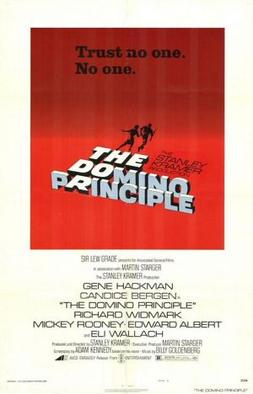
The Domino Principle (1977, directed by Stanley Kramer)


Roy Tucker (Gene Hackman) loyally served his country as a part of a “search and destroy” team in Vietnam but when he returned home, he discovered that America didn’t appreciate his sacrifice.  When he was convicted of murdering his wife’s abusive first husband, he was tossed in prison.  But now, two mysterious men (Richard Widmark and Edward Albert) have offered Tucker a chance to escape from prison and reunite with his wife (Candice Bergen) in Costa Rica.  The only catch is that they also expect Tucker to do a job for “the Organization” and assassinate an unidentified target.  As Tucker discovers, The Organization has been watching and manipulating him entire life, setting him up for this very moment.  Every small event in Tucker’s life led to another event that eventually sent him to both the war and to prison.  It’s almost like a game of dominos.  And we have a title!

The Domino Principle gets off to a good start, with a black-and-white montage of actual assassinations and then an opening credit sequence that features someone placing dominos over pictures of Roy Tucker at different ages.  (I am guessing that actual childhood photos of Gene Hackman were used because even the baby pictures feature the Hackman squint.)  However, the scene immediately following the credits features Gene Hackman and Mickey Rooney as cellmates and the film never really recovers.  Though they were both talented actors, Gene Hackman and Mickey Rooney don’t seem as if they belong on the same planet together, let alone sharing a prison cell in a grim and downbeat political thriller.  Hackman is his usual surly self, while Mickey seems like he’s going to try to get the entire prison to put on a show.  The film tries to do some unexpected things with Mickey’s character but it doesn’t change the fact that he’s Mickey Rooney and he just doesn’t belong here.

As for the rest of The Domino Principle, it’s slow and ponderous.  Best known for earnest social issue films like The Defiant Ones and Guess Whos’ Coming To Dinner, Stanley Kramer is the wrong director for a film that aspires to duplicate the conspiracy-themed atmosphere of other 70s thrillers like The Parallax View and Three Days of the Condor.  For all the time that film takes to build to its obvious conclusion, Kramer doesn’t even bother to identify who Tucker is supposed to kill or why the Organization wants him dead.  Though he seems like he should be a good choice for the lead role, Gene Hackman goes through the movie on autopilot.  Perhaps he was overwhelmed to be sharing a prison cell with Mickey Rooney or to be playing the husband of Candice Bergen, who the film unsuccessfully attempts to deglamorize.

Sadly, this would be one of Kramer’s last films.  He followed it up with The Runner Stumbles, which starred Dick Van Dyke (!) as a conflicted priest, and then went into semi-retirement.  (A few attempts to return to directing failed.)  Kramer spent his twilight years writing about movies for The Seattle Times.  Before his death in 2001, he also published a very entertaining autobiography, A Mad Mad Mad Mad World: A Life in Hollywood, which I recommend to anyone interested in the history of Hollywood.

Music Video of the Day: Don’t Be Shy by Tiesto & Karol G (2021, dir by Christian Breslauer)


Enjoy!

Verses
people say
I’m not gonna change
not gonna change
I know that you like that
you know where my mind’s at
can’t be tamed
I’m not gonna play
not gonna play
oh no I ain’t like that
fug ‘em i’m a wild cat

CHORUS
baby break my heart
give me all you got
don’t ask why why why
don’t be shy shy shy
is it love or lust
i can’t get enough
don’t ask why why why
don’t be shy shy shy

POST
la la la la la
la la la la la
la la la la la
Ta da da da da
la la la la la
la la la la la
la la la la la
Ta da da da da

BRIDGE
show yourself beautiful
wanna get emotional oh-oh-oh
mmmm
follow me, easy now
we could work a miracle
oh-oh-oh

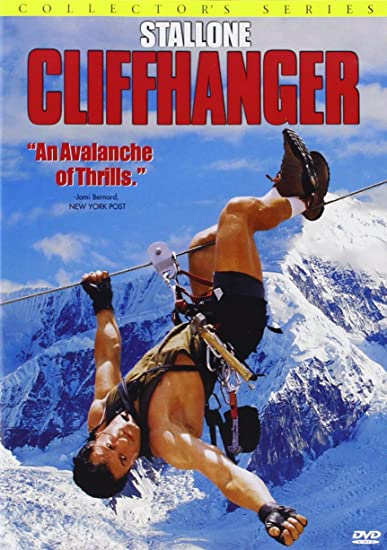
Cliffhanger (1993, directed by Renny Harlin)


Sylvester Stallone is Gabe, a mountain climber who also works as a rescue ranger.  Michael Rooker is Hal, Gabe’s colleague and former best friend.  Hal blames Gabe for the death of his girlfriend, Sarah.  Gabe also blames himself and is planning on getting out of the rescue game.  But before Gabe can quit, he’s got one last mission to perform.  Qualen (John Lithgow) is a psychotic former spy who has masterminded a multi-million dollar robbery.  A plane crash leads to the loot getting scattered in the mountains.  Qualen takes Hal and Gabe prisoner and tries to force them to help him track down the money.

Cliffhanger was made during one of the slower periods of Stallone’s career.  He had temporarily retired the roles of both Rocky Balboa and John Rambo and, as an action star, he was being overshadowed by Arnold Schwarzenegger.  Stallone had tried to reinvent himself as a comedic actor, with the result being Stop!  Or My Mom Will Shoot!  The former Oscar nominee was now only winning Razzies and he was running the risk of becoming better known for his messy divorce from Brigitte Nielsen than for his recent films.  Things weren’t looking good for Stallone but, fortunately, the box office success of Cliffhanger revived his career.

Seen today, Cliffhanger holds up well as an undemanding but enjoyable action film.  It’s a very much a film of its time, complete with John Lithgow hamming it up as a British villain and Northern Exposure’s Janine Turner playing Stallone’s loyal, helicopter-owning girlfriend.  Stallone’s best films are the ones where he is willing to surrender his ego and he does that in Cliffhanger.  It may be a Stallone film but the best lines go to Michael Rooker and the true stars of the film are the mountains and the scenes of Stallone and Rooker trying to climb them.  With Cliffhanger, Stallone was smart enough to stay out of the way and just trust that the image of him dangling above the Rockies would bring in the audience.  It was a smart decision.  Though Cliffhanger is often overshadowed by Stallone’s other 1993 hit, Demolition Man, it’s still an entertaining film in its own right.

Cliffhanger was directed by Renny Harlin, the Finnish action specialist whose promising career would subsequently take a hit and never really recover from directing Cutthroat Island.  Mountain climbing and Renny Harlin just seem to go together and Cliffhanger is one of his better films.  Here’s hope that, just as Stallone has done many times in the past, Renny Harlin will eventually his comeback as a director.

Scenes that I Love: Marlon Brando as Mark Antony in Julius Caesar


Beware the Ides of March!

The scene below is from the 1953 film, Julius Caesar.  This Oscar-nominated Shakespearean adaptation had a cast that was full of distinguished actors.  James Mason played Brutus.  The great John Gielgud played Cassius.  Louis Calhern was Caesar while other roles were filled by Deborah Kerr, Greer Garson, Edmond O’Brien, George Macready, John Hoyt, Edmund Purdom. and a host of other distinguished thespians.  And yet, the best performance in the film came from an actor who, at the time, no one considered to be a Shakespearean.  Marlon Brando brought his method intensity to the role of Mark Antony and the result was a performance that is still electrifying today.

On YouTube, someone referred to this as being “the world’s greatest speech delivered by the world’s greatest actor.”  Sounds good to me!

Here is Marlon Brando in Julius Caesar:

4 Shots From 4 Films: Special David Cronenberg Edition


4 Or More Shots From 4 Or More Films is just what it says it is, 4 shots from 4 of our favorite films. As opposed to the reviews and recaps that we usually post, 4 Shots From 4 Films lets the visuals do the talking!

Today, the Shattered Lens wishes a happy birthday to one of our favorite directors, David Cronenberg!  Cronenberg has a new film coming out later this year, one that we’re all looking forward to.  Crimes of the Future (which shares its name with one of Cronenberg’s early, experimental films) will be Cronenberg’s first film since 2014’s Map of the Stars and it will also reunite him with Viggo Mortensen.

For now, here are….

4 Shots From 4 David Cronenberg Films

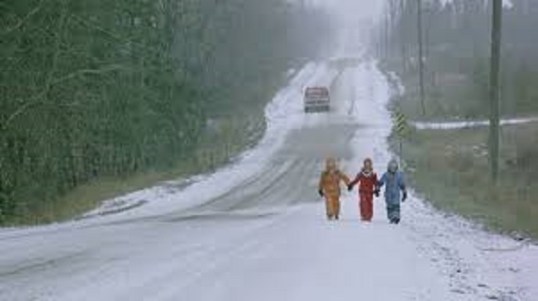
The Brood (1979, dir by David Cronenberg, DP: Mark Irwin)

The Fly (1986, dir by David Cronenberg, DP: Mark Irwin)

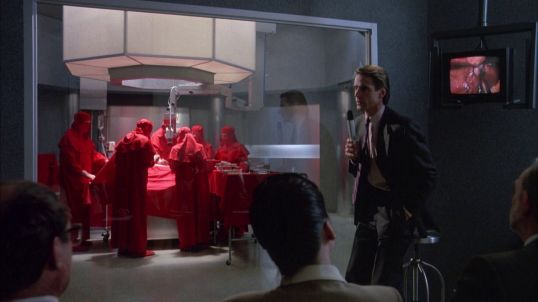
Dead Ringers (1988, dir by David Cronenberg, DP: Peter Suschitzky)

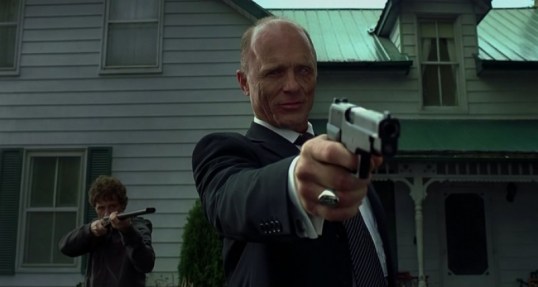
A History of Violence (2005, dir by David Cronenberg, DP: Peter Suschitzky)