A Day To Die is a low-budget action film with a ludicrously complicated plot.
The film opens with an elite SWAT team reacting to a terrorist incident in a small town. A group of white supremacists have taken over a hundred hostages in a high school. An elite SWAT team, led by Brice Mason (Frank Grillo) and Connor Connolly (Kevin Dillon), attempt to rescue the hostages but a mistake leads to the school blowing up and many of the hostages dying. Corrupt police chief Alston (Bruce Willis) breaks up the SWAT team. Some of the members become auto mechanics. Some of them become drug addicts. Connor becomes a …. parole officer.
A year or so later, Connor is forced to kill one of the henchmen of the local drug lord, Pettis (Leon). Pettis is upset because, by his estimation, the dead man would have brought in over two million dollars over the course of his career. Pettis orders Connor to steal two million to pay off his “debt.” Pettis gives Connor 12 hours to find the money and, just for good measure, he kidnaps Connor’s pregnant wife (Brooke Butler).
Pettis suggests that Connor get the money by robbing a rival’s drug house. With no other choice, Connor puts in a call to Brice and soon, the old SWAT team has gathered in a garage. Quicker than you can say Fast and Furious, the team is talking about how they’re family. If Connor needs them to rob a bunch of drug dealers, that’s what they’re going to do. However, they’re also going to take down Pettis in the process. Of course, what they don’t realize is that Pettis has a connection of his own with Chief Alston.
Probably the best thing that can be said about A Day To Die is that Bruce Willis seems to be remarkably steady on his feet. This was one of the batch of films that Willis made before his family announced that he was retiring from acting. Knowing what we now know about not only his health but also the allegations that Willis wasn’t always sure what type of films he was being singed up for, it’s always a bit awkward to watch his last few films. But, in A Day To Die, Willis actually gives a credible performance as the corrupt police chief. Though there’s not much of evidence of the swaggering wise guy charisma that made Willis a star, Willis still delivers his lines convincingly and he seems to be invested in the character. While I’m faintly praising the film, I should also mention that Leon appears to be having fun with the role of the sharply-dressed drug dealer and Frank Grillo is his usual rugged self. They’re all good enough to keep you watching.
Unfortunately, Kevin Dillon uses the same facial expression that he used when he played Johnny Drama on Entourage and, as a result, it’s a bit difficult to take him seriously as an action hero. (If anything A Day To Die seems like the type of film that everyone would laugh at Johnny for doing while Vince was appearing in Martin Scorsese’s Gatsby.) Ultimately, the film is done in by an overcomplicated plot that really doesn’t hold up to close scrutiny. As entertaining as Leon is, Pettis’s actions never really make sense. In the end, A Day To Die is better than American Siege but nowhere close to Gasoline Alley.
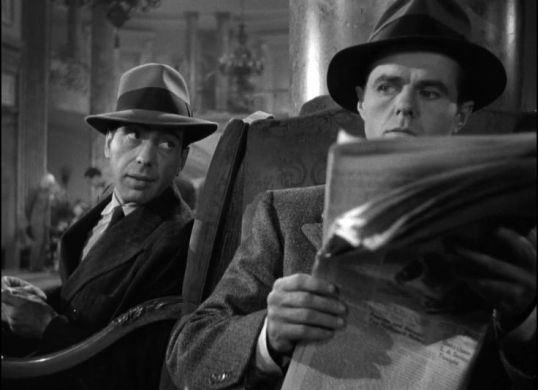
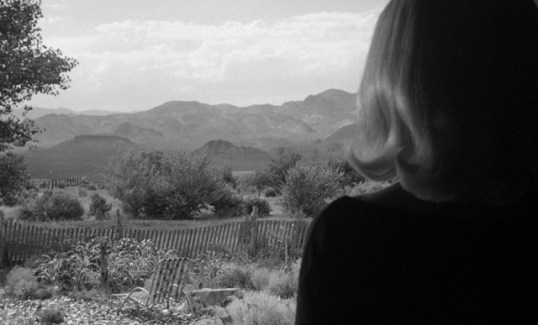
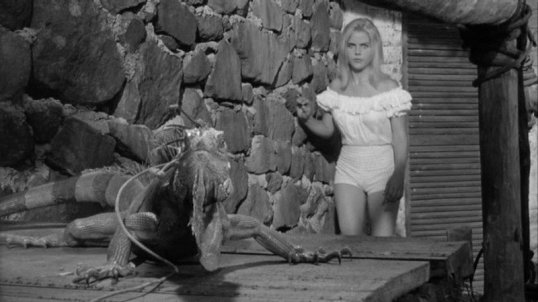
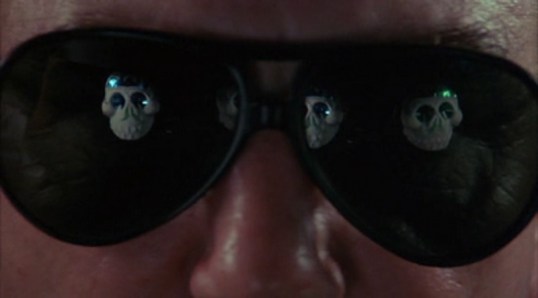
4 Or More Shots From 4 Or More Films is just what it says it is, 4 shots from 4 of our favorite films. As opposed to the reviews and recaps that we usually post, 4 Shots From 4 Films lets the visuals do the talking!
116 years ago today, the writer/director/actor John Huston was born in Nevada, Missouri. Today, we honor his life and films with….
4 Shots from 4 John Huston Films
The Maltese Falcon (1941, dir by John Huston, DP: Arthur Edeson)
The Misfits (1961, dir by John Huston, DP: Russell Metty)
The Night of the Iguana (1964, dir by John Huston, DP: Gabriel Figueroa)
Under the Volcano (1984, dir by John Huston, DP: Gabriel Figueroa)
Today, the Shattered Lens wises director James Gunn a happy 56th birthday!
My favorite James Gunn film remains 2014’s Guardians of the Galaxy. Not coincidentally, that’s also my favorite comic book film. A good deal of that love has to do with the film’s absolutely brilliant introduction of Chris Pratt’s Star-Lord. In the scene below, both the film and Gunn announce that this is a comic book movie that actually has a sense of humor. Let the other franchises specialize in depressed heroes and grim themes. The Guardians of the Galaxy are all about dancing.
Here’s a scene that I love, directed by James Gunn:
Big Brat, which appeared on Phantom Planet’s self-titled third album, has twice gotten a lot of attention. The first time was when it was released as a single in 2003 and the Spike Jonze-directed music video went into regular rotation on MTV. (This was when MTV still played videos and had some actual influence.) The second time was in 2012, when it was included on the soundtrack of The Amazing Spider-Man.
The video features the band performing and shooting a low budget zombie film. (Remember that 2003 was long before the current zombie boom, showing that both the band and director Spike Jonze were far ahead of the curve.) This is yet another video in which Spike Jonze displays his love of media and pop culture. Jonze, of course, has gone on to have a very successful career as a director of idiosyncratic feature films.
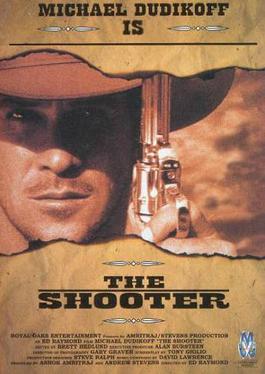
While riding his horse through the old, Michael Atherton (Michael Dudikoff) discovers a group of thuggish ranch hands attacking a prostitute named Wendy (Valerie Wildman). Because Michael is known as being the Shooter, he has no problem coolly gunning the men down and saving Wendy’s life. Unfortunately, for Michael, one of the dead men is the son of a fearsome rancher named Jerry Krants (William Smith) and Jerry has his own reasons for wanting Wendy dead. Michael may be the Shooter but Jerry Krants is William Smith so you automatically know that it is not a good idea to mess with him.
In the grand spaghetti western tradition, Krants has his men kidnap Michael, beat him up, and crucify him outside of town. The men leave Michael for dead but, after they’ve left, Wendy repays Michael’s kindness by untying him from the cross, nursing him back to health, and saving his life. (The same thing used to happen to Clint Eastwood, except he usually had to nurse himself back to health without anyone else’s help.) With everyone else believing him to be dead, Michael rides into town to get his violent revenge against Krants and his men. With all of the townspeople convinced that Michael has returned as a ghost, only the town’s power-hungry sheriff, Kyle Tapert (Randy Travis), understands what has actually happened. Tapert makes plans to use Michael’s return for his own advantage. While it wouldn’t look good for Tapert to openly murder all of his opponents, what if he killed them and then framed Michael? And then what if he made himself a hero by being the one to end Michael’s reign of terror?
Directed by Fred Olen Ray, The Shooter is a low-budget western that turned out to be far better than I was expecting. Ray is obviously a fan of the western genre and, with The Shooter, he’s made a respectful and, by his standards, restrained homage to the classic spaghetti westerns of old. He even shows some undeniable skill when it comes to building up the suspense before the climatic showdown. Ray indulges in every western cliché imaginable but he does so with the respect of a true fan.
With his less than grizzled screen presence, Michael Dudikoff is slightly miscast as a Clint Eastwood-style gunslinger but the rest of the cast is made up of genre veterans who give it their best. In particular, William Smith shows why he was one of the busiest “bad guys” working in the movies. To me, the most surprising part of the film was that the casting of Randy Travis as a villain actually worked. Fred Olen Ray made good use of Travis’s natural amiability, making Kyle into a villain who will give you friendly smile right before he opens fire. Also be sure to keep an eye out for Andrew Stevens, playing the man who records Michael’s story. It wouldn’t be a Fed Olen Ray movie without Andrew Stevens playing at least a small role.
Low-budget, undemanding, and made with obvious care, The Shooter is film that will be appreciated by western fans everywhere.
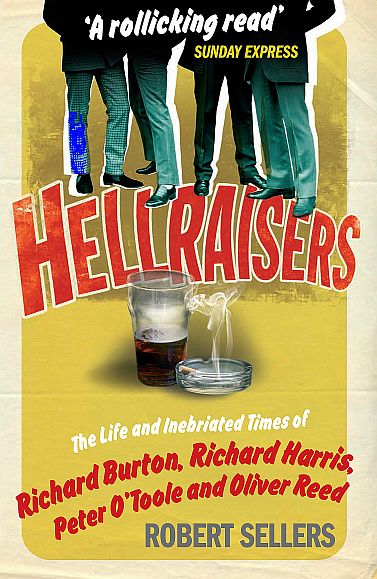
First published in 2009, Hellraisers is a fast-paced look at the life and times of four men, Richard Burton, Richard Harris, Peter O’Toole, and Oliver Reed, and an examination of what they all had in common.
First off, they were all talented actors who were at the height of their careers in the 60s and the 70s.
They all first came to prominence in the UK. Peter O’Toole and Oliver Reed were English. Richard Burton was Welsh. Richard Harris was born in Ireland.
With the exception of Oliver Reed, all of them were multiple Oscar nominees but none of them actually won the award.
All four of them could boast filmographies that included some of the best and some of the worst films of all time.
And, of course, all four of them were infamous for their drinking. They were all, if I may borrow the book’s title, famous for raising Hell.
Hellraisers is a frequently entertaining look at their careers and their legendary off-screen exploits. All four of them come across as being very different drinkers. Richard Burton was a depressing drunk, one who drank because he was aware that he was wasting his talents in mediocre films. O’Toole was a drunk who alternated between being charming and being dangerous, someone who was capable of coming across as being a bon vivant even at his lowest moments. Richard Harris was the angry drunk but he was also the one who seemed to have the both the best understanding of why he drank and why, at a certain age, it was necessary for him to cut back. And, finally, Oliver Reed was the showman, the one who viewed drinking a beer the way that others viewed having a cup of tea and who would rather damage his career than allow anyone else to tell him how to live. He knew that he had a reputation and he was determined to live up to it, even at the risk of his own health.
Perhaps not surprisingly, it’s Oliver Reed who dominates the book. There was very little that Reed wouldn’t do while drunk and he was drunk quite a lot of the time. He was also perhaps the most unpredictable of all of the actors profiled in the book, a raw mountain of energy who kept audiences off-balance. Personally, I would not have wanted to have been along in a room with a drunk Oliver Reed. The book has too many stories of Reed dropping his trousers and asking everyone to look at what he called his “mighty mallet,” for the reader to feel totally safe with Reed. At the same time, anyone who has seen a good Oliver Reed performance knows that he deserved better roles than he was often given. (Then again, the book is also honest about the fact that a lot of filmmakers would not work with Reed because they had justifiable reasons to be terrified of him and his erratic nature.) Over the course of the book, Reed comes across as hyperactive, easily bored, and also far more intelligent than most gave him credit for. In many ways, he was a prisoner of his own reputation. He was outrageous because he knew that was what was expected of him. As shocking as some of his behavior seems today, he felt that he was giving the people what they wanted and Hellraisers suggests that he may have been right.
Personally, I don’t drink and I find most heavy drinkers to be tedious company at best. That said, Hellraisers is an interesting book. Burton, Harris, O’Toole, and Reed are all fascinating talents and the book takes a look at how their hellraising reputations both hurt and, in some cases, helped their careers. However, the book is more than just a biography of four actors who drank a lot. It’s also an examination of a different era, of a time when performers were expected to raise Hell and when one could get away with being a contrarian just for the fun of it. One can only imagine what the moral scolds of social media would have to say if Oliver Reed were around today! As a result, this is a book that can be enjoyed by both film lovers and history nerds, like you and me.
Having done both America and the universe, Beavis and Butt-Head are back where they belong!
I just watched the first two episodes of Mike Judge’s Beavis and Butt-Head on Paramount+. The boys are once again spending their days sitting on the couch and watching videos. They’ve got a flat screen now and, like the rest of the world, they’ve abandoned MTV for TikTok and YouTube. Judging by these two episode, they’re a little smarter now than they were during their original run. Butt-Head can now read (if he puts some effort into it) and Beavis knows how to use a drill. Of course, smart is a relative term when it comes to Beavis and Butt-Head. They haven’t changed that much. They’re still getting trapped in boxes and they still can’t score. Beavis still loves fire but, as he discovers during the first episode, Fire can be a tough taskmaster.
Beavis and Butt-Had aren’t the only ones to return. Mr. Van Driessen and Mr. Anderson return in the second episode. Mr. Van Driessen tells the boys that people will buy fresh honey. Mr. Anderson tries to warn the boys about a giant wasp’s nest. You see where it’s going but it doesn’t make it any less funny. Unfortunately, Stewart hasn’t returned yet. Is he still wearing his Winger t-shirt in 2022?
Each episode features two separate stories, along with cut-away scenes of Beavis and Butt-Head watching and commenting on videos. The first episode started with Beavis and Butt-Head wrecking havoc at an escape room and it ended with Beavis talking to a dumpster fire. The Escape Room story wasn’t anything special but it did serve to reintroduce Beavis and Butt-Head so it served its purpose. The Dumpster Fire segment was better and it featured a rare solo turn for Beavis. I loved that Fire’s instructions to Beavis were not what you would expect. Get some exercise. Recycle. Think about college. Fire cares!
The first episode was all about reintroducing Beavis and Butt-Head but the second episode showed the series settling into its groove. The first story featured Beavis and Butt-Head getting trapped in a box. Beavis, always the optimist, thought that maybe they should just get used to living in the box and that maybe some chicks would show up. When they realized they were running out of air, Butt-Head started taking deep breaths to try to get as much of the air as possible before Beavis could get it. The second story was a stone cold Beavis and Butt-Head classic, featuring farmer’s markets, wasps, shampoo, and of course, Mr. Van Driessen and Mr. Anderson. Everyone knows that Beavis and Butt-Head never score and never will score. The second episode reminded us that Mr. Van Driessen never score either and it’s usually Beavis and Butt-Head’s fault. After years of being humiliated and often grievously injured by Beavis and Butt-Head, Mr. Van Driessen still hasn’t given up on them. Maybe he should.
Of the videos that the boys critiqued, the highlight was Beavis revealing his love for BTS but I also liked their commentary on a creepy Cale Dobbs video. Their TikTok commentaries seem like they’ll be more uneven but I did enjoy their reaction to the man explaining how to do a prison tattoo. That will be a good skill to have when the boys inevitably end up in prison.
The most important thing about, though, is that Beavis and Butt-Head are back! Just in time, too. The world is finally stupid enough to benefit from their insight.
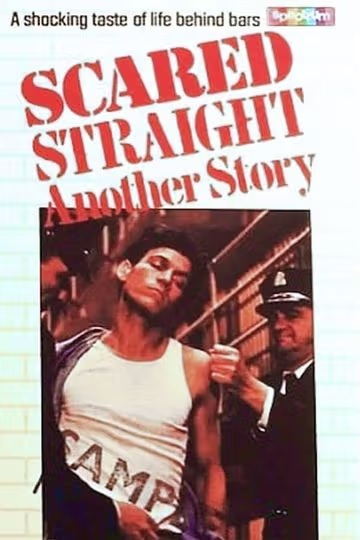
Scared Straight! Another Story is a made-for-television movie from 1980. As you can tell by the name, the movie was inspired by the documentary Scared Straight! and the addition of Another Story to the title would lead one to suspect that this was actually a follow-up or continuation to that documentary and I guess it kind of is. A group of teenagers, all of whom have been in trouble with the law, are sent to a prison where they are finger-printed, forced to stay in a cell, and then yelled at by a bunch of prisoners who assure them that they don’t have what it takes to survive in prison. Then, just as in the documentary, the teenagers leave the prison. Some of them continue to get in trouble and some of them are scared straight. As for the prisoners, they remain imprisoned.
The main difference is that, instead of featuring real prisoners and real delinquents, Scared Straight! Another Story is a dramatization. As a result, the prisoners are saying the same thing that they said in the first Scared Straight! but now the prisoners themselves are played by actors who will be familiar to anyone who has watched enough old TV shows. The prisoners may be yelling about how much life sucks but the viewer knows that they are all actors and, as a result, Scared Straight! Another Story lacks the rough authenticity of the first film. (It also doesn’t help that most of the profanity from the original documentary has been replaced with softer expressions of disgust.) The film again makes the argument that the Scared Straight program can turn someone’s life around but it’s not as effective because, again, the troubled teens are all actors. The viewer knows that they’re actors. Their lives have already been turned around.
Surprisingly, the scenes of the prisoners yelling are the least effective parts of this film. Instead, Scared Straight! Another Story works best when it is exploring everyone’s life before and after the trip to the prison. Stan Shaw, in particular, is effective as a prisoner who is inspired to take part in the program after he comes across the body of an inmate who has been driven to suicide. Also well-cast is Terri Nunn, playing Lucy, the girlfriend of a small-time drug dealer. Both she and her boyfriend are scared straight but it turns out to be too little too late as her boyfriend is eventually sent to jail for the crimes that he committed before the program. (There’s an interesting scene, one that I wish had been explored in greater detail, where Lucy’s father observes the scared straight program and, instead of understanding that prison is a terrible place to send a kid, reacts by saying that the prisoners are all getting what they deserve.) Finally, Cliff De Young, who has played a lot of corrupt government agents and out-of-touch teachers over the course of his career, gets a sympathetic role as Paul, the idealistic juvenile probation officer who sends three of his clients to the program. The program works for two of them while the other eventually ends up joining the inmates who previously tried to warn him. If nothing else, the film deserves some credit for admitting that the Scared Straight program isn’t going to magically reform everyone who attends.
Despite some good performances, Scared Straight! Another Story lacks the rough edged authenticity of the documentary. It’s just not as effective when you know that everyone, including the prisoners, could go home at the end of the day. Today, this is one of those films that is mostly interesting as a historical artifact. Apparently, there really was a time when anything could inspire a TV movie.
Beyond Scared Straight used to air on A&E. It was a reality show, one where teenagers would be taken into a prison and harassed by the guards and eventually the prisoners. The teenagers were usually guilty of things like skipping school, shoplifting, and either smoking weed or underage drinking. Oddly, I can remember one episode where all of the teens had to wear signs that announced what their crime was. One of them was wearing a sign that simply read, “I disrespect my parents.” I mean, that may be bad manners but is it really a crime for which you can be sent to jail?
Beyond Scared Straight was best known for the segments in which prisoners would yell at the teens and tell them about life in prison and say stuff like, “You don’t belong here! This is not for you!” What is often forgotten today is that the prisoners were usually only a small part of each episode of Beyond Scared Straight. Usually, more time was spent on the guards. Beyond Scared Straight visited a lot of towns and a lot of jails but the guards always seemed to remain the same. The male guards were always bulked up and bald and would try to yell like a drill sergeant. The female guards would always scream at anyone who didn’t stand up straight. “Kids today,” one of them said during one particular episode, “do not respect authority the way they should.” Considering what we’ve seen of authority over the past few years, that lack of respect is perhaps understandable. In fact, there’s a lot of evidence that suggests that the Scared Straight program does more harm than good. Whenever I watched Beyond Scared Straight, it always seemed like the program was more about humiliating the teens than actually trying to help them or to understand why they were doing the things that they were doing. It reminded me a bit of something that I read about the psychology behind spanking. It’s more about the anger of the adults than the behavior of the children and it usually leads to a lot of resentment down the line. There’s only so many times that anyone can be spanked or yelled at before they strike back.
I have to admit that, whenever I watched Beyond Scared Straight, I always enjoyed it whenever one of the “bad teens” would smirk at some screaming guard. There were a few episodes where a teen would actually take a swing at a guard and those were my favorite episodes. (I guess I have issues with authority, too.) If I had a difficult time taking Beyond Scared Straight seriously, it was because it hard for me to watch it without thinking of Steve Carell’s performance as Prison Mike on The Office.
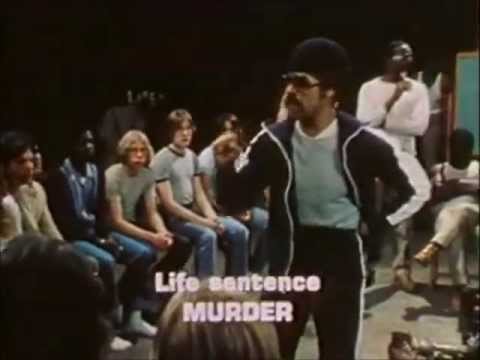
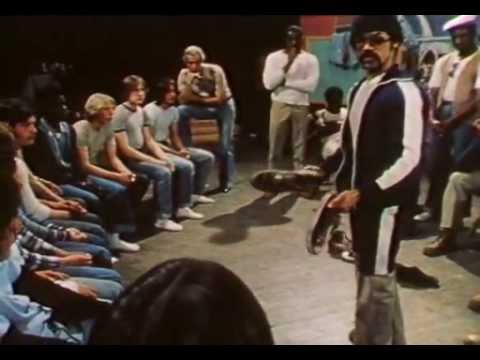
Far more effective than Beyond Scared Straight was the documentary that inspired it, 1978’s Scared Straight! Scared Straight! followed a group of juvenile delinquents who were taken to a prison in New Jersey. The film didn’t waste any time with the guards and indeed, the documentary emphasized the fact that the convicts ran the prison and not the guards. (That’s the sort of thing that Beyond Scared Straight, with all of its “respect my authority” rhetoric, would never have the guts to admit.) In fact, the documentary really didn’t even reveal much about the teenagers being yelled at, beyond the fact that they all thought that they were tough (or, at least, they did before going into prison) and that all the boys had really thin, barely-there mustaches.
Instead, it’s the prisoners who dominated this documentary. The majority of them were serving life sentences. A few of them were murderers. They were angry, they were loud, and they made it clear that they didn’t like the people listening to them, filming them, or watching them. They left the audience with no doubt that the prisoners would hate them just as much as they hated the teens in the program. The prisoners stole everyone’s shoes. They knocked a stack of cards out of one teen’s hands. They regularly threatened to break one kid’s neck. They talked about what it was like to be raped in prison. They talked about what the teens would have to do in order to survive in prison. Scared Straight! was narrated by Peter Falk who, early on, informed the audience that they would be hearing some “rough language.” Falk wasn’t lying. The prisoners in this film were frightening in a way that their later television counterparts never could be. One doesn’t have to be a believer in the Scared Straight! program (and you’ve probably noticed by now that I’m not) to find the prisoners to be both compelling and disturbing at the same time. All of the prisoners were obviously intelligent but, just as obviously, prison had left physical, mental, and emotional scars that would never heal.
Scared Straight! was a huge success, winning both an Oscar and an Emmy. It led to various follow-up documentary, which explored whether or not the teens had actually been scared straight. After I watched the original Scared Straight!, I watched Scared Straight: 20 Years Later. Released in 1999, this documentary was narrated by Danny Glover and featured interviews with the surviving prisoners and program participants. At the time the documentary was released, almost all of the prisoners had been paroled. Three of them had died, one from a drug overdose, one from AIDS, and another from a sudden heart attack. A few of the parolees had been re-arrested and were now back in prison and, just as importantly, a few others had stayed out of trouble. As for the teens, one had died of AIDS and one was in prison but the rest of the surviving teens claimed that they had all learned from the program. At least two were involved in the ministry. The others all had families and steady jobs. None of them seemed to be particularly well-off financially but, at the same time, the majority of them seemed to be happy.
Of course, Scared Straight: 20 Years Later was filmed over 20 years ago. Things change. One of the graduates of the original program, Angelo Speziale, appeared in 20 Years Later, playing with his children and talking about how he had a few minor run-ins with the law immediately after the program. At the time, Speziale said that was all behind him and he was now just focused on being the best father that he could be. As I watched Angelo Speziale talk about how perfect his life was, I couldn’t help but think that there was something slightly off about him. He seemed to be trying too hard to come across as just a regular suburban dad. In 2011, long after he was interviewed for 20 Years After, Angelo Speziale was arrested and charged with raping and murdering one of his neighbors in 1982, four years after he took part in the Scared Straight program. Angelo Speziale is now serving a life sentence at the same prison where the original Scared Straight! was filmed. As for the rest of the participants, who knows? Hopefully, they’re doing well.



 Through the Shattered Lens