Music Video of the Day: Falling by Julee Cruise (1990, dir by ????)


Seeing as how today is David Lynch’s birthday, it just seems appropriate that today’s music video of the day should come from Twin Peaks.  Julee Cruise played the singer at the Roadhouse during the first season of Lynch’s legendary show and her voice perfectly captured and, in many ways, helped to create the show’s mysterious and dream-like atmosphere.  (The Roadhouse, of course, became a much more menacing location when the series was revived for Showtime.  I mean, even “The Nine Inch Nails” ended up playing there.)

This video features a compilation of clips from the show.  Some of the clips were directed by David Lynch while some weren’t, so it’s a bit difficult to determine who should be credited as director for this video.  Regardless, this video still captures the unique power of Lynch’s vision.

Enjoy!

Don’t let yourself be hurt this time

Then I saw your face
Then I saw your smile

The sky is still blue
The clouds come and go
Yet something is different
Are we falling in love?

Don’t let yourself be hurt this time

Then your kiss so soft
Then your touch so warm

The stars still shine bright
The mountains still high
Yet something is different
Are we falling in love?

Falling
Falling
Are we falling in love?

Falling
Falling
Are we falling in love?

A Whole New World : Hurk’s “Jinx Freeze”


It can be a fickle bastard of a thing, this critiquing business. In theory, at any rate, you’re judging a work on its own merits and nothing else — how well it succeeds at establishing the terms of what it is, first off, and then subsequently delivering upon them. But who are we kidding? Outside influences, both subtle and less so, almost always figure into the equation on some level, the so-called “soft tyranny” of expectations being foremost among them. “Was this book all that I wanted or hoped for it to be?” is a question most critics ask themselves — fair or not; whether they even realize it or not.

It’s just as well, then, that every so often something comes along that blows that whole framework out of the water : a comic that, by its very nature, is steadfastly resistant to the “expectations game” on the one hand, and to comparison of any sort on the other. Something that makes its own rules, does things its own way, operates according to the dictates of its creator and to nothing or no one else. That “something” being, in this case, UK cartoonist Hurk’s 2021 Avery Hill-published graphic novel Jinx Freeze.

The comics medium itself is no longer a young one, it’s true, and so works that are completely original are tough to come by — maybe even flat-out impossible — but a book like this serves to, at the very least, remind one that, of all forms of art, comics remains the one with the most untapped potential. And hey, even if I’m only saying so myself and asking you to take me at my word, that right there is a big reason why I felt myself drawn toward analyzing and reviewing them in the first place. Sure, you might very well be able to place Hurk’s work somewhere along a stylistic continuum that includes names such as Mark Beyer, Kaz, Max Huffman, or Marc Bell (among others), but the spot it carves out for itself is, in point of fact, utterly its own, and as Jinx Freeze unfolds, even the least astute reader out there will get a very real sense of an artist claiming his thematic and stylistic territory while he goes about weaving an apparently-haphazard-yet-actually-quite-intricate series of vignettes into a tapestry that’s hitherto unseen because, frankly, it’s hitherto unimagined. Even the parts that don’t make “sense” in the conventional — errrmmm — sense of the term do so within the hermetic de facto confines of what I’ll call, at least here in a pinch, the “Hurk-verse.” And I guess now’s the point at which I hope the cartoonist himself, should he ever actually read this, can forgive me for coining that unfortunate term on the fly. But I effing digress —

So what do we have here, in purely narrative and aesthetic terms? Well, in one respect it’s a classic caper. In another, it’s a surreal spin on police procedurals. In still another, a sprawling-ensemble slapstick yarn. And in yet one more, a futuristic sci-fi comedy thriller. Upping the ante still further, each of these respective genre sandboxes the narrative is playing around in is shot through with elements of pastiche, and so it’s fair to say Hurk is both marginally beholden to them and sending them up (or, as they’d say on his side of the pond, “taking the piss out of them”) simultaneously. Now throw in the added elements of each component riffing off the others and being in conversation with them, all while being recognizably part of the same world and story thanks to Hurk’s vivid, energetic, stylized, colorful, geometrically-informed cartooning, and the end result is something that should, by all rights, probably be a cacophony of literary and visual noise, but instead builds up in truly symphonic fashion.

Which isn’t to say, of course, that the occasional note of discord doesn’t linger in the background or, on occasion, force itself to the fore. There are punchlines that fall flat, story “beats” that miss the mark — but the overall trajectory of the piece is never derailed in any appreciable, lasting manner, and the only thing that quells the urge to keep turning the pages is the desire to spend more time “oohing” and “aahing” over the ingenious little flourishes of the one you’re already on. Don’t be afraid to take your time with this comic, then, even if the pace is rapid and frenetic, verging on the breakneck.

And so we return to our analysis of the phenomenon of critical analysis itself. Jinx Freeze is, perhaps, easier to praise than it is to describe, at least for someone of my meager capabilities — and it’s arguably greater on the whole than the sum of its parts would, upon first reading at any rate, suggest. Although, the more I pore over it, the more I come to see the “little things” that come together to form the “big picture” are all there, either in plain sight or hiding in it. Here’s what I do know : I didn’t want it to end, and when it did, I wanted to start reading it all over again. And whaddya know? That’s exactly what I did.

************************************************************************

Jinx Freeze is available from Avery Hill Publishing at https://averyhillpublishing.bigcartel.com/product/pre-order-jinx-freeze-by-hurk

Also, this review is “brought to you” by my Patreon site, where I serve up exclusive thrice-weekly rants and ramblings on the worlds of comics, films, television, literature, and politics for as little as a dollar a month. Subscribing is the best way to support my continuing work, so I’d be very appreciative if you’d take a moment to give it a look by directing your kind attention to https://www.patreon.com/fourcolorapocalypse

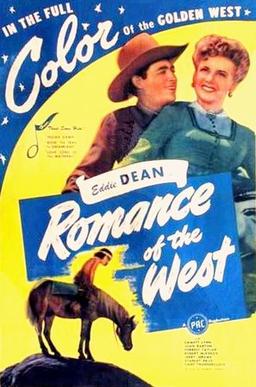
Romance of the West (1946, directed by Robert Emmett Tansey)


In California’s Antelope Valley, the local Indian tribe lives peacefully alongside the recently arrived white settlers.  However, some of the settlers want to end that peace and deliberately try to provoke the Indians into raiding a nearby town.  When the Indian village is attacked and a young boy is turned into an orphan, the tribe prepares or war.  It falls on the new Indian agent, a singing cowboy named Eddie Dean (played by real-life singing cowboy Eddie Dean) to capture the real culprits and maintain peace in Antelope Valley.

Romance of the West was the first of many films that Eddie Dean made in which he played a character named Eddie Dean.  Dean had a good singing voice and an amiable screen presence but he was also a pretty stiff actor.  That’s particularly obvious in Romance of the West, where he breaks out into a huge grin whenever he has to deliver any of his dialogue.  Even when he talks about something as serious as finding a home for an orphan, he still smiles like someone who has found a month’s worth of moonshine.   With the exception of Forest Tucker (who plays a sympathetic priest), the rest of the cast isn’t much better.  Eddie looks convincing in a gunfight and on a horse but whenever he has to speak or show emotion, the action comes to a halt.

Compared to other westerns of the period, Romance of the West is sympathetic to the Indians, with Dean speaking up for them every chance he gets and telling one bad guy that the Indians are more American than he’ll ever be.  But the movie also features a lot of scenes of the Indians speaking in exaggerated broken English.  After an Indian child is orphaned, Eddie refuses the chief’s offer to raise the child, saying that it would be better that the child go to the church orphanage so he “can be raised right.”  The film should be commended for rejecting the “savage” stereotype but then it goes too far in other direction, portraying the Natives as being almost child-like and without any agency of their own.  Always, it falls on Eddie Dean to explain things to everyone and hold together the fragile peace.

Seen today, the most interesting thing about Romance of the West is that it was shot in color, at a time when that was a rare occurrence.  Unfortunately, Eddie Dean was just as boring in color as he was in black-and-white.

On a final note, the singing cowboy genre has always been a strange one to me.  Did no one in the old west find it strange that men were riding through the wilderness and singing songs of love to their horses?  For some reason, singing cowboys were always appointed to positions of importance, like town marshal or Indian agent.  Were people that impressed by a banjo?

Drive My Car and Nicolas Cage Win In Seattle


On Monday, the Seattle Film Critics Society announced their picks for the best of 2021 and it was another victory for Drive My Car and Pig‘s Nicolas Cage!

Best Picture of the Year
CODA (Apple TV+)
Drive My Car (Janus Films)
Dune (Warner Bros.)
The Green Knight (A24)
In the Heights (Warner Bros.)
Licorice Pizza (MGM/United Artists Releasing)
Pig (NEON)
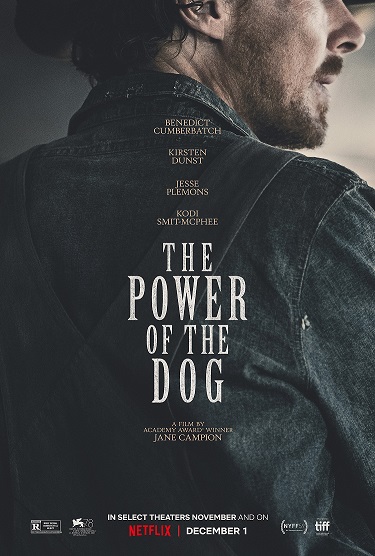
The Power of the Dog (Netflix)
Titane (NEON)
West Side Story (20th Century Studios)

Best Director
Jane Campion – The Power of the Dog
Julia Ducournau – Titane
Ryûsuke Hamaguchi – Drive My Car
David Lowery – The Green Knight
Denis Villeneuve – Dune

Best Actress in a Leading Role
Alana Haim – Licorice Pizza
Lady Gaga – House of Gucci
Renate Reinsve – The Worst Person in the World
Agathe Rousselle – Titane
Kristen Stewart – Spencer

Best Actor in a Leading Role
Nicolas Cage – Pig
Benedict Cumberbatch – The Power of the Dog
Andrew Garfield – tick, tick…BOOM!
Dev Patel – The Green Knight
Simon Rex – Red Rocket

Best Actress in a Supporting Role
Ariana DeBose – West Side Story
Ann Dowd – Mass
Kirsten Dunst – The Power of the Dog
Aunjanue Ellis – King Richard
Ruth Negga – Passing

Best Actor in a Supporting Role
Colman Domingo – Zola
Troy Kotsur – CODA
Vincent Lindon – Titane
Kodi Smit-McPhee – The Power of the Dog
Jeffrey Wright – The French Dispatch

Best Ensemble Cast
Dune – Jina Jay, Francine Maisler, casting directors
In the Heights – Tiffany Little Canfield, Bernard Telsey, casting directors
Licorice Pizza – Cassandra Kulukundis, casting director
Mass – Henry Russell Bergstein, Allison Estrin, casting directors
The Power of the Dog – Nikki Barrett, Tina Cleary, Carmen Cuba, Nina Gold, casting directors

Best Screenplay
Drive My Car – Ryûsuke Hamaguchi & Takamasa Oe
The Green Knight – David Lowery
Mass – Fran Kranz
Pig – Michael Sarnoski
The Power of the Dog – Jane Campion

Best Film Not in the English Language
Drive My Car (Janus Films) – Ryûsuke Hamaguchi, director
Flee (NEON) – Jonas Poher Rasmussen, director
The Hand of God (Netflix) – Paolo Sorrentino, director
Titane (NEON) – Julia Ducournau, director
The Worst Person in the World (NEON) – Joachim Trier, director

Best Animated Feature
Encanto (Walt Disney Pictures) – Jared Bush, Byron Howard, director; Charise Castro Smith, co-director
Flee (NEON) – Jonas Poher Rasmussen, director
Luca (Walt Disney Pictures) – Enrico Casarosa, director
The Mitchells vs. The Machines (Netflix) – Michael Rianda, director; Jeff Rowe, co-director
Raya and the Last Dragon (Walt Disney Pictures) – Don Hall, Carlos López Estrada, director; Paul Briggs, John Ripa, co-director

Best Documentary Feature
Billie Eilish: The World’s a Little Blurry (Apple TV+) – R.J. Cutler, director
Flee (NEON) – Jonas Poher Rasmussen, director
The Rescue (National Geographic Documentary Films/Greenwich Entertainment) – Jimmy Chin, Elizabeth Chai Vasarhelyi, directors
Summer of Soul (…Or, When the Revolution Could Not Be Televised) (Hulu) – Ahmir “Questlove” Thompson, director
Woodlands Dark and Days Bewitched: A History of Folk Horror (Severin Films) – Kier-La Janisse, director

Best Original Score
Dune – Hans Zimmer
The French Dispatch – Alexandre Desplat
The Green Knight – Daniel Hart
The Power of the Dog – Jonny Greenwood
Spencer – Jonny Greenwood

Best Film Editing
Drive My Car – Azusa Yamazaki
Dune – Joe Walker
The Power of the Dog – Peter Sciberras
Titane – Jean-Christophe Bouzy
West Side Story – Michael Kahn, Sarah Broshar

Best Cinematography
Dune – Greig Fraser
The Green Knight – Andrew Droz Palermo
The Power of the Dog – Ari Wegner
The Tragedy of Macbeth – Bruno Delbonnel
West Side Story – Janusz Kaminski

Best Costume Design
Cruella – Jenny Beavan
Dune – Jacqueline West, Robert Morgan
The Green Knight – Malgosia Turzanska
House of Gucci – Janty Yates
Spencer – Jacqueline Durran

Best Production Design
Dune – Patrice Vermette (Production Design); Zsuzsanna Sipos (Set Decoration)
The French Dispatch – Adam Stockhausen (Production Design); Rena DeAngelo (Set Decoration)
The Green Knight – Jade Healy (Production Design); Jenny Oman (Set Decoration)
Nightmare Alley – Tamara Deverell (Production Design); Shane Vieau (Set Decoration)
West Side Story – Adam Stockhausen (Production Design); Rena DeAngelo (Set Decoration)

Best Visual Effects
Dune – Paul Lambert, Tristan Myles, Brian Connor, Gerd Nefzer
The Green Knight – Eric Saindon, Michael Cozens
The Matrix Resurrections – Dan Glass, Huw J. Evans, Tom Debenham, J.D. Schwalm
Shang-Chi and the Legend of the Ten Rings – Christopher Townsend, Joe Farrell, Sean Walker, Dan Oliver
Spider-Man: No Way Home – Kelly Port, Chris Waegner, Scott Edelstein, Dan Sudick

Best Youth Performance (18 years of age or younger upon start of filming):
Jude Hill – Belfast
Cooper Hoffman – Licorice Pizza
Emilia Jones – CODA
Woody Norman – C’mon C’mon
Joséphine Sanz – Petite Maman

Villain of the Year:
Baron Vladimir Harkonnen – Dune – portrayed by Stellan Skarsgård
The Green Goblin/Norman Osborn – Spider-Man: No Way Home – portrayed by Willem Dafoe
Phil Burbank – The Power of the Dog – portrayed by Benedict Cumberbatch
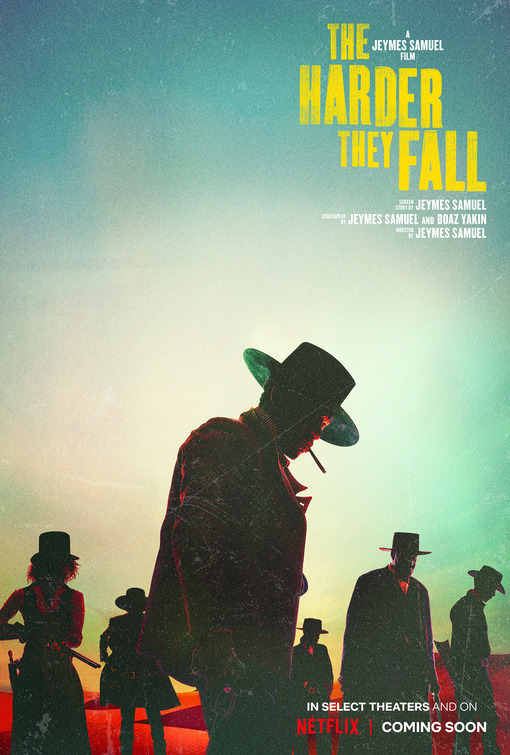
Rufus Buck – The Harder They Fall – portrayed by Idris Elba
Xu Wenwu – Shang-Chi and the Legend of the Ten Rings – portrayed by Tony Leung

Best Action Choreography
In the Heights
No Time to Die
Nobody
Raging Fire
Shang-Chi and the Legend of the Ten Rings

The Power of the Dog Wins In North Dakota!


On Monday, the North Dakota Film Society announced their picks for the best of 2021 and it led to another victory for The Power of the Dog!

Here are all the winners in North Dakota:

Best Picture
FLEE (Monia Hellstrom and Signe Byrge Sorensen)
THE FRENCH DISPATCH (Wes Anderson, Jeremy Dawson and Steven Rales)
LICORICE PIZZA (Paul Thomas Anderson, Sara Murphy, JoAnne Sellar and Daniel Lupi)
NIGHTMARE ALLEY (J. Miles Dale, Guillermo del Toro and Bradley Cooper)
THE POWER OF THE DOG (Emile Sherman, Iain Canning, Roger Frappier, Jane Campion and Tanya Seghatchian)

Best Director
Paul Thomas Anderson (LICORICE PIZZA)
Wes Anderson (THE FRENCH DISPATCH)
Jane Campion (THE POWER OF THE DOG)
Guillermo del Toro (NIGHTMARE ALLEY)
Lin-Manuel Miranda (TICK, TICK…BOOM!)

Best Actress
Jessica Chastain (THE EYES OF TAMMY FAYE)
Alana Haim (LICORICE PIZZA)
Renate Reinsve (THE WORST PERSON IN THE WORLD)
Agathe Rousselle (TITANE)
Kristen Stewart (SPENCER)

Best Actor
Nicolas Cage (PIG)
Bradley Cooper (NIGHTMARE ALLEY)
Benedict Cumberbatch (THE POWER OF THE DOG)
Andrew Garfield (TICK, TICK…BOOM!)
Denzel Washington (THE TRAGEDY OF MACBETH)

Best Supporting Actress
Caitriona Balfe (BELFAST)
Jessie Buckley (THE LOST DAUGHTER)
Ariana DeBose (WEST SIDE STORY)
Kirsten Dunst (THE POWER OF THE DOG)
Ruth Negga (PASSING)

Best Supporting Actor
Bradley Cooper (LICORICE PIZZA)
Robin de Jesus (TICK, TICK…BOOM!)
Mike Faist (WEST SIDE STORY)
Ciaran Hinds (BELFAST)
Kodi Smit-McPhee (THE POWER OF THE DOG)

Best Screenplay
C’MON C’MON (Mike Mills)
DRIVE MY CAR (Hamaguchi Ryusuke and Oe Takamasa)
THE FRENCH DISPATCH (Wes Anderson, Jascon Schwartzman and Roman Coppola)
LICORICE PIZZA (Paul Thomas Anderson)
THE POWER OF THE DOG (Jane Campion)

Best Cinematography
DUNE (Greig Fraser)
THE GREEN KNIGHT(Andrew Droz Palermo)
NIGHTMARE ALLEY (Dan Laustsen)
THE POWER OF THE DOG (Ari Wegner)
WEST SIDE STORY (Janusz Kaminski)

Best Film Editing
THE FRENCH DISPATCH (Andrew Weisblum)
LICORICE PIZZA (Andy Jurgensen)
THE POWER OF THE DOG (Peter Sciberras)
TICK, TICK…BOOM! (Myron Kerstein and Andrew Weisblum)
WEST SIDE STORY (Sarah Broshar and Michael Kahn)

Best Production Design
DUNE (Patrice Vermette, Richard Roberts and Zsuzsanna Sipos)
THE FRENCH DISPATCH (Adam Stockhausen and Rena DeAngelo)
NIGHTMARE ALLEY (Tamara Deverell and Shane Vieau)
THE POWER OF THE DOG (Grant Major and Amber Richards)
WEST SIDE STORY (Adam Stockhausen and Rena DeAngelo)

Best Costume Design
CRUELLA (Jenny Beavan)
DUNE (Jacqueline West)
THE FRENCH DISPATCH (Milena Canonero)
LAST NIGHT IN SOHO (Odile Dicks-Mireaux)
WEST SIDE STORY (Paul Tazewell)

Best Sound
DUNE (Mac Ruth, Mark A. Mangini, Theo Green, Doug Hemphill and Ron Bartlett)
LAST NIGHT IN SOHO (Julian Slater, Dan Morgan, Colin Nicolson and Tim Cavagin)
THE POWER OF THE DOG (Robert Mackenzie, Richard Flynn, Leah Katz, Tara Webb and Dave Whitehead)
TICK, TICK…BOOM! (Paul Hsu and Tod A. Maitland)
WEST SIDE STORY (Gary Rydstrom, Brian Chumney, Andy Nelson, Tod A. Maitland and Shawn Murphy)

Best Visual Effects
DUNE (Paul Lambert, Tristan Myles, Brian Connor and Gerd Nefzer)
THE GREEN KNIGHT (Kev Cahill)
NO TIME TO DIE (Charlie Noble and Chris Corbould)
SHANG-CHI AND THE LEGEND OF THE TEN RINGS (Christopher Townsend, Joe Farrell, Sean Walker and Dan Oliver)
SPIDER-MAN: NO WAY HOME (Kelly Port, Chris Waegner, Scott Edelstein and Dan Sudick)

Best Makeup and Hairstyling
CRUELLA (Nadia Stacey and Carolyn Cousins)
DUNE (Donald Mowat, Love Larson and Eva von Bahr)
THE EYES OF TAMMY FAYE (Linda Dowds, Stephanie Ingram and Justin Raleigh)
THE GREEN KNIGHT (Eileen Buggy, Audrey Doyle and Barrie Gower)
WEST SIDE STORY (Judy Chin and Kay Georgiou)

Best Original Score
DUNE (Hans Zimmer)
ENCANTO (Germaine Franco)
THE FRENCH DISPATCH (Alexandre Desplat)
THE HARDER THEY FALL (Jeymes Samuel)
THE POWER OF THE DOG (Jonny Greenwood)

Best Original Song
ANNETTE – “So May We Start” (Ron Mael and Russell Mael)
DON’T LOOK UP – “Just Look Up” (Nicholas Britell, Ariana Grande, Kid Cudi and Taura Stinson)
ENCANTO – “Dos Oruguitas” (Lin-Manuel Miranda)
KING RICHARD – “Be Alive” (Beyonce and Dixson)
NO TIME TO DIE – “No Time to Die” (Billie Eilish and Finneas O’Connell)

Best Animated Feature
ENCANTO (Jared Bush, Byron Howard and Charise Castro Smith)
FLEE (Jonas Poher Rasmussen)
LUCA (Enrico Casarosa)
THE MITCHELLS VS THE MACHINES (Michael Rianda and Jeff Rowe)
THE SUMMIT OF THE GODS (Patrick Imbert)

Best Documentary Feature
THE FIRST WAVE (Matthew Heineman)
FLEE (Jonas Poher Rasmussen)
PROCESSION (Robert Greene)
SUMMER OF SOUL (…OR, WHEN THE REVOLUTION COULD NOT BE TELEVISED) (Questlove)
VAL (Ting Poo and Leo Scott)

Best International Feature
DRIVE MY CAR (Hamaguchi Ryusuke) – Japan
FLEE (Jonas Poher Rasmussen) – Denmark
THE HAND OF GOD (Paolo Sorrentino) – Italy
TITANE (Julia Ducournau) – France
THE WORST PERSON IN THE WORLD (Norway) – Joachim Trier

The African-American Film Critics Association Named The Harder They Fall As The Best Film of the Year!


On Monday, the African American Film Critics Association named their picks for the best of 2021!  Their pick for film of the year?  The Harder They Fall.

Here are the rest of the winners:

Best Picture: “The Harder They Fall”
Best Director: Jeymes Samuel (“The Harder They Fall”)
Best Screenplay: Adam McKay (“Don’t Look Up”)
Best Actor: Will Smith (“King Richard”)
Best Actress: Jennifer Hudson (“Respect”)
Best Supporting Actor: Corey Hawkins (“The Tragedy of Macbeth”)
Best Supporting Actress: Aunjanue Ellis (“King Richard”)
Breakout Actor: Saniyya Sidney (“King Richard”)
Best Ensemble: “The Harder They Fall”
Emerging Director: Reinaldo Marcus Green (“King Richard”)
Best Music: Jeymes Samuel, Kid Cudi & Jay-Z (“The Harder They Fall”)
Best Independent Feature: “Who We Are”
Best Documentary: “Summer of Soul”

Music Video of the Day: Liquid Dreams by O-Town (2000, dir by ????)


In this music video, the clean-cut members of O-Town sing about having a collective wet dream about a dominatrix super model.  The song is directed to the person who they wish was in their collective wet dream which …. yeah, that’s not creepy at all, guys.  According to the lyrics, this person is a combination of Madonna, Beyoncé, Angelina Jolie, Tyra Banks, Halle Berry, Cindy Crawford, Janet Jackson, Salma Hayek, and Jennifer Lopez.  Apparently, in between performances, the members of O-Town spent all of their time masturbating on posters of their favorite celebs and then singing songs about it.  O-Town was creepy af.

Of course, O-Town was a fairly creepy enterprise from the start.  The band was put together by the notorious Lou Pearlman, who was responsible for a lot of boy bands.  He was also apparently a crook who defrauded the musicians he managed and who later served time in prison for all sorts of financial crimes.  He also just looked like a creepy fellow.  I can say that because O-Town was actually a part of the first ever season of Making the Band.  Though the show was technically about the band, most episodes centered on Pearlman gloating about how much money he was going to make off of O-Town.  I don’t really remember a whole lot about the show, beyond Pearlman being scary.  I do know there was one episode where the band’s choreographer threw a fit because the members of the band weren’t doing the steps correctly.  O-Town apparently didn’t have that much say about their music or their image.

Liquid Dreams finds the members of the band making out with water people.  Since the song is about a wet dream, I guess that means that …. well, never mind.

Enjoy!

Posters of love surrounding me
Lost in a world of fantasy
Every night she comes to me
And gives me all the love I need
 
Now this hot girl (hot)
She’s not your average girl
She’s a morphorotic dream from a magazine
And she’s so fine (dang), designed to blow your mind
She’s a dominatrix supermodel beauty queen (oh)
 
I dreamed about a girl who’s a mix of Destiny’s Child
Just a little touch of Madonna’s wild style
With Janet Jackson’s smile
Throw in a body like Jennifer’s
You’ve got the star of my liquid dream (my liquid dreams)
 
Angelina Jolie’s lips to kiss in the dark
Underneath Cindy C’s beauty mark
When it comes to the test well Tyra’s the best
And Salma Hayek brings the rest (oh-oh)
 
Now this hot girl (hot)
She’s not your average girl
She’s a morphorotic dream from a magazine
And she’s so fine (dang) designed to blow your mind
She’s a dominatrix supermodel beauty queen (oh)
 
I dreamed about a girl who’s a mix of Destiny’s Child (oh, Destiny’s Child)
Just a little touch of Madonna’s wild style
With Janet Jackson’s smile (Janet Jackson’s smile)
Throw in a body like Jennifer’s (oh, ooh)
You’ve got the star of my liquid dreams (my liquid dreams)
(My liquid dreams)
 
Seem everything she’s got the sweetest personality
(Like Halle B) Halle B
My mama thinks I’m lazy, my friends all think I’m crazy
But in my mind, girl I leave the world, oh
(World behind every night I dream)
 
Liquid dreams, my (she’s my) liquid dreams
She’s my liquid dreams
Waterfalls and streams, these liquid dreams
(Ooh, ooh, ooh)
 
I dreamed about a girl who’s a mix of Destiny’s Child (I dreamed, I dreamed)
Just a little touch of Madonna’s wild style
With Janet Jackson’s smile (Janet Jackson’s smile, ooh yeah)
Throw in a body like Jennifer’s (she’s my)
You’ve got the star of my liquid dream (my liquid dreams)
(My liquid dreams)
 
I dreamed about a girl who’s a mix of Destiny’s Child (be my liquid dreams)
Just a little touch Madonna’s wild style (be my liquid dreams)
With Janet Jackson’s smile (oh)
Throw in a body like Jennifer’s (Jennifer’s)
You’ve got the star of my liquid dreams
(You got it, you got it, you got my liquid dreams)
 
I dreamed about a girl who’s a mix of Destiny’s Child
Just a little touch of Madonna’s wild style
With Janet Jackson’s smile
Throw in a body like Jennifer’s
You’ve got the star of my liquid dreams
(My liquid dreams)

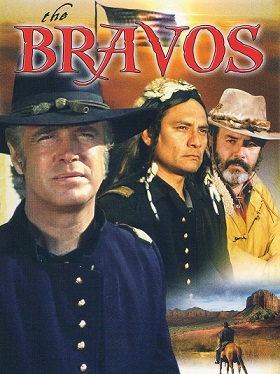
The Bravos (1972, directed by Ted Post)


Major John David Harkness (George Peppard) is the commander of Fort Bravo, a small and ill-equipped frontier fort.  Despite having only 77 soldiers and not many supplies, Harkness has managed to keep an uneasy peace between the local Indian tribes and the settlers who move through the area.  The peace, however, is disturbed when an arrogant wagon master (Pernell Roberts) kills the son of the tribal chief.

That’s not all that Harkness has to worry about.  A German outlaw (Bo Svenson) is hiding out at the camp.  His head scout (L.Q. Jones) suspects that something is forcing the local tribes out of the area.  Two settlers from Missouri (played by Barry Brown and Belinda Montgomery) are at the fort and trying to decide whether they should continue westward or return to Missouri.  Finally, Harkness’s 12 year-old son, Peter (Vincent Van Patten), has been expelled from his New England boarding school and is being sent to Fort Bravo to live with his father.  When Major Harkness refuses to turn the wagon master over to the Indians, they kidnap his son instead.

The Bravos was made for television and originally aired on ABC in 1972.  It was apparently meant to serve as the pilot for a television series, one that would have followed the daily adventures of the Major, his son, and all of the men at Fort Bravo (who were played by television mainstays like Dana Elcar, Randolph Mantooth, and George Murdock.)  For all intents and purposes, Pernell Roberts, Bo Svenson, Belinda Montgomery, and Barry Brown are all “special guest stars” and are meant to serve as examples of the type of television-friendly actors who would visit Fort Bravo on a weekly basis.  That the pilot didn’t lead to a series isn’t surprising.  TV westerns may have dominated the ratings in the 50s and the 60s but they quickly went out of fashion in the 70s as networks realized that they could make more money selling ad space for Norman Lear sitcoms and cop shows.  In the 70s, the people that advertisers were wanting to reach were watching Archie Bunker and Starsky and Hutch, not George Peppard.

Because of its TV origins, The Bravos is a fairly bland western.  It would be a few years before George Peppard would reinvent himself as a grizzled character actor and he’s sincere but fairly dull here.  Pernell Roberts is more effective as the headstrong wagon master and perhaps The Bravos would have worked better if Roberts and Peppard had switched roles.  In the end, the main reason to see the film is for the chance to see L.Q. Jones play a heroic role for once.  A member of Sam Peckinpah’s stock company, Jones brings some authentic grit to his role as the fort’s only scout.  Jones played a lot of villains but I always preferred him as one of the good guys.

The Bravos ends with a few major subplots unresolved.  Maybe they would have been resolved during the show’s first season but it was not to be.

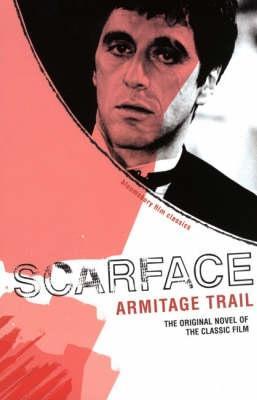
Novel Review: Scarface by Armitage Trail


First published in 1930, Scarface tells the story of Tony Guarino.  Tony was an 18 year-old hoodlum, working his way through the Chicago rackets.  Unfortunately, for Tony, he started to draw too much attention from the cops and his gangster boss told Tony to stop hanging around so much.  Miffed, Tony decided to join the Army.

Tony served with a valor in World War I.  He was natural leader and had no hesitation when it came to killing people.  He was “a good soldier,” as the novel puts it.  When he’s wounded in battle, he’s left with a facial scar that changes his appearance to the extent that even his own family doesn’t recognize him when he returns to Chicago.  Of course, due to a clerical mistake, they also think that Tony’s dead.  After killing his former mistress and her new lover, Tony somewhat randomly decides to change his name to Tony Camonte and take over the Chicago underworld.

He gets a job working for Johnny Love.  Scarface Tony, as he is called now, works his way up.  Soon, Tony is in charge of the Lovo mob and he even has a girlfriend, a former “gun girl” named Jane.  Unfortunately, Tony also has a lot of enemies.  Captain Flanagan may take Tony’s money but he still wants to put Tony behind bars.  The DA may take Tony’s money but he still wants to put Tony behind bars.  The cops way take Tony’s money but …. well, okay, you get the idea.  Tony can’t trust anyone.  Complicating things is that his older brother is moving his way up in the police force and his younger sister has been hanging out with Tony’s main gunman.  And there’s a new gang boss in town.  His nickname is Schemer.  You know he has to be bad with a nickname like that!

I read Scarface yesterday.  It’s only 181 pages long and it’s a quick read.  It’s also not a particularly well-written book.  The prose is often clunky.  The dialogue is awkward.  Tony really doesn’t have any motivation beyond the fact that he’s a jerk.  We’re continually told that Tony has become one of the most powerful gangsters in the country but we don’t really see any evidence of it.  One of the basic rules is that it’s better to show than to tell and this novel is all about telling instead of showing.  What there is of a plot feels like it was made up on the spot.  For instance, with the exception of an off-hand mention of her in the first chapter, the character of Tony’s sister doesn’t even figure into the story until it is nearly done and, yet, the story’s conclusion pretty much hinges on her existence.  Though not as well-written, Scarface is still a bit like The Epic of Gilgamesh.  Writer Armitage Trail just kept coming up with complications until he finally ran out of tablets and had no choice but to abruptly end things.

That said, the book is notable in that it served as the inspiration for Howard Hawks’s 1932 film, Scarface.  The Hawks film, which only loosely follows the plot of Trail’s book and which wisely abandons some of the less credible plot points, would later be remade by Brian De Palma, with Al Pacino stepping into the role of Tony.

And the rest, as they say, is history.