Film Review: Small Axe: Red White and Blue (dir by Steve McQueen)


Red, White, and Blue opens with a very young Leroy Logan (Nathan Vidal) standing on a London street corner.  Behind him is the school that he attends.  He’s wearing a school uniform.  As the other students walk past him, they say hi and acknowledge the very obvious fact that Leroy is a student who is waiting to be picked up by his parents.

That, however, doesn’t matter to the two white police officers who walk up to Leroy and start to interrogate him as to why he’s standing on the street corner.  They inform Leroy that there have bee several burglaries in the area and that the burglar is a young, black male.  They start to search Leroy.  The only thing that stops them is the arrival of Leroy’s father, Ken (Steve Toussaint).  Ken reprimands the police for harassing his son.  While driving Leroy home, Ken tells Leroy that he expects his son to do two things for him.  Leroy is never to become “a roughneck” and he’s never to bring the police to his front door.

Jump forward several years and Leroy Logan (now played by John Boyega) is now grown up and working as a forensic scientist.  When his father is beaten by two police officers who claim that Ken was blocking traffic and that he was resisting arrest (neither is true), Leroy decides to channel his anger into something productive.  He applies to join the police force, hoping to bring about change from within.

Needless to say, that turns out to be more difficult than even Leroy was expecting.  At first, Leroy finds himself being used as a prop.  Knowing that they’ve got to fix their public image, the police uses Leroy as a part of their latest public relations campaign, featuring him in advertisements and news stories.  But on the streets, Leroy finds himself an outsider.  His fellow cops, the majority of whom are white, refuse to have his back and welcome him to the force by writing racist graffiti on his locker.  Meanwhile, the members of his community now distrust Leroy, accusing him of selling out and calling him a traitor.  Leroy became a police officer believing that he could be an agent of change but he soon discovers that no one is interested in changing.

At the heart of the film is Leroy’s relationship with his father.  Though Leroy joined the force to try to make life better for men like his father, he didn’t tell Ken about his decision.  In fact, Ken doesn’t find out until two police officers show up at this doorstep, checking to make sure that Leroy put the correct address on his application.  Ken believes that the system cannot be changed.  Leroy disagrees.  The film leaves it to us to decide which man is correct.

Red, White, and Blue is based on a true story.  Leroy Logan was one of the first blacks to join the London Metropolitan Police and he joined for the same reasons that are shown in the film.  Eventually, Leroy would work his way up to being a superintendent and he would help to found and later chair the Black Police Association.  Interestingly enough, the details of Leroy’s eventual success are left out of Red, White, and Blue.  Instead, the film ends with Leroy and his father at the kitchen table, still wondering if things can change.  It’s an ambiguous ending, one that’s hopeful because, even though he’s disillusioned, Leroy hasn’t given up but, at the same time, it’s also one that accepts that it’s going to take more than just one man to change the culture of the police.  It’s an ending that suggests that racism is so ingrained in society that the only way to vanquish it might be to just start all over again from the beginning.  It’s an ending that manages to be both low-key and revolutionary at the same time.

Red, White, and Blue is the third film in Steve McQueen’s Small Axe anthology.  It’s a deceptively simple film, one that kind of sneaks up on you and takes you by surprise.  The minute that you start to think the film is going to be just another well-intentioned liberal plea for tolerance, McQueen will throw in an unexpectedly honest scene that will shake your expectations.  For instance, when Leroy tries to help a prisoner who has been brutalized by a bunch of racist cops, his help is rejected and Leroy discovers that the prisoner hates him even more than he hates the cops who were beating on him.  The prisoner takes it for granted that the white cops are going to be brutal but he saves his most vicious scorn for someone whom he consider to be a traitor to his race.  McQueen directs in a matter-of-fact but enthralling style, emphasizing the bleak coldness of the London landscape.

John Boyega and Steve Toussaint both anchor the film with ferocious performances.  Leroy spends the majority of the film having to hold back his anger and, sometimes, his despair and Boyega does a wonderful job suggesting what’s going on behind Leroy’s outward calmness.  Boyega does get to do some yelling, of course.  When he confronts his follow police officers for refusing to respond to his calls for backup, Boyega doesn’t hold back.  But his best moments are the quiet ones, where Boyega subtly but powerfully suggests that anger and the pain that Leroy has to deal with every day.

Red, White, and Blue is a short but powerful film.  Check it out on Prime.

Music Video of the Day: It’s Not Christmas Till Somebody Cries by Carly Rae Jepsen (2020, dir by Josh Forbes)


Ain’t that the truth!?

(I know, I know.  Ain’t is not a real word and I should be embarrassed about using it.  I’m a a half a country girl and half a city girl and sometimes, the country half just demand to be heard.)

Usually, I’m the one who cries on Christmas.  This is the month that I allow myself to get sentimental and everything.  Seeing my presents.  Getting my presents.  Unwrapping my presents.  Trying my presents on.  Showing my presents off.  Seriously, it touches my heart every time.

Enjoy!

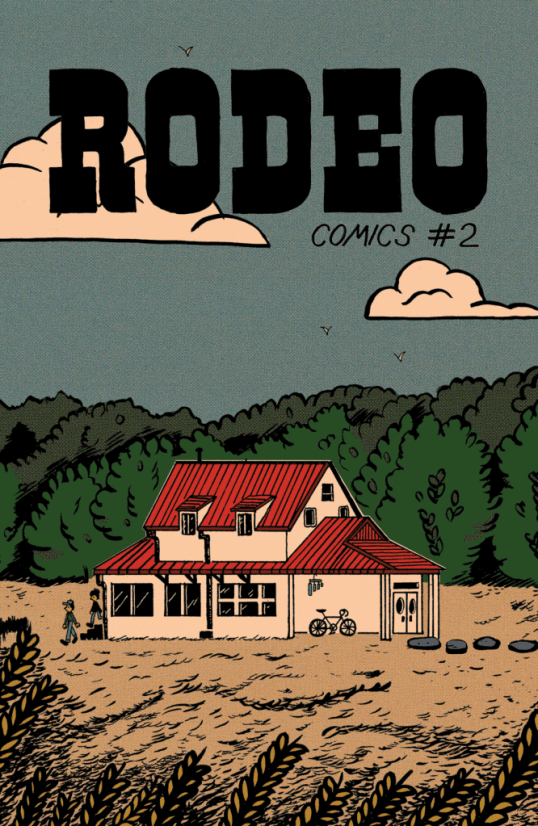
No Sophomore Slump : Evan Salazar’s “Rodeo Comics” #2


Ryan C. (fourcolorapocalypse)'s avatarRyan C.'s Four Color Apocalypse

Back when albums were a thing, many a band or artist struggled with the so-called “difficult second album,” but such a concept applies to other mediums, as well — including, of course, comics. It’s much harder to make an impactful “splash” when people see you coming and when they, to one degree or another, sort of know what to expect. Deliver on that expectation, and you’re accused of playing it safe; deviate from it, and you’re accused of getting too big for your britches too quickly and abandoning whatever it was that made you successful in the first place. You just can’t win.

Evan Salazar, for his part, has chosen the “more of the same” route for Rodeo Comics #2, but not necessarily done in the same way : for one thing, the MICE Mini-Grant he received has gone into upping the production values of his self-published comic considerably, the…

View original post 728 more words

There’s A Front Row Seat Reserved For You In Tana Oshima’s “Theater Of Cruelty”


Ryan C. (fourcolorapocalypse)'s avatarRyan C.'s Four Color Apocalypse

Deep in the murky subterranean depths of your being, there are questions that can’t even be asked, much less answered. Hidden truths obfuscated by so many layers of denial and reification that the very act of keeping them hidden has become a central function of your identity. Or maybe that should be of both your identities — the one you’ve constructed for yourself, and the one you show the public. What you see is never what you get with either, of course, because you desperately want to avoid what you need to see just as desperately as you know you really should be doing no such thing. Think of those parties you went to in your twenties that you knew your ex was going to be at and there was nobody in the world you wanted to see less, and nobody in the world you wanted to see more

View original post 783 more words

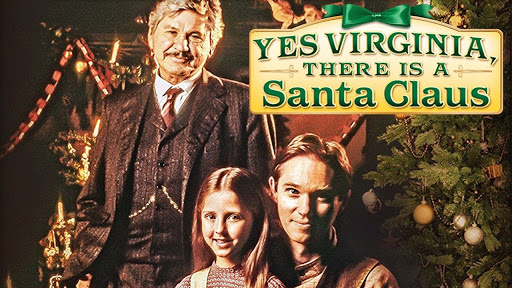
Holiday Film Review: Yes, Virginia, There Is A Santa Claus (dir by Charles Jarrott)


The year is 1897 and eight year-old Virginia O’Hanlan (Katharine Isabelle — yes, that Katharine Isabelle) has a problem.  All of her “little friends” say that there is no Santa Claus!  When she asks her father (Richard Thomas) about whether or not there’s a Santa Claus, he suggests that she write a letter to the New York Sun.  “If you see it in the Sun,” he says, “it must be true!”  The letter ends up on the desk of a gruff editor (Edward Asner) who assigns Virginia’s question to Frank Church (Charles Bronson), an alcoholic who is still mourning the deaths of his wife and child. Conquering his own cynicism and depression, Church writes an editorial reply that goes on to become not just a holiday classic but also the most frequently reprinted editorial in history.  Yes, Virginia, Church begins, there is a Santa Claus….

This 1991 film is a sweet-natured retelling of the famous story of Frank Church’s editorial.  Of course, it takes considerable liberties with the actual story.  Here’s just a few examples.

In real life, the editorial was published in September.  In the movie, it’s published on Christmas Eve.

In real life, Virginia’s father was a doctor and she came from a middle class family.  In the movie, Virginia’s father is an Irish immigrant and laborer who is so poor that the O’Hanlan’s might not be able to afford a Christmas!  They live in a tenement and Virginia’s father is frequently harassed by not only the cops but also corrupt labor officials.

In real life, Frank Church was a notoriously cynical atheist who reportedly had little use for Christmas and specifically didn’t sign his name to his famous editorial because he didn’t think much of it.  At the time that he wrote the editorial, he was also a bachelor.  He did marry shortly after the editorial was published but he never had any children.  In the film, Frank is a widower who rediscovers his zest for life and who smiles broadly while listening to Virginia’s father read it aloud.

And, of course, in real life, it’s very probable that the letter was written by Virginia’s parents because how many eight year olds would actually write something like, “Some of my little friends say there is no Santa Claus.”  In the movie, however, Virginia writes the letter herself.

In other words, this is a nice movie that just happens to be terrible history.  The film does end with a disclaimer that clarifies that “certain events have been fictionalized.”  Actually, the entire story has been fictionalized, with the exception of the content of Church’s editorial.  That said, this is a sweet-natured and generally likable movie.  If nothing else, it’s a film that means well and, as tempting as it may be to roll your eyes at the film’s unabashed sentimentality, it’s sincerity feels right for the holiday season.  It’s a made-for-TV movie from the early 90s so don’t expect any surprises but it’s nicely acted and even Charles Bronson seems to be in a good mood by the end of it.

As far as movies about journalists lying to children are concerned, this is a good one.  Just don’t watch it for a history lesson.

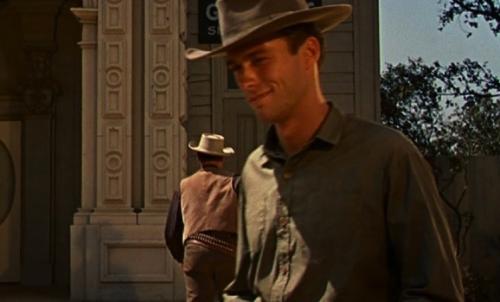
Star in the Dust (1956, directed by Charles F. Haas)


The time is the late 1800s and the place is the town of Gunlock.  Gunlock is split between the ranchers and the farmers, with the ranchers eager to buy all of the land around the town and the farmers refusing to sell.  Trying to keep the peace is Sheriff Bill Jorden (John Agar), who not only wants to keep war from breaking out in Gunlock but who also wants to live up to the example of his legendary father.

There’s a prisoner in the Gunlock city jail.  Sam Hall (Richard Boone) is a notorious gunman who has been convicted of killing three farmers.  He’s due to hang at sunset but everyone in town believes that Sam will somehow escape the executioner.  (They’re even taking bets down at the local saloon and casino.)  Everyone knows that Sam was hired by the ranchers but Sam has yet to name which rancher specifically invited him to come to town.  The farmers want to lynch Sam.  The ranchers want to break him out of jail and arrange for him to be killed in the resulting firefight.  Meanwhile, Sheriff Jorden insists that he’s going to carry out Sam’s sentence by the letter of the law.  Complicating matters for Jorden is that he’s engaged to Ellen Ballard (Mamie Van Doren), the sister of the main rancher, George Ballard (Leif Erickson).

I was really surprised by Star in the Dust, which turned out to be far better than I would normally expect a John Agar/Mamie Van Doren western to be.  Though Agar, Boone, and Van Doren get top-billing, Star in the Dust is really an ensemble piece, with several different people responding to the possible hanging of Sam Hall in their own way.  Sam’s girlfriend, Nellie Mason (Colleen Gray), tries to figure out a way to keep Sam alive.  One of the ranchers, Lew Hogan (Harry Morgan), is morally conflicted about whether or not to honor his word to help Sam escape, especially after he finds out that Sam tried to rape his wife (Randy Stuart).  Even the old deputies (played by James Gleason and Paul Fix) get a few minutes in the spotlight before the shooting begins.  The town of Gunlock comes to life and everyone, from the villains to the heroes, has a realistic motivation for reacting in the way that they do to Sam’s pending execution.

Mamie van Doren’s role is actually pretty small.  She doesn’t have enough screen time to either hurt or help the film overall.  John Agar is as stiff as always but, for once, it works for his character.  Sheriff Jorden isn’t written to be a bigger-than-life John Wayne type.  Instead, he’s just a small town lawman trying to do his job and keep the peace.  Not surprisingly, the film is stolen by Richard Boone, who brings a lot of unexpected shading and nuance to the role of Sam Hall.  Hall may be a killer but he has his own brand of integrity and, if he’s going to die, he’s determined to do it his way.

Produced by the legendary Albert Zugsmith, Star in the Dust is a surprisingly intelligent and well-acted B-western.  If you watch carefully, you might even spot Clint Eastwood playing a ranch hand named Tom who wants to know if he should put money down on Sam Hall being hanged.  Though he was uncredited in this tiny role, Star in the Dust was Eastwood’s first western.

The Covers of Beauty Parade


by Peter Driben

Beauty Parade was published, by Robert Harrison, from 1941 to 1956 and you can probably already guess what the magazine about.  This was a pin-up magazine, full of articles and pictorials about Hollywood’s leading starlets.  By today’s standards, Beauty Parade seems pretty tame and the pictures are pretty innocent when compared to what you can currently find on any newsstand (not to mention the internet).  Back in the 40s or 50s, though, this was all considered to be very daring.

Here are a few of the covers of Beauty Parade!  Racy back in the 40s, they seem quaint today.

by Earl Moran

by Earl Moran

by Earl Moran

by Earl Moran

by Peter Driben

by Peter Driben

by Peter Driben

by Peter Driben

by Peter Driben

by Peter Driben

by Peter Driben

by Peter Driben