Today’s horror scene that I love comes from 1935’s Bride of Frankenstein!
In this scene, directed by James Whale, the Monster (Boris Karloff) meets his first friend, a blind hermit played by O.P. Heggie. It’s a scene that features Karloff at his best and it’s still touching, even if it is kind of hard to watch it without thinking about Peter Boyle accidentally burning down Gene Hackman’s shack in Young Frankenstein.
Jeff and I are currently on a little road trip but we’re not going to let something like that prevent us from seeing the latest bad movies.
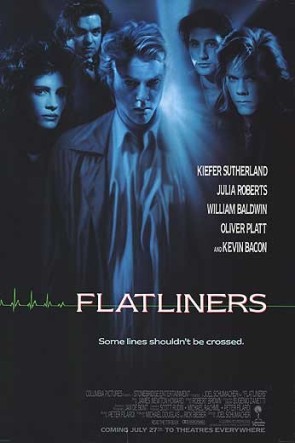
For instance, last night, we saw the remake of Flatliners at the AMC 8 in Ardmore, Oklahoma. Ardmore is a lovely little town. When I was six years old, my family briefly lived in Ardmore and I can still remember this deserted barn that was sitting right at the edge of our property. My older sisters all told me that it was haunted and I can still remember sneaking over to the window in the middle of the night and staring at that dilapidated barn, searching for ghosts. Even though I was only six at the time, it’s still an incredibly vivid memory and I still have dreams about that barn. That’s the power of a good scare and that is exactly what’s missing from Flatliners. This is seriously one of the most forgettable films that I’ve ever seen.
I did get a little excited when I discovered that the film co-starred Nina Dobrev. Most people know her as Elena from The Vampire Diaries but, for me, she’ll always be Mia Jones on Degrassi. (Mia was not only a high school student and a star on the spirit squad. She was also: a single mother, a model, a drug addict, and J.T.’s girlfriend during the show’s sixth season.) She’s one of many Canadians in the cast of Flatliners. There’s also Ellen Page and Kiefer Sutherland.
That’s right, Kiefer Sutherland returns in the new version of Flatliners. But don’t get too excited. He’s not playing the same character. If he had been playing the same character, this film would have been a lot more interesting and he could have told the new cast, “Your sins have returned in physical form … and they’re pissed off!” Instead, he’s just playing a clueless doctor with really weird hair. I think we’re just supposed to be impressed by the fact that he agreed to appear in the remake and I guess I would be if the first one was some sort of award-winning classic or something. It’s not like the original Flatliners is the defining role of Kiefer Sutherland’s career. Now, if they had gotten Oliver Platt to come back…
ANYWAY, it’s pretty much the same story all over again, just told with a lot less visual flair. (Say what you will about Joel Schumacher as a director, he understood that the first Flatliners needed a lot of neon.) This time, it’s Ellen Page who convinces her friends to let her die and then revive her after two minutes. The remake does add an interesting wrinkle in that, when Page returns from being dead, she is now suddenly super smart and has total recall. At the very least, this explains why all the rest of her friends are then so eager to try it out for themselves. Even though it feels like a Limitless knock off, it’s still an interesting idea and I think that if the entire film had been about the students obsessively killing themselves and coming back, all in an effort to achieve some sort of Godhood, it would have made for an intriguing movie.
But that whole angle kind of gets abandoned. Soon, it’s time for everyone’s sins to start showing up. That means that Ellen page has to deal with her dead sister. Nina Dobrev has to deal with a dead patient. Another doctor has to deal with a girl she bullied. The movie tries to make you wonder whether or not they’re just having hallucinations but why would a hallucination feel the need to sneak around a room while its target isn’t looking?
Plus, I have to wonder: there are real people out there who have been clinically dead, just to have been brought back to life. Some of them have reported seeing the bright light and all the rest. If you follow this movie’s logic, are they all now secretly smart and being chased around by their past sins? If that’s the case then I’m looking forward to the sequel to Heaven Is For Real.
It’s a forgettable movie. The first Flatliners had its own stupid charm but the remake just falls flat.
“Our sins have come back in a physical form … and they’re pissed!”
That one line pretty much sums up the original 1990 version of Flatliners. It’s a good line in that it’s one that you remember and it’s a line that you can use in almost any situation.
Have you gotten a phone call from an unknown caller? “Our sins have come back in physical form … and they’re pissed!”
Have you and your boyfriend recently been driving across Texas and suddenly noticed that a car has been following you all the way from Lake Dallas to the border of Oklahoma. “Our sins have come back in physical form … and they’re pissed!”
Have you ever had a stranger fail to hold a door open for you? There’s only one possible reason for that rudeness. “Our sins have come back in physical form .. and they’re pissed!”
And don’t even get me started on people who leave negative comments under my reviews. We all know what’s going on with that! “Our sins have come back in physical form … and they’re pissed!”
It’s a line that is both oddly memorable and also deeply stupid. The same description can be applied to Flatliners. It’s a film about a group of medical students (played by Julia Roberts, William Baldwin, Oliver Platt, and Kevin Bacon) who help Kiefer Sutherland investigate whether or not there’s actually an afterlife. Sutherland believes that there is but he needs an atheist to be a part of the group, that’s where Kevin Bacon comes in. And he needs a potential love interest and a Baldwin brother to be a member of the group as well, that’s why Julia Roberts and William Baldwin are there. And, of course, someone has to provide comedic relief whenever things start to get too dark. Say hello to Oliver Platt! Anyway, Sutherland’s plan is to die for a minute or two and then have his fellow medical students bring him back to life. It sounds like kind of a dumb idea but everyone agrees to it.
Anyway, it turns out that the afterlife looks a lot like an overproduced student film, full of weird camera angles, tinted lighting and disembodied voices. When Sutherland dies, he sees a boy that he used to bully. Julia Roberts sees her father, who committed suicide when she was younger. Kevin Bacon sees a little girl that he used to bully. (There are a lot of bullies in this movie.) William Baldwin, a sex addict who is chronically unfaithful to his fiancée, sees hundreds of women, all saying, “But you said you loved me.” Oliver Platt never actually gets to die and therefore, he sees nothing. He does make a joke about how his vision would probably involve an angry babysitter. I laughed.
What happens next? “Our sins have come back in physical form … and they’re pissed!”
Flatliners has an intriguing premise but oh my God, is it ever a silly film. It’s not really a spoiler to tell you that all of these returned sins want the characters to either atone for their mistakes or make peace with their past. For Kevin Bacon, this means tracking down the girl that he used to bully and allowing her to bully him. For Julia Roberts, it means getting an apology from her Dad and understanding that he was addicted to heroin. For William Baldwin, it means making peace with never being as well-known as either Alec or Steven. As for Kiefer … well, things are a bit more complicated for Kiefer Sutherland.
Flatliners starts out as a horror film but then it turns into a squishy movie about letting go of bitterness and learning how to forgive oneself. It’s kind of annoying that the film couldn’t just stick to being scary because the first half of the film does have some effectively tense moments. However, it all gets lost as the film’s plot sinks into sentimental, New Age-y quicksand.
Flatliners was directed by Joel Schumacher, who generally does well with shallow films that 1) don’t really mean anything and 2) don’t involve super heroes. And really, the only film that I can think of that’s more shallow than the original Flatliners is the remake. (But we’ll talk about that later…) Schumacher’s direction here is not particularly bad — everyone looks good and the film is never boring. It’s a very, very pretty film and one that doesn’t add up to much.
I would suggest watching it with your sins, especially after they take physical form. Maybe they’ll be a little less pissed off afterward.
4 Shots From 4 Films is just what it says it is, 4 shots from 4 of our favorite films. As opposed to the reviews and recaps that we usually post, 4 Shots From 4 Films is all about letting the visuals do the talking.
This October, I am going to be using our 4 Shots From 4 Films feature to pay tribute to some of my favorite horror directors, in alphabetical order! That’s right, we’re going from Argento to Zombie in one month!
Bob Clark may be best remembered for directing the holiday classic, A Christmas Story, but he started out his career as a horror filmmaker. Before he spread Christmas cheer with A Christmas Story, he spread Christmas fear with Black Christmas.
4 Shots From 4 Films
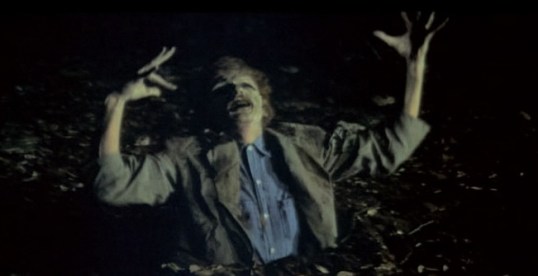
Children Shouldn’t Play With Dead Things (1972, dir by Bob Clark)
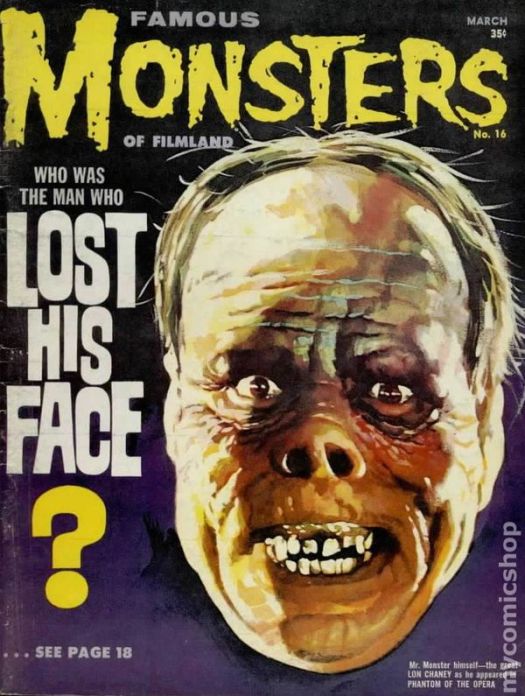
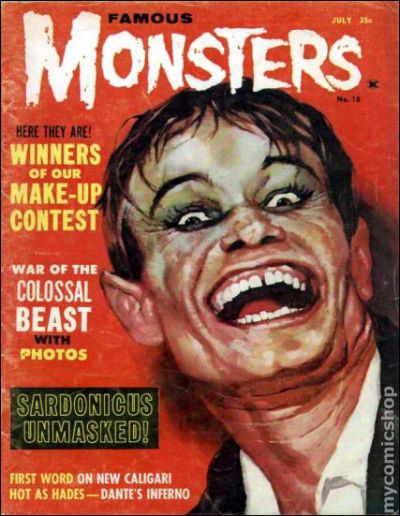
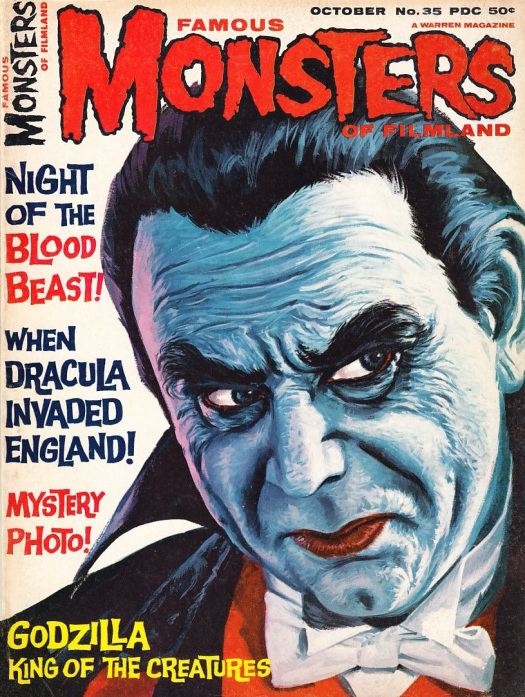
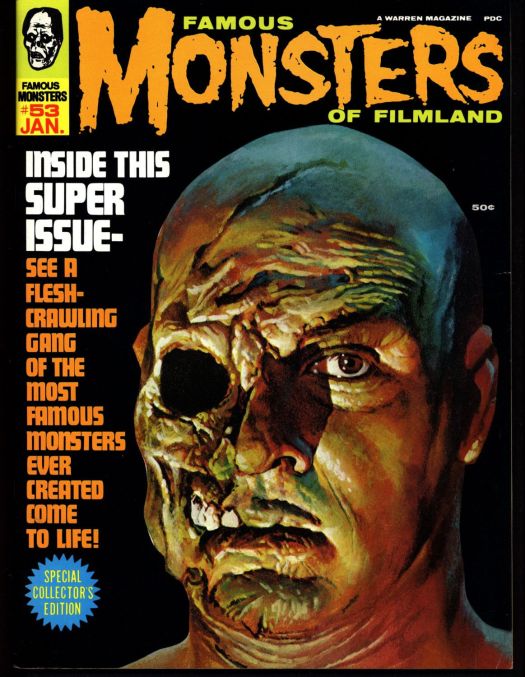
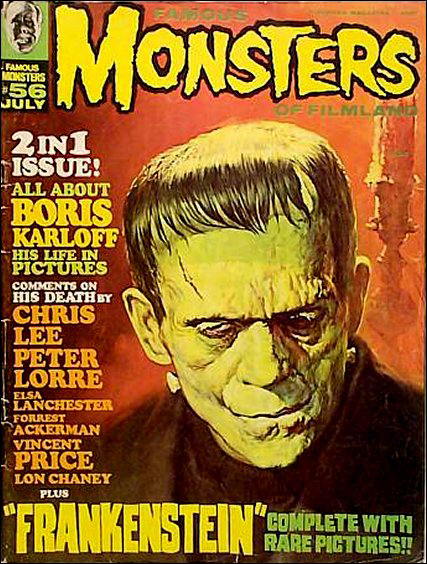
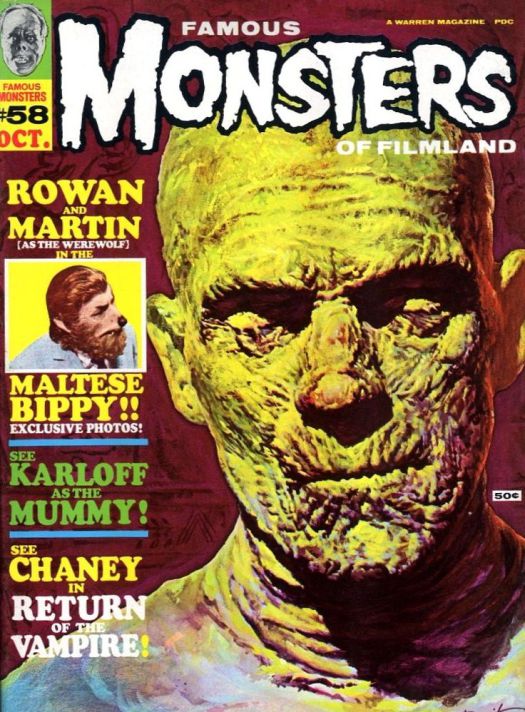
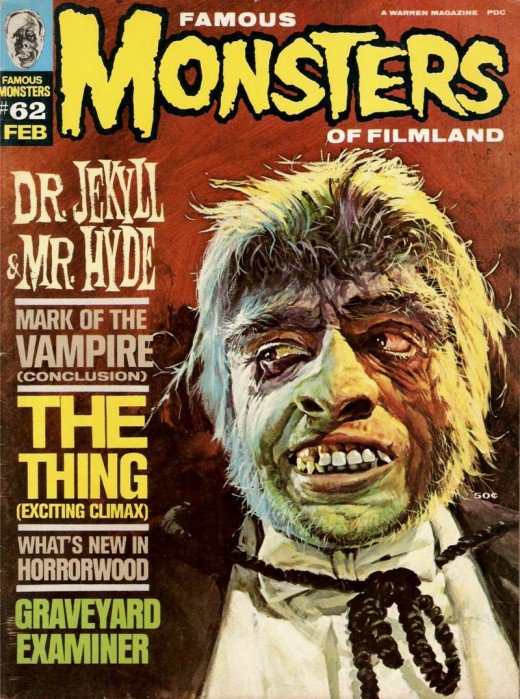
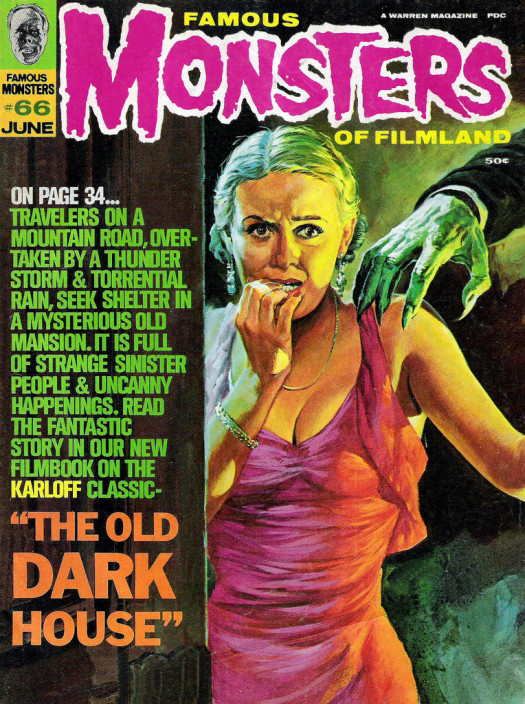
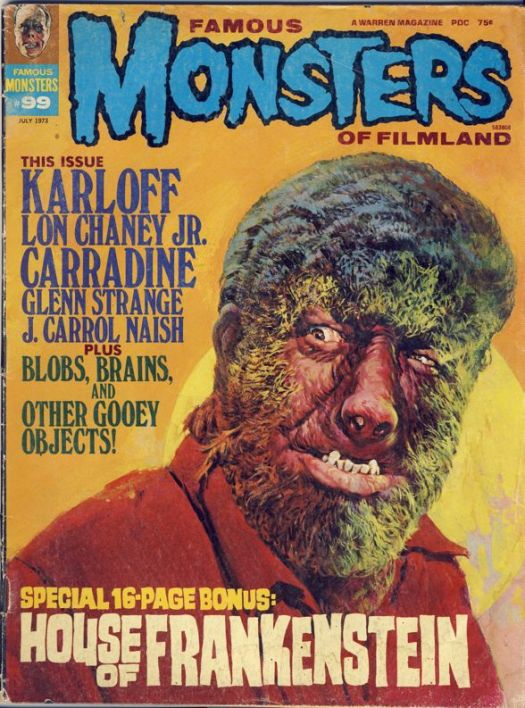
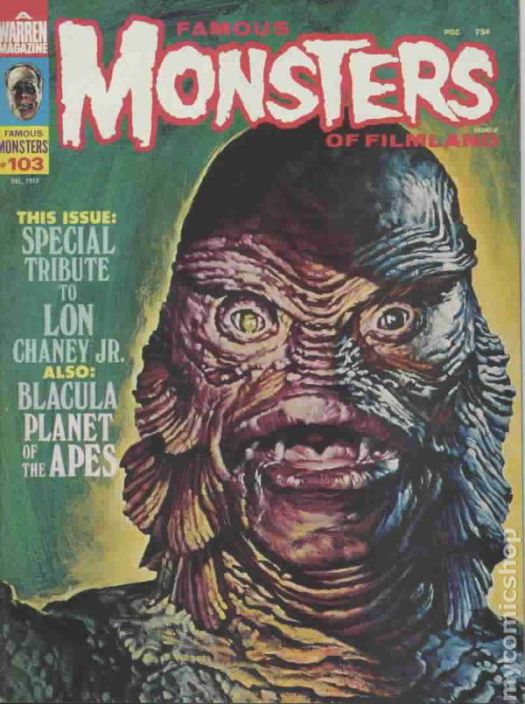
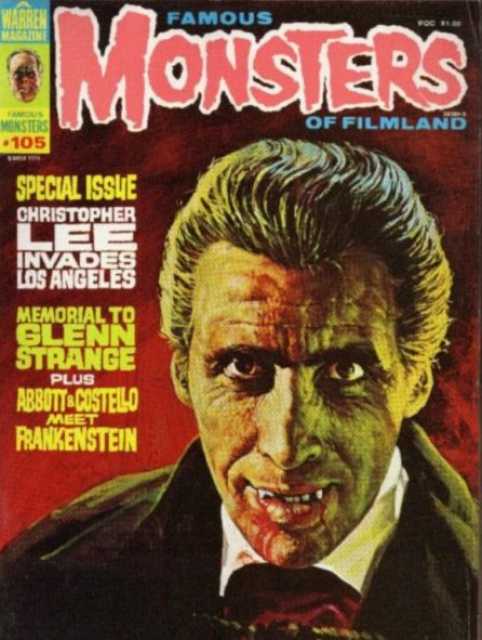
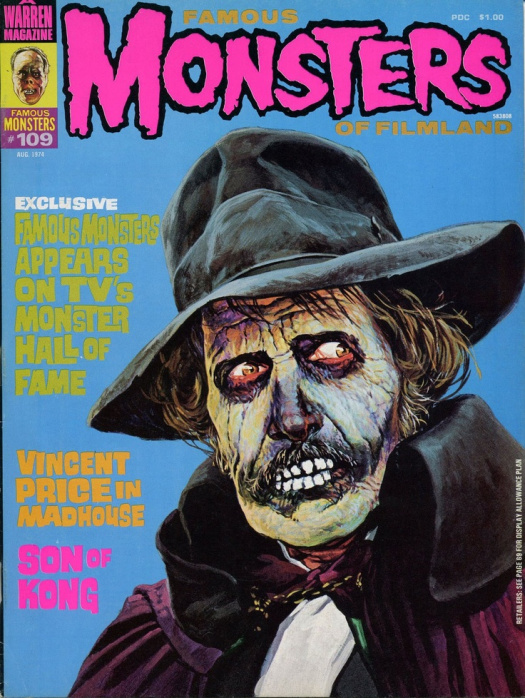
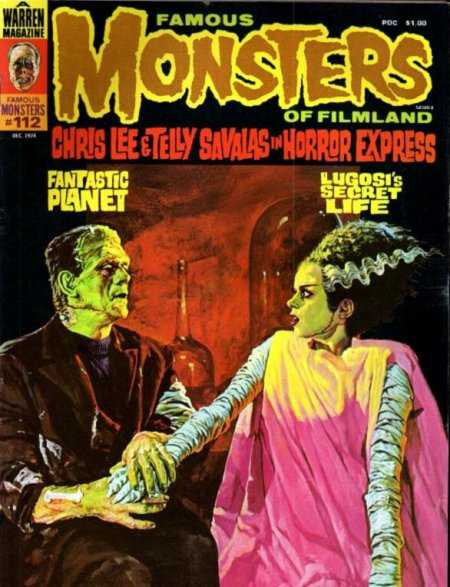
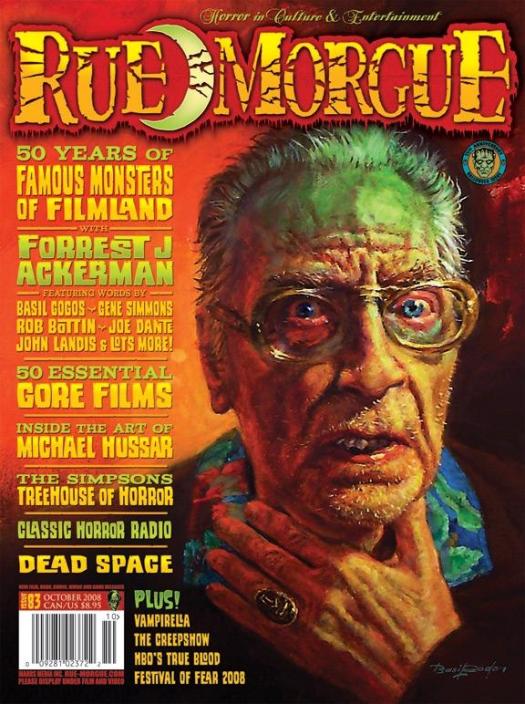
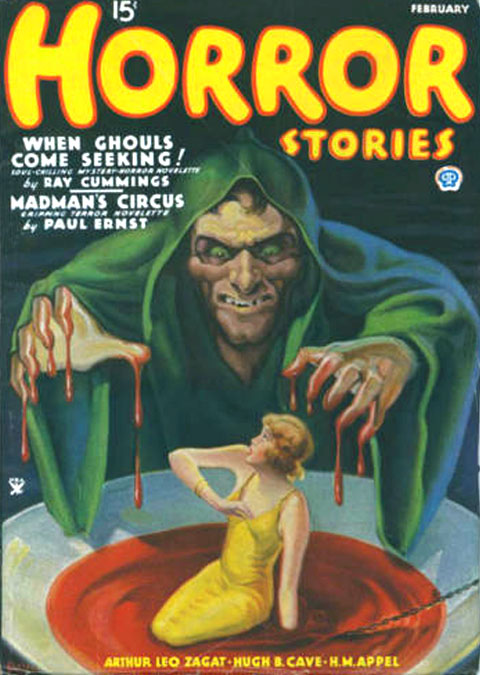
Everyone from the Monster Kid Generation knows the name of Basil Gogos. The Rondo Award-winning artist created memorable covers on a monthly basis for FAMOUS MONSTERS OF FILMLAND Magazine, depicting the iconic stars of the horror genre in his bold, vividly colored style. Mr. Gogos passed away on September 14th of this year at the age of 78. In his honor, here’s a ghoulish gallery from the fantastic work of artist Basil Gogos.
And finally, here’s Basil’s tribute to the late Forest J Ackerman from RUE MORGUE Magazine. A hearty Halloween salute to you both!
It’s really not October until you’ve watched at least one Vincent Price film and, for today’s horror on the lens, we have one of his most popular films, 1971’s The Abominable Dr. Phibes!
First up out of the gate in our October-long look at some of the more — and I say this with all due respect — obscure horror offerings available for streaming on Amazon Prime we have Chameleon Shadow, a micro-budget affair from writer/director/star Sam Mills, who apparently spent somewhere in the neighborhood of $10,000 (probably of his own money) to shoot this thing in his hometown of Salt Lake City, Utah, earlier this very year. This is one of those flicks that barely has an IMDB presence and has attracted very few reviews to date, so let’s see if I can get the intrepid Mr. Mills on the “scoreboard” with his first official “external reviews” link, shall we?
Right off the bat we’re greeted with some far more well-composed and “artsy”-looking shots than we’re accustomed to from essentially “homemade” efforts such as this, and while I can’t say for…
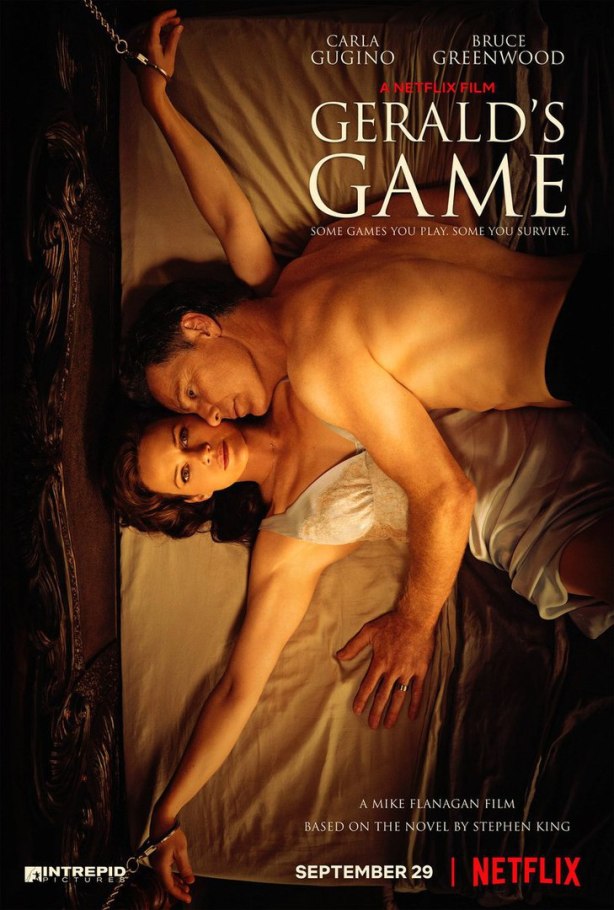
Well, whaddya know : Stephen King seems to be experiencing one of those mini-resurgences in the overall pop culture zeitgeist that happens for/to him every now and then (the last probably being in 2007 with the box-office success of both The Mist and 1408), usually just at the point where it looks as though all the material that the prolific (to the point of being ubiquitous) horror scribe has cranked forth from his apparently-bottomless imagination has been mined for all it’s worth. Granted, new King adaptations are almost always debuting somewhere on TV, the silver screen, or various streaming services, but their sheer and constant volume pretty much guarantees that few, if any, will have much impact beyond the author’s admittedly-large fan base — which is usually more than enough to ensure that they make at least a nice, tidy profit, I’m sure, but I doubt that most Hollywood observers…
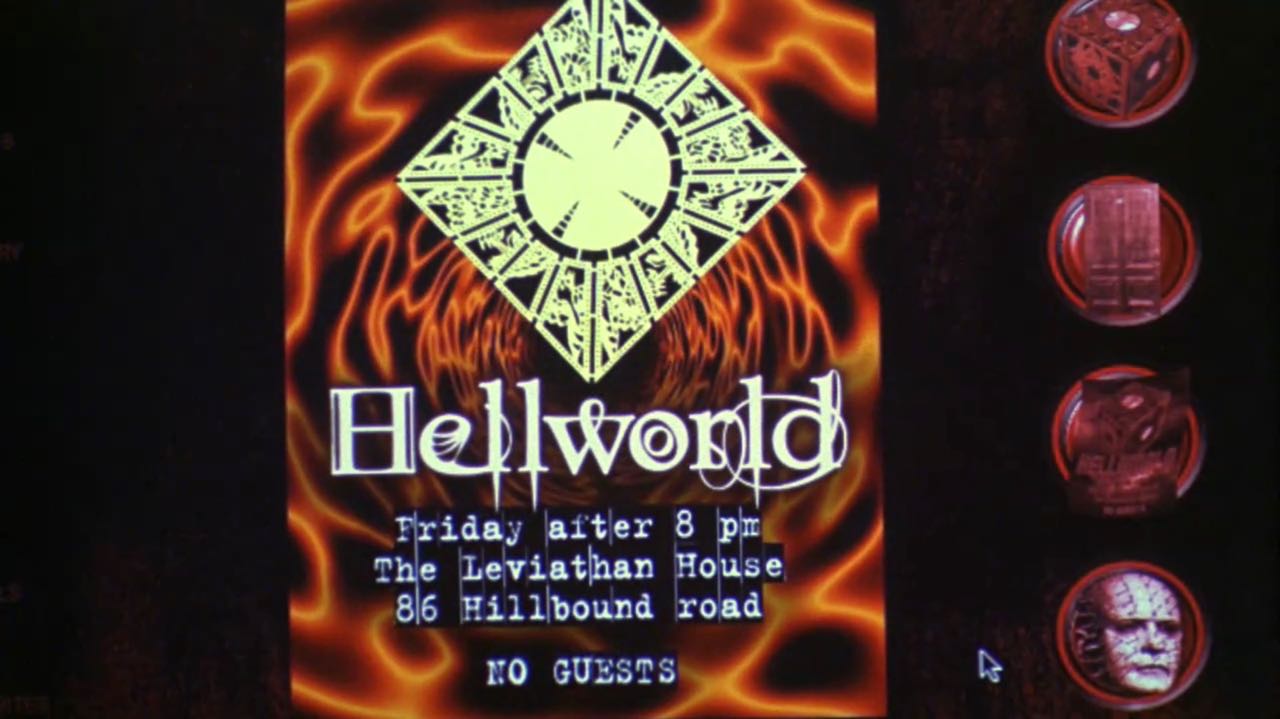
Oh, Kirsty. Yes, Hellraiser III was awful. Yes, it is sad that it’s the movie that got Motörhead’s version of Hellraiser. But it could have been worse. It could have been Hellraiser: Hellworld (2005) that got this song. That would have been truly painful.
Hellraiser: Hellworld (2005, dir. Rick Bota)
In 1992 they finally got around to making a third film in the Hellraiser franchise. It really has nothing to do with the first two films. Once you’ve seen Pinhead create a cenobite with a face made of CDs, there’s no going back. If you’ve only seen the first two films, then stop there. You can watch this music video to get one, if not the only good thing about the third film–this song.
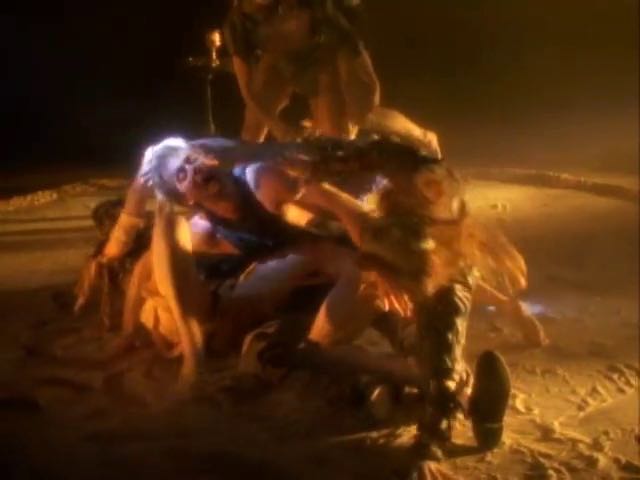
We open on Motorhead’s performance, set a large, cavernous space. Dante-esque, dimly lit with pools of light on the band members and their instruments. As the camera moves around the space, various creatures are revealed, oily bodies shining through their ragged bits of clothing, prosthetic pieces (a claw, a beak etc.,) and bandages, stylized make-up all showing that they are THE DAMNED. All of this is shot in shadowy black and white. We also see Props from “Hellraiser 3” (the baby, signage, etc.), which become match dissolves to footage from the film itself.
Back in our black and white cavern a roadie sits in a large Overstuffed chair toward the back of the space, smoking, watching the band’s performance. Suddenly light streams in when a door crashes open. We switch to color as Pinhead makes his grand entrance, rim-lit, a delicate presence. The demons begin to writhe madly to the music. The band’s performance builds as Pinhead moves across the floor, throwing the roadie out of his chair and out of frame. Pinhead takes the seat and gulps virgin’s blood from smoking cup. From Pinhead’s point of view we watch the band.
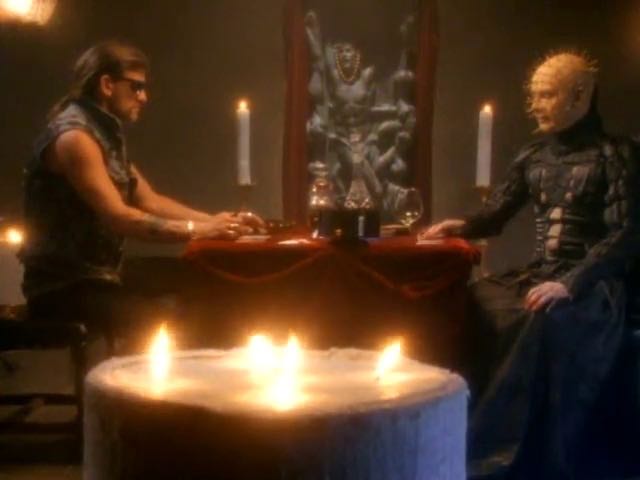
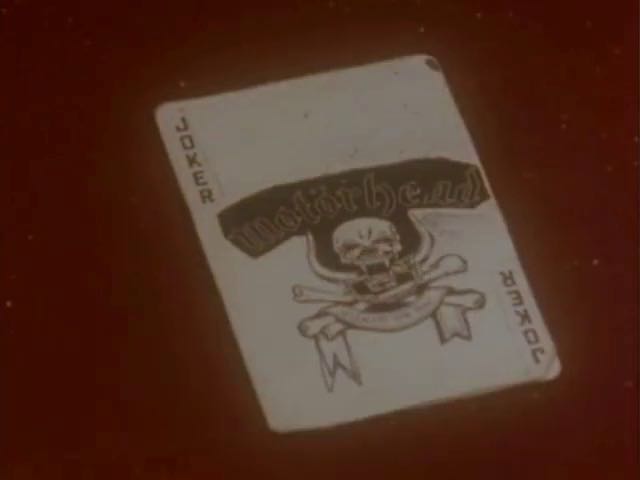
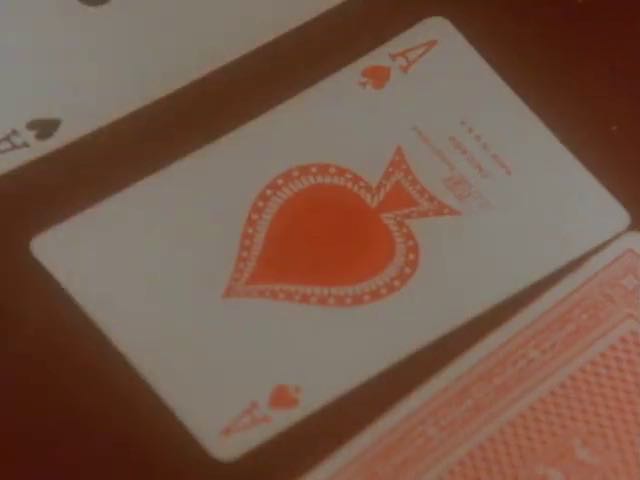
We cut to a scene of Lemmy and Pinhead in two chairs at a gaming table. Intercutting with performance footage and Hellraiser III footage, we see Lemmy and Pinhead playing cards, drinking, Serious competitors having fun. The demons writhe behind Pinhead, the band stands behind Lemmy as the tension builds between the two.
Doug Bradley added the following in 2005 concerning Lemmy:
The card game finished with me getting the Ace of Spades, so the idea is that Lemmy wins the game but at the price of losing his soul. But that was funny, when we were playing that card game there was a decanter on the table, just as a prop, and Lemmy had a word with one of his people, the decanter disappeared but it came back again full of amber liquid which Lemmy proceeded to drink his way through while we shot that scene, like you and I would drink orange juice, while the dark pope of Hell sat on the other side of the table demurely sipping Evian water…
The attraction of this music video is when Lemmy and Pinhead play cards.
However, there are a few other things I enjoy about the video.
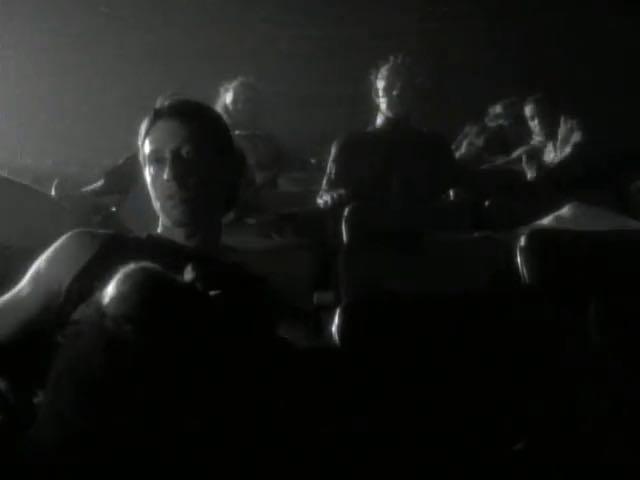
While the footage of the band playing is boring, I do like the reverse shot where Pinhead is at a Motörhead concert.
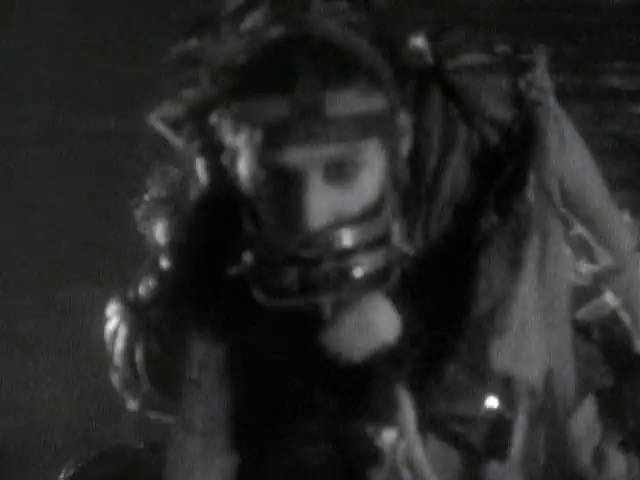
Why is this person wearing something similar to the jaw-breaking device from the Saw movies?
A bit of a Queen music video is going on here.
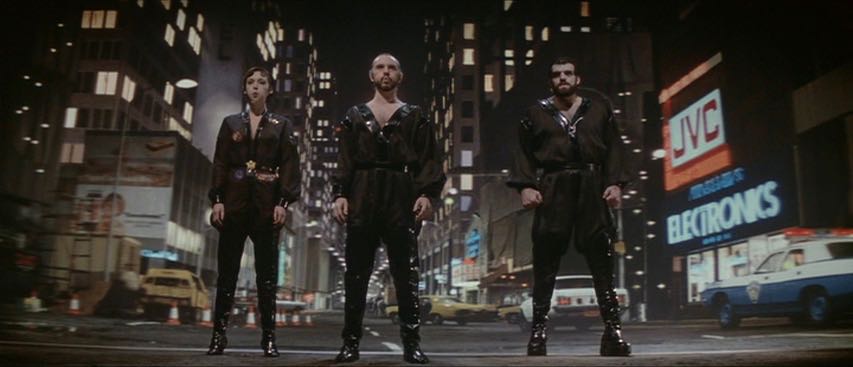
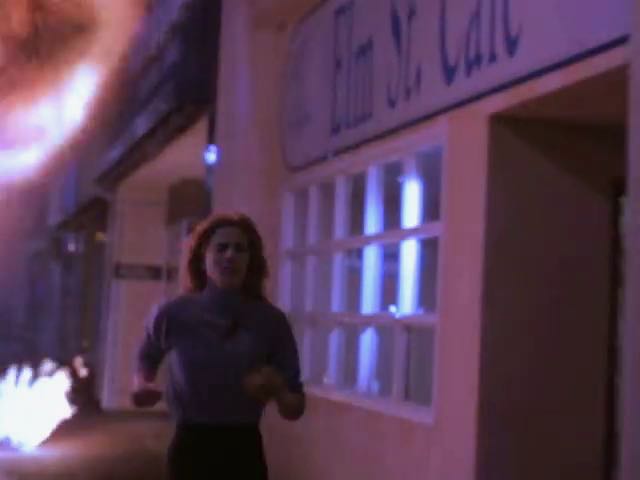
I normally don’t go for unintegrated movie footage in videos of this sort, but I appreciate that Barker left in one particular sequence from the movie. There is a scene where the cheap cenobites that Pinhead made chase Terry Farrell’s character onto a street to do a scene similar to the one from Superman II (1980).
Superman II (1980, dir. Richard Lester & Richard Donner)
And yes, Henry Cavill was in Hellraiser: Hellworld where he got killed off by Lance Henriksen, not Pinhead, since, like the other movies after IV, Hellworld was a different movie that had elements of Hellraiser grafted onto it. Pinhead doesn’t actually exist in the movie until the very end of the film.
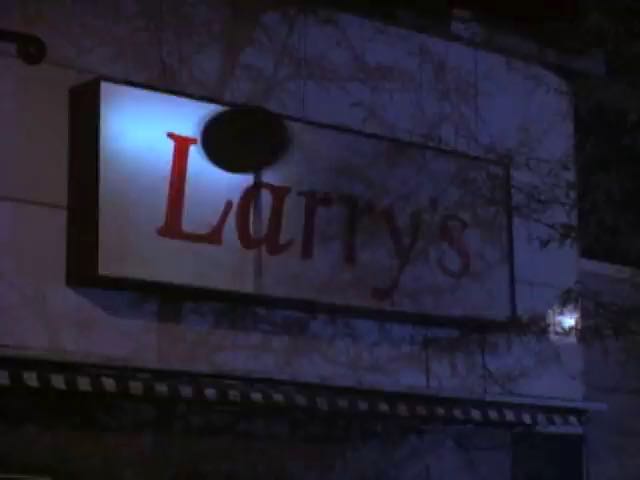
During that street destruction scene, there are at least two places that get their signs destroyed.
Larry was a character from the first Hellraiser movie played by Andrew Robinson who would go on to be on Star Trek: Deep Space Nine with Terry Farrell in 1993–one year after this movie came out.
If you have the misfortune to watch Hellraiser III, then you might notice that the statue Pinhead is in with what I remember to be trapped souls is just a tad similar to something from A Nightmare On Elm Street 3: Dream Warriors (1987). In that movie, Freddy Krueger explains that he has gotten stronger by capturing children’s souls which he then shows as part of his flesh. I’m sure the similarities weren’t lost on the people involved in both franchises. Elm Street started back up the same year as the Hellraiser franchise started. Also, makeup artist Kevin Yagher, who did makeup on Elm Street 2, 3, and 4, would go on to direct Hellraiser IV as Alan Smithee.
Barker could have just as easily used footage from the club parts of the movie instead of Farrell running on the street. Instead, he left in those shots.
Other than those things, it’s just the song and the card playing scene, which yes, is similar to The Seventh Seal (1957) with its game of chess with Death. There’s nothing else particularly interesting. You’re watching to see Lemmy turn up a joker and the ace of spades.






 Through the Shattered Lens