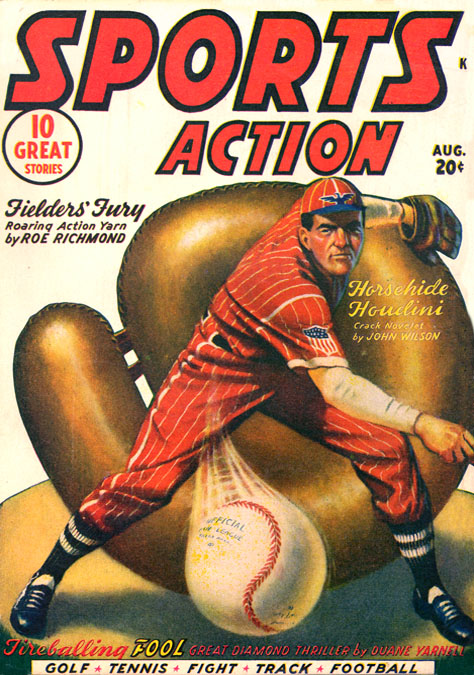
Chester Bloom was born and raised in Canada. When he was 14, he and his family moved to Virginia after his father became a reporter for The Washington News Bureau. He studied art with The Arts Student League of New York and served in World War II. He began his career doing illustrations for crime magazines but he is best known for the covers he did for sports-themed pulp magazines. He retired from commercial illustration in 1950 and spent the rest of his career as a portrait painter.
 Through the Shattered Lens
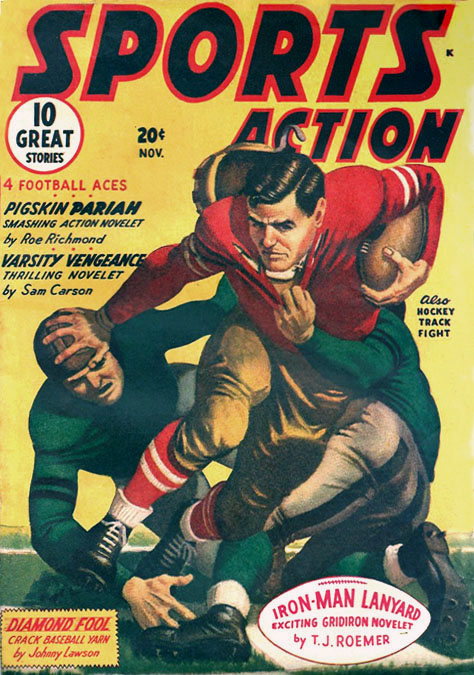
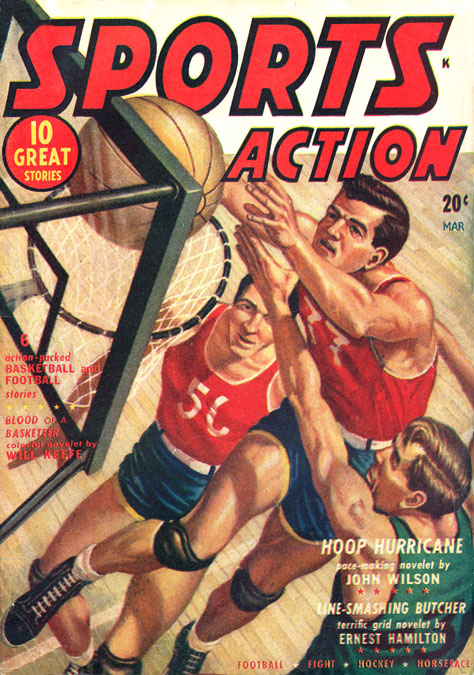
For those who might not get it, the words “gridiron” and “grid” are references to American football. It’s something of an archaic term, but still has currency here in Australia, so as to distinguish American football from the various other codes played here. Also, a lot of my fellow Australians take serious offence to gridiron being listed as a form of football, when the ball is seldom met by a player’s foot. Then again, nobody complains about the lack of baskets in basketball–I hate to break it to everyone, but a ring with a net hanging from it isn’t a basket. Baskets hold things, hoops with open ended netting do not. Also, you don’t see rugs in rugby, either, unless it’s naked women’s rugby, but I’m sure such sporting exhibitions are rare at best.
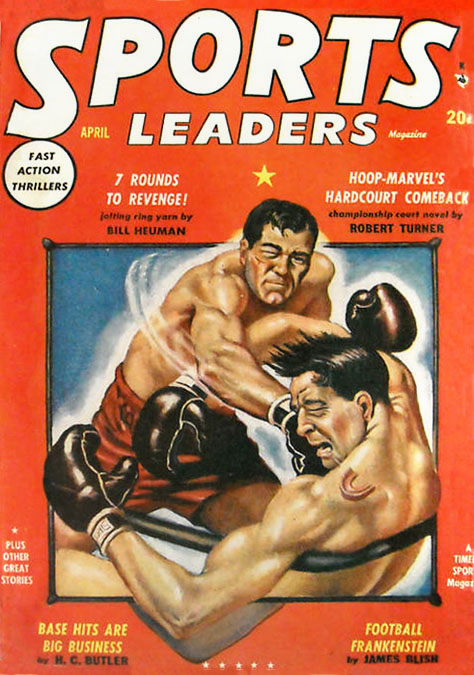
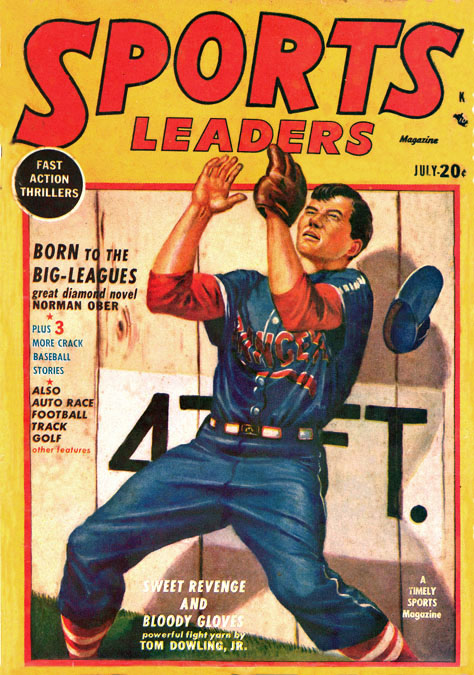
On a similar note, I notice that one of the baseball yarns listed on the cover of “Sports Leaders”, entitled “Born To The Big-Leagues”, is called a “diamond novel”, despite the fact that baseball isn’t even played on a diamond (it’s actually a square turned at 45 degrees—baseball freaks just call it a diamond to add to the romance of the game). Just below the subheading for Norman Ober’s story, one can see the phrase “Plus 3 More Crack Baseball Stories”, and Johnny Lawson’s “Diamond Fool” is described as a “crack baseball yarn”. I think those phrases had a different connotation back then.
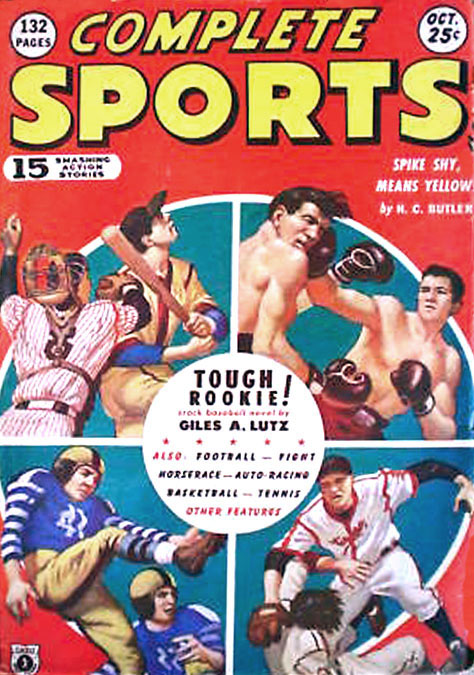
I can’t help but be amused by the illustration on the lower left hand corner of the “Complete Sports” cover. The kicker is right-footed, but the holder is kneeling to the kicker’s left. In reality, the kicker would either be left-footed, or in order for the kicker to kick right-footed, the holder would be on his right. That holder is such a clod. I bet he even spotted the ball with the laces in–what an amateur.
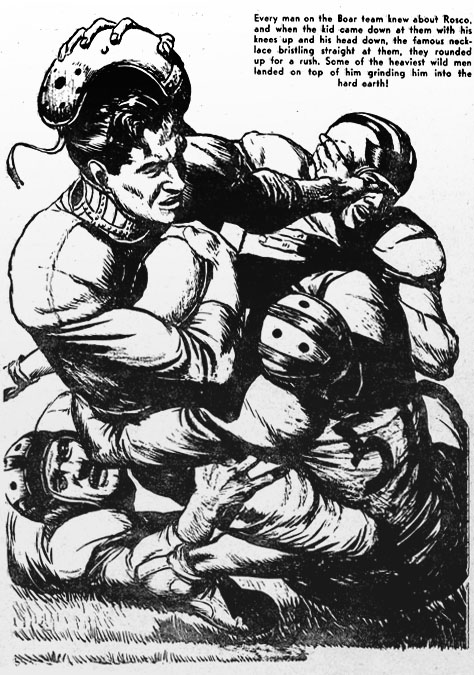
That last line about Rosco, men landing on top of him, grinding him into the hard earth, sounds rather inappropriate for a patently heterosexual activity such as men’s football. I think maybe Dave Kopay wrote that caption.
LikeLike