AMV of the Day: Ash vs Gary (Pokemon)


For the first AMV entry for 2013 and the latest in a long series I’ve decided to go for nostalgia to dictate my choice instead of quality (though I will say the video does it’s job well in matching the song used). Anyone who grew up during the late 90’s and early 2000’s have heard, seen and/or obsessed over the Japanese pop-culture phenomenon simply called Pokemon.

I was already an adult and I was caught up in the hurricane that was Pokemon when it swept through the West in the late 1990’s. Hell, I pretty much played most of the different color editions of the game on the Game Boy and it’s subsequent handhelds. I’m even proud to say that my two favorite Pokemons were Pikachu and Togepi. But that’s a different matter altogether. Today it’s all about the AMV titled “Ash vs. Gary”.

The video uses the very fight-like song “Remember the Name” by Ft. Minor to highlight the Pokemon battle match between the two rivals. As we can see in the video the two use many different Pokemons in their collection to battle it out. Their battle lasts until they each just have one Pokemon left and it’s a sudden death match that many fans of the show fondly remembers. In one corner is Gary’s fully evolved Blastoise (which is the final evolved version of the starter Pokemon Squirtle) and in the other corner is Ash’s tempermental Charizard (the final evolved form of the starter Pokemon Charmander).

Really, there’s nothing left to say other than enjoy the video and take a glimpse into a nostalgic trip down my own memory lanes.

Anime: Pokemon

Song: “Remember the Name” by Ft. Minor feat. Styles of Beyond

Creator: Logan8703

Past AMVs of the Day

It Figures (No. 1): Godoka


For some time now, Arleigh has been trying to get me to write up a post about figures.  We both enjoy collecting them, and my collection of them is rather extensive so there’s certainly no lack of material.  Again, it all came down to motivation to just get started, and what motivated me the most was my most recent acquisition, the Good Smile Company version of Ultimate Madoka, or as she’s better known, Godoka.

Yes indeed, the contents are fragile, and very valuable.  Many Bothans died bringing this….ahem, wrong story.  Anyways, this is one thing I really appreciate about the Japanese.  That’s no cheaply made, reused, been sitting in the back with people taking naps on it kind of cardboard box.  That’s a sturdy, never before used, highly protective one.  Plus they put just the right amount of packing material inside to keep the figure from shifting, but not so much that it crushes it.

And that effort paid off.  Here she is, safe and sound in the comfort of my own home, without nary a dent in the box.  The boxes themselves are often times practically works of art.  On them they usually show the various angles and options one can do with each figure.  I know Godoka is yearning to be free from her plastic and cardboard prison, but first I think one needs to appreciate just how big this box is.  This picture doesn’t really do it justice, since there’s no basis for comparison.

Now this one gives you an idea.  That’s about 14.5″ wide, and the box is pretty much square, so that should show that they didn’t mess around with this figure.  The boxes for the other figures in this series were only half this size.  But now that we’ve had our fill of boxes, let’s get her out of there and take a better look.

Here we have a look at all the various pieces that comprise her.  While this may not be a lot by some figures standards, by a scaled, static figure this is a lot.  In case it’s not easily seen, in addition to the main figure, she had two different bows, two sets of wings, an arrow and of course her base.  What also probably isn’t easily seen is the fact that the plastic tomb is not only held together by the snaps and tape, but also with twisted wire.  This last part is always a pain in the rear, so be sure to keep a pair of wire cutters handy.  Trying to untwist those wires by hand is not a fun task, and I do not recommend those without much patience to attempt it.

Now we finally get to see Godoka free from her constraints.  And let me tell you, she’s no lightweight figure.  A good amount of weight is in the dress of hers, which is good since that’s where she’s going to attach to her base.  The pattern of stars on the black interior of the dress is a very nice touch, and GSC did not skimp on the details.  One thing to be wary of is her hair.  It feels pretty fragile, and the ends are very pointy so if you’re not careful, she could very easily snag a piece of clothing and possibly snap a strand of hair off.  I thought it was going to happen to me a couple times as I was getting later parts put on her, but thankfully I managed to avoid any catastrophes.  Ah, I can hear you now.  “But pantsukudasai, when you say she’s detailed, just HOW detailed, if you know what I mean?”  Oh, I do know what you mean, yes indeed.

Homu Homu would be drooling in envy.  Yes, in keeping with a fine tradition in figures, they made sure to sculpt a pair of panties on her.  Sadly, it’s just a very standard pair.  Some figures get very fancy underwear indeed.  Still, it’s this attention to detail that makes collecting so worth while.  And when you think about it, it certainly makes sense.  I mean, if you’re going to have a figure in a dress, it stands to reason that she’s going to be wearing something underneath it, doesn’t it?  And since one must appreciate all aspects of their figure, it’s only natural that I’d flip each figure over and check out their pantsu.  Nothing perverted about that in the least!

Now here she is with her bow and arrow.  As I mentioned earlier, she comes with two different bows.  The other bow does not have the pink energy charge around it and it just her regular sprout bow.  I assume that’s if you want to display her as if she’s already fired the arrow.  I think it looks much better with the arrow and the charged bow.  The only downside to this is that the bow doesn’t feel particularly sturdy, and as you move the figure the top wobbles in a way that doesn’t inspire a lot of confidence in me.  Still, for the most part the figure is going to be safely behind glass, and other than the vibrations from me walking past, it should be kept stable.  It’s not like I live in an earthquake zone.  A great deal of care must be taken when getting the arrow into her hand.  Her hand is removable, so I’d recommend taking it off and then attaching the arrow.  It can only go in one way, so don’t try forcing it!  Also, there are many little barbs on the bow and the arrow that could easily snap off if improperly handled.  They didn’t do us any favors by wrapping some plastic around the bow either.  I had to carefully cut the plastic wrap off, because those barbs I mentioned earlier made it difficult to slide off otherwise.

The next troublesome point were the wings on her feet, but this was more a troublesome aspect simply because it’s not very clear which wing goes on which foot.  When you try putting the correct wing on the correct foot, it slides on snugly and securely.  While this might seem like the obvious thing, in some cases they don’t get all the slag out of the slots for the holes, so things like this don’t always fit right.  Luckily for me, when I tried them the other way, it worked just fine.  You can kind of see in the bottom corner of the picture, but it does come with instructions.  The reason why they’re sitting there, unused is two reasons.  First off, I’m a guy.  We don’t need no stinkin’ instructions.  Secondly, they’re in Japanese, which I cannot read a single word of.  The pictures they show aren’t terribly helpful in deciphering what one is to do.  At any rate, you can probably guess, but those wing tips are very fragile too.  Take your time, and you should be fine.

The last detail to add to her are the wings on her back.  These thankfully were very obvious how they needed to go, and other than having to weave the right wing in between a couple strands of hair, it went on quite painlessly.  Again, the details they made with the sculpt of the figure are indeed stunning.  The way the dress flows, the ruffles in it, all her accessories, it made the wait for this figure from when I originally ordered it back in June all worthwhile.

This group shows her from various angles.  It’s truly a satisfying feeling when you finally get your figure all assembled and ready to properly be displayed.  Certainly another run to Ikea is in my future so that I may properly save her from the evils of dust.

Lastly, I felt it fitting to have her shown with the other figures in her line.  On the right we have the pairing of Kyoko and Sayaka, and on the left we have the pairing of regular Madoka and Homura.  In the middle, with Godoka taking careful aim, we have the hated Mami.  No one is romantically interested in Mami.

I’ll end this with saying that while she might be a bit spendy for some people, I feel that Godoka was worth every penny I spent on her.  If figure collecting is your thing, don’t delay on grabbing her as fast as you can.  She’s still available now, but when a figure looks this good, it’s tough to say how long she’ll be around for.  If you wait too long, the only way you’ll get her is by forming a contract with a certain someone….

The Daily Drive-In: The Creeping Terror (dir. by Vic Savage)


There are some films that you just have to see at least once before you die.  One of those films is Dr. Strangelove: Or How I Learned To Stop Worrying and Love the Bomb.  And another one of those films is The Creeping Terror.

While at first it might seem like The Creeping Terror and Dr. Strangelove don’t have much in common, that’s actually not the case.  Both of these films were released in 1964.  Both of them feature a scientist and a general who wants to blow things up.  Both of these films portray an American military that’s incompetent when it comes to dealing with the unexpected.  Even more importantly, both of these films are in black-and-white.

Beyond that, the two films don’t really have that much in common.  Dr. Strangelove is a satire about nuclear war and was nominated for several Academy Awards.  The Creeping Terror is a film about a killer rug that eats people and is currently in the public domain.

Okay, technically, the creeping terror of the title is not a killer rug.  It just looks like a rug.  Actually, it’s an alien being that crashes down to Earth and spends the majority of the film moving very slowly through a small town.  Whenever it comes across an old man out fishing or a group of 30 year-old high school students dancing to the most generic music ever heard, the rug attacks and we’re treated to lengthy scenes of giggling extras climbing into the rug’s “mouth.”

Fortunately, there’s a local deputy sheriff and newlywed named Martin and Martin’s pretty concerned about this killer rug that appears to be eating everyone in town.  Martin doesn’t really do much but he’s played by the film’s director (an enigmatic figure who went by the name of Vic Savage) so, by default, Martin’s the main character.

The Creeping Terror is probably best remembered for the fact that the film’s soundtrack apparently got lost during post-production and, as a result, nearly the entire film is silent with the exception of a narrator.  For example, we might see Martin silently moving his jaw while the narrator recites, “Martin told them what he had seen…”

However, the narrator is not just there to tell us what people are saying.  He’s also there to provide psychological insights.  In one of the film’s more famous moments, the action stops for a few minutes so the narrator can tell us about how Martin’s recent marriage has strained his relationship with his bachelor friend Barney.  During this moment, the narrator drops his usual even tone and soon, hints of self-loathing and anger start to turn up in his voice.  Seriously, the narrator’s got some issues.

Now, a lot of people will tell you that The Creeping Terror is one of the worst films ever made but I think it’s hilarious and fun.  Add to that, there’s a lengthy dance scene dropped into the middle of all this and you know how I am about movies with gratuitous dance scenes.

You can view the entire movie below:

Film Review: Argo (dir. by Ben Affleck)


When I made out my list of my 26 favorite films of 2012, Argo came in at number 19,  I think that Argo is a likable, funny, and frequently exciting film.  Not only does it feature some of Ben Affleck’s best work as a director (though I still think Affleck has yet to top Gone, Baby, Gone) but also some of his best work as an actor.  If The Town left my skeptical about Affleck’s film-making talents, Argo made me a believer again.  That said, while I think that Argo is a good film, I don’t think it’s a great film but that opinion definitely places me in both the minority of filmgoers and, since my sister Erin considers Argo to be the best film of 2012, Bowmans as well.

Based on a true story, Argo takes place in 1979.  The Shah of Iran has been overthrown and the American embassy in Tehran is overrun by Islamic militants.  Over 50 Americans are taken hostage but six embassy workers manage to escape and end up hiding in the home of the Canadian ambassador (Victor Garber).  The U.S. State Department has to find a way to get the six of them out of Iran before the militants discover their existence.

It’s up to CIA agent Tony Mendez (played, of course, by Ben Affleck) to come up with a better plan than attempting to smuggle bicycles into Iran.  Mendez’s scheme is to team up with a Hollywood makeup artist (John Goodman) and a B-movie producer (Alan Arkin) and to convince the Iranian government that he and the 6 embassy workers are actually a film crew and that they’re in Iran not on a rescue-and-escape mission but instead to scout locations for a science fiction film called Argo.

Argo, for the most part, works.  As a director, Affleck manages to deftly juggle both comedy and suspense.  The scenes where Arkin and Goodman teach Affleck how to be a Hollywood phony are frequently hilarious, while the scenes in Iran are effectively tense and claustrophobic.  The film is full of little period details that ring true and I’m still shocked that Argo didn’t receive an Oscar nomination for either Best Costume Design or Best Production Design.  The wide lapels on Ben Affleck’s suits may not have been as flamboyant as the costumes in Les Miserables but, like the costumes in Les Mis, the very sight of them not only transported us to a different time but made that time plausible as well.

As you might expect from an actor-turned-director, Affleck gets good performances from his entire cast.  Goodman and Arkin are both sympathetic as recognizable Hollywood types and Bryan Cranston has a few good scenes as a fellow CIA agent.  While the 6 hostages are all pretty much interchangeable, they are still all well-cast and sympathetic.

That said, when I saw the film, it was hard to escape the feeling that the first half of the film (in which the embassy workers hid out at the Ambassador’s house while Affleck, Arkin, and Goodman worked on promoting their fake film) was dramatically more interesting and compelling than the far more conventional second half.  Once Affleck actually reaches Tehran, Argo becomes a rather predictable, if still well-made and exciting, movie.  Perhaps that’s why, as much as I enjoyed Argo, the film didn’t make as much of an impression of me as a film with a more challenging narrative would have.  Ultimately, Argo tells the true story of people in tremendous danger but the film itself feels very safe.

Argo is one of the most acclaimed films of 2012 and it’s been nominated for 7 Oscars, including Best Picture.  To just about everyone’s surprise, Ben Affleck was not nominated for best director.  While I personally would not have nominated either Argo or Affleck, the fact of the matter is that the reason Argo has received so much acclaim is because of Affleck’s work behind the camera.  Argo is such a director’s film that it’s next to impossible to argue that Argo‘s one of the best films of the year without also arguing that Affleck is one of the best directors of the year.  Hence, Affleck’s lack of a nomination does feel like a definite snub.  Even speaking as someone who was not as enthralled with Argo as much as everyone else, I would still have nominated Affleck long before I wasted a nomination on Benh Zeitlin for relying too much on a hand-held camera while filming Beasts of the Southern Wild.

While the Academy may have snubbed Affleck, the Hollywood Foreign Press Association did not.  Earlier this night, Affleck won the Golden Globe for best director and Argo won best picture.  (Though, I have to say, I find myself wondering if my friend Jason Tarwater was right when he suggested that the notorious starfuckers of the HFPA honored Argo mostly because they wanted to hang out with the film’s co-producer, George Clooney.)  Given the fact that it’s been over 20 years since a film won Best Picture without receiving a nomination for Best Director, Affleck and Clooney might just have to be happy with the universal acclaim.

‘Zero Dark Thirty’ Review (dir. Kathryn Bigelow)


“Zero Dark Thirty” opens with the sounds of frantic emergency calls from people trapped inside the World Trade Center. Their cries for help to dispatchers, played over a black screen, is a shocking reminder of the horrors of 9/11, and sets the tone for what is to come – the brutal and riveting retelling of the dark paths and dead ends this country traveled in the hunt for Osama bin Laden, the man responsible for those attacks.

What makes “Zero Dark Thirty”, a film with an ending we all already know, so effective is how tautly it depicts the events that led up to bin Laden’s death in such an intellectually and morally challenging way. There is no flash, no melodrama, no varnished surfaces or sanded edges to make the material more bearable or ‘entertaining’, it simply tells it as it is. This is done with meticulous detail by Kathryn Bigelow and Mark Boal. They tell this story through the eyes of a female CIA operative, played by Jessica Chastain, whose obsession with finding bin Laden was the driving force that led to his death. This performance by Chastain, who carries the film, is quite astonishing. She displays such a wonderful level of assurance, confidence and determination but also the weight of her obsession – doing most of this with her eyes. We know nothing about her character other than the work she did to find bin Laden but we still root for her the whole way. It is one of those subtle but powerful performances that will be remembered for much longer than any other performance this year.

Now, at this point in time, it would be impossible to write a review without addressing some of the criticisms the film has drawn. Honestly, I have to say that I find it quite disheartening that morally insecure and intellectually lazy people have tried to bring the film down for not making moral decisions for them. I am disgusted by the claims that the film is pro-torture for not taking a side as to whether such techniques as water boarding are right or wrong. The simple fact is it doesn’t have to. It isn’t the films responsibilities to do such things. All it wishes to do is relay the facts, as it knows them. It is then up to the audience, based on what they see, to make these decisions.

It is true that in doing so it reveals some truths, many we might not like, that makes us reexamine the past decade of American history. But this is what makes the film more than just a masterfully crafted thriller. There is no arguing this country has had some very dark moments over the past decade  – Abu Ghraib – and the search for revenge to capture or kill those responsible for 9/11 was the driving force of most of this. In making “Zero Dark Thirty” Bigelow and Boal aren’t trying to say whether any of this was right or wrong, but rather they looked to remind us that it did happen and challenges us to question how it truly effected us all and make the decisions ourselves as to the moral nature and effectiveness of torture and war; while at the same time allowing us to appreciate and honor the hard work and sacrifice of those who gave so much in trying to protect this country.

This is made quite clear at the end of the film with its final shot, which I think is perhaps one of the most important in any film in recent years. After the films harrowing opening and what comes after – the remembrance of the horrors of 9/11, the journey down the dark paths revenge took us, including torture and the horrors of war – we are disgusted by what happened, but like the films main character we knew it was happening yet we kept moving forward because we had our ‘eyes on the prize’. In the end, after all was said and done, it is hard to truly rejoice when the full weight of what had happened is realized. Chastain’s face in the films final moment sums this up perfectly. A sort of “what now…was it worth it…what parts of ourselves were lost to accomplish or fight this war on terror?” We killed the man who essentially started this war, a sliver of justice was delivered to those who have lost family and friends, but that war didn’t end with his death, and it will always haunt us no matter how many body bags we fill. The implications of this scene, and the whole film, are bigger than any scene or any film in recent memory.

Thinking back, it is quite amazing how well the whole emotional trajectory of the film so well mirrors the emotional trajectory of this country in the last ten years. From its black screen opening to the close up of Chastain before the credits, “Zero Dark Thirty” intimately reflects on the sadness and shock, that led to anger and war, that was followed by frustration, that led to apathy, which ultimately ended with rejoice…only to quickly then be overshadowed by the full weight of post-9/11 America and where the past decade has left us. It is because of this that I think “Zero Dark Thirty” is not only the best but also the most important film of 2012, or even in recent years. It is a masterfully and tautly crafted thriller that challenges the viewer in ways that will leave us talking about it for years to come. Its moral ambiguity and apolitical stance reveal truths usually overshadowed by preachy, overtly political films of the same nature. If that isn’t the formula for a modern masterpiece, then I don’t know what is.

*Read Arleigh’s comment below for his perfect expansion on the feelings towards the criticisms the film has drawn*

The Daily Grindhouse: BTK (dir. by Michael Feifer)


Kane Hodder as The BTK Killer

One of the unfortunate things about being a self-appointed “film critic” is that the majority of the films that have been released over the past century are neither good nor bad.  Instead, they’re simply “bleh.”  Neither good enough to be memorable nor bad enough to be truly entertaining, a bleh film sits in the gray area between good and bad.  These are the films that you watch and maybe if you’re in the right mood or you’re watching with the right audience, you’ll find the experience of watching the film tolerable.  And if you’re not in the right mood, you’ll end up bored and will probably start to forget about the film before the end credits even roll.  When you make it a point to see (and review) as many films as you possibly can, the end result is that, in between the joy of discovering some really great examples of cinematic art, you end up sitting through a lot of bleh films.

The 2008 horror film BTK is the epitome of a bleh film.

Like many direct-to-DVD horror films, BTK is based on a true-life case of serial murder.  Dennis Rader was an animal control officer living in the suburbs of Wichita, Kansas.  He was also a prominent member of the local church and, by most accounts, a devoted family man and father of two.  He was also a remorseless serial killer who, over two decades, killed at least 10 people.  His oldest victim was 62.  His youngest was 9.  When he wasn’t murdering, Rader was writing taunting letters to the police in which he named himself the “BTK,” for Bind Torture Kill.

What makes Rader’s crimes even more disturbing is that he nearly got away with them.  It wasn’t until 13 years after his last confirmed murder that Rader was arrested and confessed to being the BTK killer.  When Rader appeared in court for sentencing, he again gave the details of all ten of his admitted murders and, for a few weeks afterward, it was next to impossible to turn on a TV without seeing the footage of this mild, middle-aged men calmly explaining how he killed ten people.  I was 19 at the time and I can tell you that I had more than a few nightmares as a result of Dennis Rader.

It wasn’t just Rader’s crimes that frightened me.  It was the fact that Dennis Rader wasn’t some masked psycho like I used to seeing in the movies.  What frightened me was that Dennis Rader seemed so normal.  Dennis Rader was literally the killer next door.

A lot of great horror films have been based on the concept of the killer next door but unfortunately, BTK, though competently directed by Michael Feifer, is not one of them.  Offering up a highly fictionalized account of Rader’s crimes, BTK is pretty much a typical psycho film that uses its true life origins to hide the fact that there’s not really much going on.  Playing the title role, Kane Hodder (of Friday the 13th fame) is menacing and effective when the film calls on him to be the evil BTK but he’s far less effective when it comes to recreating the mask of normalcy that Rader used when dealing with his friends and his neighbors.

The reason why the real-life Dennis Rader was such a frightening and disturbing figure was because he seemed so normal and ordinary.  The fear that he inspires comes not from his crimes but from the fact that if Dennis Rader could have been a serial killer than just about anybody could be.

That’s a genuinely scary idea that the cinematic BTK never seems to grasp.

Arleigh’s Top Ten (……TV Shows) of 2012


With each passing year my TV viewing habits have begun to change. I used to watch mostly network shows with the occasional premium cable channel series here and there. In the last couple years it’s been more of the opposite. I watch less and less of whatever the top networks are showing and instead have taken most of my TV viewing pleasure from basic and premium cable channels. Only one show from the big networks makes my Top Ten TV shows of 2012.

The ten shows I’ve picked as best of 2012 arrive on this list in no particular order. They’re just numbered to keep things organized…

  1. Community – This show is the only network series to make my list and it’s well-deserving. The show has garnered such a huge cult following that seems to confuzzle those who still haven’t jumped on the Community bandwgaon. The show’s hilarious and full of pop-culture and geek culture references that each new episode we see something crazy and new from showrunner Dan Harmon and his crazy crew of writers and and, even moreso, talented ensemble cast. The fact that despite low ratings each season it’s been on the air since it premiered just show’s the power of it’s fans to tell the NBC network to keep the show for another season (maybe another more after this upcoming 4th). Plus, the show has Annie’s Boobs.
  2. Justified – This was the series that premiered three years ago with a pedigree that most networks would kill to have on it’s show. You had acclaimed tv screenwriter Graham Yost as series creator and showrunner. The show was adapated from a series of Elmore Leonard novels featuring the character of U.S. Marshal Raylan Givens (who also had critics favorite Timothy Olyphant in the role). The first two season’s were major hits for the series. This past year’s third season couldn’t match up to the great season 2 that earned Margo Martindale an Emmy for her role as the devious and cold-blooded matriarch of the Bennett Clan, but it did more than hold it’s own by introducing an outsider to the mix of Kentucky-grown characters in Neal McDonough’s Detroit mobster and deviant criminal mastermind Robert Quarles. the interaction between Olyphant’s Raylan Givens, McDonough’s Quarles and Walton Goggins’ Boyd Crowder was some of 2012’s best tv moments.
  3. Doomsday Preppers – This series has become a sort of guilty pleasure for me, but despite that label it’s also one of the best shows on TV. The premise of the show may sound ludicrous and hilarious at first glance. I mean it’s a series that details in each episode a couple of families who have taken to extremes their attempts to prepare for whatever doomsday will befall in world in the near future. See, it sounds like a reality tv show that’s tailor-made for what elitists would consider the redneck and uneducated section of America. The truth of the matter is that the show’s ludicrous premise also is it’s strength. We may laugh, at first, at the families who have gone to extremes to create survival shelters, home grown food stocks and other means to survive a catastrophe. While we laugh the show does point out that whether a disaster happens soon or later the very survival preparations and techniques these families make become learning tools for the viewing audience. We won’t need to go to such extremes, but the fact that we laugh at these people while we have no clue how to survive when catastrophe strikes means the joke is on us and not on the Doomsday Preppers.
  4. The Walking Dead – Speaking of doomsday, this show on AMC seems to be the show that, like it’s zombified monsters, survives it’s own producers and writers attempts to kill it off. This year saw the second half of the show’s season 2 minus it’s original creator and showrunner as Frank Darabont was fired. The show continued to pull in great ratings despite being on basic cable and writing that tended to lean towards average with frustrating characters the audience would rather see die than survive the show’s zombie apocalypse. But something miraculous happened this year and that’s the show’s newest showrunner in Glen Mazzara simplified Darabont’s more deliberate and existential narrative style and tone for the show. Under Mazzara the show’s first haf of the 3rd season saw more action and characters actually becoming more complex and nuanced. There’s been less exposition dumps to tell the audience what’s going on. The show has also amped the danger towards the characters as we saw not one but  many characters die before the season even hit the halfway mark. The show’s writing still has a ways to go, but no show on TV can match The Walking Dead in sheer tension and watercooler moments that fans (and even detractors) were left wanting more and more everytime a Sunday ended.
  5. Sons of Anarchy – The show by showrunner Kurt Sutter that was original billed as “Hamlet meets Hell’s Angels” had one of it’s better season in 2012 as we saw the biker gang SAMCRO finally split into two camps. On one side is the former President of the club Clay Morrow (played by Ron Perlman) and newest club President Jax Teller (played by Charlie Hunnam), the son of the club’s original founder John Teller, standing on the opposite side. The show returned to it’s Shakespearean roots in 2012 as we saw Jax try to maneuver SAMCRO away from it’s illegal enterprises and away from the clutches of the not just the CIA, but the Mexican cartels, rival biker gangs and inner-city crime lords. The series saw the departure of a fan favorite character in one of the most brutal and vicious deaths on TV, but also one that was necessary to push Jax into becoming more ruthless and cold-blooded in dealing with his club’s enemies. Sons of Anarchy is also aired on the FX Channel which makes it such a powerful bookend to it’s fellow series in Justified for the basic cable network.
  6. South Park – Matt Stone and Trey Parker continues to insult all and everyone. The show benefits from this and it hasn’t changed in 2012. The show looked to be slowing down after an uneven 2011, but came back strong in 2012. There’s nothing else to be said other than a show that can come up with an episode that has Honey Boo Boo and Michelle Obama in the same episode and make it all come off as hilarious and thought-provoking deserves to be on everyone’s top ten tv shows of 2012.
  7. Deadliest Catch – Discovery Channel’s long-reality series about crab fishermen in the dangerous waters of the Bering Strait and the Arctic Circle continues to be one of the best reality series on TV. It’s simple premise of just showing the rigors, dangers and the toll the job of crab fishing in the Arctic Sea continues to lure fans old and new alike back to the series each new year. It’s definitely a show that puts down anyone who thinks they have a hard job. Nothing is harder than a job these men do where every moment can literally be the moment that something will happen that will take their life. It’s must-see TV (well except for Lisa Marie with the pitching ships and heavy seas and stormy waves).
  8. Boardwalk Empire – The show that details the rise and fall and rise again of Atlantic City’s man behind the scenes Nucky Thompson during the 1920’s continues to be one of TV’s best shows and continues HBO’s almost two decade of fine, quality original tv programming. We find Steve Buscemi in fine form as the corrupt city treasurer Nucky Thompson whose actions in season 2 creates major ripple effects for 2012’s season 3. While the latest season wasn’t on the same level as 2011’s season 2 it’s uneven slow burn for most of it’s season 3 run culminated in a bloody and tense-filled affair as Nucky’s penchant for surviving leads to an almost Michael Corleone-level of retribution by season’s end.
  9. Game of Thrones – George R.R. Martin. A Clash of Kings. Three baby dragons. Peter Dinklage. Arya and Stannis Lannister. Battle of Blackwater Bay. Neil Marshall. Sexposition. Ice zombies. Nothing else need to be said. One of the best shows of 2012, if not, the best show of 2012 period.
  10. Archer – The most out there and down right funny show on TV in 2012 was the FX Channel’s animated series Archer. It’s a an animated series that spoofs the spy franchises like James Bond, Man from U.N.C.L.E. and the like, but also being one of the raunchiest shows on TV and making it all come off as hilarious. Whether it’s the title character’s child-like behavior despite being the show’s top spy or the pyromaniac and autoerotic-fixated agency secretary Cheryl, the show’s cast of characters are all so memorable that the show doesn’t even need to have celebrity guest stars to try and pull in viewers, but they do it anyway with one being Burt reynolds himself playing as himself and bringing back memories of why Burt was considered the “star’s star in his heyday””. The man is just smooth as velvet and cool as ice.

So, these were my Top Ten shows on 2012. The FX channel definitely made it’s mark by getting three shows into the list with HBO running second with two. I know there’s a major omission of Breaking Bad in this list, but I thought the new season (really just the first half of the final season with the second half due later in 2013) was a letdown after blockbuster of a season 4. It seemed more like a first half that was table-setting for what looks to be the show’s final 8-episode this year to put the show to bed on a blaze of glory.

Film Review: Judgment At Nuremberg (dir by Stanley Kramer)


I previously posted a review of the 1967 best picture nominee Guess Who’s Coming To Dinner that was somewhat critical of Stanley Kramer as a filmmaker.  In retrospect, I feel like I may have been a bit too dismissive of Stanley Kramer.  When one looks over the list of every film that has ever been nominated for best picture, one comes across the name Stanley Kramer (as a producer, a director, or both) far too many times to just blindly dismiss him for the sin of being old-fashioned.  While Kramer made his share of well-intentioned misfires like Guess Who’s Coming To Dinner, he was also responsible for some films that remain important and watchable today.  Judgment at Nuremberg is one of those films.

Judgment at Nuremberg opens in 1947, with one car being driven through the ruins of Nuremberg, Germany.  Inside the car is Dan Haywood (Spencer Tracy), a judge from Maine who has been appointed chief of a military tribunal that will be passing judgment on four German judges who are accused of crimes against humanity for their legal rulings during the Nazi regime.  As Haywood quickly learns,  many people don’t feel that the Nazi judges should be held as accountable for their actions as men like Hitler, Goebbles, and Goering should have been.  It’s up to Haywood to determine whether the accused were simply doing their job or if they had a responsibility to defy the laws that they had sworn to uphold.

Judgment at Nuremberg almost feels like two films.  The first film is a courtroom drama, where the Nazi judges (the main one of which is played by Burt Lancaster) are prosecuted by the fiery Col. Tad Lawson (Richard Widmark) and defended by the idealistic Hans Rolfe (Maximilian Schell).  While Lawson approaches the case and regards the defendants with righteous anger, Rolfe takes a more cerebral approach to defending the undefensible.  Rolfe argues that the judges were following the laws of Germany and that if the tribunal finds them guilty than it will be finding the entire nation of Germany guilty.  (In a rather clever twist, director Kramer and screenwriter Abby Mann initially make the German defense attorney a far more likable character than the American prosecutor.)  During the trial, we also hear heart-wrenching testimony from two people (played by Montgomery Clift and Judy Garland) who were victimized by the Nazi regime and the judges who gave legal legitimacy to the regime’s crimes.

The second film deals with Haywood adjusting to working in Germany and trying to understand how the Nazis could have come to power in the first place.   Haywood asks several Germans to tell him about life under the Nazis and every time, he is met with bland excuses.  (“We were not political,” he is told more than once.)  The film’s strongest scenes are the ones where Haywood simply walks alone through the ruins of Nuremberg.  Spencer Tracy was a uniquely American actor and, much as he did in Guess Who’s Coming To Dinner, Tracy here stood in for every American who was struggling to make sense of a changing world.

In his book Pictures At A Revolution, Mark Harris correctly points out that Stanley Kramer started out as a producer and, even after he started directing, he still approached filmmaking like a producer.  While that approach led to many uninspiring films, it was also the right approach for Judgment at Nuremberg.  Perhaps realizing that Judgment at Nuremberg was a long and talky movie about a disturbing subject manner, Kramer made the very producer-like decision to fill Judgment at Nuremberg with recognizable faces.  While this approach has proven disastrous for many films, it works quite well in Judgment at Nuremberg.

This is one of the most perfectly cast films of all time, with all of the actors bringing both their characters and the issues that they’re confronting to vivid life.  As the main defendant, Burt Lancaster brings a combination of intelligence and self-loathing to his role, playing him in such a way to reveal that even he can’t believe the evil he upheld as a judge.  Meanwhile, Spencer Tracy is perfectly cast as a world-weary man who is simply trying to figure out what justice means in the post-war world.  Maximilian Schell plays his role with so much passion that it’s impossible not to listen to him even when you despise the argument he’s making.  Marlene Dietrich has an extended cameo where she plays the widow of Nazi general who befriends Judge Haywood but still refuses to admit that she knew anything about what Adolf Hitler was doing.  Even William Shatner shows up, playing a small role as Haywood’s chief military aide and yes, he does deliver his lines in that Shatner way of his.

First released in 1962, Judgment at Nuremberg won Oscars for Best Actor (Maximilian Schell) and Best Adapted Screenplay (Abby Mann) and was nominated for 9 more: Best Picture, Best Director, Best Actor (Spencer Tracy), Best Supporting Actor (Montgomery Clift), Best Supporting Actress (Judy Garland), Best Black-and-White Art Direction, Best Black-and-White Cinematography, Best Black-and-White Costume Design, and Best Film Editing. While it’s hard to argue with the victory of West Side Story in that year’s Oscar race, Judgment at Nuremberg remains a watchable and thought-provoking film.

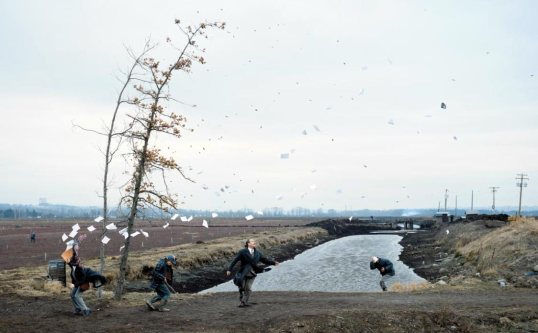
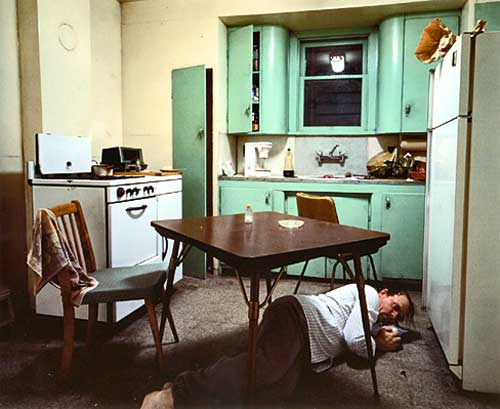
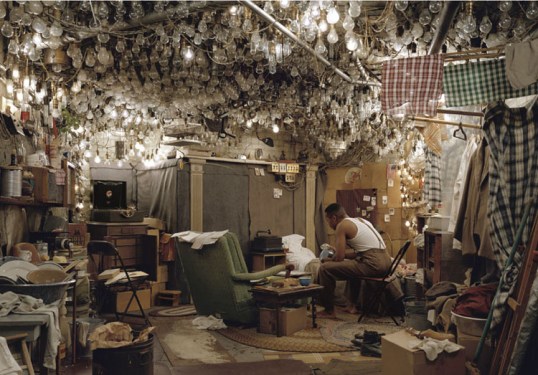
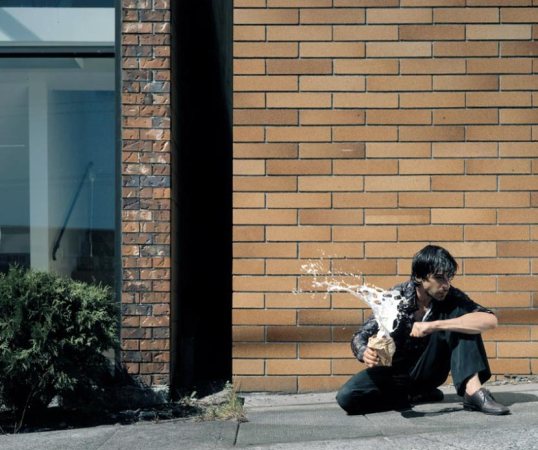
Artist Profile: Jeff Wall (1946– )


Jeff Wall -- A Sudden Gust Of Wind

“It’s a pitfall to have a definition of photography.” — Jeff Wall

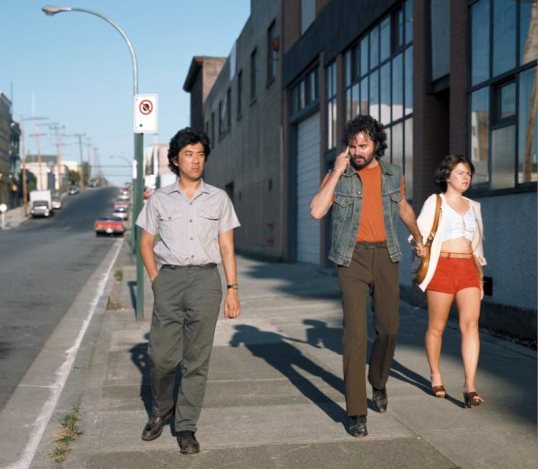
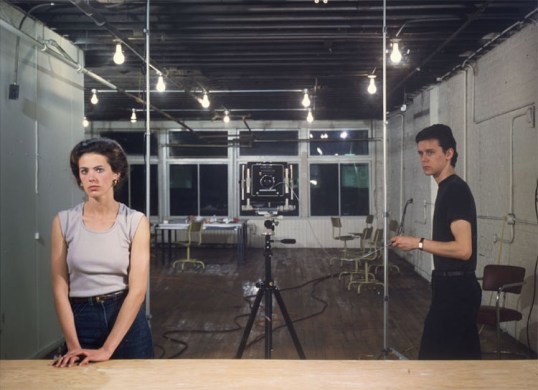
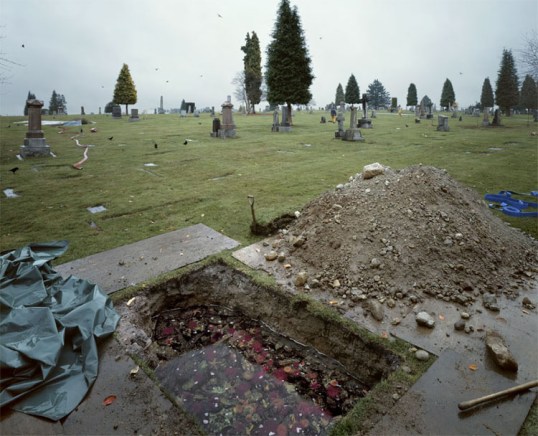
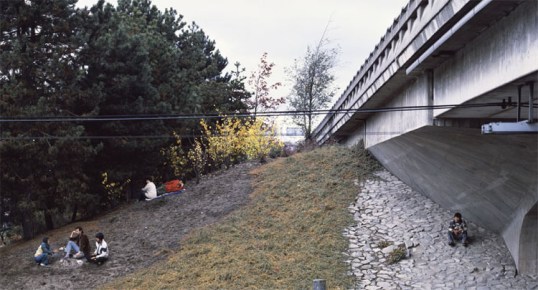
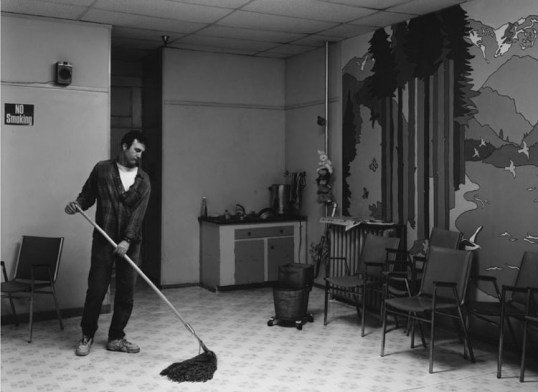
Born in Vancouver, Canada, Jeff Wall received his Masters of the Arts from the University of British Columbia in 1970 and  gone on to become one of the most influential and important photographic artists of all time. Like Gregory Crewdson, Wall is best known for large, elaborately staged cinematographic pictures.  Wall is often credited with being one of the first artists to prove that photography could be a true art form.

Jeff Wall -- A View From An ApartmentJeff Wall -- Insomnia13_After 'Invisible Man' by Ralph Ellison, the Prologue_1999-2000Jeff Wall -- MilkJeff Wall -- MimicJeff Wall -- Picture For WomenJeff Wall -- The Crooked PathJeff Wall -- The Destroyed RoomJeff Wall -- The Flooded GraveJeff Wall -- The StorytellerJeff Wall -- The Volunteer

The Oscar Nominations: The Complete List


Films listed in bold also appeared on my list of my personal picks for what I felt should have been nominated.

BEST PICTURE
“Amour”
“Argo”
“Beasts of the Southern Wild”
“Django Unchained”
“Les Miserables”
“Life of Pi”
“Lincoln”
“Silver Linings Playbook”
“Zero Dark Thirty”

BEST DIRECTOR
Michael Haneke, “Amour”
Ang Lee, “Life of Pi”
Steven Spielberg, “Lincoln”
David. O. Russell, “Silver Linings Playbook”
Benh Zeitlin, “Beasts of the Southern Wild”

BEST ACTOR
Bradley Cooper, “Silver Linings Playbook”
Daniel Day-Lewis, “Lincoln”
Hugh Jackman, “Les Miserables”
Joaquin Phoenix, “The Master” 
Denzel Washington, “Flight”

BEST ACTRESS
Jessica Chastain, “Zero Dark Thirty”
Jennifer Lawrence, “Silver Linings Playbook”
Emmanuelle Riva, “Amour”
Quvenzhane Wallis, “Beasts of the Southern Wild”
Naomi Watts, “The Impossible”


BEST SUPPORTING ACTOR
Alan Arkin, “Argo”
Robert De Niro, “Silver Linings Playbook”
Philip Seymour Hoffman, “The Master”
Tommy Lee Jones, “Lincoln”
Christoph Waltz, “Django Unchained”

BEST SUPPORTING ACTRESS
Amy Adams, “The Master”
Sally Field, “Lincoln”
Anne Hathaway, “Les Miserables”
Helen Hunt, “The Sessions”
Jacki Weaver, “Silver Linings Playbook”

BEST ADAPTED SCREENPLAY
“Argo”
“Beasts of the Southern Wild”
“Life of Pi”
“Lincoln”
“Silver Linings Playbook”

BEST ORIGINAL SCREENPLAY
“Amour”
“Django Unchained”
“Flight”
“Moonrise Kingdom”
“Zero Dark Thirty”

BEST FOREIGN LANGUAGE FILM
“Amour”
“Kon-Tiki”
“No”
“A Royal Affair”
“War Witch”

BEST ANIMATED FEATURE
“Brave”
“Frankenweenie”
“Paranorman”
“The Pirates”
“Wreck-It Ralph”

BEST DOCUMENTARY FEATURE
“5 Broken Cameras”
“The Gatekeepers”
“How to Survive a Plague”
“The Invisible War”
“Searching for Sugar Man”

BEST PRODUCTION DESIGN
“Anna Karenina”
“The Hobbit: An Unexpected Journey”
“Les Miserables”
“Life of Pi”
“Lincoln”

BEST CINEMATOGRAPHY
“Anna Karenina”
“Django Unchained”
Life of Pi”
“Lincoln”
“Skyfall”

BEST COSTUME DESIGN
“Anna Karenina”
“Les Miserables”
“Lincoln”
“Mirror Mirror”
“Snow White and the Huntsman”

BEST EDITING
“Argo”
“Life of Pi”
“Lincoln”
“Silver Linings Playbook”
“Zero Dark Thirty”

BEST MAKEUP
“Hitchcock”
“The Hobbit: An Unexpected Journey”
“Les Miserables”

BEST SCORE
“Anna Karenina”
“Argo”
“Life of Pi”
“Lincoln”
“Skyfall”

BEST SONG
“Before My Time” (“Chasing Ice”)
“Suddenly” (“Les Miserables”)
“Pi’s Lullaby” (“Life of Pi”
“Skyfall” (“Skyfall”)
“Everybody Needs a Best Friend” (“Ted”)

BEST SOUND EDITING
“Argo”
“Django Unchained”
“Life of Pi”
“Skyfall”
“Zero Dark Thirty”

BEST SOUND MIXING
“Argo”
“Les Miserables”
“Life of Pi”
“Lincoln”
“Skyfall”

BEST VISUAL EFFECTS
“The Avengers”
“The Hobbit: An Unexpected Journey”
“Life of Pi”
“Prometheus”
“Snow White and the Huntsman”

BEST ANIMATED SHORT
“Adam and Dog”
“Fresh Guacamole”
“Head Over Heels”
“Maggie Simpson in The Longest Daycare”
“Paperman”

BEST DOCUMENTARY SHORT
“Inocente”
“Kings Point”
“Mondays at Racine”
“Open Heart”
“Redemption”

BEST LIVE ACTION SHORT
“Asad”
“Buzkasi Boys”
“Curfew”
“Death of a Shadow”
“Henry”