A Quickie With Lisa Marie: Cosmopolis (dir. by David Cronenberg)


“I wanted you to save me.” — Paul Giamatti in Cosmopolis

It’ll probably take the rest of the world a few years to realize this but David Cronenberg’s Cosmopolis is not only a good film but occasionally, it’s even a great film.  What it is not is an easy film.  Instead, this film is a throwback to the such Cronenberg films as Videodrome and eXistenZ, films that served to not only challenge the audience’s expectations but to occasionally attack them as well.

Plotwise, Cosmopolis is a day in the life of a 28 year-old billionaire named Eric Packer (played by Robert Pattinson, who gives an excellent performance that hints at the neurosis that boils underneath surface ennui).  Packer wants to get a haircut so he spends nearly the entire day sitting in the back of his stretch limo, being driven through an increasingly violent and disturbing New York.  Rarely leaving the safety of his limo, Packer has several chance meetings with his wife, who refuses to have sex with him, and picks up several other women who are willing to have sex with him.  He also finds the time to have a prostate exam and discuss (and discuss) the meaning of life with several of his cronies, all of whom seem to pop up in the back of his limousine without warning and who also seem to vanish once Packer tires of listening to them.  Along the way, Packer finds both himself and his limousine being targeted for destruction but he never changes his plans or his direction.  After all, he needs a haircut…

Many reviewers are treating Cosmopolis, with its portrayal of a man who has too much money and not enough humanity, as if it’s some sort of Occupy manifesto and, indeed, there are several scenes where Cosmpolis does seem to serve as a mouthpiece for the anti-capitalist Occupy ideology.  There are also several scenes where Cosmopolis plays as a very deliberate modern-day version of Jean-Luc Godard’s Marxist-themed, pro-revolution Weekend.  However, to simply call Cosmopolis a pro-Occupy film is  to offer up an interpretation that’s a bit too simplistic.  After all, when the Cosmopolis version of the Occupy protestors do make an appearance, they’re either rioting in the streets  (and getting nothing more than a bemused smirk from Packer) or else they’re being represented in the form of a shambling and somewhat pathetically bitter character played by Paul Giamatti.  When Giamatti accuses Packer of hurting other people with his lifestyle, Packer confidently replies, “Don’t pretend that you care about other people,” and it’s rather obvious that, in the troubled world of Cosmopolis, both the excesses of the 1% and the Occupy movement spring from the same poisoned well of narcissism and anger.  In Cosmopolis, neither of the competing ideologies are presented as being a solutions but instead, both are seen as signs that the world is beyond saving.

Ultimately, Cosmopolis is a return to themes that should be familiar to anyone who is familiar with Cronenberg’s work.  Like many Cronenberg protaganists, Eric Packer is a neurotic man who has attempted to make himself invulnerable to a messy and imperfect world and, in the process, he has surrendered his humanity.  While the world outside collapses, Packer is sealed off in his stretch limo.  Over the course of the day, it becomes increasingly obvious that he stays in the limo because that limousine is an environment that he can control.  It also becomes apparent that the sterility of his perfect limo has left his incapable of relating to or even understanding the world outside.  It’s only as the film progresses and Packer continually finds himself forced to exit the limousine that his true nature starts to come to the surface.  It’s only when, at the end of the film, Packer finds himself permanently separated from his limousine that the film can reach its apocalyptic ending.

Ever since it appeared at Cannes, Cosmopolis has been getting a lot of mixed reviews and it’ll probably never be the type of film that is embraced by the masses.  It’s too cold and clinical to be beloved by many filmgoers.

Well, that’s their loss.

In a year that’s been dominated by bland and safe movies, Cosmopolis is a film that dares to challenge the audience.  It’s a film that dares to say that all is not right with the world and that there might not be any easy or crowd-pleasing solutions.

Love it or hate it, we need (and deserve) films like Cosmopolis.
What I Played Today: Mass Effect 3: Leviathan!


Technically, I played it yesterday.

So, remember how everyone hated the ending to that highly anticipated, trilogy-culminating, pre-order bonanza of a FPS RPG called Mass Effect 3? I do. Later, when Bioware got around to releasing an expanded and updated ending, it seems like only about half of the original ME3 crowd came back to see it. Part of it might have just been exhaustion over the whole ME3 ending saga – it was mostly fatigue that kept me from running to my XBox to plunge into the depths of the new ending. I suspect others are sticking to their guns; they heard that the “new” ending isn’t really new at all, just an expansion on existing events and themes. So they’re not interested. The Indoctrination crowd didn’t find much to love in the new ending, so diehards of that theory or whatever… probably didn’t need to rush back to see things unfold.

Others I suspect are in a third camp. They want an excuse to play the game again, but they don’t really feel like doing Chronos Station and Earth. At least, not as a standalone. It’s not like those missions were some glowing paragon of what ME3 could be. All of the heavy stuff happens earlier, and Earth doesn’t have the fun factor that the final assault on the Collector Base did. It’s kind of a long slog, when you get right down to it. In fact, the whole game is pretty heavy, and I’m not sure it bears back-to-back play-throughs with as much grace as the previous installments did. I, at least, noted Mass Effect lover and apologist, have completed Mass Effect and Mass Effect 2 probably a dozen times each. I have completed Mass Effect 3 once. Just once. I continued to play the multiplayer occasionally, keep that readiness nice and blue, and waited patiently for a time when I would feel the urge to play the game once again.

It turns out that the urge returned when BioWare finally dropped their first single player content DLC: Leviathan.

Leviathan starts with the story of a man named Dr. Bryson, a scientist on the Citadel who is investigating celestial phenomenae. Specifically, he is rooting around through old monster legends and other such seeming nonsense for any kind of clues that might have survived from a previous cycle about the Reapers. In the course of this research he discovered something that is – potentially – even more interesting… an artifact that is linked to a space monster they’ve dubbed ‘Leviathan’. A creature so powerful that it was capable of downing a Reaper in single combat. Something that seems impossible. But, Bryson does have this weird glowy artifact, and he seems pretty sure… and, since we’re completely desperate for even the tiniest possible edges at this point in our seemingly unwinnable battle against extermination… I eventually acceded that it was probably worth tracking down Bryson’s assistant, who went to an asteroid mining facility in order to follow up on a possible second artifact. Needless to say, hilarity ensues, and Shepard embarks on several missions, broken up by return visits to the lab for analysis, before the climactic scene on an eerie ocean planet about which the less I say, the better.

In terms of DLC, Leviathan is no Lair of the Shadow Broker. While it does appreciably expand on some story elements of Mass Effect 3 (specifically, you gain some fun information about the Reapers. This DLC answered one of my most irritatingly nagging questions about the background of the Reapers. Fun!) and it provides a handful of fun missions – the ocean planet, it’s worth stating, is a gorgeous backdrop for the mission that takes place there – it lacks the character driven tension of Lair. I would put it more on par with the “Arrival” DLC for ME2. You don’t have much reason to get invested in the new characters you meet, and so they feel disposable in a way the core cast never would have. That having been said, I don’t know how many of you returned to ME2 to complete Arrival, but I felt it was a well-spent $10, and I feel the same way about Leviathan. It has a good atmosphere, a couple of cool weapons and new modifications for your gun toting pleasure, and a very impactful revelation at the end.

Incidentally, if you have any interest in ME3 single player DLC at all, there’s extra incentive to acquire Leviathan. Fan interest has seemed much less driven for ME3 DLC than in previous titles… presumably because the ending to the game is as final as it is. Shepard’s story can’t continue, it can only expand.

VGM Entry 36: Mother, Batman, Goemon


VGM Entry 36: Mother, Batman, Goemon
(Thanks to Tish at FFShrine for the banner)

A lot of solid Nintendo soundtracks were released in 1989, and I can’t touch on all of them, but here are a few other noteworthies I can’t justify passing over.

Ganbare Goemon 2 (Konami, 1989) added a lot to the sound of the original 1986 Goemon titles (Legend of the Mystical Ninja series in the west), maintaining the same style but adding a percussion track and much more complimentary and varied tone selections. I’ve not managed to find a satisfactory answer as to who composed it though. Tomoya Tomita, Koji Murata, and Michiru Yamane have all been credited here an there without any explanation as to their different rolls, and I’m pretty sure at least the latter two were definitely involved in some capacity, but I can’t be sure.

Konami has a long history of botching the names of their video games, and the Goemon series is no exception. For instance, I have seen sites unattentively list authorship credits as: “Goemon: Satoko Miyawaki. Goemon 2: Michiru Yamane”. But not only was there no game in the Goemon series actually titled Goemon or Ganbare Goemon, there were two games titled Ganbare Goemon 2. Different sub-titles sort this out, but I don’t trust the creators of massive composer compilation lists to have attentively adhered to this.

In so far as the original Mr. Goemon was released on arcade and the third Ganbare Goemon title was an MSX port of the first NES game (I’m not sure why it’s listed separately), calling the 1989 instalment Ganbare Goemon 2 was a fair move. The confusion in this instance did not arise until Konami decided to release Ganbare Goemon 2: Kiteretsu Shogun Magginesu in 1993. (If you add them all up, the second “Goemon 2” was the tenth Goemon video game.)

At any rate, you’re hearing Ganbare Goemon 2, no subtitle, and it was released in 1989. Enjoy.

Nobuyuki Hara and Naoki Kodaka composed Batman (Sunsoft, 1989) in the wake of Mega Man 2, when the bar for NES action game soundtracks was through the roof. I certainly don’t think it’s as good as Takashi Tateishi’s historic work, but it demands an honorable mention. Its most famous track, first in this compilation, feels straight out of a Castlevania game, whereas the second song here kicks off with more of a Mega Man vibe. All the while it is consistently driven by a forceful bass which really best defines the soundtrack. It is in large part the consequence of Hara and Kodaka landing on highly complimentary bass and drum tones which seem to mutually emphasize each other. The bass track is also much more complex in a lot of these songs than was typical for Nintendo music, and the dark, punchy vibe is perfectly suited for a Batman-themed action game.

Similarly, the frequent employment of Castlevania-style melodies is less a ripoff than a completely appropriate sound for the game. I mean, it could be a total coincidence that they sound alike at all. What is our hero here supposed to be again? Oh yeah, a bat.

Or it could be the case that Hara and Kodaka were avid fans of contemporary video game musicians and incorporated the best of every world with conscious intent. A lot of amazing works have derived from calculated stylistic fusions, and I would not rule out either possibility.

And then there is Mother (Nintendo, 1989). If you ever played Earthbound on the SNES, its music is etched into your memory whether you like it or not. Earthbound was the sequel, and Mother has still yet to be released outside of Japan today. I was a cool little middle school computer nerd who managed to get his hands on a fan-translated ROM, but having succeeded in acquiring it, I promptly lost all interest in actually playing it. It’s a shame, because now I am completely perplexed as to how these two games overlapped. The gameplay is literally identical to the SNES sequel, and I’m not wholly convinced that the plot is not as well. Likewise, quite a number of the songs of Earthbound first appear in Mother, including a lot of the battle themes. Keiichi Suzuki and Hirokazu Tanaka remained partners for both titles, and there is hardly any break where one lets off and the other begins. The original was certainly one of the most unique compositions on the Nintendo, but the same can be said for its sequel on the SNES despite the music really not changing much.

This compilation is really one of garudoh’s weaker efforts, and I can’t easily provide you with many alternatives, so I may leave most of the Mother discussion for Earthbound when I get to it.

But on a final note, here is one of the revisited battle themes in its original form, just to give you an idea of how effective Keiichi Suzuki and Hirokazu Tanaka’s drum and bass emphasis was even on a system as limited as the NES.

Film Review: Lawless (dir. by John Hillcoat)


For most of 2012, I was excited about seeing one film and that film was Lawless.  Why was I so excited about seeing Lawless?  Well, first off, I had spent most of the year being bombarded by the film’s genuinely exciting trailer.  Seriously, that trailer was more entertaining than 80% of the film that I’ve seen this year.  Judging from the trailer, the film was a period piece that took place during one of my favorite decades, the 1920s.  The film dealt with bootleggers and I’m proud to say that there’s a few of those on my family tree.  The trailer also featured Gary Oldman firing a tommy gun, Jessica Chastain dancing, Guy Pearce acting odd, and Tom Hardy being all tough and Tom Hardy-like.

When I watched that trailer, it didn’t matter that the film starred Shia LeBouf (who has always struck me as being a bit of a whiney actor).   It didn’t matter that director John Hillcoat previously wasted good material with his adaptation of The Road.  It didn’t even matter that the film was greeted with indifference at Cannes.  “Oh,” I told myself, “that’s just the French critics being reflexively anti-American.  Lawless has Truffaut written all over it…”

The only thing that tempered my enthusiasm for Lawless was when the first of the 30-second commercials started to appear on television.  As opposed to the exciting trailer, these commercials made the film seem rather average and they now put less emphasis on the film’s stylistic excesses and more on the fact that the film was apparently “based on a true story.”  The tone of the television spots was so different from that of the theatrical trailer that it was hard not to conclude that the PR geniuses at the Weinstein Company weren’t sure how to sell the film.  I found myself wondering if Lawless would be as confused as its ad campaign.

Last Friday, I finally saw Lawless and judged for myself.

Lawless tells the story of the three Bondurant brothers.  In the 1920s, these brothers are succesful bootleggers who work out of rural Virginia and who maintain a peaceful coexistence with local law enforcement through a steady supply of bribes.  The oldest brother is a taciturn World War I veteran named Forrest (played by Tom Hardy.)  The youngest brother is Jack (Shia LeBouf), who idolizes violent gangsters like Floyd Banner (Gary Oldman).  The middle brother is Howard (Jason Clarke).  Howard spends most of the movie yelling.

Things are peaceful for the Bondurant brothers until, one day, a corrupt and oddly fastidious prohibition agent named Rakes (Guy Pearce) shows up and demands a cut of whatever profit the brothers make from their bootlegging.  Forrest refuses and soon Rakes and the Bondurants are engaged in a very violent and bloody war.

That war, however, doesn’t stop Jack from pursuing a relationship with a rebellious preacher’s daughter (played by Mia Wasikowska).  Meanwhile, Forrest hires a new waitress to work at the family bar.  Maggie (Jessica Chastain) is a former dancer from Chicago and soon, she and Forrest are cautiously pursuing their own relationship.  As for Howard, he yells a lot.

Lawless is an odd film.  The actors are all well-cast and Shia LeBouf probably gives his first genuinely good performance here.  The film’s violent action sequences are well-choreographed and one could even argue that, in the character of Rakes, the film is drawing a very relevent parallel to America’s own modern-day war on drugs.  And yet, as I watched the film, I felt oddly detached from the action onscreen and the Bondurants never came to life for me as individual characters that were worth rooting for.  I think the ultimate problem with Lawless is the same problem that Hillcoat ran into with The Road.  Lawless is a film full of beautiful visuals and striking sequences but none of it seems to naturally flow together.  As a result, the film is visually striking but narratively weak.

As a result, Lawless is ultimately a case of the triumph of style over substance.  How you react to the film will probably depend on how much importance you put into either one of those two elements.  If you’re willing to accept the film simply as a collection of striking visuals (as I was), you’ll find a lot to enjoy in Lawless but if you’re looking for something deeper, you’ll probably be disappointed.

You’re also going to be disappointed if you go to Lawless expecting to see a Gary Oldman film because Oldman is only in about four minutes of the film, his best scene is in the trailer, and his character lacks that touch of eccentric charisma that Oldman typically brings to his villains.  Instead, it falls to Guy Pearce to be eccentric and evil and he does a great job.  Sporting an accent as odd as his haircut, Pearce brings a brilliantly perverse jolt to even the simplest of line readings.  Lawless is at its best when its content to just let Guy Pearce play at being Gary Oldman.

Scenes I Love: Riki-Oh: The Story of Ricky


I finally got around to checking out Riki-Oh: The Story of Ricky over on Netflix Instant and It’s as great as the first time I saw it on VHS almost 15 years ago. It’s during the second fight Ricky finds himself in that I’ve picked the latest entry in the “Scenes I Love” feature.

This scene has Ricky in just his second day in prison (for a crime he did commit) and already gaining the attention of the prison gang leaders who control the different cell blocks. This scene has him fighting it out with Oscar who happens to be the leader of the gang that runs the North Cell. It’s a fight that has Ricky fighting unarmed against Oscar who wields a custom machete/saw-toothed sword. One would think that Ricky would be at a major disadvantage, but one would be oh so mistaken.

Ricky is not just a master of kung fu, but he’s got powers that Crouching Tiger and Hidden Dragon would kill babies and cook kittens to acquire. The scene best explains it all and having it dubbed in classic martial arts style makes it even better: “Alright! you got a lot of guts Oscar!”

VGM Entry 35: Forgotten Worlds


VGM Entry 35: Forgotten Worlds
(Thanks to Tish at FFShrine for the banner)

I mentioned that musicians had yet to properly exploit the capabilities of the Sega Genesis/Mega Drive in 1989. There were nevertheless some fairly decent efforts. I wouldn’t place most of them on par with Altered Beast, but they are still worth noting.

I have seen Herzog Zwei (TechnoSoft, 1989) mentioned from time to time on ‘best of the Genesis’ type lists. It was composed by Naosuke Arai and Tomomi Ootani, and it was one of the earlier games to be released exclusively for the Genesis/Mega Drive. As a pretty standard action soundtrack, it was a definite improvement over Space Harrier II and Super Thunder Blade, and it’s got a few memorable moments, especially towards the beginning of this mix. But it sort of feels, to me at least, as though it could have functioned on just about any system. It seems backwards-compatible I guess, as if it could be transposed to the NES or SMS without any real alterations beyond the difference in tone quality. There weren’t too many Genesis titles against which to compete in the 80s, and I suppose it comes out near the top of its small field, but the quintessential sound of the system still remained to be defined.

Phantasy Star II (Sega, 1989) I am a bit more fond of. The Genesis was never well known for its RPGs and adventure games, but it did have them. Phantasy Star was Sega’s own attempt at an RPG series, and its second installment was the first to appear on the Genesis/Mega Drive. Like Herzog Zwei, it was released exclusively for one system. It was composed by Tokuhiko Uwabo, or “Bo” as he’s credited–that same Bo who contributed to the rather poor Ys I SMS port I mentioned earlier. But whatever went wrong there, Phantasy Star II turned out alright.

I’d hardly call it typical RPG music. It ranges from relaxed jazz to pretty hoaky pop. It’s got some awful tracks, and there’s no getting around that. Parts of it are better off in outdated infomercials (0:44). But when it’s not bad it’s pretty enjoyable and wholly appropriate. You don’t need to see any video to know that this is not your typical wizards and knights in shining armor game, but rather something futuristic or space-oriented. It wasn’t the first game to musically break with RPG tradition. Ys II certainly did the previous year. But Phantasy Star II exhibits a great degree of stylistic consistency, despite its frequent shortcomings. All of the music is closely related through a fairly unique sound. And since that sound was definitely impossible to attain on the SMS or NES, as you can easily tell, it can be regarded as one of the first games to really put the Genesis’s capabilities to proper use. It is mainly Tokuhiko Uwabo’s hesitancy to can the cheesier tracks, not featured in this sample, which prevent it from leaving a very noteworthy mark on the development of video game music. I would also argue that the style is just a little too restricting to reflect the inherent diversity of an RPG, but it’s a solid effort in creatively applying new technology. My personal favorite is “Over” (4:13).

Capcom’s Forgotten Worlds, credited to Tamayo Kawamoto and Yukichan no Papa (Yoshihiro Sakaguchi), is a pretty interesting case. You may remember Tamayo Kawamoto from the original arcade versions of both Commando and Ghouls’n Ghosts. I have reason to believe that Tamayo Kawamoto actually wrote the music, while Yoshihiro Sakaguchi may have been responsible for the finished product and port. But I am not certain of this. At any rate, it is one of the most eclectic and bizarre game soundtracks I have ever heard, and while it’s just a little too weird to be brilliant, it cannot be wholly ignored. As with the vast majority of early Genesis/Mega Drive titles, it was released on a wide variety of platforms. The version you are hearing right now is from the 1988 arcade original. Make what you will of it. What I would like to emphasize is the differences in the Genesis port.

This version, released in 1989, is an exact replica of the original in structure. Only the tones have changed. The first thing you’re bound to notice is that the opening organ on the Genesis sounds downright sinister. The arcade version has no such effect. As the song progresses, the Genesis version remains decisively sharper and more pronounced until around the break at 47 seconds. Here the composition demands a degree of clarity that the Genesis just fails to pull off. The flute is too raspy, and both the pulse tone and the sporadic deep note lack the depth of the original. It’s only as the main melody starts to run wild ten or so seconds later that the merits of the Genesis return, giving it a much more disturbing sort of feel.

I trust that both versions of the song were prepared with care. Such a peculiar song could be easily butchered, and that the Genesis version sounds, to me at least, slightly better, says something about the mindfulness with which they prepared it. It also makes the these two versions of the score a fruitful means to assess the differences between the sounds of the Genesis and the ‘arcade standard’ of the time. The Genesis seems to have lacked a little bit of the depth of arcade sound systems, but it compensated with a greater distinction of tones. Everything is a lot more pronounced in the Genesis take, and it’s only when the original calls for subtlety that the Genesis comes up a little short. I think you can hear much more vividly Tamayo Kawamoto and Yoshihiro Sakaguchi’s juxtaposition of peaceful and deranged tones in the port version, because it forcefully distinguishes the latter.

If you want a really interesting experience, try and sync up the two songs and play them simultaneously. The effect is pretty cool–better than either version individually–and you may observe that the arcade version is capable of much deeper bass tones. As I’ve always regarded Genesis music as being heavily bass-driven, at least in comparison to the Super Nintendo, this came as a bit of a surprise.

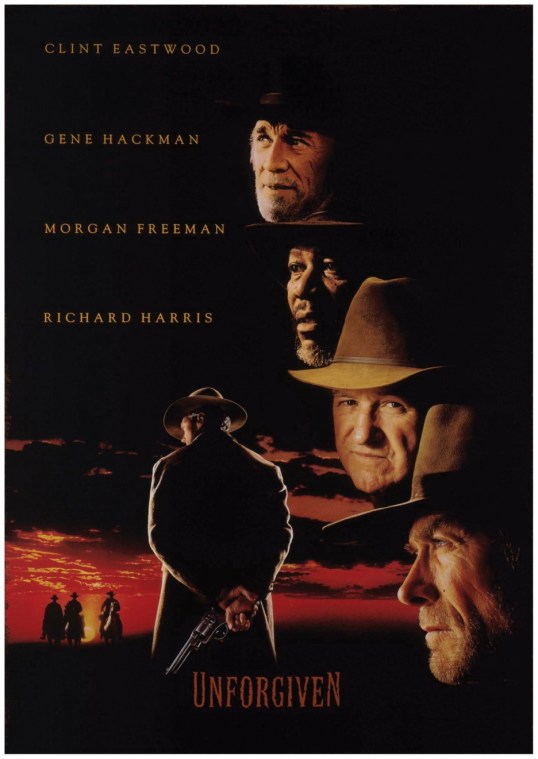
Unforgiven Remake to be a Samurai Film


Anyone who complains that all Hollywood does nowadays are sequels and remakes should think before they start to rant. Sequels and remakes are not exclusive to Hollywood (Bollywood anyone) and it’s been a tried-and-true practice both inside and outside the glitzy confines of Hollywood. Sergio Leone took classic Kurosawa samurai films and remade them into the classic spaghetti Westerns which made Clint Eastwood a household name (pre-RNC chair).

Now Japan is looking to take one of the best Westerns of the past quarter-century in Eastwood’s own critically-acclaimed and award-winning Unforgivenand remake it as a samurai film set in 188’s Japan. The film will star Ken Watanabe in the same role Eastwood had in his film with fellow actors Akira Emoto and Koichi Sato rounding out the cast. The remake will have the title of Yurusarezaru-mono and will closely follow the same story of Eastwood’s film with just changes in location and other cultural changes.

The film will be directed by award-winning Korean filmmaker See Sang-il and should see a release date sometime around 2013.

I, for one, am looking forward to see how this remake will turn out. Jidaigeki (samurai period films) have seen a resurgence in Japanese cinema these past couple years and it’s going to be interesting to see how one of Eastwood’s Western masterpieces will turn out as a samurai drama. Fans of both genres have a mutual understanding that the Western and the samurai films share similar themes and character traits so it shouldn’t have been a surprise that Unforgiven will be remade into a samurai. What is a surprise is that Japan took twenty years to decide to do it.

Source: Variety

Clint Eastwood’s Chair


Politics constitute an indomitable itch for those of us inclined to discuss them. This is not a post about politics. This is a post about Clint Eastwood’s chair.

Clint Eastwood’s chair was first made known to me at about 3:30 this afternoon. I know, I’m behind the times. At my ripe old age of 27 it’s hard to keep up with the world. But I made that perilous journey to youtube, and with, I am proud to say, no great difficulty, I procured a mouse cursor in a blank textbox, from whence my journey began.

Arriving at my destination, and bearing witness the public oration there displayed, I found myself not at all befuddled or amused by an old man’s rant. Quite the contrary, I thought it a reasonably clever comedy sketch in consideration of his age, chuckled at his tongue-in-cheek endorsement (which amounted to little more than a ‘lesser of two evils’ vote), and felt inclined to comment on his behalf. Then my troubles set in.

I was caught off guard. The text below the video bombarded me like an artillery barrage, every 10 seconds a new string of demented rambling surpassing all of my direst expectations for the video at hand:

“LOL do you just make shit up? California well off? LOL just keep making shit up your boy will gone in November.” (kEMCO2)

“YOU’RE PROBABLY A LOSER SITTING IN YOUR MOTHER’S BASEMENT WATCHING FADING POSTERS OF OBAMA WAITING FOR YOUR NEXT WELFARE CHECK.” (Chloe Smith)

“You’re an idiot. You’re going to get old to you moron. Old age has nothing to do with dementia. People become deranged at 35, look at your hero Obama, he is as stupid as they get.” (DonDraperism)

“Ask the ones that OUR military freed and saved! Your a pansy and have no clue! Your part of the reason we’re in the shape we are!” (bessedchevy20)

“LOL. congratz u have been brainwashed” (bobilo95)

And I realized something.

I realized something terrible.

My internet was gone.

It was gone. It was dead. The shroud tailor measured it for a deep six holiday.

I didn’t believe it at first. I panicked, frantically hammering out search terms into Google, but no relief was in sight. I turned to Gogloom, dear old friend, but its springs too had run dry; IRC, my last vestige of hope, failed me.

And I thought maybe, just maybe, this tragic loss and the verbal assault upon Clint Eastwood’s chair were somehow related.

I was born and raised on the internet. I remember when we first got dial-up in 1996. I passed the tender age of 11 sharing insightful comments much akin to those I experienced today, only geared to my youthful interests. “LOL u dont even know ff3 is rly ff6 and u wasted $200 on a PSX even tho ff7s gonna suck NINTENDO FOR LIFE” Ah, such fond memories. A prodigy no doubt, I learned quickly to curb my intellectual idioms to placate the masses, adapting to the drudgery of coherent English in my teenage years and beyond. Was it some cruel twist of fate that now finds me linguistically isolated from the very internet users for whom I learned to converse? All I wanted to do was talk about Clint Eastwood’s chair.

The fact of the matter is the internet no longer functions as an outlet for sharing free thought. Oh, I am “sharing” my thoughts here, with the four or five of you who happen to read this, but should you choose to respond you will do so in the form of a comment, in reply to my post which I moderate. I am in charge here, and that means I am not really intimately engaging with anyone. These WordPress blogs completely lack an equal playing field for discussion, but they’re ideal for sharing one’s opinion with the wind. We’re all special. We all have a voice. Here’s mine.

That’s the state of WordPress. That’s the state of Facebook. That’s the state of Twitter, I suppose. I don’t use the latter two, frankly because the notion of making an isolated personal statement bores me save on rare occasions such as these. I post here because all of my previous outlets have slowly withered away. Are new outlets out there? I suppose there’s 4chan. The launch of /r9k/ encompasses some of my fondest memories of the internet, specifically due to the brief period of intellectual discussion it spawned. Coincidentally coinciding with the launch of Project Chanology, it generated countless debates on the political and social impacts of anonymity and collective thought, perhaps culminating in a collective realization of and expansion upon the notion of Stand Alone Complex (Ghost in the Shell). We were each participants, debating and trolling in turn, in the very social experiment we were conducting. It was a grand culmination of everything I loved about the internet in the 1990s and 2000s, but it was indeed a culmination–an end–because complacency and the totality of its form of anonymity rendered it non-sustainable. I remember acknowledging that at the time, and feeling as though my online world was passing away even as it stood resplendent in its most accomplished form.

And so it did. It took me four years to admit it, but the internet is dead. The pathways and connections through which such experiments as /r9k/ emerged as hubs for collective contemplation (a great majority of us, myself included, were not active 4chan members, and that fact was pivotal to elements of the discussion) dried up into defunct forums and dead irc channels. Our mutual file-sharing ties, the final tether, were severed by delayed but decisive corporate rationality headed by the likes of Apple and Netflix. The generation-spanning cultivation of anonymity was wiped clean and even culturally discredited by Facebook, with present-day internet users lavishly emblazoning their identity upon all electronic activity. The collective internet mind dispersed into relegated pockets. I am now an individual, and I despise that fact.

I wanted to talk about Clint Eastwood’s chair, but I couldn’t. I could tell a few people about it. I’m not really doing so at the moment, but I could. I could also scream at the wall, as so many youtube users of voting age are doing right now. And indeed, they’re relatively anonymous. Chloe Smith and blessedchevy20 will certainly never know that I read their banter, and, though I could probably trace down their thorough identities with easy today, apathy preserves them. But they aren’t engaging anything. Their ‘thoughts’, if what they wrote even amounts to thinking, involved not but petty rebuttals to the most recent of 12,000 comments, by now surely buried behind thousands more. The /r9k/ ideal, of thoughtful engagement under the shroud of total anonymity, was short-lived. Perhaps it carries on in some diminished form. But the long-sustained anonymous community is what we’ve truly lost. The modestly sized forum; the casual irc channel; the self-contained communities where one could engage under independent but locally consistent identities: it’s their loss that we now suffer.

Would so many adults scream at the wall if they had any alternative? In an age where everyone has access to the internet, would we be so simultaneously excitable and yet devoid of well-formed opinions if we had any means of discussion? I can talk here and hope you hear me. I can shout on youtube knowing you won’t. In neither medium am I well positioned to receive an intelligible response by an identity in equal social standing. You’re either on my turf or in the combat zone with barely time to breathe before taking aim. And even if the spirit of youtube calmed down a bit, what can you meaningfully say in 500 characters?

I don’t want to talk about Clint Eastwood’s chair anymore. I was going to say some silly crap about a metaphor for lack of political leadership that would sound corny as hell but would spark up some discussion. But I can’t do that here, because as an editor I’m in charge and that means I have to maintain boundaries. And there’s no point in doing it anywhere else. I guess I’ll just go back to playing Warcraft, maybe discuss the new expertise cap or auction house inflation. In the absence of loosely-moderated discussion boards and public chats those seem to be the approachable topics we have left on the internet.

VGM Entry 34: Stormlord


VGM Entry 34: Stormlord
(Thanks to Tish at FFShrine for the banner)

There were only so many things a musician could do within the limited capacity of the Commodore 64, and though a rare boundary-breaking exception or two snuck by, I think that by 1989 most music sounded like a rehash of the same old thing. It wasn’t declining in quality, but it was getting a little repetitive, while many of the best musicians were moving on to other platforms or beginning to burn out. The amount of games I feel inclined to exemplify diminishes in turn.

Dominator (System 3, 1989), composed by Matt Gray, is a perfect case in point. It was a solid four-song work that incorporated a lot of standard C64 innovations while remaining pretty laid back. It’s definitely a pleasant listen, and in a way it reminds me of Jeroen Tel’s work on Cybernoid II the previous year. It is one of the best Commodore 64 soundtracks of 1989 that I’ve found, but it offers absolutely nothing new. There’s no stylistic innovation here. It doesn’t employ the SID in any sort of novel way. It’s just a catchy tune in C64 style. That’s all well and good, but if the whole SID musical movement was defined by constant experimentation and expansion then it was surely by 1989 well in decline.

Part of Jeroen Tel’s real claim to fame was his ability to keep pushing forward in the midst of this:

Stormlord (Hewson, 1989) is a joint effort by Johannes Bjerregaard and Jeroen Tel. Its sort of cheesy extra-terrestrial vibe does little to reflect the gameplay, but that’s to be expected. I’m more impressed by how effectively poppy it is compared to Commodore 64 titles of the past. It sounds almost too pop to be SID, with even a tip of the hat to Michael Jackson (0:37) as far as I can tell, and that’s a lot of what makes it a significant composition. Jeroen Tel kept on incorporating new styles of popular music into a chiptune medium long after most SID composers had become set in their ways. Johannes Bjerregaard was of course also involved in Stormlord, and I don’t know the extent to which either contributed to this tune in particular (or if there even are other tunes in the game). Bjerregaard is a name I seldom run across, although Lemon 64 credits him with 63 compositions.

Stormlord also comes with an amusing story. The game caused Hewson Consultants a bit of trouble, and the box art you see above is not the original design. The original, if fairly innocent, would probably still cause a ruckus today.

Hewson Consultants didn’t beat around the bush. They knew that finding out the princess was in another castle wasn’t what gamers really wanted, and they attempted to deliver the real deal. So in Stormlord you play a behemoth, loin-cloth laden viking who runs around saving hot naked chicks. Sexist? Maybe, but not really sexual. This wasn’t an “adult” game by any means. Your interaction with the distressed damsels was in no way suggestive, and there was no discernible full-blown nudity. It would have surely landed a safe PG-13 rating were its contents in a movie today, but… is that the side of a pixilated breast I see? Good heavens!