In a world where almost every season news media both traditional and on-line warn the population of what could be an outbreak of a new super-virus that could cause a new pandemic similar to the Spanish Flu of 1918. This was a pandemic which occurred before transcontinental travel was the norm and the virus still managed to kill 1% of the world’s population. Now, it’s 2011 and with warnings of swine flu, bird flu, Ebola, SARS and any number of infectious diseases still in the public’s consciousness we get a new film from filmmaker Steven Soderbergh which seriously explores a world discovering a new deadly disease and how the world responds and deals with the crisis.
Contagion begins with a simple “Day 2” caption as we see one Beth Emhoff (Gwyneth Paltrow) awaiting her flight to board in O’Hare at Chicago. There’s a bit of character building about this character who we see as already in the early stages of what looks to be the flu. From there Soderbergh does an interesting bit where he lets the camera linger for just a split second longer whenever Beth touches something. Soderbergh does this many times that the audience will soon get used to it and forget the significance of the act. We see Beth get a ride home from a colleague back to her home where she’s welcomed home by her husband Mitch and her young son Clark who runs to her and gives her a big hug.
The story really hits the ground running as Beth and soon those she has come into contact with begin to show similar symptoms and quickly die. The CDC and it’s head administrator, Dr. Ellis Cheever (Laurence Fishburne), soon begin to see a pattern to the deaths and the similarity to their symptoms. We soon see another aspect of the story begin with the arrival of Dr. Erin Mears whose job is to investigate the circumstance which seems to be leading into a cluster case starting with Beth and the area she lives in.
The third aspect of this film throws in internet news blogger Alan Krumwiede (Jude Law) who begins to suspect that several deaths around the world looks to be interconnected in someway and that the government, the CDC and the WHO (World Health Organization) are trying to hide these disturbing facts from the general public. Krumwiede becomes the purveyor of unfiltered news which seems to do more harm than good as more and more people begin to believe his conspiracy theories about what looks to be a growing global pandemic cause by an unknown virus every expert brought in to help cannot seem to figure out.
Let me just first say that to call Contagion a thriller in the traditional sense would be flimsy at best. Soderbergh and the film’s writer, Scott Z. Burns, have made a thriller but in a sense that it skews heavily on using realism and an almost docudrama style to push the film’s narrative. The thriller aspect comes from the notion that this film’s plot is not far off from actually becoming a real event. There’s no usage of dramatic tropes from past disaster and apocalyptic films to manipulate the audience. The film as a thriller would be quite mundane when stacked up against films like Outbreak and The Andromeda Strain. It’s the realness of the story, the events taking place on the screen which gives the film it’s dramatic heft.
We begin to see what Soderbergh is trying to accomplish with this film. How transcontinental travel which took weeks during the 1918 Spanish Flu pandemic now can spread a highly infectious disease in a manner of less than a day’s plane flight over one ocean. The film shows in disturbing detail just how easily we as a people can spread a disease just by doing the most innocuous thing like absently touching one’s face many times a minute then transferring whatever we had to any surface we touch. Contagion definitely will add to the paranoia of those who already have an unhealthy habit of disinfecting everything before they even touch it.
The film doesn’t just touch upon the medical side of solving the growing crisis, but also explores how the governmental response and sociological reaction to the epidemic. For the former we see how protocols and the need to slowly disseminate information to the public only adds to the public’s mistrust of the very agencies created to help them in case of such an event. Soderbergh doesn’t condemn or praise these agencies for their bureaucracy. We see the reason why places like the CDC take their time to finally inform the public as we get the unfiltered and manipulative news blog side of the news media in the form of Krumwiede’s blog. While he does dare to ask the questions other more traditional news organizations fail to ask he also becomes too enamored with how many people read his blog that he’s willing to manipulate the news itself in order to gain more followers.
Contagion hits the second half of the film with the world in full crisis mode and the film taking on a more apocalyptic tone. We see streets in San Francisco full of garbage bags as agencies who used to pick them up have either gone on strike or have stopped their daily runs in fear of infection. Then there are the riots at pharmacies and stores as interstate commerce grounds to a halt and no new supplies of goods and sundries make it to stores. Society itself begin to devolve as everyone and every group start to look after their own and begin to turn on others for the dwindling supplies.
It’s here in the second half that we see the film take on some of the more traditional aspects of a thriller, but even here Soderbergh doesn’t seem to want to linger on the more sensational side of the story. He continues, for good or ill, on the narrative style he began with and that’s to see the epidemic from beginning to conclusion in as clinical a manner as possible. It’s for this reason that at times the more intimate and personal side of the film’s story involving the Emhoff family seemed like it was from a different film. The Emhoff’s end up becoming the heart of the film, but it’s this emotional center that never seemed to fit with the sterile and cold narrative style Soderbergh chose to tell the film’s story.
The performances by the star-studded cast was quite good, but no one person really stood out. If I had to choose one it would have to be Kate Winslet’s Dr. Mears who goes out into the field early in the crisis investigating the early stages of the epidemic. We see her frustration at having to deal with local governmental agencies who fear the hit a quarantine would put on local economies (as if people dying in droves wouldn’t be a bigger hit) and the very danger of contracting the disease itself since having no knowledge of how it works she must use means of protection that may or may not protect her. While her story-arc in the film was just one of several it was her’s which really showed a major impact at how impersonal can be and how no one is truly safe.
Contagion is a film that tells a story about the possibility of such an event occurring and does it well, if not in a very clinical way, but it also shows just how unprepared we truly are when it comes to the smallest of creatures who sees us as nothing more than living forms of intercontinental travel. It’s exploration of such a global crisis in all it’s aspects (medical, research, governmental, media and sociological) makes it seem more like a docudrama more at home in the Discovery Channel, The Science Channel and the like instead of a cinema multiplex. It’s all due to Soderbergh’s storytelling skills that he’s able to pull off such a non-traditional thriller and make people more afraid about their surroundings coming out of the film than they were going into it. It’s not one of Soderbergh’s best films, but it’s a strong offering from him and one of the better films to come out in 2011.
This latest and 26th dream-memory which our eternal warrior, Kaim, remembers is another one which hits home for me. The memory’s title is “Signpost” and it deals with another aspect of mortality we humans have to deal with both personally and intimately.
As someone who has experienced the death of a loved one this particular dream-memory definitely hits home. Death is something which we always think of as something that happened to other people and those people’s loved ones, but never to us. There’s so many ways to interpret this memory, but for me I always thought that it teaches us that people should never be left to die alone. Whether it’s someone who will die young and not have experienced a full life or one who has lived to a ripe-old age, they must always be given the time to spend their final moments of life with someone close to them.
To die is part of the natural of things, but that doesn’t mean we can’t help those about to make that journey into that far, green country with some compassion and respect. We need to let them know that their life had meaning and that they affected people around them. That they have a legacy to leave behind. They should be reminded that it’s not their fault they’re dying and that they should have no reason to apologize for. In fact, it’s those being left behind who will have to suffer through the mourning process.
Ever since the day she passed away I have always hoped that my Mom did so with happy thoughts as she moved on and not regrets.
Signpost
“I’ll be gone soon.” Anri says.
“So it makes no difference a life like this.” She smiles with some effort, puts a gray tablet on her tongue, and swallows it.
Use or possession of this drug by ordinary people is prohibited by law and strictly controlled. The person taking it feels as if every bone in his or her body is melting. All the anxieties and cares of life vanish as the individual wanders in the space between languor and pleasure.
“Why don’t you take one, too?”
Anri pulls another tablet from her leather pouch and holds it out to Kaim, who is standing by her bed. “Coward!” she says with a grim smile when he shakes his head in silence, and then she places the second tablet on her tongue.
“How many pills does that make today?” Kaim asks.
“Hmm, I forgot . . .”
With empty eyes, Anri stares into space and sighs.
This is an addiction, a serious one. “How do you feel?” he asks.
“Not bad.” she says. “Very happy.”
She gives him a smile. It is deeper and softer than her earlier smile-though maybe too deep and too soft. It appears to be a smile of ultimate bliss, but, for that very reason, it also has a frightening quality that sends chills up his spine. The drug is called “signpost.”
This is not its formal designation, of course.
People started calling it that as a secret code word to avoid prosecution, and the term caught on.
“Signpost” is, however, the single most appropriate name for this drug.
Each pill takes the user one step farther down the road. And when withdrawal symptoms strikes, the person rushes to take the next pill, thereby advancing yet another step. Farther and farther and farther . . .
The road marked by this signpost is a soothing one, entirely free of pain or suffering.
At the end of the road, however, there waits only death.
The use and possession of signpost is so strictly prohibited because it is seen as an invitation to gradual suicide. “How many more pills, I wonder?”
Anri mutters, stretching her emaciated body full length on the bed.
It is a question that Kaim can not answer. He knows only that she is nearing the end of her signpost journey.
It is for this that Kaim has been called to this hospital, which is a facility for people on the verge of death. “I have no regrets.” Anri says.
“None at all. This way I die pleasantly, quietly, like going to sleep.”
Her empty eyes fixed on Kaim, but they seem to register nothing.
“I’ll be fine.”
She reaches into the leather pouch again. “You probably shouldn’t do that.” Kaim says.
“I’m telling you I’m fine.” she says, laughing weakly, and placing a third signpost in her mouth.
She closes her eyes.
Her sunken eye sockets harbor dark shadows.
Kaim settles himself into the chair by her bed.
He waits for her to say more, but she seems to have fallen asleep.
Her breathing is calm, and a slight smile plays upon her sleeping face. The signpost seems to be working. Without the drug, hammer-like pains in her back and violent chills would prevent her sleeping. Even worse than the physical suffering would be the fear of approaching death. More than a girl than a woman, young Anri was struck by a mortal illness. At the end of her long battle with the disease, the doctor gave up all hope of treating it and prescribed signpost for her instead.
Ordinary people are not allowed to use the drug, but special permission has been given to patients for whom there is no hope of recovery in order to afford them a peaceful death and bring their lives to a quiet close-in other words, to enable them to die without having a deal with a regret or despair.
Before Kaim began this work, a doctor explained the effects of the medicine to him, concluding with a smile, “In other words, signpost forgives all the debts the person has built up toward life.” Anri wakens.
After she has confirmed Kaim’s presence at her bedside, she says. “You don’t have to worry.” and closes her eyes again, smiling.
“I’m fine. I think I can go just like this . . .”
So, she knows there are other possibilities. In certain rare cases, signpost can have undesirable side effects. Sometimes at the very end, when the person is just beginning to slide into the abyss of death, there can be an attack of nightmares. The patient experiences a literal death agony. Even though signpost have a provided such a wonderfully tranquil departure on the person’s final journey, every last bit of tranquility can be swept away on the cusp of death.
Worse still, some patients concluded their hallucinatory episode with a frenzied physical outburst. They might have barely enough strength to breathe until, tormented by the nightmares, they lash out violently enough to break the bed or even strangle the caregiver in attendance. Such can be the mysteries of the human body, or, more so, the human heart. This is why Kaim is here.
He is to stand vigil by Anri’s deathbed against the remote possibility that she might be tormented by nightmares and go wild under the influence of signpost’s side-effects.
The doctor has supplied him with yet another drug.
It is a poison that will kill the patient instantaneously.
Kaim has been instructed to administer it to Anri as soon as she begins to exhibit strange behavior. “Believe me, this a humane measure,” the doctor said, “not murder by any means. The face of a patient who has suffered the drug’s side-effects is truly grotesque-not something that anyone could stand to look at.
A person’s death should never be that excruciating.
This is a final kindness to give the person a quiet, peaceful ending.” Kaim was not entirely convinced by the doctor’s rationale. Neither, however, was he able to bring himself to take an issue with it.
Now he can only hope that, led by her signpost, Anri will be able to pass her final moments in peace.
Some part of her inner self might be paralyzed at the moment, and her empty eyes might never regain their former gleam, but if she is happy that way, it is nothing that anyone has the right to deny her. Waking again, Anri reaches for another signpost but drops the leather pouch.
“Sorry, but . . . would you pick it up for me?” she asks Kaim.
She no longer has the strength even to hold the pouch.
Her final moments are closing in.
Kaim lifts the pouch from the floor, but when she asks him to put a tablet in her mouth, he hesitates for a moment before complying.
Her tongue is dry and rough as sandpaper. She really must be nearing the end. Having taken another signpost, Anri seems to be overtaken by that languorous feeling again. She moves the flesh of her cheeks in a way that has no meaning, releases a feeble sigh and says, “I was just dreaming.”
“What about?”
“About when I was little . . . everybody was there . . . my father, my mother, my big brother and sister . . . all smiling.”
This is not a good sign. The drug might be having a bad effect.
If the signpost is working properly, she should not be dreaming-especially about her family. The more lingering attachment or regret or sadness a person retains, the more likely he or she is to experience side effects. This is precisely why the family is never admitted to the patient’s room. The final farewells are made before the administering of signpost, and only after everything is finished do they “meet” again. “Everybody was in such a good mood!”
Kaim wonders if he should give her another signpost.
“I’m sure when I was born that my parents never imagined I would die so young.”
A more season caregiver would probably give her another pill with hesitation. Then Anri would fall into another peaceful sleep without any thoughts to disturb her, perhaps never to wake again.
Kaim, however, sets the leather pouch on a shelf and waits to hear what else she has to say.
Anri herself does not request another signpost but moves the sunken flesh of her cheeks again.
This time the movement takes the form of a deliberate smile. “You know,” she says to Kaim, “I’m beginning to wonder.”
“About what?”
“Why I was ever born.”
Kaim is at loss for words, but she does not let this prevent her from continuing.
“I mean, if I’m going to die so young, when I’ve never had a chance to fall in love, wouldn’t it have been better if I’d never been born at all?”
Kaim nods as if to tell her that he understands.
Why was I ever born?
This is the question that Kaim himself has been pondering all through his endless journey.
He has still not found the answer, and maybe never will.
“My mother and father will be sad, I’m sure.”
“You had better rest now.”
“Maybe I was born to make my parents sad.”
“Close your eyes and take a few long, deep breathes.”
“Can I have some more medicine?” This time he gives it to her without hesitation.
“Thank you,” she says simply for the first time, and then closes her eyes.
“I guess it’s possible I might never wake up again.”
“It’s possible.”
“It’s a good thing to die without suffering, isn’t it?”
“It probably is.”
“And to die with your head in a fog, without thinking or feeling anything . . . that’s a good thing, too, isn’t it?” Kaim says nothing.
This is a question he cannot answer, a question he doesn’t want to answer.
Anri falls asleep without asking him anything else.
She is still sound asleep when the doctor examines her and tells Kaim, “She will probably pass away before the night is out.” It is late that night-close to dawn-when Anri begins to suffer. “I’m sorry, Mommy, I’m sorry I ate the jam, It was me.”
She is running a high fever with large drops of sweat on her forehead as she moans deliriously.
“What’s taking you so long, Daddy? Hurry, hurry, the butterfly’s going to fly away!”
Kaim wonders if she could be reliving memories of early childhood. “You hit me! Big brothers shouldn’t hit their little sisters! You’re bad! I’m gonna tell Mommy!”
Convulsions wrack her entire body. “Let me in! I want to play with the big girls!”
It doesn’t end with her delirium.
She starts moving her arms as if trying to embrace family members floating around her.
This is what they were afraid of: the side-effects. “Take me with you, please! I don’t want to stay here! Don’t leave me!”
Her cries mingle with tears. Hallucinations seem to have taken the place of past memories in her empty eyes. “Please, I’ll be good! I’ll do what you tell me, Mommy and Daddy! Take me with you!”
In fact, just the opposite is happening: the ones being left behind are the family who so loved the youngest daughter, Anri. “Don’t leave me alone! Mommy! Daddy! Come back, please!”
He can feel her pain and sorrow.
Her convulsions become increasingly violent. Her face contorts in agony. Alerted by the commotion, a doctor comes charging into the room.
“What are you doing?” he shouts at Kaim, “Put her out of her misery now!”
Kaim knows what he should do.
This is what he was hired for. The poison that will prevent Anri from suffering any more is within easy reach.
What he takes hold of, softly, however, is not the poison but the hands that Anri stretches out into empty space. “What are you doing?” the doctor shouts at him.
“Stop it! This is a direct violation of your duties! You’re fired!”
Kaim turns toward the fuming doctor and says simply, “Be quiet, please.”
“What in the hell are you-“
But the doctor breaks of his shouting when he catches sight of the look on Anri’s face.
She is smiling. “Are these my mother’s hands? My father’s? Big brother’s? Big sister’s? Tell me whose hands are these?” she asks joyfully.
Feeling the strength of Kaim’s grasp, she squeezes back, an almost indescribably happy smile on her face, tears streaming from her eyes.
“I’m here with all of you . . . together . . . always . . . “
Her convulsions have subsided, and her breathing has calmed down. Kaim whispers in her ear, “Thank you, Anri.”
“Daddy?”
Smiling through her tears, she says, “I know it’s you!”
Kaim smiles back at her and says, “I’m speaking for all of us-for me, your mother, your brother, your sister, when I say ‘Thank you, Anri.”
Anri seems almost embarrassed when she asks, “For what?”
“For having been born, Anri. For having come to be with us. For having allowed us to share time with you. Mommy and I and Brother and Sister, we’re all so grateful to you for that.” Unfortunately, life has its limits. There are long lives and short lives.
And in life-even more unfortunately-there is happiness and unhappiness.
There are happy lives and unhappy lives.
For all of this, however, for the chance to be alive in this world, for the chance of having lived life in this world, the only thing to say is
“Thank you” When Kaim says this to her, Anri gives her slender chin a little shake and says,
“No, I should be the one to be thanking you…all of you.”
These are Anri’s last words.
The look on her face in death following the torment of the drug-induced nightmares is neither tranquil nor peaceful.
It is, however, happy. Are you really leaving us?” the doctor asks Kaim with a genuine show of regret.
Dressed for the road, Kaim smiles and says, “I don’t think I’ll be ever able to perform the duties of a caregiver properly.”
“To tell you the truth, Kaim, I still can’t get over the fact that it’s even possible to do it your way.”
With a serious look, he adds, “I wonder if your hands give of some substance like signpost. Otherwise, I can’t imagine how she could have died so happily.” Kaim turns his palms toward the doctor. “They’re just ordinary hands, nothing special.”
“I’m not so sure about that,” the doctor says. “If we spent some time studying them properly, maybe . . .”
Kaim shakes his head with a sour smile as if to say “You wouldn’t find a thing.”
He does have one point to make with the doctor”
“I’ve seen lots of people die alone-probably a lot more than any of you doctors have. That’s why I wanted to bring her together with her family at the end. That’s the only reason I took her hand.” The doctor’s vague nod suggests that he is not, but Kaim is through talking with him.
He strides off toward the highway.
He must continue his journey.
His journey will go on as long as he is unable to reply to Anri’s question.
Why was I ever born?
Anri had a family at least. His life consisted of her joining and leaving her family.
Kaim has not had even that much. Where did I come from?
Where am I going?
Why does the passing wind draw Kaim along on his endless journey?
Day 25’s dream-memory is called “Stones of Heaven” and it’s a tale that when looked into should remind people of their own lives.
This remembered dream-memory of Kaim’s explores the meaning of strength and weakness in humanity. In one end, we have people who dedicate so much of their lives to achieving perfection and discipline that they soon begin to shed the very humanity which gave them the strength to begin their journey in the first place. On the other side of the equation we have those who have failed in their own attempts to achieve something great yet from this failure (or failures) they’re able to gain a sort of wisdom which just reinforces their very humanity in the face of adversity and hardship.
Stones of Heaven
The waterfall lies deep in the forest, more than a day’s travel from the nearest village.
It is said to be a holy place.
In search of the divine amid the towering peaks, pilgrims stand beneath the plunging falls in their final ascetic practise.
The water of the falls is freezing cold.
All it takes is a momentary lapse of concentration, and the person is hammered down by the rushing water.
The pilgrims call this waterfall the Stones of Heaven.
Heaven is testing their mental and physical strength, they say, by hurling an endless stream of “stones” down upon them in the form of the powerful waterfall.
“And the stones have a mysterious power,” a former pilgrim says to Kaim with a pained smile. He himself failed in this final austerity, he adds.
“Different Stones of Heaven fall on each person. It’s as if they can see into your heart.”
“What do you mean?” Kaim asks.
“The burdens you bore and the dreams you dreamed in the secular world appear to you one after another.”
In his own case, he says, what came to him first were the voices of women.
“The water plunging down into the basin of the falls began to sound like women’s voices. Sweet voices whispering in my ear, voices sobbing, voices moaning in a lover’s embrace… an incredible variety. And for better or worse I knew every single one of them. Some I was thrilled to hear again, while others I hated remembering.”
“Meaning, you’ve gotten yourself into a lot of trouble involving women?”
“I have indeed. Not to boast or anything, but that was one battlefield I knew better than anybody. I survived, but I made a lot of women cry, and there were a lot of them I loved. My whole purpose in undertaking the austerities was to put that life behind me, but the Stones of Heaven know what they’re doing. In the final, final test, they go after your greatest weakness. If you waver the slightest bit, you’ve had it. The water slams you down, and your austerities are over.”
The man feeds a stick of kindling into the campfire.
“And I’m not the only one,” he continues.
“One fellow heard the voice of the mother he hadn’t seen since he was a little boy; another heard the voice of his dead child.”
“Is it always voices?”
“I wish it were. If you hold up through the voices, the waterfall’s mist starts changing into the shapes of people. You might see somebody who you hated so much in the secular world that you wanted to kill him, or it might be some loan shark you had to go into hiding to get away from.
One little flinch and you’re done for.”
This particular austerity can be performed only once. There are no second chances.
Someone who has persevered for a whole day and night but who fails in the end has no choice but to return to the secular world in defeat, as this man did.
“Not that it was easy for me to get on my feet again once I was back there, either.”
The man chuckles and calls out to a young pilgrim. Or, more precisely, to a young man who was a pilgrim until a few moments ago, but who has just now dragged himself up to the lip of the basin in utter dejection.
“Hey, young fellow, the campfire’s over here. I’ve got liquor to warm up your insides, and some fresh-grilled meat. Get a little of that in your stomach and you’ll have the strength to make it down to the village.”
The man now makes his living as master of the teahouse by the waterfall. Of course, pilgrims undergoing austerities carry no money with them, but the man is not expecting to become rich doing this work.
For bodies chilled by long hours of pounding under the waterfall, he provides a warming fire, food and drink, and sometimes even money to tide them over when they first go down to the village. Payment can be made at any time. The men can bring him the money after they have started to take in earnings again from the jobs they find in the secular world.
He sets no date for repayment. He takes no IOUs. He says he is fine with that.
“Aren’t there some who don’t pay at all?” Kaim asks.
“Of course there are,” the man says matter-of-factly. “But I think my running this teahouse has another kind of discipline for myself.”
“Another kind of discipline?”
“That’s right. The Stones of Heaven will accept only the strongest pilgrims, the ones unperturbed by anything. The role I want to play is to accept the ones who were broken by the Stones of Heaven – the weak human beings. I want to go on accepting the weakest of the weak. The kind who not only succumb to the Stones of Heaven but who even fail to pay for their food and drink afterwards!”
“That is your kind of discipline?”
“Exactly. It makes for a hard living, that’s for sure. I thought I was prepared to deal with cheats and weaklings, but there are a lot more of those than I ever bargained for,” he declares with a hearty laugh.
But then he quickly turns serious and says, “To tell you the truth, I think of this less as a form of discipline than as a way to get even.”
“Get even? With whom?”
“With those gods or whatever they are that keep hurling down their Stones of Heaven.
Human beings are weak – shockingly so, in the eyes of a God. But, I think, and this is not just because of what happened to me, that being weak is the best thing about human beings. Weakness can make us cunning, but it can also make us kind. Weakness can torment us, but it can just as easily be our salvation.
Don’t you see? If the gods are hurling down their Stones of Heaven just to make people aware of their own weakness – just to make us savor our own powerlessness – then I’d just as soon drop my trousers and moon them. I’ll slap my bare butt and say to them,
‘I’m not like you! I’m not going to punish human beings for being weak! I accept them for what they are, weakness and all!'”
The man feeds a new piece of kindling to the fire and says with a shy shrug, “I guess I got carried away.”
Kaim smiles and shakes his head as if to say, “Not at all.”
“Tell me, though,” the man goes on. “I see you’re a traveller, but you don’t seem to be a pilgrim.”
“You’re right, I’m not,” Kaim says. “I was trying to cross over the pass and took the wrong road.”
“Well then, as long as you’re here, why not give the Stones of Heaven a try? It’ll be something to talk about.”
“No, thanks,” Kaim says, smiling.
“Whats the matter? Afraid they’re going to show you whatever it is that shakes you up?” The man smiles and nods. “Can’t say I blame you, though.”
The man is mistaken about Kaim. He is not the least bit afraid of such a thing.
What scares him is the opposite prospect. That of not being shaken up. Of encountering in himself a person unmoved by anything at all.
“Anyway, it would be suicide to jump into the waterfall without preperation.”
“How’s that?”
“It’s freezing cold, for one thing. There’s even colder water bubbling up from a spring in the basin. Even the most well-conditioned person has to be careful and take time to accustom himself to the low temperature. If you go in all at once, it can stop your heart.”
The man jerks his chin in the direction of the falls as if to say, “Look at them.”
Two new pilgrims are preparing themselves for the challenge of the Stones of Heaven.
The men appear to be brothers. The older one kneels at the edge of the basin, splashing himself and massaging the cold water into his skin from foot- to heart-level. The younger brother is too impatient for that. He wants to jump right under the falls. The elder brother cautions him and takes all the time he needs to accustom himself to the water’s coldness.
He exudes the quiet power of one who has withstood the most rigorous training.
“Aha,” the teahouse owner says to Kaim, smiling. “we’re in for a rare privilege. I think we are about to see the first successful attempt in a long while.”
“You can tell?” Kaim asks.
“You can if you’ve spent as much time here as I have. The winners and losers are decided before the men ever step under the falls.”
Having completed his meticulous preparations, the elder brother enters the basin. Even then, the steps he takes are slow and cautious.
The younger brother follows him in, kicking up a spray with every step.
“The younger one is hopeless,” says the man with a sigh, adding another stick of kindling to the fire.
“I’d better get the liquor ready now,” he mutters to himself.
The brothers stand side by side beneath the pounding waterfall. The Stones of Heaven rain down upon them.
As the man predicted, the elder brother, utterly calm, stands up to the onslaught of images sent by the Stones of Heaven.
Also as the man predicted, the younger brother yields to the Stones of Heaven and is beaten down into the basin of the waterfall.
But then something happens that goes far beyond what the man predicted.
Writhing in agony, the younger brother bobs helplessly in the basin, unable to rise himself.
He is drowning.
He tears at his own chest. His heart is failing. He was not fully prepared to enter the icy water.
“Help me, brother, please!”
But the elder brother doesn’t move. He remains under the waterfall in total concentration.
“Hey, what are you doing there? Hurry and help him!” the man yells, but the elder brother’s expression remains unchanged. He never flinches.
“He’s drowning! You can’t just leave him like that. He’ll die!”
The elder brother never moves.
He grits his teeth, keeps his eyes clamped shut, and shows no sign of moving out from under the waterfall, as if to declare, “This is it! This is the final test of the Stones of Heaven!”
The man screams at him, “You idiot!” and dives into the rolling basin in a rash effort to help the younger brother.
For the moment his untrained body hits the frigid water, the shock of it seizes his heart.
Still, he reaches out toward the drowning brother, who is sinking beneath the surface. A great shudder goes through him and with an enormous groan he takes hold of the young man’s wrist and pulls his limp body toward him.
He tries to return to the shore, but his strength gives out and he falls back into the water.
Next it is Kaim’s turn to dive into the basin beneath the falls. He takes hold of the two unconscious men and drags them toward the shore.
The tones of Heaven pour down on Kaim, and he is assaulted by one vision after another –
battlefields,
scenes from his wanderings,
shooting stars,
the climbing and sinking sun,
raging winds,
and countless deaths of those he has come to know on the road of his all-too-long life.
It will do you no good, he silently declares to the gods hurling the Stones of Heaven at him.
My heart remains unmoved. I have lived through a reality far crueler than any phantom you can show me.
Whether or not his life is a sign of his strength, he does not know. He will not boast of it, nor will he tell the tale to others.
He has, however, lived it; that much is certain. He has lived it through the years.
Kaim climbs onto the shore and lays the limp bodies of the teahouse master and the younger brother beside the fire.
As he warms himself, he thinks, The Gods who hurl the Stones of Heaven are inferior Gods.
If they could truly see into everything, they would never have been foolish enough to show Kaim scenes from his past. For what would disturb him most of all would be the unwelcome sight of moments from his own limitless future.
And if they were to ask him the simple question, “For what purpose were you born?” his knees would buckle in an instant.
The first to regain consciousness is the young pilgrim.
The teahouse master’s condition is critical. Kaim’s attempts to warm him and massage his clenched heart have little effect.
“Pull yourself together now! Look, we’ve got a fire here – the fire you built! Let it warm you!”
Kaim shouts into his ear until the man finally manages to force his eyes open a crack and move his purple lips.
“Is… is he… all right?”
“Sure, he’s fine, don’t worry.”
“Oh, good… good…”
“Pull yourself together, man!”
“Tell me, though… is strength the same as coldness?”
“Never mind! Stop talking!”
“Because if it’s true… if strength is coldness, I don’t want any part of it…”
The man gives Kaim a faint smile and closes his eyes.
He will never open them again.
Human beings are weak and fragile.
All it takes for a person to die is for a fist-sized organ to stop beating.
Human kindness, on the other hand, may derive from everyone’s profound awareness of the fragility of life.
Facing the teahouse master’s lifeless corpse, the younger brother hangs his head and cries. This weak man, defeated by the Stones of Heaven, sheds heartfelt tears for the man who saved his life.
His strong elder brother, meanwhile, is still being pounded by the waterfall, unfazed by the Stones of Heaven.
Surely his strength will be recognized by the gods, and he will bring his ascetic training to perfect completion.
Still, Kaim finds the tear-stained face of the younger brother beautiful in a way the stronger elder brother’s can never be, and he wishes that he himself could be moved like the younger man.
There was an unmatched nobility in the last smile of the teahouse master who gave up his life to save that of a complete stranger. Kaim wishes that he, too, could experience such feelings.
And what of my own face?
Living through a thousand years of life is not strength.
Yet, burdened with a life he cannot lose, will Kaim ever be able to change weakness into kindness?
This he cannot tell.
He can only live, unknowing.
He can only walk on.
He can only continue his journey.
Kaim looks at his reflection in the basin of the waterfall.
On the water’s heaving surface, he sees the trembling face of a lonely wanderer.
This is one of those public domain films that seems to show up in every other Mill Creek Box Set. It’s a guilty pleasure of mine and the trailer is all tacky goodness. Plus, Erika Blanc’s in it. (And the title has allowed me to have a lot of fun at my friend Evelyn’s expense.)
Before he was hired to direct Zombi 2, Lucio Fulci directed this spaghetti western. Not surprisingly, it’s one of the darkest, most cynical westerns ever made.
Nine years before Four of the Apocalypse, Fulci directed another western, this one with Franco Nero. Have I mentioned the things I would let Franco Nero do to me if I could get my hands on a time machine? Mmmmm….Franco Nero.
As part of my continuing effort to get caught up on reviewing all of the movies that I’ve seen so far this year, allow me to offer up 6 very quick reviews of 6 very different documentaries that I’ve recently seen. Two of these documentaries — Buck and Senna — are still playing in theaters. The other four — American, Exporting Raymond, The Greatest Movie Ever Sold, ResurrectDead— are all available On Demand and on DVD and Blu-ray.
1) American: The Bill Hicks Story(dir. by Matt Harlock and Paul Thomas)
This heartfelt documentary about the life of the late comedian Bill Hick and it shows why his defiantly anarchistic humor is even more relevent today as it was during his heyday. Here, his story is told through the use of cut-and-paste animation and it’s surprisingly poignant. I didn’t know a thing about Bill Hicks before I saw this film but I was crying by the end of it.
2) Buck (dir. by Cindy Meehl)
Buck is a portrait of both the real-life horse whisperer Buck Brannaman and the various ranchers and horse owners who come to his various “clinics.” The documentary covers Brannaman’s own abusive childhood and shows how he managed to turn the worst circumstances into something good. The film works best when it just allows the charismatic Buck to talk about his life and his beliefs. It’s less succesful when Hollywood phony Robert Redford pops up to talk about his feelings towards Buck.
3) Exporting Raymond (dir. by Phillip Rosenthal)
This is an interesting documentary in that it manages to be both entertaining and annoying at the same time. Phillip Rosenthal was the creator of one of the most oddly durable sitcoms of all time, Everybody Loves Raymond. In this documentary, which was directed by Rosenthal, we watch as he goes to Russia and deals with the resulting culture clash as he tries to adapt Raymond for Russian television. If you’re like me and you’re fascinated by all the behind-the-scenes production aspects of television and film, then you’ll find a lot to enjoy in this documentary. Unfortunately, Rosenthal himself is a bit too self-satisfied and, often times, he comes across like an almost stereotypical “ugly American.” There’s something annoying about watching a wealthy, American television producer going over to a country that’s perpetually on the verge of self-destruction and then bitching about how ugly all the buildings look.
4) The Greatest Movie Ever Sold (dir. by Morgan Spurlock)
In The Greatest Move Ever Sold, Morgan Spurlock sets out to make the “Iron Man of documentaries,” a documentary that is completely and totally funded by product placement. The documentary itself becomes about Spurlock’s attempts to find the corporate sponsors needed to make his documentary and the results are often hilarious and the film does succeed in getting you to think about how we are constantly bombarded with advertisements. At the same time, this is also a good example of a “Who cares?” documentary. Spurlock shows us how advertising works but he never really convinces us that it’s as big a problem as old toadsuckers like Ralph Nader and Noam Chomsky seem to think. In many ways, Morgan Spurlock is a more likable version of Michael Moore in that he primarily makes documentaries for people who already agree with him.
5) Resurrect Dead: The Mystery of the Toynbee Tiles (dir by John Foy)
This is a fascinating documentary about the mysterious Toynbee Tiles. The Toynbee Tiles are, to quote Wikipedia, “messages of mysterious origin found embedded in asphalt of streets in about two dozen major cities in the United States and four South American capitals.” That message is:
TOYNBEE IDEA
IN Kubrick’s 2001
RESURRECT DEAD
ON PLANET JUPITER.
These tiles first appeared in the 1990s and they’ve remained a perplexing unsolved mystery. Nobody’s sure what the mysterious message means, who wrote the message, or even how the tiles were embedded into the asphalt. This documentary is about not only the mysterious tiles but also the men who have, over the years, become obsessed with them and how that obsession has gone on to effect their own perception of reality. The movie even offers up a plausible theory of who is responsible for the tiles. Seriously, this is one of the most fascinating documentaries that I’ve ever seen.
6) Senna (dir. by Asif Kapadia)
Senna tells the life story of Ayrton Senna, a Brazilian formula one racer who was the world champion for three years before his own tragic death during a race. I have to admit that I don’t know much about Formula One racing and, as a result, I had some trouble following Senna. But Senna, seen in archival footage, is a charismatic and sometimes enigmatic figure and the racing footage is both exciting and, occasionally, frightening.
When Morgan Spurlock was doing publicity for The Greatest Movie Ever Sold earlier this year, he claimed that 1988’s Mac and Me contained the worst example of Hollywood product placement. After watching the following scene on YouTube, it’s hard to disagree.
“The Village Closest to Heaven” is the Day 24 entry of this 33-day marathon of Shigematsu Kiyoshi’s short stories which make up the Kaim collection, He Who Journeys Eternity.
It’s a tale remembered by an immortal warrior who cannot die no matter if it’s natural causes or through war. He has experienced death in all its forms and yet he always remains the only one untouched by Death and remain to wander the world as the eternal warrior. It’s during one such stop in a village that he sees a people who doesn’t see death as something to fight against but something they’ve accepted as part of their natural order of things.
It’s this acceptance that has made each and every person in this village to live their lives to the fullest each and every day for no one knows if tomorrow their time will come for them to go to “heaven”. It’s a way of living that many nowadays would consider as crazy. Too much do people think that they can fight death and their focus and life has been consumed at doing just that they fail to live a full life. It’s only in the end when their struggle to fight off the inevitable has failed do they finally realized how much of their life they’ve wasted.
There’s a moral to this tale and that’s to live life to the fullest. Enjoy life and do it with those you love and care about. Worrying about things we never really have control over is a waste of the finite time we have.
The Village Closest to Heaven
In this village ringed by jagged mountains, the women give birth to many children.
Five or six is not uncommon. Just the other day, the wife of the village headman gave birth to her tenth child.
“And why do you think that is?” the young fellow asks the traveller, looking down at the snow-blanketed village.
Kaim cocks his head in search of an answer.
Meanwhile, the young man takes something like a piece of crystal candy from a small leather pouch. He pops it into his mouth and says with a laugh, “Because they die right away.”
“The children?”
“Uh-huh. Hardly anybody grows up to be an adult. Most kids die after five or six short summers. Look at the village headman’s wife; she’s lost seven kids already.”
Whether from a genetic problem or a disease endemic to the area, the people of this village have always lived short lives, he says, from way, way back.
“Now that you mention it,” says Kaim, “I haven’t seen any old people here.”
“See what I mean? A few decades ago, I’m told, one person lived to be fifty, but people say that’s the oldest anyone ever got in the whole history of this village.
This is why we give birth to lots of kids – give birth to a lot and lose a lot.
If just one of them lives into adulthood, though, the family line is saved and the village history continues. You see my point?”
The young man is sixteen, as is his wife.
Their first child is due to be born any day now – literally today or tomorrow.
The young man crunches down on the candy in his mouth. “Let’s get going,” he says, and around his wrists he winds the ropes he uses to pull the sled. He hasn’t loaded the sled yet, but dragging it up the steep, snow-covered road is hard work. This, he says, is why the pay is so good.
Only a few days earlier, he lost his good friend and fellow worker, who had been three years his senior. When Kaim happened along, the young man asked him if he would help by pushing the sled from behind until they cleared the pass. Kaim agreed, and they became an instant team.
Kaim circles around to the back of the sled and asks,
“You don’t have any animals to pull the sled?”
“Afraid not,” says the young man. “I know it’s strange, but our horses and cattle and donkeys all die young. You can spend a lot of money at the town market buying an animal, and it’ll keel over before it’s done a lick of work. Finally, the best way is for us humans to plow the fields and pull the sleds ourselves.”
The arms with which the young man himself is pulling the sled are massive, and he forges through the road’s snowy cover with powerful steps.
His fellow worker was stronger still, he says. “He taught me how to pull the sled, how to set rabbit traps, how to build a fire… all the skills I need to live, with all the love he would give to a kid brother. Before I knew it, he was gone.”
People here always die suddenly, he says. “They can be perfectly healthy one minute and drop dead the next. No time for suffering. Just like that. No time to call a doctor. Even if a doctor comes, there’s nothing he can do.”
“Did your friend die that way?”
“Uh-huh. He was shoveling the snow that piled up overnight, clearing the road, when he dropped dead. By the time we ran over to help him, he was gone. That’s how it always is. Always. That’s how they die. Grown-ups, kids… everyone.”
“And you, too, then…”
“I guess so. Nobody knows when the moment is coming. It might be decades from now, or it could be tomorrow…”
After this cool pronouncement, the young man turns to look at Kaim and, pointing to his own chests, says with a smile, “Or maybe even now.”
The smile is genuine, without a hint of despair or bitterness toward the cruelty of his fate.
“Aren’t you afraid to die?” Kaim starts to ask him but stops himself. It’s a stupid question, he decides, and one that he is not qualified to ask.
Where could a man burdened with eternal life find appropriate words to speak to a man burdened with the threat of sudden death?
Kaim and the young man keep dragging the sled up the steep mountain path. Their destination is the lake beyond the pass. The young man’s job calls for him to cut ice from the surface of the frozen lake and transport it back to the village.
“We in the village call the like the ‘Spring of Life’.
If you trace the source of the water that bubbles out of the ground here and there in the village, you will always wind up at the Spring of Life.”
Kaim nods silently.
“The ice from the Spring of Life takes forever to melt. That’s why, look, you can even do this…”
Again the young man takes a piece of the crystal candy – or, rather, ice – from his leather pouch and puts it in his mouth.
“It gives you energy. It’s indispensable when doing hard work or for pregnant women or infants. Just put a piece in your mouth and it gives you instant strength.”
The young man offers a piece to Kaim, who nods again in silence.
“We’re really not supposed to give any to outsiders, but you’re special ’cause I’m putting you to work. If I give it to you, though, I want you to help me load the ice on the sled. I can handle it by myself on the way back.”
Kaim silently accepts the ice from the young man, who assures him, “It tastes good, too,” and watches him, smiling. Kaim averts his gaze somewhat and puts the piece in his mouth.
The ice should be nothing but frozen water, but it has a mild sweetness.
Just as Kaim expected.
He spits it out when the young man is not looking.
Poison. I know that taste, thinks Kaim.
The village people are used to this taste, so they think nothing of it. Without a doubt, though, there is poison in the ice.
The long flow of time smoothes over the wounds inflicted by history. The permanently snow-capped peaks make people forget the existence of the wide world on the other side.
The young man calls this lake the Spring of Life, but those who lived far beyond the mountains, at the source of the river that feeds the lake, used to know it as the Pit of Death.
Long, long ago – several hundred years ago – the entire area around the river’s source was polluted with the poisonous metallic outflow from a mine.
The river was filled with dead fish floating belly-up, and the poisonous gas that rose like a mist from the ground killed both the earthbound animals and the birds in the sky.
The forests withered, and the lively town that had grown up with the development of the mine became a deserted ruin.
Nature took many years to recover, but the forests eventually turned green again, which attracted small animals and eventually the larger animals that hunted them.
People, however, never came back, and there was no one left to hand down the story of the tragedy that occurred at the river’s source deep in the mountains.
The only one who knows everything that happened is Kaim, the man who has lived a thousand years.
The young man stands by the frozen lake and takes a nice, satisfying stretch.
“You know,” he says to the traveller, “I sometimes think this village might be the closest one to Heaven in the whole world. Perhaps it’s because we are too close to Heaven that we’re all summoned by the gods early on. Don’t you think that might be true?”
Kaim says nothing in response to this.
Over many years, this lake has accumulated the metallic poison that flowed into it from upstream. And over many years the poison that infiltrated the soil has mingled with the ground water, bubbling up in the spring water with which the villagers slake their thirst.
No one knows the exact chemical makeup of the poison, but at least it does not cause the villagers to suffer until, at the last moment of their lives, the accumulated poison suddenly takes its toll. This may be its one fortunate aspect. On the other hand, this might simply make the misfortune it brings all the more conspicuous.
“Still,” the young man says as he saws off a piece of ice by the shore,
“I do hope that the children my wife and I have will be able to live longer lives – say, if we have five, at least one of them will live long enough to grow up and have kids. That way, for me, it would be like finding some meaning in having been born into this world. It was the same for my father and mother, and my grandparents. They all had lots of kids and mourned the loss of lots of kids but managed to raise one or two to adulthood before they died. That’s what gives our life meaning.”
He wipes the sweat from his brow and puts another piece of ice candy in his mouth.
If I were to tell him everything I know, thinks Kaim, if I were to tell him everything that had been buried in the darkness of history, and if he were to tell the other villagers, the tragedy might not have to be repeated.
The young man says, “When a baby is born here, they ring the village bell. Also when someone dies. The same for both; birth and death are like two sides of the same coin. So there’s no sadness when someone dies. Everybody sees them off with a smile and a wish; ‘You go ahead of us to Heaven and save a good spot there for us.’ Do you understand that sentiment?”
“I do,” says Kaim. “I do.”
“That’s how we’ve always done it; welcoming lots of new lives to the village and sending lots of lives off to Heaven. I’ve never been much of a student, so I don’t know exactly how to put this, but I kind of think maybe ‘the village closest to Heaven’ is a place where life and death are right next door to each other.”
The young man gives Kaim an embarrassed smile at the sound of his own words.
“Maybe it’s because I’m about to have a kid of my own that I’m starting to think about these complicated things.”
“No, that’s fine, I see exactly what you mean,” Kaim says.
The moment the words leave his mouth,
a bell sounds from the foot of the hill –
several long, slow rings.
“That’s it!” exclaims the young man. “My child has been born!”
He dips his head and says again, as if savoring the sound of his own words, “My child!”
While the bell is rung likewise for births and deaths, the young man says, the sound in each case is subtly different. When a young villager learns to tell the two apart, he or she is considered to be an adult.
“I hope this one lives a long time…” the young man says, choking with the flood of emotions that show on his face, but then he goes on as if to negate his own hopes for the future;
“Either way, whether it lives a long time or not, my child has now been born into this world. That’s all that matters. I’m so happy, so happy…”
Eyes full of tears, he turns a beatific smile on Kaim.
And then-
Still smiling, he collapses where he stands.
Kaim lays the young man’s corpse on the sled and returns to the village.
As the young man said, the villagers accept his death with the same smiles they had for the birth of his baby.
Death is not a time for sorrow. It simply marks whether one has been called to Heaven earlier or later.
The young man’s wife takes an ice candy from the leather pouch he has left behind and places it gently into the baby’s mouth.
“I want you to grow up to be strong and healthy,” she says.
“Daddy is saving a wonderful place for you up in Heaven. But go there slowly, slowly… and until you go to Heaven, I want you to grow up here in the village till you’re nice and big.”
Her words have the gentle tone of a lullaby.
Kaim says nothing. If he is to stand unflinchingly for what is right, his silence may be a crime. But, burdened with eternal life, Kaim knows how suspect the “right” can be. Throughout history, people have fought and wounded and killed each other in the name of what they declared to be “right”. By comparison, the look on the dead young man’s face is tranquility itself.
The “village closest to Heaven” is filled with happiness indeed.
The baby starts to cry, its loud wailing like a celebration of the beginning of it’s own life, however short that life is likely to be.
Kaim leaves the village with a smile on his face.
The village bell begins to peal, reverberating with utter clarity through the distant mountains as if to bestow a blessing on the young man who lived life to the fullest with neither resentment nor regret.
And when this too-long life of mine draws to a close,
Kaim thinks,
I’d like to be sent off with the sounds of bells like this if possible.
Because he knows that day will never come, Kaim walks on, never stopping, never looking back.
Time to begin the third and final leg of this 33-day marathon and to usher this in will be the dream-memory simply titled, “The Ranking of Lives”.
It’s actually quite a coincidence that a dream-memory about a particularly virulent plague Kaim lived through in the past will come up the night before the release of the Steven Soderbergh film about a similar topic in his latest film, Contagion. The title of the memory Kaim remembers is also quite timely in that it brings to the mind my own country’s struggle on the idea of affordable health care for everyone. It’s a topic that has split the country between those who thinks this should be a necessity for everyone and those who think the government shouldn’t get involved in forcing such a plan to everyone whether they want it or not.
I try to remain silent about this topic when it comes up and will continue to do so here. I will say that the idea of ranking people’s lives in importance to the group, nation or state is an idea whose logic I do understand, but also one that is difficult for me to accept as a human being. It brings to mind the nature of the battlefield triage. In time of battle many soldiers and civilians will be wounded. It’s the level of their woulds which determines whether they get immediate treatment or pushed back to allow someone who needs the help more. Battlefield triage is a concept I do think takes the “ranking of lives” in a more humane fashion. Doctors and medics only look at the extent and level of the injuries. The patient’s standing in society both in the military and as a civilian don’t matter as much as whether the patient’s injuries need immediate attention. If their injuries are life-threatening, but can be mended then they go ahead of the line. If their injuries is not life-threatening then they wait.
Now, some will ask about those who are dying and whether they also get immediate help. It’s here that physicians must always make the toughest decisions. Do they take precious time and resources to try and save someone who is beyond saving or do they just help ease the pain and allow them to move on in relative peace? It’s a decision that not anyone can make and, for most of us, it’s something we’re glad we never have to make.
This type of “ranking lives” I can understand and accept, but it is still something that shouldn’t be easy to deal with.
The Ranking of Lives
A terrible epidemic is ravaging the kingdom.
The onset of the disease is sudden. Due to genetic or perhaps hormonal factors. It strikes only males. The victim experiences a high fever, a violent headache, and often a swift death.
The disease does have two hopeful aspects.
First of all, if an individual survives it, he need not fear catching it again: from then on he has immunity.
Secondly, an extremely effective medicine exists. If used preventatively or in the initial stages of the disease, the drug, a tablet made primarily from a plant that grows in the mountains, almost always results in a cure.
Does this mean people can relax, and that there is no need to worry?
Unfortunately not, for an ironic twist of fate is something that life tends to thrust upon people all too often.
The high-altitude plant used to make the medicine that is so effective in prevention and early cure is extremely rare, verging on extinction.
In other words, there is not enough medicine for all the kingdom’s subjects, only for certain people.
“Do you see what I mean?” asks Dok, a quiet man on patrol in the capital’s marketplace with his fellow military policeman, Kaim.
Sending his sharp gaze down one alley after another, Kaim responds “You’re saying they rank people to decide who gets the medicine?”
“Exactly,” says Dok.
“In deciding the rank order, they brand us as either ‘Subjects Indispensable to the Nation’ or ‘Other Subjects’.”
Capital military policemen will receive their medicine relatively early, which demonstrates their ranking as “Subjects Indispensable to the Nation.”
“I guess it makes sense,” Dok goes on, “If all of us were to keel over, order in capital would break down like nothing. We always have to be the picture of health as we patrol the city, right Kaim? ‘For the sake of the homeland,’ as they say.”
“I suppose so . . .”
“First the royal family gets the medicine. Then the royal guards. Third comes politicians, and then the financiers who run the country’s economy, the police and fireman, doctors, and finally us-the capital military police. There’s not enough to give it to just anybody.”
Dok all but spat out those final words, and asks, “What do you think, Kaim? Ordinary subjects are people, too. Is it okay to ‘rank’ them like that?”
In theory, Kaim should be able to reply without hesitation that of course it is not okay.
But, realistically speaking, he says, “There’s no way around it.” He averts his gaze from Dok’s as he hear himself saying these words.
“No way around it huh?” he mutters with obvious distaste.
“Maybe you’re right. Maybe there is no way around it.”
He sounds as if he is trying to convince himself, in fact it does seem to be the only means open to them.
“The folks here in the marketplace know about the disease, obviously.”
“Obviously.” answers Dok.
“If their fears get the better of them, they could riot at any time.”
“Absolutely.”
“We can just manage to keep the peace by patrolling the streets like this.”
“I know what you mean.”
“If we were to succumb to the disease, their lives would put them more at risk. If we can’t dose every subject in the kingdom, all we can do is think about how best to keep the harm or the impact of the disease to an absolute minimum.”
“I couldn’t have said it better myself Kaim. You get a perfect score. Good job!”
His words of praise carry obvious barbs.
Sensing their presence, Kaim falls silent. Underlying Dok’s sharp comments is not only the pain of biting saracasm but the sorrow of helplessness.
Two children, a boy and a younger girl, run past the men, laughing. Dressed in rags, they have probably come from the slum behind the market to gather scraps of vegetables little better than garbage.
Dok points to their receding forms and says,
“I’d like to ask you a question, Kaim.”
“All right . . .”
“Are those kids ‘Subjects Indispensable to the Nation?”
Kaim has no answer for him. Because he knows the right answer all too well, he can only lapse into silence.
Responding to Kaim’s silence with a bitter smile, Dok goes on,
“According to your logic, Kaim, if those kids fall sick and die. “There’s no way around it.’ Or at least capital police like us have a greater right to the medicine than those kids do. Am I right, Kaim? Isn’t that what you’re saying?”
Kaim could hardly declare that he was wrong.
Responding again to Kaim’s silence, Dok asks,
“Now don’t misunderstand me. I’m not attacking you. It’s just that everybody is indispensable to somebody. Even those kids. They may be just a nuisance to the state-poor beggars, but to their parents they are indispensable lives that must be protected at all cost. Am I wrong?”
What a kindhearted fellow, Kaim thinks, maybe too kind – to a degree that could prove fatal for a soldier.
From the direction of the castle comes the sound of the great bell – an emergency assembly signal to the soldiers patrolling the streets.
The medicine seems to have arrived for them.
“Let’s head back,” Dok pipes up, apparently emerging from his gloom,
“Let’s be good boys and take the miraculous medicine that’s going to save our lives and protect the kingdom.”
The sorrow-filled thorns sprouting form his words pierce Kaim through the heart.
It is the following day when Dok tells Kaim of his plan to desert.
“I’m only telling this to you Kaim,” he says when they are patrolling the marketplace again.
“I know the punishment for desertion is harsh. I’m not sure I can make it all the way, and if I’m caught, I know I’ll be court-martialed and executed.”
He has resigned himself to that possibility, he says, which is why he wants to make sure that Kaim knows the purpose of his desertion.
“I’m not betraying the country or the army. I just have to deliver . . . this.”
In his open palm lies the tablet that he was issued the day before.
“You didn’t take it?” Kaim asks, shocked.
“No, I fooled them,” he chuckles, immediately turning serious again and closing his open hand.
“You’re going to deliver this tablet?”
“Uh-huh.”
Dok holds out his hand now, pointing toward the mountains south of the capital.
“At the foot of those mountains is the village where I was born. My wife and son are there. He’s just five years old and he’s been sickly since the day he was born. If he gets the disease. It’s all over for him.”
“So you’re going to give him the medicine?”
“Do you think it’s wrong of me to do that?”
Transfixed by Dok’s stare, Kaim is at a loss for words.
Suddenly the gentle Dok’s eyes betray a murderous gleam.
“I may be a soldier dedicated to protecting the nation, but before that I am the father of a son, and before that I am a human being.
I don’t give a damn about the kingdom’s ranking of lives according to whether or not they are ‘indispensable.’
I want to save the life of one human being who is indispensable to me.”
Dok’s eyes take on added strength. They are bloodshot now, dear proof of his resolve.
“If I leave now, I can be back in the barracks by roll call tomorrow morning. I’ll come home as soon as I give him the medicine, so I’m asking you to do me this one favor: don’t cause any commotion until then.”
“No, of course not, but . . .”
“I’m not sure I can make it, but I am sure my boy will die if I just stay here. He’ll pull through if he has the medicine. If there’s even the slightest possibility of that. I have no choice: I have to take a chance.”
“They’ll kill you if they catch you.”
“I don’t care. I can die with pride, knowing I did it to save the life of the one person most important to me.”
“What if you get sick?”
“All I can do is leave it up to fate.”
Dok smiles.
Human beings can’t do anything about fate, but I want to do everything I can as a human being.”
This is why Dok has revealed his plans to Kaim.
“One more thing, Kaim. If they kill me or if I get sick and die. I hope I can depend on you to visit my village sometime and tell my wife and son what happened.
Make sure they know that I didn’t desert because I got fed up with the army. I did it to save my son’s life, which is something that is more more important to me than army rules and even more important than my own life.”
He will be satisfied as long as that message gets through, he says with a smile. Kaim has no way to reply to this.
Not that Kaim fully accepts everything Dok has said to him. He is convinced not so much by the man’s reasoning as he is overwhelmed by something that transcends reasoning: by the power of life, by the strength and depth of Dok’s desire to save a life precisely because it is something that will eventually be cut off by death.
“I’m going to make a run for it for it while we’re patrolling the marketplace. I’m asking you to look the other way. Tell them I dissappeared when you took your eyes off me for a split second.”
Kaim can do nothing but accept Dok’s plea in silence.
He sees that deep in the hearts of those who love, finite life is a place that cannot be entered by those who have been burdened irrevocably with life everlasting.
The two men reach the far end of the marketplace.
“All right then, sorry to put you through this . . .” Dok says.
He turns toward the exit and is about to plunge into the crowd when it happens.
A child comes bounding out the alleyway.
It is the same shabbily dressed girl from the slums who ran past the men yesterday, laughing. Today she is alone and crying her head off.
She looks around with wild eyes, and when she spots Kiam and Dok in uniform, she comes running to them, shouting. “Help! Help!”
“What’s the matter?” Doks asks.
She takes his hand and leads him into the alleyway as if to prevent the surronding people from hearing what she is about to tell him.
“It’s my brother!” she blurts out. “He’s sick ! He’s got a high fever and he’s shaking all over! We’ve got to do something or he’s going to die!”
Kaim and Dok look at each other.
“How about your parents? Don’t you have a father or mother to take care of him?” Kaim asks.
“What parents?” the girl retorts tearfully.
“They both died a long time ago. There’s just me and my big brother. Oh please help him, please!”
“But I was just . . .” Dok mutters, fidgeting, ready to run. He looks at Kaim with pleading eyes.
Kaim kneels and down and looks the girl straight in the eye. “When did his fever start?” he asks.
“Just a few minutes ago,” she says.
“We were leaving to pick up vegetable scraps, and he fell down . . .”
Only a little time has passed since the disease struck. He could be saved by the medicine.
But of course there is no medicine for slum children.
Judging from the girl’s wasted frame, her brother must also be eating poorly. The disease will almost surely ravage his malnourished body and snatch his life in a matter of hours.
The girl will not come down with the disease of course, but even if it cannot attack her directly, once she has lost the only other member of her family and has no one to take care of her, the tiny thing is bound to trace the same fatal path as her parents and brother sooner or later.
“Please help my brother . . . please!”
She clings to Kiam and Dok, huge tears streaming down her cheeks.
Kaim gives her a slight, silent nod. He rises slowly and reaches for a small leather pouch dangling from his sword hilt.
Before he can lay hold of it, he hears saying to the little girl.
“Don’t worry.”
Dok is holding out his hand to her, smiling gently.
In the palm of his hand is a tablet.
“Give this to your brother.” Dok says. “There’s still time to save to save him.”
The girl gives him a puzzled look and hesitates until he urges her.
“Hurry. Do it now!’
She reaches for it uncertainly and takes it in hand with great care.
“Hurry home, now!”
Dok says witha smile for her. the girl dashes off.
“Thank you! Thank you! Thank you!”
Her shrill, tearful voice rings out as she dissappears into the alleyway.
“I’m glad it worked out like this, Kaim.”
Dok says with a shrug and a pained smile. “So now I won’t be branded a deserter, and I won’t have to give you anything to worry about. No, this is a good thing.”
He sounds as if he is trying to convince himself. He even nods deeply in agreement.
Surely he cannot have done this without regrets, especially if his son at home should take sick and die.
His voice is calm, however, as he says. “I couldn’t help it. When I saw that little girl crying like that . . . I know my son would understand.” He gives himself another deep nod.
“Still, Dok . . .”
“Never mind. Don’t say a thing.” Dok cuts him off and squints towards the alleyway the girl ran down.
“There’s absolutely no rank order to lives. The only thing that matters is to save a life you see with your own two eyes.”
“I know what you mean.” says Kiam
“Just because I saved one slum kid’s life, there’s no guarantee he’ll grow up to be a credit to the nation.
Maybe all I succeeded in doing was prolonging the life of yet another drag on the state. Maybe after I get back to the barracks. I’ll start thinking of other people I should have save instead of him.”
“On the other hand, Kaim.” he says, interrupting himself and turning to look at Kaim as he considers yet another posssibility:
“On the other hand, I look at it this way, too. Maybe it is just a matter of innate human instinct to want to save the life before your eyes.
Maybe we learn those other kinds of ranking later: ‘for the nation,’ or ‘for the people, ‘ or even ‘for my son.’
I may have failed as a soldier or as a father. but I think I did the right thing as a human being.”
Dok stops himself there and starts walking without waiting for Kaim to reply. He might be trying to hide his embarrassment at his own tortured reasoning.
Seeing this, Kiam produces a laugh and calls out to to Dok as casually as if he were suggesting they go to the tavern for drinks.
“Hey Dok!”
“Uh-huh?”
“You forgot this!”
Now Kaim finishes what he interrupted before, reaching for the leather pouch tied to his sword hilt.
From it he takes a small pill.
“What? You mean . . .?”
“I didn’t take it either.”
Incapable of losing his life to a disease. Kaim has no use for the medicine to begin with.
Of course he has no intention of telling Dok about that. Even if he were to try telling him he had lived a thousand years, it is not likely that Dok would take him seriously.
“You have a family, Dok. Lives you’d give anything to protect.
That is a great thing.”
Now Kaim holds out a hand with a tablet in it the way Dok did earlier to the girl.
“I envy you,” he says with a smile.
“Wait, Kaim, wait . . . Hey, I mean you . . .”
“I don’t have a family,” he says, increasing the depth of his smile.
Responding to Kaim’s smile, with it’s mixture of sympathy and warmth. Dok silently accepts the tablet.
“Well now, would you look at that beautiful blue sky!” says Kaim.
“I think I’ll just stand here a while, looking up at it, not thinking about anything at all. This might be a good time for you to run home to your son.”
Kaim does as he says, looking up at the sky.
Before long, he hears the sound of footsteps running across stone pavement.
“Make sure you come back alive Dok,” Kiam mutters.
Kaim strolls along, looking up at the blue sky, until he dissappears into the marketplace crowd.
I’ll admit that I didn’t give The Warrior’s Way that much thought when we picked it up from the rental store the other day. At first glance, it didn’t seem to have much of an identity to it. Was it trying to be something serious like a House of Flying Daggers or something more humorous like Kung Fu Hustle? I guess one could say that it’s really a little of both and although the movie may be a little too strange for it’s own good, it was really worth going through the first hour or so just to get to the last 30 minutes. The film really picks up steam from there going forward.
In the film, Yang (Jang Dong Gun) becomes the Greatest Swordsman in the World after defeating the original Greatest Swordsman ever. After doing so, he’s given an order to kill a family by his clan. Managing to kill everyone but a young baby named April, Yang decides to let it live and to take care of it, giving the movie a Lone Wolf and Cub / Shogun Assassin feel.
And basically, what the film boils down to is Yang trying to leave behind the life he had in order to protect the baby he’s found. He finds himself in a Wild West town and meets a number of individuals who help him hide his identity. In return, he helps them gain the courage to find themselves. Kate Bosworth’s character, Lynne, is a knife thrower with a bit of talent, but without any focus. Geoffrey Rush is something of a drunkard, but in watching what Yang is doing in the town, he sets aside his drinking ways in place of sniper rifle. Both actors are okay in their roles, but I found myself wondering why they went with these, honestly.
One of the standouts of this film (if one could say there’s a standout, because the movie really could be better than what it was) was Danny Houston. Despite some of the bad movies he’s been in (X-Men Origins: Wolverine instantly comes to mind), he carries his characters with this really weird style – his voice has this sense of authority, much like a Liev Schreiber – his villain is the classic evil cowboy, which normally would do him a lot of justice. Here, he does okay in his scenes, but doesn’t really have a whole lot to work with.
Yang is also being pursued by his former master, Saddest Flute, named after the sound one’s throat makes when it’s cut. Saddest Flute and his ninjas manage to make their way to the town, which culminates in a really cool battle which is one part Rango, one part Ninja Scroll and even a little like Samurai Jack. And all of that really needs to be seen, all 25 to 30 minutes of it, even if it happens to be just as a clip.
Overall, The Warrior’s Way is the kind of movie you end up watching if you’re planning to take a nap on a Sunday afternoon or if you really like cinema of this type. It’s not worth taking the whole ride for, but it ends with such a bang that one may not consider it a total loss.
We’re now two-thirds into the 33-day Shigematsu Kiyoshi short story marathon and for the last third I decided to kick it off with my third favorite track from the Lost Odyssey soundtrack. The latest “Song of the Day” is the simple and playful tune “Small Recollections”.
This track gets used a lot in the game’s collected dream-memories. It’s usually used in concert with other music when the dream involves children Kaim has met through his 1000-year and more journey as the eternal warrior. I like this song for it’s simplicity. It’s a solo piece done on a calliope and made to sound like it’s coming from a child’s music box. It’s really quite a great use of this instrument and one I’ve rarely heard used in a soundtrack for a film or game.
It’s hard not to listen to this song and not think of the simpler times when one was a kid and the biggest worry in our mind’s was whether we’d get to eat ice cream, cake or both at a birthday party. “Small Recollections” is definitely something one can hear at a fair or a carnival and always something that would make one smile like a kid again.




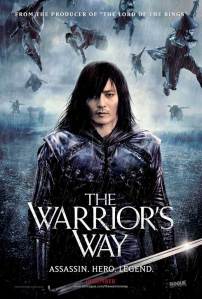
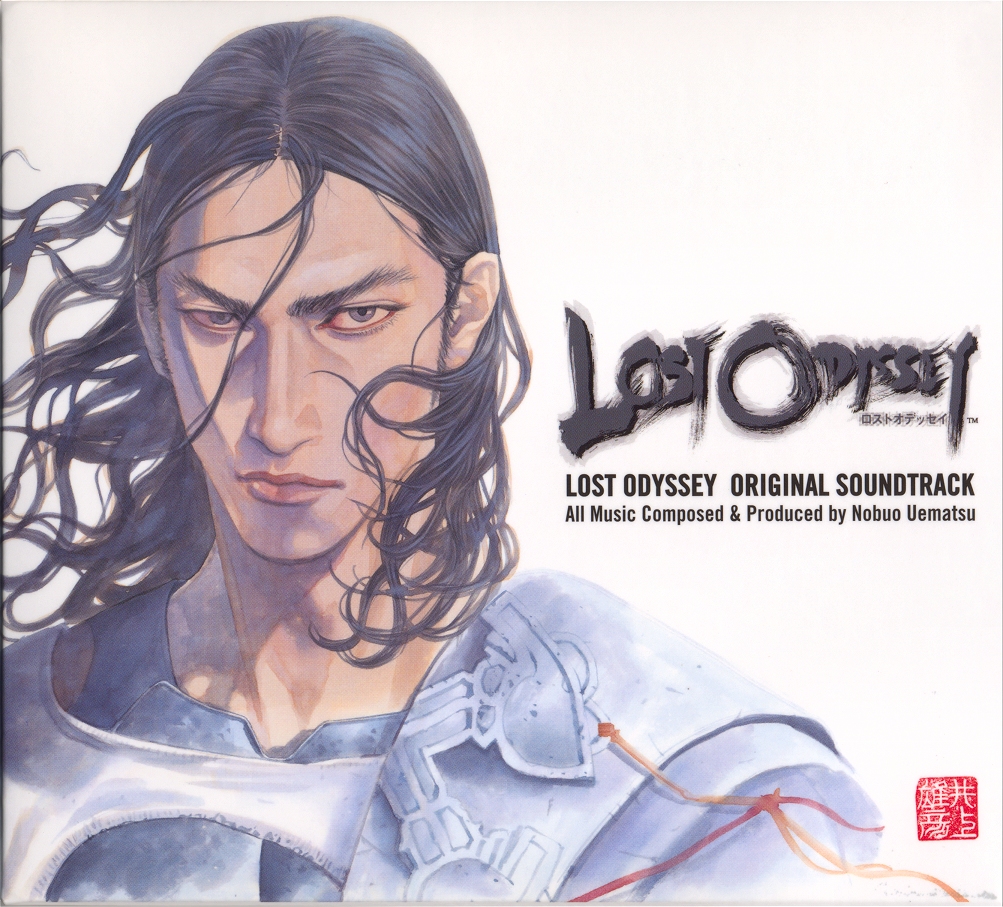
 Through the Shattered Lens