A Quickie With Lisa Marie: Frankenstein (dir. by J. Searle Dawley)


There’s literally been hundreds of film adaptations of Mary Shelley’s novel Frankenstein, or the Modern Prometheus.  Everyone from James Whale to Terrence Fisher to Paul Morrissey to Kenneth Branagh to Marcus Nispel has taken a shot at interpreting the legend and the monster’s been played by everyone from Boris Karloff to Christopher Lee to Robert De Niro to Srdjan Zelenovic (who was pretty freaking hot and yummy for a creature stitched together out of random corpses in Flesh for Frankenstein).

However, the very first cinematic version of Frankenstein came out in 1910.  Produced by Thomas Edison’s film company, this 10-minute, silent film starred an actor named Charles Ogle as the monster.  Frankenstein, himself, was played by Augustus Phillips while his fiancée was played by Mary Fuller.  The film was directed by a fellow known as J. Searle Dawley.  Dawley reportedly directed over a hundred silent films and most of them are lost to history.

For about 6 decades, it was assumed that Dawley’s Frankenstein was lost as well.  However, in the mid-70s, it turned out that one remaining print of the film still existed and was apparently sitting up in someone’s attic in Wisconsin.  It also turned out that the film was still in viewable condition.

And now, thanks to a combination of YouTube and the fact that every movie made before 1922 is now in the public domain, I’ve had the opportunity to see this movie for free and even better, here’s your chance to see it for free.  Understand that when I say better, I’m speaking from the point of view of someone who is fascinated by history in general and cinematic history in specific.  In many ways, this film epitomizes everything that makes it difficult for modern audiences to appreciate the excitement once generated by silent film.  The acting is overly theatrical and watching the film makes you appreciate the eventual development of the dolly shot and the zoom lens even more.  Add to that, the music that was selected to accompany this video is way too obvious and heavy-handed.  I would suggest, before watching, that you mute the video and put your own preferred music on instead.

Still, the film does have a lot of historic interest.  I don’t think you can truly judge and appreciate the films of today unless you know something about the films of the past.  Watching a movie like the 1910 Frankenstein not only makes you realize how far films have come as an art form but also how much of the medium’s inherent earnestness has been lost with each advance in technology. 

Anyway, with all that said, here is the 1910 version of Frankenstein

Song of the Day: Heart of Courage (by Two Steps From Hell)


I’m feeling a bit under the weather. I swear the crazy raining then sunny then raining split-personality of Bay Area weather will be the death of me. So, instead of a review of an animated film about a toothless dragon or a war zone where someone is punishing criminals I’ve decided on a new “song of the day”. This time the latest song is a short one, but what it lacks in length more than makes up for it’s epicness. It’s the Tyrion Lannister of epic music. The song I chose is from the production music company Two Steps From Hell: “Heart of Courage”.

What is a production music company?

It’s a company who makes nothing but music for trailers and tv spots for shows, film and video games. Yes, Two Steps From Hell makes trailer music. So, if you’ve ever watched a film trailer or even the latest video game trailer then you probably have heard one of their music. The fact that they make trailer music shouldn’t take away from the quality work they’ve produced through the years. The one piece of music they’ve done which have stood out for me is “Heart of Courage”.

This song begins with a bevy of strings creating an ethereal intro which suddenly transitions to the inclusion of the percussion section. The intro of the percussion section would soon be followed by the very strings themselves changing from ethereal to a martial tempo. It’s in the middle of the song where the choir joins in to complete what I consider one of the most epic-sounding pieces of music I’ve ever heard. It’s no wonder that people who make film and video game trailers often pick this song to complement the visuals they’ve spliced together to sell a product.

The song was most recently used in a fan-made trailer for the upcoming EA shooter, Battlefield 3. Watching that fan-made trailer one could see how the music added more drama and gravitas to the scenes being played out. While the trailer’s editing itself didn’t fully match every beat and crossovers in the song there were enough that did match to make the trailer become accepted and approved by the publishers of Battlefield 3. But it’s another video game which used this song that really used it best.

It was a game which came out in early 2010 and the trailer itself even premiered during the Half-Time of the Super Bowl. Some who saw the trailer thought it was a commercial for an upcoming sci-fi blockbuster. To their surprise it wasn’t but for an upcoming game instead. What convinced some that it was a film was the music. Just watch the trailer below and you’ll know why this song makes anything with drama and action very epic.

Review: The Cave of Forgotten Dreams (directed by Werner Herzog)


Do you ever wonder why and how the great artists of the past first decided to become artists in the first place?  Have you ever thought about why, since before recorded history, humanity has always had the same desire to record and recreate their existence in the form of art?  I know I do and that’s why I was excited to see the new 3-D documentary The Cave of Forgotten Dreams.

The Cave of Forgotten Dreams is probably the only chance that most of us will ever get to see the oldest, preserved art created by our ancestors.  The Chauvet Cave in Southern France was first discovered in 1994 and it is believed to contain the oldest known cave paintings in existence.  (Some of the paintings are estimated to have first been created 32,000 years ago.)  The Chauvet Cave has been very carefully preserved by the French government and the interior of the cave has remained so fresh and undisturbed that ancient footprints can still be seen on the cave’s floor.

For this documentary, German director Werner Herzog was allowed to film in the cave but, as he shows us, he had to work under several restrictions to preserve the cave.  He could only work with a three-man film crew, he had to stay on a 2-foot metal walkway the entire time, and, because of the high levels of carbon dioxide in the caves, no one was allowed to stay in the cave for more than a few hours at a time.  Once you see the film, you realize that all the restrictions are worth it to preserve the cave.

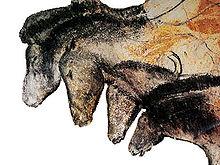
The paintings in the cave are so well-preserved that they seem as if they could have been painted just a year ago.  While most prehistoric cave art sites have focused on paintings of animals that could be easily hunted — like horses and reindeer, the Chauvet Cave also features paintings of more dangerous animals, like lions, bears, and especially rhinos.  What really struck me was how these paintings were created with a clear aesthetic purpose.  Several of the animals are painted in such a way that creates the illusion of movement.  The most famous of the Chauvet Cave paintings appears to feature a stampede of horses.

As Herzog makes clear in his narration, the perfectly preserved cave paintings show that “cave men” weren’t the simpletons we always assume they were.  Instead, the paintings reveal that they were observant and actually had personality.  One of my favorite parts of the movie was when Herzog and a paleontologist look at one wall that is covered with ancient hand prints.  The paleontologist points out that we can tell one person made all the handprints because the hand has a crooked little finger.  That hand print is also found throughout the entire cave and allows us, 32,000 years later, to follow the man with the crooked finger as he walks through the cave.

Because of the restrictions he had to film under, Herzog had to have his 3-D cameras custom-built and he and his 3-man crew had to put the cameras together inside of the cave.  It was all worth the trouble because the 3-D effects truly make you feel as if you’re standing there in the cave with Herzog.  Unfortunately, we probably won’t ever be able to see the world’s oldest paintings in person but The Cave of Forgotten Dreams is the next best thing.