Lisa Marie Discovers All Good Things (dir. by Andrew Jarecki)


I’ll admit right now that I’m a true crime junkie.  Maybe it’s because I work for a lawyer or maybe I’m just morbid-minded but, for whatever reason, I am fascinated by this stuff.  And while we all love to watch a good mystery and see if we can solve it before everyone else, it’s the mysteries without a solution that hold a special grip on my imagination.  That’s why I was really looking forward to seeing the film All Good Things.  Directed by Andrew Jarecki and starring Ryan Gosling, All Good Things is based on not one true crime case but three!  (And two of those crimes remain unsolved to this day.)

All Good Things is based on the life of Andrew Durst, who was born into a wealthy New York family just to eventually find himself accused — at one time or another — of two murders and actually put on trial for a third.  Oh, and did I mention that in-between being accused of killing people, Durst also found the time to drop out of high New York society and, despite being a very wealthy man, wandering around the country like a homeless transient?  And, would you also believe that when Durst eventually ended up moving down to Galveston, Texas, he apparently also became a transvestite?  And once Durst was in Galveston, he ended up living in a run-down boarding house with another transient who Durst eventually ended up decapitating?  Of course, all of this happened long after the mysterious disappearance of his first wife and the execution-style shooting his best friend (who also happened to be the daughter of a Las Vegas mob boss).  Durst, it should be noted, has only been put on trial once and, in that case, was acquitted.  (For a better account of the various unproven allegations against Robert Durst, click here.)

Yes, Robert Durst is a man who has found himself at the middle of several very intriguing mysteries and All Good Things pretty much sticks to the facts of the case, recreating all the scenes that we Durst watchers are familiar with while leaving the ultimate question of Durst’s guilt or innocence ambiguous.  For legal reasons, the names are changed but that’s about it.  The film even begins with a title card telling us that the film is based on the Durst case even if Ryan Gosling is technically playing a character named David Marks.  We watch as David meets and romances sweet but lower class Katie (Kirsten Dunst) despite the disapproval of his wealthy father.  (David’s father is a real estate mogul who owes his fortunes to the peep shows and grindhouses on 42nd Street.)  Once David and Katie have married, we watch the marriage turn into a nightmare as David grows increasingly abusive and Katie starts to abuse drugs.  We meet all the familiar characters that we know about from reading about the case, especially David’s devoted friend Deborah (Lilly Rabe).  We see the way that Deborah fanatically defends David after Katie mysteriously vanishes and eventually, we see David in Galveston, a blank-faced recluse who has lost the ability (if he ever had it) to exist in reality.   Yes, it’s an interesting story but does the film do it justice? 

Frustratingly, the answer is yes and no.

There’s a great movie to be found in the life of Robert Durst and unfortunately, director Andew Jarecki doesn’t find that great movie with All Good Things.  Despite telling a fictionalized version of a true story, Jarecki still approaches the material as if he’s making another documentary.  By simply concentrating on the public record of the Durst case (and, for the most part, declining to engage in any poetic license while telling the story), he keeps his distance from the characters and their world and, as a result, you watch fascinated because the story is so bizarre but not because you have any emotional investment in anything happening onscreen.   Like a good documentarian, Jarecki concentrates on providing the evidence and leaving the ultimate verdict to the audience.  If this film was a documentary about Robert Durst, this would be commendable.  However, All Good Things is a movie about a vaguely sinister guy named David Marks who remains a cipher throughout the entire film.

However, this is not the fault of the cast who manage to redeem this movie with several carefully conceived character turns.  In a frustrating and vague role, Ryan Gosling gives a far better performance than anyone would really have the right to expect.  He plays the role with a vague sense of blank desperation, creating a portrait of a man who wants to fit in with reality but just doesn’t know how to do it.  When we first meet see David wandering around 42nd street and struggling to maintain a facade of normalcy, it’s hard not to feel sorry for him.  He looks like a lot child and your natural reaction is to want to protect him and help him find his place in the world.  Add that vulnerability to the fact that he looks like Ryan Gosling and you can believe that Kirsten Dunst’s character would find him attractive and would eventually marry him, despite his quirks.  Its only once David is married (and, in theory, no longer has to worry about losing Dunst) that he starts to show his true face.  Any woman who has ever been in an abusive relationship will know the type of person that David Marks is.  As played by Gosling, he becomes every boyfriend or husband who has ever transformed into a different person once we’ve made the mistake of falling in love with him.  He’s every man we’ve ever been happy to have out of our life even as we wondered if we were to blame for whatever went wrong.  Gosling’s strongest moments come when David simply stares at his own reflection, the look on his face indicating that he’s just as confused by himself as we are.  Kirsten Dunst is sympathetic as his wife and there’s excellent character turns from Frank Langella, Philip Baker Hall, Diane Venora, and Lilly Rabe.

So, what I recommend All Good Things?  I would.  It makes for a good introduction to the Durst case and, if nothing else, it’s worth seeing for Gosling’s performance.  The definitive version of Durst’s case hasn’t been told yet but All Good Things is, at the very least, a start.

Scenes I Love: Sherlock Holmes (2009)


One thing you can always count on with a Guy Ritchie film is an interesting fist fight. Sherlock Holmes, which I’ve watched tons of times, doesn’t disappoint. It incorporates a bit of Wing Chun, and the blows actually landed in this scene (at least according to the behind the scenes crew). The music in the background (The Dubliners “Rocky Road to Dublin”) also really adds to this. Shame it wasn’t on the soundtrack.


Scenes I Love: 12 Angry Men


With the recent passing of filmmaker Sidney Lumet I’ve gone through some of the films of his I’ve come to see as favorites of mine. One film which always came to the forefront whenever I spoke about Lumet as a filmmaker is his directorial film debut in 1957 with his adaptation of 12 Angry Men. Of all his films this is the one which I always go back to time and time again. Part of me is somewhat biased in regards to this film since I was part of a class reading of the original teleplay and played the role of Juror #3.

The scene in the film which I love the most has to be when Juror #8 (played with calm assurance by Henry Fonda) and Juror #3 (played with seething rage by Lee J. Cobb) finally get into it after a very long deliberation in trying to find a consensus on the guilt or innocence of the defendant in their case. I love how in this scene everything that’s right about the American jury system was being upheld by Juror #8. How the guilt or innocence of the defendant should come down to just the facts of the case and combing through all the testimony. How emotions and personal feelings and bias should never enter the equation. It is a person’s life in their hands and it is a responsibility too great to leave it to emotions to find the verdict.

This scene also shows the darker side of the American jury system in that there will be, at times, people chosen to preside as a juror in a case will come in with emotional baggage and a hidden agenda which clouds their decision making. They don’t look at the facts and testimony at hand but at what they believe to be true no matter what the facts may say otherwise. this is how the jury system becomes twisted and becomes part and parcel to the notion that justice is never truly blind but always colored by human frailties and prejudices.

Even 54 years since the films first premiered it still holds a powerful effect on me and those who sees it for the first time. It helps that you have a master filmmaker in Sidney Lumet guiding an exceptional cast of actors. One could come to the conclusion that the audience has the angel on one shoulder with Juror #8 and the devil on the other with Juror #3. All in all, a great scene that always stays with me long after the film has ended.

On Special: 4 DLCs


Micro-transactions… are the future. In the future, the principle game will be less important than it even now is. We’ve already learned to expect from pioneers in the DLC field like BioWare that a retail game may be half of what it ends up being… and not through the antiquated idea of a full expansion (although those are still nice and profitable too, I’m sure) but rather through add-ons. DLC. Updates. Extras. Once we’re paying for little tidbits to enhance the game we’ve already paid full retail for, we are just walking, talking wallets for the developer.

In a way? This is actually a good thing. We can expect more content to be established over time and to bridge the gap from release to release. Does this seem lazier, and a way to push retail titles out faster? Unquestionably. However, even with full eyes-wide-open knowledge that I’m being exploited somehow… I’d earnestly rather be able to download and play a few new scenarios over the course of a year that eventually complete the game I had purchased… rather than finishing a more-complete-at-retail-launch game… and having nothing to play for a year.

Unfortunately, I think the developers realized this even before I did… and it led them to release games that weren’t even ready to go, reasoning that they could be completed later. Still, the idea of rushed production isn’t new. Let’s take the example that I’m sure some of us are still angry about… Knights of the Old Republic II. Obsidian’s sequel offering to the critically acclaimed original threatened to be better than BioWare’s classic original in literally every way. We had more characters, more sophisticated interactions, a more diversified playing field in terms of character customization as well as available items. We threatened to go to more places, more diverse locales, and places not quite so stubbornly grounded in the Star Wars trilogy canon. In short, the game threatened to be an all-time great. Oh, except that a third of the content was cut before release. It was released with roughly ten trillion bugs. It was released, in short, because the producers wanted to make money for Christmas… rather than put out a game that would endure even through 2011.

But if Knights of the Old Republic II were released in 2011… we would have gotten the HK factory. It would have been a $5 (U.S.) add-on, but we would have gotten it. We would have gotten patches and updates to make the game stable and play-able so that we could have gotten the HK factory. So that we could have gotten the Sith Academy. Or whatever else cut content we found ourselves to be lacking.

Given that I was going to buy Knights of the Old Republic II either way… and given that I’m going to buy incomplete DLC-driven money-grubbing games today… I guess I’ve just accepted, at this point, the inevitability of DLC and micro-transactions in general. If I can spend $5 at a time for some cool add-on, I do it almost without thinking. At least, for my favourite games. If the retail release is garbage, I’ll never think about it again. So I suppose that’s the line that developers have to walk in this brave new world. Make it good enough that I’m willing to play it on-and-off for a year. This will keep the game always in my head, so I’m already thinking about the sequel… and it will keep me happy, so that I don’t write scathing reviews about your product.

Phew. Rant over. Alright, here’s something that might potentially become a regular feature for me. Four (or more, but this time, four) DLCs or add-ons I played recently. My impressions, whether they were worth the money I shelled out, and what they did to the overall game. These are, in this case, in no particular order, but I did include the launch DLC for Dragon Age II… just because.

Jill Valentine / Shuma Gorath – Additional Characters for Marvel vs. Capcom 3 – It’s been two weeks (or more?) and I still earnestly can’t believe what I paid for these characters. As anyone could have guessed (and, really, since these two at least were in the game files anyway, it didn’t take a savant to anticipate) the first ‘major’ DLC for MvC3 is the addition of fan-favourites from MvC2. Unfortunately for my wallet, the idea of being able to use Jill Valentine and Shuma Gorath again somehow justified the cost. Given that these add-ons were basically unlocks (costing me roughly 100 KB of space on my XBox 360’s hard drive) and not new content at all, I’m extremely unimpressed with their addition. Couldn’t I have gotten this as a bonus for pre-ordering? I already forgave developers for adding cut content on later as DLC packs, but I feel like this reaches a point where content is deliberately cut in order to make a few extra dollars. Are video games not enough of a growth industry? I’ve got an idea – make a better game. Sell me a half dozen characters as an add-on, not two individual ones each of which cost me a few bucks. As much as it pains me, I really can’t discourage this DLC enough. What a disappointment!

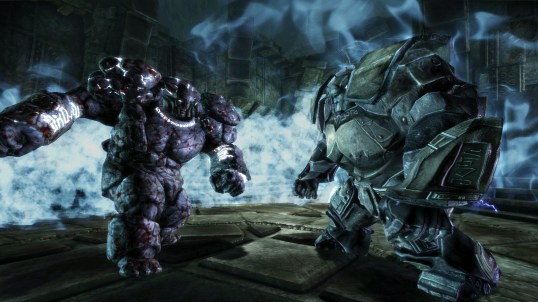
The Golems of Amgarrak – Add-on Scenario to Dragon Age: Origins – I reviewed this just today, so I won’t spend a ton of time on it. Considering its cost, and how much I enjoyed the original game, I can’t say that I regretted this purchase. After playing it, I’m sternly disapproving of the marketing of this DLC as some kind of super ultimate difficult challenge. I thought the Emerald and Ruby Weapons in Final Fantasy VII were harder… and they were literally just a matter of patience in game-play. And fine, say what you will, that in a game that allows tactical thinking you can’t make a challenge that is difficult for everyone yet also possible for everyone… but don’t try to tell people who really enjoyed the tactical combat of Origins and were hoping for more just how hard Golems would be. Because it wasn’t.

Arrival – Add-on Scenario to Mass Effect 2 – Very much following in the vein of the Overlord DLC, we are treated to what is ultimately an elongated single mission. For this scenario, we have Commander Shepard rolling solo, and the scenario is quite a bit more challenging than normal – mostly as a result of this solo-Shepard format. However, I can’t argue with the scenario design, which is fun to play through. The DLC is about the average BioWare-single-scenario-add-on length… but yet again, the marketing let me to expect something that I don’t feel like I got. Arrival didn’t do much to bridge ME2 and ME3 for me. Now, of course, I’ve envisioned scenarios in which it stands as a direct bridge, but the DLC still felt a little lazy to me… and not something that profoundly changes the way I felt about the setting. I was earnestly disappointed after the DLC that we’d received from the ME2 team in the past, with Shadow Broker, Kasumi’s Stolen Memory, and Project Overlord all head-and-shoulders above this offering. Still, it was fun, and if you’re hungry for a re-visit to ME2, Arrival isn’t a terrible choice.

The Black Emporium / The Exiled Prince – Launch DLC for Dragon Age IIAs a pleased pre-order customer of this game, I received both of these DLC packs via the usual unwieldy 4957 digit prize code entry which gave me permission to spend twenty minutes downloading add-on content for my launch copy of Dragon Age II. My fundamental issues with the format aside, I’m reasonably happy with the fact that I got these add-ons for free. The Black Emporium is little more than a curiousity, despite its potential. Its existence provides a solid jump to your Hawke in the early stages of the game, but you earnestly may never visit the in-game Emporium more than once… maybe twice.

As for the Exiled Prince… it was actually a very strong DLC. I may not have liked Sebastian Vael as much as I liked the game’s stock companions, but he has a very complete role in the story. He’s interwoven with elements of the plot, with events from the previous game, and with the most important underlying themes of Dragon Age II. He feels like an integral part of the story if you take the time to do each of his plot scenarios and speak with him when the opportunity is given. Of course, as is common with this game, the overall sheen of Exiled Prince is marred by the bugs it launched with. Most notable amongst them? Not being able to earn achievements from the DLC. I don’t mean to sound overly critical… but this is just unacceptable, particularly for customers who would have purchased this add-on after market, not received it for free with a pre-ordered copy.

What I Played Today: Golems of Amgarrak


I was in quite a mood after playing so much Dragon Age II, and (as that led to) another full play-through of Dragon Age: Origins. I had originally planned to continue straight on to Awakening, and just complete the whole series. But then, as I was on my roll, I remembered that I had purchased a couple of DLC packs for Dragon Age: Origins a while back on the cheap. They had some kind of sale for half price DLC, or some such. I’d taken that opportunity to pick up both Witch Hunt and The Golems of Amgarrak… but while I’d completed the former some time ago, I’d never bothered to sit down and play through Golems. I took a look at the achievements, because I’m like that, and I realized that I needed to complete the DLC on a minimum difficulty of Hard in order to receive my e-recognition for my accomplishments.

Harkening back, I recall that Golems of Amgarrak was touted as an extra-difficult bit of DLC… it was, ostensibly, much harder than the regular game, even on the Casual difficulty. In short, this DLC was not intended for the faint of heart. This did nothing but excite me, but I did go into it expecting a higher degree of difficulty, and felt that I should use some caution.  Although I might be ‘that guy’ when it comes to gaining achievements in an expedient manner, I’m strangely honourable about some of them. It seemed to me that if I were going to defeat the DLC’s final boss on a Hard or Nightmare difficulty, I might as well play the whole DLC on that difficulty. So, I set my difficulty, and I chose to import a Warden from an Origins playthrough at level 20, a Dwarven sword-and-board warrior.

The DLC took a couple of hours to play through all the way. It introduces a semi-new area (yet another re-skin of the default Dwarven Thaig that we saw four times or more between the Origins game and the various DLCs) that paves the way into a completely new area. Amgarrak itself is a completely unique area replete with colour-switch puzzles, swarms of enemies (mostly of the more difficult types. I assumed there would be Golems, but I was treated to a plethora of Revenants, Arcane Horrors, and high-ranked skeletons as well), and a bunch of loot. Most of the loot proved to be useless, but it did provide upgrades to the Golem which I picked up on my way in. As one might expect, the Golem is the key to the whole deal. It has significant healing abilities, and while it can’t always fight its way out of trouble, the Golem is tough enough to escape from danger so long as your party features some tankier types.

Ultimately, I found the DLC a little on the disappointing side. It was about as substantial as I expected (given the average length of BioWare’s DLC add-ons) with a fairly large area to run through and a whole new party. However, in lieu of adding substantially to the story (as Leliana’s Song does, and Witch Hunt debatably does) the idea behind Golems of Amgarrak was to provide a very challenging play experience within the tactical game engine of Dragon Age: Origins. Earnestly, I didn’t feel the need to adjust my tactics much from playing the original game. Tank-type characters are still able to mostly take care of themselves, and the most effective approach for me seemed to be to focus on healing. The only encounter I had to repeat was a surprisingly difficult swarm of golems which jumps out at you in an optional chamber while in the process of acquiring golem upgrades. I was not particularly impressed by the Harvester, which seemed to be mostly a matter of managing a group of enemies and keeping on top of healing.

Anyway, I think this polishes off my experience with Origins. I’m very much anticipating a DLC – any DLC add-on, really – for Dragon Age II.

Review: Dragon Age 2


Unfocused Ramblings

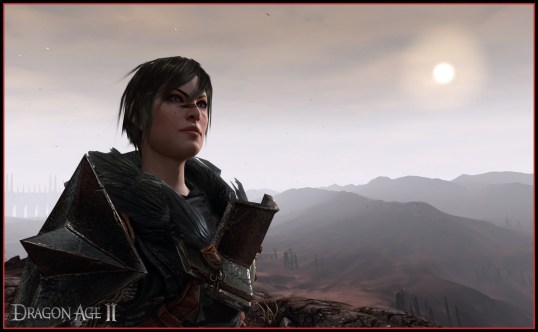
After a long wait, I hope to be back and better than ever. I was originally planning to go off the board with MLB 2K11… which is still getting a review I might add … but Dragon Age II consumed my life for a while, and I have to talk about it. BioWare and I have had a rocky relationship. The first game of theirs which I played was actually Neverwinter Nights… which I got about halfway through before my friend told me to stop playing it and go back and hit Baldur’s Gate II: Shadows of Amn instead. It was a formative experience for me. Up until that time, I would have described myself as an irredeemable JRPG fan. Since that fateful day, I’m not sure I’ve ever enjoyed a JRPG as much again. Naturally, this launched my love affair with BioWare. There have definitely been parts of that relationship that I’ve enjoyed more than others. For me, as much as I enjoyed Baldur’s Gate II, the current generation of these games is really the golden age of WRPGs in my eyes.

Is Dragon Age II the best WRPG that I’ve ever played? Ultimately, I would have to say no. Its release was too obviously rushed, which is evident in the plethora of bugs available for your gaming pleasure (some of them pretty damaging to your game experience, and all of those impossible to correct when playing the console versions). In years past, it was always true that the PC release was preferable because the developer could release patches that would solve a lot of the known bugs, and knowledgeable use of the game’s console could solve a lot of other problems. Obviously console games still don’t have the latter option, and only (relatively) recently gained the former. But as time has gone on and computers have easily outpaced what I need them for in terms of work, it became steadily less economically viable for me to upgrade my GPU three times a year… especially when I could own one XBox 360 for four years and counting.

The potential annoyance factor only comes out occasionally – when games are pushed through release with known bugs, and you have some agonizing wait for them to be fixed for the console version. Unfortunately, this was definitely the case with Dragon Age II and it sapped some of the luster off of what I otherwise felt to be an extremely fun offering from one of my favourite developers.

Oh, and a little disclaimer before I begin complaining in earnest. As I am wont to do, I’m going to table any discussions about DLC, micro-transactions, and EA’s 2010+ marketing strategy of bundling add-ons with pre-orders and adding content at regular intervals to bridge the gaps between releases. I think we can all agree that it is one of the more brilliant marketing ploys (not that we’re giving EA credit for coming up with it, but that doesn’t really detract from the idea itself) that we’ve seen… ever. I think we can also all agree that regardless of our personal feelings, on the whole, it works. This was the first game I’ve pre-ordered in years, and I did it entirely to gain access to the launch DLC that I’d otherwise have to pay for. It wasn’t particularly onerous, since I knew I was going to purchase the game anyway, and EA knew for a fact that they’d sold me a copy six months before launch. I’m sure some executives slept very soundly knowing that they’d suckered yet another fan into pre-ordering titles and sitting around in anticipation of Amazon’s launch day delivery time.

So how is Dragon Age II? As a sequel to the dark fantasy original, Dragon Age: Origins I would say that it both succeeds masterfully and disappoints completely. The feel of the two games is almost entirely different. In the original, we’re treated to a bleak literal-end-of-the-world scenario that is playing out before our eyes. Factions of whom we urgently require aid are fighting one another, the enemy is building in power, and in the grand tradition of Tolkien-esque fantasy, evil used to have a hell of a lot harder time of it. The sequel, rather, takes us through an eight-ish year period in the life of a single protagonist within the Dragon Age setting. It deals heavily with plot elements that were introduced in the original game and it has some obligatory cameos from characters we’ll recognize, but it otherwise is entirely stand alone. Gone is the overarching threat of a darkspawn-fueled apocalypse. Instead, the conflict centers around the city of Kirkwall, a deeply troubled metropolis that was formerly the center of a bustling slave trade in the ancient Tevinter Imperium.

We haven’t really gotten away from the slavery, however. Not only is Kirkwall infested with some of those very same modern-day Tevinter slavers, but the whole city lies under the pall of another form of slavery. As brutal as we may have found the treatment of mages in Ferelden – what with the vials of blood taken from every Apprentice that could allow them to be unerringly tracked down, or with the merciless hunting of unlicensed ‘Apostate’ mages – we only saw the tip of the iceberg in terms of both what mages have to suffer through, and what they’re capable of when they’re left unshackled. The picture painted by this conflict is an interesting one primarily for its gray morality. Very few issues in real life have the kind of clear-cut good and evil dynamics that we often see in video games. Real people are complex organisms with complex motivations. We are not a society of mustache-twirling villains tying maidens to railroad tracks only to be foiled by tights-wearing do-gooders from every angle. To an extent, we experienced this in Dragon Age: Origins as well. Both games mercifully liberate us from the point-based good-versus-evil system that characterized the Knights of the Old Republic games and others during that era.

In Dragon Age II we’re treated to a whole new system which bears a little resemblance to the party-favour style system we saw in Origins, but with a new twist. Now, our party members (as expected) either approve or disapprove of our protagonist, Hawke, and the actions we take as Hawke. The relative level of either ‘Friendship’ or ‘Rivalry’ (I’m sure you can figure out which is which) then begins to colour all of Hawke’s interactions with the rest of the party. Many of the changes are subtle, but Dragon Age II is rife with subtle-but-appreciated touches that make it stand out as a game above many of the other offerings in this same genre. These little touches serve ultimately to give this title a more authentic feel than many games that I’ve played over the years, and I appreciated the attention to detail. It seems an odd contrast with the various bugs, which, I really can’t state enough, were plentiful and ranged from mildly irritating to infuriating.

Oh, and while we’re unfocused, and while we’re talking about subtle details? An odd thing occurs in this game. One which I might have appreciated more than almost anything else in the whole thing. Each conversation option is responded to with a variant of the Mass Effect style conversation wheel – responses to the right tend to lead toward the conclusion of the conversation and have a certain tone, while ones to the left tend to be follow-up questions. Unlike Mass Effect, we are treated to some symbols which help to identify the tone of the message before Hawke plants her foot in her mouth. For example, a sarcastic or whimsical reply will be accompanied by a comedy mask icon. A decisive, aggressive reply is accompanied by a closed fist. A bribe is accompanied by an image of falling coins. And so on. Anyway, this in and of itself is nice, but the truly outstanding dialog feature of the game? If you reply consistently in one vein (i.e., if you are consistently sarcastic) then the filler dialog or automatic replies from Hawke begin to mirror that type of response. Again, using the ‘sarcastic Hawke’ as an example… the dialog which is default, that is, not under the control of the player. Eventually, if enough sarcastic replies are given in order to establish a pattern, Hawke will begin to respond in a sarcastic manner on her own. It adds a lot of character to Hawke solely based on how you’re already playing the game. I hope that you can see why I think this is one of the best (albeit very subtle) features that BioWare thoughtfully included for me in this title.

So, I suppose the real question is… what is Dragon Age II like? True to how it was promoted, it’s sort of a compromise between the FPS-action-with-RPG-elements style of Mass Effect 2 and the old-school WRPG tactical gameplay of Dragon Age: Origins. If what you loved most about Origins was how it harkened back to Baldur’s Gate II, you’ll probably find the combat system in Dragon Age II to be a bit on the shallow side. You’re still, of course, perfectly at liberty to pause the game, arrange your party, and launch a more tactical assault. On the harder difficulties, being discriminating and tactical pays off big dividends. However, the game clearly wants to draw in fans of the Mass Effect games with a pace that is overall faster, and a system that is much more streamlined. As a result of this intention, it’s pretty quick-paced… or, at least, it can be, with an optimized party on the lower difficulties. Don’t expect the same degree of difficulty that Origins could present, either, if you chose to visit Orzammar first and played on the higher difficulties. Although, again, on the higher difficulties Dragon Age II has its own challenges.

Let’s boil things down, shall we?

The Good

– It’s a beautiful, detailed, thoughtful world. We’re introduced to more of a setting we’ve been introduced to. In a lot of ways, Dragon Age II exceeds Mass Effect 2 in terms of expanding on an existing setting. If you were really drawn into the world of Dragon Age, you’ll find a lot to like in the sequel.

– The voice acting is exceptional. I can’t think of a single character whose voice acting was poor, whether you like the character or not (and – almost as a side note – I liked them all)

– The characters offer a lot to the narrative, and have some fantastic interactions. BioWare has done a stunning job letting the party members banter back and forth during quiet moments. Try different combinations. You won’t be disappointed!

– The slice-of-life style which follows a single character, Hawke, and her life is perhaps a bit less ‘epic’ on the overall than the Grey Warden’s quest, but it delves far deeper into the underlying themes of the setting.

– Combat system is streamlined and intuitive. You’ll recognize everything from Dragon Age: Origins and the menus are actually easier to navigate now.

– Party members have completely unique skills, maintain their own wardrobe, and maintain their personal opinions, which lets them keep a refreshing flavour each of their own.

– BioWare went out of their way to make crafting your own potions, Runes, poisons, grenades, and supplies more attractive. Given how frustrating it could be to locate certain components in Origins, it may almost seem like an overreaction for how simple things become in Dragon Age II – but it works well.

– Girthy. This game is pretty long. If you’re planning to do everything… settle in. You’re looking at forty hours of game-play or more.

– The DLC items (from every source!) are not the best items in the game. They’ll definitely serve you well in the early part of the game, but they’re outclassed by the mid-game, and they also don’t sell for a ton of money. Just having DLC gear won’t make this game a breeze for you, or render all other equipment useless. It’s a nice touch to actually be trying to upgrade my stuff, rather than just equipping Blood Dragon Plate and calling it a day.

The Bad

– Buggy. Buggy. Buggy. Buggy. I really can’t overstate this. Every game launches with bugs, but this one launches with an unacceptable amount, and an unacceptable severity. Patches have already cleared up a couple of them (even for the console versions) but I was still frustrated to see the sloppy polish on what is otherwise a very delicious fruit.

– Much of the tactical aspect of gameplay is gone. Baldur’s Gate II could be a serious pain in the ass sometimes, but it really rewarded good planning and a thorough knowledge of spells and mechanics. Dragon Age: Origins made a strong compromise between viable-console-game and hardcore-tactical-gameplay… this element isn’t nearly as strong in Dragon Age II.

– Did I mention the bugs? Seriously. Hopefully more of the issues in this game can be patched out.

– Overused sets. Although the set pieces are beautiful and I love the look of the game, it suffers from a bit of the Mass Effect syndrome, where there are a hundred caves which are all built using the same “cave” layout and look. Very disappointing to see a step backward here after what we saw from Origins, Awakening, and Mass Effect 2. I can only assume this is another aspect of rushed production.

– We revisit too many places. I understand the scope of the game, its focus on Kirkwall and the surrounding environs, and whatever else… but while I don’t mind re-treads within the city (especially in, as the game runs on, a number of years) it seems like there should be more unique locales around the city. It feels lazy for us to revisit the same places over and over again for quests in each Act of the game. I’ll mention it once more… it was probably intended to have a few more locales, and that was probably scrapped for time. I’m in no position to complain because I bought the game, and I loved it, but I would have loved it more if EA/BioWare had spent another month catering to my discerning tastes.

– The game seems to lack focus at times in terms of the narrative. I actually appreciated this characteristic as it seemed to mirror how a real person’s life would tend to pan out… but it does seem out of place in a video game. At times, it’s not clear where the game is headed.

– This may sound stupid, but I’m far from above personal pique, so… way too much energy spent on promoting the game prior to launch. Although their strategy of offering DLC items for interacting with people on the BioWare website or whatever else might have drawn in a couple of new fans, it almost assuredly annoyed a lot of fans who were planning to buy the game anyway.

The Bottom Line

BioWare has me, at least, hook line and sinker. In spite of my various whiny complaints. I can’t wait for their next release.
Song of the Day: Аркона – Покровы Небесного Старца


I have never been to Russia. I imagine they have cities and cars and year-end clearance sales and pizza delivery just like anyone else. But that’s just being boring and realistic. I would rather think of Russia as that savage, untamed land to the east, from whence road the Hun and the Mongol–a mysterious, Dionysian place in which primeval landscapes produce warriors with the spirits of beasts. Arkona seem to perfectly capture this. Their music dances care-free about you but is poisonous to the touch.

There’s something about Slavic languages that sounds ruthlessly vicious when screamed–a very different vibe from the power and command of Germanic tongues. At the same time, that typical deep Russian chorus sound is always so encompassing, embracing everything around it except, perhaps, the listener. Arkona employ ample quantities of both, and fuse it with brilliant folk. If someone described a sound as “one with nature” to me I’d probably roll my eyes, but the nature here presented is a pack of wolves delighting in the kill.

I don’t know, this particular song has just really struck me lately. Ot Serdtsa K Nebu is one of my most listened-to albums, but perhaps because of the lengthy intro I never took sufficient notice of the opening track before. “Shrouds of Celestial Sage”, or “Pokrovy Nebesnogo Startsa”, or “Покровы Небесного Старца”, however you want to write it, isn’t Arkona’s most beautiful song, but I think it might be their greatest success at melding such meledies with a characteristically eastern savagery.

The explosion at 5:03 is one of the most epic moments in metal, and the sound quality of a youtube video cannot do it justice. Also, Miss Masha Arhipova is the most awesome person ever. Yes, that’s her screaming.

Songs of the Day: The Devil Is In The Details/Beats from Hanna (by The Chemical Brothers)


To cap off the day I decided to take a lead from my favorite spring and summer past-time (baseball) and give everyone a double-header. The latest song of the day is actually two of them. While they’re really a single melody they’re done in two diverging ways that fit in with Joe Wright’s modern fairy tale action film, Hanna.

Once again these songs are from The Chemical Brothers who everyone by now have heard composed the score for Hanna. They did such a magnificent job scoring this film that I wouldn’t be surprised if they’re asked to do more of it in the future. I will admit that I actually like they’re work on Hanna than what Daft Punk did for Tron: Legacy. The songs I picked are called “The Devil Is In The Details” and “The Devil Is In The Beats” respectively.

The first song is a charming little melody that sounds like it’s being played on a calliope. It really underscores the fairy tale aspect of the film and Hanna’s own Grimm’s fairy tale like journey from the frozen wilderness of Finland to the rundown carnival (looking like something out of Bizarro World Grimm’s fairy tale) to end the film. This melody also becomes a sort of leitmotif for whenever Hanna became endangered from the assassins hired by her nemesis, Marissa Veigler, to chase her down. The leader of this group will begin to whistle this tune when they’ve caught onto Hanna’s trail.

The second song is a more aggressive version of this fairy tale melody done in the only way The Chemical Brothers know how. “The Devil Is In The Beats” is twists, distorts, remixes and adds a funky bassline to the original “The Devil Is In The Details” but without losing the original calliope tone. This version I liken to a fairy tale story seen through the eyes of someone tripping out on acid or LSD.

Both songs fit in well in the scenes they complement and just shows how well both filmmaker Joe Wright and The Chemical Brothers were on the same wavelength when it came to telling the story of Hanna.

Rest In Peace: Sidney Lumet


Sad news came across the news wire this morning as it was confirmed that one of the most esteemed filmmaker in America has passed away at the age of 86. Sidney Lumet was considered by many as one of the best filmmakers of all-time. He definitely is one of the best, if not the best, American filmmaker of all-time.

Lumet was quite prolific as a filmmaker since he began to work behind the camera starting in 1957 with the classic drama 12 Angry Men and ending with his most recent work in 2007 with Before the Devil Knows Your Dead. In between these two films he would direct another 43 films with all of them received positively by critics and audiences everywhere. He was the consummate professional and never waited for the perfect project to come along. He always went into a film project because he either liked the script or, barring being in one which didn’t have a script he liked, it had actors he wanted to work with or he wanted to test his abilities as a filmmaker with new techniques.

Sidney Lumet began his career directing Off-Broadway plays and summer stock productions. He would soon move into directing tv shows in 1950. It would be his time as a tv director where turn-arounds between episodes were so short that a director had to work quite fast that he would earn the reputation as a filmmaker who didn’t spend too much time shooting too many takes of a scene. Lumet became known as a filmmaker who would shoot one to two takes of a scene and move onto the next. Another tool he learned as a tv director that served him well once he moved into film was to rehearse for several weeks with his actors the script before starting up actual production behind the camera.

It was in 1957 when he finally moved into filmmaking with 12 Angry Men (itself previously a teleplay for a TV drama) which would catapult him into prominence in the film community. The film was well-received and still considered by many as one of the most influential films of its kind as it highlighted social injustice in a time when such themes were not considered profitable by studios and the people who ran them. This was the film which would help build the foundation of Lumet’s filmmaking-style as he would continue to use filmmaking as a way to tell the audience about social injustices not just in his preferred film location of New York, but in America and the world, in general. Some of the best films in American history were done by him during the 1970’s when he would take the chaos and public distrust of long-standing public institutions in the US and crafted three of the finest films of the 70’s and America as it was during that decade with Serpico, Dog Day Afternoon and Network.

Sidney Lumet’s legacy as a filmmaker will continue to inspire young filmmakers long after his passing. He was a man who looked at filmmaking as an artform and not just a way to entertain the audience. His films never talked down or pandered to the very general public who watched them unlike some of the filmmakers working in the industry today. His legacy as being the consummate “actor’s director” meant that one didn’t need to be dictatorial with his cast and crew to create a great piece of filmmaking. That there were other ways to make a film and do it in such a way that everyone were still able to give their best without being alienated to do so.

My very first experience when it came to Sidney Lumet had to have been watching his Cold War classic, Fail-Safe, in high school history and it was one of those films which got me looking at film as something more than a form of entertainment. Here was a film that was entertaining but also one so well-made and acted that it’s ideas and themes were not lost. It opened up my eyes to the possibility of film as a medium that could be used to teach, raise issues to debate in society and highlight both the good and the bad of the human experience.

Sidney Lumet has made such an impact not just on those who were fans of films and grow up to become players in the industry, but also those people who would work in other fields of life whether they were lawyers, judges, police officers or politicians (professionals he would use over and over in his films throughout his career). Even Supreme Court Justice SOnia Sotomayor would look at Lumet as an inspiring figure in convincing her that she made the correct choice in choosing law as the path for her professional life.

I find it one of the most fitting tribute for Sidney Lumet that his time as a filmmaker and doing what he enjoyed doing the most became inspirational for people of all color, stripe and creed. This was a man who didn’t just take from the public but gave back just as much in the end. America has truly lost one of its best artists.

Serpico

The Hill

Dog Day Afternoon

Network

The Verdict

Before The Devil Knows You’re Dead

6 Trailers In Search Of a Title


Without further delay, here’s the latest edition of Lisa’s favorite grindhouse and exploitation trailers.

1) Something Weird (1967)

I just had to start out with this because it represents everything that I love about these old school exploitation trailers.  It’s just so shameless and cheerful about it all.  This film is from Herschell Gordon Lewis and it features ESP, a really kinda scary witch, and a random LSD trip.  The title of this film also inspired the name of one of my favorite companies, Something Weird Video.  (I make it a point to buy something from Something Weird every chance I get.  My most recent Something Weird video is a film from the 60s called Sinderella and the Golden Bra.  Haven’t gotten a chance to watch it yet but with a title like that, how could it be bad?)

2) Fade to Black (1980)

This is actually a really, really bad movie and I think the trailer goes on for a bit too long but it does have a few vaguely effective moments — i.e., when Dennis Christopher stares at the camera with half of his face painted.  Plus, you can catch a young Mickey Rourke acting a lot like Michael Madsen. 

3) Monster Shark (1984)  

Now you may think that since this Italian film was directed by Lamberto Bava (credited here as John Old, Jr. because his father, Mario, was occasionally credited as John Old, Sr.) and has the word “shark” in the title that it’s yet another rip-off of Jaws.  Well, joke’s on you because, as they state repeatedly in the trailer, “It’s not a shark!”  Even if you didn’t know this was an Italian film before watching the trailer, it wouldn’t be hard to guess.  First off, there’s the dubbing.  Then there’s the scene of the film’s main character wandering around aimlessly.  (Most Italian horror trailers feature at least one scene of someone just walking around.)  And finally, there’s the fact that this is yet another trailer that uses a sped-up version of Goblin’s Beyond The Darkness soundtrack for its background music.  While I haven’t seen this film yet, I plan to just to find out who Bob is.

 4) Van Nuys Boulevard (1979)

Originally, I was planning on including the trailer for a Ted V. Mikels’ film called The Worm Eaters right here but I reconsidered because, quite frankly, The Worm Eaters is one of the most disgusting, stomach-churning things I’ve ever seen.  I’m going to wait until I find five other equally disgusting trailers to feature it with and then I’m going to put them all up under the heading: 6 Trailers To Inspire Vomit.  Until then, enjoy a far more pleasant trailer — Van Nuys Blvd.  This trailer rhymes!  I’m tempted to say that I could have written it but then again, I only write free verse poetry.  Anyway, where was I?  Oh yeah, Van Nuys Blvd.

5) Vice Squad (1982)

However, there was a darker side to Van Nuys Blvd. and here it is: Vice Squad, starring Wings Hauser.  Eventually, I’ll review this film but until I do, check out our new friend Trash Film Guru’s review.

6) Crosstalk (1982)

We’ll conclude with the only thing scarier than Wings Hauser in Vice Squad — a computer that has not only witnessed a murder but enjoyed it!