Anime You Should Be Watching: Memories


“Memories… memories are not to be toyed with!” — Heinz

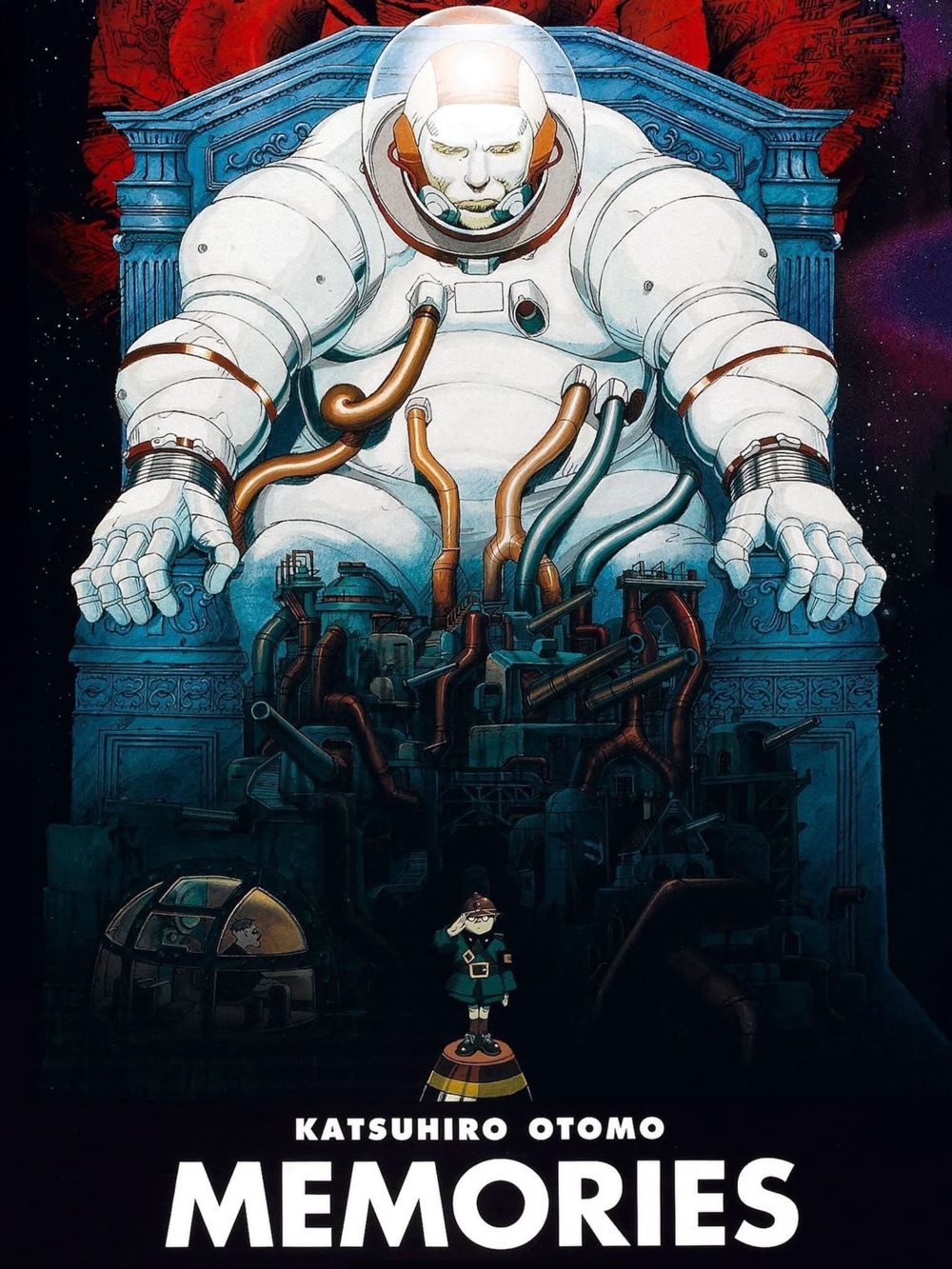
Memories is a mid‑90s anime anthology that feels like a snapshot of how wild and experimental the medium could be when a bunch of heavy hitters got to play in the same sandbox. It’s made up of three separate stories—“Magnetic Rose,” “Stink Bomb,” and “Cannon Fodder”—that don’t connect plot-wise but circle around similar ideas: how technology intersects with memory, systems, and human weakness. The end result is uneven in spots but consistently interesting, and when it clicks, it’s honestly outstanding.

“Magnetic Rose” is the clear showpiece. Directed by Kōji Morimoto and written by Satoshi Kon, it follows a deep-space salvage crew that investigates a distress signal and discovers a derelict structure haunted by the lingering memories of a famous opera singer. The visual approach blends cold, utilitarian sci‑fi hardware with crumbling, ornate interiors, so it feels like the crew is trespassing inside someone’s decaying mind as much as an abandoned ship. The way the environment morphs and lies to the characters, folding past and present together, already hints at the kind of reality‑slipping storytelling Kon would later become famous for.

The sound design and score really push this one over the top. Yoko Kanno leans into big, emotional, opera‑flavored cues that give the segment a tragic, almost theatrical sweep rather than just standard genre tension. Instead of simply backing up jump scares or space thrills, the music amplifies the grief and obsession at the heart of the story, so it plays less like straightforward sci‑fi horror and more like a ghost story built out of longing and denial. The characters themselves are drawn pretty broadly—they mostly function as recognizable types (the seasoned veteran, the younger hothead, the crew just doing their job) rather than deep, fully explored people—but that simplicity keeps the short moving and leaves room for the atmosphere to breathe. In practice, the combination of visuals, sound, and escalating psychological pressure makes “Magnetic Rose” feel rich and layered even without a lot of explicit character backstory.

After that, Memories swerves sharply into “Stink Bomb,” a dark comedy directed by Tensai Okamura. The premise is almost absurd on its face: a lab worker accidentally turns himself into a walking biohazard and slowly becomes the epicenter of a massive crisis. The tone is much lighter, even cartoonish, but there’s a sharp satirical edge underneath. Most of the jokes come from watching institutional systems totally fail to understand or handle what’s happening, ramping up their response in increasingly overblown ways while the poor guy at the center of it all has no idea how dangerous he’s become. It’s a fun, briskly paced piece that lets the animators go wild with chaos and destruction.

That said, “Stink Bomb” is also the segment that feels the most limited conceptually. Once the central gag is in place—this one ordinary guy unintentionally leaving disaster in his wake while officials keep making things worse—the short mostly riffs on variations of that idea. The animation stays lively and the satire lands, and there are flashes of real bite in how it portrays bureaucracy and military decision‑making. But compared to the emotional and thematic density of “Magnetic Rose” or the chilling world‑building of “Cannon Fodder,” it leaves less to chew on once the credits roll. It’s enjoyable, just not as haunting.

“Cannon Fodder,” directed by Katsuhiro Otomo himself, is the quietest but in some ways the most unsettling of the three. It takes place in a city whose entire existence revolves around firing gigantic cannons at an enemy no one ever actually sees. Everything—from education to labor to family routines—is oriented toward that single, unexamined purpose. Visually, it stands apart from the rest of the film: the designs are rougher and more stylized, drawing on European comic and industrial influences rather than sleek anime polish. The big stylistic flex is the way the segment is staged to feel like one continuous movement, with the “camera” drifting through streets, factories, and cramped apartments, watching people go through their day.

There isn’t much conventional plot here, and that’s intentional. The story follows workers and a single family long enough to show how thoroughly the ideology of constant war has soaked into everyday life. Kids learn artillery math at school; adults talk about shell trajectories like it’s the weather. Because the short avoids big twists or overt exposition, it hits more like a living political cartoon: the point is how normalized the whole nightmare has become. Some viewers might find the slower, observational rhythm a bit dry or abstract, especially coming after two more immediately engaging segments. But if the mood clicks, “Cannon Fodder” leaves a lingering, uneasy aftertaste that fits the anthology’s preoccupation with systems and dehumanization.

Stepping back, the three shorts show off just how flexible this medium can be. You get operatic space horror, satirical disaster comedy, and austere anti‑war parable in a single package. There is no explicit framing device tying them together, and the shifts in tone are dramatic, so the film doesn’t feel “smooth” in the way a more unified narrative would. That can be a downside if you’re expecting a cohesive movie rather than a curated set of pieces. On the other hand, that variety is a big part of the appeal: each segment has its own personality and agenda, and the anthology structure lets them coexist without compromise.

On a technical level, Memories holds up surprisingly well. The hand‑drawn animation retains a level of texture and physicality that still looks great today, and the layouts and background work in all three segments are consistently strong. “Magnetic Rose” in particular could be screened alongside other top‑tier anime films from the era and not feel out of place. “Cannon Fodder” still feels formally bold because of its faux‑continuous-shot approach and its distinct visual tone. If anything has aged, it’s more about pacing—modern viewers used to ultra‑fast editing and constant exposition might find some stretches slower than expected—but the film rewards anyone willing to lean into its rhythms.

In terms of accessibility, Memories isn’t the most beginner‑friendly anime film. The first segment leans into psychological horror and tragedy, which can be intense if you’re mostly used to lighter or more straightforward sci‑fi. The comedic whiplash of “Stink Bomb” right after might feel tonally off if you’re still processing the emotional punch of “Magnetic Rose.” And “Cannon Fodder” asks you to be okay with a more metaphor‑driven, open‑ended piece rather than a neatly resolved story. That mix means the anthology is more likely to resonate with viewers who are already interested in anime as a cinematic form and are curious to see different approaches pushed side by side.

What really makes Memories feel important, though, is the cluster of talent involved and what they went on to do. Katsuhiro Otomo brings the weight of Akira and uses this film as a space to experiment with scale and structure. Kōji Morimoto’s work here sits right in the trajectory of his later, more explicitly experimental projects. Satoshi Kon’s script for “Magnetic Rose” reads almost like a prototype for the identity‑fracturing stories he’d later build entire films around. Tensai Okamura and Yoshiaki Kawajiri bring a sensibility for action and genre that gives “Stink Bomb” its bite, and Yoko Kanno is already showing the range and emotional intelligence that would make her one of anime’s most beloved composers. Even if you stripped away the historical context, the film would still be worth watching—but knowing what these creators went on to do makes it feel like catching a moment just before a lot of big ideas fully explode.

Taken as a whole, Memories plays like a compact tour through different corners of what anime could do in the 1990s when it wasn’t worried about franchising or playing it safe. It’s not flawless, and not every segment will work equally well for every viewer, but the high points are strong enough that the anthology earns its reputation. For anyone interested in the evolution of anime as an art form—especially on the sci‑fi and psychological side—it’s absolutely worth the time, both as a film in its own right and as a window into a formative creative era.
Song of the Day: Information High (by Yoko Kanno)


“Information High,” by Yoko Kanno for Macross Plus, is a track that’s as electrifying as it is fitting for the anime’s sleek, futuristic vibe. From the moment it kicks in, you get caught up in its propulsive beat and layered electronic sounds that perfectly capture the sense of speed and technological buzz that define the series. It doesn’t just sit in the background but actively drives the energy forward, mirroring the fast-paced aerial dogfights and the intense emotions swirling underneath the sci-fi setting. There’s a hypnotic quality to it — like the perfect soundtrack for a world where human experience and digital overload collide.

What really strikes about “Information High” is how it balances mechanical precision with a playful, almost funky undertone. It’s not simply cold or robotic; Kanno brings in just enough warmth and groove to humanize the electronic pulse, making the song feel alive and vibrant rather than sterile. This duality works beautifully with Macross Plus’s themes—characters caught between their human desires and the artificial worlds they navigate. The track feels like a bridge between those realities, capturing both the exhilaration and the subtle unease of living in an over-connected, data-saturated future.

Beyond its role as a background piece, “Information High” stands on its own as a distinctive expression of Kanno’s genius. It’s got that catchy, infectious energy that sticks with you, yet never feels repetitive or shallow. It’s clear that Kanno tailored this song to complement not just the visuals but the emotional currents of the show, subtly enhancing moments without overpowering them. For anyone familiar with Kanno’s work, this track is a perfect example of her skill in blending genres and moods into a cohesive whole that elevates the experience of the anime itself.

Information High

You know how to get eternal life
In the center of the lightning-speed waltz
Feel your soul cut by a rusty knife
As you head down for the self-destructive edge

Our satori is just floating in the core
Where we can spiritually go through the door
We’ll know how to get eternal life
While we catch the pulse from unknown satellites

If we get the transient facts
Then we’ll feel the info high
If we get the transient facts
Then we are really free
To fly high
In space

We know how to get eternal high
In the center of the lightning-speed waltz
See our soul struggling to survive
As we head down for the self-destructive edge

Sayonara to intrusive noise
No more childish play and no more toys
We know how to get eternal life
While we feel and sense mother nature’s strong might

If we get the transient facts
Then we’ll feel the info high
If we get the transient facts
Then we’ll feel the info high
If we get the transient facts
Then we’ll feel the info high
If we get the transient facts
Then we are really free
To fly high
In space

If we get the transient facts
Then we’ll feel the info high
If we get the transient facts
Then we’ll feel the info high
If we get the transient facts
Then we’ll feel the info high
If we get the transient facts
Then we’ll feel the info high
If we get the transient facts
Then we’ll feel the info high
If we get the transient facts
Then we’ll feel the info high
If we get the transient facts
Then we’ll feel the info high
If we get the transient facts
Then we are really free
To fly high
In space

Anime You Should Be Watching: Macross Plus


“Life without pain isn’t real life!” — Isamu Dyson

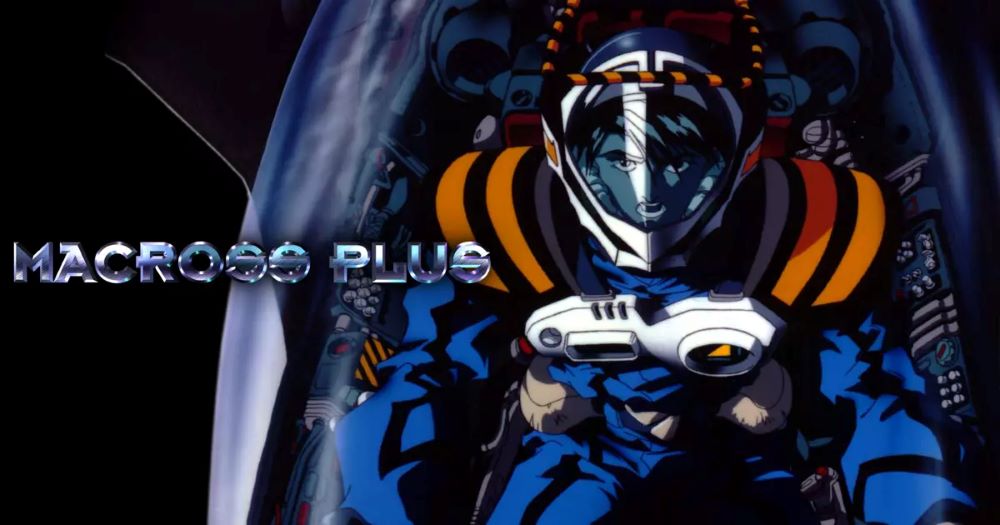
Macross Plus is a landmark anime OVA series from 1994 that continues to resonate with both newcomers and longtime fans of the genre. It stands out within the larger Macross franchise—one of the most influential in anime history—that includes various series beginning with the original Super Dimension Fortress Macross in the early 1980s. While Macross Plus is just one of several entries under this umbrella, it serves as a crucial bridge between the earlier incarnation of the series produced during the 1980s and the more modern take that the franchise would eventually develop in the late 1990s and into the 2000s. This OVA represents a stylistic and thematic evolution that helped transition the series from its original space opera roots into a more mature, complex narrative form that appeals to contemporary audiences.

Set decades after the destructive war between humanity and the alien Zentradi featured in the original series, Macross Plus takes place in the year 2040 where the UN Spacy conducts flight trials on a remote planet to select the next generation of Variable Fighters. The story revolves around Isamu Dyson, a cocky and passionate pilot; Guld Goa Bowman, his calm and talented rival who is revealed to be a Zentradi/human hybrid; and Myung Fang Lone, a woman emotionally entangled with both men and managing the artificially intelligent holographic idol Sharon Apple. The narrative explores themes of rivalry, friendship, human connection, and emotional tension with nuance and depth, distinguishing it within the franchise and offering a compelling experience for both newcomers and longtime fans.

Viewers can experience Macross Plus either as a four-episode OVA or through the re-edited movie version titled Macross Plus: Movie Edition. The movie version condenses the original four episodes into a much shorter runtime, around 115 minutes, with certain scenes expanded, some new scenes added, and others shortened or removed entirely. While the movie includes roughly 20 minutes of new or alternate footage, it retains much of the OVA’s original material. The film format emphasizes a more cinematic presentation and features a widescreen format, contrasting the original OVA’s 1.37 aspect ratio. However, while the movie streamlines some narrative aspects and adds a few striking sequences, some fans feel the OVA’s longer runtime allows for richer character development and storytelling depth. Both versions have their merits, with many recommending watching the OVA first to appreciate the fuller experience before exploring the movie edition.

One of Macross Plus’s standout features is its animation quality, especially remarkable for a mid-1990s production. The series blends traditional hand-drawn artistry with pioneering computer graphics, particularly in its spectacular aerial dogfight sequences featuring transforming fighter jets. These dynamic battle scenes convey a vivid sense of speed and intensity, demonstrating a level of technical sophistication that remains impressive today. Though some fans note minor differences in character design from Haruhiko Mikimoto’s original work, the visual impact overall is striking and immersive, providing a thrilling experience for newcomers and a nostalgic appreciation for veteran viewers.

Integral to the anime’s atmosphere is its unforgettable soundtrack, composed by the legendary Yoko Kanno. Her wide-ranging score—from haunting melodies to energetic action themes—perfectly complements the show’s tonal shifts. While “Voices,” performed by Akino Arai, is the song most fans distinctly remember and cherish for encapsulating the emotional core of the series, the rest of the soundtrack stands out as excellent in its own right. Notably, the tracks tied to the Sharon Apple AI subplot add an additional layer of mood and narrative depth. The song “Information High,” performed by Sharon Apple, is particularly praised for its ethereal, electronic style that perfectly captures the AI’s hypnotic and otherworldly presence in the story. This track complements the themes of technology, identity, and artificial emotion explored through Sharon Apple’s character, enhancing the viewer’s immersion in the high-tech world of Macross Plus.

Another rarity in the anime world that Macross Plus represents is its highly regarded English-language dub. Unlike many anime dubs that face criticism, the Macross Plus English dub is considered excellent by fans and critics alike. One notable factor is the casting of a younger Bryan Cranston (before his Breaking Bad fame) as the voice of Isamu Dyson. His performance brings genuine energy and nuance to the role, contributing to the dub’s reputation as a quality adaptation worthy of both newcomers who prefer English audio and longtime fans who appreciate a well-executed dub.

A core thematic insight in Macross Plus lies in its exploration of technology, especially artificial intelligence, highlighting how even advanced AI must learn from humans as templates, inevitably influencing its behavior. Sharon Apple, the AI pop star and central figure of the subplot, cannot authentically generate emotion on her own. Instead, she relies on the emotional input provided by Myung Fang Lone, her producer and the emotional source behind Sharon’s performances. This dependency underlines a profound implication: true sentience and emotional authenticity in AI require imitation and absorption of human feelings, experience, and behavior. Consequently, Sharon’s increasingly autonomous actions become shaped by the complex and sometimes conflicted emotional landscape of the humans around her, illustrating how AI, while synthetic, is ultimately tied to the human condition and its imperfections. The series presents this relationship critically, showing both the potential and danger of AI learning and evolving from human templates, culminating in Sharon’s struggle to assert an identity that is both alien and deeply rooted in human emotions.

Importantly, Macross Plus is recognized as the first official sequel to the original Macross series by its creator Shoji Kawamori. The earlier Macross II was later retconned by Kawamori as an alternate reality or parallel world separate from the main timeline. This status cements Macross Plus as the canonical continuation of the original saga, reinforcing its significance within the franchise and its role in guiding Macross’s future directions.

The narrative structure—whether experienced as the OVA’s four episodes or the condensed movie version—strikes a balance between introspective character moments and exhilarating mech combat, keeping viewers engaged while allowing emotional depth to unfold. Though some supporting characters receive limited development and the antagonist can seem somewhat one-dimensional, these elements do not detract significantly from the memorable storytelling, animation, and thematic richness.

For newcomers, Macross Plus serves as a powerful introduction to anime that blends sophisticated storytelling, technical artistry, and philosophical inquiry. For veterans, it offers a compelling revisit to a milestone work that elegantly bridges the franchise’s classic roots and modern evolution.

Macross Plus holds a revered place within the Macross franchise and the wider anime landscape for several reasons. It was pioneering in its integration of traditional cel animation with early computer-generated imagery (CGI), setting a precedent for the increasing use of digital effects in anime. This blend allowed for its visually stunning aerial combat sequences which remain influential in mecha animation.

The series also marked the start of a significant collaboration between director Shinichirō Watanabe and composer Yoko Kanno, whose work on Macross Plus would lead to iconic projects such as Cowboy Bebop. The soundtrack’s genre-spanning style influenced how music could serve as a narrative force in anime, intertwining with story and character development rather than merely accompanying visuals.

Narratively, Macross Plus helped reaffirm the franchise’s thematic core—the interplay of love, war, and music—while pushing it toward more mature and psychological storytelling, expanding the appeal beyond traditional mecha fans. Its exploration of AI and human emotion was ahead of its time, posing philosophical questions still relevant in today’s discussions about technology and identity.

The excellent English dub, featuring talents like Bryan Cranston, contributed to its international acclaim, helping it become a gateway series for many Western viewers into the Macross universe and anime more broadly.

Its legacy continues not only through ongoing Macross installments but also in manga adaptations and video game tie-ins, as well as in inspiring countless mecha and sci-fi creators. To this day, Macross Plus is frequently cited as a high watermark of 1990s anime, a timeless fusion of innovative animation, memorable music, and complex, emotionally resonant storytelling that helped shape the trajectory of anime as a global medium.

Anime Expo 2010 Experience


This past 4th of July weekend I finally attended my very first Anime Expo over in Los Angeles. Anime Expo is considered the largest anime/manga convention in North America. It could very well be the largest of its kind outside of Japan itself. I’ve attended Anime Boston and one cannot even compare the two.

Anime Boston is pretty much a regional event for the New England region with attendance numbers ranging between 15,000 to 17,000 people for the whole event. Anime Expo is not regional but a national event with attendance numbers topping around 45,000 to maybe as high as 50,000 people. Anime Expo also seem to be able to achieve in scheduling more of the Japanese talent from Japan to be Guests of Honors. While Anime Boston will get one or two Japanese GoHs it seems to be the norm for Anime Expo to schedule between 5-8 in addition to several Japanese musical acts and groups.

This year at AX2010 the Guests of Honors ranged from anime directors and animators like Rei Hiroe (Black Lagoon), Shinichi “Nabeshin” Watanabe (Excel Saga, Nerima Daikon Brothers), Tomohiko Ishii (Sky Crawlers, Eden of the East) and Satoru Nakamura (Ghost in the Shell: SAC, Moribito) to seiyuu (voice actors) like Yuu Asakawa, Eri Kitamura, Saki Aibu and Yui Horie. The amount of such guests makes for a busy schedule and even in the four days I spent through all of AX2010 I wasn’t able to see each and every one of them. So, it ended up with myself and fellow site writer pantsukudasai56 to choose the ones we wanted to see the most. Our final choices ended up being Shinichi Watanabe (who I thought had the best guest of honor panel for how much he bullshit with the crowd really let loose), Yuu Asakawa and Yui Horie.

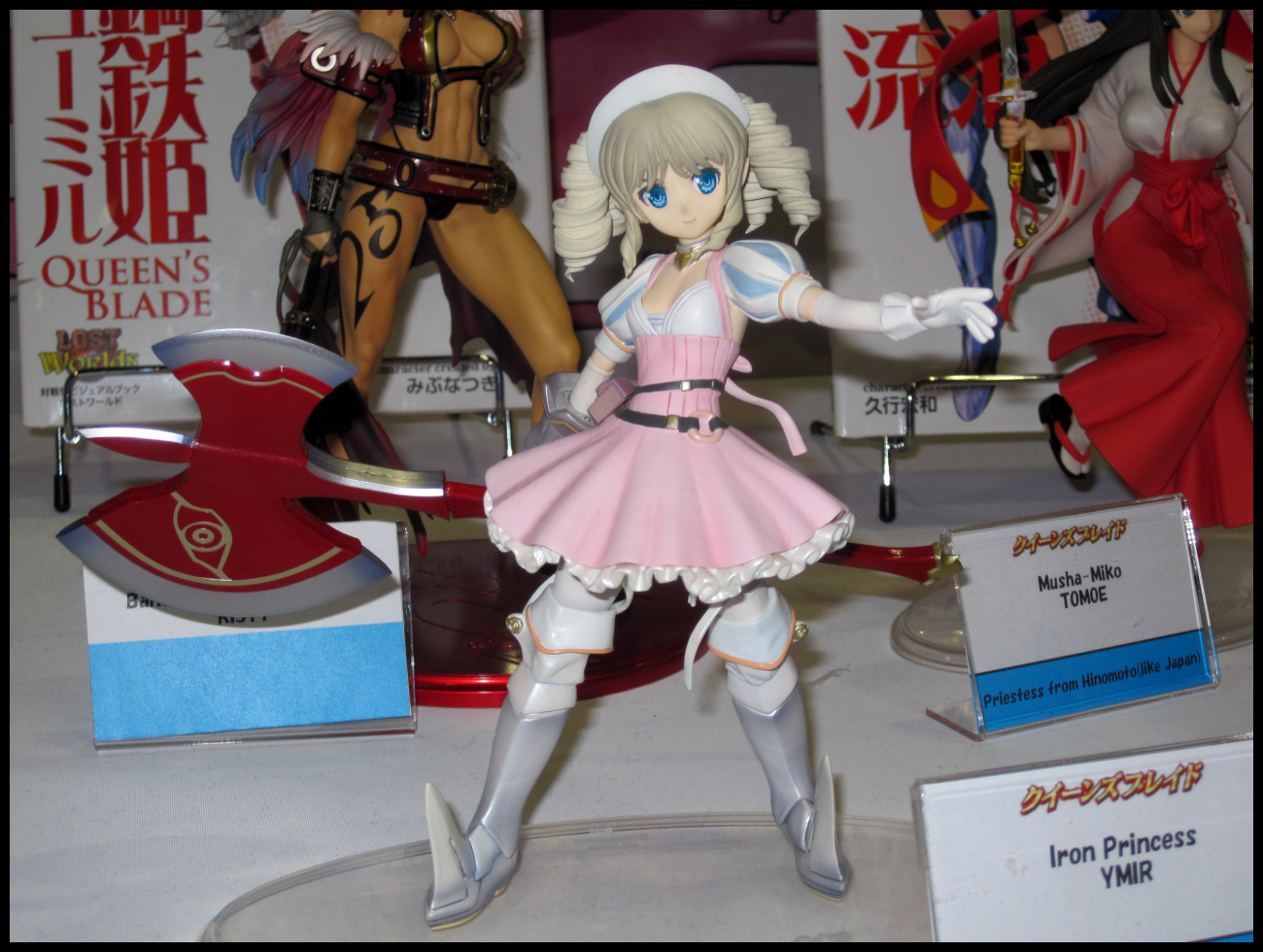
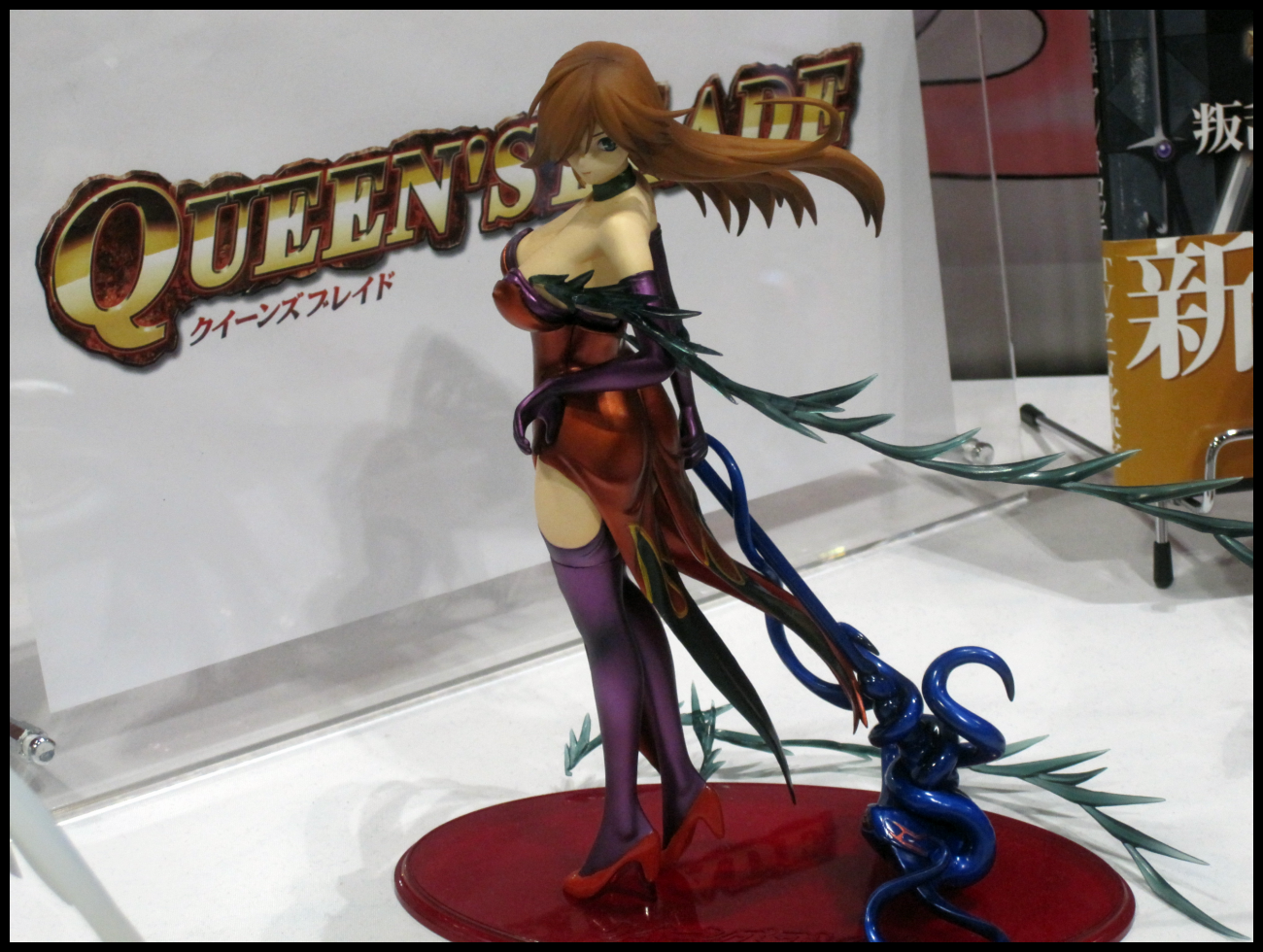
AX2010 also meant attending some anime/manga-related panels whether it was industry ones where specific power players in the industry showed what they had to release in the near-future to panels which showed the future of the industry. One particular panel which I really enjoyed was the Hobby Japan panel which was that companies first foray into the US to announce their plans to expand their products to North America starting with their very own anime/figure property the ecchi-heavy series Queen’s Blade. The 1/8 scale figures they showed both in their panel and in their dealer booth has become my new obsession. I need to own them all! As you can see in the pictures I took of the figures who wouldn’t want to own them all.

The highlight of my AX2010 experience as attending the free concert for Megumi Nakajima and May’n. Two Japanese singers and seiyuu in their own right. Their concert was a duo performance and sang in Japanese. It didn’t matter if one knew what they were singing about. The energy in the Nokia Theater where it was held was palpable and infectious. But that wasn’t even the highlight of the concert. The highlight happened in the very last 30 or so minutes when the secret guest performer stepped on-stage to play the grand piano that had been left in the middle of the stage for some reason. I am talking about legendary Japanese musician and composer Yoko Kanno. Her music has been a major part in influencing my love for anime from the early 90’s onward. After seeing her live and in-person the rest of my AX2010 could’ve been a disaster and it will still have been worth it.

The other half of my time at AX2010 was spent walking the dealers’ exhibition hall were stores and companies of all types had set up their booths to promote their wares and/or sell anime/manga-related items of all types. This was the room where thousands of dollars were easily spent by people within an hour of setting foot in. It was a shame I didn’t have such thousands or I would’ve needed to hire one of the cosplayers (or three) to lug my purchases around and back to my hotel room. I was able to purchase a few choice items. Even got fellow site writer Lisa Marie a couple of items I know she found to be adorable and cute.

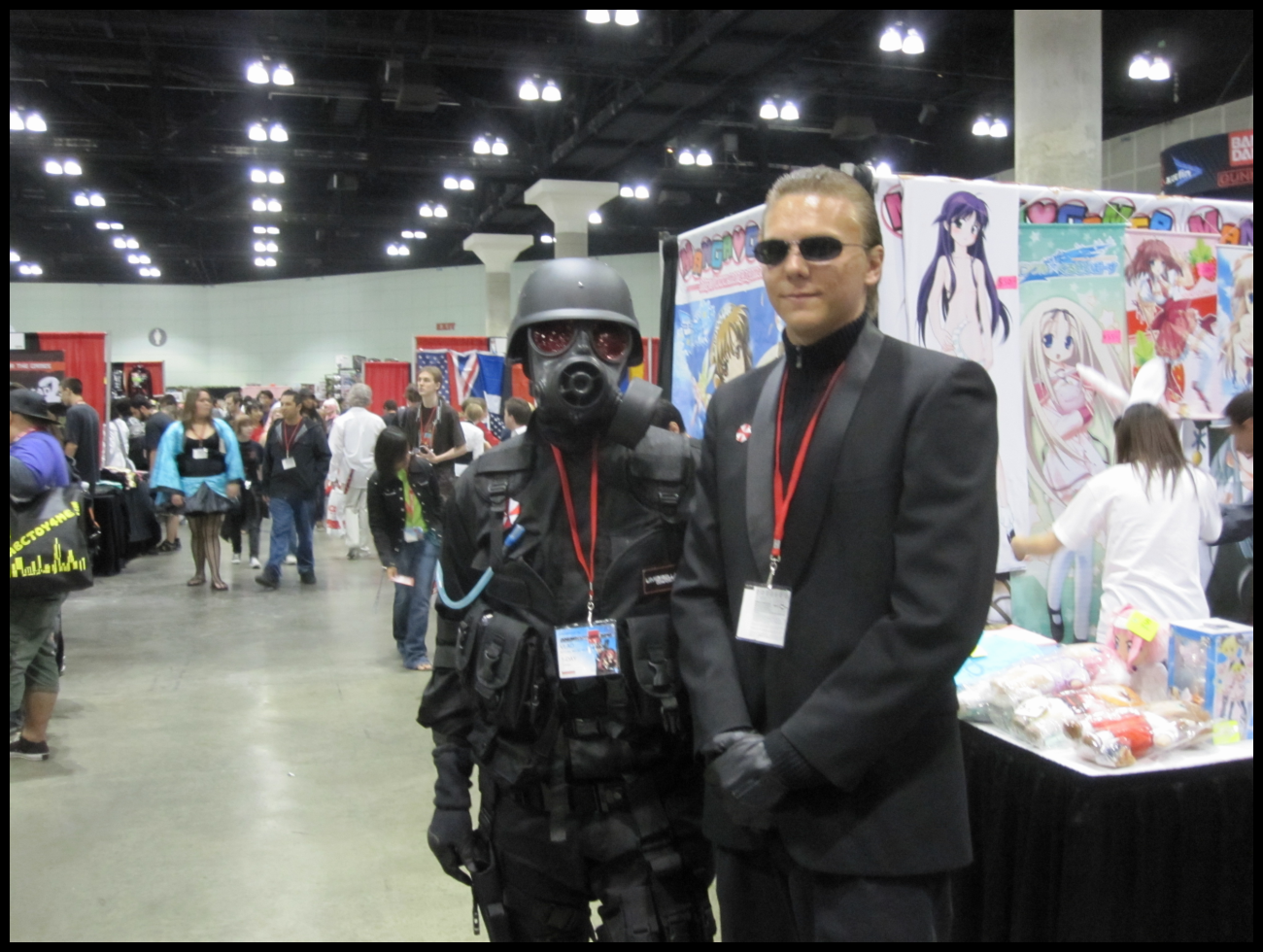
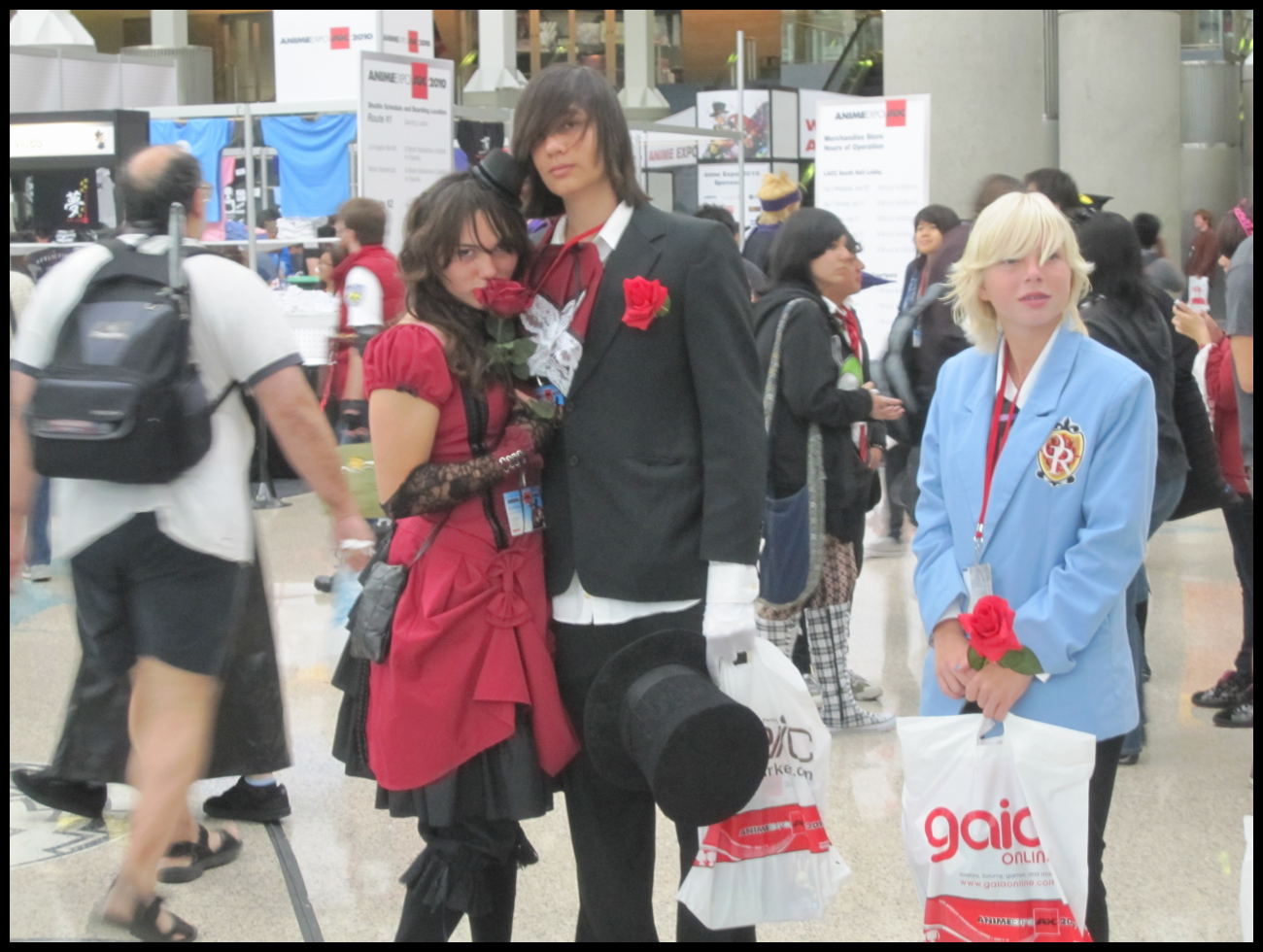
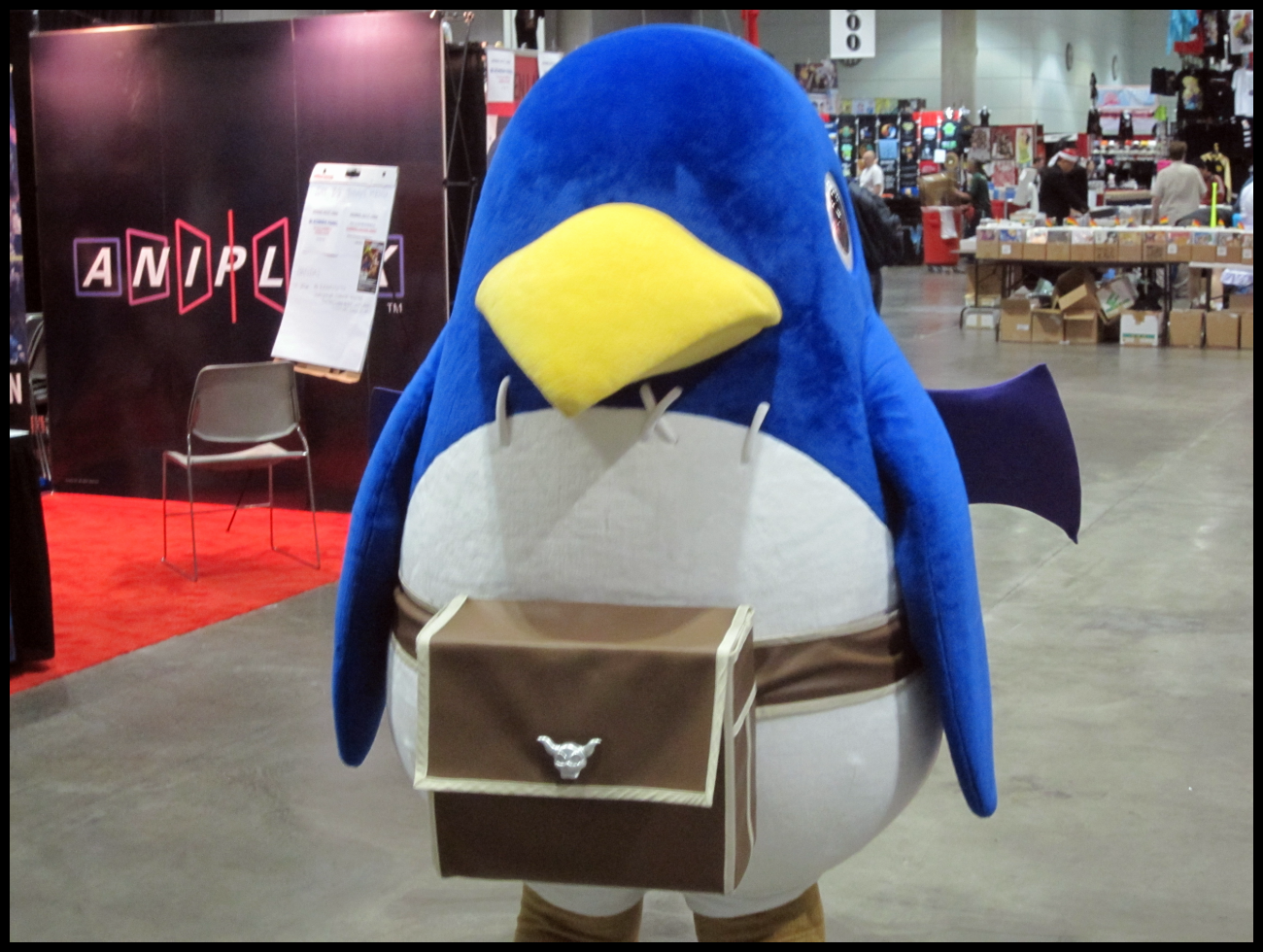
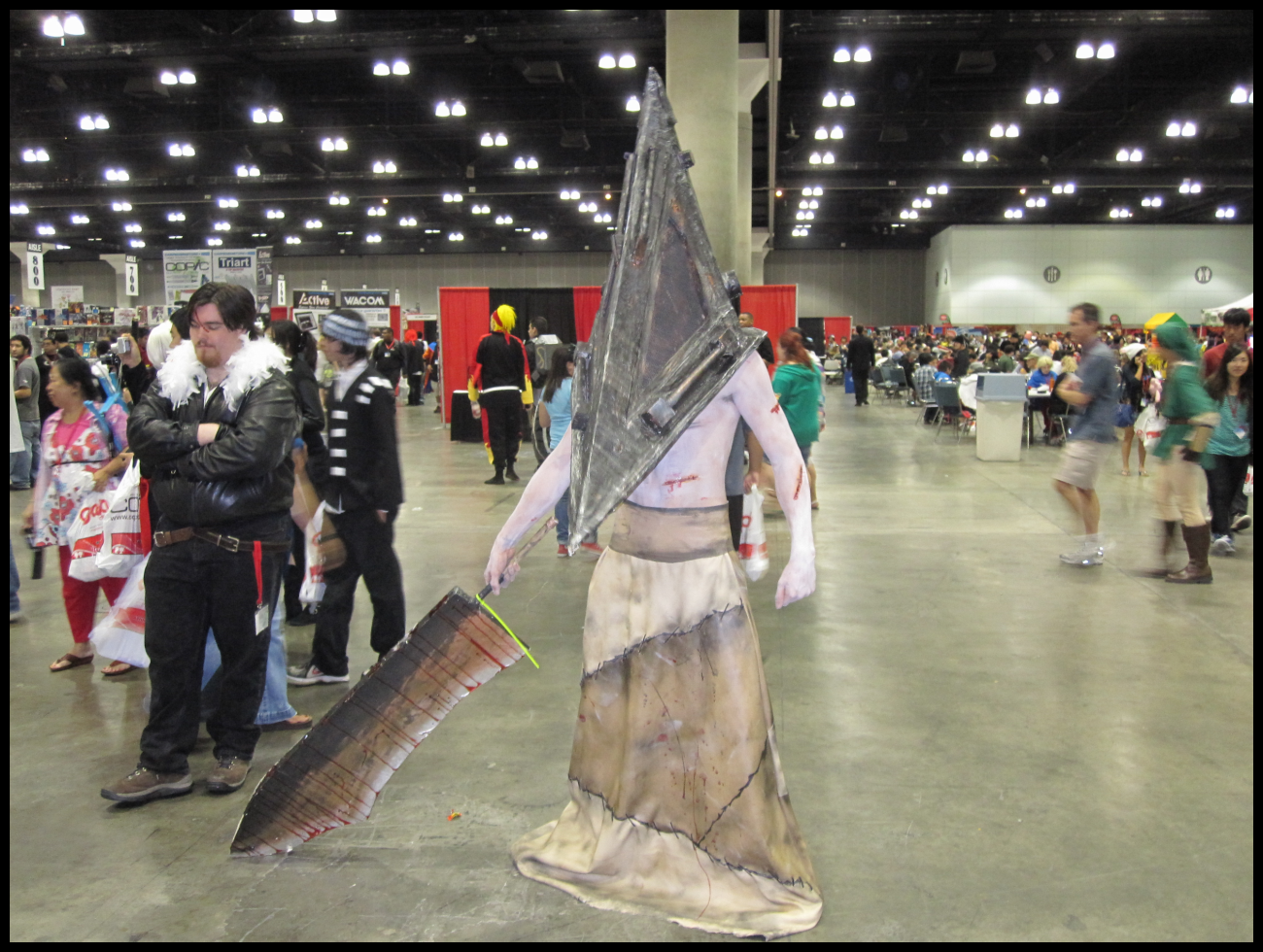
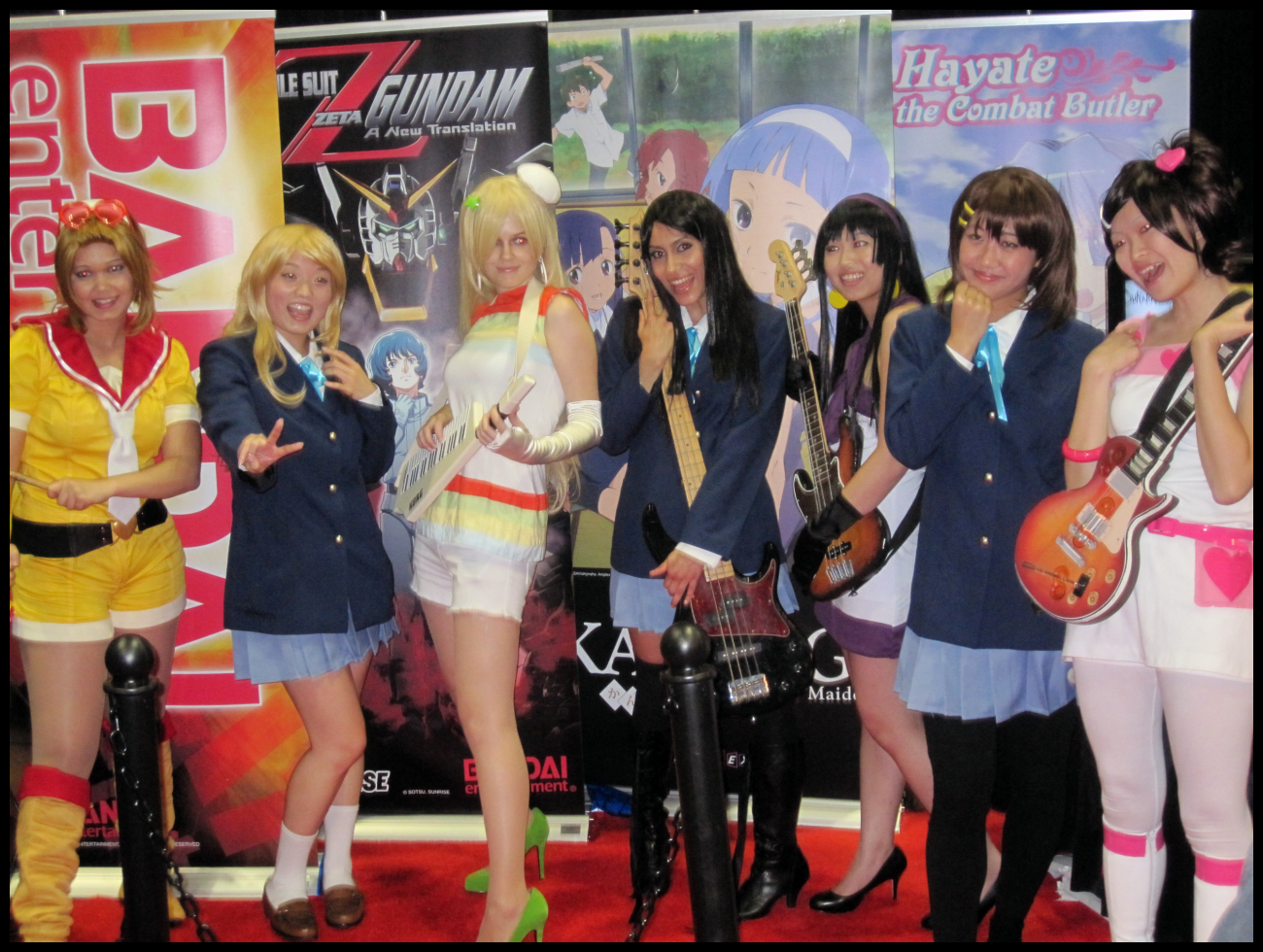
When I and my buddy weren’t perusing the dealer’s tables I was on the look out for cosplayers (costume players) who did a great job with their costumes and who I deemed worthy of taking their pictures. I didn’t get all the best ones I saw since they were always on the move but as you can see by clicking on the thumbnails below the ones I was able to take pictures of did a great job. I fully intend to join their ranks when I attend my next con whether it be Anime Boston 2011 or Anime Expo 2011.

Now that I’ve gotten my first Anime Expo out of the way I can see why so many people love going back year after year after year since it began. It didn’t matter if one was a pre-teen just getting into the anime/manga scene or people in their 50’s who’ve been into it since the days of Speed Racer and Astroboy. The event catered to hardcore and newbie fans alike and while there were some obnoxious individuals who sometimes got on my nerves by and large they were all nice and fun to be around. Anime Expo 2010 has definitely been the highlight of my 2010 year, so far.

Highlights of AX2010

  • Seeing Yoko Kanno performing live and in-person
  • Attending GoH panel for Shinichi “Nabeshin” Watanabe
  • Attending GoH panel for Yuu Asakawa and getting autograph after
  • Attending Hobby Japan industry panel (Queen’s Blade!)
  • Attending and sitting through insane 2.5 hours of Manga Gamer’s bishoujo panel

Lowlights of AX2010

  • The autograph line for Yui Horie/Eri Kitamura line debacle
  • Several dumbass, retards in the JList bishoujo panel who kept shouting “Boobies!”
  • More than a few people who kept trying to push stupid expo memes
  • Not being able to spend as much as I wanted at the dealers exhibition hall
  • The overly pricey eating places in and around Anime Expo and hotel staying in

Song of the Day: Voices (by Yoko Kanno)


The song of the day is one which I consider one of my favorite pieces of music ever composed and played. I speak of “Voices” from the Japanese OVA/film Macross Plus. The song was composed by Japanese composer Yoko Kanno and originally sung by singer-musician Akino Arai.

Anime has become of one my major hobbies and interests and during the early 90’s Macross Plus dominated my viewing rotation and it was partly due to this song. The moment I started the VHS tape (yes that’s how far this song goes back) and heard the very first verse of this song and the techno-tinged Japanese sound of the song I was hooked. I listen to it almost as much as I did when I first heard it 16 years back.

One of the best memories of this song just happened recently as Yoko Kanno made a surprise appearance at this past Anime Expo 2010 in Los Angeles. While sitting in the Nokia Theater for the May’n and Megumi Nakajima concert Ms. Kanno appeared on-stage to play the grand piano and started playing this particular song w/ J-pop singer and seiyuu Megumi Nakajima performing the lyrics. To say that this was the highlight of the Expo for me would be a huge understatement. Listening to the song done live showed me why I love this song and why it’s my pick for song of the day.

Acoustic Ver.

Cello Instrumental

Voices (Japanese)

Hitotsume no kotoba wa yume
Nemuri no naka kara
Mune no oku no kurayami wo
Sotto tsuredasu no

Futatsume no kotoba wa kaze
Yukute wo oshiete
Kamisama no ude no naka e
Tsubasa wo aoru no

Tokete itta kanashii koto wo
Kazoeru you ni
Kin’iro no ringo ga
Mata hitotsu ochiru

Mita koto mo nai fuukei
Soko ga kaeru basho
Tatta hitotsu no inochi ni
Tadoritsuku basho

Furui
Maho no hon
Tsuki no
Shizuku yoru no
Tobari itsuka
Aeru yokan
Dake…

We can fly…
We have wings…
We can touch…
Floating dreams…
Call me from…
So far…
Through the wind…
In the light…

Mittsume no kotoba wa “hum”
Mimi wo sumashitara
Anata no fureru ude wo
Sotto tokihanatsu

Voices (English)

The first word in my dreams
I could clearly see
Planet Eden high beyond the skies

Beautiful and sad
is this story I’ll tell
of the winged travellers eager

’twas one day
the wind guided him where to go
like an eagle high above he flew

Waving from down below
he flew out of sight
into the mystical darkness

Neither a smile nor a cry
I gave when he left
feeling my spleen decline
And hoping
one day we’d fly over
back to the places we once shared

Where vessels glide
in silky waves and of gold
deep in the gulf such planet lies

Surrounded by this universe
of love and hate
confusion breaks through and dwells

Cast a spell
from the old magic book
set a path
in the black magic box
something strange will happen
it will take you so far
So try…

We can fly
We have wings
We can touch floating dreams
Call me from
so far
Through the wind
And the light…

Someone came from the dark
over from the stars
protecting my heart from crying

Taken back by surprise
my traveller returned
What went wrong? Why did he change.