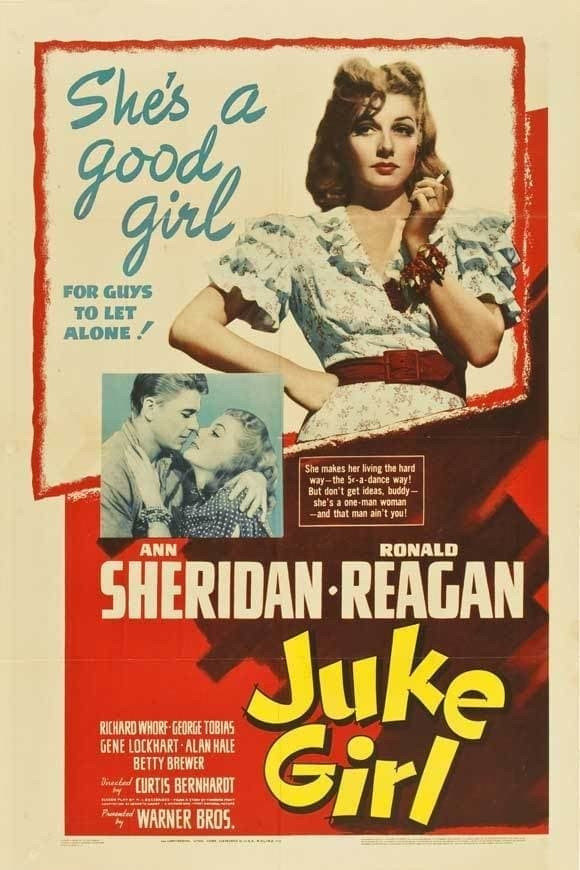
 Farm workers Steve (Ronald Reagan) and Danny (Richard Whorf) arrives in Florida, looking for work. The whole town is controlled by the corrupt Henry Madden (Gene Lockhart) but the honest Steve would rather work for Nick (George Tobias), who treats his workers fairly. While Steve romances Lola Mears (Ann Sheridan), who works at a “juke joint,” he also tries to organize the other workers into demanding better conditions. When Madden frames Steve and Lola for a murder, the entire town turns against them.
This is not a bad Warner Bros. melodrama. As with a lot of Warner Bros. films, the heroes are the poor workers who have found themselves exploited by wealthy men like Madden. As played by Ronald Reagan, Steve is no radical firebrand. He is just someone who wants the workers to get a fair shake and who wants to help decent bosses like Nick make a living despite the efforts of Madden to put them out of business. As was so often the case with his movies, Reagan is an affable hero without ever actually being compelling. Gene Lockhart is the dependably hateful villain and the cast is full of dependable character actors, including Faye Emerson, Alan Hale, Howard Da Silva, and Fuzzy Knight.
Ann Sheridan is really the main reason to Juke Girl and she’s as sexy and tough as ever. There’s a reason why this movie was named for her character’s profession, even though its really only a minor part of the film. Sheridan is the main attraction here and she gives a strong performance as a bad girl who is actually good underneath it all. Her character worries that settling down with Steve will mean a lifetime of struggling to make ends meet but she sees that Steve is worth it by the end of the movie. The town may not be worthy of either of them but Steve and Lola are meant to be together.


 Through the Shattered Lens