Late Night Retro Television Review: CHiPs 3.4 “High Octane”


Welcome to Late Night Retro Television Reviews, a feature where we review some of our favorite and least favorite shows of the past!  On Mondays, I will be reviewing CHiPs, which ran on NBC from 1977 to 1983.  The entire show is currently streaming on Prime!
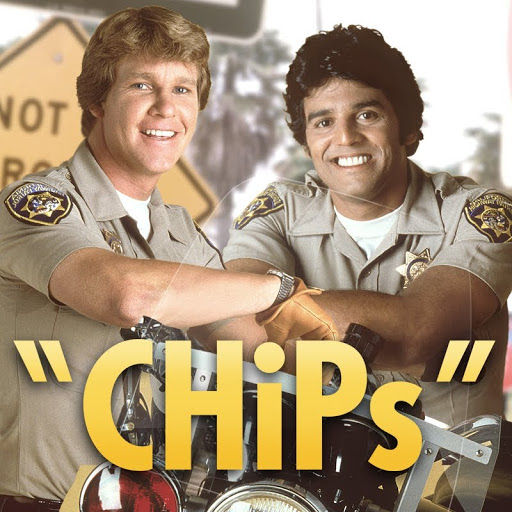
This week, CHiPs deals with the oil crisis!

Episode 3.4 “High Octane”

(Dir by John Florea, originally aired on October 6th, 1979)

Tonight’s episode of CHiPs is a real history lesson.

The episode was aired at a time when the U.S. was suffering from a shortage of gasoline.  Conflict in Iran had led to both the Shah fleeing the country and Americans being taken hostage.  Oil production fell, OPEC raised its prices, and people panicked and started to hoard gasoline.  Many states instituted odd-even gas rationing, which meant that only people with an odd-numbered license plate could purchase gas on an odd-numbered day and only people with an even-numbered license plate could purchase gas on an even-numbered day.  As so often happens when the government attempts to micromanage a crisis, this only made things worse as there were soon long lines at the pump and reports of fights breaking out between people at gas stations.  Even with the rationing, many gas stations ran out of gasoline before they could serve every customer.  If you didn’t arrive early enough, chances were that you would not be able to put gas in your car,

California was one of the many states to institute odd-even rationing and this episode of CHiPs is all about the battle over gasoline.  Two crooks are siphoning gas from independent gas stations and then reselling it to other stations.  (Their biggest customer is played by veteran screen tough guy, Aldo Ray.)  Getraer is injured when he crashes his bike while chasing the two crooks, which makes this case personal for Ponch and Baker.  Meanwhile, Ponch and Baker have to break up fights at the gas station, chase yet another guy who was caught siphoning gas from a car, and save yet another motorist who passes out from the fumes of all the gas cans that he had in the backset of his car.  Ponch even starts to date Beth (Ellen Bry), because she works at a gas station and can tell him the best time to show up to make sure that he and Baker are able to fill up their bikes.  Meanwhile, at headquarters, Harlan is giving lessons on the best way to keep unused fuel from evaporating.

Of course, it wouldn’t be CHiPs if there wasn’t also a light-hearted sports angle.  This week, everyone’s into roller hockey.  Ponch serves as the referee for the CHP-sponsored kids’ roller hockey game and everyone agrees that he’s the best referee that they’ve ever seen.  And why not?  He’s Ponch and, by the time the third season rolled around, CHiPs was definitely The Ponch Show.  Later, the adult officer play roller hockey as well.  It’s the show’s way of saying, “California’s still fun, even with the gas rationing!”

I enjoyed this episode because I’m a history nerd and it was interesting to see how the show dealt with the 1979 oil crisis while it was occurring.  It’s interesting that this episode was a bit cynical about rationing, as CHiPs was usually a show that portrayed the government and its policies as positively as possible.  In 1979, even the audiences of CHiPs was fed up with having to pay — let me check my notes to make sure I have this right — nearly a dollar a gallon for gas.

Really?  Just 90 cents for a gallon gas?  Get me a time machine.  I’m going to 1979!

14 Days of Paranoia #3: The Passover Plot (dir by Michael Campus)


First released in 1976 and based on a book that had come out ten years previously, The Passover Plot is a film that asks, “What if Jesus was a political revolutionary who faked his own death?”

Even when the film was first released, that wasn’t a particularly novel or new theory.  Ever since the Crucifixion, there have been conspiracy theorists who have claimed that the entire thing was staged.  Indeed, the early days of the Church were defined by conflicts between different sects debating the true nature of Jesus, with those who believed that he was the son of God and that he had risen from the dead eventually winning out over sects who claimed that Jesus was not divine or that he had actually escaped from the Romans and was instead hiding out in Egypt or even on the island that would eventually become known as Britain.  (The fact that so many Gnostics and other heretics were executed by the Church and their texts suppressed only served to lend them credibility with future theorists.)  Still, every few decades, some new book or film will claim that Jesus faked his death or married Mary Magdalene and gullible people will act as if this is somehow a new argument.  It’s been over 20 years since all of that Da Vinci Code nonsense convinced bored suburbanites across America that they could be experts on both boxed wine and historical conspiracy theories.  We’re about due for a new version of the old story.

As for The Passover Plot, it features Zalman King as Yeshua of Nazareth, an angry young man who dreams of the day when Judea will be free of the Romans.  Having a knowledge of the prophecies of a messiah and also knowing that he is descended from King David, Yeshua specifically patterns his life after the prophecies and presents himself as being not just another revolutionary but instead as being sent by God.  However, he is also aware that it will be necessary for him to “die” and “rise from the dead,” so he goes out of his way to force the hand of Pontius Pilate (Donald Pleasence).  Having seen plenty of crucifixions when younger, Yeshua arranges for the local revolutionaries to drug him so that he’ll appear to be dead.  When he later wakes up, everyone will believe that he has returned from the dead.  The film ends with several title cards, all arguing that the Gospels were written long after Yeshua’s death (“Mark lived in Italy!” one title card proclaims with almost comical indignation) and were subsequently rewritten by “unknown” hands.

The Passover Plot is a weird combination of biblical epic and conspiracy thriller.  Scenes of Yeshua preaching feel as if they could have come from any traditional Biblical epic but they are awkwardly placed with scenes of Yeshua having secret, melodramatic meetings with various conspirators.  It would make for an interesting contrast if not for the fact that the film itself is so slowly paced and boring.  Zalman King, who is best-known for his subsequent career as a softcore filmmaker, spends a lot of time yelling and smoldering intensely but he still doesn’t have the charisma or screen presence necessary to be convincing in the role.  In the scene were he’s meant to be passionate, he shrieks with such abandon that he makes Ted Neeley’s performance in Jesus Christ Superstar feel restrained.  This film asks us to believe that people would not only abandon their previous lives to follow Yeshua but that they would also take part in an elaborate conspiracy that could have gone wrong at any time.  For that to be believable, Yeshua needs to be played by someone who doesn’t come across like the drama student that everyone dreads having to do a scene with.  Far more impressive is Donald Pleasence, whose portrayal of a ruthless and unfeeling Pilate is a marked contrast to some of the more sympathetic interpretations of the character that tend turn up in the movies.

On the plus side, the film does look good.  It was shot on location in Israel and there is a certain authenticity to the film’s recreation of the ancient world.  Along with Pleasence, character actors like Scott Wilson (as Judas!) and Dan Hedaya get a chance to shine.  But otherwise, The Passover Plot is too slowly paced and kooky for its own good.  Conspiracy theorists never seem to understand that the more elaborate a conspiracy theory becomes, the less convincing it is to anyone who isn’t already a true believer.  In the end, how one feels about the film’s conclusions will probably be connected to how one already views Jesus and the Church.  The Passover Plot is not a film that’s going to convince anyone who wasn’t already convinced.

14 Days of Paranoia:

  1. Fast Money (1996)
  2. Deep Throat II (1974)

A Movie A Day #258: The Hunting Party (1971, directed by Don Medford)


Old west outlaw Frank Calder (Oliver Reed) wants to learn how to read so he and his gang ride into the nearby town and kidnap Melissa Ruger (Candice Bergen).  Because he saw her reading to a group of children, Calder assumed that Melissa was a school teacher.  Instead, Melissa is the wife of a brutal cattle baron and hunter named Brandt Ruger (Gene Hackman).  Even after Calder learns the truth about Melissa’s identity, he keeps it a secret from his gang because he knows that they would kill her and then kill him as punishment for kidnapping the wife of a man as powerful as Brandt.  Stockholm Syndrome kicks in and Melissa starts to fall in love with Calder.  Meanwhile, Brandt learns that his wife has been kidnapped and, with a group of equally brutal friends, he sets out to get her back.  In Brandt’s opinion, Calder has stolen his personal property.  Using a powerful and newly designed rifle, Brandt kills Calder’s men one-by-one until there is a final, bloody confrontation in the desert.
Coming out two years after Sam Peckinpah redefined the rules of the western genre with The Wild Bunch, The Hunting Party owes a clear debt to Peckinpah.  Much as in The Wild Bunch, the violence is sudden, brutal, and violent.  What The Hunting Party lacks is Peckinpah’s attention to detail and his appreciation for the absurd.  Instead, The Hunting Party is just one shooting after another and, devoid of subtext or any hint of a larger context, it quickly gets boring.

Fans of Oliver Reed, however, will want to watch The Hunting Party because it features one of his best performance.  For once, Reed is actually playing the nice guy.  He may be an outlaw but he still cries when a mortally wounded member of his gang begs Calder to put him out of his misery.  Gene Hackman is also good, even though he’s playing one of his standard villain roles.  (The less said about Candice Bergen’s performance, the better.)  The Hunting Party may be dully nihilistic but Oliver Reed shines.

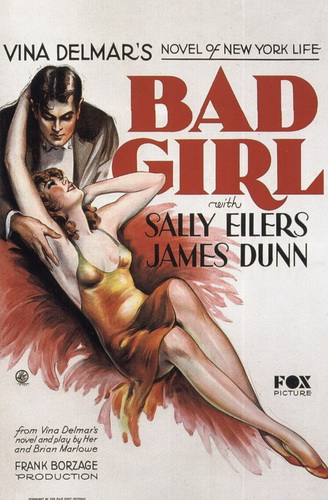
Lisa Reviews An Oscar Nominee: Bad Girl (dir by Frank Borzage)


bad-girl

Seeing as how I started this day by watching Fifty Shades Darker, it seemed appropriate to end the day by watching yet another film about the difficulty of finding love and commitment.  This film came out a little bit earlier than Fifty Shades of Grey.  In fact, it even predates the whole concept of fan fiction.  This film came out in 1931 and it would probably be totally forgotten today if not for the fact that, 85 years ago, it was nominated for Best Picture.

Of course, that’s not to say that Bad Girl is particularly well-known.  Until I came across it on my list of best picture nominees, I didn’t know that it even existed.  According to Wikipedia, it was based on a novel and a play and it did rather well at the box office.  The Academy apparently liked it, awarding it Oscars for both Best Director and Best Adapted Screenplay.  It’s currently available on YouTube.  That’s where I saw it.  But, despite all of that, it definitely appears to be one of the more obscure films to have ever been nominated for best picture.

Bad Girl opens with Dorothy Hailey (Sally Eilers) in a wedding gown.  However, she’s not getting married.  Instead, she’s a store model and, in a rather surreal little sequence, Dorothy and her co-workers walk through the store in their bridal gowns while sleazy men leer at them.  As Dorothy complains to her best friend, Edna Diggs (Minna Gombell), men are “only interested in one thing.”  When Dorothy’s boss propositions her, Dorothy claims to have a prizefighter husband waiting for her at home.  In truthfulness, Dorothy lives with her overprotective brother (William Pawley), a judgmental brute who accuses her of being a tramp if she stays out too late.

At Coney Island, Edna makes a bet that Dorothy won’t be able to get surly Eddie Collins (James Dunn) to talk to her.  Dorothy takes the bet and then proceeds to go over to Eddie and play a ukulele, until Eddie gets annoyed enough to tell her to be quiet.  Eddie claims to not like women  and he accuses Dorothy of being a tease.  “Listen, sister,” he tells her, “if you don’t want guys to salute, take down the flag.”

Wow, Eddie sure does seem to be a jerk, doesn’t he?

Well, don’t worry.  It turns out that Eddie isn’t as bad as he seems, it’s just that he’s often in a bad mood because he doesn’t have much money and he wants to open up his own radio store.  However, Eddie and Dorothy quickly fall in love and soon, they’re married…

But, of course, things never go that smoothly.  It turns out that Eddie is proud and stubborn.  Fortunately, he’s played by a charming actor named James Dunn because, without Dunn’s considerable working class charm, Eddie would probably be insufferable.  Dorothy, meanwhile, fears letting Eddie know that she’s pregnant…

And you know what?

I liked Bad Girl.  

On the one hand, Bad Girl is definitely a dated film.  Any film released in 1931 is going to seem dated when watched in 2017.  But, at the same time, that also means that Bad Girl works as a nice little time capsule.  Watching Bad Girl was like stepping into a time machine.  And it turns out that the 1930s weren’t that bad!  Everyone wore nice clothes and talked like James Cagney.

But, dated it may be, there is also an almost timeless quality to Bad Girl.  Even decades after the film was originally released, the likable chemistry between James Dunn and Sally Eilers feels real and you really do care about what happens to them.  You feel like they belong together and it’s hard not to worry when they fight or when they misunderstand each other’s intentions.  (This happens rather frequently.)  Furthermore, Bad Girl is a film about people who, often times, are struggling just to make ends meet.  That’s something to which everyone can still relate.  It certainly sets it apart from a lot of the other films made both then and today.

Bad Girl was nominated for best picture but it lost to a film that was almost its total opposite, Grand Hotel.  Unlike most of the other old best picture nominees, I have never seen Bad Girl on TCM but it is on YouTube and you can watch it below!