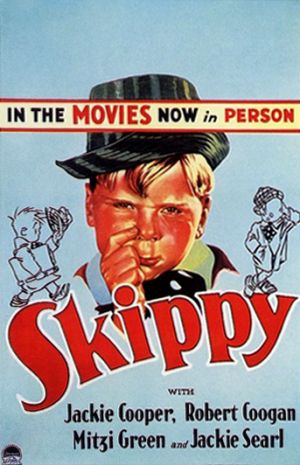
(SPOILERS BELOW!)
Oh my God, they actually killed the dog…
That was my main reaction, this morning, as I watched the 1931 film Skippy. Skippy aired on TCM earlier this morning and I set the DVR to record it because, long ago, Skippy was nominated for best picture and, for quite some time, it has been my goal to see and review every single film ever nominated for the best picture.
And I have to admit that for the first hour or so, I wasn’t sure if I’d actually be able to get all the way through Skippy. Skippy is very much a film of the early 30s and you never known how much you appreciate jump cuts, tracking shots, and even the occasional hand-held camera shot until you watch a movie that features none of them. It’s definitely a different style of story telling and I sometimes found myself struggling to adjust to it.
Add to that, Skippy was a film about children and, while the film’s star, 9 year-old Jackie Cooper, was a natural before the camera, the other child actors often seemed forced. There was a lot of overacting that, if nothing else, made me appreciate even more Jacob Tremblay’s subtle performance in Room.
There were a few things that I did appreciate about Skippy. As I’ve stated on the site before, I love history and Skippy was definitely a time capsule. The film follows 6 year-old Skippy (Jackie Cooper) as he leaves the safety of his upper class home and explores the poor side of the town and the film does a good job of contrasting Skippy’s sheltered home with the nearby neighborhood of Shantyown. It’s while wandering around Shantytown that Skippy meets and befriend Sooky (Robert Coogan). Skippy and Sooky accidentally break a windshield that belongs to the evil dogcatcher, Mr. Nubbins (Jack Rube Clifford). Mr. Nubbins retaliates by taking away Sooky’s dog and demanding that the boys pay him 3 dollars for the dog’s freedom. Though it’s a mighty struggle that involves many comedic schemes, the boys manage to raise the 3 dollars. Mr. Nubbins takes the money, says that he’s going to use the money to buy a new windshield, and that he’s going to kill the dog anyway. So, Skippy and Sooky have to raise three dollars more just to discover that Mr. Nubbins has already shot their dog.
As Sooky sobs, Skippy fights back tears and asks if they can at least have the dog’s body so they can give it a proper burial.
“It’s already been disposed of,” Mr. Nubbins snarls.
And, at this point, I was just sitting there and thinking, “What the HELL!?” Seriously, I can only imagine what it must have been like to be a child in 1931, watching this film (which was based on a comic strip that all the kids probably read every day), laughing at jokes that were probably quite funny back then, and then suddenly being smacked in the face by Mr. Nubbins announcing that not only was the dog dead but his body had been cremated. I can only imagine that amount of tears that were shed in those 1931 theaters!
(Making things even worse is the discovery that the town’s rules for dealing with stray dogs were written by none other than Skippy’s father.)
And as I thought more about it, it occurred to me that this is one thing that would never happen in a movie today. You don’t kill the dog, unless you want Keanu Reeves to show up and kill you.
Sooky breaks into tears as soon as he hears that his dog has been killed. Skippy manages to hold back until he gets home and then he breaks into sobs. (According to Jackie Cooper, director Norman Taurog threatened to kill the dog in real life unless Cooper gave him authentic tears.) Fortunately, all is eventually resolved by both Skippy and Sooky getting new dogs and Skippy’s dad beating up Mr. Nubbins. Yay!
Anyway, for the most part, Skippy is one of those films that will mostly be interesting to Oscar completists for me. However, I will always be stunned by the fact that, in the film, Mr. Nubbins actually killed that dog.
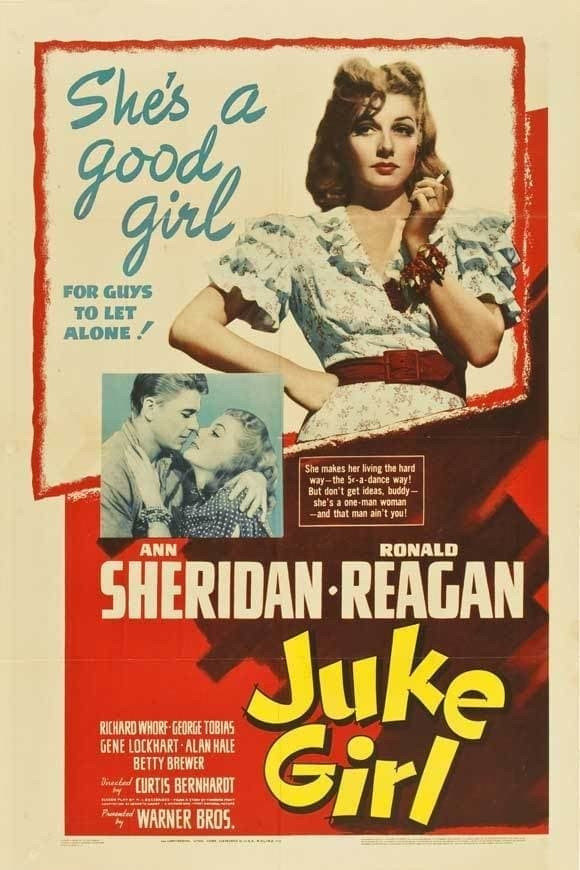 Farm workers Steve (Ronald Reagan) and Danny (Richard Whorf) arrives in Florida, looking for work. The whole town is controlled by the corrupt Henry Madden (Gene Lockhart) but the honest Steve would rather work for Nick (George Tobias), who treats his workers fairly. While Steve romances Lola Mears (Ann Sheridan), who works at a “juke joint,” he also tries to organize the other workers into demanding better conditions. When Madden frames Steve and Lola for a murder, the entire town turns against them.
 Lisa asked me to review an old best picture nominee for today’s movie a day so I picked Here Comes The Navy, because hardly anyone has ever heard of it and I usually like old service comedies.
 Through the Shattered Lens