20 Horror Films For Halloween (10/29/25)


Here’s 20 suggestions, some of which are obvious and some of which are not.

The Essentials

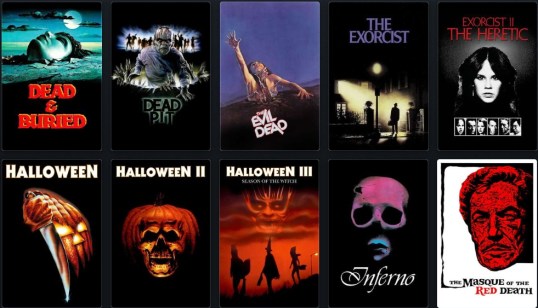
What would Halloween be without watching Halloween (1978)?  And, just to make clear, I’m talking about the John Carpenter Halloween and not any of that David Gordon Green crap.  John Carpenter’s Halloween continues to be one of the most effective horror films ever made and it’s also the rare example of a slasher film in which the victims are just as memorable as the killer.  I love Donald Pleasence’s performance as Dr. Loomis.  Halloween can be viewed on Shudder.

Halloween II (1981) picks up right where the first Halloween ended.  Jamie Lee Curtis doesn’t really do much in this version, other than spend her time limping through the hallways of Haddonfield’s nearly deserted hospital.  However, that just means that we get to spend more time with Dr. Loomis!  Halloween II is nowhere near as effective as the first film but it still introduced some really interesting ideas, like Samhain and Laurie being Michael’s sister.  David Gordon Green decided all of that unnecessary.  I disagree.  Halloween II can be viewed on Peacock.

Halloween III: Season of the Witch (1982) does not feature Michael Myers or Laurie Strode or even Dr. Loomis.  However, it does feature the Silver Shamrock theme song, Tom Atkins yelling like a badass, and Don O’Herlihy explaining the true meaning of Halloween.  “….and Happy Halloween.”  Halloween III can be viewed on Peacock.

The Exorcist (1973), William Friedkin’s masterpiece and the first horror film to ever be nominated for Best Picture, is one of the few horror film to remain frightening even after repeat viewings.  I will add that you don’t have to be Catholic to get The Exorcist but it definitely helps.  The Exorcist can be viewed on HBOMax. 

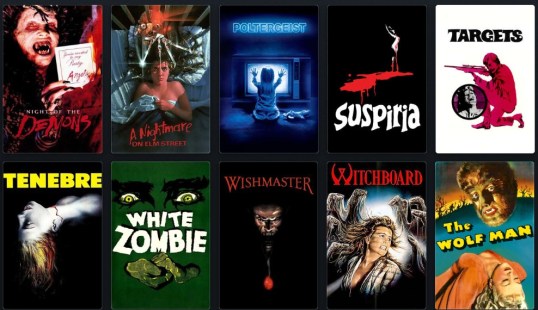
Suspiria (1977) remains Dario Argento’s best film, a dizzying masterpiece of horrific pop art that mixes blood, ballet, witches, music, and names that start with S.  From the moment that Jessica Harper (giving a great performance) steps into the rainy night to the shocking double murder at the red apartment building to the mind-bending climax, Suspiria is a brilliant mix of suspense and horror.  Do not see the remake.  (What is the deal with pretentious schmucks remaking brilliant horror films?)  The original is all you need.  It’s on Tubi.

Inferno (1980) is one of Argento’s more unfairly overlooked films.  A loose sequel to Suspiria, Inferno is a masterpiece of both horror and paranoia.  Irene Miracle’s opening swim is one of Argento’s most haunting set pieces.  The killer kitties are adorable.  The ending features effects work from none other than Mario Bava.  Sadly, the making of Inferno was not a happy experience for Argento and it temporarily soured him on working in America.  This brilliant film is on Tubi.

After his bad experience with Inferno, Argento returned to his giallo roots with Tenebrae (1982).  A series of murders in Rome are connected to an American writer.  Argento reportedly did not get along with star Anthony Franciosa but he still got a good performance out of him.  The wonderfully quirky supporting cast includes John Saxon, Daria Nicolodi, Christian Borromeo, John Steiner, Lara Wendel, Ania Pieroni, and Giuliano Gemma.  This film features several frightening and suspenseful set pieces.  The relentless dog still freaks me out.  Tenebrae can be viewed on Tubi.

A Nightmare on Elm Street (1984) — again, the original and not the remake — holds up surprisingly well.  Whenever I watch it, I’m shocked to be reminded of just how scary Freddy Krueger actually was in his first film appearance.  This Wes Craven shocker is available on HBOMax.

Poltergeist (1982) — the original, not the remake — also holds up well.  JoBeth Williams finding the strength after being thrown around her room to limp down that ever expanding hallway to save her children continues to be both horrifying and inspiring.  Craig T. Nelson’s over-the-top delivery of “YOU LEFT THE BODIES!” continues to make me smile.  Poltergeist can be viewed on HBOMax.

It’s not Halloween without Bruce Campbell and Evil Dead (1981) — the original, though the remake isn’t bad — is available on Tubi.  Though it lacks the humor of the sequels, the first Evil Dead holds up very well and one can definitely see why not only Bruce Campbell but also Sam Raimi went on to have active and successful career afterwards.

In my previous entry, I listed several Vincent Price/Roger Corman collaborations.  Somehow, I failed to include The Masque of the Red Death (1964), which is the best of them all.  Vincent Price is wonderfully evil.  Roger Corman’s direction is appropriately intense.  Nicholas Roeg’s cinematography is beautifully ominous.  It can be viewed on Tubi.

The Wolf Man (1941) — the original, even though I like the remake — is one of my favorite Universal horror films, even if it does leave me wondering how Lon Chaney, Jr. could possibly be the son of Claude Rain.  In future films, Larry Talbot would become a bit too whiny for his own good.  In this one, your heart breaks for him and his father.  The Wolf Man can be viewed on Peacock.

White Zombie (1932) is considered to be first feature-length zombie film.  It’s a bit creaky but it does feature one of Bela Lugosi’s best performances.  One should see it for its historical significance, if nothing else.  It can be viewed on on Tubi!

Odds and Ends

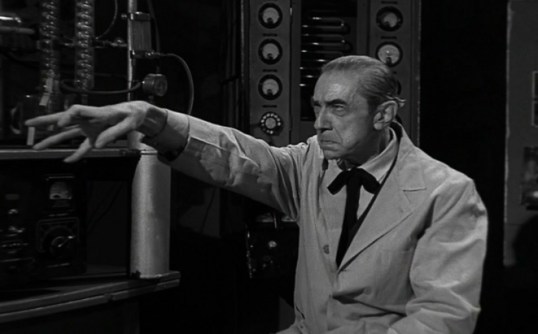
One can debate whether or not Targets (1968) should be considered a horror film or a thriller but it features what is perhaps Boris Karloff’s best performance, playing an aging horror star who fears that his old movies can’t compete with reality.  For once, Karloff is the hero, bravely confronting a madman who starts shooting at the people attending a showing of one of Karloff’s old films.  Targets can be viewed on Pluto TV.

The Dead Pit (1989) is a personal favorite of mine.  An amnesiac (energetically played by Cheryl Lawson) finds herself in an insane asylum where she spends a lot of time running around in her underwear while a doctor performs experiments and the dead rise.  Lawson’s committed performance and director Bett Leonard’s atmospheric direction elevate the entire film.  This is 80s, low-budget horror at its best and it’s on Tubi.

Night of the Demons (1988) asks the question, “Is it really a good idea to have a party in a deserted house?”  Night of the Demons is enjoyable in its shameless and demented way.  Linnea Quigley and Angela Kinkade throw themselves into the role of the two girls throwing the party.  The film is energetic, surprising, witty, and occasionally even scary.  It can be viewed on Tubi.

From the same director as Night of the Demons, Witchboard (1986) is the ultimate film about why one shouldn’t mess with a Ouija board.  I relate to Witchboard because it’s about a redhead who never curses.  Beyond that, though, this is a good horror film that features Stephen Nichols getting upset when everyone fails to take his Ouija board seriously.  This film actually has its share of very real jump scares.  It can be viewed on Tubi.

Wishmaster (1997) is well-remembered for Andrew Divoff’s creepy intensity as the Djinn but the cast is actually a who’s who of horror royalty.  Robert Englund, Tony Todd, George “Buck” Flower, Kane Hodder, Reggie Bannister, Joe Pilato, they all made appearances.  I like the fact that no one ever chooses their words carefully when speaking to Wishmaster.  The film is on Tubi.

Dead and Buried (1981) features strange things happening in a coastal town.  This film feels like a particularly gruesome episode of The Twilight Zone and features a strong performance from Jack Albertson as the coroner with a secret.  It’s on Tubi.

Exorcist II: The Heretic (1977) has a terrible reputation that is largely deserved but I have to admit that I find it to be strangely fascinating.  It’s such a misfire that you really can’t look away and it takes an all-star cameo approach to its story that feels so wrong that it leaves you wondering whether John Boorman was intentionally going for a parody or not.  Richard Burton doesn’t waste any time with being subtle.  See if you can figure out what’s going on during the flashback scenes.  It’s on Tubi and I dare you to watch it.

Click here for the weekend’s list!


4 Shots From Horror History: 1930s Part One


This October, I’m going to be doing something a little bit different with my contribution to 4 Shots From 4 Films.  I’m going to be taking a little chronological tour of the history of horror cinema, moving from decade to decade.

Today, we take a look at the start of the 1930s.

4 Shots From 4 Films

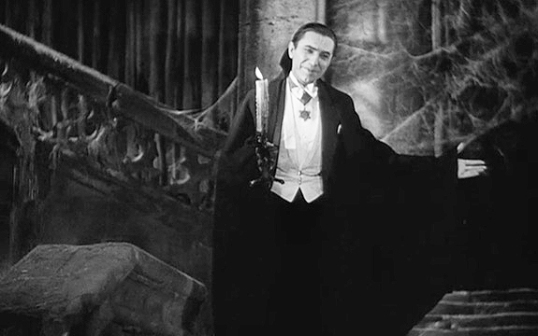
Dracula (1931, dir by Tod Browning)

Dracula (1931, dir by Tod Browning)

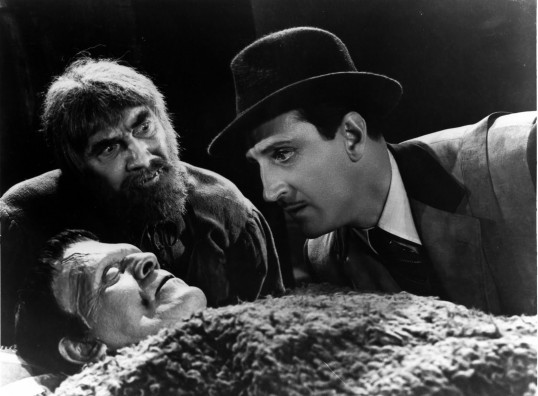
Frankenstein (1931, dir by James Whale)

Frankenstein (1931, dir by James Whale)

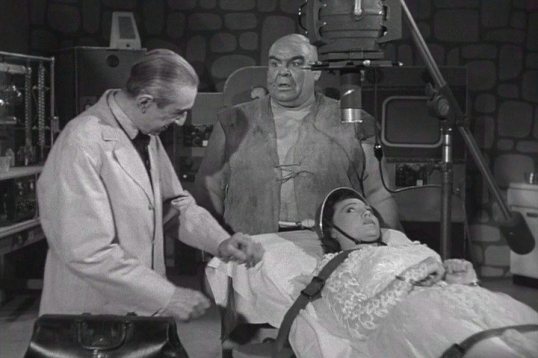
Vampyr (1932, dir Carl Theodor Dryer)

Vampyr (1932, dir Carl Theodor Dryer)

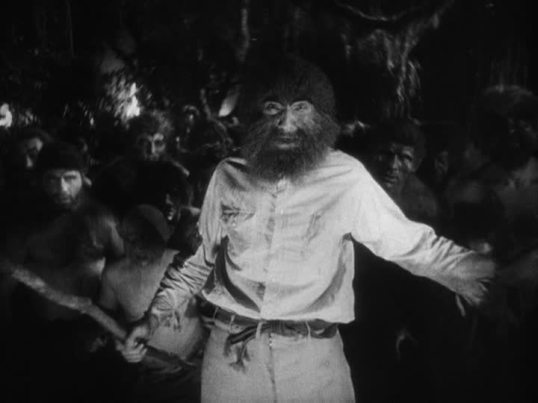
White Zombie (1932, dir by Victor Halperin)

White Zombie (1932, dir by Victor Halperin)

Horror Film Review: White Zombie (dir by Victor Halperin)


In the 1932 film, White Zombie, Bela Lugosi plays one of his most evil characters.

Lugosi is “Murder” Legendre, a voodoo master who lives on the island of Haiti.  He owns a sugar cane mill, one that has an ever-growing amount of workers.  All of Legendre’s workers do their work without complaint.  Actually, they work without talking at all.  Even when one of them falls to his apparent death, the rest continue to work as if they didn’t even notice.  Legendre has made himself into a wealthy and feared figure because everyone knows that he has an army of zombies who serve him.  He’s not only evil but he’s also someone who enjoys being evil and causing as much trouble as possible.  And yet, because his magic is powerful, the island’s rich plantation owners often pay him for favors.

Among those who are willing to pay Murder for his services is Charles Beaumont (Robert W. Frazer), a plantation owner who is in love with Madeleine Short (Madge Bellamy) and jealous of her fiancé, Neil Parker (John Harron).  Charles wants Madeleine to love him so Murder gives Charles a potion to slip into Madeleine’s drink.  When Madeleine drinks the potion, she appears to die.  After her funeral, Charlies and Murder break into her crypt and retrieve Madeleine.  Madeleine is now in a state of limbo, not quite alive but also not quite dead.  She can still play the piano but she cannot speak and she stares straight ahead with a blank look in her eyes.  She is now one of Murder’s zombies.  Needless to say, Charles isn’t happy about this and neither is Neil.

Now, one thing I should make clear is that the zombies in White Zombie are more like the zombies of Haitian mythology than the zombies that one would expect to find in a George Romero film.  The zombies in White Zombie do not eat human flesh.  They’re not in a process of decay.  They are not immortal.  These zombies are not the walking dead.  Instead, they’re brainwashed victims who have been turned into slaves by Murder and his magic potions.  Murder uses them to punish his enemies and to work in his mill.  As I said at the start of this review, Murder Legendre is one of Bela Lugosi’s most evil characters.

White Zombie is usually considered to be the first feature length zombie film.  Though it was released 91 years ago and watching it requires a bit of adjustment on the part of modern viewers, White Zombie still creates and maintains a memorable atmosphere of ominous magic and growing menace.  The scenes in Murder’s sugar cane mill are especially strong, with Murder’s zombies silently marching from one task to another.  The acting is a bit inconsistent.  Watching the film, it’s easy to see that it was made at a time when Hollywood was still making the transition to sound.  But the important thing is that Bela Lugosi is absolutely fantastic as the menacing Murder Legendre, smirking as he casts his spell and, in one of the film’s most famous scenes, walking straight towards the camera with an evil gleam in his eyes as if he’s coming straight for the audience.  Flaws aside, White Zombie features one of Bela Lugosi’s best performances and is more than worth watching for that reason alone.

Live Tweet Alert: Join #ScarySocial For A Halloween Double Feature


As some of our regular readers undoubtedly know, I am involved in a few weekly live tweets on twitter.  I host #FridayNightFlix every Friday, I co-host #ScarySocial on Saturday, and I am one of the five hosts of #MondayActionMovie!  Every week, we get together.  We watch a movie.  We tweet our way through it.

Tonight, we’ve got a special Halloween double feature!  First up, we’ve got 1932’s White Zombie, starring Bela Lugosi!

After White Zombie, we will watch 1940’s The Wolf Man, starring Claude Rains, Lon Chaney Jr, and …. Belua Lugosi!

Halloween is always fun at #ScarySocial!

If you want to join us on Saturday night, just hop onto twitter, start White Zombie at 9 pm et, and use the #ScarySocial hashtag!  The films are available on Prime!  I’ll be there co-hosting and I imagine some other members of the TSL Crew will be there as well.  It’s a friendly group and welcoming of newcomers so don’t be shy.

8 Shots From 8 Horror Films: The 1930s


4 Or More Shots From 4 Or More Films is just what it says it is, 4 shots from 4 of our favorite films. As opposed to the reviews and recaps that we usually post, 4 Shots From 4 Films lets the visuals do the talking!

This October, I’m going to be doing something a little bit different with my contribution to 4 (or more) Shots From 4 (or more) Films.  I’m going to be taking a little chronological tour of the history of horror cinema, moving from decade to decade.

Today, we take a look at the 1930s.

8 Shots From 8 Horror Films

Dracula (1931, starring Bela Lugosi as the Count, Dir by Tod Browning, DP: Karl Freund)

Frankenstein (1931, dir by James Whale, DP: Arthur Edeson)

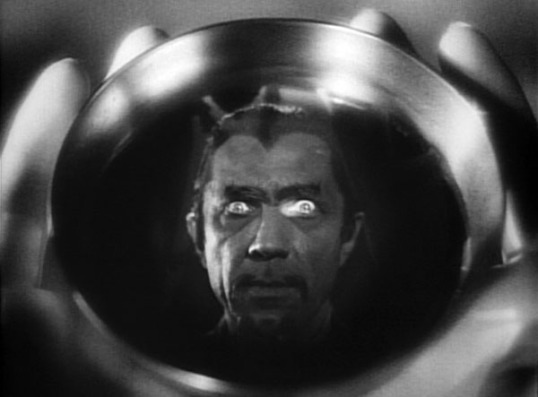
White Zombie (1932, directed by Vincent Halperin, DP: Arthur Martinelli)

The Mummy (1932, directed by Karl Freund, DP: Charles Stumar)

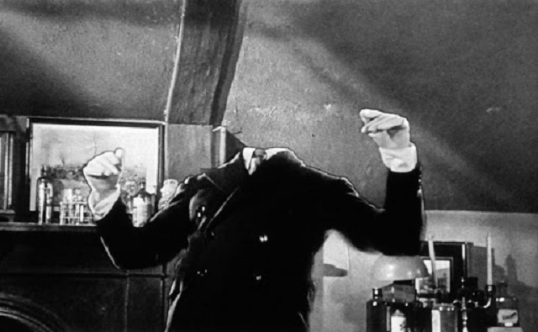
The Invisible Man (1933, dir by James Whale, DP: Arthur Edeson)

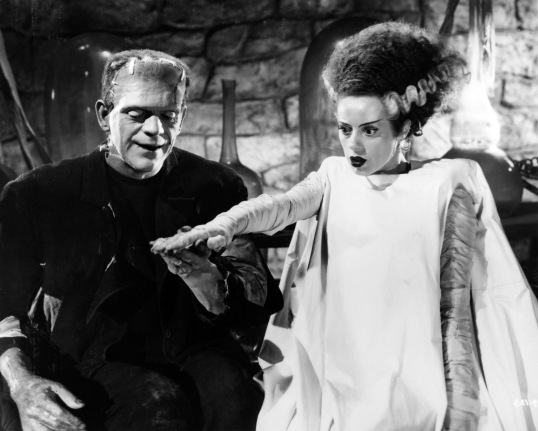
Bride of Frankenstein (1935, dir James Whale, DP: John J. Mescall)

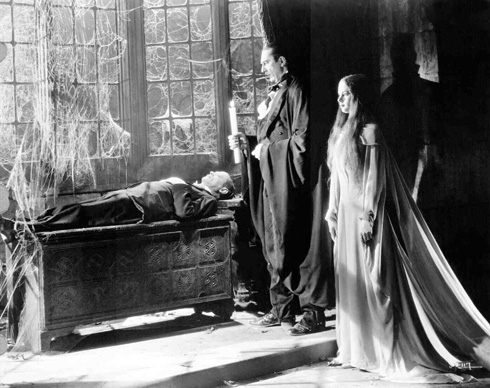
Mark of the Vampire (1935, dir by Tod Browning, DP: James Wong Howe)

Son of Frankenstein (1939, directed by Rowland V. Lee, DP: George Robinson)

4 Shots From 4 Bela Lugosi Films


4 Shots From 4 Films is just what it says it is, 4 shots from 4 of our favorite films. As opposed to the reviews and recaps that we usually post, 4 Shots From 4 Films lets the visuals do the talking.

139 years ago on this date, Bela Lugosi was born in Hungary.  Today, we honor his memory with….

4 Shots From 4 Bela Lugosi Films

Dracula (1931, dir by Tod Browning, DP; Karl Freund)

White Zombie (1932, dir by Vincent Halperin, DP: Arthur Martinelli)

Ninotchka (1939, dir by Ernst Lubitsch, DP: William H. Daniels)

Bride of The Monster (1955, dir by Ed Wood, DP: Ted Allan and William H. Thompson)


4 Shots From 4 Films: Special Bela Lugosi Edition


4 Shots From 4 Films is just what it says it is, 4 shots from 4 of our favorite films. As opposed to the reviews and recaps that we usually post, 4 Shots From 4 Films lets the visuals do the talking.

Today is the 138th anniversary of the birth of Bela Lugosi!  In honor of his legacy, here are….

4 Shots From 4 Films

Dracula (1931, directed by Tod Browning)

White Zombie (1932, directed by Vincent Halperin)

Island of Lost Souls (1932, directed by Erle C. Kenton)

Bride of the Monster (1955, dir by Edward D. Wood, Jr.)

4 Shots From 4 Films: Happy Birthday Bela Lugosi!


4 Shots From 4 Films is just what it says it is, 4 shots from 4 of our favorite films. As opposed to the reviews and recaps we usually post, 4Shots From 4 Films is all about letting the visuals do the talking. Today is the 135th anniversary of the birth of one of horror’s most iconic stars, the great Bela Lugosi! In his honor, here’s a special Halloween tribute to everyone’s favorite Hungarian actor!

White Zombie (1932; D: Victor Halperin)

Mark of the Vampire (1935; D: Tod Browning)

The Devil Bat (1940; D: Jean Yarborough)

Zombies On Broadway (1945; D: Gordon Douglas)

Music Video of the Day: More Human Than Human by White Zombie (1995, dir. Rob Zombie)


I have very little to say about this music video. It was the first one fully directed by Rob Zombie. According to Wikipedia, the title and lyrics draw from Philip K. Dick’s book Do Androids Dream of Electric Sheep?, more commonly known by its’ film adaptation, Blade Runner (1982). The music video is taken from several places. Some of it was shot in the halls of Framingham High School, Framingham, Massachusetts and on the streets of Hollywood Boulevard. The home video footage is just that. It’s of Rob, his brother, Michael Cummings of the band Powerman 5000, and a cousin.

If you’ve heard the song, then you know that there is orgasmic moaning at the beginning of the song that is missing from the music video. That is from the post-apocalyptic film Café Flesh (1982). I haven’t had a chance to see it yet, but I do hear really good things about it. I would not be surprised if this music video is inspired more by it than Philip K. Dick. It fits with the post-apocalyptic feel of the music video while also touching on the whole implanted memories thing from Blade Runner as represented by the home movie footage. I’m sure there are more tie-ins with Café Flesh, but I haven’t seen it yet. I can only really tell you that the apocalypse left the majority of the population unable to have sex without getting sick while the rest are forced to perform onstage for them.

That’s it! Enjoy!

4 Shots From Horror History: Dracula, Frankenstein, Vampyr, White Zombie


This October, I’m going to be doing something a little bit different with my contribution to 4 Shots From 4 Films.  I’m going to be taking a little chronological tour of the history of horror cinema, moving from decade to decade.

Today, we take a look at the start of the 1930s.

4 Shots From 4 Films

Dracula (1931, dir by Tod Browning)

Dracula (1931, dir by Tod Browning)

Frankenstein (1931, dir by James Whale)

Frankenstein (1931, dir by James Whale)

Vampyr (1932, dir Carl Theodor Dryer)

Vampyr (1932, dir Carl Theodor Dryer)

White Zombie (1932, dir by Victor Halperin)

White Zombie (1932, dir by Victor Halperin)