Scenes That I Love: “Greed is Good” from Wall Street


Today, the Shattered Lens wishes a happy 81st birthday to actor and producer Michael Douglas!

For today’s scene that I love, we have a scene from Oliver Stone’s 1987 film, Wall Street.  In this scene, Michael Douglas plays Gordon Gekko.  Gekko is supposed to be the film’s villain but he’s actually a lot more compelling and, at times, sympathetic than the film’s heroes.  He’s not a judgmental jerk like the union leader played by Martin Sheen.  Nor is he a snitch like his protegee, played by Charlie Sheen.  Instead, Gordon Gekko is honest about who he is.

This is the scene that won Michael Douglas an Oscar.  Watching him in this scene, it’s easy to see why Douglas’s performance supposedly inspired a lot of people to get a job working on Wall Street.  Douglas is so charismatic in this scene that he makes this movie, directed by a future supporter of Bernie Sanders, into one of the best advertisements for capitalism ever filmed.

Scenes That I Love: “Greed is Good” from Wall Street


Today, the Shattered Lens wishes a happy 79th birthday to actor and producer Michael Douglas!

For today’s scene that I love, we have a scene from Oliver Stone’s 1987 film, Wall Street.  In this scene, Michael Douglas plays Gordon Gekko.  Gekko is supposed to be the film’s villain but he’s actually a lot more compelling and, at times, sympathetic than the film’s heroes.  He’s not a judgmental jerk like the union leader played by Martin Sheen.  Nor is he a snitch like his protegee, played by Charlie Sheen.  Instead, Gordon Gekko is honest about who he is.

This is the scene that won Michael Douglas an Oscar.  Watching him in this scene, it’s easy to see why Douglas’s performance supposedly inspired a lot of people to get a job working on Wall Street.  Douglas is so charismatic in this scene that he makes this movie, directed by a future supporter of Bernie Sanders, into one of the best advertisements for capitalism ever filmed.

A Quickie with Lisa Marie: Wall Street: Money Never Sleeps (Dir. by Oliver Stone)


Sometimes, words escape even me. 

I’ve been trying for about three days now to figure out how to explain why Wall Street: Money Never Sleeps is one of the most disappointing films of 2010.  Notice I didn’t use the term “worst film.”  There’s enough in the movie that works (Michael Douglas is fun to watch as Gordon Gekko and there’s a handful of scenes that perfectly capture the modern atmosphere of financial panic) to keep it from being a truly awful movie.  But just because the movie isn’t awful, that  doesn’t necessarily mean that it’s any good.

Oh, Wall Street — how did you fail?  Let me count the ways.

1) Michael Douglas gives a great performance but he actually has less screen time here than he did in the original Wall Street.  Yes, it’s fun to watch Gekko claw his way back up to the top but, once you take those scenes out of the equation, you still have about 1oo minutes of non-Gekko material to slog through.

2) Instead most of the screen time goes to Shia LeBouf.  Let me repeat that — most of the screen time goes to Shia LeBouf.  In this film, Shia plays a cocky young financial genius.  Let me repeat that.  In this film, Shia LeBouf plays a genius.  Back before Shia became the human face of the Transformers franchise, I’ll admit that I thought he was kinda cute in his geeky, awkward way.  However, in Wall Street, his character isn’t supposed to be geeky or awkward.  He’s supposed to be some sort of financial genius.

3) We’re also supposed to automatically sympathize with Shia LeBouf’s character because, while he’s a part of the system that created the recession, he’s also dedicated to funding some sort of green energy project.  Much like James Cameron in Avatar, Oliver Stone trots out a simplistic environmental theme here and expects to be praised just for mentioning it.  The message is: “Love my film or Mother Earth gets it.”

4) The film’s plot: Shia LeBouf’s mentor and boss — played by Frank Langella — commits suicide after being run out of business by evil millionaire Josh Brolin.  So, Shia takes a job working with Brolin.  Meanwhile, Shia is also engaged to the daughter of Gordon Gekko.  This leads to him taking Gekko on as a mentor.  Shia apparently wants to take Brolin down.  Or does he?  Unfortunately, LeBouf doesn’t seem to know for sure and that comes across in his performance.  As a result, the majority of the film is about as exciting as watching anyone else go to work.

5) Josh Brolin’s the villain here.  We know he’s a villain because everyone else in the film keeps insisting he’s the villain and Brolin plays the role as if he’s auditioning for a role in the next James Cameron film.  Which is to say, Brolin gives a dull and lifeless performance.

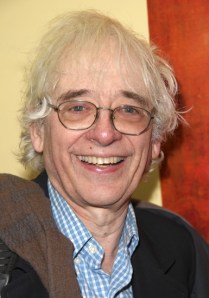
6) The little guy who is creating this alternate source of energy that Shia is so obsessed with?  The little guy is played by Austin Pendleton who, I swear to God, is one of the most annoying character actors ever.  Seriously, Pendleton, stop fucking smiling all the time! 
7) Having seen both this and the original Wall Street, I can now say that I have no idea how the stock market works and I really don’t care to learn.  I just want everyone to stop yelling and throwing paper all over the place.  Seriously, Stone tries to make the “market” scenes exciting here but, once you get over the fact that Stone knows how to use a zoom lens, they’re pretty dull.  Lucio Fulci and Jean Rollin — they would have found a cool way to film those scenes.  Stone just resorts to the same old tricks.

8) That little smiley face looks so cute with his sunglasses on.

9) As with the original Wall Street, this is yet another film about little boys and their daddy issues.  Which father figure will Shia choose?  Meanwhile, Shia’s mother (a grating performance from Susan Sarandon) and his girlfriend (Carey Mulligan) are portrayed as total fools.  Mulligan, after her performance in An Education, especially deserve better than to be stuck playing some sexist fantasy of a human being.  Sarandon is blamed for the housing collapse while Mulligan’s character is cheated out of a fortune towards the end of the film.  The message here, I guess, is don’t let women have money because we’ll just fuck everything up.  I love how I can always count on “progressive” filmmakers to prove themselves to be a bunch of pigs at heart.

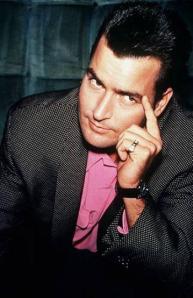
10) Charlie Sheen shows up for a really awkward cameo.  He’s supposed to be playing his Bud Fox character from the original film but, watching his performance, you get the feeling that Charlie doesn’t remember being in the original film.  Showing up at a charity dinner with a separate date on either ar, Bud Fox is presented as being just as corrupt as Gordon Gekko.  Michael Douglas, quite frankly, looked somewhat embarrassed by the whole scene.  However, as awkward as the scene was, it did manage to perfectly capture the theme of this movie:

Eventually, even Bud Fox will grow up to be Charlie Sheen.
A Quickie With Lisa Marie: Wall Street (dir. by Oliver Stone)


Yesterday, me and my friend Jeff were planning on seeing Wall Street: Money Never Sleeps.  However, there was one problem — I’d never seen the original Wall Street.  Though I owned the movie on DVD, I’d never actually bothered to sit down to watch it.  Don’t get me wrong, I knew that this was the movie that won Michael Douglas an Oscar.  I knew that Douglas played a character named Gordon Gekko who, at one point in the film, delivered the line, “Greed is good.”  Who hasn’t seen that clip?

So, yesterday, before leaving to see the sequel (which I’ll be reviewing in the near future), I sat down and watched the original. I discovered that there’s a reason why everyone remembers Gordon Gekko’s little “Greed is good” speech.  It’s literally the only memorable part of the entire movie.

Wall Street tells the tale of Bud Fox (Charlie Sheen), a young stock broker who becomes a protegé to an intense and amoral businessman named Gordon Gekko (Michael Douglas).   Gekko specializes in taking over other companies and putting people out of work.  He wants to take over an airline that employs Bud’s father.  Bud’s father is played by Martin Sheen and he’s such a self-righteous, judgmental, blue-collar asshole that you find yourself hoping that Gekko does put him out of work.  Anyway, Bud engages in insider trading (which is apparently a crime though I’m not sure as the film seems to assume that everyone already understands how the stock market works) yet then finds his conscience awakened when Gekko’s greed threatens his dad’s job.  Yes, this is yet another one of those laughably masculine films in which an overage boy has to pick a father figure.  

I guess we’re supposed to care about whether or not he picks the right father but seriously, Bud Fox is such a dull character and Charlie Sheen is so miscast that I found myself wondering when the film’s real hero was going to show up.  I had some hope when James Spader popped up in a supporting role but no, the lead character here is Bud Fox and he’s played by Charlie Sheen.

Not surprisingly, this is pretty much a male-dominated film.  There’s only two notable female characters in the film.  Darryl Hannah plays a ditz and Sean Young plays a bitch and neither one gets a chance to even have fun with the stereotypes.  However, we all know that this film is really just about Gordon Gekko plunking his twanger over money and Bud Fox jackin’ the beanstalk to Gekko.

However, once you see Michael Douglas’s performance as Gordon Gekko, it’s a bit easier to understand why he causes Bud to walk Willie the One-Eyed Wonder Worm.  Douglas truly is amazing in this role.  In fact, Douglas is so charismatic in the role that it actually hurts the movie.  It’s hard to take much pleasure in listening to Martin Sheen talk about how much he loves his union when you realize that all he’s doing is taking up time that could have been devoted to Michael Douglas fucking over poor people.  I don’t know if a bad film can ever be truly redeemed by just one good performance but Douglas definitely makes Wall Street — with all of its awkward moralizing and sexist (and sexual) confusion — worth seeing.

As little as I thought of Wall Street, I still found myself excited about seeing the sequel.  Why?  Because I knew Michael Douglas was coming back and Martin Sheen wasn’t.  Perhaps, I thought, this sequel will simply focus on Gekko being an over-the-top, charming viper instead of forcing us to sit through a repeat of the first film’s heavy-handed moralizing and simplistic political posturing.  Of course, I was wrong but that’s another review for another day.

Oh, one last note: Oliver Stone’s direction is far better than his script.  I once read an old review from Pauline Kael in which she said that Oliver Stone directed “as if someone held a gun to his head and shouted, ‘Go!'”  and this is certainly the case with Wall Street.  That said, I still find it hard to stay interested in any scene that features stock brokers screaming at each other and tossing around little bits of paper.  Seriously, how does the Stock Market work?  Whenever I see any footage from the New York stock exchange, it just looks incredibly silly.