Film Review: All The Wilderness (dir by Michael Johnson)


All the Wilderness

I recently watched an excellent little film called All The Wilderness.

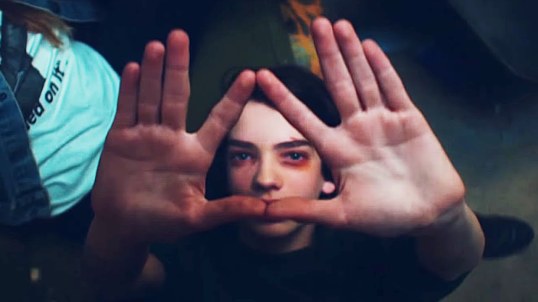
James Charm (Kodi Smit-McPhee) is a shy and withdrawn teenager who is still struggling to deal with the recent death of his father.  He spends his time wandering around the forest surrounding the house where he lives with his mother (Virginia Madsen).  Occasionally, he makes his way into the nearby city and aimlessly wanders through the desolate streets.  In his spare time, he sketches pictures of dead animals and tells people that he can predict when they are going to die.  When he informs the local bully that he’s going to die in just a few more days, the bully responds by punching James in the face.

Sometimes, James visits a therapist (Danny DeVito) who seems to alternate between concern and indifference.  One day, while sitting in the waiting room, James meets Val (Isabelle Fuhrman), who is dealing with her parents’ divorce and spends her time making and selling eccentric doughnuts.  James likes Val but he’s too scared to open up to her.  Some of that may have to do with the mysterious, hooded figures who occasionally materialize out of thin air and pursue him through the streets.

After sneaking out of one unproductive therapy session, James discovers a mysterious man named Harmon (Evan Ross) playing a piano in a courtyard.  Later, after his hamster mysteriously dies, a distraught James sneaks out of his house, makes his way down to the city, and gets on a bus.  Sitting across from him is none other than Harmon.

Harmon invites James to follow him on a trip into the hidden corners of the city.  Soon, James is discovering that the wilderness is not only limited to the countryside surrounding his mother’s house.  There’s also an urban wilderness and, with Harmon as his guide, James starts to discover it.  And yet, even as James starts to find happiness, those hooded figures continue to follow him…

All The Wilderness reminded me a lot of last year’s underappreciated California Scheminganother atmospheric look at alienation that was full of existential dread.  All The Wilderness is probably not a film for everyone.  Not only is it extremely stylized but it’s also a bit too short.  All The Wilderness is one of the few films that could actually benefit from an additional 30 minutes added to its running time.

And yet, flaws and all, All The Wilderness is a great film and one that everyone should take the time to see.  It is perched so precariously between being insightful and being pretentious that it becomes oddly compelling to watch the film’s valiantly struggle to maintain its balance.  Visually, this is an incredible film just to look at, with the constantly moving camera capturing images of ominous yet undeniably beautiful urban decay.  In small roles, both Danny DeVito and Virginia Madsen are well-cast while Evan Ross is appropriately charismatic as Harmon.  Finally, Kodi Smit-McPhee — all grown up from his heartbreaking performances in The Road and Let Me In — gives a wonderful and versatile performance in the lead role.

All The Wilderness is a film that deserves to be seen.

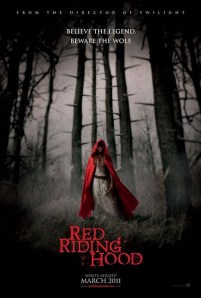
Film Review: Red Riding Hood (dir. by Catherine Hardwicke)


My problems with Red Riding Hood are more of a personal nature than anything else. I’m from a family that clashed old world values of women being blindly subserviant to the Man of the House vs. women being fiercely independent and only having a male in their lives to complement things. These elements were my luggage already brought to the table on seeing the film, but it shouldn’t damper one’s opinion on the film. If this review does this, it’s on me personally and not a reflection of the entire Shattered Lens.

Like Alice in Wonderland before it, Red Riding Hood takes the classic fairy tale and expands on it. While it does so, it doesn’t do it by much. What it has going for it is a nice visual style. Colors are vibrant and director Catherine Hardwicke really has an eye when it comes to forest landscapes (just as she did with Twilight). Mists cover the trees and capes billow in the wind, when it’s not concentrating on the town itself (which does look like a soundstage at times). In the end, however, it suffers from the same quasi teenage issues that Twilight had. I yawned a number of times. Granted, I understand that the movie may be targeted to a younger audience (and for them it may very well work), but even my audience groaned a little and they were target individuals.

Red Riding Hood is the story of Valerie (Amanda Seyfried), who lives in a small village that lives in fear of The Wolf, who has been known to sneak in and attack or kill citizens. To appease the wolf, the townspeople keep animals tied outside. As a child, she forms a bond with a young boy named Peter. Time passes, and we find young Valerie bethrothed to Henry (Max Irons) by way of her mother’s plans (played by Virginia Madsen). Peter (Shiloh Fernandez) still has feelings for Valerie, and this all quickly becomes another Bella / Jacob / Edward triangle. It’s not at the start a story of Valerie choosing her own road, but having to hear from everyone around her that this guy should be the one she marries or that one is the right guy for her. To me, personally, the film in the beginning pushes as much of a pro-“I need a man to survive” stance as Battle:LA does a Pro-Marine one. Is this a terrible thing? Not if that’s where your mindset is, no. Every time I saw them mention anything along the lines of hand and feet worship some guy just because “that’s how it is”, I had to remind myself that it’s just the time period the story takes place in (though I’m sure the audience heard me groan at least once). Again, that’s just me.

In the midst of all this, on being asked to run away with Peter, Valerie is alerted to her sister’s death from the wolf. The townfolk make a point of going after the wolf, and decide to head out the cave where they believe the beast lives. They return with proof of a victory and plan to host a party for the deed. The town priest (Lukas Haas, who somehow seems to less here than he did in Inception) reaches out for help in form of Solomon (Gary Oldman). Solomon, arriving with armed guards warns the townsfolk of the evil of werewolves and that he will hunt it down. The next few nights will be Blood Moon nights, meaning that if the wolf bites anyone during that time, they’ll become werewolves as well. The townsfolk, not buying into this, decide to have a wild party with sexy dancing. This results in a visit from the Wolf, who confronts Valerie and telepathically asks her to come away with it, or the town will be razed. It all kind of escalates from there.

Oldman, for his credit, was fun here and slightly over to the top.  Oldman delivers his lines with flair, being far less subdued here than he was in The Book of Eli. For who better to hunt a wolf than Sirius Black himself, right?

And that’s part of the problem I found with Red Riding Hood. With the exception of Seyfried, the supporting cast is actually stronger than the main group of actors the story focuses on. Julie Christie plays Valerie’s grandmother, in a great turn, and as always Billy Burke (Drive Angry, Twilight) is supportive as Valerie’s father. He’s really one of the highlights of the film. As for Henry and Peter’s characters,  the most I could think of with them were the Winchester brothers in Supernatural. They’re eye candy for the girls, though I should note that none of the girls in my audience were excited as they were when I saw The Twilight Saga: New Moon. There were lots of screaming for that one.

What does work is that the movie is reminiscient of The Beast Must Die. It is a mystery of who the wolf actually is, and both Valerie and the audience are given clues. That I actually enjoyed, and the third act of the film wasn’t too bad. The action is quick and to the point, but again, it all kind of feels like I could have seen this as a series on the CW. There wasn’t as much of a worry about who would fall at the hands of the wolf or what dangers would face Valerie so much as they actually looked cool when it occurred. Easily a Netflix pick.

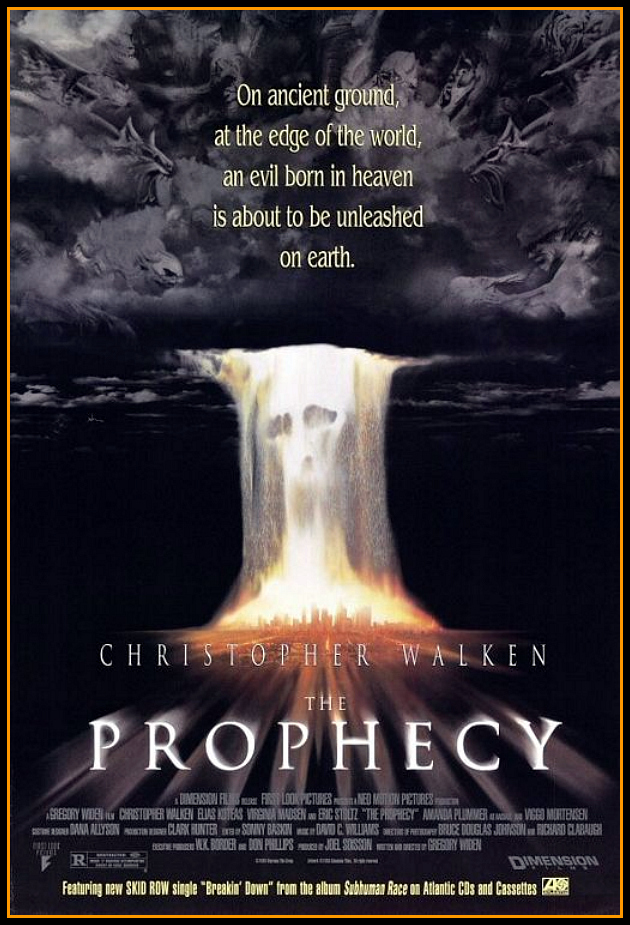
Film Review: The Prophecy (dir. by Gregory Widen)


I first found out about this little cult film starring the very awesome Christopher Walken around 1993 or so when I was at the local Waldenbooks (yes there used to be bookstores not named Barnes & Noble or Borders back in the day) looking at the latest issue of Fangoria. Inside the magazine they were doing a brief feature on an upcoming horror film tentatively called God’s Army. All I saw was that it was to star Christopher Walken and it had gore and angels in it. That alone peaked my interest and I was looking forward to seeing it in the theaters. Almost two years passed and nothing about it was ever heard again until I visited the video rental place near my house and saw a VHS tape (yeah, those big videocassette thingies) with the title of The Prophecy and starring Christopher Walken.

This was the film I was so hyped to seeing in the theaters. The title had changed from it’s earlier (and much cooler) one of God’s Army. It would seem that it’s film distributor had little to no faith in the box-office potential of the film and just delayed it’s release to the point that when it did come out no one knew about it barely anyone saw it. It was a real damn shame since filmmaker Gregory Widen made such a good film that was able to mash-up horror, angels and a detective story all in one without creating a mess of things.

The Prophecy was about the war in heaven we were never taught about in Sunday school. We all know about the war in heaven where Lucifer and the rebel angels who followed him tried to overthrow God. That didn’t go over so well for Lucifer and he and his band of fallen angels were cast out into Hell by God and his right-hand man the Archangel Michael. This film talks about the second war in heaven soon thereafter which no one outside those who wrote little-known apocryphal texts about it (and being apocryphal they never were included in the Bible). This war now had a new group of angels led by the Archangel Gabriel rebelling against God for choosing humans (talking monkeys as these new rebels called them) above all living creatures including the angels themselves for God’s love. This war was now in a state of stalemate after countless millenia, but a prophecy about a soul so dark and evil was to be the tipping point for either side. This particular soul was to be found on Earth and whoever acquires it would break the stalemate and finally bring this second war to an end.

With this in mind we have Walken as the Archangel Gabriel coming down to Earth to look for this soul so he can finally win the war for his side (which also means the end of mankind). It’s the angel Simon (played by Eric Stoltz) who comes down to stop him from getting this soul or, at the very least, hide it from Gabriel. With these two factions of angels vying to acquire this soul we have a Detective Thomas Daggett smack in the middle of the case investigating all the weird happenings and deaths surrounding the battle between these two factions. The dead bodies of angels begin to appear on morgue slabs looking like eyeless, hermaphroditic specimens and angelic script found in crime scenes brings Daggett back to his time studying to be a priest before images of angels warring amongst themselves breaks him down and he quits the seminary to become a cop instead.

It would come down to these three factions racing against time to acquire this dark soul.

The film is not as gory as it’s feature in Fangoria made it out to be, but it is quite violent and bloody that I understand why it got the horror label attached to it. It’s more a dark fantasy thriller more than horror. It’s rare in today’s film that we see angels portrayed as the bloodthirsty beings that the really are. The film even points out this oft-ignored detail of God’s messengers. Angels are always the ones God sends to punish or send a very serious message to his chosen beings that is Man. The Prophecy shows this aspect of angels in full light and how their attitudes about humanity might lead some of them to hate God for raising Man above even them.

Christopher Walker does a great job conveying Gabriel’s hate and contempt for humans. His Gabriel is like one of those pundits always on tv (both liberal and consevative) who are so into their sides’ message that they never see the other side as anything but the enemy. One could almost say that Walken’s Gabriel is like then apocalypse-hungry version of Glenn Beck and Keith Olbermann in one body. This is not to say that Walken goes over-the-top with his performance. In fact, he’s quite subdued in how he uses those many tics and voice mannerisms a whole cottage industry has grown around in.

Walken’s portrayal of Gabriel infuses what could’ve become a one-note villain with lots of layers and complexities that the rest of the cast were able to play off from. His character would be terrifying one moment then smoothly switch over to being funny and charming then back to terror. It’s due to his great performance that the other cast members like Stoltz as the weary, loyal angel Simon and Koteas as the fallen religious cop Daggett were able to bring their own performance to another level. This is quite a feat since the dialogue in the film was a mixed bag of horror cliches and interesting Biblical-speak about secret wars, apocryphal books and prophecies. The film even has a nice appearance of the first fallen angel himself and none other than Viggo Mortensen plays Lucifer.

The Prophecy does have a feeling that it was always one misstep away from becoming an awful film. This had happened with 2010’s Legion and did that film about angels and the apocalypse turn out to be a huge steaming pile of shit-turd. But while Dimension Film saw the film fall over on the side of bad for myself and those who have come to admire and love this cult classic the film stayed balance between good and bad. Widen’s film never went over to the side of becoming a truly great film, but it also never fell on the side that Legion ended up on. What Prophecy ended up becoming was a film that was almost grindhouse in nature, but even then it still looked too good with too many good performances to be given that label. The fact that it contains one of Christopher Walken’s best performances speaks well of a film that many critics during it’s early days had dismissed as just another bad horror film.

In the end, this film became just one of the many little-gems that got lost in film studio money politics. I definitely would recommend this cult film to people who haven’t seen it, but I would tell them to stop at just this film and not even go near the four sequels which came after it.