Quick Review: Word Realms!


photo-main

Full disclosure: I was a Kickstarter backer and beta tester for this game.

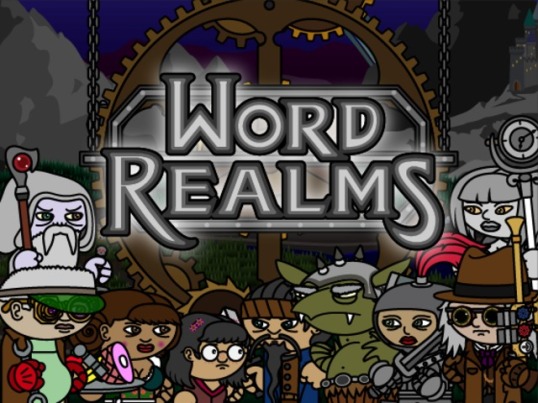
So recently, Asymmetric’s “Word Realms” was released to the public as a semi-finished product. I say semi-finished because, by their own admission, there are many changes still to go. If the studio name sounds vaguely familiar, it’s probably because you’ve happened across the popular browser-based game “The Kingdom of Loathing” in the past. As a long, long, long time fan of the browser based game, I simply couldn’t resist when the opportunity came to support their new endeavour – an animated game effort with (presumably) the same kind of sarcastic humour and potential, and one based even more promisingly in the realm of words.

So here’s the skinny. Word Realms challenges you to play a lot of “Scrabble”. The combat involves forming words out of randomly generated banks of letters. Each letter has a score value, and the higher the score, the more damage that you do. It’s really that simple. So if you’ve been dominating your friends at “Words With Friends” for the last five years, then you should find yourself quite at home here, but with a catch: the combat timer is somewhat swift, and you’ll need to think quickly about your word, rather than spending days on it. Generating valuable words quickly is as important a skill as knowing how to dump off the random “Z” letters that come into your life. Frankly, I found the experience quite immersive, but your own mileage may vary based on just how much you enjoy the word games in your life.

The problem with Word Realms is that, even explored to its utmost, there just isn’t that much girth to be explored. While the game definitely has the potential to absorb an entire afternoon away from you, I’m not sure it has much more than that. There’s a small amount of replayability, I suppose, and the game does have some fun mini-games (found through the story mode in the form of dream sequences; you’ll see) and a fairly deep crafting system. I still maintain that the core game-play is probably just not substantative enough for most single player gamers who are, frankly, looking for something to suck up their free hours. That said, the $11 price tag guarantees five or six totally engrossed hours. I’m not sure how much better most modern single player experiences do in terms of bang for your buck.

For what its worth, I enjoyed Word Realms. I backed it for substantially more than $11 and I certainly don’t regret that choice. If you’re looking for something to do it would be hard to go wrong with this title. Oh, and as for the acerbic wit of Kingdom of Loathing? If you enjoy the browser game the humour will translate easily to you.

On the Rain-Slick Precipice of Gaming!


Unfortunately, this particular editorial can’t pass without some background information being passed around first. The story is a sad one at times, but I think you’ll find the resolution as satisfying as I have! Do let me know!

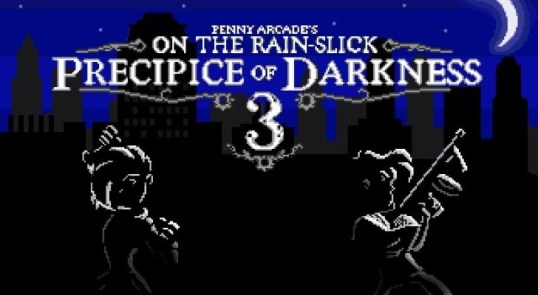
Some of you may have heard of the popular webcomic Penny Arcade. A much smaller chunk of you are probably familiar with the two games that Penny Arcade released in the year 2008, parts one and two of On the Rain-Slick Precipice of Darkness… a story which blended Penny Arcade’s unique style of humour and its unique visual style with a modern RPG engine to create a new gaming experience. Most of you who bought the first two games are further familiar with the catastrophic announcement in 2010 that Hothead Games was going to proceed with the Deathspank franchise over producing the third title in the Penny Arcade series… and that… the Penny Arcade series was cancelled.

Ouch.

Double ouch to people who really enjoyed the first two titles, and were looking forward to the conclusion of the story of Tycho Brahe and Jonathan Gabriel.

But then in 2011, a ray of hope emerged. Zeboyd Games, producers of such titles as Breath of Death VII: The Beginning and Cthulu Saves the World, had signed on to the project. In development? Rain-Slick 3. Only now, instead of using Penny Arcade’s comic book visual style and a more modern RPG engine, we were going to experience a fully pixelated 16-bit treatment of the story and the world, and it was to be released in a more Indie fashion.

Fine by me!

Now, in mid-2012… the new game is here. I have played it. And I would like to tell you all about it.

Rain-Slick 3 continues the story immediately after it left off at the end of Rain-Slick 2. Our heroes Tycho Brahe and Jonathan Gabriel, of the Startling Developments Detective Agency, have slain two Gods, and by a prophecy spoken by Tycho’s own father, this has brought the world to the brink of oblivion. Unfortunately, it seems, we must balance that against the fact that the ongoing presence of these ancient Gods has infused a great amount of evil into the world, from wicked hobos and rampaging mimes to the occurrence of ghosts, ghouls, and other supernatural critters. Railing against this destiny, Tycho and Gabe enlist the help of a head in a jar and a mysterious woman detective who shares a past connection with Tycho, in an effort to halt the ongoing conflict before it spirals out of control.

The gameplay is pure 16-bit RPG. Characters use a job system which is not unlike a pared-down version of that used in any Final Fantasy game, with jobs having certain special abilities gained as they level up. However, Rain-Slick wants to be fun for the player, and actually doesn’t allow you to grind (enemy groups disappear when defeated, and do not return!), so un-used jobs level up concurrently with those currently equipped, albeit at a slower rate, and your characters can equip multiple jobs with no penalty. Combining a useful suite of skills can create truly devastating fighters, so there is definitely a strategic aspect to how you equip your jobs, and how you choose equipment which can either cover weaknesses or heavily accent strengths. It gives a decent feel of customisation to the player, which is otherwise somewhat lacking as the player’s own avatar is absent from the game’s cast of characters (although referenced several times as having participated in previous events) and the game plays like a traditional RPG – there are no Mass Effect style conversation wheels to be found here.

The game’s charm is in its simplicity, and its storytelling. Although the story is predictably broken up by long chunks of combat-heavy dungeon, it remains infused with the humour and ability of the guys from Penny Arcade – not insubstantial! – and hints of that artwork style, used for character portraits and enemy models. Of particular amusement value are the names of enemies, always accompanied by a short description, which really rekindle the feel of the first two games. Zeboyd has done a marvelous job in continuing the saga, even though the game plays absolutely differently from the original two titles.

If you still have any interest in this series, I highly encourage a purchase! Rain-Slick 3 is available on Xbox Live Marketplace or Steam, or through the Penny Arcade store. The official site also notes that it should become available for iOS and Android in the future, and Penny Arcade notes the possibility of free updates to expand upon the core game. For a pittance of $5, this game is likely to do nothing but impress you from start to finish.

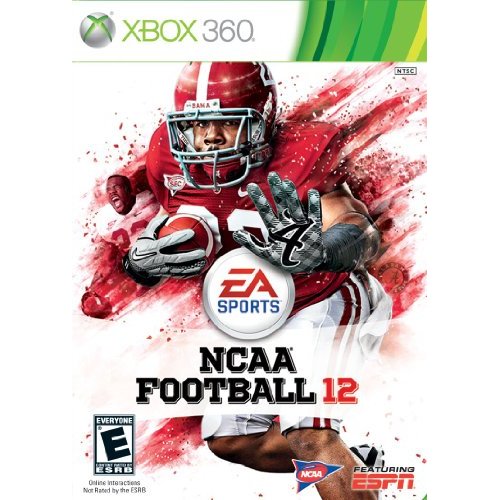
Review: NCAA Football 12


Yes, it’s that time of year everyone. Football season looms … at least, it does for the thousands of student athletes within the NCAA system. The NFL is still in limbo, even if it now appears inevitable (although either way, it won’t slow down the annual Madden release). Now, let me preface this review by saying that I don’t actually enjoy college football. I find the poor defensive play and imbalanced match-ups boring, and I hate the way that the BCS standings come together over the course of a season. The fact that the Big East has an automatic bid is a bad joke, etc. All of this is probably because I never attended a university where college football mattered. But absolutely none of that counts in the world of video games!

As a visceral experience, there’s a lot to be said for the college football style. Here, we still live in a world where running the football can be king, and a world in which the QB option (in a shocking variety of forms) can still be a primary offensive tool. Teams suffer every year from playing the service academies (who still run the triple option) because defending it is so different from the spread, or even the spread option, that most teams run. If you’re looking for a football experience where all of these systems are in play, then you should run — not walk — toward NCAA Football 12. Of course, most people are more NFL fans than NCAA fans, if the numbers are to be believed… but the one thing that the video game version will always have over Madden is that it isn’t quite so formulaic. We’re dealing with an eclectic mixture of offenses and defenses. If you care to start a dynasty (and the dynasty features are outstanding in the new version. In NCAA Football 12 we’re treated to the full coaching experience. More on that in a bit.) you have a ton of player turnover, which can make it difficult to have a consistent program. I suppose it’s probably easier if you’re a fan of Alabama or Florida. I’m not, so this title has a refreshing ‘battle uphill’ feel, especially in the Dynasty Mode.

The flagship promotion for this game has to do with the authentic recreations of the university celebrations, pre-game ceremonies, etc. It deserves to be the most outstanding feature. Granted, it has absolutely no effect on game-play, but one of the things that sets college football apart from the professional game is the sheer number of teams in play – each with their own unique celebrations, entries, and whatever else – who have their own tradition. If that kind of personalized experience doesn’t faze you, then you won’t find much of note has changed between iterations of this game. The graphics are still in the same generation, we have the same playbooks, the announcers have actually become less interesting (which may be a selling point, depending on your point of view – Lee Corso has made his departure), and there are no real innovations in game-play. The tackling feels slightly more authentic — that is, there’s less magnet tackling — and the AI that guides defensive players in zone defenses is dramatically improved over the 2011 version of this title. You can actually feel pretty confident when calling cover 3 defense… of course, this goes double for the AI player, who aggressively bats down passes (but mercifully doesn’t seem to randomly intercept any more). Still, the game emphasizes more than ever the value of lofting a pass high to avoid marauding defenders as opposed to just firing laser beam passes from point A to point B.

Outstanding features include the Dynasty mode. Returning are the online dynasty features, which were a huge improvement in last year’s title… but massively upgraded are the single player versions. You can now create your own coaching avatar who can hold the position of Offensive/Defensive Coordinator, or Head Coach, at a university of your choice – but who is held accountable for the team’s performance. The university has expectations, and you can experience first-hand being on the coaching hot seat and being fired from your job. Of course, if you’re good enough at the game, this is hardly a concern… but it does add a fascinating dynamic to the experience – a bad recruiting class could still doom you! If you are fired, you end up on the coaching carousel looking for a new job. It’s definitely a cool feature, even if you probably won’t run into it much.

The other game mode which received a significant overhaul is the Road to Glory mode. As always, you create a single player, and advance from a top-rated high school prospect through your collegiate career at whatever university. However, this time around, the experience is much more interactive. We’re treated with a game mode that allows us to fully develop a single player in a much more immersive way than in previous installments. Your created player will gain experience and skills — as always — but also adapt to (or be moved into) a specific role on the team. I imagine this is a much more authentic recreation of what going out for Div 1 sports is really like… but you tell me.

The game does take a significant step back in terms of calling audibles. I would say that the player is given more freedom than ever in terms of setting up audibles (with the addition of custom playbooks) but gone are the menus that actually tell you which button push calls what. Or, at least, they were absent for me. It seems like a senseless change, and one that left me feeling pretty bitter through my Dynasty play… when I had to frequently consult my audible chart in order to keep track of what I was calling, and when. If I could remember all of this playart, I’d probably be playing Div 1 football myself.

As always, this game will synergize with the Madden release in terms of draft classes, as the Madden schedule continues uninterrupted. Definitely worth a pick-up if you’re starved for some video game football, or if you consider yourself a college ball fan.

What I Played Today: Majesty 2 and MLB 2K11


MLB 2K11

I bought MLB 2K11 on the first day of its release… and, having played hours upon hours of it, I’ve been dying to review it ever since. The core problem, however, is that there’s really not that much to say about a sports game. Especially a baseball game. Especially a baseball game that doesn’t really boast any new features over its predecessor from the year before. It’s the tightest baseball simulation with the best graphics that I’ve seen. You know, since last year. It still uses the one-touch control system that basically lets you play the entire game with only single presses (or maneuvers of the thumbsticks. Whatever.) to take any action. I would say the ease with which the game can be played is its best feature by far…

And it’s hard to criticize the game, since they’ve culled the irritating features over the years, until the tight baseball simulation is basically all that remains.

It’s worth noting that unlike other sports offerings (Madden, I’m looking at you!) MLB 2k11 does a fantastic job of keeping up with the big league rosters if you’re playing in an online format, or if you just hop straight in and want to play a game of baseball.

As you would expect, the game has all of the modern game modes. Many of the big achievements revolve around the My Player mode, which is also one of the most fulfilling modes… depending on the position you prefer. I would say, tentatively, that I’ve spent more time in My Player than in Franchise or Play Ball this year. It really is kind of fun to work your way up from AA ball into the big leagues, and then to carve a name out for yourself from there. I like this mode in MLB far better than I ever have in Madden, and I really can’t recommend it any more strongly.

Oh, and it’s worth noting… out of all of the 2K Sports offerings for baseball, this one is easily the best. It runs mostly alike to the 2K10 effort, but as you would expect, it’s a little tighter, and a touch better looking… and, really, with not much else to improve on that’s the story of the game. If you like baseball, or you have some hankering to play it, this game is definitely for you. If you’re looking to gain 1000 GS then this game will disappoint you with the amount of time required to earn some of the achievements. If you’re *that sort*, I wouldn’t bother with this title.

Majesty 2

The self-described fantasy sim game, Majesty 2, makes its triumphant return on Steam. I bought the gold collection when it became available partially out of nostalgia, and partially because I desperately wanted a strategy game to play that I hadn’t worn out. I could always return to StarCraft II, but for some reason Majesty 2 caught hold of my imagination, and drew me back in.

The outstanding feature of Majesty 2 as opposed to your generic RTS game is that much of the action is not under your direct control. Your armed forces consist of guards, who will defend your town and your palace in a very automated, very uninspired, way… and heroes, who do their own thing, unless they’re being paid. You can throw out contracts of various types (examples include ‘destroy target’, or ‘explore region’) in the form of flags, for which you announce a bounty you’re willing to pay. In an ideal world, your heroes will help you out, and dash to the rescue. Of course, the interest level of your heroes and their personal gumption depends both on their hero type and their hero level. For example, the Rogues from the Thieves Guild are a bit on the cowardly side and flee at the first sign of real trouble, while the Rangers Guild and its heroes are particularly excited about exploring the wilderness and battling beasts.

You personally control the construction of town structures and fortifications, and choose the path through the single player campaign; a rich experience which takes its decent share of time. This experience can actually get a little repetitive; you’ll want the missions to end a bit quicker, at the very least, no later than halfway through the campaign. No doubt if you’re better at the game than me, this will never become a problem.

L.A. Noire

Strictly as a tease… I’ve been playing a great deal of this game lately. A full review from me is forthcoming.

What I Played Today: Transformers: War For Cybertron


In my recent hunger for new games to play (not new to the world, just new to me, mind) I started browsing the Steam store… and playing some of the crap that was coming in off of my Gamefly subscription. In honour of the fact that I haven’t written a column in three weeks, I thought I’d throw out some quick thoughts on a game I’ve played quite a bit recently. Sadly, it’s not a new title anymore… but there it is. Maybe next time, Gamefly… maybe next time.

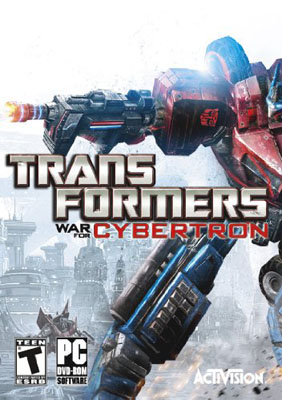
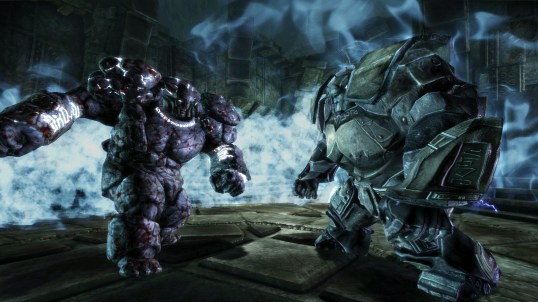
Transformers: The War for Cybertron – My most recent arrival from Gamefly. It’s a solid game. The game-play is pretty tight, and it does a pretty decent job of integrating the idea of both heavily armed and armored robots… as well as their ability to transform into things. The whole system is pretty simple – and you’ll discover over hours of game-play that it lacks a certain level of depth – but the game is certainly fun enough.

The single player mode has you taking command of a single Transformer in the service of either the Decepticons or the Autobots (both have their own full-length campaign mode, which combine together to tell a single story). We are taken far into Transformers Past and the initial battle for control of the planet Cybertron that began the million-year-long war between the two factions. Ambitious Megatron claims that he will build a galactic empire rightfully dominated by the power of the Cybertronians… while Optimus Prime and his Autobots battle based… well, mostly on principle. Honestly, we’re not given much background. Luckily, the story is simple enough; nobody is going to get lost in this narrative.

You’ll recognize the names, and the look, and even the transformations of the titular robots in disguise… but one of the game’s most disappointing features is that there isn’t the variety from Transformer to Transformer that you might be hoping for. Although each one has a unique loadout of one or two weapons, their unique transformation, and a pair of special abilities, all of these are drawn from the same pool (with the exception of the transformations… oh, and Megatron and Optimus Prime receive unique weapons… but they’re the only ones). Ultimately, you’ll probably end up fighting with whatever weapon you like best / whatever weapon you happened to find that will work for the given situation. This isn’t a terrible thing; after all, games like Halo are completely based on the concept of two weapon swaps, switching out weapons for new weapons and so on, and the model works.

Still, the game has some fun voice acting, some cool level designs… and it’s pretty fun to roll through. The levels are longer than I expected going in… which is both a plus and a minus. Since the gameplay is, on the whole, fun… it’s not debilitating… but some of the sequences definitely begin to drag before you’ll finish a given level. The sequences can be challenging, depending on your difficulty level, but there’s earnestly nothing in terms of tremendous innovation in any of the game-play sequences. Basically you’re thrust into a third-person shooter with a variety of terrain, weapons, and enemies… and you go to town. There’s nothing wrong with that, but there’s nothing to this game that really makes it feel Transformers-y… aside, again, from the transformations themselves. At times, these will help you out, and do add an element to the game.. but you’re going to want to spend most of your time in combat in your robot form, doing robot things.

Oh well.

The multiplayer component features a few modes  modes. The competitive multiplayer modes (Deathmatch, King of the Hill, etc.) bear some similarities in structure with Activision’s Modern Warfare 2, with perks and levels and so on. The co-operative multi-player is headlined with the by-now-completely-standard horde mode (called Escalation in this particular incarnation), where you face off against wave after wave of enemies. I know that there’s only so many permutations of multiplayer modes; particularly within a given genre. I accept that each game isn’t going to break new ground with its multiplayer modes or concepts. That having been freely admitted? There wasn’t much to get hooked on here.

If for some reason you haven’t been turned off by the movie franchise or the endless bastardization of the classic Transformers, and you enjoyed this game, there’s something to look forward to: A planned sequel in 2012.

What I Played Today: Golems of Amgarrak


I was in quite a mood after playing so much Dragon Age II, and (as that led to) another full play-through of Dragon Age: Origins. I had originally planned to continue straight on to Awakening, and just complete the whole series. But then, as I was on my roll, I remembered that I had purchased a couple of DLC packs for Dragon Age: Origins a while back on the cheap. They had some kind of sale for half price DLC, or some such. I’d taken that opportunity to pick up both Witch Hunt and The Golems of Amgarrak… but while I’d completed the former some time ago, I’d never bothered to sit down and play through Golems. I took a look at the achievements, because I’m like that, and I realized that I needed to complete the DLC on a minimum difficulty of Hard in order to receive my e-recognition for my accomplishments.

Harkening back, I recall that Golems of Amgarrak was touted as an extra-difficult bit of DLC… it was, ostensibly, much harder than the regular game, even on the Casual difficulty. In short, this DLC was not intended for the faint of heart. This did nothing but excite me, but I did go into it expecting a higher degree of difficulty, and felt that I should use some caution.  Although I might be ‘that guy’ when it comes to gaining achievements in an expedient manner, I’m strangely honourable about some of them. It seemed to me that if I were going to defeat the DLC’s final boss on a Hard or Nightmare difficulty, I might as well play the whole DLC on that difficulty. So, I set my difficulty, and I chose to import a Warden from an Origins playthrough at level 20, a Dwarven sword-and-board warrior.

The DLC took a couple of hours to play through all the way. It introduces a semi-new area (yet another re-skin of the default Dwarven Thaig that we saw four times or more between the Origins game and the various DLCs) that paves the way into a completely new area. Amgarrak itself is a completely unique area replete with colour-switch puzzles, swarms of enemies (mostly of the more difficult types. I assumed there would be Golems, but I was treated to a plethora of Revenants, Arcane Horrors, and high-ranked skeletons as well), and a bunch of loot. Most of the loot proved to be useless, but it did provide upgrades to the Golem which I picked up on my way in. As one might expect, the Golem is the key to the whole deal. It has significant healing abilities, and while it can’t always fight its way out of trouble, the Golem is tough enough to escape from danger so long as your party features some tankier types.

Ultimately, I found the DLC a little on the disappointing side. It was about as substantial as I expected (given the average length of BioWare’s DLC add-ons) with a fairly large area to run through and a whole new party. However, in lieu of adding substantially to the story (as Leliana’s Song does, and Witch Hunt debatably does) the idea behind Golems of Amgarrak was to provide a very challenging play experience within the tactical game engine of Dragon Age: Origins. Earnestly, I didn’t feel the need to adjust my tactics much from playing the original game. Tank-type characters are still able to mostly take care of themselves, and the most effective approach for me seemed to be to focus on healing. The only encounter I had to repeat was a surprisingly difficult swarm of golems which jumps out at you in an optional chamber while in the process of acquiring golem upgrades. I was not particularly impressed by the Harvester, which seemed to be mostly a matter of managing a group of enemies and keeping on top of healing.

Anyway, I think this polishes off my experience with Origins. I’m very much anticipating a DLC – any DLC add-on, really – for Dragon Age II.

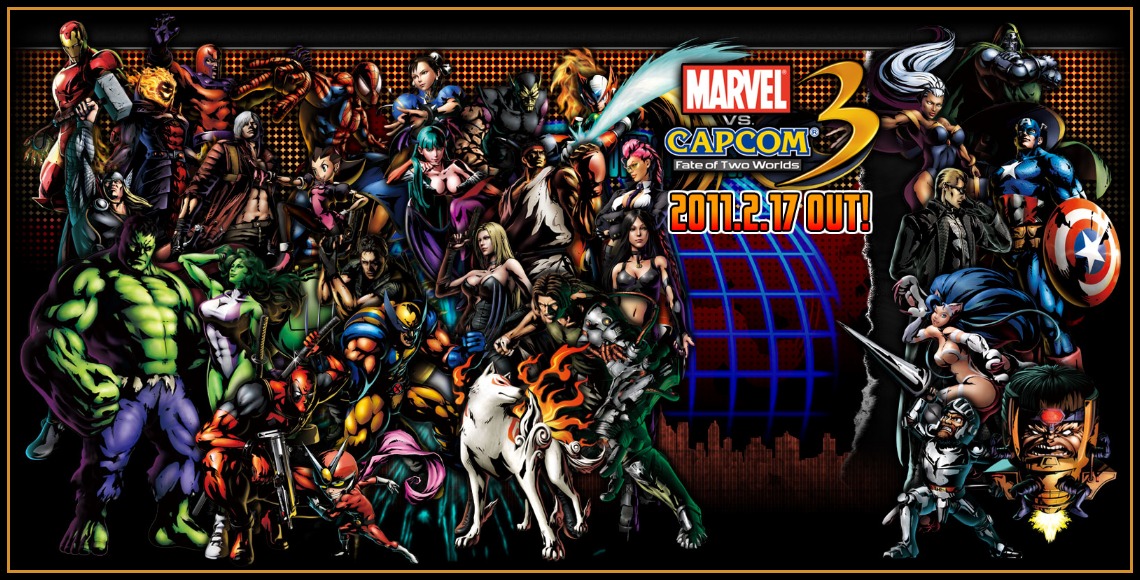
Game Review: Marvel vs. Capcom 3: The Fate of Two Worlds


The Bottom Line

It’s been over a decade (no, seriously! Marvel vs. Capcom 2 came out in 2000! It was on the Dreamcast!) since we last dropped into this remarkable franchise of fighting games. A lot of our favourite characters are missing, but the feel hasn’t changed.

Unfocused Ramblings

As usual, I like to begin these reviews with a boring story about my personal life. About ten years ago, a friend of mine owned the Sega Dreamcast. He never had a ton of games for it, and we all agreed that the controller was preposterously big, but it was probably the console that my group of friends and I played the most during that stretch. Because whatever we thought about the Dreamcast, and however few games there were on it, or however few my friend owned… he did own Marvel vs. Capcom 2. At this point, years later, I don’t even remember much about the fine details of the game. But I do remember its feel… and that feel has returned, to my hazy memory more or less intact, this year with the release of Marvel vs. Capcom 3: The Fate of Two Worlds. So now that I’ve played it, and the excitement is all flooding back to me, the unfortunate truth comes out: for all of its selling points (and it has them to spare) this game is not as much fun as its predecessor.

It’s not. You may think it is, and you may even be having more fun with it now… but it’s a matter of circumstance. And this game is not as much fun as the last one.

Does that mean that Marvel vs. Capcom 3 isn’t a great game? No. Actually, I’ve been impressed by basically everything that I have seen from the new title so far. It has the same feel of the old game. That hyper-frenetic superhero/comic book/action game and so on action is quite intact. You still have the hyper combo bars. You still have three different characters who are flying in and out of the action supporting one another and generally causing some havoc. You can still fill the screen with blasts of energy and crazy attack schemes that seem like no one could ever possibly survive them (and be just as disappointed to see that your opponent blocked in time). In other words, they’ve done a magnificent job of recreating what made Marvel vs. Capcom great. So we can say that this sequel is a faithful one. So what’s the problem?

I’m not sure this game translates as well to playing against faceless strangers on the internet as some of the other fighting games that have come out over time. Of course, it’s not a different experience on XBox Live (or the equivalent service of your choice) but this game, unlike other games, is a more intense frenetic experience and should be less about a cold, tactical approach. To me, this makes it more fun to play with friends than in multi-player match-making. Ultimately, that’s subjective, and if you like fighting games you should enjoy the multi-player experience here as well. Of course, whatever I may say about frenetic superhero/video game combat, the more skillful players of fighting games will still maintain a big advantage in this game due to the huge variety of combos available, even if the move-sets of each character are relatively simple. A lot of universal concepts translate across all characters (such as chaining together flashy aerial or team combos, and the counters to those moves).

The game does offer some options to help teach people about the game-play mechanics. If your fingers aren’t made of steel you may get frustrated attempting to execute long multi-team-mate-extravaganza type combos, but the mission mode (sort of a training mode with specific objectives as far as moves) encourages you to explore chaining moves together (from the basics of knocking a foe in the air and coming down on top of them with a crushing blow all the way to the aforementioned 500000 hit combos). I suspect that if you explore some of these modes, and trouble to learn the moves of a few favourite fighters, you’ll quickly get the hang of winning in this game.

Oh, and don’t be overly troubled by the absence of some Marvel vs. Capcom favourites. I’m sure they will all be available through DLC sooner or later. What’s that, you say? They announced that Jill Valentine and Shuma Gorath will appear as DLC characters even before launch? Let the games begin!

The Big Question

What were they thinking, not including characters like Megaman X? Presumably they were already looking at the prospect of selling DLC packages… but there is an infinite pool of characters to draw on between Marvel and Capcom. It still feels a little cheap to have excised some of the staples that we’ve been playing with since the first installment in the series.

Overall Game-Play

It’s a seamless game-play experience that has more than its fair share of flashy effects and super-cool sets of moves. My one gripe with the game on the whole is the inconsistency in move-sets between the characters, where some of the characters have a huge variety of diverse moves that can work in every situation… while other characters… are basically stuck with a signature move or two and a series of button combos. I can see how the innate attributes of the different fighters necessitate some of this for the purposes of balance, but it’s a little disappointing to find out that a personal favourite character has a lackluster move set. I suspect that this will be the exception rather than the rule for most players, but I do think it’s worth mentioning.

Graphics

It’s not visually breathtaking, but it has a certain (and to my mind, incredibly appropriate) style, and you won’t be disappointed by the attack animations. A ton of unlockable artwork accompanies the game in addition to the rendered character models, and there’s a lot to like with the visuals in this game. More important than the overall graphical presentation is probably the tightness of the experience, which doesn’t seem to have any glitches or bugs to it.

Sound

An upbeat main soundtrack accompanies unique themes for every fighter in the game as well as for the mighty Galactus. You’ll likely recognize a lot of the music as remixes on songs associated with the character in question (for example, Chun-Li’s appearance in a bout is accompanied by an overclocked remix of her battle theme from Street Fighter II) and you’ll probably come to appreciate a few favourites. I didn’t find the score forgettable which is a point in its favour. Obviously there’s not a ton of room for mood music in a fighting game, so the character themes and menu themes are essentially it. As for the voice acting, I haven’t encountered any voices that send me to my knees screaming at the heavens, and I take that to be a good sign. For a handful of bonus points, if you have some good surround sound and bass, you may be blown out of your seat by comments from Galactus, who addresses Thor with a hearty “If you are a god… then what shall we call Galactus!?” and other fun-loving quips.
Classic Game: XCOM: UFO Defense


Those who forget their past; are doomed to forget some incredible games.

I forget who said that, but he must have been a smart man. Going back to the days of DOS games and 3.5 disks, we can still find some gold. In fact, some of the greatest games I’ve ever been played were made before the world had envisioned the idea of a game on a CD-ROM. Well, the greatest squad-based strategy game ever made is just one of these. And you can get it on Steam for a pittance. Really, a pittance of a pittance! I’m talking, of course, about X-COM: UFO Defence (Hereafter referred to simply as X-COM).

People who have played this game are already having some nostalgic flashbacks, and are strongly considering buying it on Steam right now.

For those of you who haven’t played it… read on!

X-COM is a squad-based strategy game that places the player in command of a global counter-alien organization aptly titled X-COM. A completely covert organization, X-COM crosses national boundaries with impunity, and remains hidden from the alien aggressors who haunt the globe. As the theatre commander for this covert organization, you will establish bases across the globe. Each base can house facilities such as alien containment for captives, hangar bays to launch interceptor craft in pursuit of UFOs, laboratories to develop new technologies, and workshops to build weapons. From your initial base, your X-COM organization will grow to protect all of Earth from a merciless and inhuman enemy. It is up to you to save us all.

The game play is based on the Geosphere. In essence, this is a map of the earth which is manipulated through time lapse controls, allowing the player to speed or slow the passage of time. From the Geosphere, the player can access the aforementioned workshops and laboratories, outfit soldiers for battle, and construct new bases and facilities. In addition, the Geosphere map allows the player to monitor alien activity on earth. Each time your base(s) detect UFOs, you can intercept them, shoot them down, and attempt to recover salvage. In addition, you may detect alien bases manufactured on earth, or the aliens may strike on their own, terrorizing Earth cities in an attempt to frighten our governments into submission.

Once you’ve landed at an alien crash site, an active UFO, a terror site, or an alien base, you take command of a squad of soldiers deployed from your landing craft. Equipped with the weapons and armor that you provided them, your soldiers are ready to fight and die at your command. They have various gameplay statistics that will determine how far they can move, how brave they are in the face of adversity, and how accurately they shoot. This squad combat is turn based, and pits a small group of highly-trained soldiers against their enemies. As these soldiers kill aliens and survive their missions, they are advanced in rank and in statistics, moving from squeamishly determined green troops into hardened combat veterans. At the same time, your scientists will learn the secrets of the aliens’ technology, allowing your troops to use fantastic energy weapons and psionic attacks against the invaders.

Strategy game enthusiasts will, almost without variation, love this game. It has incredible depth of strategy, and yet still contains a lot of action. You’ll have to learn the strengths and weaknesses of a variety of alien opponents, and counter them, if you ever intend to defeat the aliens at their base on Mars and stop the invasion of Earth. If you don’t know the joy of X-COM: UFO Defense, then it’s time to run, not walk, to check it out.