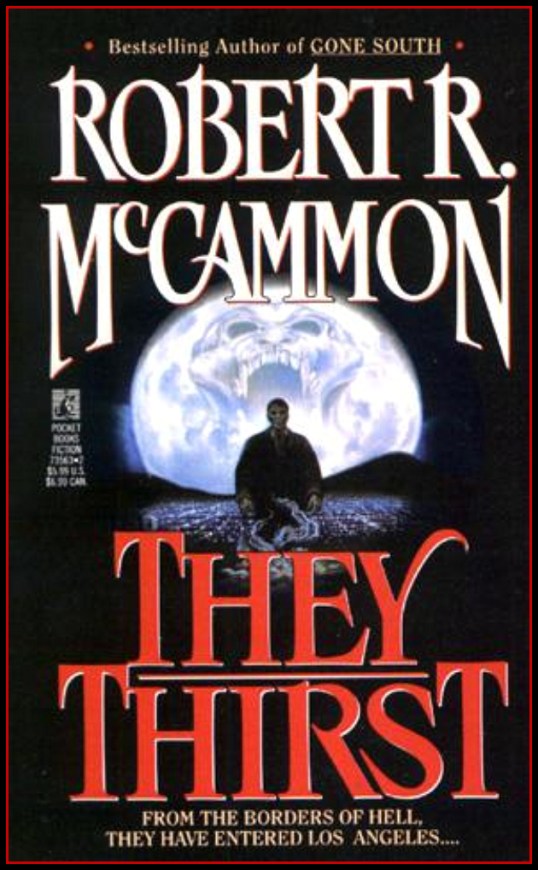
Robert McCammon’s 1981 novel They Thirst stands as a significant yet often overlooked contribution to the vampire horror genre and to modern horror literature more broadly. The novel deftly marries Gothic vampire traditions with contemporary anxieties surrounding urban decay, societal collapse, and the limitations of scientific reasoning. McCammon’s approach—transforming vampirism from a supernatural curse into a viral, apocalyptic force—presents a fresh perspective that elevates the narrative beyond conventional monster fiction. The result is a richly detailed and thought-provoking story that explores not just the nature of evil, but humanity’s fragile relationship with belief, knowledge, and survival.
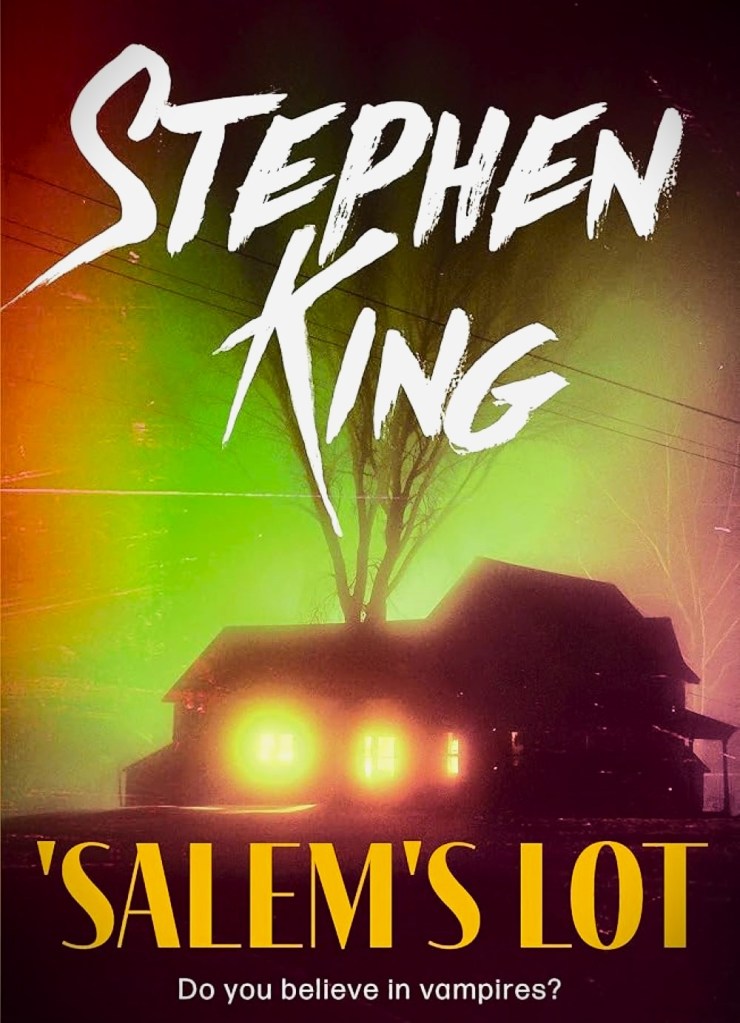
The novel’s geographical and thematic scope is ambitious from the outset. It begins in Eastern Europe, grounding the story firmly in vampire mythology, before making a dramatic shift to Los Angeles, California. This transition is more than a change of location; it serves as a potent narrative device. While Stephen King’s ’Salem’s Lot confines the vampire threat to the insular setting of a small New England town, They Thirst imagines an entire sprawling metropolis consumed from within. Los Angeles—with its sprawling excesses, cultural contrasts, and complicated history—becomes a perfect backdrop for the ancient evil of McCammon’s story. In many ways, the city and the novel’s antagonist are made for one another: Vulkan, a 13th-century Hungarian prince turned vampire, and his undead legion prey on humanity’s vulnerable underbelly, just as Los Angeles has often been depicted as a city feeding off the dreams—and the desperation—of its most naive and downtrodden residents.
This parallel between city and vampire empire is one of the novel’s strongest thematic elements. Both embody forms of false promise: Los Angeles offers fame, wealth, and a kind of modern immortality through celebrity culture, while Vulkan offers literal immortality through vampirism. Yet both promises are double-edged. The city’s glittering surface conceals poverty, violence, and spiritual emptiness; Vulkan’s offer of eternal life masks the curse of undeath and loss of humanity. In that sense, Vulkan and Los Angeles mirror each other, feeding off hope and desperation alike. This symbiotic relationship deepens the horror: it’s not just that vampires invade the city, but that they thrive there because the city, in its essence, is already broken and hungry.
The antagonist, Prince Vulkan, represents the archetypal vampire lord but is also reimagined as a force of apocalyptic renewal. His ambition is to establish a vampiric empire within Los Angeles, turning the city into a dark kingdom under his rule. The irony of this choice is palpable; Los Angeles is a city obsessed with youth, image, and perpetual reinvention, and Vulkan exploits those cultural values by offering something seemingly eternal. His infiltration begins subtly—with grave robberies, disappearances, and escalating violence—until the infestation becomes impossible to ignore. The city’s sprawling nature, its labyrinthine neighborhoods, and its social divides become the perfect terrain for an epidemic to spread unchecked.
McCammon stays true to Bram Stoker’s legacy, incorporating essential vampire lore: vulnerability to sunlight, the necessity of native soil in coffins, and the insatiable craving for blood remain central to the story. But he sets these paranormal elements against a starkly modern world, making their impact feel immediate and unavoidable. One striking subplot involves a wealthy coffin manufacturer whose industrial-scale production unwittingly supports Vulkan’s legion by supplying coffins in large quantities. This detail reinforces the novel’s critique of modernity: progress and capitalism, while often celebrated, can be co-opted by darkness when divorced from awareness and wisdom.
Central to the narrative is the novel’s sharp examination of science and superstition. McCammon critiques modern rationalism’s limits when confronted with the inexplicable. As the vampire epidemic grows, institutions built on evidence and strict rationality—police departments, medical professionals, the press—are shown to be inadequate. Police officers demand forensic proof; scientists dismiss eyewitness accounts as hysteria or fabrication; journalists prioritize sensationalism over truth. This widespread skepticism, while understandable in a culture founded on empiricism, ironically becomes what allows the vampires to thrive. McCammon suggests that humanity’s overreliance on logic and denial is itself a fatal vulnerability. The story implies that what civilization labels “superstition” may hold the very keys to survival against threats outside the realm of science.
This tension—between modern science and the supernatural—gives the novel a distinctively unsettling atmosphere. The city’s collapse is not solely due to the vampires themselves but also because humanity’s intellectual arrogance leaves it vulnerable. The horror grows as reason twists into denial, and disbelief becomes as lethal as the vampires’ bite. McCammon doesn’t dismiss science but critiques a worldview that excludes anything it can’t measure or rationalize. The vampires are, in a way, as much the product of this intellectual blindness as they are physical monsters.
From this thematic core comes one of the novel’s most compelling characters: Detective Andy Palatizin. A man haunted by his past in Hungary, Palatizin has already faced these same creatures in his youth. His instincts and knowledge make him an outlier in the modern police force, where skeptics and bureaucrats dismiss his warnings as superstition. Palatizin’s struggle embodies the tension between ancient wisdom and modern disbelief. Alongside him are characters who represent various facets of Los Angeles life: Wes Richer, a hopeful comedian whose life is upended by the chaos; Solange, his psychic partner who senses the darkness; Tommy Chandler, a youth thrust unwillingly into the fight against evil; and Kobra, a dangerous albino gang leader whose alliance with Vulkan underscores the novel’s bleak view of human nature. Through these characters, McCammon presents a cross-section of humanity reacting to incomprehensible horror in ways both brave and flawed.
The novel’s pacing builds steadily, escalating from subtle unease to urban apocalypse. McCammon’s detailed descriptions of Los Angeles falling apart—freeways clogged with abandoned vehicles, entire neighborhoods burned out, power grids failing—create a vivid portrait of a civilization unraveling. It is in this progression that They Thirst transcends the conventional vampire tale, transforming into a mythic story of apocalypse. The battle grows beyond individual survival into a symbolic contest between light and darkness, belief and denial.
In this way, They Thirst invites comparison not only to ’Salem’s Lot but also to Stephen King’s The Stand. Both novels begin with localized catastrophe but evolve toward apocalyptic narrative arcs that weigh heavily on the theme of good versus evil. Palatizin’s final confrontation with Prince Vulkan mirrors the spiritual and philosophical duels seen in The Stand—a struggle not only between man and monster but between faith and nihilism. This heightened mythic tone gives They Thirst a resonance that extends beyond its genre, engaging with questions about human nature, belief, and the limits of reason.
The novel’s themes also echo the Japanese vampire tale Shiki, which similarly explores a community’s devastating response to supernatural infection and the corrosive effects of denial. Although Shiki is set in a small rural village as opposed to a vast city, both stories articulate the dangers of refusing to confront inconvenient truths, particularly when those truths conflict with scientific rationality or cultural blindness. McCammon’s choice of Los Angeles as a setting magnifies this theme, illustrating how sprawling urban environments—with their anonymity, social stratification, and competing belief systems—become fertile ground for supernatural and existential threats alike.
Moreover, They Thirst represents a crucial moment in Robert McCammon’s development as a writer of expansive horror fiction. The novel’s sophisticated interplay between individual characters and large-scale disaster foreshadows the narrative techniques he would later perfect in Swan Song. If They Thirst can be considered McCammon’s ’Salem’s Lot—an exploration of vampirism growing into an epic struggle—then Swan Song stands as his The Stand—a sweeping post-apocalyptic saga combining horror, hope, and human resilience on a grand scale. Seen in this light, They Thirst is not only a memorable and impactful vampire narrative but also the author’s foundational work in epic horror storytelling.
In sum, They Thirst is a novel of considerable ambition and thematic richness. It successfully unites Gothic vampire mythology with contemporary social concerns, delivering a story that is both thrilling and intellectually engaging. The interplay of science and superstition, the vivid portrayal of Los Angeles as a city on the brink, and the moral complexity of its characters elevate the book beyond simple genre fare. This novel offers a challenging and unforgettable journey — a reminder that some darkness is older than reason and that even the brightest city lights may hide the longest shadows.
Would further assistance be welcome in preparing this review for publication or tailoring it to a specific format or audience?Robert McCammon’s 1981 novel They Thirst stands as a significant yet often overlooked contribution to the vampire horror genre and to modern horror literature more broadly. The novel deftly marries Gothic vampire traditions with contemporary anxieties surrounding urban decay, societal collapse, and the limitations of scientific reasoning. McCammon’s approach—transforming vampirism from a supernatural curse into a viral, apocalyptic force—presents a fresh perspective that elevates the narrative beyond conventional monster fiction. The result is a richly detailed and thought-provoking story that explores not just the nature of evil, but humanity’s fragile relationship with belief, knowledge, and survival.
The novel’s geographical and thematic scope is ambitious from the outset. It begins in Eastern Europe, grounding the story firmly in vampire mythology, before making a dramatic shift to Los Angeles, California. This transition is more than a change of location; it serves as a potent narrative device. While Stephen King’s ’Salem’s Lot confines the vampire threat to the insular setting of a small New England town, They Thirst imagines an entire sprawling metropolis consumed from within. Los Angeles—with its sprawling excesses, cultural contrasts, and complicated history—becomes a perfect backdrop for the ancient evil of McCammon’s story. In many ways, the city and the novel’s antagonist are made for one another: Vulkan, a 13th-century Hungarian prince turned vampire, and his undead legion prey on humanity’s vulnerable underbelly, just as Los Angeles has often been depicted as a city feeding off the dreams—and the desperation—of its most naive and downtrodden residents.
This parallel between city and vampire empire is one of the novel’s strongest thematic elements. Both embody forms of false promise: Los Angeles offers fame, wealth, and a kind of modern immortality through celebrity culture, while Vulkan offers literal immortality through vampirism. Yet both promises are double-edged. The city’s glittering surface conceals poverty, violence, and spiritual emptiness; Vulkan’s offer of eternal life masks the curse of undeath and loss of humanity. In that sense, Vulkan and Los Angeles mirror each other, feeding off hope and desperation alike. This symbiotic relationship deepens the horror: it’s not just that vampires invade the city, but that they thrive there because the city, in its essence, is already broken and hungry.
The antagonist, Prince Vulkan, represents the archetypal vampire lord but is also reimagined as a force of apocalyptic renewal. His ambition is to establish a vampiric empire within Los Angeles, turning the city into a dark kingdom under his rule. The irony of this choice is palpable; Los Angeles is a city obsessed with youth, image, and perpetual reinvention, and Vulkan exploits those cultural values by offering something seemingly eternal. His infiltration begins subtly—with grave robberies, disappearances, and escalating violence—until the infestation becomes impossible to ignore. The city’s sprawling nature, its labyrinthine neighborhoods, and its social divides become the perfect terrain for an epidemic to spread unchecked.
McCammon stays true to Bram Stoker’s legacy, incorporating essential vampire lore: vulnerability to sunlight, the necessity of native soil in coffins, and the insatiable craving for blood remain central to the story. But he sets these paranormal elements against a starkly modern world, making their impact feel immediate and unavoidable. One striking subplot involves a wealthy coffin manufacturer whose industrial-scale production unwittingly supports Vulkan’s legion by supplying coffins in large quantities. This detail reinforces the novel’s critique of modernity: progress and capitalism, while often celebrated, can be co-opted by darkness when divorced from awareness and wisdom.
Central to the narrative is the novel’s sharp examination of science and superstition. McCammon critiques modern rationalism’s limits when confronted with the inexplicable. As the vampire epidemic grows, institutions built on evidence and strict rationality—police departments, medical professionals, the press—are shown to be inadequate. Police officers demand forensic proof; scientists dismiss eyewitness accounts as hysteria or fabrication; journalists prioritize sensationalism over truth. This widespread skepticism, while understandable in a culture founded on empiricism, ironically becomes what allows the vampires to thrive. McCammon suggests that humanity’s overreliance on logic and denial is itself a fatal vulnerability. The story implies that what civilization labels “superstition” may hold the very keys to survival against threats outside the realm of science.
This tension—between modern science and the supernatural—gives the novel a distinctively unsettling atmosphere. The city’s collapse is not solely due to the vampires themselves but also because humanity’s intellectual arrogance leaves it vulnerable. The horror grows as reason twists into denial, and disbelief becomes as lethal as the vampires’ bite. McCammon doesn’t dismiss science but critiques a worldview that excludes anything it can’t measure or rationalize. The vampires are, in a way, as much the product of this intellectual blindness as they are physical monsters.
From this thematic core comes one of the novel’s most compelling characters: Detective Andy Palatizin. A man haunted by his past in Hungary, Palatizin has already faced these same creatures in his youth. His instincts and knowledge make him an outlier in the modern police force, where skeptics and bureaucrats dismiss his warnings as superstition. Palatizin’s struggle embodies the tension between ancient wisdom and modern disbelief. Alongside him are characters who represent various facets of Los Angeles life: Wes Richer, a hopeful comedian whose life is upended by the chaos; Solange, his psychic partner who senses the darkness; Tommy Chandler, a youth thrust unwillingly into the fight against evil; and Kobra, a dangerous albino gang leader whose alliance with Vulkan underscores the novel’s bleak view of human nature. Through these characters, McCammon presents a cross-section of humanity reacting to incomprehensible horror in ways both brave and flawed.
The novel’s pacing builds steadily, escalating from subtle unease to urban apocalypse. McCammon’s detailed descriptions of Los Angeles falling apart—freeways clogged with abandoned vehicles, entire neighborhoods burned out, power grids failing—create a vivid portrait of a civilization unraveling. It is in this progression that They Thirst transcends the conventional vampire tale, transforming into a mythic story of apocalypse. The battle grows beyond individual survival into a symbolic contest between light and darkness, belief and denial.
In this way, They Thirst invites comparison not only to ’Salem’s Lot but also to Stephen King’s The Stand. Both novels begin with localized catastrophe but evolve toward apocalyptic narrative arcs that weigh heavily on the theme of good versus evil. Palatizin’s final confrontation with Prince Vulkan mirrors the spiritual and philosophical duels seen in The Stand—a struggle not only between man and monster but between faith and nihilism. This heightened mythic tone gives They Thirst a resonance that extends beyond its genre, engaging with questions about human nature, belief, and the limits of reason.
The novel’s themes also echo the Japanese vampire tale Shiki, which similarly explores a community’s devastating response to supernatural infection and the corrosive effects of denial. Although Shiki is set in a small rural village as opposed to a vast city, both stories articulate the dangers of refusing to confront inconvenient truths, particularly when those truths conflict with scientific rationality or cultural blindness. McCammon’s choice of Los Angeles as a setting magnifies this theme, illustrating how sprawling urban environments—with their anonymity, social stratification, and competing belief systems—become fertile ground for supernatural and existential threats alike.
Moreover, They Thirst represents a crucial moment in Robert McCammon’s development as a writer of expansive horror fiction. The novel’s sophisticated interplay between individual characters and large-scale disaster foreshadows the narrative techniques he would later perfect in Swan Song. If They Thirst can be considered McCammon’s ’Salem’s Lot—an exploration of vampirism growing into an epic struggle—then Swan Song stands as his The Stand—a sweeping post-apocalyptic saga combining horror, hope, and human resilience on a grand scale. Seen in this light, They Thirst is not only a memorable and impactful vampire narrative but also the author’s foundational work in epic horror storytelling.
In sum, They Thirst is a novel of considerable ambition and thematic richness. It successfully unites Gothic vampire mythology with contemporary social concerns, delivering a story that is both thrilling and intellectually engaging. The interplay of science and superstition, the vivid portrayal of Los Angeles as a city on the brink, and the moral complexity of its characters elevate the book beyond simple genre fare. This novel offers a challenging and unforgettable journey — a reminder that some darkness is older than reason and that even the brightest city lights may hide the longest shadows.
 Through the Shattered Lens