So, the latest “Song of the Day” comes courtesy of Led Zeppelin and also in no small part from the release of the first trailer for the third Thor in the MCU (that’s Marvel Cinematic Universe for those who have been living in a cave the last 10 years).
“Immigrant Song” has been used in past trailers though not as often as people think. Led Zeppelin has been very selective of who uses (and pays) for the license to use their songs.
Whether the song makes it into Thor: Ragnarok still to be determined, but it definitely fits the trailer as it sings of Vikings and their call to ship off to find new lands, adventure and battle.
So, yes, Lisa Marie, that song in the Thor: Ragnarok teaser trailer was definitely Led Zeppelin.
Immigrant Song
We come from the land of the ice and snow
From the midnight sun where the hot springs blow
Hammer of the gods will drive our ships to new lands
To fight the horde and sing and cry
Valhalla, I am coming
On we sweep with the threshing oar
Our only goal will be the western shore
We come from the land of the ice and snow
From the midnight sun where the hot springs blow
How soft your fields so green can whisper tales of gore
Of how we calmed the tides of war
We are your overlords
On we sweep with the threshing oar
Our only goal will be the western shore
So now you’d better stop and rebuild all your ruins
For peace and trust can win the day despite of all your losing
This pick for song of the day marks the fifth time the “Bards” from Germany has made an appearance. This song marks the third track to be chosen from their latest album, At The Edge of Time. To say that I am a fan of Blind Guardian would be just a tad bit of an understatement.
“Valkyries” is the latest song of the day and it’s Blind Guardian at their most progressive metal. As a band they’ve grown from a German speed and thrash metal band then became one of the progenitors of the power metal subgenre. For the past dozen or so years they’ve evolved their sound to incorporate progressive, melodic, symphonic and orchestral stylings to their basic power metal sound.
This song has lead bard Hansi Kürsch writing about Norse mythology, specifically the concept of the Valkyries who fly and roam above the battlefield to take those…
Geri and Freki does Heerfather feed, / the far-famed fighter of old, / but on wine alone does the one-eyed god / Wuotan forever live.
O’er Midgard Hugin and Munin both / each day set forth to fly. / For Hugin I fear lest he come not home. / but for Munin my care is more.
There Valgrind stands, the sacred gate, / and behind, the holy doors. / Old is the gate, but few there are / who can tell how it’s tightly locked.
Five hundred doors and forty there are, / I ween, in Walhall’s walls. / Eight hundred fighters through one door fare / when to war with the wolf they go.
Five hundred rooms and forty there are, / I ween, in Bilskirnir built. / Of all the homes whose roofs I beheld / my son’s the greatest meseemed.
There is Folkvang, where Freyja decrees / who shall have seats in the hall. / The half of the dead each day does she choose. / The other half does Othin have.
There is Gladsheim, and golden-bright / there stands Walhall stretching wide. / There does Othin each day choose / all those who fell in fight.
Now am I Othin, Ygg was I once. / Ere that did they call me Thund. / Wodan and Oden, and all, methinks / are the names for none but me.
Hail to thee, for hailed thou art / by the voice of Veratyr. / Where Valgrind stands, the sacred gate, / ye will find nine golden doors.
Hail to thee, for hailed thou art / by the voice of Veratyr. / Old is the gate, but few there are / who can tell how it’s tightly locked.
Where His Ravens Fly…
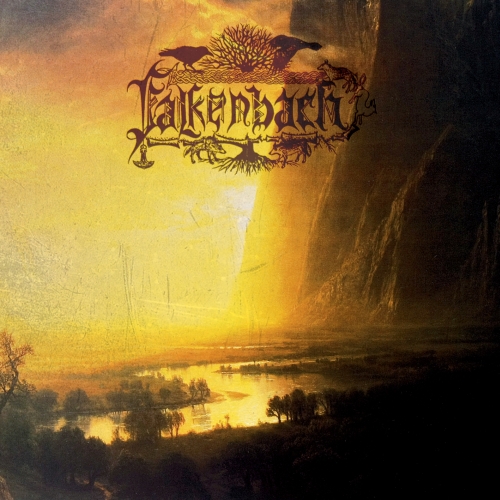
Far from a simple “see you in Valhalla,” Tiurida begins with a faring off worthy of kings, and even before understanding the lyrics you can feel their power in the music. Falkenbach’s 22 years of existence could be described as an effort to express the shared values, traditions, and beliefs of pre-Christian Europe. Written into the music just as much as the lyrics is a reverence for a greater age of man, in which fear and submission had not yet taken the place of mystery and honor. At least, that is what I have always taken out of his works, and perhaps it is why, in spite of the minimal variation in his sound over the years, I’ve always looked to new Falkenbach albums with a sort of reverence.
I never quite got the complaints that every Falkenbach album sounds the same–that he has eschewed developing as a musician and merely continued to produce the same thing over and over again. For while this is certainly true, especially of his last three albums, I would never want anything different. I would gladly take a hundred songs just like Where His Ravens Fly over any change that might cease to capture so fully the essence I’ve described.
Tanfana
I regard Tiurida as a phenomenal success, and possibly the best album of the year. Excluding the decidedly darker and heavier track Time Between Dog and Wolf, what you get on this album are five hymns. There is seldom any anxiety–no desperate or aggressive calls to return to past values, as so many other pagan bands manifest (with much success.) The lyrics are in the present tense, and so, in a sense, is the music. It’s hard to put my finger on what exactly I mean by this last comment, but it definitely lies in the folk side of his sound.
Tanfana is an instrumental song referring to a Germanic goddess of which very little is known. Tacitus’ mention of her in the 1st century is the only surviving source. Fitting, then, that the song should have no lyrics. This song is a very standard representation of how Vratyas Vakyas goes about employing folk music. A few things should stand out right away: The woodwinds are all synthesized; there are no actually traditional instruments at work here. Furthermore, they aren’t being played in any sort of traditional way, with any degree of diversity or improvisation. They are locked into the pace of the song and feel more like a sound sample loop than something performed live in studio.
The effects of this have to be significant, because it’s really what characterizes the folk element of almost all of Falkenbach’s songs. Well, two things stand out to me. Whether we’re talking monks or Burzum or really bad techno, there’s something inescapable about chanting effects. The repetition zones you in and forces you to experience the music in the here and now, whether you want to or not. It creates a heightened awareness of your present state of being. (And it might be why alcohol makes most awful music sound even worse but really bad techno sound awesome, but I’m getting way off focus now.) My point is that an element of this is present in Falkenbach’s sound, not only in the plodding progression of the drums and guitar, but in the folk. The other thing is that the folk instrumentation, being synthetic, bears a commonality with the more standard keyboard choruses he uses. Actual folk instrumentation generally calls to mind an image of something decidedly non-modern, but here there’s very little gap.
So when I say the music is in the present tense, what I mean is that his sound both evades my preconceived disconnection between folk and modernity and zones me into the moment–not of the music, but the on-going present state. Am I just babbling now? Perhaps, but it’s interesting to try and understand what about his sound appeals to me so distinctly from any other band describable as folk/viking/pagan metal. I think that, instead of taking me into the past, it has a sort of capacity to bring the past to me and blur any distinction.
Sunnavend
I suppose we all have particular bands and songs that move us in a personal way and might not have any such effect on anyone else. Falkenbach is just one of those bands for me. I don’t ever want his sound to change, and I’m so glad that on Tiurida it didn’t. This music gives me a unique sort of peace of mind–a feeling that lofty visions of the past aren’t mere idealizations or lost causes, but are entirely realizable in the present. This music is a hymn to the immortal, personified through gods whom modern society has yet to blaspheme.


 Through the Shattered Lens