Late Night Retro Television Review: Baywatch Nights 1.22 “Heat Rays”


Welcome to Late Night Retro Television Reviews, a feature where we review some of our favorite and least favorite shows of the past!  On Tuesdays, I will be reviewing Baywatch Nights, a detective show that ran in Syndication from 1995 to 1997.  The entire show is currently streaming on You tube!
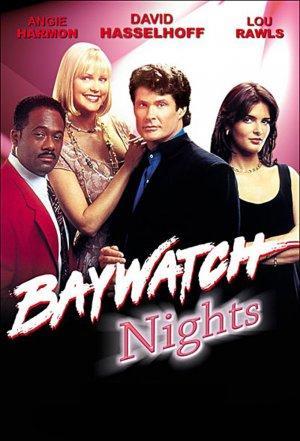
This week, season one comes to a close.

Episode 1.22 “Heat Rays”

(Dir by Peter Roger Hunt, originally aired on May 18th, 1996)

The first season wraps up with an episode that doesn’t really add up too much.

As was typical of the latter half of this show’s first season, this episode actually tells two separate stories.  In the first one, Donna is stopped while driving at night by three panicked people on a bridge.  They say that their friend is in the water below.  Donna jumps into the ocean, just to discover that it was all a trick to steal her car.

Donna floats around for a while.  She passes the time by talking to herself.  To be honest, she holds up surprisingly well for someone who is stranded in the middle of the ocean.  Eventually, a boat stops to help her.  Unfortunately, the two men on the boat are drug dealers and, when they’re both shot by a bunch of guys on a bigger boat, it’s up to Donna to save them and get them to dry land.

That may sound like an intriguing storyline but, oddly enough, it gets abandoned fairly quickly.  I kept waiting for Donna’s storyline to somehow intersect with the other storyline but it never did.  No one even thought to say, “Hey, where’s Donna?”  If I was Donna, I would be pretty mad about that.

As for the other storyline, it features Mitch, Garner, and Ryan investigating a series of murders and attempted murders that all involve the members of an old surf band called The Heat Rays.  It ultimately turns out that they’re being targeted by the daughter (Christa Sauls) of a woman (played by Judy Geeson) who was raped by several members of the band.

Again, that may sound like a storyline that has the potential to be intriguing.  And there is an interesting subtext to the story, as Mitch and Garner are forced to admit that their favorite band wasn’t as innocent and wholesome as they chose to remember.  But, in typical Baywatch Nights fashion, the story was a bit too predictable to really work.  It was easy to figure out who the murderer was because there was really only one suspect from the start.

This episode had a violent streak just felt out of place.  Baywatch Nights, in both its first season and its supernatural-themed second season, was essentially a goofy detective show starring David Hasselhoff.  Having multiple people die over the course of one episode just didn’t feel right for such a lightweight show.  Some shows are meant to be violent.  Some shows are at their best when they embrace their inherent silliness.  Baywatch Nights is the latter type of show.

So much for the first season.  Unfortunately, the show never really found a consistent identity or style during the first season.  However, that would change with the second season.

We’ll find out how next week!
Cleaning Out The DVR: Fury To Freedom (dir by Erik Jacobson)


It’s that time of year again!  It’s the time when entertainment hoarders like me take a look at our DVR and discover, to our horror, that we’ve only got about 3 hours of space left.  When that happens, it means that it’s time clean out the DVR and hopefully make some space before 2021 brings a whole new collection of shows and movies to be recorded.

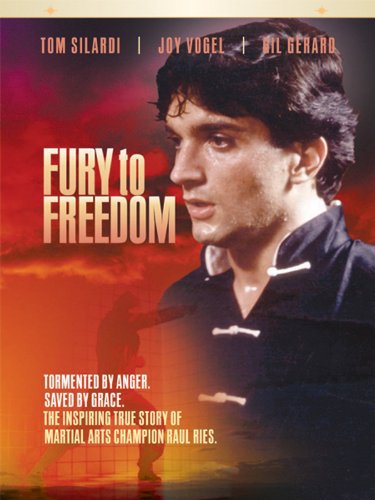
Yesterday, I got a start on cleaning out my DVR by watching the 1985 film, Fury to Freedom.  I originally recorded it back in August and I’m going to guess that I did so because I liked the title.  Fury by itself is good.  Freedom is even better.  Put them together and you’ve got something I’m definitely going to record!

As for the movie itself, it was obviously a low-budget and independently made movie.  I’m guessing that it was specifically made to be shown to church groups.  It’s one of those films that tells the true story of a sinner who becomes an evangelist.  It ends with preaching but, before you reach that point, you’ve got about an hour or so of sinning.  It’s the old Cecil B. DeMille method.

The film tells the story of Raul Ries (Tom Silardi), a teenager who grew up in an abusive home and constantly finds himself in a conflict over whether or not to do the right thing.  His girlfriend, Sharon (Joy Vogel), always pushes him to follow the right path.  All of Raul’s friends are always pushing him to follow the wrong path.  As for Raul, he just wants to earn a black belt in karate but the local sensei doesn’t think he’s ready to learn.

After Raul loses his tempter at a party and slashes someone’s face (agck!), he ends up joining the Marines and getting trained to fight in Vietnam.  (I was pretty sure that, during the basic training scene, I spotted a young Jon Favreau as one of the Marines but, according to the imdb, it was someone else.)  Anyway, Raul actually does pretty well in basic training but then he fakes a breakdown to get out of serving in Vietnam.  He returns home, knocks up his girlfriend, gets stuck in a go-nowhere job at a grocery store, and eventually he somehow opens up his own dojo.

Anyway, after about an hour or so of Raul being a jerk and hitting Sharon, he reaches the point where he’s contemplating committing a murder/suicide but then he sees a preacher on TV and, the next thing you know, he’s going to his old high school and preaching.  “Yo!  Listen up!” he yells at the students.

It was kind of a predictable film but it was also sincere in its goals and nowhere near as preachy as you might expect given the subject matter.  Tom Silardi and Joy Vogel both gave good performances as Raul and Joy and the film deserve some credit for resisting the urge to use Buffalo Springfield’s For What It’s Worth as an easy way to establish that it was taking place in the 60s.  Probably the most interesting thing about this film is that it was obviously made in the wake of the success of The Karate Kid because it spends as much time on the karate as it does on the religion.

Fury to Freedom was an effective, low-budget, and very sincere film.  And now, it’s off of my DVR.