4 Or More Shots From 4 Or More Films is just what it says it is, 4 shots from 4 of our favorite films. As opposed to the reviews and recaps that we usually post, 4 Shots From 4 Films lets the visuals do the talking!
Today, we pay tribute to the man who gave us Billy Jack. It’s time for….
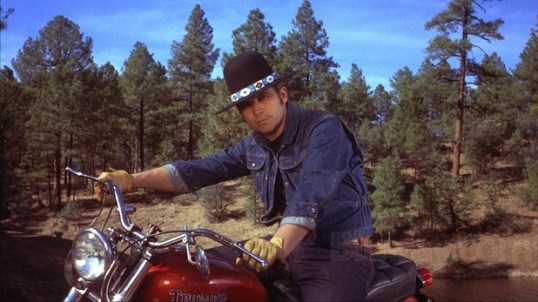
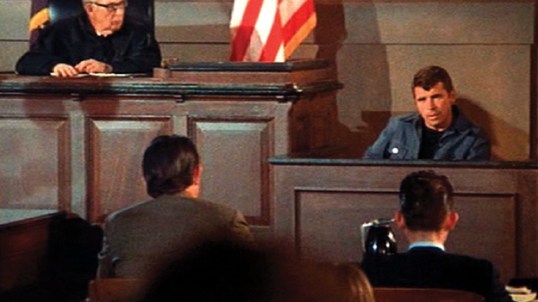
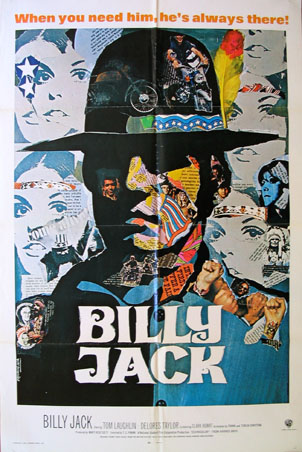
4 Shots From 4 Tom Laughlin Films
Born Losers (1967, dir by Tom Laughlin)
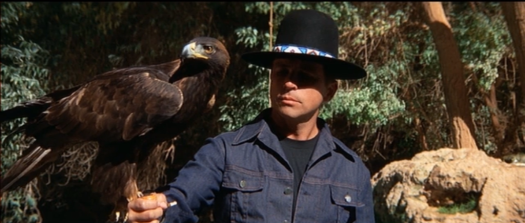
Billy Jack (1971, dir by Tom Laughlin)
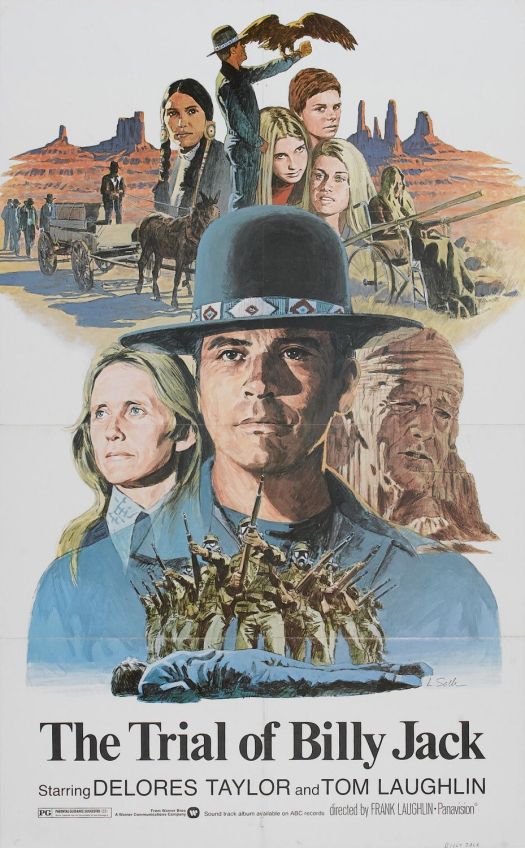
The Trial of Bully Jack (1974, dir by Tom Laughlin)
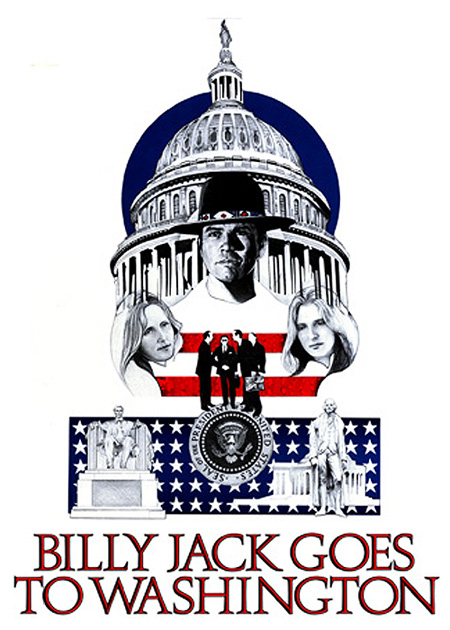
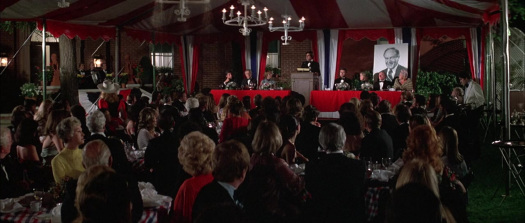
Billy Jack Goes To Washington (1977, dir by Tom Laughlin)
Today would have been the 94th birthday of Tom Laughlin, the independent film pioneer who gave the world Billy Jack.
In honor of the day of his birth, here’s a scene that I love from Billy Jack. The townspeople think that they can get away with humiliating the students from the Freedom School. Well, Billy Jack’s got something to say about that and, as always, it starts with him taking off his shoes.
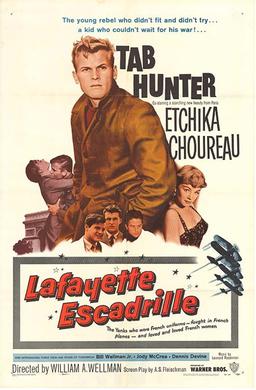
In the days leading up to World War I, spoiled rich kid Thad Walker (Tab Hunter) flees Boston after getting hit with a car theft charge and ends up in Paris. He befriends a group of American expatriates (including David Janssen, Will Hutchins, Jody McCrea, and William Wellman, Jr.) and eventually joins the French Air Force as a members of the Lafayette Escadrille. Thad also falls in love with a French prostitute named Renee (Etchika Choureau) and, after Thad strikes a French officer, he goes on the run with her.
I always wonder how many people have watched this film over the years because of the presence of a young Clint Eastwood in the cast, just to discover that he doesn’t get many lines and his character is largely interchangeable with the other young actors playing the members of the Lafayette Escadrille. This is a Tab Hunter movie, meaning that the action is dominated by Hunter’s sincere but bland screen persona. Director William Wellman wanted to cast Paul Newman in the lead role and that would have been something to see. Instead, the studio insisted on Hunter. They also insisted that Wellman change the film’s ending so that Hunter could survive instead of getting shot down on his very first mission. William Wellman was so disgusted with the studio that he retired from directing.
What had to make it all especially galling for the director was that LafayetteEscadrille was based on his own life. His son, William Wellman Jr., plays “Bill Wellman” in the film and Thad was based on actual friend of Wellman’s. The film was meant to be a tribute to his friends, many of whom did not survive World War I. Instead, the studio insisted that it be just another Tab Hunter service comedy. The best scenes are the ones where it’s just Thad and his friends trying to make it through basic training. Unfortunately, those scenes are overshadowed by Thad on the run.
The film is still there for those of us who enjoy catching future stars. Clint Eastwood, David Janssen, Tom Laughlin, Will Hutchins, Brett Halsey, and Jody McCrea are all present and accounted for. Rumor has it that James Garner can spotted in the background but I couldn’t find him and Garner had already co-starred with Brando in Sayonara when this move was made so I doubt he was doing background work. Tab Hunter’s blandness sinks the production but the rest of the cast would go on to better things.
Charles Bronson began acting in movies and on TV shows in 1951. Through the mid-fifties, he established himself as a solid character actor with a strong physical screen presence. Beginning in October of 1958, he was given the opportunity to headline his own TV show, MAN WITH A CAMERA. The show, which ran for 29 episodes, features Bronson as a freelance photographer from New York named Mike Kovac, a guy who specializes in the difficult and dangerous assignments that his peers stay away from. Always on the side of truth and justice, Kovak will do anything to get the picture.
In the first episode of the series, Mike Kovac (Charles Bronson) wants to get a picture of his old neighborhood pal, Joey Savoyan (Tom Laughlin). Joey has risen in the boxing ranks, and is getting a title shot at the champ, Sal Benning (Don Kennedy). But it seems that success has changed Joey from the guy Mike knew, and there have been many reports that he’s turned into a jerk who’d rather punch a reporter or photographer than look at them. When Mike goes to Joey’s training camp, and proceeds to tell him that his attitude is an embarrassment to the people pulling for him back home, Joey gets pissed and the two men end up in the ring. Apparently Mike could whip him back in the day, but times have changed and after absorbing a few of Mike’s jabs, Joey lays his ass out cold with one punch. The photograph that makes the papers that night is Mike laying flat on his back with the headline “Joey Savoyan puts ace photographer in darkroom!” Licking his wounds with spare ribs at a local restaurant that night, another pal from the old neighborhood shows up to see him. This time it’s Dolly (Ruta Lee), Joey’s main squeeze, who’s there on his behalf. Joey’s in trouble and needs Mike’s help. Mike goes out to Joey’s cabin where he’s filled in on the truth. The reports of his punching photographers and reporters were all made up to create his “killer” image. What’s even worse is the fact that Joey had found out the day before that the fights he had won to get the title shot were all fixed. Now, gangster Willie Fletcher (Theodore Marcuse) is putting the pressure on him to take a dive. Joey doesn’t want to do it, so he asks Mike to get a picture of him, Willie, and the champ planning the fix that night. He believes he can use this picture as leverage to turn the dangerous mobster down. It wouldn’t be much of a show if things went exactly as planned, and the fun is seeing how it all plays out!
The series MAN WITH A CAMERA stretches our ability to suspend our disbelief right off the bat, when it asks us to accept that anyone, including Billy Jack himself, could lay out Charles Bronson with one punch. The fact that Bronson is shirtless, revealing muscle on top of muscle, makes it that much harder to believe. That lack of realism aside, I really did enjoy this first episode. Bronson plays Mike Kovac with a determination and uncompromising integrity that lets us know right off the bat that he will do whatever it takes to get to the truth, and that he doesn’t care who he has to piss off to accomplish that goal. He seems fearless and very tough. When the gangster Willie Fletcher, who’s known for using his gun, threatens Mike, he responds with “Boy, you talk tough… you scare me, Willie” in a way that would indicate it’s impossible to scare him and you get the feeling he can back it up. As a lifelong fan of Bronson, it’s nice seeing his powerful screen charisma and toughness come across so easily at this early point in his career. It’s also fun seeing Bronson and Tom Laughlin on screen together, even if the writers came up with the unrealistic scenario that I discussed earlier. I have to admit I would love to see Billy Jack take on Chaney from HARD TIMES. I think that would be one hell of a show!
This is a solid first episode, and I’m looking to see where the show heads from here. I’ve watched various episodes of MAN WITH A CAMERA over the years, but this will be first time I’ve ever started from the beginning and watched and reviewed each episode. Although he’s only talked about in episode 1, I remember Mike’s dad being a fairly big part of the series. Father/son relationships on TV and in movies are my favorites, so I’m looking forward to seeing that play out. If Tom Laughlin is any example, I’m also looking forward to the quality of guest stars we’ll be seeing. A quick look on IMDB reveals actors like Don Gordon, Angie Dickinson, Gavin McLeod, and Lawrence Tierney will be showing up throughout the series. This should be a lot of fun!
This is from 1974’s The Trial of Billy Jack. Yes, Billy Jack killed a lot of people and broke a lot of laws but ultimately, he was just a man who protected animals, children, and other living things.
shed a tear, running deer don’t turn back billy jack i am crying, are you dying just for me?
whenever trouble came about i could feel you coming out you were there, i could feel you in the air when anyone had a happy moment to share you were there when anyone had a burden they couldn’t bare you were there to share the load
shed a tear, running deer don’t turn back billy jack i am crying, are you dying just for me?
when they took you from the church i couldn’t bare to watch the town stare you aren’t an animal, you’re a man it wasn’t fair, it just wasn’t fair and they trialed you for murder they said you were guilty, it just wasn’t fair wanted to tell them they were unjust i didn’t dare, i could only stare what will happen to you now you’ve got to live, but i don’t know how i am crying, are you dying just for me?
shed a tear, running deer don’t turn back billy jack i am crying, are you dying just for me?
First released in 1957 and filmed on a $63,000 budget in Kansas City, The Delinquents tells the story of Scotty White (Tom Laughlin).
Scotty is eighteen. He’s not a bad kid. He’s just a bit directionless and he’s got a slight rebellious streak. Today, Scotty would not be considered to be that wild of a teenager but, by the standards of 1957, he’s dangerous. He’s a criminal. He’s a rebel. He’s an outsider. He’s a degenerate. He’s a delinquent and it doesn’t matter how in love he and 16 year-old Janice (Rosemary Howard) may be, Janice’s parents don’t want Scotty anywhere near their daughter. She’s too young to date, they say. Scott’s got a bed reputation, they say. Scotty is set to soon leave for college and he’s got his entire future ahead of him. But it doesn’t seem like much of a future without Janice as a part of it.
Poor guy! Is it any surprise that he ends up hanging out with two legitimate delinquents, Cholly (Peter Miller) and Eddy (Richard Bakalyan)? At first, Cholly and Eddy seem like great friends to have. They even come up with a scheme to allow Scotty to spend some time with Janice. (The plan doesn’t work, of course. But it’s the thought that counts.) However, when the police show up to bust a wild delinquent party, Cholly and Eddy suspect that Scotty might be a rat! When their attempts to get Scotty drunk enough to confess fail, they end up driving a passed out Scotty into the country so they can dump him on the side of the road. However, they decide to stop to rob a gas station first. Believe it or not, this leads to even more trouble.
It also leads to the question of why they couldn’t have waited to rob the gas station until after they got Scotty out of the car. Watching The Delinquents, I came to suspect that many of the characters just weren’t that smart. Seriously, how difficult is it to be a delinquent in Kansas City? But as dumb as Cholly and Eddy were, Scotty was even dumber because he continually got outsmarted by the both of them. Maybe Janice’s parents had a point about him….
The Delinquents is pretty much a standard youth-in-trouble exploitation film, one that owes more than a little bit of debt to Rebel Without A Cause. The main reason why anyone would watch the film is because it was not only the directorial debut of Robert Altman but also the acting debut of Tom “Billy Jack” Laughlin. And let’s give credit where credit is due. Though I doubt either one of them would have claimed this film as an example of their best work, there is some obvious talent to found in The Delinquents. Laughlin gives an appealing performance, even though Scotty’s an idiot. And Altman keeps the action moving and even manages to come up with some visually striking sequences, like the opening jazz performance and the “wild” delinquent party. Viewed today, The Delinquents is an interesting preview of what was to come for both Altman and Laughlin. Though the plot is nothing special and it’s hard not to laugh at the portentous narration (which was apparently added by the studio and without Altman’s knowledge), The Delinquents is an energetic exploitation film and a reminder that even Kansas City had its mean streets.
Today would have been the 91st birthday of Tom Laughlin, the independent film pioneer who gave the world Billy Jack.
In honor of the day of his birth, here’s a scene that I love from Billy Jack. The townspeople think that they can get away with humiliating the students from the Freedom School. Well, Billy Jack’s got something to say about that and, as always, it starts with him taking off his shoes.
Monday would have been the 90th birthday of Tom Laughlin, the actor who revolutionized independent American cinema through his Billy Jack films.
In four films, Laughlin played Billy Jack, an American Navajo, a former Green Beret, a veteran of the Vietnam War, a hapkido master, and a man who just protects children and other living things. When he first appeared in 1967’s TheBornLosers, he was protecting a woman from bikers. In 1971’s BillyJack, he was protecting the Freedom School from ignorant townspeople. In 1974’s TheTrialofBillyJack, he was …. well, in that film, Billy Jack did a little bit of everything but the National Guard still ended up destroying the Freedom School. Finally, in 1977’s BillyJackGoesToWashington, Billy was appointed to the United Stated Senate because what else are you going to do with someone who has killed a tremendous amount of people over the course of three films?
(Of course, in Senator Jack’s defense, they were all bad people.)
Laughlin not only starred as Billy Jack but he also directed all four of the films and, starting with BillyJack, he also handled the distribution of them. A huge box office hit, BillyJack is considered to be a seminal counter culture film. The other three films are a bit less acclaimed and TrialofBillyJack is often cited as one of the most pretentious and self-indulgent films ever made. But, regardless of their individual artistic merits, all of the Billy Jack films share an appealing mix of sincerity and silliness. Laughlin was a good actor and, visually, he was a stronger director than he was often given credit for. Some of the shots in the original Billy Jack are breath-taking. At a time when even self-styled progressive films still portrayed women in the most condescending and demeaning way possible (check out GettingStraight or R.P.M., if you dare), the BillyJack films were as much about Jean (played by Delores Taylor, Laughlin’s wife and creative partner), the founder of the Freedom School, and her beliefs, as they were about Billy Jack and his struggles to accept pacifism. If nothing else, the Billy Jack films featured actual conversations and debates about actual ideologies and philosophies, as opposed to the usual shallow Hollywood politics. Unfortunately, Laughlin was also a heavy-handed storyteller and a terrible editor. TheTrialofBillyJack goes on for three hours.
And yet, of all the BillyJack films, TheTrialofBillyJack is my favorite. It’s just so weird that it’s hard not to like it. It’s a film that doesn’t really work but, at the same time, you can’t help but appreciate all the effort that was put into it. Whatever else you might be able to say about him and his films, it’s obvious that Tom Laughlin truly did think that the movies could make a difference. There’s an aching sincerity to Laughlin’s work that pretty much cannot be found in the majority of today’s films.
In honor of Laughlin’s birthday and his legacy, here’s a scene that I love from TheTrialofBillyJack. In this scene, Billy goes on a vision quest and experiences the Three Levels. I would be lying if I said I really followed much of the logic in the scene but at least we get to see Billy hit a hippie professor. Billy also smacks Jesus, which isn’t cool but Jesus shows exactly how to handle that type of belligerence and hopefully, he provides a lesson for us all.
Learn about the Three Levels, with Billy Jack. And be sure to spare a thought for the hard work of Tom Laughlin.
Billy Jack, hero of the oppressed, goes up against an enemy he can’t wrap his head around – the politicians of Washington, D.C. in BILLY JACK GOES TO WASHINGTON, the final chapter in the Billy Jack saga. I know I harped on the fact that the last film, THE TRIAL OF BILLY JACK , didn’t contain enough action, and this one has even less, but I liked this film better. It’s a remake of Frank Capra’s 1939 classic MR. SMITH GOES TO WASHINGTON (Capra’s son is the producer), retooled for the modern era and casting Tom Laughlin’s Billy Jack character in the Jimmy Stewart role. You’d think a forty-plus year old political film would be dated, but truth to tell, not a lot has changed since then… if anything, it’s gotten worse.
When Senator Foley has a heart attack and croaks, the powers-that-be look for a patsy to replace him…
The last time we saw BILLY JACK , he was being hauled off to jail – and raking in about 60 million bucks at the box office! The eponymous hero of the surprise 1973 indie hit struck a chord with young audiences disillusioned with the Establishment’s endless wars and crushing their hobnail boots on the throats of dissidents (like I always say, the more things change…), and cheered as Billy Jack struck karate blows and Hapkido kicks in the cause of freedom. A sequel was inevitable, with Tom Laughlin returning as star/director/co-writer (along with wife Delores Taylor, who plays Jean) in a film loaded with political and spiritual philosophies designed to open those young moviegoers’ hearts and minds (not to mention wallets!).
But while BILLY JACK (and its predecessor, BORN LOSERS ) are fun flicks, THE TRIAL OF BILLY JACK suffers from that dreaded disease many filmmakers are prone to…




 Through the Shattered Lens