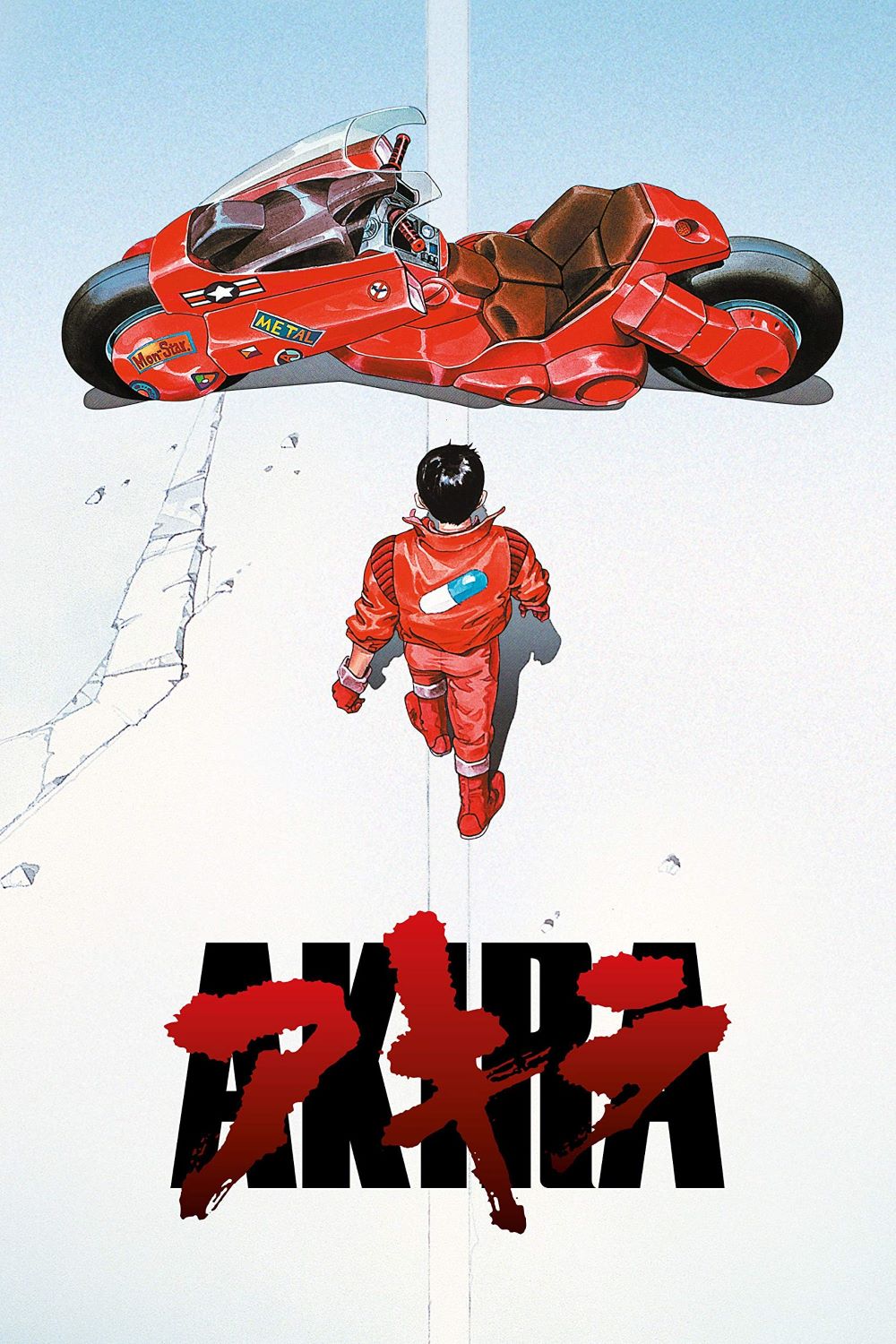
Anime You Should Be Watching: Akira


“The future is not a straight line. It is filled with many crossroads. There must be a future that we can choose for ourselves.” — Kiyoko

Akira is a landmark anime film that has left an indelible mark on both the medium and popular culture, widely regarded as a masterpiece blending dystopian cyberpunk aesthetics with potent social and political themes. Directed by Katsuhiro Otomo and released in 1988, it is an adaptation of Otomo’s own manga of the same name, adding layers of depth from its source material. The film remains a touchstone for its groundbreaking animation, complex narrative, and deep thematic explorations that resonate decades after its release.

At its surface, Akira tells the story of a post-apocalyptic Neo-Tokyo, a city ravaged by past destruction and on the brink of chaos again due to psychic powers unleashed unexpectedly on its streets. The narrative centers around two childhood friends caught in this upheaval: Kaneda, a rebellious gang leader, and Tetsuo, whose sudden acquisition of devastating psychic abilities leads to uncontrollable transformation and societal breakdown. This conflict draws viewers into a gripping tale of friendship, power, and loss.

Beneath the action-packed plot lies a rich tapestry of themes. One of the most striking is the exploration of loss of humanity through power. Tetsuo’s descent into madness as his psychic abilities spiral beyond his control serves as a visceral metaphor for how absolute power corrupts and alienates. The transformation he undergoes, from a troubled youth into a monstrous entity, dramatizes the fear of losing oneself when faced with forces that cannot be tamed. Meanwhile, the other characters and factions, including the military and resistance groups, depict varying responses to such disruptive power, from authoritarian control to emergent heroism among society’s outcasts and delinquents, emphasizing resilience in adversity.

Akira’s setting is crucial to understanding its impact. Unlike other dystopian sci-fi that glamorizes technology, Neo-Tokyo is raw and unpolished—a place of grime, corruption, and social decay. This lack of fetishization makes the depicted world more relatable and unsettling, reflecting post-World War II anxieties in Japan. The narrative draws clear analogies between the trauma of nuclear devastation and the cyclic nature of destruction and rebirth. The film and manga respectively underline how societies can be dehumanized by catastrophe yet still harbor hope for renewal and change.

The adolescent characters also embody a universal coming-of-age struggle, where uncertainties of identity, power, and responsibility mirror Japan’s own postwar societal shifts. Tetsuo’s monstrous growth and Kaneda’s protective yet rebellious nature capture the complex emotions of fear, resentment, and desire for control, making the story as much about internal battles as external ones. This allegorical layer brings timeless relevance, inviting viewers to reflect on personal and collective growth in times of turmoil.

From a technical and artistic standpoint, Akira set new standards for animation. The film’s fluid motion, attention to detail, and atmospheric world-building were revolutionary for the time and still hold up remarkably well. Otomo’s insistence on lip-syncing dialogue and meticulous frames elevated the cinematic experience far beyond typical anime productions of the 1980s. Its high-budget production values and painstaking artistry make every scene visually immersive, from frenetic gang fights to apocalyptic psychic battles.

One of the film’s most iconic and influential moments is the “Akira slide”—the flawless and stylish maneuver where Kaneda slides his motorcycle to a perfect stop amidst a high-speed chase. This scene has become emblematic not only of Akira’s kinetic energy and visual prowess but also of the potential for animation to convey dynamic motion with a sense of weight, style, and personality. The technique has been endlessly referenced and homaged in both anime and live-action works worldwide, shaping how filmmakers portray fast-paced chase and action scenes. Its balance of fluid animation, camera angles, and character flair set a new benchmark for kinetic storytelling, inspiring generations of animators and directors to capture similar moments of cool, precise motion.

Moreover, Akira’s soundtrack and sound design contribute significantly to its gritty and intense atmosphere, reinforcing the emotional beats and tension throughout the film. The score blends pulsating electronic music with haunting melodies, capturing the film’s blend of futuristic dread and human vulnerability.

Critically, Akira is celebrated not just for its technical achievements but also for its complex storytelling and thematic depth. It does not offer neat resolutions or clear heroes; instead, it portrays a morally ambiguous world where power is both destructive and transformative. The lack of easy answers enhances its emotional and intellectual resonance, making it a powerful narrative of destruction, evolution, and hope.

Akira stands among the most influential works in animation and film, a piece that’s carved its place indelibly in cultural history. Its influence isn’t just in the stunning visuals or the groundbreaking animation techniques; it’s also in how it expanded the horizons of what anime could achieve on a global scale. Otomo’s dystopian vision challenged viewers to confront uncomfortable truths about power, chaos, and societal resilience. Years after its debut, the film continues to inspire and provoke new generations of creators—each eager to capture some fragment of its raw energy and layered storytelling. Akira’s legacy is not just that of a cinematic masterpiece but as a catalyst that reshaped the possibilities for animated storytelling, making it a timeless beacon for artists and audiences alike.
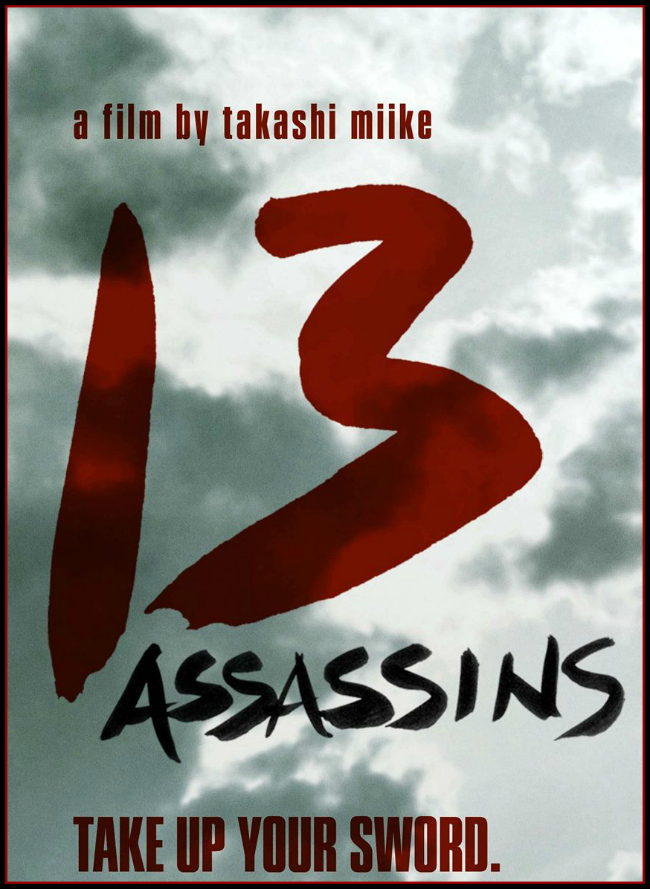
Review: 13 Assassins (dir. by Miike Takashi)


“…being a samurai is a burden.” – Shimada Shinzaemon

Miike Takashi (Takashi Miike to those in the West) has always been one of my favorite filmmakers and I consider him one of the most unique directors working. To say that he has an extensive body of work would be an understatement. This is a man who is quite at home at releasing 2-3 films a year. He has dabbled in all sorts of genres from drama, thrillers, horror, scifi, musicals and even children’s stories. Those who discovered him in the West mostly remember him for his more extreme films such as Audition, Ichi the Killer and his Dead or Alive epic. He’s taken extreme film-making to some unpredictable plac. While some of his films never work one could never say that they were ever boring or uninteresting.

In 2010, Miike released what I can only say is one of his best films to date with his remake of Tengan Daisuke’s 1963 film of the same name. 13 Assassins is Miike’s take on the classic jidaigeki (Japanese Edo period pieces…think of it as similar in idea to Merchant-Ivory period pieces) which incudes such great films as Kurosawa’s Seven Samurai, Rashomon and Yojimbo to name a few. This film also shares some similarities to the “men on a mission” war films which were quite popular during the early 60’s which included one of my other top action films in The Dirty Dozen.

The film is loosely based on some historical characters from the Tokugawa Shogunate era mainly that of Lord Naritsugu of the Akashi clan. In this film he’s portrayed as a sadistic young noble whose familial ties to the ruling Shogun allows him to kill and rape both commoners and nobles alike with impunity. When a high government official fears for the government and the country should Naritsugo ever ascends to a higher position in the Shogunate he takes it upon himself to hire a trusted friend and veteran samurai, Shinzaemon (Kōji Yakusho), to plan and pull off the assassination of Lord Naritsugo.

From this moment on the film takes it’s time in introducing the men who would form the film’s title. It doesn’t linger or take too long with each man, but we learn enough of these 13 assassins to form some sort of attachment to each and everyone that the loss of each man, once the battle begins between Shinzaemon’s assassins and Naritsugu’s 200 bodyguards, has emotional impact and meaning. Even knowing that this mission ultimately becomes a suicide task still doesn’t stop the surprise when one of these men falls to the blades of their enemies.

The assassins themselves were quite a diverse group of characters that could’ve been lifted off your typical “men on a mission” film. We have the goofballs with the talent for explosives, younger samurai eager to prove themselves in battle and to their masters, veteran samurai looking to do one more last job before they retire from the life right up to the last-minute addition of a fool whose unique skill sets becomes integral to the missions success.

13 Assassins begins the final 45 minutes of its running time with a non-stop battle which rivals anything we’ve seen put out by Hollywood in the past ten years. Unlike the sturm und drang actionfests from Michael Bay and those who seem to emulate his style of action film-making, Miike takes a much more restrained approach to the proceedings. This is not to say that the action in this film was boring. He allows the audience to know exactly what’s going on with long takes and minimal amount of edits. I don’t think he ever used too many quick cuts to help simulate chaos during the fight. Instead he lets the practical stunt choreography and the inventive set design of the village turned killing field to dictate the flow of the action. It’s quite interesting to note how a filmmaker such as Miike whose reputation in the West has been built on his style of extreme visuals and imagery on film would be quite adept at such a thing as traditional filmmaking that eschews heavy-usage of CGI, quick-cut editing and unnecessary montages to help propel not just the action but the film’s narrative.

Again, unlike the Bay-fest the West has been flooded with the last decade or so this film also has as one of it’s strength’s the story all the action revolves around. The story itself is quite simple when one really boils it down to it’s most basic premise. Evil lord sows chaos around the countryside and a group of honor-bound fighting men band together for one reason or another to stop this evil. It’s a story as old as Beowulf and as recent as 2010’s trio of such films with The Losers, The A-Team and the Expendables. What this film does with it’s characters which helps it stand out from that trio is how well Miike was able to balance not just the action with the story but how to make each character in the film seem unique despite being so stereotypical of such films at first glance.

The acting by the ensemble cast (a who’s-who of performers in Japanese, but mostly unknown to Western audiences) adds just the right mix of melancholy and dark humor not to mention some rock star-like work from it’s lead antagonist. Gorô Inagaki (himself not just a talented actor but one of Japan’s more popular pop star singers) as Lord Naritsugu brings energy as the evil lord to every scene he’s in not because of being so over-the-top but the opposite. He plays this villain as a noble bored with the peaceful days enjoyed by everyone and could only enjoy what life has to offer when he brings chaos to the proceedings. The fact that this involves him raping the women of a fellow noble and cutting off the limbs of a nameless young girl just shows how much out of touch he is with reality and at the same time romanticizes the age of war hundreds of years in the past. The rest of the cast does an admirable job in their own roles. To say that it was difficult to see one of them die on-screen would be an understatement.

13 Assassins was released in 2010, but really got it’s major showing in the United States in early 2011. Despite all of that and with the eclectic group of films I was fortunate enough to have seen in 2011 that made my “best of” list it would be this film that ranks as one of the best of 2011 and also one of my favorite films of recent times. Miike Takashi has shown himself to be now just a filmmaker provocateur whose reputation for shocking audiences have bee well-earned, but also cemented the true fact that he is a filmmaker (both in and out of Hollywood) who has the skills and know-how to escape being labeled as only a filmmaker of a particular genre. His restraint and decision to remake a classic film in the jidaigeki genre shows that while he hasn’t lost his panache for extreme brutality (and this film has them to satiate action and gore fans everywhere) he can also create a film using the subtle brushstrokes of traditional, old-school filmmaking. With this film he has made one of finest and cements his place in the roll call of best filmmakers of the last quarter-century.