The Killer Inside Me (1976, directed by Burt Kennedy)


Today is Stacy Keach’s 84th birthday.

Stacy Keach has always been an underappreciated actor.  Despite his obvious talent and his ability to play both heroes and villains, he’s never really gotten the film roles that he’s deserved and he’s mostly made his mark on stage and on television.  There have been a few good films that made use of Keach’s talents.  I’ve always appreciated his performance as Frank James in Walter Hill’s The Long Riders.  He was a morally ambiguous Doc Holliday in Doc.  He played a boxer in John Huston’s Fat City.  Horror fans will always remember him for Road Games. The Ninth Configuration featured a rare starring role for Keach but it was treated poorly by its studio.  He was chilling as a white supremacist in American History X.  For the most part, though, Keach’s film career has been made up of stuff like Class of 1999.  For all of his talent, he seems destined to be remembered mostly for playing Mike Hammer in a television series and a few made-for-TV movies.  It’s too bad because Keach had the talent to bring certain character to life in a way that few other actors can.

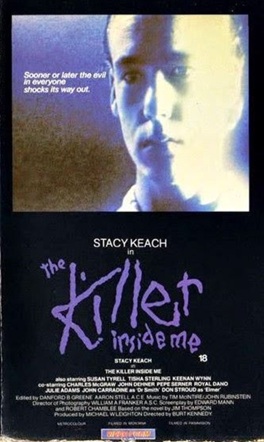
The Killer Inside Me features one of Keach’s best performances.  Based on a pulp novel by Jim Thompson, The Killer Inside Me stars Stacy Keach as Lou Ford.  Lou is a small town deputy.  Everyone thinks that he’s a good, decent man.  He’s dating the local school teacher (Tisha Sterling).  The sheriff (John Dehner) trusts him.  Lou seems to be an expert at settling conflicts between neighbors.  What everyone doesn’t know is that Lou is actually a psycho killer who is having a sado-masochistic affair with a local prostitute (Susan Tyrrell) and who has zero qualms about punching the life out of someone.  When Lou finds out that Tyrrell is also involved with the son of a local businessman, it sets Lou on a crime and killing spree.  Lou thinks he’s a genius but his main strength is that no one can imagine Lou Ford doing the terrible things that he does.

Burt Kennedy was an outstanding director of westerns and straight-forward action movies but he appears to have struggled with The Killer Inside Me’s morally ambiguous tone.  The end result is not a great film but it does feature a great performance from Stacy Keach.  In both his performance and his narration, Keach captures both the arrogance and the detachment from normal society that defines Lou Ford’s character.  He also shows how Ford coolly manipulates the people around him.  Keach is believable and compelling whether he’s playing the fool or if he’s committing cold-blooded murder and he also subtly shows that Lou is not as smart as he thinks he is.  Though Keach dominates the film, The Killer Inside Me also features good performances from a gallery of 70s character actors, including John Carradine, Keenan Wynn, Don Stroud, Charles McGraw, and Royal Dano.

This version of The Killer Inside Me didn’t do much at the box office.  The movie was remade in 2010, with Casey Affleck miscast as Lou Ford.  That version didn’t do much at the box office either.  The secret to recreating the book’s mix of social satire and pulp action has proven elusive to filmmakers but at least we’ve got Stacy Keach’s performance as Lou Ford to appreciate.

Brad’s “Scene of the Day” – The Pool Hall fight in COOGAN’S BLUFF!


One of the best action scenes in the Don Siegel / Clint Eastwood collaboration COOGAN’S BLUFF (1968)… I really enjoy this scene because Coogan tried to use Libby Raven, but she surprised him by being smarter than he thought she was. Enjoy this classic scene from COOGAN’S BLUFF!

I review COOGAN’S BLUFF (1968) – starring Clint Eastwood!


Here at The Shattered Lens, we’re looking forward to celebrating the birthday of Clint Eastwood on May 31st. In anticipation, I decided to revisit COOGAN’S BLUFF (1968). 

Clint Eastwood is Coogan, a tough as nails deputy sheriff from Arizona, who’s ordered by his boss, Sheriff McCrea (Tom Tully) to go to New York City and bring back the escaped killer James Ringerman (Don Stroud). When he gets to New York, he’s informed by Lieutenant McElroy (Lee J. Cobb) that Ringerman has overdosed on LSD while in the state’s custody, he’s now in the Bellevue Hospital, and he will not be released to Coogan until the state Supreme Court says so. Stuck in the Big Apple with nothing to do but flirt with probation officer Julie Roth (Susan Clark), Coogan decides to take matters into his own hands and get Ringerman out of the hospital early. He bluffs the attendants at the hospital into turning Ringerman over to him so he can catch the first plane back to Arizona. It seems like a good plan until he’s ambushed by Ringerman’s girlfriend Linny (Tisha Sterling) and his friend Pushie (David Doyle), he gets conked on the head, and he loses both his gun and his prisoner. Now, in trouble with Lieutenant McElroy and Sheriff McCrea, Coogan is ordered back home to Arizona. Determined to get Ringerman at any cost, Coogan stays in the city and leaves a trail of broken hearts and bruised bodies on his way to capturing his man! 

Made in 1968 after Eastwood’s string of excellent spaghetti westerns with Sergio Leone, COOGAN’S BLUFF may be set in contemporary times, but Coogan still seems to be a product of the old west. A big part of the fun is watching him interact with the people of New York City, where everyone is trying to take advantage of him, whether it be the cab driver, the hotel clerk, or the hooker down the hall. When he finally gets to the police station, he sees a building that’s completely overrun with criminals and crazies. He soon finds that Lieutenant McElroy follows the law down to the letter, while he treats the law as more of a set of suggestions on his way to getting the bad guys. This leads to endless frustration and almost gets Coogan arrested multiple times throughout the film as he doesn’t want to deal with all the red tape. One thing that doesn’t change whether Coogan is in Arizona or New York is his success with the ladies. They all swoon and he more than willingly obliges. The only problem for his prospect of true love is the fact that getting his guy always comes first, and he’ll use that sex appeal to get whatever information he needs. One of the main action scenes in this film, the bar fight, is set up ironically when the woman he’s “using” turns the tables and instead sets him up to be pummeled. 

COOGAN’S BLUFF is Eastwood’s first film with director Don Siegel, with whom he’d make DIRTY HARRY a few years later. You can definitely see the genesis of Harry Callahan in Walt Coogan, a man who does whatever it takes to stop criminals, is quick with a whip, and usually pisses off his superiors along the way. In some ways, you could say that Walt Coogan set the mold for the hero of cop films for the next couple of decades! It also has that sense of humor that would be a mark of Eastwood’s cop films. This one includes a funny thread that runs throughout where every person he meets assumes he’s from Texas because he wears a cowboy hat, and he always corrects them that he’s from Arizona. I get this as I always make sure people know that I’m from Arkansas! 

Overall, I really enjoy COOGAN’S BLUFF due mainly to Clint Eastwood’s excellent performance in the lead role. It was a great start to his “post Leone” career and would influence action movie heroes from that point forward. 

Norwood (1970, directed by Jack Haley, Jr.)


Norwood Pratt (played by country singer Glenn Campbell) is a just a good old boy who has just returned home from serving in the Marines over in Vietnam.  After saying goodbye to his Marine buddy, Joe William Reese (played by quarterback Joe Namath), Norwood heads to his hometown of Ralph, Texas.  Norwood discovers this his sister (Leigh French) has married an idiot named Bill (Dom DeLuise!)

Norwood gets a job working at the local garage but he’s got his guitar and he’s got his dreams.  All he wants to do is play his music on the Louisiana Hayride radio program.  But with no money and no connections, how is he going to make it there?  When a shady businessman (Pat Hingles) offers to pay him fifty bucks to drive a car and prostitute (Carol Lynley) to New York City, Norwood agrees.  When Norwood discovers the car is stolen, he abandons both the vehicle and the girl but he still heads up to New York City.

Norwood has plenty of adventures and he meets plenty of people, like a hippie (Tisha Stirling) who invites him to open mike night at a coffee house in the Village.  Later, she invites him to join her in a bathtub by asking him if his guitar plays underwater.  “No, ma’m,” Norwood says, “but I do.”  He also meets a pregnant teenager (Kim Darby, Campbell’s co-star from True Grit) and a little person (Billy Curtis) who is traveling with a super intelligent chicken.

There have been a lot of very good films made about the struggle of military veterans to transition back to civilian life after their tour of duty comes to an end.  Unfortunately, Norwood is not one of those films.  Both Norwood and Joe have just returned from Vietnam but neither one of them seems to carry any lingering effects from their time overseas.  Neither of them shares any war stories or any thoughts on war in general.  (Someone does point out that Norwood has a scar.  Norwood says it’s a war wound that he got when he accidentally fell off a water truck.)  There’s no hint that the war itself was not going well for the United States in 1970 or that it wasn’t a popular war and that returning veterans often felt as if they had been rejected by the same country that asked (or forced) them to serve.  Even when Norwood meets the hippies in the Village, there’s no mention of protests.  Instead, Norwood presents 1970 as a time with no real conflicts, which is the perfect era for someone as forgettable as Norwood Pratt to become a star.

Norwood has the same basic and episodic structure as an Elvis movie, except that Elvis could actually act when he wanted to.  No one can deny Glenn Campbell’s talent as a singer but as an actor, he had very little screen presence.  In True Grit and this movie, the best that he could come up with was an amiable dullness.  In True Grit, it didn’t matter because John Wayne was in the movie.  But in Norwood, Campbell had to carry the story and his acting limitations were much more obvious.  Campbell even managed to get outacted by Joe Namath, who, as far as pro football player-turned-actors were concerned, was no Alex Karras.  Wisely, Campbell didn’t further pursue a career as an actor and instead concentrated on singing.  When Campbell died in 2017, he was praised for both his musical legacy and his honesty and courage while facing Alzheimer’s.  He may not have made it as an actor but he still touched a lot of lives.

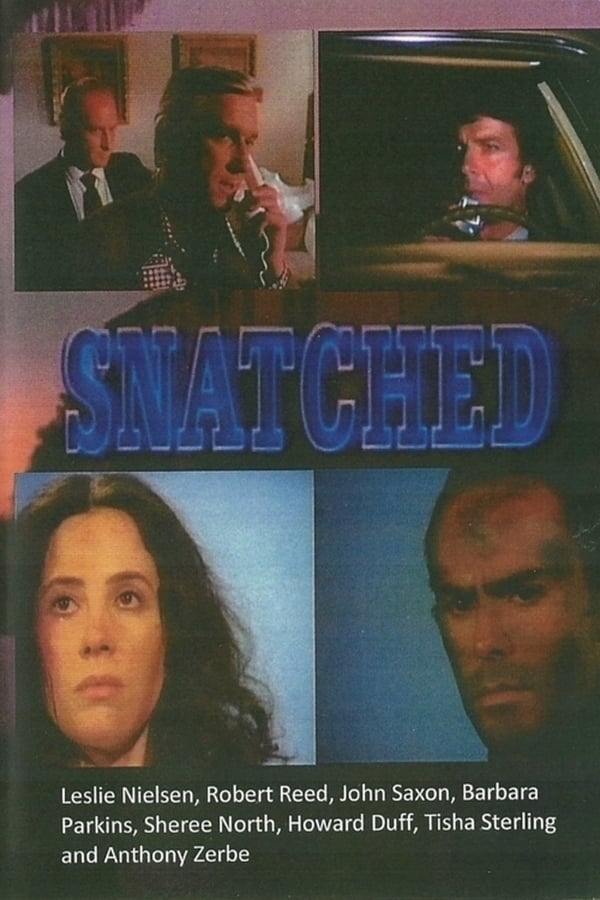
Snatched (1973, directed by Sutton Roley)


Three women have been kidnapped and are being held prisoner in a lighthouse.  Robin Wood (Tisha Sterling), Kim Sutter (Sheree North), and Barbara Maxvill (Barbara Parkins) are married to three wealthy men and the kidnappers (one of whom is played by the great Anthony Zerbe) assume that the husband will be willing to pay whatever is necessary to get back their wives.  Paul Maxvill (John Saxon) and Bill Sutter (Leslie Nielsen!) are willing to put up the money but Duncan Wood (Howard Duff) scoffs at the idea of paying a million dollars just to see his adulterous wife again!

It sounds like the set-up for a Ransom of Red Chief-type of comedy but Snatched is actually a very serious and intelligent thriller, one that will definitely keep you on your toes as you try to keep up with who is working for who.  Kim is diabetic and is growing weaker every minute that she’s being held in the lighthouse.  Paul, Bill, and police detective Frank McCloy (Robert Reed) try to get Duncan to pay his share of the ransom but Duncan is convinced that his wife has been cheating on him and he refuses to pay for her.  On top of that, it turns out that one of the wives might be in on the scheme.  When she tells the kidnappers that she’s actually the one who came up with the plan, is she just trying to protect the other wives or is she telling the truth?  It leads to betrayal and a surprisingly downbeat ending.

Snatched is a well-produced made-for-TV movie.  The mystery will keep you guessing and the cast is made up of a collection of old pros.  Leslie Nielsen, cast here long before he reinvented himself as a comedic actor, is especially good as Bill Sutter and John Saxon gives one of his better performances as Paul.  Even Robert Reed gives a good performance.  Snatched is a classic made-for-TV mystery.

Horror on the Lens: Night Slaves (dir by Ted Post)


For today’s horror on the lens, we have the 1970 made-for-TV movie, Night Slaves!

In this atmospheric film, an estranged married couple (James Franciscus and Lee Grant) find themselves in a small town.  It seems like a friendly enough place.  I mean, Leslie Nielsen is the sheriff!  How could anything go wrong in a town protected by Leslie Nielsen?

However, at night, the town changes.  Only Franciscus seems to notice all of the townspeople wandering about like zombies.  Is he going crazy or has he stumbled across something sinister?

You’ll have to watch find out!

Enjoy!