Retro Television Review: The Love Boat 6.16 “Doc’s Big Case/Senior Sinners/A Booming Romance”


Welcome to Retro Television Reviews, a feature where we review some of our favorite and least favorite shows of the past!  On Wednesdays, I will be reviewing the original Love Boat, which aired on ABC from 1977 to 1986!  The series can be streamed on Paramount Plus!
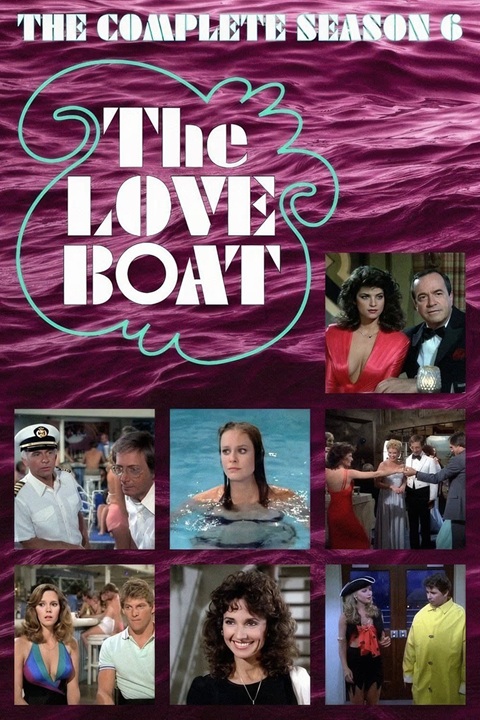
Love won’t hurt anymore….

Episode 6.16 “Doc’s Big Case/Senior Sinners/A Booming Romnace”

(Dir by Bob Sweeney, originally aired on January 22nd, 1983)

As usual, this episode has three stories.  However, this week, only one of the stories really works.

Dr. Elliott Norton (James Noble) attended medical school with Doc.  He is a world-renowned surgeon who has written a best-selling book and, as soon as he boards the boat, ol’ Doc Bricker starts to feel insecure.  It’s easy to see why.  Dr. Norton performs life-saving surgery on a daily basis.  Doc Bricker helps people recover from severe sun tan.  The fact that everyone on board wants Norton’s autograph doesn’t help.  Vicki is supposed to be writing a report on Doc but even Doc is like, “You should probably do it on Elliott.”

However, when a little girl (played by Tori Spelling, in what must have been one of the first roles that Aaron Spelling demanded she be cast in) asks Doc to diagnose what’s wrong with her doll, Bricker quickly figures out that both the doll and the girl are depressed because they’re not spending enough time with their father.  Norton may be getting the groupies but Doc Bricker gets invited to a tea party with the girl, her father, and the doll.

I’m sorry, are you smirking?

Okay, it is pretty silly.  Normally, I would smirk too but you know what?  Bernie Kopell really makes this story work.  In many ways, Doctor Adam Bricker was a bit of silly character, a supposed swinger who always came across as being rather mild-mannered and kind of conservative.  But Bernie Kopell was so likable in the role that it didn’t matter that the character often didn’t make much sense.  In this episode, Kopell does such a good job of playing up the character’s insecurities and regrets that my heart actually broke for the poor guy.  Was the tea party silly?  Yes.  But I still cheered when he was invited.

As for the other two stories, one featured Raymond St. Jacques and Theresa Merritt playing an elderly couple who were living together without being married.  Their children (played Brian Stokes Mitchell and Thelma Hopkins) were scandalized!  It was pretty boring.  The children weren’t particularly likable so I was kind of hoping the parents would just toss them overboard.

The final story …. I don’t even know how to describe it other than to say it was dumb.  Ross (Alan Young) wants to impress Kathy (Holland Taylor) and keep her from running off with Bob (Adam West, who was severely underused).  So, Ross builds a fake bomb, hides it in the engine room, pretends to discover it, and then defuses it while Kathy watches.  I mean, how am I supposed to care about someone who would do something that stupid?  And then, when Ross confesses the truth to her, Kathy laughs it off and forgives him.  I mean, it seems like he’s an obvious sociopath to me.  Run, Kathy, run!

This was an uneven episode but seriously, the story with Doc Bricker got to me.  This show was very lucky to have Bernie Kopell.
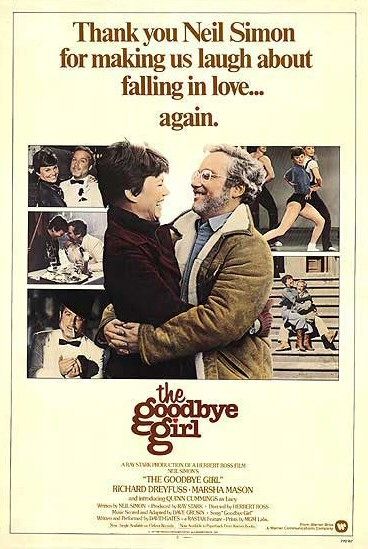
Lisa Watches An Oscar Nominee: The Goodbye Girl (dir by Herbert Ross)


Goodbye_Girl_movie_poster

After I watched San Francisco, I decided to watch yet another film that I had DVRed during TCM’s 31 Days of Oscar.  I had several films to choose from and I ultimately decided to watch the 1977 best picture nominee The Goodbye Girl because, in general, I like movies from the 70s.  Add to that, the film was described as being a comedy and who am I to turn down the chance to laugh?

The Goodbye Girl asks the question, “What would happen if two of the most annoying people on Earth were forced to live together and then ended up falling in love with each other as a result?”  Paula (Marsha Mason) is recently divorced and is trying to raise her 10 year-old daughter, Lucy (Quinn Cumming), while also trying to relaunch the dance career that she put on hold when she got married.  As played by Marsha Mason, Paula is probably one of the most humorless characters to ever be at the center of a romantic comedy.  It’s not just that Paula is written to be a very angry character.  (For the most part, Paula has every right to be angry).  Instead, it’s that Mason gives such a totally sour performance that you get the feeling that Paula has probably never smiled once over the course of her entire life.  When, later on in the film, she does smile, it feels forced and unnatural.  You worry that her face is going to split in half.

In the course of one very bad week, she is abandoned by her actor boyfriend (he’s going to Italy to shoot a film) and she discovers that, before he left, her ex also sublet their apartment to another actor.  That actor is Elliott Garfield (Richard Dreyfuss), who is hyperactive, immature, self-centered, and very, very talkative.  He does things like play guitar in the nude and meditate in the morning.

Once Elliott shows up and barges his way into the apartment, a familiar pattern is established.  Elliott does something eccentric.  Paula yells at him.  Elliott yells back.  Paula yells in reply.  Elliott yells some more.  Even if you never quite buy the idea that the two of them would ever fall in love, you’re glad when they do because at least it gives them something to do other than yell.

(Of course, The Goodbye Girl was written by Neil Simon, which means that not only are Elliott and Paula yellers but they’re also very quippy yellers.  And while I guess we should be happy that Elliott tells the occasional joke, the constant barrage one liners is ultimately rather alienating.  Every time you think that the film is about to make an interesting point about human relationships, Elliott says something quippy and ruins the mood.)

Which is not to say that The Goodbye Girl is a terrible movie.  The scenes where Elliott rehearses and then appears in a terrible production of Richard III are brilliantly done and wonderfully satirize theatrical pretension.  As well, during its second hour, the film settles down a little bit.  Or, I should say, Richard Dreyfuss settles down and actually starts to give a performance that’s more than just a collection of nervous tics.  It helps that once Elliott and Paula are in love, they don’t yell at each other quite as much.  There’s even a rooftop dinner scene where the two actors finally show a hint of chemistry.

Ultimately, The Goodbye Girl is an uneven film that feels a lot like a sitcom.  It’s one of those films that you watch and, even though it’s not terrible, you still find yourself thinking, “This was nominated for best picture?”