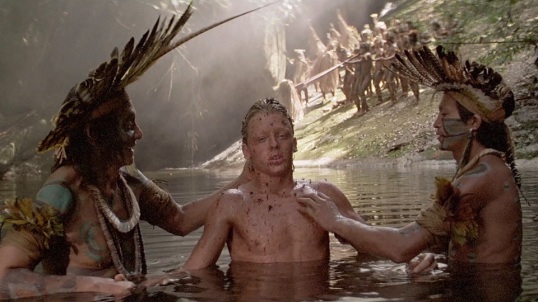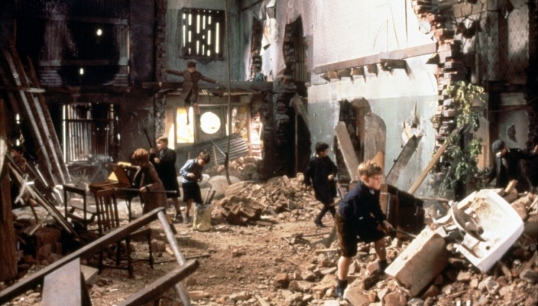
The Unnominated #11: The General (dir by John Boorman)


Though the Academy of Motion Picture Arts and Sciences claim that the Oscars honor the best of the year, we all know that there are always worthy films and performances that end up getting overlooked.  Sometimes, it’s because the competition too fierce.  Sometimes, it’s because the film itself was too controversial.  Often, it’s just a case of a film’s quality not being fully recognized until years after its initial released.  This series of reviews takes a look at the films and performances that should have been nominated but were, for whatever reason, overlooked.  These are the Unnominated.

Directed by John Boorman, 1998’s The General tells the story of Martin Cahill.

Martin Cahill (Brendan Gleeson) was a Dublin-based crime lord, a thief by trade who never made any apologies for his profession.  The film opens with the end of Martin Cahill’s life.  Leaving his suburban home, he’s sitting behind the steering wheel of his car when a young man runs up and shoots him in the face.  Cahill’s car rolls forward while his wife (Maria Doyle Kennedy) screams for help.  Cahill has been assassinated in front of his family and the reaction of the local police is to celebrate until Cahill’s oldest nemesis, Inspector Ned Kenney (Jon Voight), announces that they have nothing to cheer about.  The film leaves it somewhat ambiguous as to who shot Cahill, though it heavily suggests that he was shot by the IRA, both because of their mistaken belief that he was moving drugs into the neighborhood but also because of his refusal to share his profits with them.

The film flashes back and we watch as Martin Cahill, a rebellious young man who stole to impress girls and to get a shot back at the establishment, grows up to become Martin Cahill, the crime lord that the papers nickname The General.  Cahill is a professional thief and he’s fairly honest about it.  When his government-controlled flat is torn down, Cahill camps out on the site in a tent, refusing to leave because the location of the new building is to close to the police station.  He says he’d rather be moved to a richer part of town.  It’s better for his work.  As portrayed by Brendan Gleeson, Cahill is a fascinating and complex character, a ruthless criminal who is also devoted to his pigeons, his children and both his wife and his girlfriend (Angeline Bail).  (Fortunately, for Martin, his wife and his girlfriend know about each other and are good friends.)  He’s the type of crime lord who will test a man’s loyalty by nailing him to a pool table and then take him to the hospital afterwards.  “Sorry, Martin,” another associate says after Martin shoots him in the leg to make a fake break-in look authentic.  It’s hard not to like the film’s version of Martin Cahill, an intelligent and ultimately honest man who understands the importance of allowing his enemies to believe him to be a buffoon.  He may be a criminal but he considers it to be an honest living, unlike the government officials who force unwanted laws and exorbitant taxation on the citizenry  Director John Boorman certainly seems to like Cahill, which is interesting as Boorman was actually the victim of one of Cahill’s robberies.  (Boorman recreates the robbery in the film.)

The film went unnominated at the Oscars, which were dominated that year by Shakespeare in Love and Saving Private Ryan.  Brendan Gleeson definitely deserved a nomination for his charismatic performance as Martin Cahill.  Equally worthy of a nomination was Seamus Deasy’s black-and-white cinematography, which gives the film the dream-like feel of a half-remembered legend.  (The version of the film that’s on Tubi features desaturated color.  It’s actually an effective look for the film’s story but I still prefer the black-and-white original.)  Neither was nominated and, indeed, Brendan Gleeson would have to wait until 2023 to finally receive his first Oscar nominations for The Banshees of Inisherin.

The General (1998, dir by John Boorman, DP: Seamus Deasy)

Previous entries in The Unnominated:

  1. Auto Focus 
  2. Star 80
  3. Monty Python and The Holy Grail
  4. Johnny Got His Gun
  5. Saint Jack
  6. Office Space
  7. Play Misty For Me
  8. The Long Riders
  9. Mean Streets
  10. The Long Goodbye

8 Shots From 8 Films: Special John Boorman Edition


4 (or more) Shots From 4 (or more) Films is just what it says it is, 4 (or more) shots from 4 (or more) of our favorite films. As opposed to the reviews and recaps that we usually post, 4 (or more) Shots From 4 (or more) Films lets the visuals do the talking.

Today, the Shattered Lens wishes a happy 92nd birthday to British director John Boorman.

Boorman is one of those great director who sometimes doesn’t seem to get as much credit as he deserves.  An undeniably idiosyncratic director, Boorman easily moved from genre to genre and who brought his own individual style to each of his films.  Sometimes, critics and audiences responded to that vision and sometimes, they didn’t.  And yet even Boorman’s so-called failures have come to be appreciated over the years.  Zardoz is a cult classic.  Even The Exorcist II: The Heretic is not quite the disaster that some insist.  If nothing else, it’s one of the strangest studio productions to ever be released.

At his best, Boorman is one of the most influential directors of all time.  How many neo-noirs have ripped off the look and the feel of Point Blank?  The ending of Deliverance has been imitated by a countless number of horror films and, indeed, every backwoods thriller owes a debt to Boorman’s film about four businessmen spending a weekend canoeing.  Excalibur is one of the most elegiac of all the Arthurian films while Hope and Glory retains its power to make audiences both laugh and cry with its portrayal of life on the British homefront during World War II.  Meanwhile, films like The General and The Emerald Forest gave underrated characters actors like Powers Boothe and Brendan Gleeson a chance to shine.

So today, in honor of the career and the legacy of John Boorman, here are….

8 Shots from 8 John Boorman Films

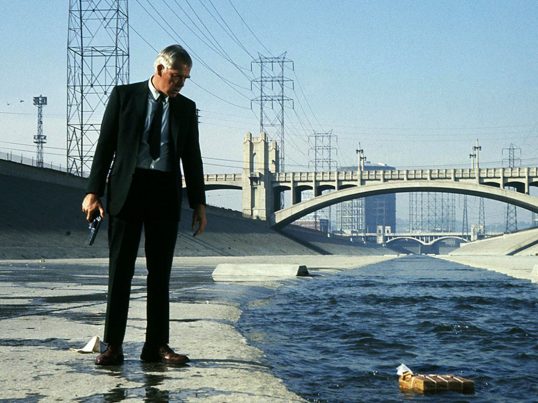
Point Blank (1967, directed by John Boorman, DP: Philip H. Lathrop)

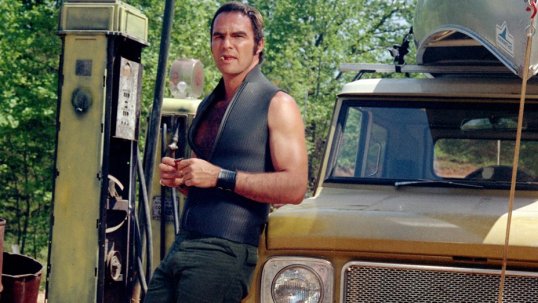
Deliverance (1972, directed by John Boorman, DP: Vilmos Zsigmond)

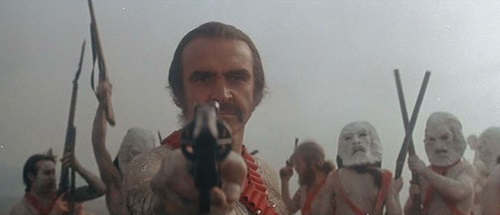
Zardoz (1974, directed by John Boorman, DP: Geoffrey Unsworth)

The Exorcist II: The Heretic (1977, dir by John Boorman, DP: William A. Fraker)

Excalibur (1981, dir by John Boorman, DP: Alex Thomson)

The Emerald Forest (1985, dir by John Boorman. DP: Philippe Rousselot)

Hope and Glory (1987, dir by John Boorman, DP: Philippe Rousselot)

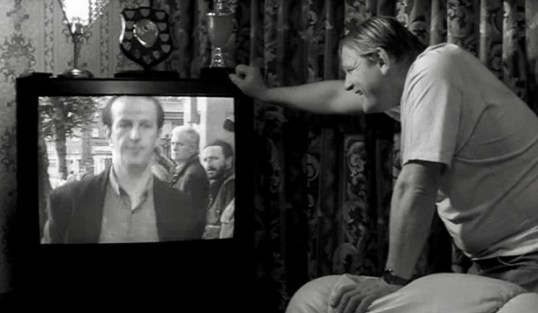
The General (1998, dir by John Boorman, DP: Seamus Deasy)

4 Oscar Snubs From the 1920s


The Oscars started out as an afterthought.

When Louis B. Mayer first proposed setting up what would become the Academy of Motion Picture Arts and Sciences in 1927, he wasn’t really that interested in giving out awards. Instead, he saw the Academy as an organization that would mediate labor disputes between the studios and the unions. He also felt that the Academy could basically be used to improve the film industry’s image, which had taken a hit from the rape trial of Fatty Arbuckle, the overdose of Wallace Reid, and the murder of William Desmond Taylor. When he and the other 35 founders of the Academy met to draw up the organization’s charter, the idea of giving out awards was mentioned only in passing. A committee would be set up to give out yearly awards to honor the best that Hollywood had to offer.

The first Academy Awards ceremony was held in a hotel ballroom in 1928. It occurred at the end of a private dinner and the awards were handed out in 15 minutes. The 2nd ceremony was the first to be broadcast on the radio. It was only when the Academy got around to the third ceremony that the Oscars started to transform into the spectacle that we know today. It was only then that people started to really pay attention to what was and was not nominated for Best Picture.  And, as people started to pay attention, they also started to notice and talk about which films and performers were snubbed by the Academy.

Today, for Oscar Sunday, we’re taking a a decade-by-decade look at some notable Oscar snubs. We will start with those first three ceremonies.

1927 — 1928: The General Receives Zero Nominations

For the very first Oscar ceremony, two Best Picture awards were handed out.  Wings won the Oscar for Best Production.  Sunrise, meanwhile, won the Oscar for Unique and Artistic Production.  Today, Sunrise is better remembered than Wings.  Personally, I like both films.  Thought it’s nearly a hundred years old, Sunrise remains visually stunning.  Wings, meanwhile, features some thrilling aerial footage and a performance from the wonderful Clara Bow.

That said, it’s still a bit unfortunate that Buster Keaton’s The General received not a single nomination, despite being eligible for the Oscars.  Today, The General is recognized as being a comedic masterpiece.  However, when it was initially released, it struggled at the box office and many in Hollywood resented Keaton’s independent streak.  As a result, The General became one of the first films to be snubbed by the Academy.
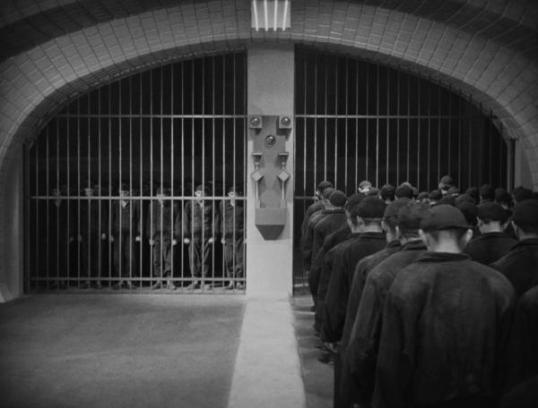
Metropolis (1927, dir by Fritz Lang, DP: Karl Freund and Gunther Rittau)

1927 — 1928: The Academy Ignores Metropolis

The very first Best Actor winner was Emil Jannings.  Jannings was German and struggled with English but, during the Silent Era, that wasn’t a problem.  However, the coming of sound petty much ended Jannings’s Hollywood career.  He returned to Germany, where he remained a star.  He would go on to star in several Nazi propaganda films and was reportedly one of Hitler’s favorite actors.  When the war came to an end, Jannings took to carrying his Oscar statuette around with him in the hopes that it would win him favor with the Allies and allow him to avoid having to go through the denazification process.  It didn’t work and Jannings retired from acting.  He died in Austria in 1950.

Personally, I think it would have been nice if the first Oscars hadn’t honored someone who would later star in Nazi propaganda films.  And the Academy had the option to do just that, as Fritz Lang’s Metropolis was released in the United States in 1927.  Metropolis was not only one of the first great science fiction films but Lang was one of the many German directors who would come to Hollywood after the Nazis came to power,  Honoring Metropolis would have allowed the Academy to honor someone who refused to compromise with the Ministry of Propaganda.  Unfortunately, neither Metropolis nor Lang were nominated.

1927 — 1928 and 1928 — 1929: Lon Chaney Is Not Nominated For Best Actor

Poor Lon Chaney.  Widely considered to be one of the best actors of the silent era, Lon Chaney, Sr. was never nominated for an Oscar.  London After Midnight is a lost film and West of Zanzibar is only partially complete but, speaking as a horror fan, I would have loved it if the Academy could have nominated him for either one of those films.  If nothing else, it would have opened the door for the horror genre.

1929 — 1930: The Cocoanuts Is Ignored

Imagine how different Oscar history would have been if the Academy had early on started a tradition of honoring comedy?  The Marx Brothers were not fans of their first released film but audiences loved The Cocoanuts.  Unfortunately, the Academy was not quite ready to embrace comedy and, as such, this became the first (but not the last) Marx Brothers film to be snubbed.

Agree?  Disagree?  Do you have an Oscar snub that you think is even worse than the 4 listed here?  Let us know in the comments!

Up next: The 1930s brings a depression and a lot more snubs!

8 Shots From 8 Films: Special John Boorman Edition


4 (or more) Shots From 4 (or more) Films is just what it says it is, 4 (or more) shots from 4 (or more) of our favorite films. As opposed to the reviews and recaps that we usually post, 4 (or more) Shots From 4 (or more) Films lets the visuals do the talking.

Today, the Shattered Lens wishes a happy 88th birthday to British director John Boorman.

Boorman is one of those great director who sometimes doesn’t seem to get as much credit as he deserves.  An undeniably idiosyncratic director, Boorman easily moved from genre to genre and who brought his own individual style to each of his films.  Sometimes, critics and audiences responded to that vision and sometimes, they didn’t.  And yet even Boorman’s so-called failures have come to be appreciated over the years.  Zardoz is a cult classic.  Even The Exorcist II: The Heretic is not quite the disaster that some insist.  If nothing else, it’s one of the strangest studio productions to ever be released.

At his best, Boorman is one of the most influential directors of all time.  How many neo-noirs have ripped off the look and the feel of Point Blank?  The ending of Deliverance has been imitated by a countless number of horror films and, indeed, every backwoods thriller owes a debt to Boorman’s film about four businessmen spending a weekend canoeing.  Excalibur is one of the most elegiac of all the Arthurian films while Hope and Glory retains its power to make audiences both laugh and cry with its portrayal of life on the British homefront during World War II.  Meanwhile, films like The General and The Emerald Forest gave underrated characters actors like Powers Boothe and Brendan Gleeson a chance to shine.

So today, in honor of the career and the legacy of John Boorman, here are….

8 Shots from 8 John Boorman Films

Point Blank (1967, dir by John Boorman, DP: Philip H. Lathrop)

Deliverance (1972,dir by John Boorman, DP: Vilmos Zsigmond)

Zardoz (1974, dir by John Boorman, DP: Geoffrey Unsworth)

The Exorcist II: The Heretic (1977, dir by John Boorman, DP: William A. Fraker)

Excalibur (1981, dir by John Boorman, DP: Alex Thomson)

The Emerald Forest (1985, dir by John Boorman. DP: Philippe Rousselot)

Hope and Glory (1987, dir by John Boorman, DP: Philippe Rousselot)

The General (1998, dir by John Boorman, DP: Seamus Deasy)


6 Good Films That Were Not Nominated For Best Picture: The 1920s


The Academy Awards, 1929

They’ve been giving out Oscars for 91 years and, since the beginning, good films have often been snubbed.

Sometimes, a film is snubbed because it was too groundbreaking to be embraced at the time of its initial release.  Sometimes, a film is snubbed because it was directed by the wrong person or it dealt with subject matter that was considered to be too controversial for the Academy to embrace.  Sometimes, a film is snubbed because of a lack of publicity or a studio that failed to launch an effective awards campaign.  And, sometimes, a good film is snubbed because it’s been a very good year and there’s only so many available slots.

There’s a lot of reasons but what it all come down to is that good films sometimes don’t get nominated for best picture.

So, in honor of those films, I’m going to take a decade-by-decade look at some of the best films that were not nominated for best picture.  We’ll start with the 1920s, with the founding of the Academy in 1927.  Here are 6 good films from the 20s that were not nominated for best picture!

It (1927, dir by Clarence G. Badger))

One of my favorite silent films of all time, It featured not only one of Clara Bow’s greatest performances but also a storyline that, at the time, was considered to be rather daring.  Clara plays a shopgirl who never allows her love for her boss to interfere with her efforts to protect both her roommate and her roommate’s baby from two meddling welfare workers.  Though It was not nominated for Best Picture, Clara Bow did star in very first film to win the top award, Wings.

Metropolis (1927, dir by Fritz Lang)

Having been released in the United States in January of 1927, this visionary German film was eligible to be nominated for best picture but it sadly went unnominated.  Science fiction was a genre that long-struggled to get any meaningful recognition from the Academy.  Fortunately, that appears to have changed a bit over the past few years.

The Jazz Singer (1927, dir by Alan Crosland)

The Jazz Singer has not aged particularly well and it’s impossible not to cringe when Al Jolson shows up in blackface.  However, it was the first commercially successful film to incorporate sound recording and, as such, it pretty much changed cinematic history.  In fact, it was such a game changer that legend has it that the Academy ruled it ineligible to compete for best picture because it was felt it would be unfair to all of the silent nominees.  Instead, The Jazz Singer was given a special honorary award.

The General (1927, dir by Clyde Bruckman and Buster Keaton)

Though Buster Keaton’s Civil War epic was made and screened in 1926, it didn’t receive a wide release until 1927, making it eligible for the first Academy Awards.  However, since the initial critical and commercial reaction to the film was rather middling, The General was snubbed.  Only later would the film be reevaluated and recognized as a classic screen comedy.

The Road to Ruin (1928, dir by Norton S. Parker)

This low-budget, independently made and distributed film became the second highest grossing movie of 1928, therefore showing that a film made outside the studio system could be a success.  With its storyline about a teenage girl who gets caught up in a world of drugs, sex, and general decadence, it established many of the exploitation film tropes that are still in use today.  The Road to Ruin was a Lifetime film before Lifetime.  For that alone, it should have been nominated.

Pandora’s Box (1929, dir by G.W. Pabst)

G.W. Pabst’s classic melodrama is another film that wasn’t appreciated when it was originally released and therefore, both it and Louise Brooks were snubbed by the Academy.  It wouldn’t be until the 1950s that Pandora’s Box finally started to receive the acclaim that it deserved.

Up next, in an hour or so, the 1930s!

Clara Bow in It (1927)