4 Or More Shots From 4 Or More Films is just what it says it is, 4 shots from 4 of our favorite films. As opposed to the reviews and recaps that we usually post, 4 Shots From 4 Films lets the visuals do the talking!
Today, on what would have been his birthday, we take the time to pay tribute to one of our favorite directors. Needless to say, when it comes to David Lynch, there’s an embarrassment of riches.
Here are….
8 Shots From 8 David Lynch Films
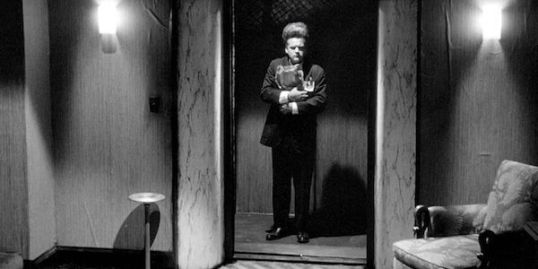
Eraserhead (1977, dir by David Lynch, DP: Frederick Elmes, Herbert Cardwell)
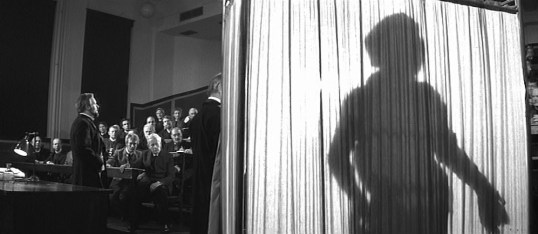
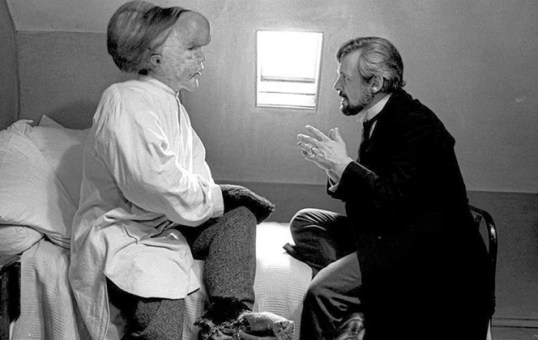
The Elephant Man (1980, dir by David Lynch, DP: Freddie Francis)
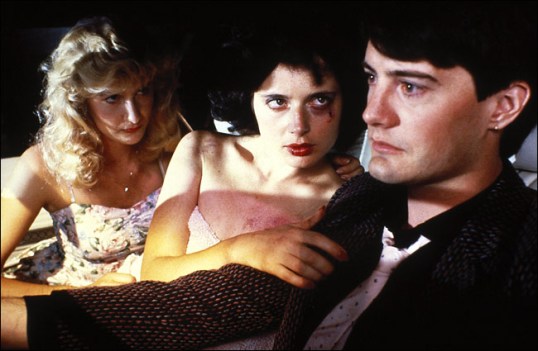
Blue Velvet (1986, dir by David Lynch, DP: Frederick Elmes)
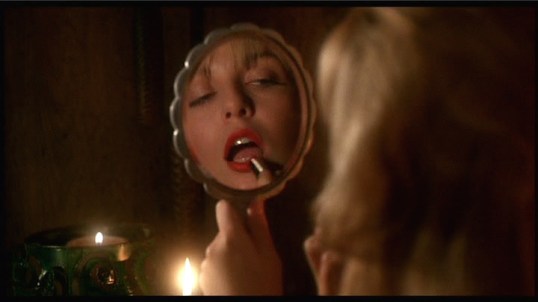
Twin Peaks: Fire Walk With Me (1992, dir by David Lynch, DP: Ron Garcia)
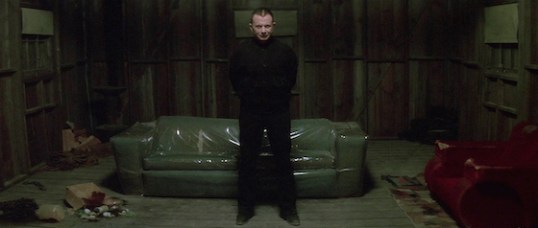
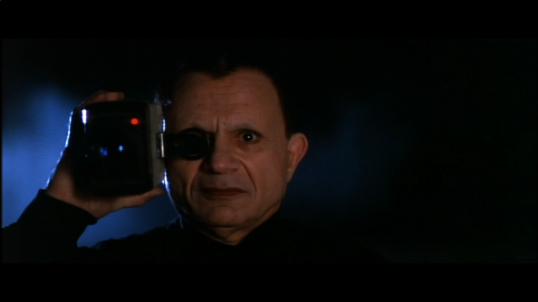
Lost Highway (1997, dir by David Lynch, DP: Peter Deming)
The Straight Story (1999, dir by David Lynch, DP: Freddie Francis)
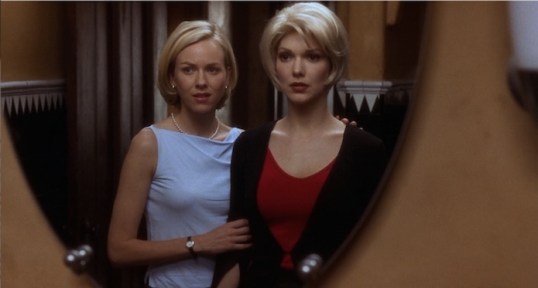
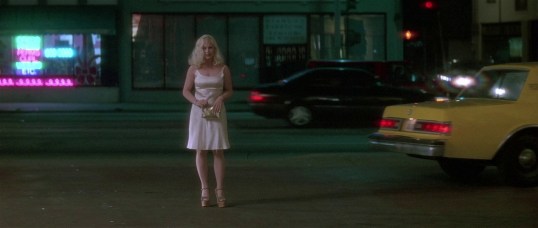
Mulholland Drive (2001, dir by David Lynch, DP: Peter Deming)
Inland Empire (2006, dir by David Lynch, DP: David Lynch)
Mel Brooks. What can you say Mel Brooks? Not only did he help to redefine American comedy but he was also responsible for bringing David Lynch to Hollywood. Brooks was the one who hired Lynch to direct The Elephant Man. It can probably be argued that, if not for Brooks, Lynch’s feature film career would have begun and ended with Eraserhead. Brooks not only hired Lynch but also protected him for studio interference. When the execs tried to make Lynch remove two surrealistic sequences from The Elephant Man, Brooks stood up to them. When they requested a more conventional biopic, Brooks defended Lynch’s vision and the result was one of the best films ever made.
Of course, Brooks isn’t listed in the credits of The Elephant Man. Though he produced the film, he went uncredited because he didn’t want people to assume that the movie was a comedy. By doing so, Brooks missed out on an Oscar nomination but he also ensured that the film was taken seriously. It’s hard not to respect someone who was willing to go uncredited to help make the film a success.
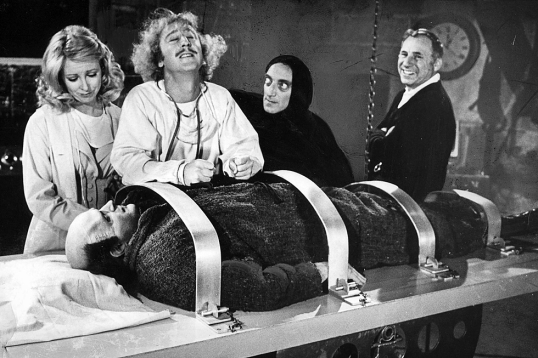
Though Brooks, as a producers, was responsible for a number of serious films, there’s a reason why Brooks is associated with comedy. He’s a very funny man and he directed some very funny films. In honor of Mel Brooks, here’s a scene that I love from 1974’s Young Frankenstein.
4 Or More Shots From 4 Or More Films is just what it says it is, 4 shots from 4 of our favorite films. As opposed to the reviews and recaps that we usually post, 4 Shots From 4 Films lets the visuals do the talking!
Today, on what would have been his birthday, we take the time to pay tribute to one of our favorite directors. Needless to say, when it comes to David Lynch, there’s an embarrassment of riches.
Here are….
20 Shots From David Lynch
Eraserhead (1977, directed by David Lynch, DP: Frederick Elmes and Herbert Cardwell)
The Elephant Man (1980, dir by David Lynch, DP: Freddie Francis)
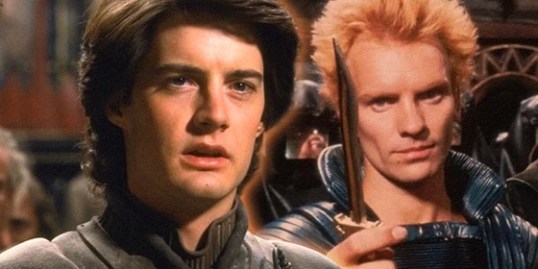
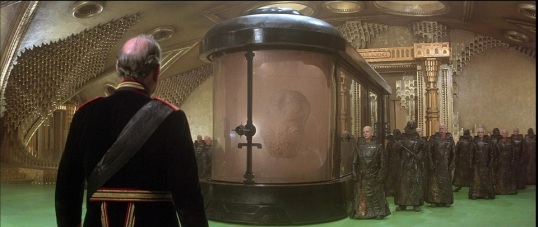
Dune (1984, dir by David Lynch, DP: Freddie Francis)
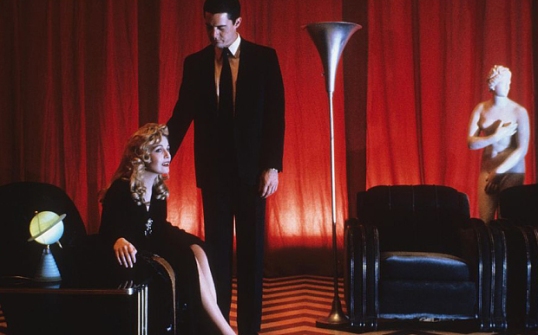
Blue Velvet (1986, dir by David Lynch, DP: Frederick Elmes)
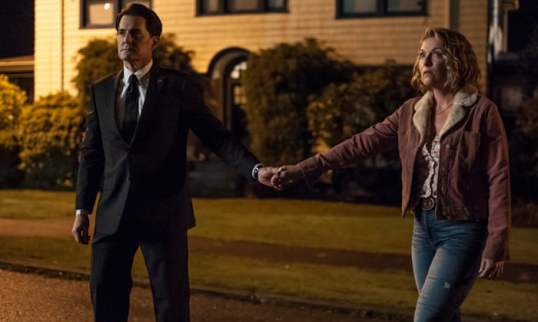
Twin Peaks: The Pilot (1990, dir by David Lynch, DP: Ron Garcia)
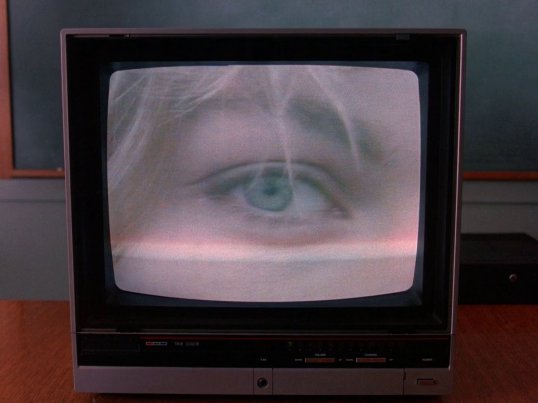
Twin Peaks 1.3 “Zen or the Skill To Catch a Killer” (1990, dir by David Lynch, DP: Frank Byers)
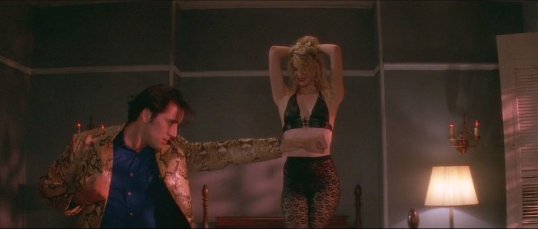
Wild At Heart (1990, dir by David Lynch, DP: Frederick Elmes)
Twin Peaks 2.7 “Lonely Souls” (1990, dir by David Lynch, DP: Frank Byers)
Twin Peaks 2.22 (1991, dir by David Lynch, DP: Frank Byers)
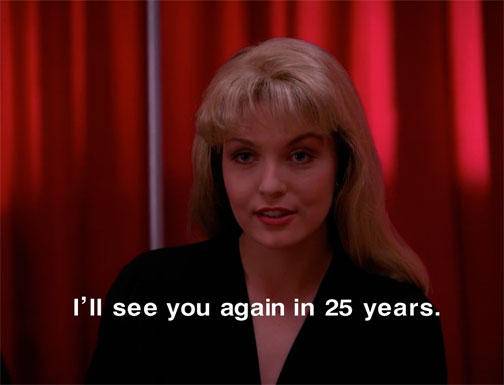
Twin Peaks: Fire Walk With Me (1992, dir by David Lynch, DP: Ron Garcia)
On The Air 1.1 “The Lester Guy Show” (dir by David Lynch, DP: Ron Garcia)
Lost Highway (1997, dir by David Lynch, DP: Peter Deming)
The Straight Story (1999, dir by David Lynch, DP: Freddie Francis)
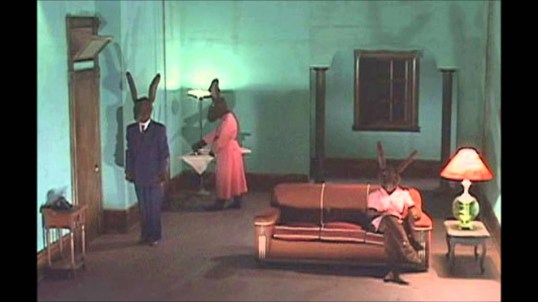
Rabbits (2002, dir by David Lynch, DP: David Lynch)
Mulholland Drive (2000, dir by David Lynch, DP: Peter Deming)
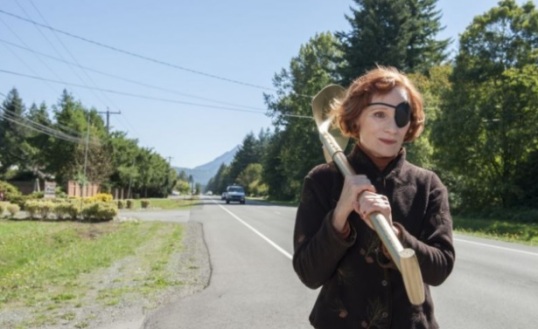
Twin Peaks: The Return Part 3 (dir by David Lynch, DP: Peter Deming)
Inland Empire (2006, dir by David Lynch, DP: David Lynch)
Twin Peaks: The Return Part 8 (2017, dir by David Lynch, DP: Peter Dening)
Twin Peaks: The Return Part 18 (2017, dir by David Lynch)
What Did Jack Do? (2017, dir by David Lynch, DP: Scott Ressler)
The Elephant Man (1980, dir by David Lynch, DP: Freddie Francis)
David Lynch never won a competitive Oscar.
He received an honorary award from the Academy in 2019. He generated some minor but hopeful buzz as a possible nominee for Best Supporting Actor for his role in Steven Spielberg’s The Fabelmans. He was nominated for Best Director three times and once for Best Adapted Screenplay. But he never won an Oscar and indeed, even his nominations felt like they were given almost begrudgingly on the part of the Academy. In an industry that celebrated conformity and put the box office before all other concerns, David Lynch was an iconoclastic contrarian and the Academy often didn’t do know what to make of him. Of the many worthy films that he directed, only one David Lynch film was nominated for Best Picture and, in my opinion, it should have won.
1980’s The Elephant Man is based on the true story of Joseph Merrick (renamed John for the film), a man who was horribly deformed and terribly abused until he was saved from a freak show by a surgeon named Dr. Frederick Treves. The sensitive and intelligent Merrick went on to become a celebrity in Victorian London, visited by members of high society and allowed to live at London Hospital. (Even members of the royal family dropped in to visit the man who had once been forced to live in a cage.) Merrick lived to be 27 years old, ultimately dying of asphyxiation when he attempted to lie down and, in Treves’s opinion, sleep like a “normal person” despite his oversized and heavy head. In the film, Merrick is played by John Hurt (who gives a wonderful performance that, despite Hurt acting under a ton on makeup, still perfectly communicates Merrick’s humanity) while Treves is played by Anthony Hopkins, who is equally as good as Hurt. (Hurt was nominated for Best Actor but Hopkins was not. Personally, I prefer Hopkins’s performance as the genuinely kind Dr. Treves to any of his more-rewarded work as Dr. Lecter.) The rest of the cast is made up of veteran British stars, including John Gielgud, Wendy Hiller, Freddie Jones, and Kenny Baker.
Lynch’s version of The Elephant Man is only loosely based on the facts of Merrick’s life. It opens with a disturbing fantasy sequence (one which I assume is meant to be from Merrick’s point of view) in which a herd of elephants strike down Merrick’s mother and then appear to assault her. Shot in stark black-and-white and often featuring the sounds of droning machinery in the background (in many ways, The Elephant Man feels like it takes place in the same world as Eraserhead), the first half of The Elephant Man feels like a particularly surreal Hammer film. (Veteran Hammer director Freddie Francis served as The Elephant Man‘s cinematographer.) Merrick is kept off-camera and, when we finally do see his face, it’s in a split-second scene in which Merrick is as terrified as the person who sees him. Before we really meet Merrick, we’ve already heard Treves and the hospital administrator (John Gielgud) discuss all of the clinical details of his condition. We know why he’s deformed. After we see him, we know how he’s deformed. After all of that, the audience is finally ready to know Merrick the human being. Without engaging in too much obvious sentimentality, Lynch shows us that Merrick is a kind soul, one who has been tragically mistreated by the world. Just as with the real Merrick, almost everyone who meets the film’s John Merrick is ultimately charmed by him. In the film, Merrick is kidnapped by his former owner, the alcoholic Bytes (Freddie Jones), who wants again puts Merrick on display in a cage. In the end, it’s Merrick’s fellow so-called “freaks” who set him free and allow him to return to the hospital, where he has one final vision of his mother. This vision is a much less disturbing than the one that opened the film. The film celebrates the humanity of John Merrick but is also reveals the genius of David Lynch. There’s so many moments when the film could have gone off the rails or become too obvious for its own good. But Lynch’s unique style so draws you into the film’s world that even the mysterious visions of his mother somehow feel completely necessary and natural. The Elephant Man is the David Lynch film that makes me cry. Lynch was a surrealist with a heart.
The Elephant Man was only David Lynch’s second film. He was hired to direct by none other than Mel Brooks, who produced the film but went uncredited to prevent people from thinking it would be a comedy. (Lynch, however, did cast Brooks’s wife, Anne Bancroft, as an actress who visits Merrick.) Brooks hired Lynch after seeing Eraserhead and recognizing a talent that many in Hollywood would never have had the guts to take a chance on. (Despite the success of Eraserhead on the midnight circuit, David Lynch was working as a roofer when he was offered The Elephant Man and had nearly given up on the idea of ever making another film.) Reportedly, Brooks stayed out of Lynch’s way and protected him from other executives who fears Lynch’s version of the story would be too strange to be a success. Lynch and Brooks proved those doubters wrong. Acclaimed by critics and popular with audiences, The Elephant Man was nominated for Best Picture and David Lynch was nominated for Best Director. I like Ordinary People. I like Raging Bull. But The Elephant Man was the film that should have won in 1980.
The Elephant Man remains a powerful movie and an example of how an independent artist can make a mainstream movie without compromising his vision. (Of course, I imagine it helps to have a producer who has the intelligence and faith necessary to stay out of your way.) David Lynch may be gone but his art will live forever. The Elephant Man will continue to make me cry for the rest of my life and for that, I’m thankful.
The Elephant Man (1980, dir by David Lynch, DP: Freddie Francis)
Twin Peaks: The Return Part 3 (dir by David Lynch, DP: Peter Deming)
4 Or More Shots From 4 Or More Films is just what it says it is, 4 shots from 4 of our favorite films. As opposed to the reviews and recaps that we usually post, 4 Shots From 4 Films lets the visuals do the talking!
Today, the Shattered Lens wishes a happy 78th birthday to David Lynch! And that means that it’s time to pay tribute to one of our favorite filmmakers.
Here are….
8 Shots From 8 David Lynch Films
Eraserhead (1977, dir by David Lynch, DP: Frederick Elmes, Herbert Cardwell)
The Elephant Man (1980, dir by David Lynch, DP: Freddie Francis)
Blue Velvet (1986, dir by David Lynch, DP: Frederick Elmes)
Twin Peaks: The Pilot (1990, dir by David Lynch, DP: Ron Garcia)
Lost Highway (1997, dire by David Lynch, DP: Peter Deming)
The Straight Story (1999, dir by David Lynch, DP: Freddie Francis)
Mulholland Drive (2001, dir by David Lynch, DP: Peter Deming)
Twin Peaks: The Return Part 18 (2017, dir by David Lynch, DP: Peter Deming)
4 Or More Shots From 4 Or More Films is just what it says it is, 4 shots from 4 of our favorite films. As opposed to the reviews and recaps that we usually post, 4 Shots From 4 Films lets the visuals do the talking!
Today, the Shattered Lens wishes a happy 76th birthday to David Lynch! And that means that it’s time to pay tribute to one of our favorite filmmakers.
Needless to say, when it comes to David Lynch, there’s an embarrassment of riches.
Here are….
20 Shots From David Lynch
Eraserhead (1977, dir by David Lynch, DP: Frederick Elmes, Herbert Cardwell)
The Elephant Man (1980, dir by David Lynch, DP: Freddie Francis)
Dune (1984, dir by David Lynch, DP: Freddie Francis)
Blue Velvet (1986, dir by David Lynch, DP: Frederick Elmes)
Twin Peaks: The Pilot (1989, dir by David Lynch, DP: Ron Garcia)
Twin Peaks 1.3 “Zen or the Skill To Catch a Killer” (1990, dir by David Lynch, DP: Frank Byers)
Wild At Heart (1990, dir by David Lynch, DP: Frederick Elmes)
Twin Peaks 2.7 “Lonely Souls” (1990, dir by David Lynch, DP: Frank Byers)
Twin Peaks 2.22 (1991, dir by David Lynch, DP: Frank Byers)
Twin Peaks: Fire Walk With Me (1992, dir by David Lynch, DP: Ron Garcia)
On The Air 1.1 “The Lester Guy Show” (dir by David Lynch, DP: Ron Garcia)
Lost Highway (1997, dir by David Lynch, DP: Peter Deming)
The Straight Story (1999, dir by David Lynch, DP: Freddie Francis)
Mulholland Drive (2001, dir by David Lynch, DP: Peter Deming)
Rabbits (2002, dir by David Lynch, DP: David Lynch)
Inland Empire (2006, dir by David Lynch, DP: David Lynch)
Twin Peaks: The Return Part 3 (dir by David Lynch, DP: Peter Deming)
Twin Peaks: The Return Part 8 (2017, dir by David Lynch, DP: Peter Dening)
Twin Peaks: The Return Part 18 (2017, dir by David Lynch)
What Did Jack Do? (2017, dir by David Lynch, DP: Scott Ressler)
4 (or more) Shots From 4 (or more) Films is just what it says it is, 4 (or more) shots from 4 (or more) of our favorite films. As opposed to the reviews and recaps that we usually post, 4 (or more) Shots From 4 (or more) Films lets the visuals do the talking.
Today, the Shattered Lens wishes a very special 75th birthday to the one and only David Lynch. As should be evident by now, we’re big fans of David Lynch around here. Not only is he a wonderfully unique filmmaker but he’s also literally the only person who can do what he does. Trust me — I’ve seen hundreds of films that were made by people who obviously thought they were going to be the next David Lynch and none of them even come close. David Lynch is a filmmaker who can make the most surreal images seem like the most natural thing in the world.
Speaking of images, it’s time for….
14 Shots From 13 David Lynch Films
Eraserhead (1977, dir by David Lynch, DP: Frederick Elmes, Herbert Cardwell)
The Elephant Man (1980, dir by David Lynch, DP: Freddie Francis)
Dune (1984, dir by David Lynch, DP: Freddie Francis)
Blue Velvet (1986, dir by David Lynch, DP: Frederick Elmes)
Twin Peaks 1.3 “Zen or the Skill To Catch a Killer” (1990, dir by David Lynch, DP: Frank Byers)
Wild At Heart (1990, dir by Frederick Elmes)
Twin Peaks 2.22 “Beyond Life and Death” (1991, dir by David Lynch, DP: Frank Byers)
Twin Peaks: Fire Walk With Me (1992, dir by David Lynch, DP: Ron Garcia)
Lost Highway (1997, dir by David Lynch, DP: Peter Deming)
The Straight Story (1999, dir by David Lynch, DP: Freddie Francis)
Mulholland Drive (2001, dir by David Lynch, DP: Peter Deming)
Inland Empire (2006, dir by David Lynch, DP: David Lynch)
Twin Peaks: The Return Part 15 (dir by David Lynch, DP: Peter Deming)
Twin Peaks: The Return Part 18 (2017, dir by David Lynch, DP: Peter Deming)
Mel Brooks. What can you say Mel Brooks? Not only did he help to redefine American comedy but he was also responsible for bringing David Lynch to Hollywood. Brooks was the one who hired Lynch to direct The Elephant Man. It can probably be argued that, if not for Brooks, Lynch’s feature film career would have begun and ended with Eraserhead. Brooks not only hired Lynch but also protected him for studio interference. When the execs tried to make Lynch remove two surrealistic sequences from The Elephant Man, Brooks stood up to them. When they requested a more conventional biopic, Brooks defended Lynch’s vision and the result was one of the best films ever made.
Of course, Brooks isn’t listed in the credits of The Elephant Man. Though he produced the film, he went uncredited because he didn’t want people to assume that the movie was a comedy. By doing so, Brooks missed out on an Oscar nomination but he also ensured that the film was taken seriously. It’s hard not to respect someone who was willing to go uncredited to help make the film a success.
Though Brooks, as a producers, was responsible for a number of serious films, there’s a reason why Brooks is associated with comedy. He’s a very funny man and he directed some very funny films. In honor of Mel Brooks, here’s a scene that I love from 1974’s Young Frankenstein.
4 Shots From 4 Films is just what it says it is, 4 shots from 4 of our favorite films. As opposed to the reviews and recaps that we usually post, 4 Shots From 4 Films is all about letting the visuals do the talking.
Happy birthday, David Lynch!
4 Shots From 4 Films
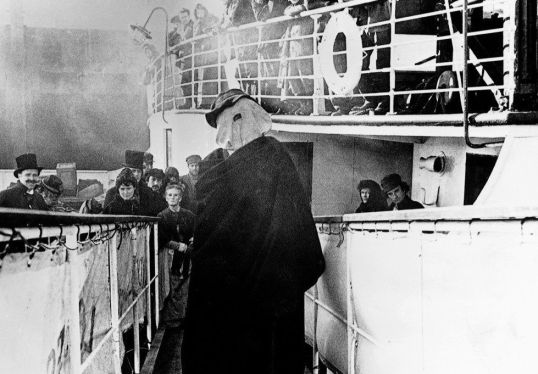
The Elephant Man (1980, directed by David Lynch)
Blue Velvet (1986, directed by David Lynch)
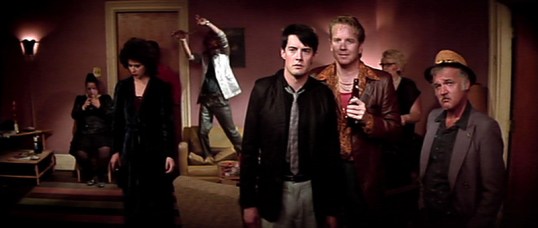
Twin Peaks: Fire Walk With Me (1992, directed by David Lynch)
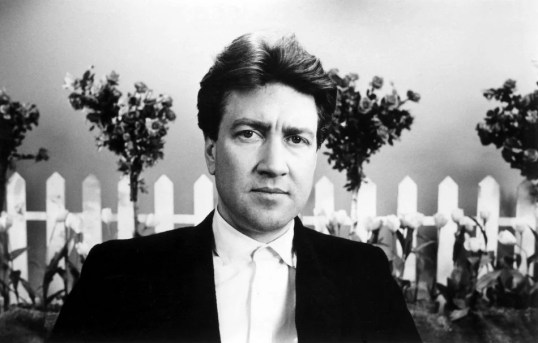 4 Or More Shots From 4 Or More Films is just what it says it is, 4 shots from 4 of our favorite films. As opposed to the reviews and recaps that we usually post, 4 Shots From 4 Films lets the visuals do the talking!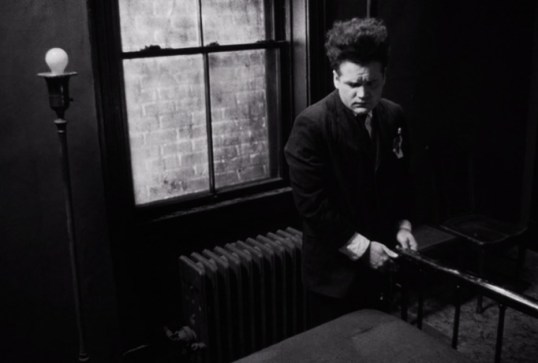














 Through the Shattered Lens