The Daily Grindhouse (Horror Edition): Female Vampire (dir. by Jess Franco)


My wonderful and loyal readers, I fear that I have failed you.  How is it, with my love of both grindhouse and Eurosleaze cinema, that I have yet to review a Jess Franco film on the site?  Halloween seems to be the perfect time to correct that oversight by taking a look at Franco’s infamous 1973 horror film, Female Vampire.

To truly “appreciate” a film like Female Vampire, it helps to know a little something about Jess Franco.  Working under a variety of pseudonyms, Spanish-born Jesus Franco Manera has been making films for over 60 years.   Among critics, Franco is usually either dismissed as a total hack (and/or pervert) or embraced as the living embodiment of the auteur theory.  Though no one’s quite sure how many films Franco has directed, Franco himself has estimated that he’s directed more than 200 films and, for the most part, he has financed and distributed them all on his own.  Franco has worked in every genre from thriller to comedy to hardcore pornography, but he is probably best known for directing low-budget, occasionally atmospheric erotic horror films like Female Vampire.

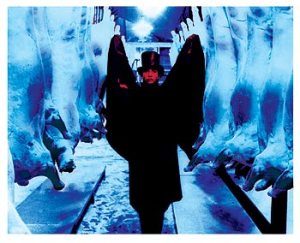
The opening of Female Vampire pretty much epitomizes everything that people love and hate about Jess Franco as a director.  The film begins with a series of ominous shots of a misty forrest.  The forest feels both beautiful and desolate at the same time and Franco’s camera lingers over the fog, building up an atmosphere of both mystery and melancholy.  Suddenly, we see one lone figure walking through the forest.  Irina (played by frequent Franco star Lina Romay) emerges from the fog, naked except for a cape and a belt.  The camera follows Irina as she walks through the mist.  When Irina stops and faces the audience, the camera zooms in to a close-up of her face and her body.  While Franco’s aim here is obviously to cater t0 the sexual fantasies of his predominately male audience, it’s still a remarkably strong scene because Romay faces the camera with such confidence that her nudity feels less like exploitation and more like empowerment.  (Romay was, like me, a self-described exhibitionist.)  Once Franco’s camera zooms away from Irina, she then starts to confidently approach the camera (and the audience as well).  She gets closer and closer to the camera until finally … she accidentally bumps her head on the lens.

That, for lack of a better example, totally sums the aesthetic of Jess Franco.  When you watch a Franco film, you’re left with the impression that Franco simply turned on the camera and recorded whatever happened to happen in front of it.  Occasionally, he managed to capture something unique and dramatic and just as often, he filmed someone bumping into the equipment or staring straight at the camera.  Whether he liked the spontaneity that came from an unexpected mistake or he just didn’t have enough money in his budget to do a second take, Franco would more often than not include these mistakes in his final film.

As for the rest of Female Vampire, it’s eventually established that. along with being a vampire, Irina is a countess and also a mute.  (At one point, we do hear her inner thoughts, a monologue in which she tells us, “I earnestly wish an end would come to this bloody race I am forced to run.”)  Several different cuts of Female Vampire have been released over the years and depending on which version you see, Irina either has to either regularly drink blood or drink semen in order to survive.  (“It was as if his potency was sucked out of him,” as the coroner puts it.)

While Irina spends all of her time wandering around a depressing resort town and seducing various victims, a poet (Jack Taylor) searches for her.  This poet — who spends a lot of time staring off into the distance and delivering inner monologues about walking down this road we call life — is determined that he and Irina are meant to be together.

There are many different version of Female Vampire currently in circulation.  For instance, a heavily-edited version was released in the U.S. as The Bare-Breasted Countess.   While Franco’s director’s cut lasts close to two hours, there are other versions that barely clock in at 70 minutes.  There’s a hard-core version, a soft-core version, and even a version that features close to no sex at all.  The version I saw was the DVD released by Image Entertainment.  That version is reportedly close to Franco’s original.

As is typical for a Franco film, not much happens in Female Vampire and what does happen doesn’t make much sense.  But, oddly enough, that actually worked in the film’s favor.  By ignoring things like plot and logic and by focusing on the film’s visuals, Franco made a film that literally feels like a dream.  Every scene is filled with an atmosphere of pure ennui and, when coupled with charisma of Lina Romay and Jack Taylor,  the end result is a film that’s strangely compelling.

The Daily Grindhouse: Chappaqua (dir. by Conrad Rooks)


At the risk of sounding like every other girl who has ever sat in a corner of Starbucks and spent a few hours writing emo poetry in her Hello Kitty notebook, I love the Beat Generation.  I’ve read all of Jack Kerouac’s novels, Allen Ginsberg’s poems, and William S. Burroughs’ cut-ups.  I’ve even tried to listen to the music of the Fugs and I just recently finished reading the very first Beat novel, John Clellon Holmes’ Go.  It was my interest in the Beats that led to me discovering Chappaqua.

Originally filmed in 1966 and released a year later, Chappaqua was produced, written, and directed by Conrad Rooks.  The son of the president of Avon, Rooks had a lot of money and a lot of addictions.  In 1962, Rooks checked into a European clinic where he detoxed and claimed to have been cured of his drug dependency through something called “sleep therapy.”  Chappaqua is based on his experiences both as a drug addict and a patient and, since Rooks was something of a hanger-on in the American underground art scene, the final film featured cameos from such counterculture figures as Allen Ginsberg and William S. Burroughs.

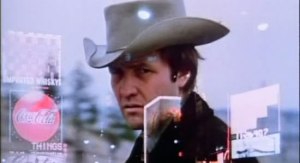
In the film, Rooks plays himself, a young man who is usually seen wandering aimlessly from one location to another.  The film is edited in such a way that you’re never quite sure where Rooks is going to be from one scene to another.  Most famously, the film’s opening features Rooks wandering across the countryside of Nebraska while images (and sounds) of New York’s 42nd Street are superimposed over his face.  Later on in the film, Rooks will just as abruptly turn up walking through the streets of India and meditating with a random guru.  Rooks, it quickly becomes apparent, is a man with no true home, a wanderer who seems to randomly alternate between being lost and being on a mission.

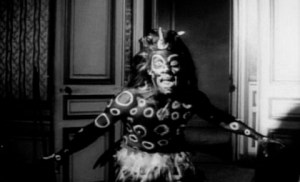
For most of the film, however, Rooks is in a small clinic outside of France.  Along with telling his doctor (played by Jean-Louis Barrault) about how he came to be addicted to drugs and alcohol, Rooks goes through withdrawal and has the surreal hallucinations that dominate the majority of the film.  During one hallucination, Rooks sees himself as a gangster gunning down a midget in a parking garage.  Then, suddenly, Rooks is no longer a gangster and instead, he’s a vampire speaking in an over-pronounced Transylvanian accent.   A druid appears and does a jig in the middle of the Stonehenge and a witch doctor shows up and starts to dance through the halls of the clinic.  Throughout it all, Rooks is haunted by the image of a stunningly beautiful woman (Paula Pritchett) in a white dress, kneeling by a placid lake.  Observing all of this is the menacing figure of Opium Jones (played by William S. Burroughs), who continually encourages Rooks to stay on drugs and who may, or may not, be a figment of Rooks’ imagination.

How to explain the odd (and occasionally frustrating) charm of Chappaqua.  This is truly a pretentious mess of a movie, full of symbolism that is both obvious and willfully obscure.  However, there’s a strange charm to the film’s pretension.  The film may not make much sense but it’s never incoherent.  Largely thanks to cinematographer Robert Frank, the visuals of the film are so strong and striking that they often provide the narrative drive that the film would otherwise lack.  Chappaqua is, ultimately, just a fascinating film to watch.

My main reason for enjoying and recommending Chappaqua, is that the film truly is a time capsule.  Both the film’s strengths and its flaws can be linked back to the fact that it was made in 1966.  It’s a true cultural artifact and, therefore, it is a must-see for anyone who is interested in either the Beats or the counter-culture that was indirectly descended from them.

The Daily Grindhouse: Abduction (dir. by Joseph Zito)


Before I went on vacation, I searched through my film collection and I found a banged-up VHS tape that I had ordered off of Amazon a while back.  I had been inspired to order the tape because it contained a movie based on a true crime case that I was oddly obsessed with at that time.  However, as is typical with my obsessions, I had pretty much lost interest by the time the movie actually showed up on my doorstep.  Hence, that tape sat unwatched until last week when I finally curled up on my couch and watched it.

Released in 1975, Abduction is an example of the “Ripped-From-The-Headlines” genre of grindhouse filmmaking.  These films specialized in taking sordid true stories and giving them an even more sordid cinematic interpretation.  They were often advertised as the film that would tell you “the shocking true story!” or “the story that they don’t want you to know.”  Despite a disclaimer at the beginning of the film that informs us that any resemblance to anyone living or dead is “purely coincidental,” Abducted tells us “the shocking true story!” behind the kidnapping of Patricia Hearst.

In 1974, newspaper heiress Patty Hearst was a 19 year-old student at Berkeley who was kidnapped from her apartment by a group of left-wing revolutionaries known as the Symbionese Liberation Army (SLA).  The SLA was led by a charismatic escaped prisoner who called himself Field Marshal Cinque and who announced — via a messages that Hearst read into a tape recorder — that Hearst was being held hostage in the name of social justice.  The police and FBI spent several months unsuccessfully searching for Hearst until one day, the SLA released an audio tape in which Hearst announced that she had now joined the SLA and wanted to be known as Tania.  Hearst was soon robbing banks and went from being a hostage to a wanted criminal.  When she was arrested in 1975, Hearst claimed to have been brainwashed by the SLA and people still debate whether she was a sincere revolutionary, a calculating criminal, or just a weak-willed victim.

One of the more fascinating aspects of the Hearst case is that, a year before Hearst was kidnapped, a book called The Black Abductor  was released.  The Black Abductor tells the story of an heiress named Patricia who is kidnapped by a group of left-wing revolutionaries led by a charismatic escaped prisoner and who eventually decides to join with her violent captors.  No one was sure who actually wrote the book (though it was credited to a “Harrison Chase”) and the FBI apparently investigated whether or not the book had been used as a blue print for the actual kidnapping.

(I actually have a copy of the Black Abductor.  I found it in the nostalgia section of Half-Price Books, mixed in with the usual collection of detective novels, westerns, and tv novelizations.  I squealed a little when I recognized the title and wow, did I ever get the strangest look at the front register when I paid for it.  The book itself is actually pretty boring.)

Abduction, probably in order to avoid a lawsuit from the Hearst family, is officially based on the novel Black Abduction and not the kidnapping of Patty Hearst.  That said, the movie (which was released after Hearst had robbed her first bank but before she was arrested) is totally about the kidnapping of Patty Hearst.

In Abduction, Hearst is called Patricia Prescott and her father is no longer in the newspaper business.  Instead, he’s a real estate developer who is planning to destroy the ghetto and replace it with high-income housing.  Patricia (played by Judith-Marie Beragan) is kidnapped and her older boyfriend is beaten up by a group of revolutionaries.  Patricia is held prisoner in a barren apartment and, in a disturbingly clinical scene, is raped (and filmed) by both the group’s leader (an escaped prisoner, of course) and a female member of the group.  Scenes of Patricia being slowly brainwashed are intercut with scenes of a brutal FBI agent beating up liberal grad students and Patricia’s parents (played by Hollywood veterans Leif Erickson and Dorothy Malone) obsessively watching video tapes of their daughter being sexually assaulted.

Abduction is one of those low-budget, relentlessly sordid films that really can’t stand on its own as a work of art but, never the less, remains a fascinating portrait of the time that it was made.  In true exploitation fashion, the film is deliberately made to appeal to both sides of the cultural divide.  When the FBI agent played by Lawrence Tierney is seen smirking as his partner smacks around a smug leftist, the filmmakers are both appealing to the paranoia of the liberals and providing wish fulfilment for the right.  By the same token, when Patricia stands in a doorway with a smoking shotgun in her hands, it’s an image that’s calculated to be empowering, erotic, and frightening all at the same time.   Like many grindhouse film, Abduction might not be a great (or even good) film but as a reflection of the psyche of the times that produced it, it’s an invaluable document.

The Daily Grindhouse: The Clones (dir. by Lamar Card and Paul Hunt)


How, you may be asking, did I come to see The Clones, an extremely obscure and low-budget science fiction thriller from 1973?

It all started when I first saw the trailer for the film on 42nd Street Forever, a compilation of old school grindhouse trailers.  For whatever reasons, the trailer for The Clones fascinated me.  Whether it was the extremely dry narration or the fact that the trailer actually ended with a quote from a then-member of the U.S. Senate, I felt that The Clones was a film that I, as a student of film and history, simply had to see.

How obscure is this film?  It’s so obscure that The Clones has never even been released on DVD.  In order to see the film, I had to go on Amazon and order a used VHS copy from a some guy in Indiana.  When it arrived in the mail, the first thing I noticed was the big “Property of the St. Augusta Public Library” that was stamped on the back of the worn video box.

The fact that my copy of The Clones had obviously seen better days actually added a lot to the viewing experience.  Much as true grindhouse fans treasure every scratch and auditory pop whenever they watch a film like Fight For Your Life or Last House on Dead End Street, I found myself oddly proud that my copy of The Clones had obviously survived so much just so that it could eventually end up as a part of my video library.

As for the film itself, The Clones is one of those wonderful low-budget films that deserve to be rediscovered.  Dr. Gerald Appleby (well-played by an actor named Michael Greene) is a nuclear scientist who discovers that he’s been cloned and that the clone has essentially been out living his life whenever the original Appleby has been at work.  Though it’s hinted that he’s being set up by foreign spies, the reason for Appleby’s cloning remains obscure throughout the entire film.  Whether this narrative obscurity is intentional or not, it actually serves the film well as it helps to transform Appleby into almost a Kafkaesque figure.

When Appleby attempts to reveal to the proper authorities that he’s been cloned, he finds himself accused of being an imposter and is forced to literally run for his life.  The majority of the film deals with Appleby being chased across the California desert by not only the mad scientist who cloned him (a wonderfully demented Stanley Adams) but also by two ruthless federal agents.  The two federal agents are played by Otis Young and Gregory Sierra, two character actors who appeared in several films during the 70s.  Sierra and Young are a lot of fun to watch in this film and it’s hard not to like them, even if they technically are villains.  They both just seem to be having so much fun trying to kill our hero.

From what little information that I’ve been able to gather about this film’s production, it appears that The Clones was one of the first motion pictures to attempt to take advantage of the paranoia that most people feel over the prospect of humans being cloned.  When seen today, the film’s story is a bit predictable because, to be honest, there’s really only so much when you can do with cloning as a plot device.  However, The Clones remains an oddly effective film.  The low budget (and lack of special effects) actually contributes to the film’s success.  Without the crutch of spectacle, The Clones is forced to pay attention to things like characterization.  How’s that for a concept?

The film eventually climaxes with a genuinely exciting shoot out in a deserted amusement park and then it all ends, in typical 70s fashion, in a climax that manages to be both fun and depressing at the same time.

The Clones is not necessarily an easy film to see but it’s well worth the effort.


A Grindhouse Quickie with Lisa Marie: The Demon (dir. by Percival Rubens)


Last summer, I decided to watch and review all 50 of the films to be found in Mill Creek’s Chilling Classics box set.  Mill Creek, of course, is a company that’s best known for releasing box sets that seem to primarily feature low-budget films that, for whatever reason, have now found themselves in the public domain.  If you’re a fan of old school B-movies in general, then you probably know just how fun it can be to read the back of a Mill Creek boxset and discover what obscure films are waiting inside.  The thing that I especially love about Mill Creek is the fact that — in the best grindhouse tradition — they describe every film that they distribute (whether it’s George Romero’s Night of the Living Dead or something like Las Vegas Bloodbath) as being a “classic.”

So, anyway, I started to watch and review the films in the Chilling Classics box set but, as 2011 drew to a close, things got rather hectic and busy here at the TSL Bunker.  In between covering the Oscar season and keeping the world supplied with weekly trailer posts, I had to set aside my plans to review the entire boxset for another day. 

Well, I’m happy to say that day is here!  Last night, I dug out the old Chilling Classics box set and I watched a South African slasher film from 1981, The Demon.

The Demon actually tells two separate but connected stories.  In the first story, a teenage girl is kidnapped from her bedroom by a masked killer.  Her distraught family calls in a tormented psychic who quickly proves himself to so superfluous and useless that you’d forget all about him except he’s played by the late Cameron Mitchell. 

If you’re a fan of old school grindhouse and exploitation films then you’ve undoubtedly seen a handful of films featuring Mr. Mitchell.  A former “legitimate” actor who, early on in his career, appeared in things like Death of a Salesman, Mitchell eventually became better known for appearing in low-budget exploitation films.  Mitchell could always be counted on to shamelessly overemote and, regardless of the film he was appearing in, he was always a lot of fun to watch.  If nothing else, Mitchell always seemed to be rather amused by the films he found himself in.  It’s a shame that Cameron Mitchell died before Quentin Tarantino could engineer a comeback for him. 

In The Demon, Cameron Mitchell spends most of his limited screen time standing on a rocky cliff while staring down at the ocean below and having psychic visions that don’t really seem to have much to do with anything else happening in the film.  Actually, visions is the wrong word.  As Mitchell says, “Sometimes…I get these feelings.  Vibes, as the kids would say.”

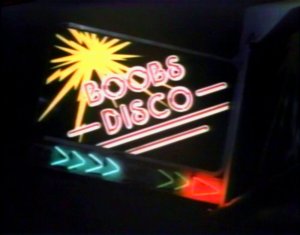
And the kids are in a lot of trouble because our nameless killer has moved on to the city where he spends his time hanging around outside of a place called Boobs Disco and stalking two teachers named Mary (Jennifer Holmes) and Jo (Zoli Markey).  This is the film’s second storyline and it mostly consists of Mary spotting the killer out of the corner of her eye and Jo pursuing a relationship with the most boring man on the planet.

Like quite a few films that seem to pop up in various Mill Creek box sets, The Demon is technically a pretty bad film but, once you accept that fact, it’s also an occasionally entertaining mess that delivers a handful of effectively creepy moment.

The scenes featuring Cameron Mitchell are entertaining for exactly the reason that you think they are.  These scenes are such obvious filler and were so obviously added as an excuse to get a “name” actor to join the cast that it’s impossible not to admire the nerve of the filmmakers.  They weren’t going to let a silly thing like narrative cohesion get in the way of producing a 90 minute film.  Playing the world’s worst psychic, Cameron Mitchell delivers his lines with such a truly unfocused intensity that I actually spent the first half of the movie convinced that he was the murderer.  The final fate of Mitchell’s character is truly shocking (if just because it kind of comes out of nowhere) and Mitchell plays his final scene as if he’s starring in a dinner theater production of some lost Shakespearean play.

If the scenes featuring Mitchell are mostly entertaining for being so bad, the scenes in which the nameless killer stalks Mary and Jo are actually pretty well done and the final confrontation between the final girl and the killer is handled surprisingly well (though I couldn’t help but roll my eyes at the fact that the film contrives to have the final girl fight for her life while topless).  The killer’s lack of personality makes him all the more intimidating and both Jennifer Holmes and Zoli Markey are likable and believable in the roles of Mary and Jo.  If nothing else, The Demon proves that even a really poorly produced horror film can be partially redeemed (if not saved) by a likable cast of potential victims.

Finally, and perhaps most importantly, The Demon — like many forgotten exploitation flicks — serves as a valuable time capsule of the society that produced it.  To offer up just one example:

The Daily Grindhouse: The Devils (dir. by Ken Russell)


With Michael Reeves’ Witchfinder General having found some notoriety for it’s graphic depictions of the witchfinding and inquisition of suspected witches and sorcerers in ravaged England during it’s English Civil War during the 17th-century the world of film, especially the grindhouse and exploitation cinema of the day, founded a new subgenre of horror (folk horror) and also one in the niche world of exploitation. Nunsploitation would be ushered in during the late 60’s and right through the 1970’s of grindhouse cinema with films like Reeves and another which many thought was influenced heavily by the Vincent Price-starred production.

Ken Russell’s The Devils has had a recent rethinking as a film that was less exploitation and more of an arthouse film of the early 70’s which many called one of the more influential films of it’s era. No matter what recent thought on the film might have labeled Russell’s film I always thought it was one of the finer examples of nunsploitation cinema which has of late become more in tune with fetishic pornography than straight-out exploitation horror.

The film starred Oliver Reed and Vanessa Redgrave and was set in 17th-century France during the reign of King Louis XIII and the rise of his Catholic advisor in Cardinal Richelieu. Just like Reeves’ film, The Devils was based on the true historical account of the French priest Urbain Grandier of Loudon who was accused of witchcraft and subsequently executed because of these accusations.

Russell, who has mentioned that he got nothing from Reeves’ film as inspiration and actually hated the Witchfinder General, would take the graphic scenes of torture and sadism of Reeves’ film and ramp it up to the next level. He wouldn’t just include even more graphic scenes of sadistic violence in his own film, but add scenes of sex and perversion (even for the type of film it was The Devils pushed the boundaries of decency of the era) which would see Russell’s film banned from many areas in the UK. The film even split the critics of the day with some calling the film awful and debased while some would nominate the film and it’s director for prestigious film circle and festival awards.

The Devils would be heavily censored in its native UK and even in the US upon it’s release. As time went by the film began to garner new accolades as more open-minded critics began to look at Russell’s film under a new light. While more and more critics of todaycontinue to heap artistic and creative accolades upon this film that it’s begun to shed it’s exploitation roots I still believe that at it’s heart The Devils was and is still nunsploitation at it’s best.


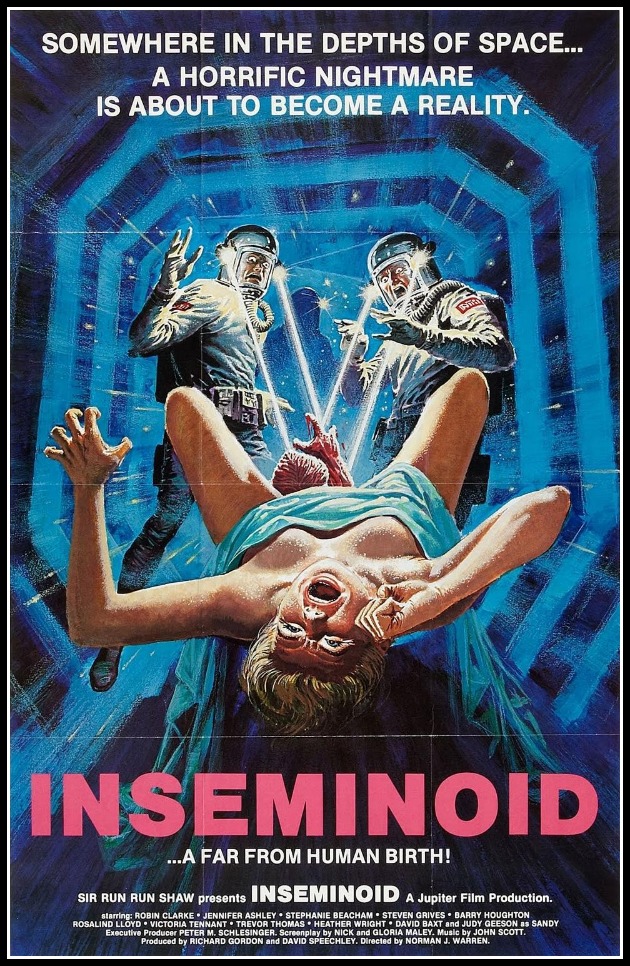
The Daily Grindhouse: Inseminoid (dir. by Norman J. Warren)


The latest daily grindhouse comes straight out of the UK from the early 80’s. It’s a sci-fi horror flick which came about as part of the exploitation wave of Alien rip-offs and imitation of the past several years since Ridley Scott’s scifi-horror masterpiece stormed through Hollywood. While it’s director, Norman J. Warren and it’s producers do not think it’s grindhouse or an exploitation film of any stripe I beg to differ.

Inseminoid (renamed for a U.S. release as Horror Planet) screams grindhouse right from that title alone. It’s a film about a group of scientists landing on an unknown and desolate planet in search of evidence that an alien civilization existed once upon a time on the planet. The whole thing was either filmed inside a studio-built spacecraft set or in a cavern complex near the studio in the UK. It’s once one of the scientists (as always with grindhouse horror it happened to be a female scientists) has become impregnated by a remnant of the planet’s long-dead civilization that the horror truly begins.

It’s that very scene of rape and alien impregnation which got this film labeled as a “video nasty” in the UK which made it’s release on video near-impossible to make without editing out that pivotal scene early in the film. That scene also got the flick compared to another grindhouse scifi-horror released the same year by low-budget auteur Roger Corman called Galaxy of Terror. Outside of both films using a rape scene by alien means the two films really had nothing in common plot-wise so I think the filmmakers of Inseminoid and Galaxy of Terror just happened to think of a similar idea at the same time.

This film is not great or even good, but like all true grindhouse the people involved in the film took their roles and task seriously to try and make the best film their budget allowed them to. It’s not a horrible film and when seen now it’s actually quite a fun little scifi-horror flick that showed a glimpse into an era of cheap, exploitation films that would last well into the late 80’s.

The Daily Grindhouse: Sugar Hill (dir. by Paul Maslandsky)


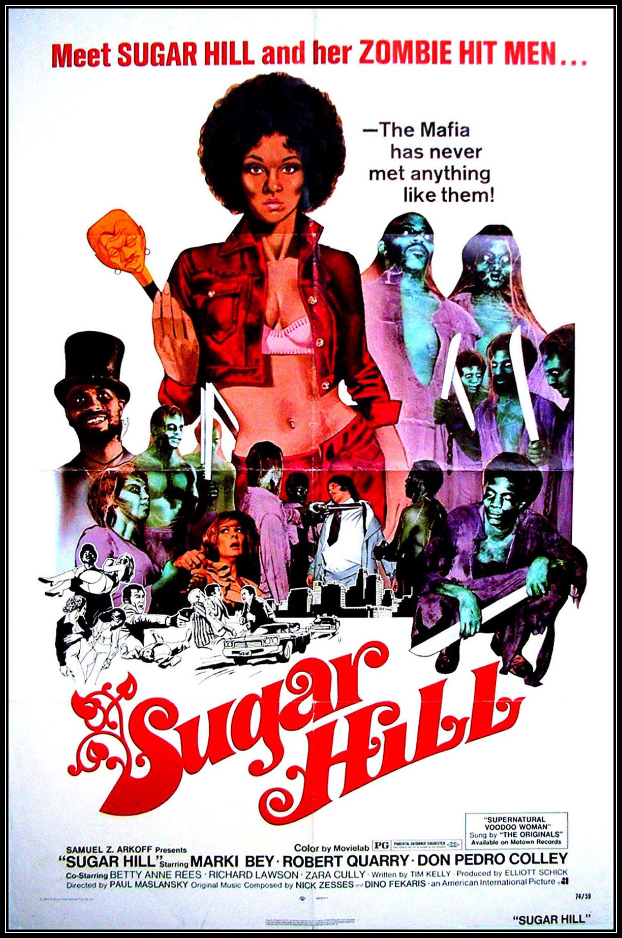
It’s been awhile since we’ve had a new pick for “The Daily Grindhouse” but that should end today. I’ve picked a good one and it is one out of sight, stone-cold groove of a pick. The latest daily grindhouse pick is the sweet blaxpoitation crime/horror mash-up, Sugar Hill.

This blaxpoitation flick was directed by one Paul Maslansky (yeah never heard of him either but that’s the life of a grindhouse filmmaker) and starred Marki Bey (in what would be her one and only feature-length role). Sugar Hill was part of the rush to take advantage of the success of another classic blaxpoitation flick, Blacula. This one wasn’t a straight out horror, but one mashed-up with a mafia story and how the voodoo-revenge side of the film took the spot of horror.

Overall, the film is quite good despite some very awful acting (even for a grindhouse film). Marki Bey (in the title role) actually is the highlight of Sugar Hill as she channels the sexy and badass vibe which made Pam Grier an instant favorite when she did Coffey. But people who read the synopsis on this flick shouldn’t expect zombies in the way we’ve come to know them. These undead are old-school voodoo zombies. They’re not flesh-eaters, but slaves of the voodoo priestess who summon them from their resting place to act as mindless muscle. These zombie end up becoming Sugar Hill’s unstoppable hit-men as she wreaks vengeance on the mafia who took her man away from her in the beginning of the film.

Sugar Hill is one example of why grindhouse cinema will always live on and find new converts. It is one fun time to be had not by just those who made it but for those who will see and continue to see it.

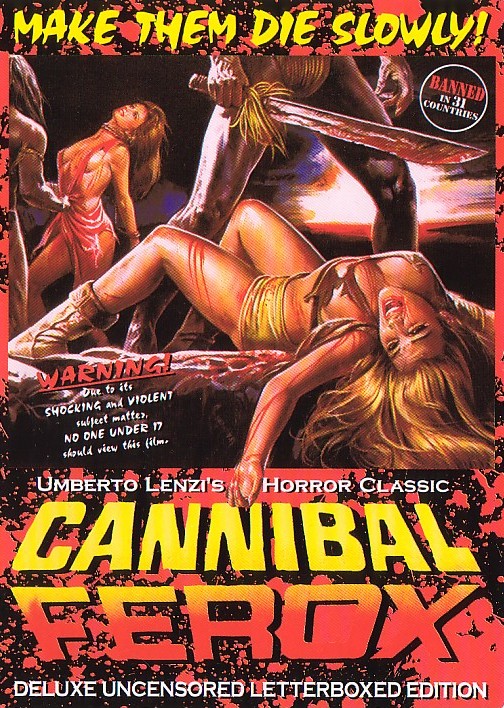
The Daily Grindhouse: Cannibal Ferox aka Make Them Die Slowly (dir. by Umberto Lenzi)


It’s time we got back to another edition of “The Daily Grindhouse” and this time we go into the lovely and wholesome fun that was the European cannibal subgenre which became popular from the mid-1970’s right up to the early 1980’s. The granddaddy and best of this subgenre will forever be Ruggero Deodato’s Cannibal Holocaust. That film help bring about the flood of cheap copies and knock-offs with each one trying to one-up Deodato’s masterpiece by amping up the violence and gore to try and get banned in as many countries as possible. One of these knock-off’s is Umberto Lenzi’s Cannibal Ferox aka Make Them Die Slowly.

It stars one of the heavyweights of Italian exploitation and grindhouse in Giovanni Lombardo Radice. It pretty much borrows part of the plot of Cannibal Holocaust then adds in a liberal helping of drug-dealers, mobsters and emeralds. Lenzi’s flick dumps the “found footage” style Deodato used for his film and instead goes a more traditional style. This lessens the impact of Lenzi’s film and definitely adds to fuel from critics and detractors who saw nothing of value in this film.

I wouldn’t say that Cannibal Ferox has no redeeming value whatsoever for it is an interesting flick. Gorehounds and lovers of this particular brand of grindhouse cinema have a special place in their heart for this flick with special mention going to the several kill sequences that occur throughout the film. Lead actor Radice gets the most elaborate and gruesome fate in this flick and I would say in most in the subgenre. No wonder in an interview years later he would regret ever filming this flick.

Oh yeah, Lenzi one up’s Deodato’s on-screen killing of a live turtle by doing a pig instead.

Like I said earlier, lovely and wholesome fun for the whole family.